We all know roses are beautiful, but they are also so much more than a pretty face!
A rose has a way of holding onto a moment. The anniversary bouquet, the single stem from a friend, the first bloom of the season on a bush you planted yourself.
They become little keepers of the moments worth remembering.
We have spent years in our gardens and arranging flowers, and along the way we have watched some roses fade in just a couple of days while others hung on for weeks.
For a long time, I chalked it up to luck. Truth be told, luck had very little to do with it!
Read along to learn how long roses typically last, the key factors that affect their lifespan, step-by-step tips to make them last longer, and how to revive roses that are starting to wilt.
How Long Do Roses Typically Last?
The answer is, it depends! A rose’s lifespan varies quite a bit with its environment.
Cut roses from the market usually last about a week in a vase.
The biggest influences are how fresh they were when you bought them and the temperature of the room they live in, so a bouquet that sat in a warm shop for days is already behind the curve.
In a vase with attentive care, roses can last close to 2 weeks! Water quality and stem trimming matter far more than most people expect.
Out of water, roses begin to decline within hours. That makes timing especially critical for events and celebrations.
Do not leave them lying on the counter while you finish setting the table!
Garden roses usually bloom on the plant for 1 to 2 weeks. Because they are still fed by their roots and the soil, they have a steady supply of water and nutrients, though exactly how long each bloom lasts depends on the variety and the weather.
Healthy soil goes a long way here, so a good layer of mulch (we use it in all our beds) helps hold in moisture and keep the soil in great shape.
RELATED: Learn about the best mulch for flower beds to help keep moisture and soil quality up, so your blooms last longer.
How Long Do Different Types of Roses Last?
Standard long-stem roses usually last longest in a vase, spray roses about a week, and soft garden roses the shortest; preserved roses last years. Not all roses age at the same pace.
Their structure, petal density, and breeding determine how they hold up once cut or how long they bloom in the garden.
|
Rose Type |
Average Lifespan |
Characteristics |
|---|---|---|
|
Standard (hybrid tea) long-stem roses |
7-10 days in a vase |
Hardy, tightly packed petals hold moisture well; they are usually the longest-lasting choice for arrangements, though the cultivar matters more than the color |
|
Spray Roses |
5-7 days in a vase |
Multiple smaller blooms per stem; fine-petaled but abundant, ideal for fuller bouquets |
|
Garden Roses (Peony-Style) |
4-6 days in a vase |
Lush, loosely layered petals that open dramatically but fade faster due to their softness |
|
Preserved & Eternity Roses |
1-3 years |
Treated with glycerin and dyes; requires no water or care, and holds its look for years if kept out of sunlight and humidity |
A study of 38 hybrid tea rose varieties found that vase life ranged from 4.5 to 18.8 days at 21°C, so the variety you buy matters.
I have always gravitated toward garden roses despite their shorter lifespan. There is something about those unruly, romantic blooms that feels worth the tradeoff, even when they fade a few days earlier than their classic counterparts.
Key Factors That Affect Rose Longevity
Once you know what shortens (or lengthens) a rose’s life, it changes the way you care for them.
Some of these factors matter quite a bit more than people assume!
-
Freshness at Purchase: Look for firm petals, rich color, and tight buds. Fresh roses have more stored energy and moisture, helping them last longer before wilting.
-
Temperature & Humidity: Keep roses in a cool room (65–72°F / 18–22°C). Heat speeds up water loss from the petals, causing them to wilt sooner.
-
Water Quality: Use filtered or room-temperature tap water. Bacteria and mineral buildup can block the stems, preventing water from reaching the petals.
-
Vase Cleanliness: Always use a thoroughly washed, residue-free vase. Bacterial buildup encourages stem rot and shortens the life of cut roses.
-
Rose Variety: Spray roses, long-stem roses, and garden roses have different lifespans. Their petal density and stem structure influence how long they stay fresh after cutting.
It is the tiniest changes that add those extra days.
Switching to filtered water made a noticeable difference in our house, and so did actually scrubbing a vase instead of giving it a quick rinse and reusing it. It is not glamorous, but it works!
Roses pay you back in time for the attention you give them.
How to Choose Fresh Roses?
Vase life starts before the rose ever reaches your home, and a fresher stem at the start means roses last longer on your table.
Picking through a florist’s bucket and cutting from your own garden come down to the same check. The stage a bloom is at when it’s cut has a real effect on how long cut roses last.
If you cut from your own bush, making the cut above a mature five-leaf set also helps the plant send up new flowering shoots.
-
Choose buds that are just starting to open rather than fully open blooms, since there is more life left in them.
-
Look for upward-curved petals and tight centers. Petals turned downward have passed their prime.
-
Check the base of the petals for a firm, springy feel. Soft or mushy petals mean the bloom is already past its peak.
-
Give the bloom a gentle shake. If petals fall away easily, skip it.
-
Look for brown spots or patches on the outer petals; they can be early gray mold.
-
Ask your florist for the cultivar name; some varieties simply last longer.
How to Make Roses Last Longer?
We like to think of these steps as rhythms rather than rigid rules.
None of them are complicated on their own, yet together these small acts add up to weeks of beauty!
1. Start With a Clean Vase
I always begin here, even when I’m tempted to skip it.
A quick scrub with dish soap removes invisible residue, but for stubborn buildup, a diluted bleach solution (about 1 tablespoon of bleach per liter of water) clears it. Rinse thoroughly afterward.
Bacteria from previous arrangements can cut days from its lifespan before you have even added water.
2. Trim the Stems Properly
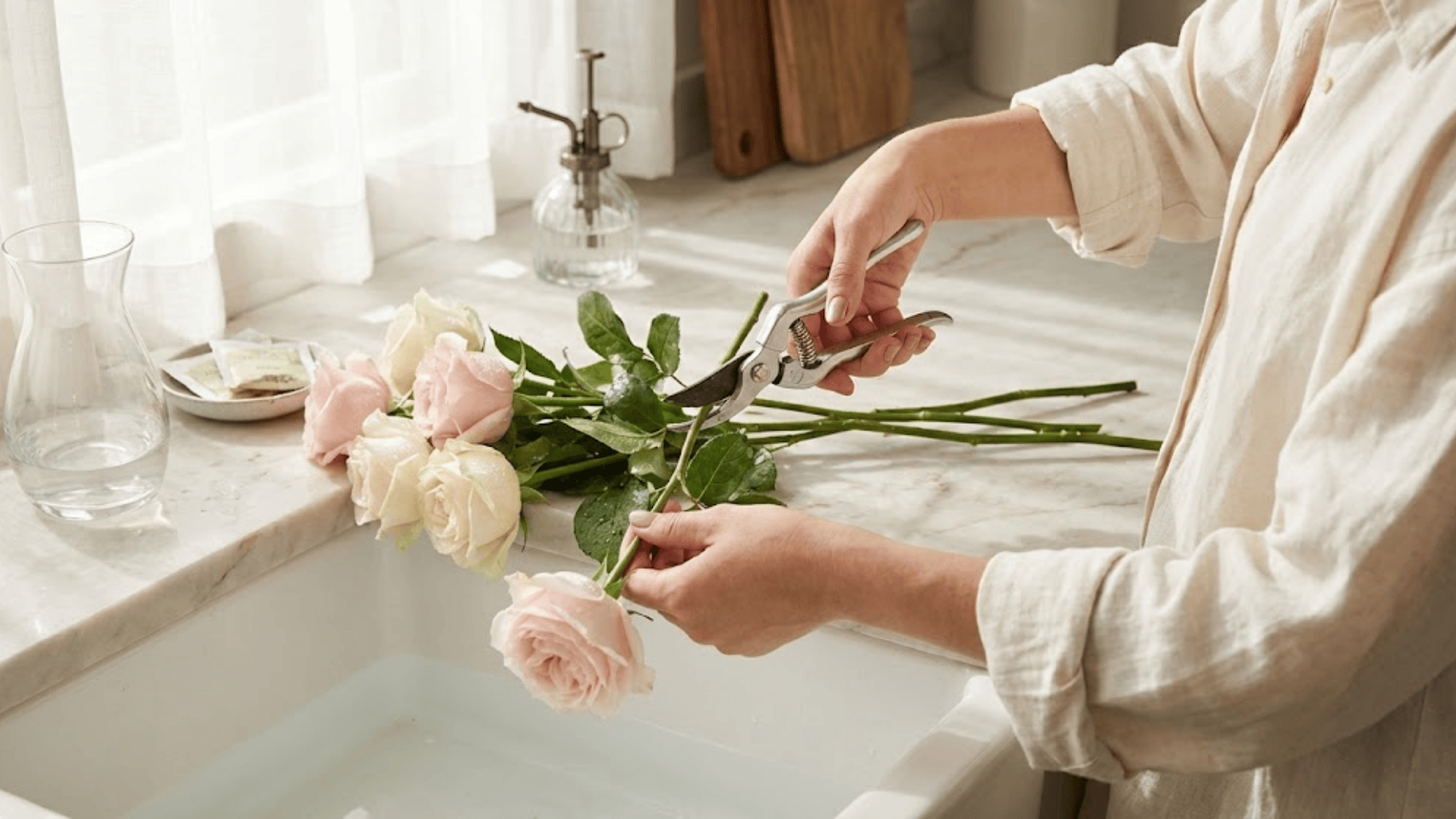
Cut stems at a 45-degree angle, removing about 1 inch from the base. The angle increases the surface area, so the stem can take up more water.
I learned to cut stems underwater back in my early greenhouse days, and at first it seemed totally pointless, I’ll admit.
But air bubbles do block the channels in the stem!
Now it’s pure habit in our kitchen, and the result is an uninterrupted flow of water all the way up to every petal.
3. Remove Lower Leaves
Any foliage sitting below the waterline invites decay.
We remove the leaves from the bottom third of each stem and keep the upper leaves for visual balance. It takes about one extra minute.
Submerged leaves release bacteria, which leads to cloudy water and a shorter bloom life.
With them gone, you get cleaner stems and fresher water; the roses almost seem to breathe easier!
4. Use Flower Food
Those little packets that come with bouquets are not just filler. Each one contains a few key ingredients:
-
Sugar – gives the roses energy
-
Biocide – fights bacteria in the water
-
Citric acid – helps balance the pH
No packet? No problem. You can make a homemade version with 1 teaspoon of sugar, a few drops of bleach, and a squeeze of lemon juice mixed into lukewarm water.
I cannot remember who first shared this trick with me, so I can’t give anyone credit (my bad!).
Commercial and homemade flower food both work just fine, as long as the roses get fed. If you use either one consistently, it will extend vase life.
5. Change the Water Often
Every 1 to 2 days, fully replace the water and add fresh flower food. Stale water breeds microbes, and those microbes clog the stems.
We used to let this slide, but now it is a small daily ritual we actually enjoy.
The difference is easy to see, too. Roses in fresh water keep supple petals and truer color, and they last much longer than those left sitting in murky, neglected water.
6. Keep Roses Cool
Roses prefer temperatures between 65 and 72°F, away from direct sunlight, heating vents, or even the warmth radiating from electronics. Heat stress causes petals to dry and curl at the edges.
I have seen this play out many times in client homes, where an arrangement beside a sunny window wilts days earlier than it should.
If you simply move roses from a sunny spot to a shaded corner, you can buy up to 3 extra days of bloom!
7. Refrigerate Overnight
This is routine practice for florists, who pair it with a wider stem prep routine before flowers ever touch a display vase.
Before bed, pop your roses into the fridge, away from any fruit. Fruit releases ethylene gas, which speeds up aging in flowers.
The cold slows down respiration and aging, so in the morning the roses look revived with firm stems and deeper color. Score!
You do not need to do this every night. Save it for the night before an event, or when you notice the first signs of wilting.
Common Mistakes That Make Roses Die Faster
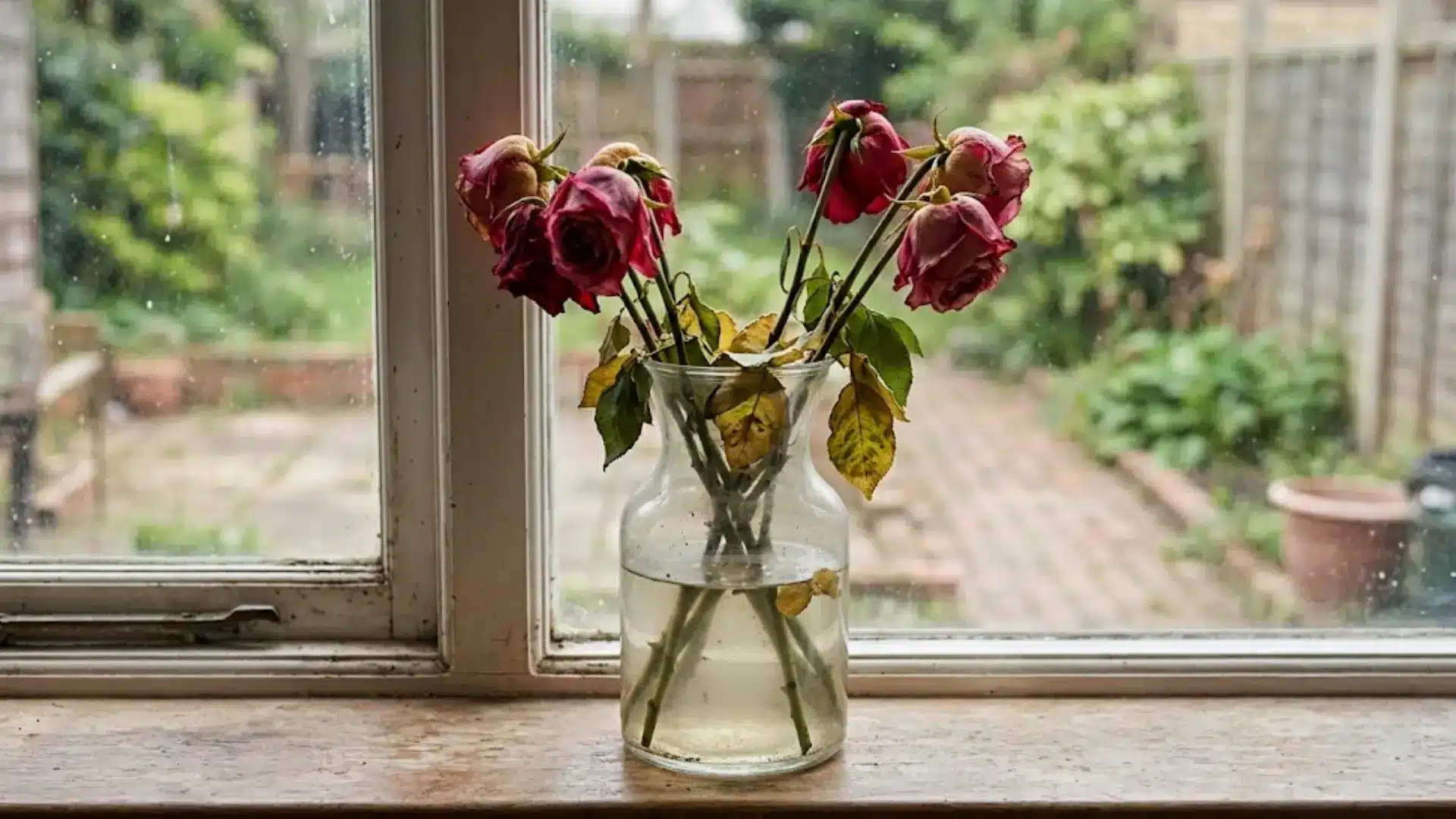
The quickest ways to shorten a rose’s life are dirty water, warmth, crowding, and ethylene. Over the years, I’ve noticed patterns in arrangements that fade quickly.
These missteps seem minor in isolation, but they compound into days lost.
-
Submerged leaves turn the water in a vase into a bacterial breeding ground within hours.
-
Dirty or unwashed vases carry residue that blocks stems before fresh water even helps.
-
Extreme water temperatures shock the stems instead of nourishing them.
-
Sunlight and heat sources speed up moisture loss, and petals wilt faster because of it.
-
Nearby fruit releases ethylene gas that triggers premature aging in blooms.
-
Crowding too many stems into one vase. Putting 10 stems in a single vase shortens vase life by 1.4 days.
-
Misting or spraying the blooms, which invites grey mould
How to Revive Wilting Roses?
To revive wilting roses, recut the stems underwater and give them a long drink of lukewarm water.
Wilting often stems from blocked water pathways or dehydration rather than true death. When I notice drooping heads or soft stems, I move quickly.
These revival techniques work best within the first day of wilting, before cellular damage becomes irreversible.
Revival Techniques
Each method targets a specific cause of decline, whether air bubbles or severe dehydration.
|
Method |
When to Use |
How It Works |
|---|---|---|
|
Recut the Stems |
First sign of wilting |
Remove 1-2 inches at a 45-degree angle underwater to clear blockages and restore water flow |
|
Warm Water Soak |
Drooping heads or a bent neck |
Recut the stem, then stand it in 100-110°F water for at least 20 minutes. Check again after 24 to 48 hours; a neck that stays bent may not recover. |
|
Remove Guard Petals |
Outer petals are browning or loose |
Peel off damaged outer petals to keep the bloom clean and mold-free. Leave the healthy outer petals, known as guard petals, in place, since they protect the bloom. |
|
Hot Water Shock |
Severe neck bending |
Place stems in 100°F water for 2-3 minutes, then transfer to cool water; heat forces water uptake rapidly |
I learned the warm water soak from a vendor at a flower market years ago, and it’s now our go-to for stems we would otherwise give up on. The first time we tried it, the drooping necks straightened within an hour, and those blooms went on to last 3 more days in our kitchen!
Extended Care Tips for Special Occasions
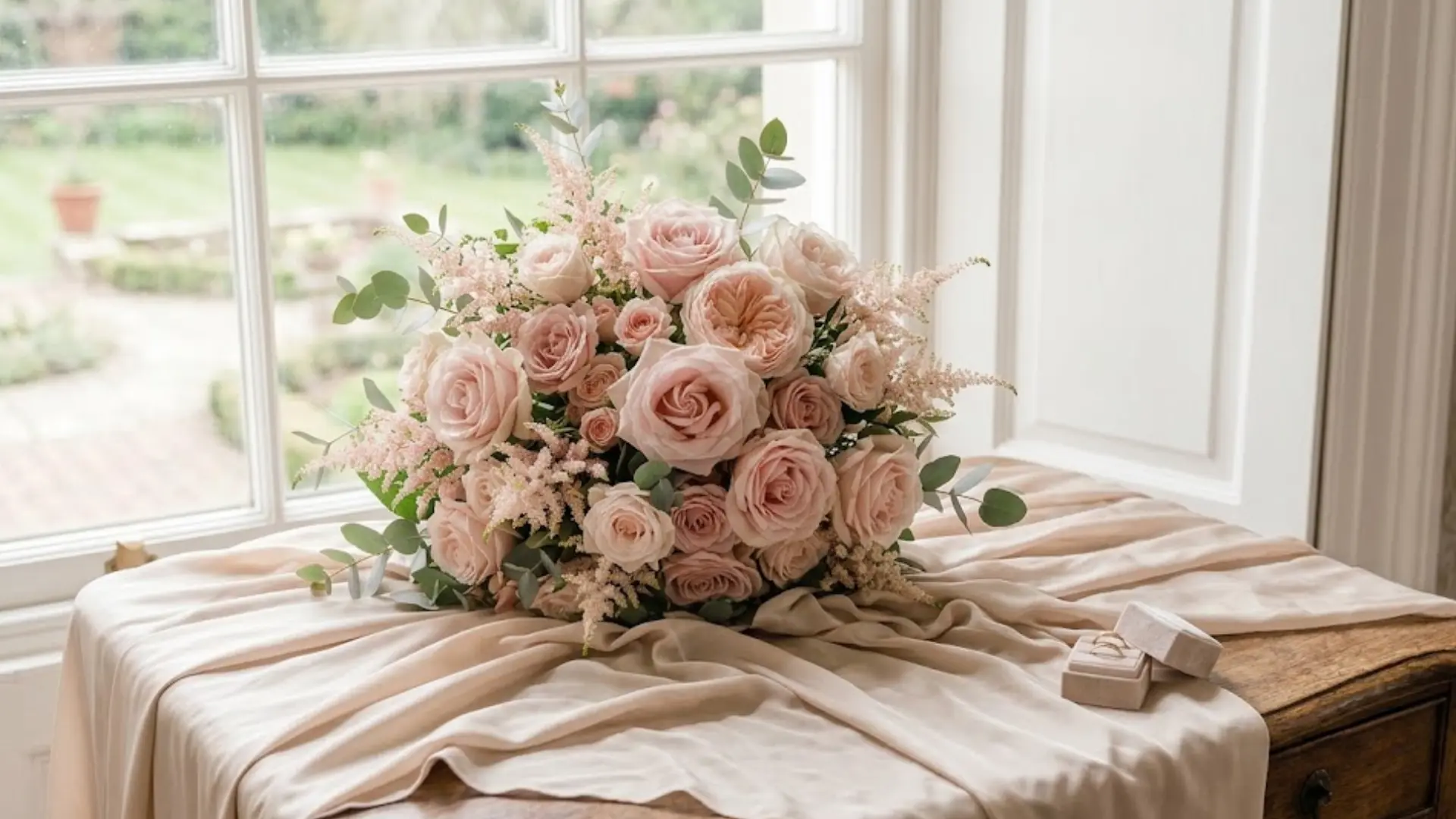
Roses for a celebration need a little extra care. The stakes are higher when the moment is a memorable one, and a little foresight makes all the difference.
1. Weddings
Wedding roses carry weight beyond their beauty. Timing and temperature control become critical when arrangements need to look pristine for hours.
-
Store arrangements in a cool space (55-65°F) the night before, away from direct airflow.
-
Transport in climate-controlled vehicles with stems secured in water-filled containers.
-
For bouquets and corsages that sit out of water, use a floral finishing spray made for the purpose, and let it dry completely before the flowers go back into the cold.
2. Gifting Roses
A bouquet loses its impact if it arrives wilted. The presentation matters as much as the blooms themselves, and small choices protect that first impression.
-
Wrap stems in damp paper towels covered with plastic wrap for transit.
-
Include a small packet of flower food with care instructions written on the card.
-
Time the delivery for early morning or evening to avoid midday heat exposure.
If your bouquet mixes roses with other cut flowers, treat each variety on its own terms. Roses paired with sweet pea flowers, for instance, need cooler water and a gentler hand since sweet peas bruise more easily and are sensitive to ethylene.
3. Large Rose Bouquets
Managing fifty or more stems requires different strategies. The sheer volume means bacterial growth accelerates faster, and water depletes more quickly.
-
Change water every day without exception; bacteria multiply rapidly in crowded vases.
-
Trim stems in batches underwater rather than all at once to maintain efficiency.
-
If a single vase becomes too cramped for proper circulation, split the stems into multiple containers using the 3-5-8 rule for flower arrangements.
Special occasions amplify every detail, but they also teach us what truly matters in rose care. What works for a single stem scales beautifully when applied with intention to grander arrangements.
The Closing Note
There is no single answer to how long roses last. Yet once you understand what shapes their lifespan, you have a surprising amount of control over the outcome, and after all our years with roses, we keep coming back to the same simple habits.
Clean vases, angled cuts, fresh water, and a cool spot do add days!
Roses respond to care with resilience. If you give them a little attention, they will keep showing up for you.
Color that holds through one more dinner, one more morning.
Now I’d love to hear from you! Which of these methods worked best for your roses? Please share your experience or ask questions in the comments below.
Thanks for tuning in, and happy arranging!
Frequently Asked Questions (FAQs)
Does Rose Color Affect How Long the Blooms Last?
Not much on its own. Vase life comes down more to the variety and how the stems are handled than to color.
Can Cut Roses Share a Vase with Other Flower Types?
Yes, as long as you avoid pairing them with flowers that release higher amounts of natural ethylene, like carnations past their peak, since ethylene speeds up petal drop in nearby roses.
Do Aspirin or Pennies Help Roses Last Longer?
Not reliably. Pennies do not extend the life of cut flowers, and studies on aspirin are mixed. A commercial flower food packet, or the homemade mix above, is the better-supported choice.