

I bought a bunch of flowers at the garden center, and they looked lovely there. But once I planted them, my flower bed looked messy.
A few plants here, a few there, and nothing seemed to go together.
Then I learned about the 3-5-8 rule for flowers, and it fixed the problem. It is a simple guideline for how many plants to put in each group, so your beds look full and planned instead of random.
You do not need any design training, just a little counting. Here is how it works and how I use it in my own garden.
What is the 3-5-8 Rule for Flowers?
The 3-5-8 rule for flowers is a grouping guideline based on three numbers from the Fibonacci sequence, a pattern where each number is the sum of the two before it.
In bouquets, florists use 3 focal flowers, 5 stems of greenery or texture, and 8 filler stems.
In flower beds, gardeners adapt it by planting the same flower in clusters of three, five, or eight instead of singles or pairs.
|
Number |
In a Bouquet |
In a Flower Bed |
|---|---|---|
|
3 |
Focal flowers with the biggest blooms |
Accent clusters and small beds |
|
5 |
Greenery or textural stems |
Medium beds and mid-border groups |
|
8 |
Filler flowers that close the gaps |
Large beds, sweeps, and pollinator patches |
Why odd numbers? Three and five catch your eye and feel less rigid than pairs or fours, which tend to look like somebody lined them up with a ruler.
Eight is even, but a group that size reads as one mass rather than a countable set, so it still looks natural.
The Design Psychology & Mathematical Concept Behind the 3-5-8 Rule
The numbers 3, 5, and 8 are consecutive terms, where each number is the sum of the two before it. That’s the math.
That pattern shows up in sunflower seed spirals and leaf arrangements, so the ratios tend to feel natural.
The psychology is easier to defend from practice. Odd groupings look more dynamic than even ones, and three focal stems form an implied triangle that guides the eye.
Each tier then plays a role: a few bold stems draw attention, supporting stems add structure, and filler adds softness. Together they build hierarchy.
Plant in groups of five or eight to anchor your beds and give them weight. Use groups of three as smaller accents.
Clustering like this also avoids the “polka dot effect,” where lone plants scattered around make a bed look spotty.
Step-by-Step: How to Apply the 3-5-8 Rule in Flower Beds?
Start with the flowers you love most, then group them to fit your space. Keep their height, color, and full-grown size in mind so the bed looks balanced, not crowded or messy.
Step 1: Choose a Focal Flower
This is the statement bloom, the backbone of the design. Roses, hydrangeas, coneflowers, and peonies work well because their big blooms draw the eye.
This focal plant should be something you love looking at, since you will be repeating it throughout the bed. Choose varieties whose hardiness zone and sun needs, as listed on the tag, match your garden.
Think about upkeep before you buy, too. For example, roses need regular trimming, and the five-leaf rule for rose pruning helps the group of three or five stay even through the blooming season.
Step 2: Plant in Groups of 3, 5, or 8
Match your grouping size to your available space. Set each group in a loose triangle or zigzag instead of a straight line.
Spacing should follow the mature width on the tag, not the size of the nursery pot (a mistake I have made more than once).
If you bought an even number, split them into smaller odd groups, or plant all eight as one sweep.
Step 3: Repeat for Harmony
Take that same focal plant and repeat it in another section of your bed. This repetition creates visual rhythm and ties different areas together.
Keep your color palette consistent as you repeat groupings. The eye will naturally travel between these repeated elements, making your garden feel intentional and cohesive rather than random.
Step 4: Layer by Height
Arrange plants with the tallest varieties in the back, medium heights in the middle, and low growers or ground cover at the front.
This layering ensures every plant gets visibility and creates depth that makes your bed look fuller.
In an island bed that you view from all sides, put the tallest group in the center instead.
Example Layout Ideas Using the 3-5-8 Rule
Seeing the rule in practice makes it easier to visualize for your own space. These layout ideas show how the same principle adapts to different garden styles and goals.
1. Cottage Garden Layout
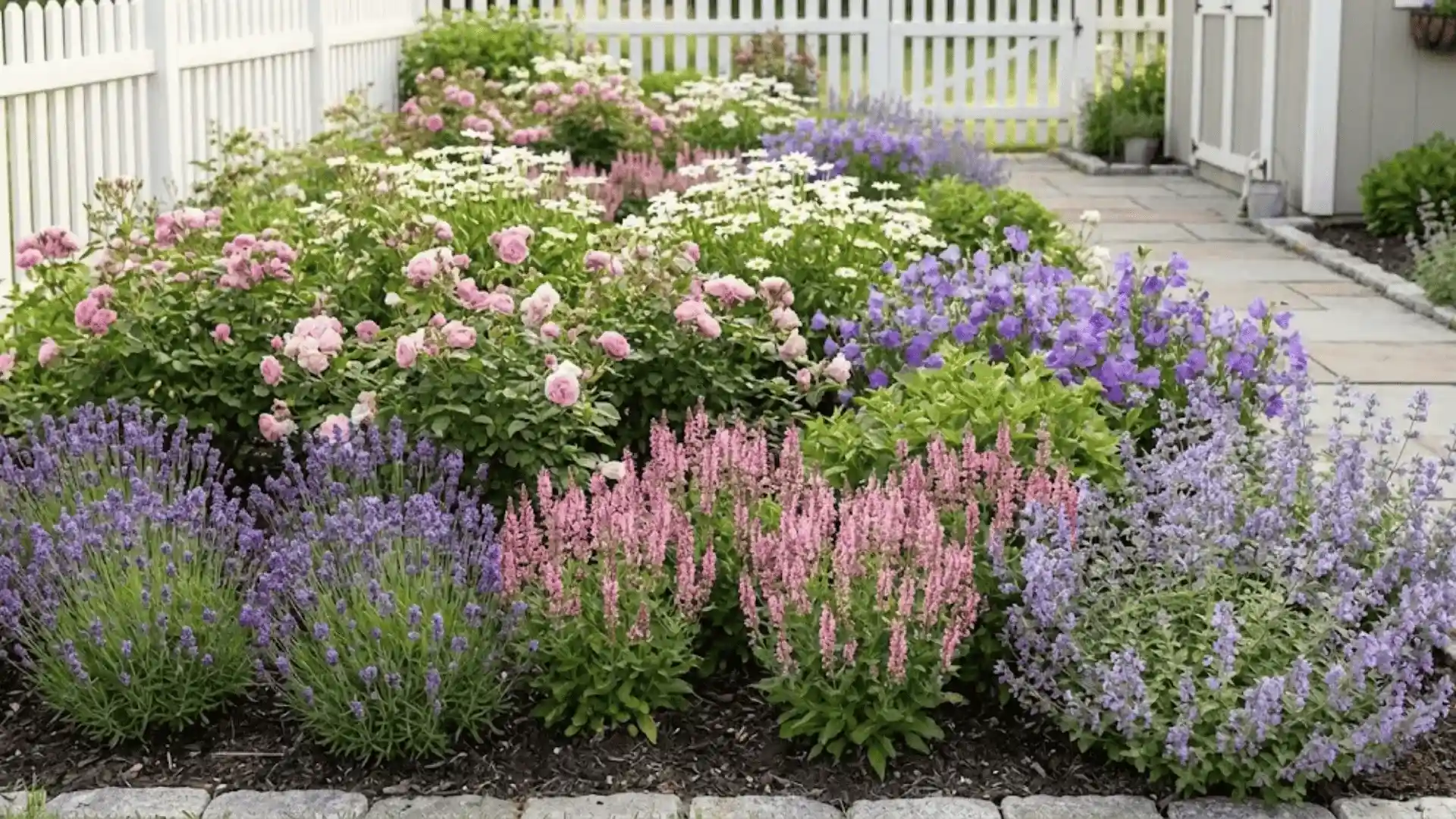
Plant perennials like lavender, salvia, and catmint in clusters of five for that classic, abundant cottage look. Stick to a pastel color palette with soft pinks, purples, and whites that repeat throughout the bed.
This creates the romantic, overflowing feel cottage gardens are known for while maintaining structure underneath.
2. Modern Minimalist Bed
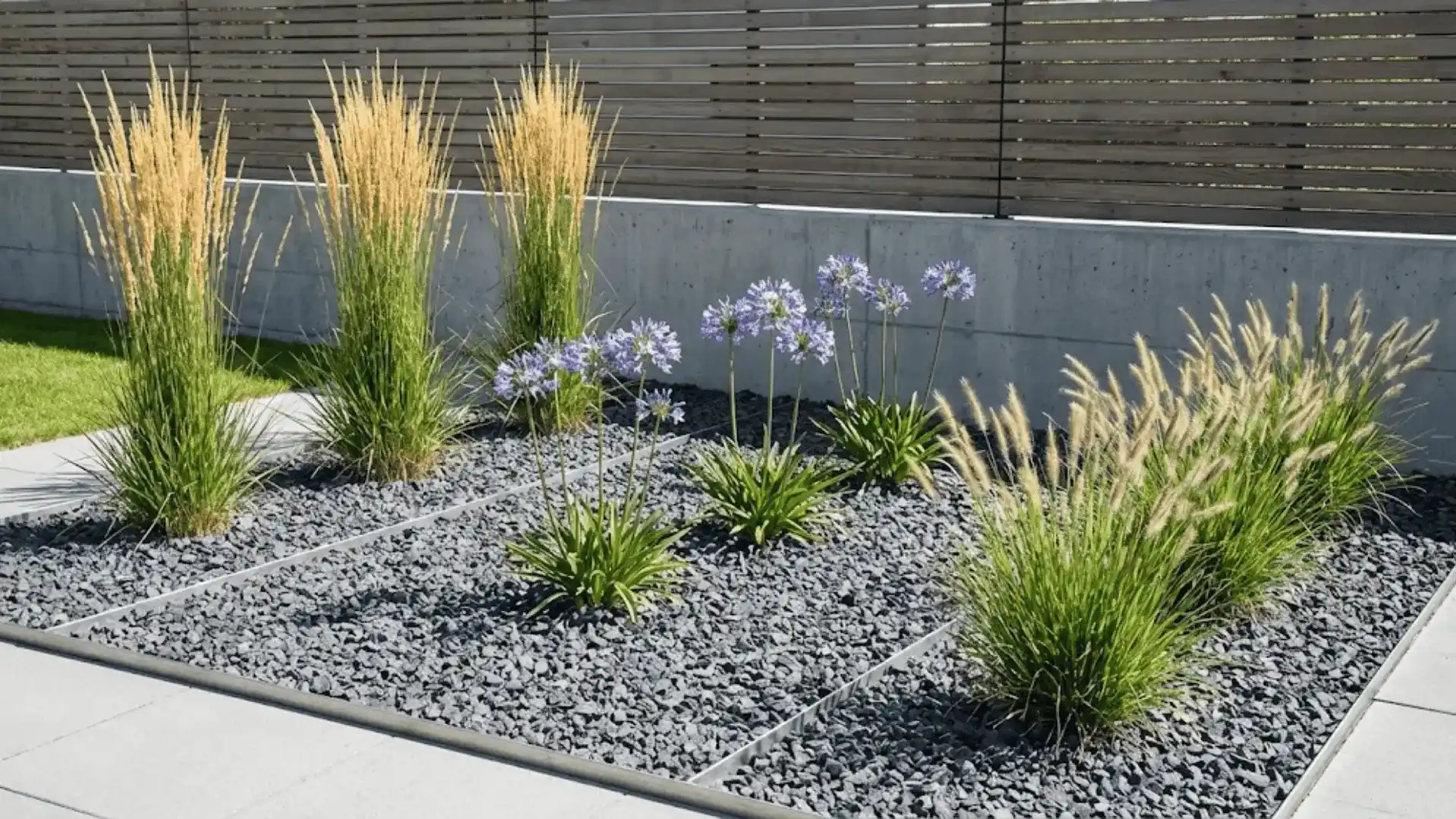
Go for bold statement plants like ornamental grasses or agapanthus in groups of three. Space these clusters apart to emphasize clean lines.
Repeat the same plant types in different areas to create rhythm while letting each grouping stand out as a sculptural element.
3. Pollinator Garden

Use clusters of eight native flowering plants like coneflowers, bee balm, or asters to create feeding stations that attract bees and butterflies.
A cluster of one flower is easier for pollinators to find than single plants scattered through a bed. Repeat clusters to create a network of pollinator-friendly zones.
How to Build a 3-5-8 Flower Arrangement?
Start with fresh stems. Strip any leaves that would sit below the waterline, and recut each stem at an angle, using the stem-conditioning basics florists rely on to keep arrangements fresh.
For a standard bouquet, you will need a clean vase and sharp snips. Each number counts stems rather than flower varieties, and you can double each number for a larger arrangement.
-
Start with Greenery: Hold two or three greenery or filler stems together at a 45-degree angle.
-
Add Flowers One by One: Place each new stem at the same angle, switching between main flowers, greenery, and fillers.
-
Turn the Bouquet: Rotate it slightly after adding each stem to spread the flowers evenly.
-
Spread Out the Stems: Avoid placing the same type together. For example, put two greenery stems on one side and three on the other.
-
Check the Height: Hold the bouquet beside the vase. The stems should reach the bottom, with the lowest flowers sitting 1-2 inches above the rim.
-
Trim and Arrange: Cut the stems to the right length, place the bouquet in the vase, and adjust the flowers until they look balanced and no gap shows.
Best Flowers to Use with the 3-5-8 Rule
Certain plants lend themselves beautifully to odd-numbered groupings because they have consistent size, shape, and bloom patterns.
Here are some reliable options that work well with the 3-5-8 rule.
| Plant Type | Best Options | Ideal Group Size | Why They Work |
|---|---|---|---|
| Perennials | Coneflowers, Black-eyed Susans, Salvia, Lavender | 3-5 | Consistent growth habits; most return yearly, and Black-eyed Susans often reseed |
| Annuals | Petunias, Marigolds, Zinnias, Impatiens | 5-8 | Season-long color, budget-friendly; use impatiens for shade, the rest for sun |
| Shrubs & Structural Plants | Hydrangeas, Roses, Ornamental Grasses | 3-5 | Anchor points for larger beds |
When the 3-5-8 Rule Does Not Apply
This rule works beautifully for natural, flowing garden designs, but some styles call for a different approach.
Here are situations where you can skip the odd-number guideline.
-
Formal symmetrical gardens that rely on matched pairs and mirror images for their structured, classical appeal.
-
Matching containers, such as a pair of pots flanking a front door or steps, where symmetry is the goal
-
Small balcony spaces that may only have room for one or two statement plants without looking overcrowded.
-
Geometric landscape designs built on patterns, grids, and intentional symmetry that create modern, architectural impact.
If your garden style leans formal or your space is tight, even numbers might actually serve you better. Pay attention to what looks right in your specific setting.
Common Mistakes When Planting in Groups
Even an easy rule like this can trip you up. I have made most of these mistakes myself, so these are the ones to avoid when planting in groups, along with easy fixes.
-
Planting in Straight Rows: Flowers can look stiff and unnatural. Arrange them in triangles or uneven groups for a softer look.
-
Placing Plants Too Close: Small plants grow bigger over time. Leave enough space based on their mature size.
-
Choosing Too Wide Varieties: Planting one of every flower can make your garden look messy. Repeat the same flowers for a balanced look.
-
Mixing Plants with Different Needs: Keep sun-loving plants together and shade-loving plants in separate groups.
-
Focusing Too Much on Numbers: Don’t worry about exact numbers in large flower beds. Focus on how the plants look together.
Final Thoughts
Applying the 3-5-8 rule for flowers transforms how you approach garden design, turning what used to feel overwhelming into something manageable and fun.
You now have a framework that brings professional polish to your beds without needing years of experience.
Start small with one section of your garden, play around with different groupings, and watch how quickly things come together.
Have you tried odd-number groupings in your own garden? Drop a comment below and share what worked for you.
Frequently Asked Questions (FAQs)
Does the 3-5-8 Rule Work in Vegetable Gardens?
Not really. Vegetables are spaced for harvest and airflow, so rows and grids usually make more sense. The rule fits ornamental edges, herb borders, and flowers planted around the vegetable bed.
Can Each Cluster Mix Different Plants?
Keep each cluster to one variety, or to plants that look very similar in size, color, and leaf shape. Save the contrast for the space between clusters.
Does the Rule Apply to Bulbs Like Tulips and Daffodils?
Yes, and bulbs usually need larger groups because each plant is small. Treat eight as a starting point for tulips and daffodils and plant more if you have room.
Is the 3-5-8 Rule the Same as the Rule of Three?
They are related. The rule of three asks you to plant in odd numbers. The 3-5-8 rule adds a Fibonacci-based size scale and allows a group of eight for large beds.




One Response
Math point here: Eight (8) is an even number. 2-4-6-8-10, etc.