If your yard looks like it got a surprise dusting of snow in late spring, you are probably dealing with cottonwood seeds. That soft, drifting fluff has a way of settling into every corner of your garden before you even realize what happened.
Cottonwood fluff cleanup can feel never-ending, but knowing why it shows up helps you stay a step ahead.
Every year, cottonwood trees release their seeds into the warm breeze, blanketing yards in white.
Read on for the prettiest, most practical ways to handle cottonwood seeds in your yard and keep your outdoor space feeling like the peaceful retreat it deserves to be.
What is Cottonwood Fluff?
Cottonwood trees are one of the most common trees across the U.S., and every spring they do what they do best by releasing thousands of lightweight, cotton-wrapped seeds into the air.
That fluffy white coating is not just pretty to look at; it is nature’s way of helping seeds travel far and wide on the wind.
If you have ever wondered about tree seed pod varieties beyond cottonwood, the differences can be surprisingly distinct.
The fluff is so light that it can drift across entire neighborhoods, which is exactly why cottonwood seeds in your yard seem to appear out of nowhere.
Peak shedding usually hits in late spring through early summer, leaving yards blanketed almost overnight.
Is Cottonwood Fluff Harmful?
Cottonwood fluff looks pretty, but it does come with a few concerns worth knowing about before the shedding season peaks.
- Lawn and Garden: Dense accumulations can briefly block sunlight and moisture from reaching your grass, but a quick cleanup usually prevents any real damage.
- Allergies: The fluff itself is not a true allergen. It is the cottonwood pollen released weeks earlier that triggers reactions, though the fluff can carry other pollens along, causing mild irritation.
- Fire Risk: Dry cottonwood fluff is surprisingly flammable, as are exploding seed pods that scatter dry debris unpredictably. Piles near grills, fire pits, or mulch require timely cleanup.
Staying aware of these small risks makes the whole cleanup process feel a lot more purposeful.
When Does Cottonwood Fluff Season Start?
Cottonwood fluff season typically rolls in during late spring and can stretch into early summer depending on where you live.
In warmer southern states, shedding can begin as early as April, while northern regions usually see it closer to May or June.
The whole cycle tends to last anywhere from a few weeks to over a month, and weather plays a big role in how intense it feels. A windy stretch can make one afternoon look like a full snowstorm in your yard.
Knowing your region’s timing helps you get ahead of cottonwood fluff cleanup before it takes over.
Spring Cleanup Tips for Cottonwood Fluff
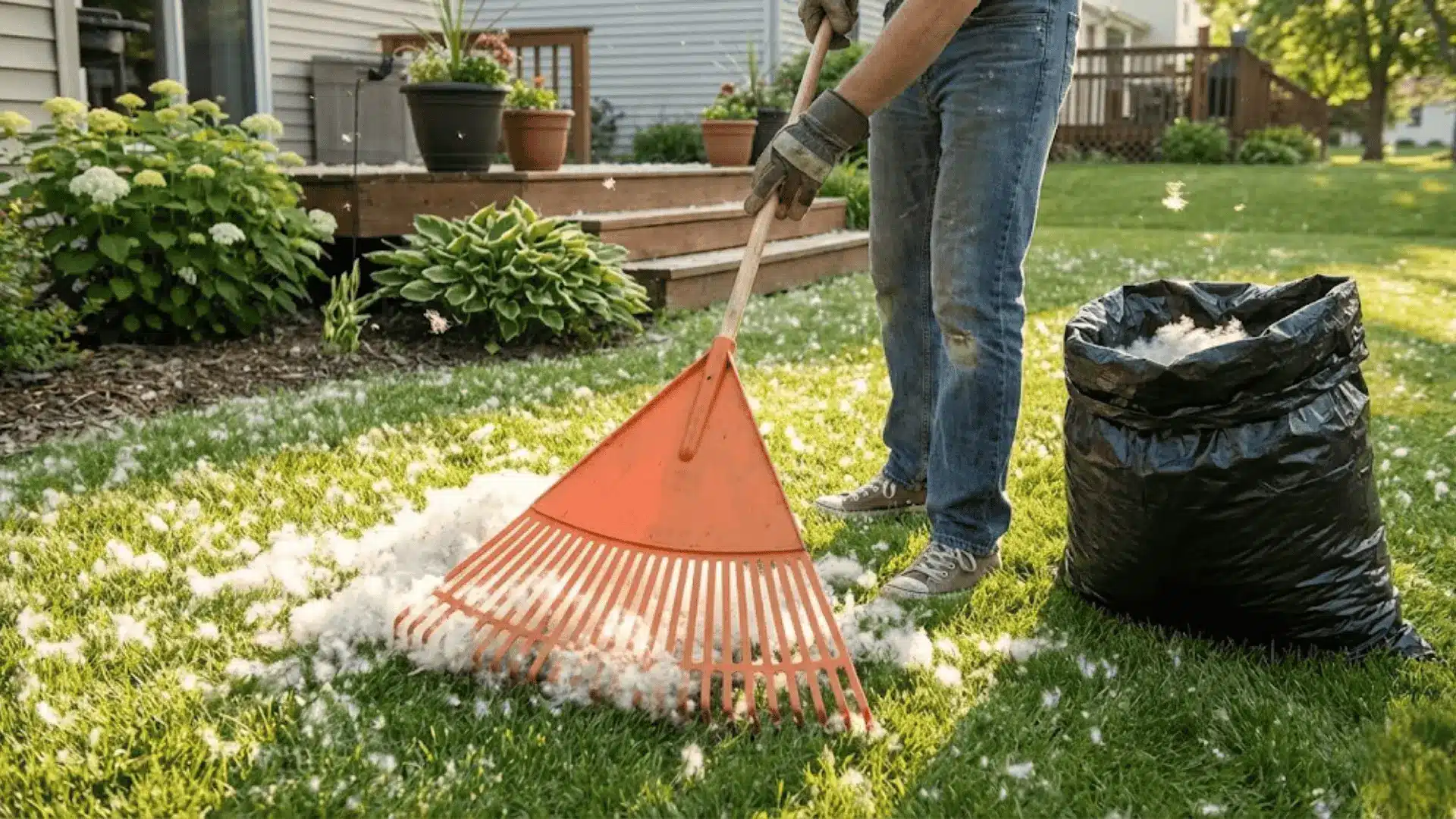
Getting ahead of cottonwood seeds in your yard does not have to feel overwhelming. A few simple habits done consistently can make the whole season a lot more manageable.
1. Rake and Bag Early
Dry fluff is your easiest window to work with, so do not wait for it to pile up. A wide plastic rake gathers it without sending seeds airborne, the way metal tines can.
Work in sections and bag as you go rather than creating one large pile, because a sudden gust of wind can undo everything in seconds.
Early morning is the best time to rake since the air tends to be calmer and the fluff sits lower to the ground.
2. Hose Down Hard Surfaces
Driveways, decks, and patios each need a slightly different approach when it comes to cottonwood fluff cleanup.
Here is a quick guide to make it easier:
| Surface | Best Method | Best Time |
|---|---|---|
| Driveway | Sweep first, then hose down toward the drain | Early morning, before the wind picks up |
| Deck | Rinse with a medium-pressure hose along the grain | Morning or after rain |
| Patio | Blow or sweep into a corner, then rinse | Morning before foot traffic |
For thicker buildup, a quick sweep before hosing down makes the whole process smoother and keeps your drain from getting overwhelmed.
3. Use a Leaf Blower With Caution
A leaf blower can be a real time-saver during cottonwood fluff cleanup, but the settings matter more than people realize.
Stick to low speed settings so you are guiding the fluff into a contained corner or bag rather than scattering it into the air all over again.
Always be mindful of the direction you are blowing, because sending a cloud of cottonwood seeds into a neighbor’s yard is not exactly a great look.
4. Lawn Mowing Strategy
Mowing frequently during peak shedding season is one of the most underrated tips for keeping cottonwood seeds in your yard under control.
When fluff sits too long on grass, it starts to mat down and can trap moisture against the soil.
Always use the bag attachment during this time of year so that clippings and seeds get collected cleanly rather than getting chopped up and redistributed right back across your lawn.
5. Shop Vac for Porches and Gutters
Cottonwood fluff accumulates fast in gutters and creates stubborn clogs that a garden hose alone struggles to clear.
A shop vac with an extension hose makes gutter and porch cleanup significantly quicker and more thorough, and doing it at least once during peak season can save you from a much bigger maintenance headache later on.
The CRAFTSMAN Gutter Cleaning Wet/Dry Vac Attachment Kit is a well-loved pick for this exact job, with extension wands and an angled nozzle that gets into gutters cleanly without needing to climb a ladder every few feet.
Preventing Cottonwood Seed Buildup
Prevention is always easier than cleanup, and a few small changes around your yard can seriously cut down on how much fluff you are dealing with each season.
- Prune cottonwood trees in late winter to reduce the number of seed-producing branches before the shedding season begins.
- If buildup is severe every year, consult a certified arborist about long-term management or selective removal.
-
Only female cottonwood trees produce fluff, so replacing them with male varieties or low-mess alternatives like maples or lindens is worth considering over locust varieties.
- Use protective covers on pools, AC units, and vents during peak fluff season to prevent costly clogs and buildup in hard-to-clean spots.
- A simple mesh screen over gutters and vents goes a long way in keeping cottonwood seeds from sneaking into places they do not belong.
Taking these steps before the season hits means less time cleaning up and more time actually enjoying your outdoor space.
Cleaning Cottonwood Fluff From Specific Areas
Every corner of your property needs a slightly different approach when it comes to how to get rid of cottonwood fluff, and knowing the right method for each spot saves you a lot of time and frustration.
| Area | Problem | Best Cleanup Method |
|---|---|---|
| Roof & Gutters | Fluff clogs drainage and traps moisture | Shop vac with extension wand or gutter flush with a hose |
| Driveway & Garage | Fluff drifts in and packs into corners | Dry sweep first, then rinse toward the drain |
| Pool & Water Features | Fluff overwhelms skimmers and clogs filters | Skim daily during peak season and rinse filters every few days |
Do Cottonwood Seeds Grow Everywhere?
Cottonwood seeds can germinate quickly, but they actually need pretty specific conditions to take hold, mainly bare, moist soil with direct sunlight.
A healthy, well-mulched lawn gives them very little room to establish.
Keep an eye out for tiny seedlings with heart-shaped leaves popping up along garden beds, fence lines, and anywhere soil stays damp.
The earlier you catch them, the easier they are to pull out by hand since the roots are still shallow. For larger patches, a light hoeing works well.
Staying consistent with lawn coverage and mulching is honestly your best defense against seedlings taking over.
The Bottom Line
Cottonwood fluff cleanup does not have to be the most dreaded part of your spring routine.
With the right timing, a few reliable tools, and some simple preventive habits, managing cottonwood seeds in your yard starts to feel a lot less like a chore and a lot more like just another part of enjoying the season.
The fluff will come every year, but so will your confidence in handling it.
If you have a cleanup tip that works really well for you, drop it in the comments below because someone out there is probably dealing with the same fluffy situation right now.