You’ve probably crouched down, picked up a long, slender seed pod off the ground, and thought, wait, which locust tree even dropped this?
It’s a surprisingly common moment, and one that’s worth getting right.
These two trees look deceptively similar on the surface, but they behave very differently in a landscape, and the pods are honestly one of the easiest places to start telling them apart.
This field guide breaks down the key traits that help separate black locust and honey locust with confidence.
What is a Black Locust Tree?
Black locust, or Robinia pseudoacacia, is native to the Appalachian region and the Ozark Plateau but has spread across much of North America.
It grows tall and narrow with deeply furrowed, rope-like bark that’s pretty hard to miss up close.
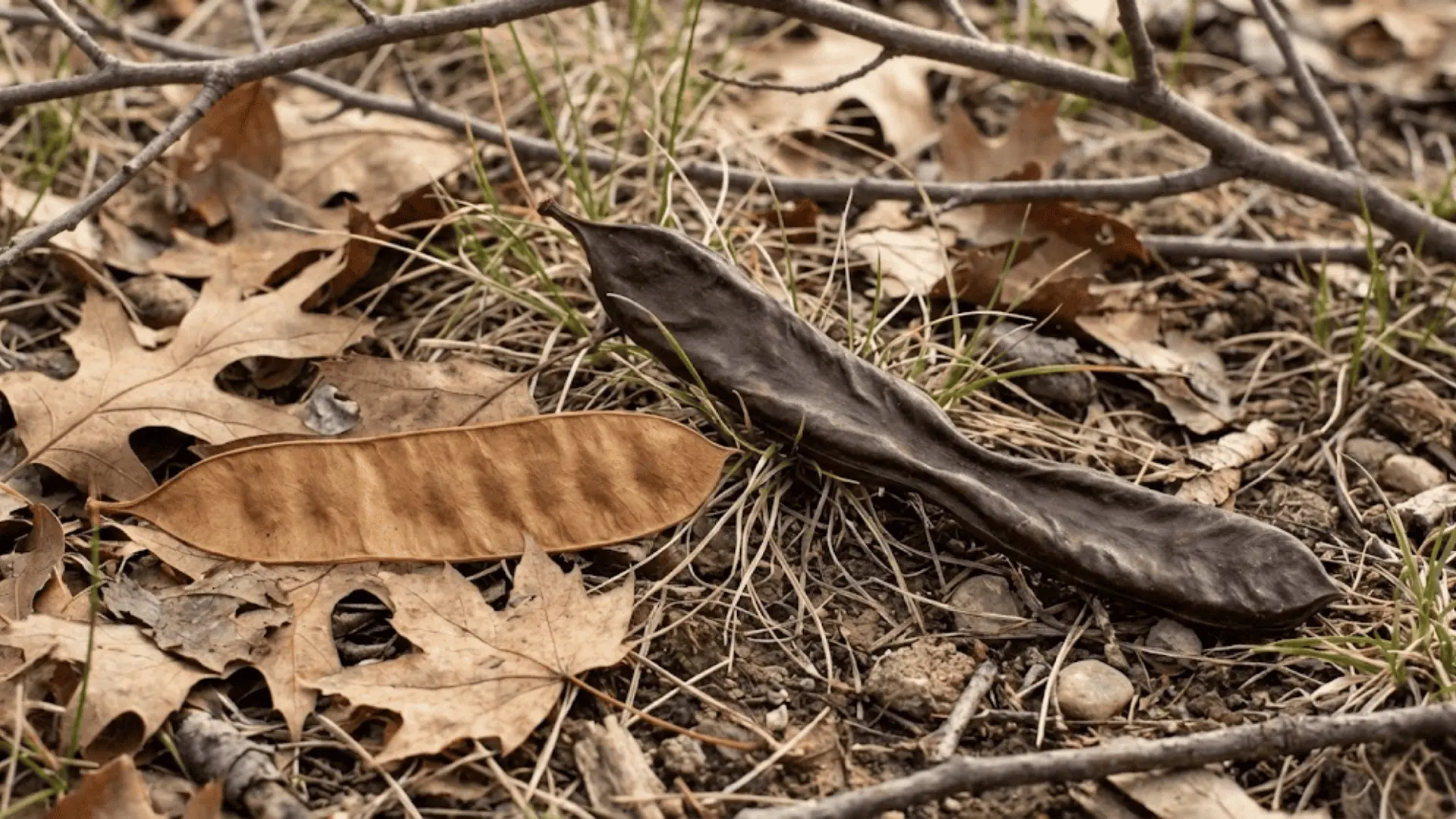
Its pods are flat, smooth-edged, and papery thin. Black locust trees are commonly found along roadsides, woodland edges, and open fields.
Their durable wood makes them valuable for fence posts, outdoor structures, and other long-lasting applications.
If the pod feels almost like dried parchment in your hand, you’re likely looking at black locust.
What is a Honey Locust Tree?
Honey locust, or Gleditsia triacanthos, is native to central North America and is widely used in landscaping for its airy canopy and tough adaptability.
It comes in thorned and thornless varieties, though wild ones often have intimidatingly large thorn clusters along the trunk.
The pods are where it gets really distinctive. They’re long, thick, twisted, and often curved or spiraled, sometimes reaching over a foot in length.
Inside sits a sticky, sweet pulp with seeds embedded throughout.
They tend to drop in late fall and can linger on the ground well into winter, looking almost like dark, leathery ribbon candy.
Key Differences Between Black Locust and Honey Locust Pods

Black locust and honey locust pods may look similar at first glance, but several visible features make them easier to separate. It pairs well with a broader understanding of tree seed pod identification.
1. Size
Honey locust pods are much larger and more noticeable than black locust pods. They typically grow around 12 to 18 inches long and may extend beyond that in some trees.
In contrast, black locust pods are shorter, usually measuring about 2 to 4 inches. This major size difference is one of the easiest ways to distinguish between the two species when examining pods in the field.
2. Shape and Texture
Black locust pods are flat, thin, and papery, the kind that crinkle when you squeeze them. Honey locust pods are thick, leathery, and often twisted or curved along their length in a way that makes them look almost sculpted.
Running your fingers along one versus the other is genuinely one of the fastest ways to tell them apart without needing to know anything else.
3. Interior Contents
Crack open a honey locust pod, and you’ll find a sticky, sweet-smelling pulp cushioning around 12 to 14 seeds inside, something that genuinely surprises most people the first time.
Black locust pods are dry with 4 to 8 seeds in a papery shell. Wildlife seek honey locust pods for pulp, a useful clue for observing animal activity.
Deer, squirrels, and cattle readily eat the fallen pulp, and the pods were historically eaten by Indigenous peoples and early settlers as well.
4. Thorns on the Tree
Black locust has small, paired thorns around half an inch long, sitting neatly at the base of each leaf, easy to miss if you’re not looking closely.
Honey locust in its wild form is a completely different story, with branched thorns reaching up to 3 inches or longer, growing in aggressive clusters directly from the trunk.
5. Flowers
Black locust produces hanging clusters of fragrant white flowers that look almost like wisteria and can be smelled from a distance.
Honey locust flowers are small, greenish-yellow, and easy to walk right past without noticing. If you catch a strong, sweet floral scent near a locust tree in May, you’re standing under a black locust.
Toxicity Differences Between Black Locust and Honey Locust Trees
Knowing which locust you’re dealing with could genuinely protect your animals, especially during the fall when locust pods and cottonwood fluff cleanup tend to hit at the same time.
Black Locust
Black locust is the one to be more careful around, especially if you have animals that graze or roam freely near it.
- Even small amounts can trigger symptoms like weakness, labored breathing, and gastrointestinal distress.
- Horses are particularly vulnerable and have been fatally poisoned by chewing on black locust bark.
- The flowers are the one part of the tree generally considered non-toxic or only mildly so.
- Fallen pods and leaves should be cleared from areas where animals graze.
Honey Locust
Honey locust sits on the friendlier end of the spectrum, though it still comes with a few things worth knowing.
- Generally considered far less toxic than black locust across most of its parts.
- The sweet pulp inside the pods has historically been used as supplemental livestock feed.
- Wild varieties with large thorns pose a physical safety risk to grazing animals.
- Moderation still matters since overconsumption of the pods can cause digestive upset in some animals.
According to ASPCA, the bark, leaves, and seeds all contain robin, a toxic protein harmful to cats, horses, and dogs.
If you suspect an animal has eaten black locust or another toxic plant, contact your veterinarian or a poison control hotline right away.
Uses of Black and Honey Locust Tree
Both trees bring something genuinely useful to the table, just in very different ways depending on what you’re working with.
|
Feature |
Black Locust |
Honey Locust |
|---|---|---|
|
Primary Use |
Timber and outdoor construction |
Ornamental landscaping |
|
Wood |
Exceptionally rot-resistant |
Less prized for timber |
|
Best For |
Fence posts, decking, outdoor structures |
Shade trees, urban planting |
|
Environmental Role |
Nitrogen-fixer, improves soil |
Erosion control, land stabilization |
|
Landscaping Appeal |
Fragrant white spring flowers |
Airy canopy; filters light beautifully |
Seasonal Identification Tips For Locust Trees
As they dry, both pod types twist and split along their seams, much like the pods of several other tree species once the weather turns hot and dry.
Locust trees give you different clues depending on the time of year, and knowing where to look each season makes identification a lot more reliable.
- Fall Pod Identification: Fall is the best time to compare locust pods because both trees produce mature pods that are easy to find and distinguish by their appearance.
- Winter Pod Clues: Honey locust pods often remain visible on the ground for longer due to their larger size, while black locust pods usually break down more quickly after falling.
- Spring and Summer Leaves: Both trees have compound leaves, but honey locust leaves usually have smaller, finer leaflets that create a softer appearance compared with black locust foliage.
- Combining Multiple Clues: Looking at pods, leaves, bark, and thorns together provides a more accurate identification method than relying on a single feature.
Once you start layering these seasonal cues together, you’ll find yourself identifying these trees almost automatically without needing to wait for pods at all.
Conclusion
Once you know what you’re looking at, telling black locust pods vs honey locust pods apart starts to feel almost second nature.
Pod size, shape, texture, and seasonal changes can help you identify these trees during outdoor walks or nature observations.
The next time you spot a locust tree, take a closer look at its unique features.
Have you identified a black locust or honey locust tree before? Share your experience and observations in the comments below.
Frequently Asked Questions
Which Locust Tree is Better for a Home Yard?
Honey locust is the more common landscaping choice thanks to its light shade and lower toxicity risk. Black locust is better suited to open land or fence-line planting, given its aggressive spread and toxic parts.
Which Locust Tree is Better For Firewood?
Black locust is generally preferred for firewood because its dense wood burns slowly, produces high heat, and lasts longer. Honey locust is also useful but burns slightly differently.
What Trees are Commonly Mistaken For Locust Trees?
Trees like mimosa, Kentucky coffeetree, and some acacia species are often confused with locust trees due to similar compound leaves and seed pods.