
Not every vine plays by the same rules, and planting the wrong one in the wrong spot can mean crumbling walls, bare fences, or a trellis that never gets touched.
Vines are climbing plants that use structures, surfaces, or other plants for support as they grow, and they each have their own way of getting there.
Some twist, some grip, some lean and weave.
Knowing which type you’re working with changes everything from the trellis you pick to how much upkeep you’ll realistically be doing a few seasons in.
What is a Vine?
Vines are plants that grow long, flexible stems and rely on something else for support, whether that’s a fence, a wall, or another plant.
Unlike shrubs, which hold their own shape, vines need direction.
Some climb upward with intention, while others trail and sprawl along the ground without ever reaching for height.
They can be annuals that finish in one season or perennials that come back year after year, and their vine lifespan indoors varies more than most gardeners expect.
What actually matters most for your garden, though, is how a vine climbs.
The mechanism it uses determines where it can grow, what it needs, and what it might damage along the way.
The 4 Types of Vines Every Home Gardener Should Know
Once you understand how a vine actually climbs, everything else clicks into place. Each type has its own personality, and pairing it with the right support makes all the difference.
1. Twining Vines
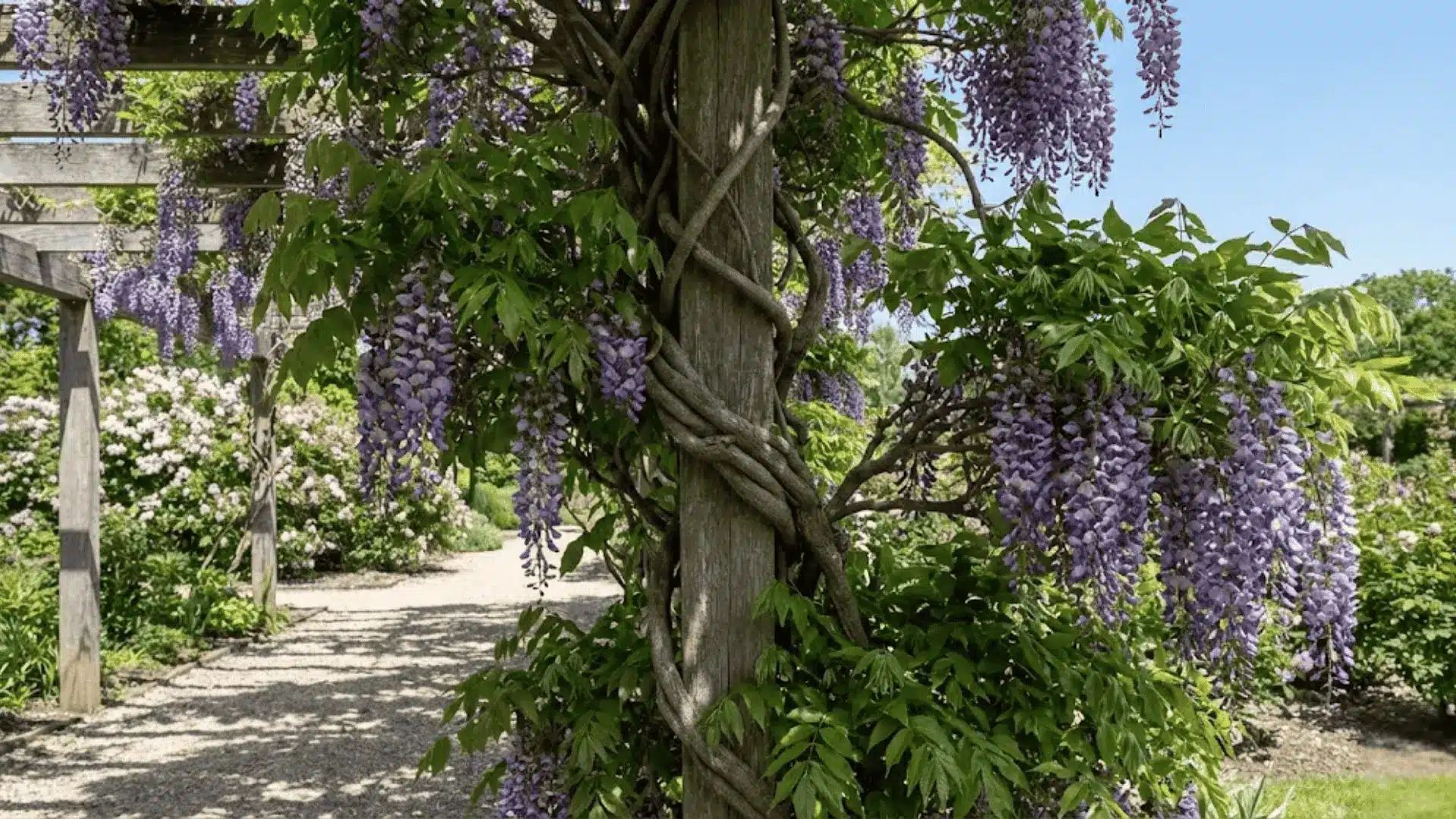
Popular Examples: Morning glory, wisteria, honeysuckle, pole beans
These vines spiral their stems around any support they can find, making them vigorous and satisfying climbers to grow.
They thrive on narrow supports like poles, wires, pergola posts, and string lines. Fast and lush, they can get heavy over time and may strangle weaker structures if left unchecked.
2. Tendril Vines
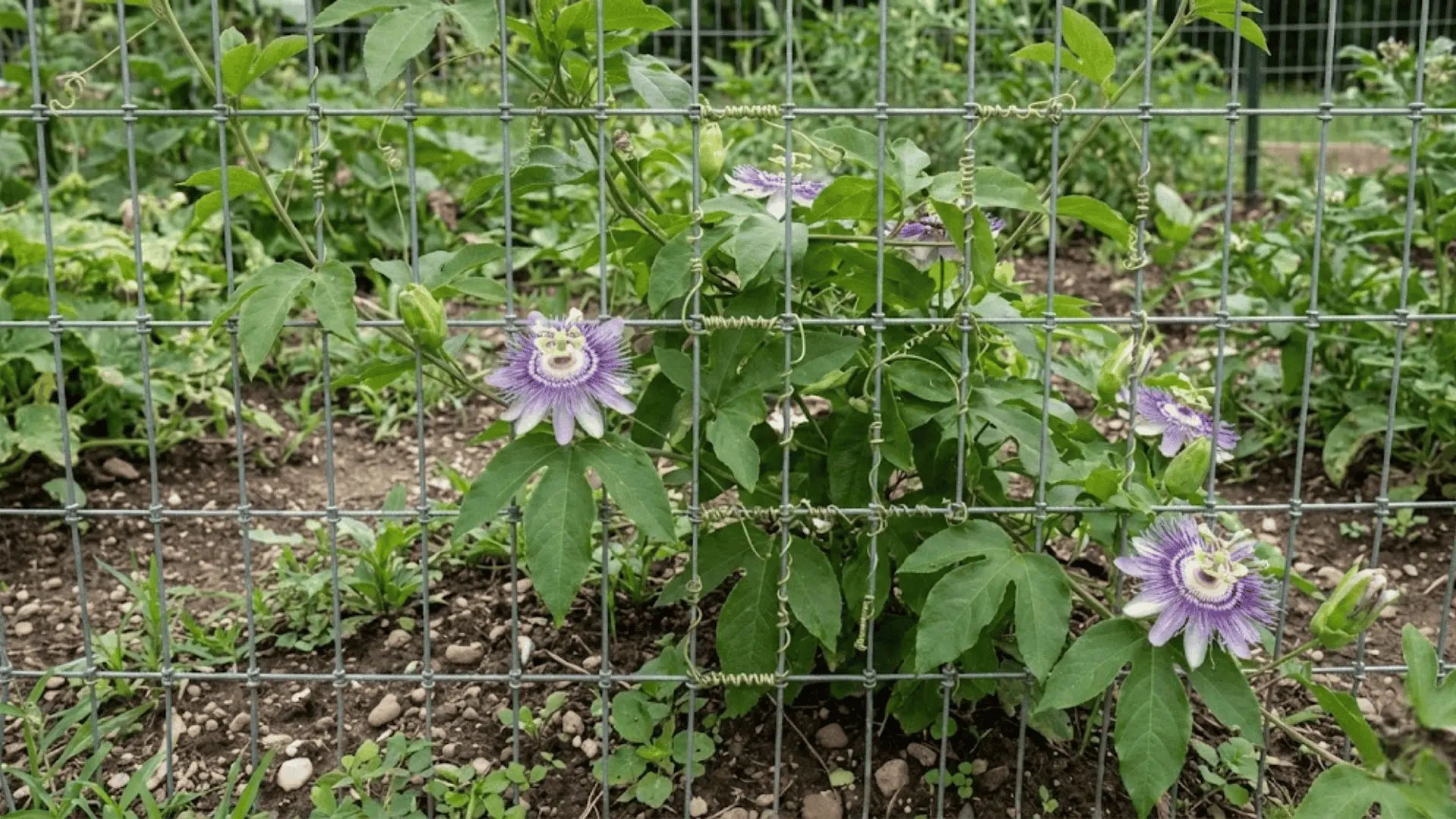
Popular Examples: Peas, passionflower, grapevines, clematis
They send out thin, curling extensions that latch onto whatever is nearby, making them precise and delicate climbers.
Netting, wire fencing, and lattice panels suit them best. They are easier to train and redirect, though they cannot grip flat walls and need something narrow and textured to hold onto properly.
3. Clinging Vines
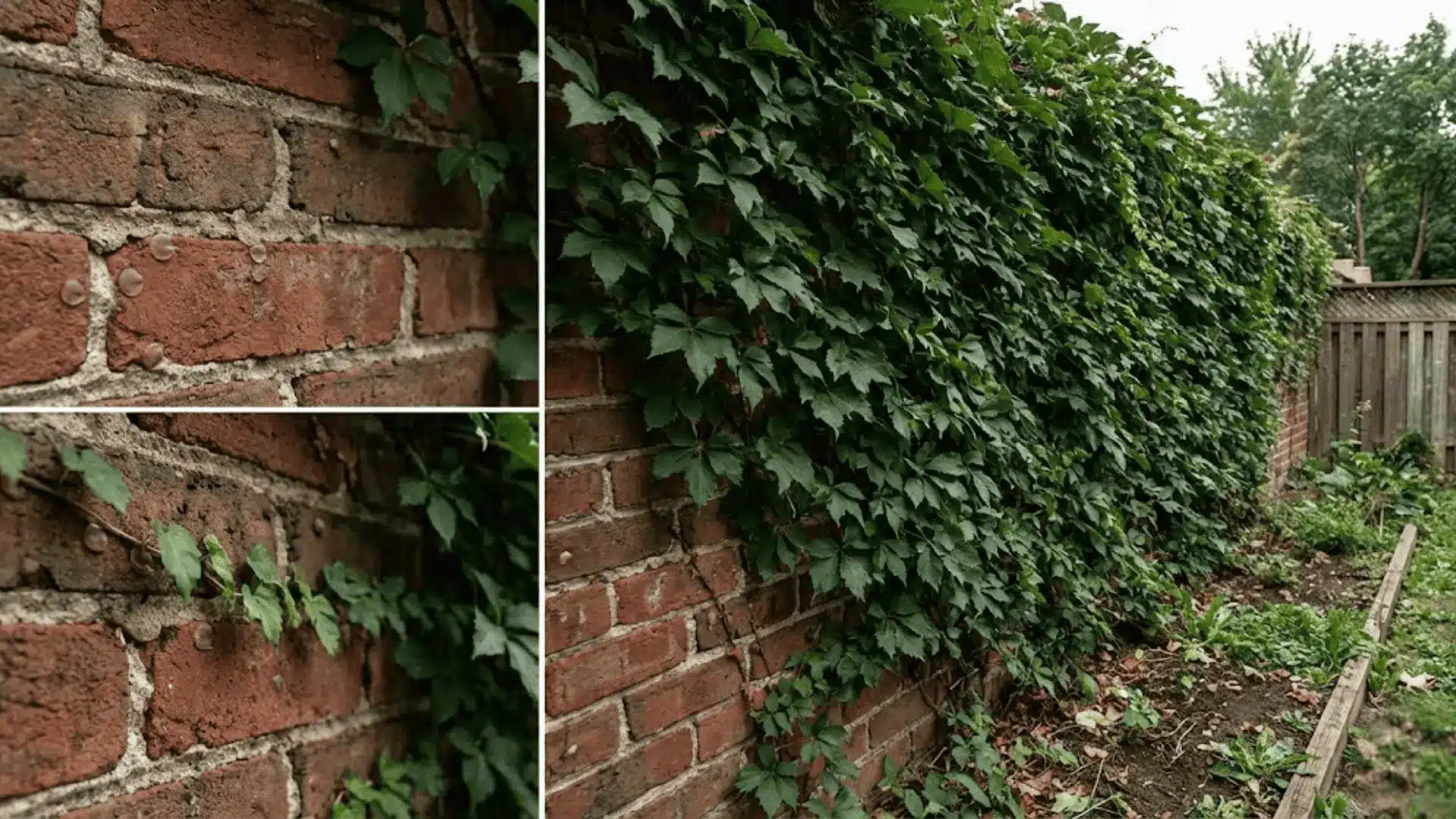
Popular Examples: English ivy, Boston ivy, Virginia creeper
These vines attach directly to surfaces using aerial roots or adhesive pads, requiring no trellis at all. Some, like English ivy, also double as air-purifying indoor plants worth knowing about.
They cover masonry walls and large garden structures beautifully and independently. The tradeoff is potential damage to siding or mortar over time, and they are genuinely difficult to remove once established.
4. Scrambling Vines
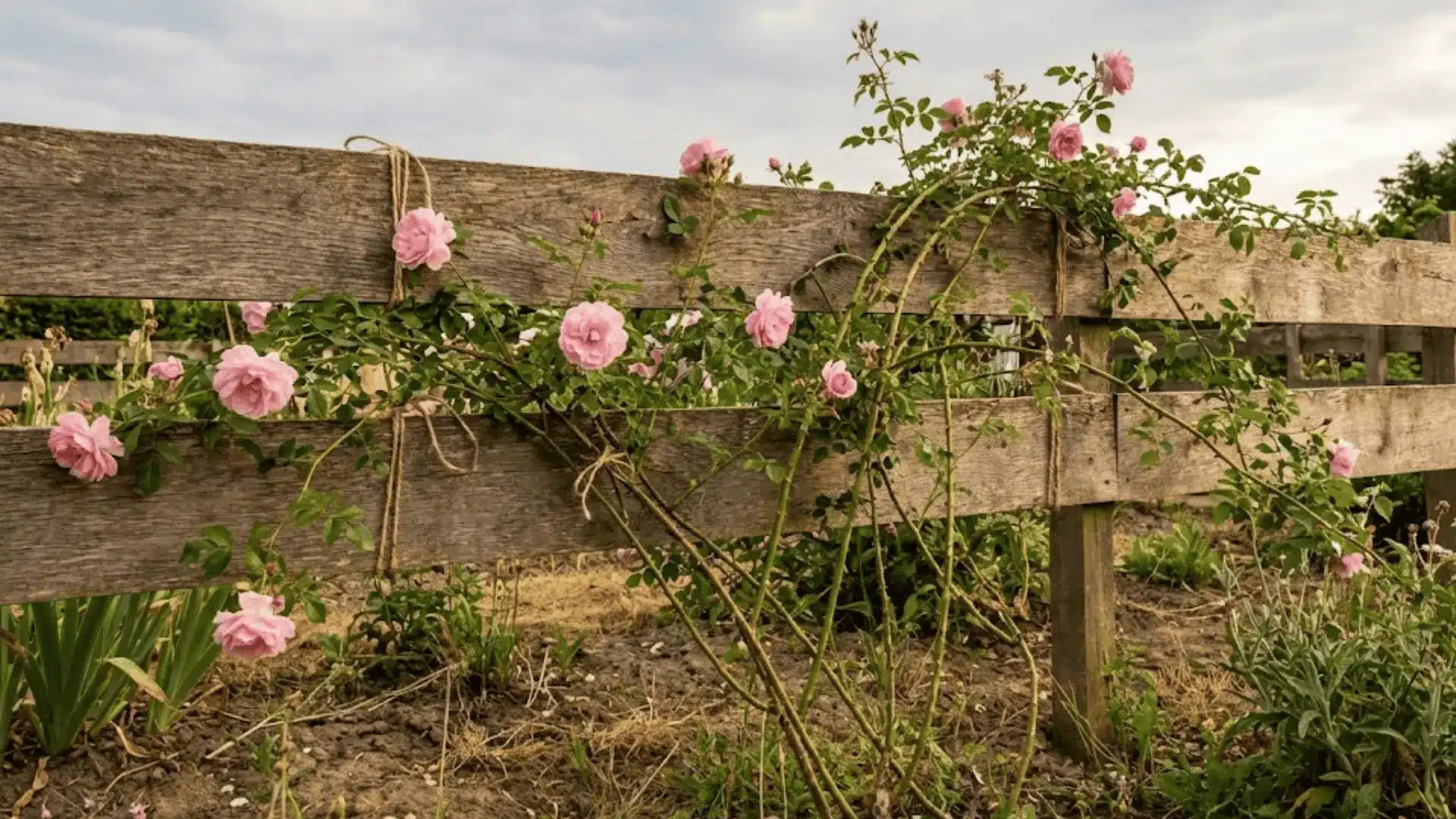
Popular Examples: Climbing roses, bougainvillea, blackberries
Unlike the others, scrambling vines do not climb on their own; they sprawl and spread until something holds them in place.
Fences, large trellises, and garden cages guide them well. They suit informal gardens beautifully but need regular tying and weaving to stay looking intentional rather than overgrown.
Choosing the Right Vine Type for Your Garden
Picking a vine is not just about what looks pretty; it is about what actually works for your space, your structure, and the amount of time you want to spend maintaining it.
If you are working with a smaller space, indoor vine plants offer a great way to bring the same lush energy inside.
- Clinging vines suit brick and masonry walls; twining and tendril vines belong on trellises, pergolas, and wire supports.
- Small balconies do better with lightweight tendril vines, while larger structures can handle vigorous twiners.
- Fast growers like wisteria need regular pruning; clinging vines are low effort going up, but difficult to remove later.
- Scrambling vines need the most hands-on training, making them better suited for gardeners who enjoy tending their space.
- Match your vine to your hardiness zone since annuals, perennials, evergreens, and deciduous types all behave differently across seasons.
Choosing well from the start saves you from a lot of backtracking later. The right vine in the right spot practically takes care of itself.
Common Mistakes When Planting Vines
Even the most well-intentioned garden can go sideways with a few overlooked details. These are the ones worth knowing before you plant, not after.
- Planting clinging vines on vinyl or wood siding, where adhesive roots can cause serious, hard-to-reverse damage.
- Pairing heavy twining vines like wisteria with flimsy trellises that cannot hold the weight as they mature.
- Ignoring the mature size of a vine and underestimating how quickly it can outgrow its intended space.
- Overcrowding supports multiple vines, which leads to tangled growth and makes maintenance far more difficult.
Give these details a little thought upfront, and your vines will reward you with exactly the kind of growth you actually planned for.
Final Thoughts
Understanding the four types of vines truly changes how you approach your garden, from the structures you choose to the plants you trust them with.
Some gardeners fall for the wild romance of a scrambling rose, others love watching a tendril vine quietly find its grip.
There is a type that fits every space, every wall, and every vision. Take your time, match your vine to your structure, and let it grow with intention.
Which vine type are you planning to try first? Drop it in the comments below!