A California teenager’s science project became one of the most-cited studies on indoor mold.
If you’ve been searching for the plant that removes 78% of airborne mold at home, you’re not alone; it’s one of the most shared plant-care claims out there, tied to a study that’s been quoted for years.
That number is real, but it comes with limits worth understanding before you build your whole mold strategy around a single plant.
Let’s understand where that figure actually came from, what the plant is, how it works against mold spores, and how to care for one properly at home.
What Plant Removes 78% of Mold From the Air
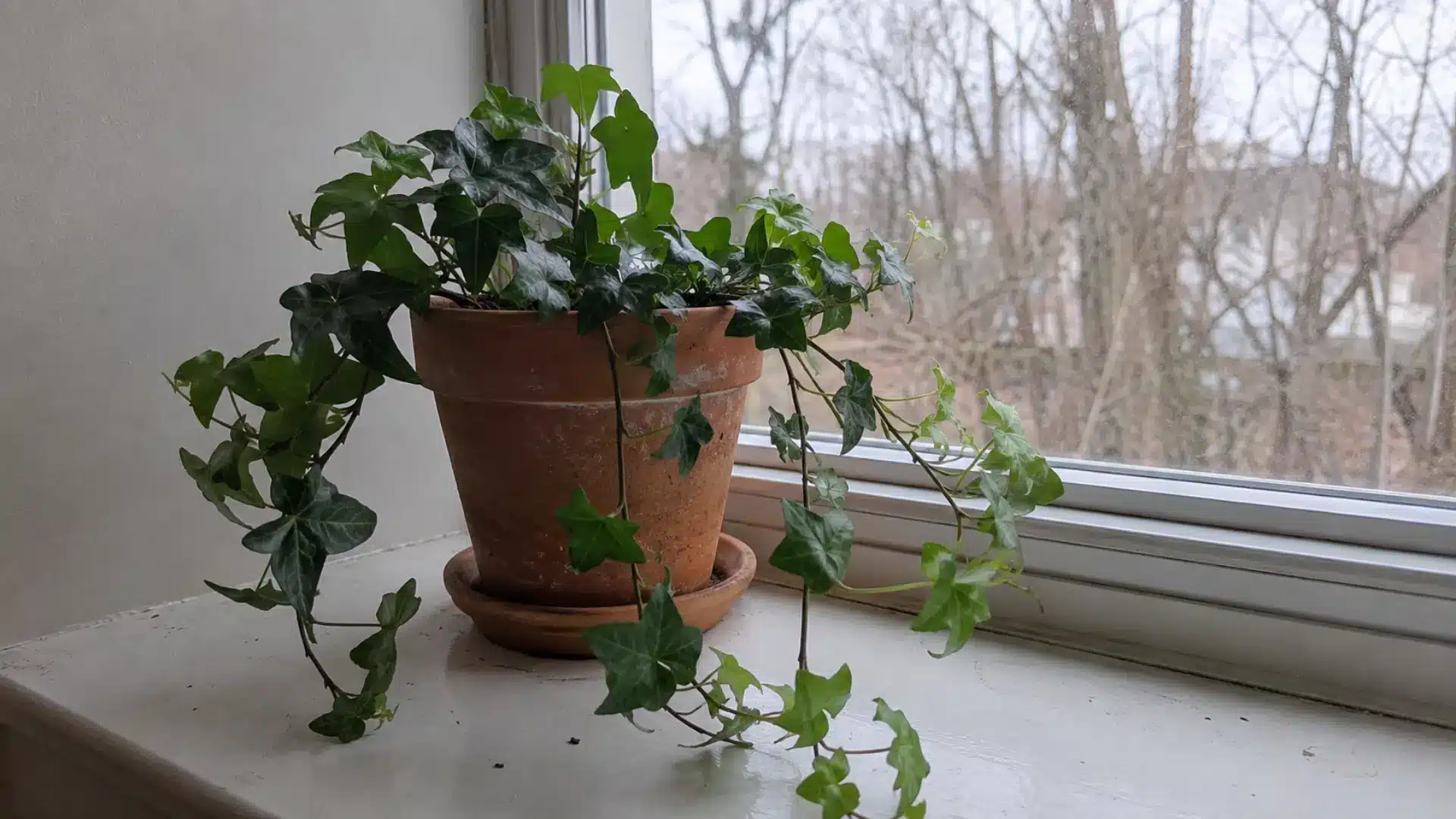
The plant behind this number is English Ivy, botanically known as Hedera helix.
It’s a trailing, fast-growing vine with glossy, dark green leaves shaped like small stars or shields, often with lighter veining running through them.
Left untrimmed, it cascades over the edges of pots and shelves, making it as much a decor piece as a functional one.
English Ivy is widely available at nurseries and garden centers, sold in hanging baskets or small starter pots. It adapts easily to indoor life, which is part of why it shows up so often in air quality studies.
The Study Behind the 78% Claim
The 78% figure comes from a 2005 study presented at the American College of Allergy, Asthma and Immunology’s meeting.
A California teen tested English ivy by measuring how much mold and fecal matter spread into sealed containers, with and without the plant present.
Under these controlled chamber conditions, ivy removed roughly 78% of airborne mold spores within 12 hours.
That said, real-world limitations apply: the number reflects a sealed chamber, not a ventilated home, and no peer-reviewed study has replicated it since. Treat it as promising, not proven.
If you want to see how this compares with other widely repeated plant air-quality claims, we’ve broken down a similar case involving the NASA Clean Air Study.
How to Grow and Care for English Ivy Indoors
Once you’ve placed your English Ivy in the right room, keeping it healthy comes down to a few consistent basics.
|
Care Factor |
What English Ivy Needs |
|---|---|
|
Light |
Bright indirect light works best, and it tolerates lower light with slower growth |
|
Watering |
Let the top inch of soil dry out fully between each watering session |
|
Soil |
Well-draining mix with perlite or sand to prevent root rot |
|
Humidity |
Thrives in higher humidity, making bathrooms and kitchens ideal spots |
|
Temperature |
Grows best when kept between sixty-five and seventy-five degrees |
Get these basics right, and English Ivy will keep working steadily in the background without much fuss.
Best Rooms to Place It For Mold Control

Mold thrives on moisture, so English Ivy does the most good in the humid spots of your home where spores are already concentrated.
- Bathrooms: Highest priority due to shower humidity. Place near a window or shelf away from direct spray, with at least indirect light since most bathrooms lack strong natural light.
- Basements: Usually the dampest and least-ventilated space. English Ivy tolerates low light better than most plants, but windowless basements will need a grow light for it to survive in the long term.
- Kitchens: Steam from cooking and dishwashing adds moisture throughout the day. Try a spot near the sink or a hanging basket away from direct heat.
A small fan or a cracked window helps the plant work more effectively and keeps humidity from building up in the first place.
How This Plant Reduces Mold Spores
English Ivy’s mold-reduction ability targets particulate matter specifically, making the mechanism closer to filtration than to gas exchange.
It tackles airborne mold through two mechanisms working together:
- Root and Soil Absorption: Aerosolized mold particles are absorbed through the plant’s roots and soil, where microorganisms in the potting mix further break them down.
- Leaf-Surface Capture: Mold spores drifting through the air settle on the plant’s waxy leaves and get trapped there instead of recirculating through the room.
This is a meaningful distinction from most “air-purifying” plant claims, which usually focus on absorbing gases like formaldehyde or benzene.
7 Other Plants Most Often Linked to Mold Reduction Claims
These seven houseplants each bring their own strengths to the table, from added humidity control to low-light tolerance, making them solid backup options for mold-prone rooms throughout the house.
1. Boston Fern

Boston Fern thrives in humidity, making it a natural fit for bathrooms and laundry rooms where mold spores tend to accumulate over time.
Its dense fronds create a large surface area for spores to settle on, and regular misting keeps the plant healthy while adding a bit more moisture control to the room.
It pairs especially well alongside English Ivy in the same damp space.
2. Peace Lily

Peace Lily is known for absorbing mold spores along with other common indoor toxins like ammonia and benzene, making it a strong all-around pick.
It also flowers reliably indoors, making it useful for darker corners of a home that still need some visual interest.
It prefers consistent watering and will droop noticeably when thirsty, making its needs very easy to read at a glance.
3. Snake Plant

Snake Plant tolerates low light and irregular watering while still contributing to overall indoor air quality, making it one of the most forgiving options on this list.
It releases oxygen at night rather than during the day, which makes it a solid choice for bedrooms specifically.
Its upright, sculptural leaves also require very little maintenance to keep looking sharp and full year-round.
4. Areca Palm

Areca Palm adds natural humidity control through its broad, feathery fronds and works well in larger, brighter rooms where mold spores tend to circulate more freely.
It needs more light than most plants on this list, so it fits best when placed near windows or bright doorways.
Regular misting helps keep its leaves healthy and supports its natural humidity output throughout the week.
5. Spider Plant

Spider Plant is easy to grow and commonly recommended alongside other air-purifying plants for general indoor air support in busy households.
It adapts to a range of light conditions and produces small offshoots that can be propagated into new plants without much effort.
Its arching, striped leaves also help trap dust and airborne particles as they settle and drift around the room.
6. Bamboo Palm

Bamboo Palm handles shadier spots well and is frequently recommended for basements, where light is limited, and the risk of mold runs high due to poor ventilation.
It grows fairly tall, making it a good option for filling empty corners while still contributing meaningfully to indoor air quality.
Consistent watering keeps its fronds full, green, and healthy with minimal ongoing effort.
7. Golden Pothos

Golden Pothos is extremely forgiving of inconsistent care and adapts to a range of humidity levels, making it useful across multiple rooms in the home.
Its trailing vines work well in hanging baskets or on shelves, and it tolerates both low light and bright indirect light equally well.
It is often considered one of the more forgiving houseplants around for total beginners to keep alive.
Signs Your Home Has a Mold Problem
Houseplants can help manage airborne spores, but it’s worth knowing when the problem goes beyond what a plant can handle.
- Musty Smell: A persistent damp, earthy odor, especially in bathrooms, basements, or closets, is often the first sign, even before mold is visible.
- Visible Spotting: Black, green, or white patches on walls, ceilings, grout, or window frames usually mean active mold growth nearby.
- Allergy-Like Symptoms: Ongoing sneezing, coughing, itchy eyes, or headaches that ease up when you leave the house can point to airborne mold exposure.
- Peeling Paint or Warped Surfaces: Trapped moisture behind walls or under flooring often shows up as bubbling paint or soft, warped wood.
A plant like English Ivy can help with airborne spores in a room, but it can’t fix a hidden leak or a moisture problem inside the walls.
What Actually Reduces Airborne Mold at Home?
If you are serious about tackling airborne mold, these are the approaches that are backed by research.
|
Method |
How |
Why It Works |
|---|---|---|
|
Ventilation |
Exhaust fans, open windows |
Flushes out moisture-heavy air |
|
Dehumidifiers |
Maintain humidity below 50% |
Mold struggles to grow in dry air |
|
HEPA Air Purifiers |
Run consistently in key rooms |
Physically captures airborne spores |
|
Source Control |
Fix leaks, wipe condensation |
Removes what mold needs to survive |
|
Clean Visible Mold |
Use appropriate cleaning agents |
Stops spores from spreading further |
English Ivy can be a nice addition to this list, but it works best as a small supporting piece alongside these proven methods, not as a replacement for any of them.
Frequently Asked Questions
How Many Plants Do I Need Per Room?
There’s no exact number backed by research, but general air-quality guidelines suggest one to two medium-sized plants per 100 square feet as a starting point for a meaningful effect.
Does It Work In Low Light?
English Ivy tolerates low light, but growth slows down, and the mold-reducing benefits are likely to be smaller since a less healthy plant does less work.
How Often Should I Repot It?
Every 1 to 2 years, or once you notice roots circling the bottom of the pot or growth slowing noticeably despite good care.
Final Verdict
Houseplants bring life, calm, and a certain warmth to any space, and that genuinely counts for something.
But when it comes to the plant that removes 78% of airborne mold at home, the truth is a little more grounded than the headlines suggest.
Think of your plants as a small piece of a larger, more intentional approach to a healthier home rather than a standalone fix.
Pair them with real solutions and a little regular upkeep, and your space will thank you.
Found this helpful? Drop your thoughts in the comments. We would love to hear what is growing in your home.