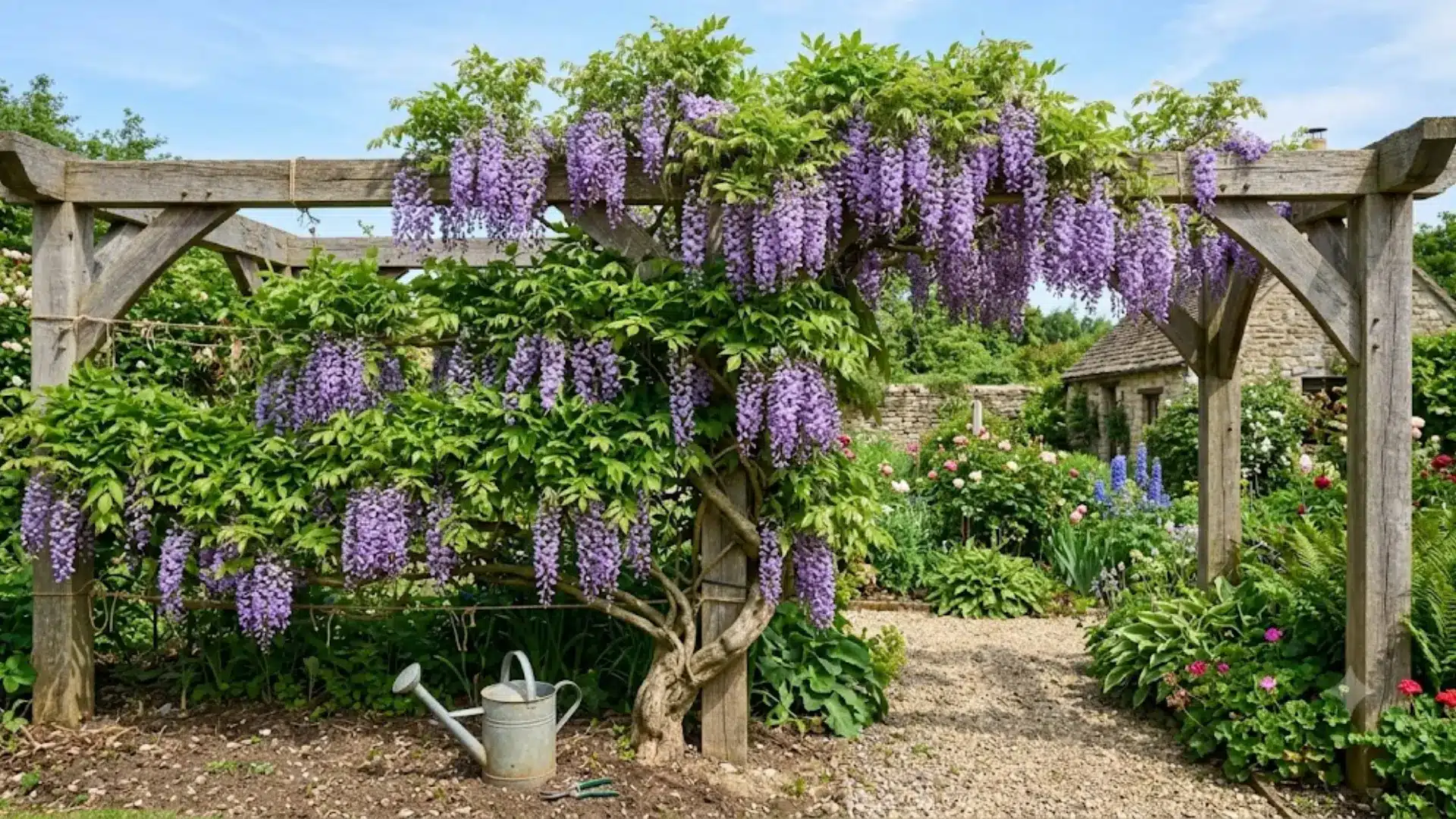
Wisteria follows its own blooming schedule, and that unpredictability is part of what makes growing it so satisfying.
I can plant it, feed it, and fuss over it, and it will still do what it wants (and I’ll admit that’s part of the appeal for me).
In my experience, the best blooms come mostly in spring, but the exact timing depends on the type, the climate, what the weather has been doing, and how old the vine is.
Some types might even surprise you with a lighter second bloom later in the season. I’ll go over when different varieties bloom in each zone, how long the flowers last, and why a vine might not bloom some years.
When Does Wisteria Bloom?
Wisteria usually blooms in spring, from April to June in most gardens, and sometimes as early as March in zones 8 and 9.
Chinese wisteria is the first to bloom, often before its leaves appear. Japanese wisteria follows, while Native American and Kentucky wisteria bloom last, from late spring to early summer, after their leaves have come out.
Climate affects bloom times as much as the wisteria type.
In warmer areas, wisteria tends to bloom earlier. In colder regions, flowering can be delayed, sometimes until June.
When Does Wisteria Bloom in Accordance with the USDA Growing Zones?
USDA zones affect bloom timing more than the calendar does.
Check your zone on the USDA Plant Hardiness Zone Map, then look at the table below to see what to expect.
| USDA Zone | Typical Bloom Window | Notes |
|---|---|---|
| Zones 4–5 | Late May to early June | Cold winters delay blooming; late frosts can damage buds |
| Zones 6–7 | Late April through May | Most consistent, reliable flowering window |
| Zones 8–9 | March to April | Blooms arrive earliest; intense heat can shorten the display |
Keep in mind that Chinese and Japanese wisteria generally bloom within these windows, but a cool spring can push them back. Native American and Kentucky types will flower later in the same zone after leaf-out.
Wisteria Bloom Time by Variety
Not all wisteria blooms the same way, so it is worth figuring out which one you have.
Lost the tag? (Who hasn’t.) The seed pods will tell you, since Chinese and Japanese pods are velvety, while American and Kentucky pods are smooth, and those vines bloom after the leaves come in.
1. Chinese Wisteria (Wisteria sinensis)
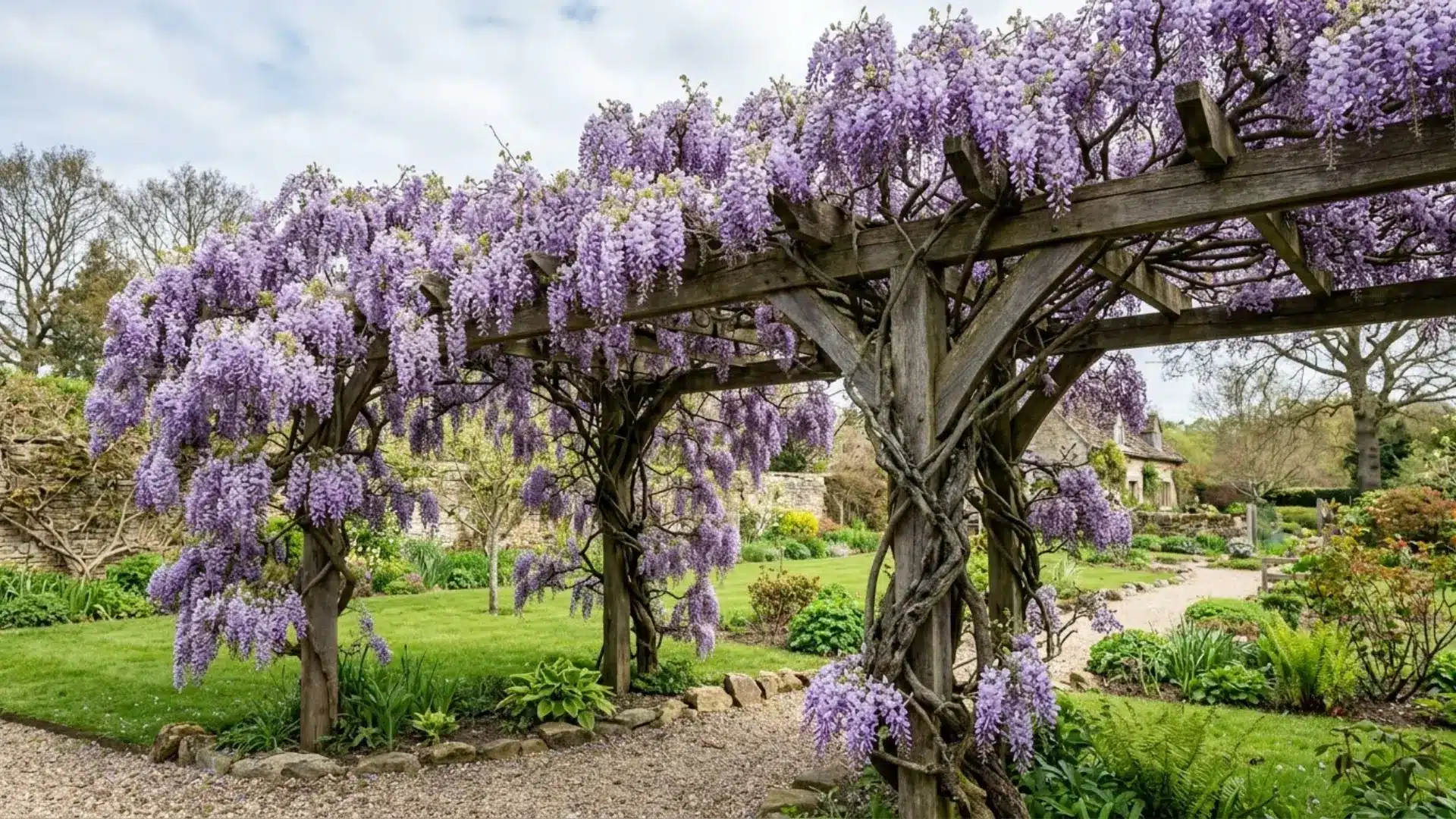
USDA Zone: 5–8 | Bloom Period: April–May
Chinese wisteria comes from China and is famous for blooming just before or as its leaves appear. This gives the vine a dramatic, cloud-like look in early spring. Its dense, fragrant flower clusters often cover the whole vine at once.
This type of wisteria usually puts on the most dramatic display in a single season.
However, it grows quickly and can be aggressive, so regular pruning is needed to control its size and promote good blooming.
2. Japanese Wisteria (Wisteria floribunda)
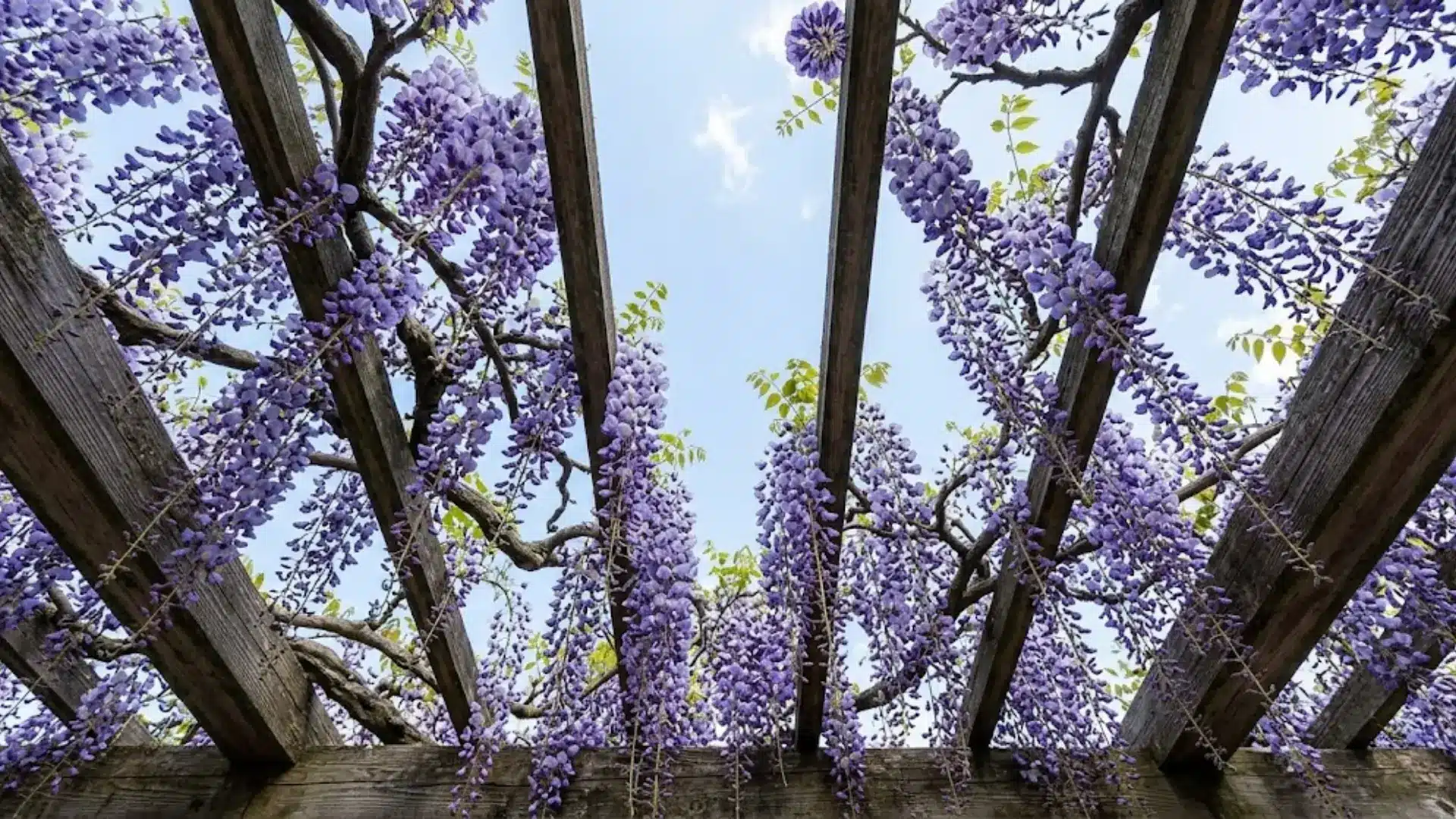
USDA Zone: 5–9 | Bloom Period: May–early June
Japanese wisteria blooms a little later than the Chinese, after its leaves have started opening.
It’s native to Japan, where the spring flowers draw crowds of visitors to trellis tunnels at places like Ashikaga Flower Park.
I have only seen the pictures, and they’re enough to make me want to book a flight.
What sets this one apart is the clusters, called racemes; they typically run 12 to 18 inches long, and some reach two feet or more, for a draping, waterfall effect that no other type quite matches.
They also open gradually from base to tip rather than all at once, giving you a longer display and a stretched-out season.
3. American Wisteria (Wisteria frutescens)
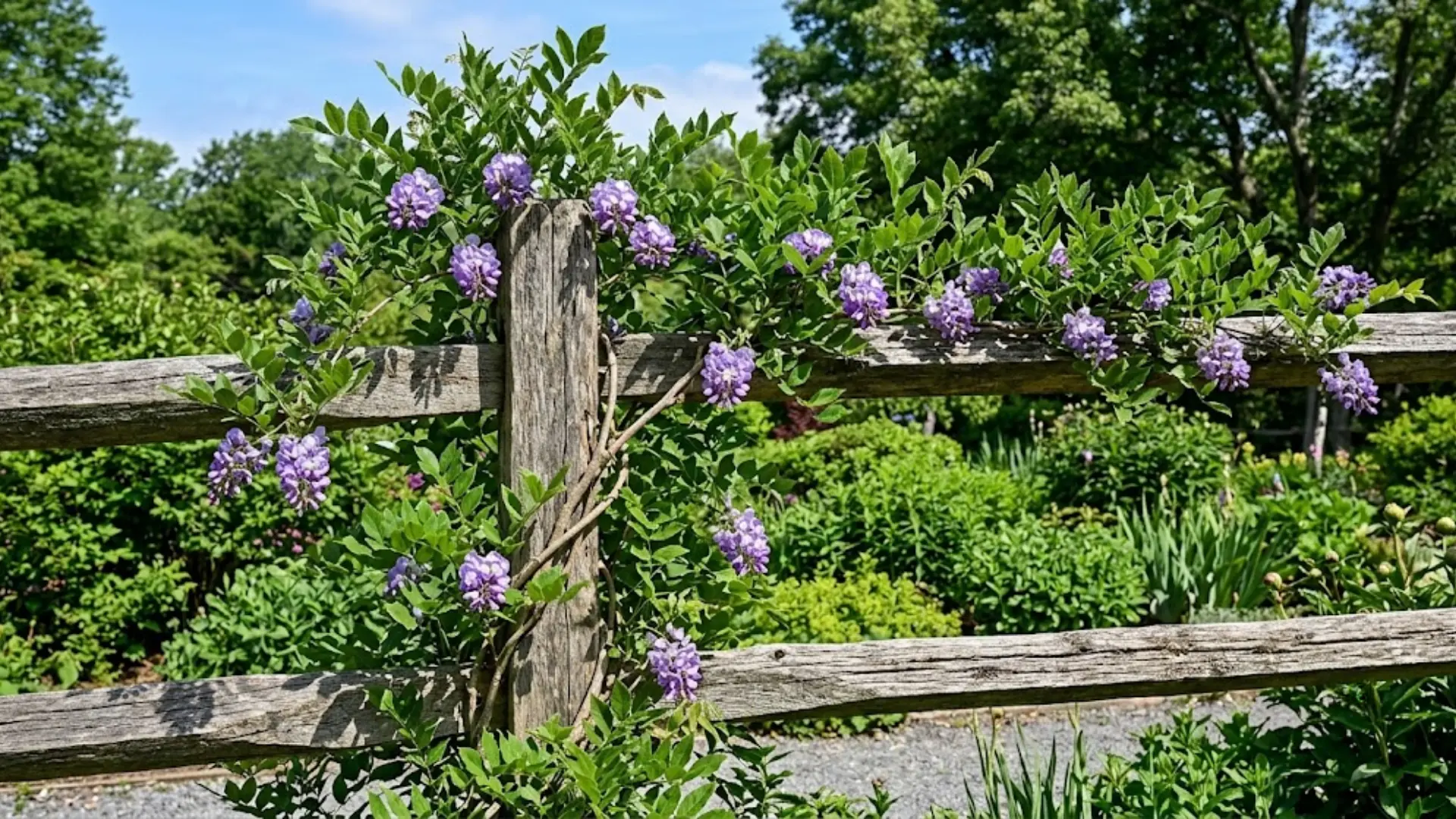
USDA Zone: 5–9 | Bloom Period: May–June
This native of the Southeast is a good pick if you want a wisteria less likely to take over the yard, the fence, and the neighbor’s garage. It blooms after leafing out, with smaller, tighter clusters than the Asian types.
They’re less showy, sure, but the bumblebees and other pollinators don’t seem to mind.
American wisteria is far less aggressive and much easier to keep under control over the long haul, and some cultivars (like Amethyst Falls) may also rebloom lightly later in summer.
That’s a nice bonus.
4. Kentucky Wisteria
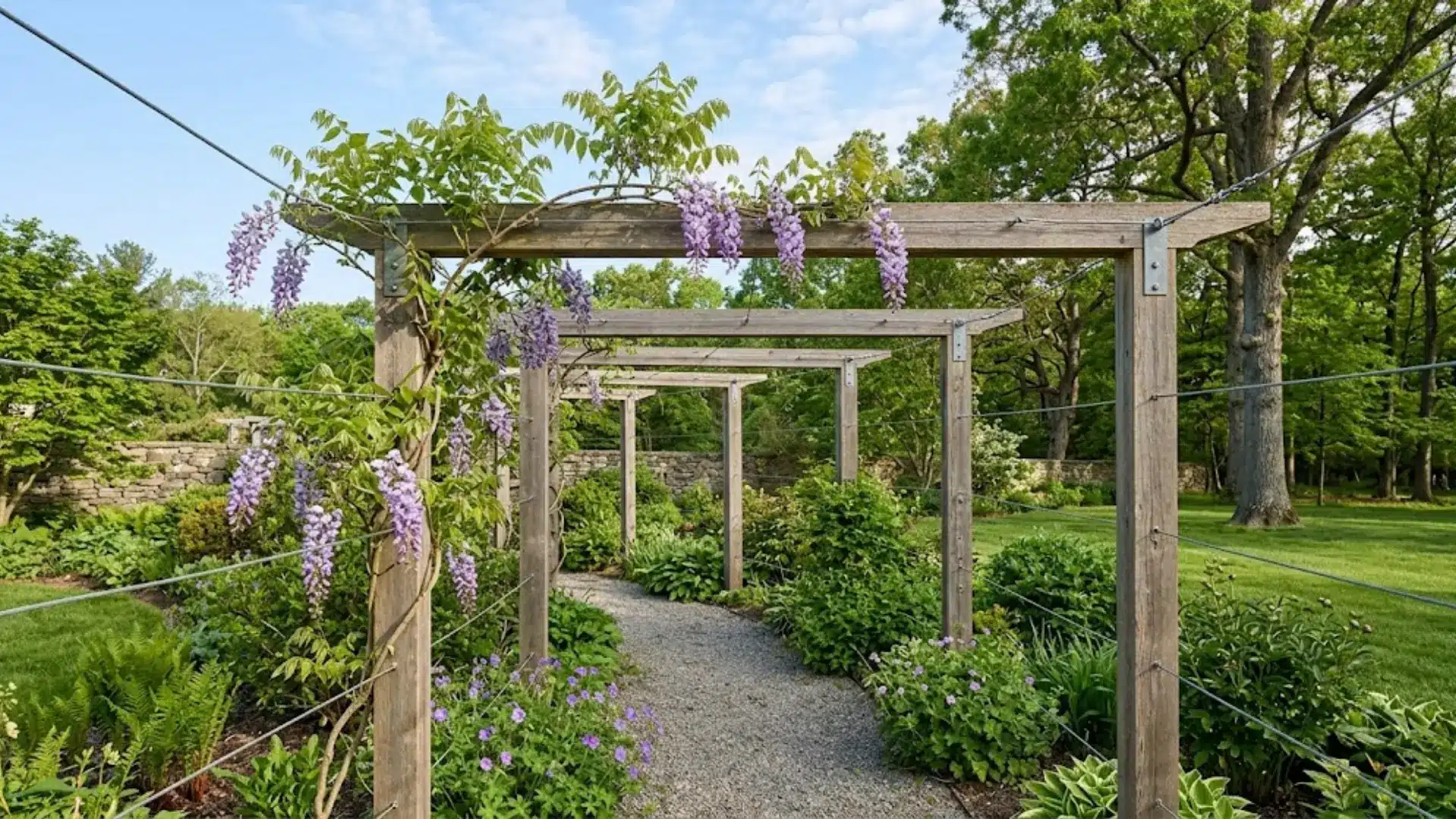
USDA Zone: 4 to 9, or 3 to 9 for Blue Moon | Bloom period: Late spring to early summer
Kentucky wisteria is native to the south-central region. Like American wisteria, it is not invasive, but it blooms at a younger age, so gardeners see flowers sooner. It is also very cold-hardy, which makes it a great choice for northern gardens.
I most often recommend this variety for colder climates because it handles harsh winters and short growing seasons.
How Long Does Wisteria Bloom?
Most wisteria blooms last two to four weeks, but the weather is the biggest factor.
Four things can affect how long the flowers stay:
-
Temperature: Cool weather helps the flowers last longer, but a hot spell will make them fade quickly.
-
Rain and wind: Heavy rain or strong winds can knock the petals off early.
-
Variety: Japanese wisteria tends to bloom the longest because its clusters open slowly.
-
Vine age: Older, well-established vines bloom longer and more fully than younger plants that are still developing their roots.
What Triggers Wisteria to Bloom?
It starts with the wood. Chinese and Japanese wisteria bloom on old wood, setting buds the previous summer; those buds overwinter on the vine, so one badly timed cut can remove a whole year’s flowers.
American and Kentucky types bloom on new growth, so winter pruning or a late frost usually won’t touch them.
Spring warmth sets the timing: a run of mild days opens the flowers early, a cold spell delays them, and a frost after they open kills them. Sun matters too, because shaded vines give more leaves and fewer flowers.
And here is something I have noticed (others have too): a mildly stressed vine, say one with crowded roots, will often out-bloom a vine that’s a bit too comfortable.
Can Wisteria Bloom More Than Once a Year?
Some wisteria varieties can bloom a second time, usually in mid to late summer after their main spring flowers fade.
American and Kentucky wisteria are the best at blooming again, but Chinese and Japanese wisteria rarely do.
Some Kentucky varieties, like Blue Moon, can even bloom up to three times in one season once they are well established.
For native wisteria, giving the plant a light trim right after the first blooms can help it flower again instead of just growing more leaves. The weather matters too, because a mild and steady summer makes a second bloom more likely.
No matter what, the second round of blooms will be lighter, with fewer flower clusters and a shorter display than the main spring display.
Why Isn’t My Wisteria Blooming?
If your wisteria is not blooming, it’s usually because the plant is too young or doesn’t get enough sunlight.
These are the most common problems. Start by checking these, then consider the other reasons listed below.
Problem 1: Is Your Wisteria Just Not Old Enough to Flower Yet?
What to Do: Wisteria grown from seed can take over ten years to bloom. Grafted or cutting-grown vines, especially native ones, usually flower within a few years. If your plant is still young, the best thing to do is wait.
Problem 2: Is Your Wisteria Getting Enough Direct Sunlight to Actually Bloom?
What to Do: Wisteria needs at least six hours of direct sunlight each day to bloom well. If it’s in the shade, it will grow more leaves and fewer flowers. Move young vines to a sunnier spot or trim anything blocking the light.
Problem 3: Is Your Fertilizing Routine Feeding Leaves Instead of Flowers?
What to Do: High-nitrogen fertilizers cause wisteria to grow more leaves and fewer flowers. Use a low-nitrogen, high-phosphorus fertilizer, or skip fertilizing if your soil is already rich.
Problem 4: Could Your Pruning Schedule Be Cutting off Next Season’s Flowers?
What to Do: If you cut back Chinese or Japanese wisteria too much in winter, you might remove the spring flower buds. Prune lightly in winter and prune more heavily in summer.
Problem 5: Did a Late Freeze Wipe out This Year’s Flower Buds?
What to Do: A late cold snap can kill flower buds before they open, especially in colder regions. To reduce this risk, choose cold-hardy varieties, such as Kentucky wisteria.
How to Encourage More Wisteria Blooms?
A few simple habits can turn a wisteria from a leafy plant into one that produces beautiful flowers.
-
Step 1: Choose a grafted or cutting-grown wisteria instead of a seedling. This way, you won’t have to wait years to see your first flowers.
-
Step 2: Plant your wisteria in a spot that gets at least six hours of direct sunlight each day, and make sure the soil is moist but drains well.
-
Step 3: Start training the vine onto a strong support early so it grows in the right direction and produces more flowers. If you don’t have one yet, pick a trellis or arbor made for heavy vines. It will hold up your wisteria for years.
-
Step 4: Prune your wisteria twice a year, once in summer and then lightly in winter.
-
Step 5: Water your wisteria every week during its first summer to help the roots settle. After that, only water during dry periods. Avoid high-nitrogen fertilizers, and use a phosphorus-rich one only if your soil needs it.
If you follow these steps from the beginning, your wisteria should bloom more fully and reliably each year.
How Should You Prune Wisteria for More Flowers?
I prune in July or August, about two months after the vine finishes blooming.
I cut that year’s long shoots back to five or six leaves, leaving short spurs; on Chinese and Japanese wisteria, next spring’s flowers form on those spurs. Then, in January or February while the vine is dormant, I cut those spurs back to two or three buds.
American and Kentucky types are simpler, since a moderate winter trim is fine and they’ll still bloom.
Do Young Wisterias Bloom Right Away?
Not really, and this is where many of us give up too early.
The wait depends on how the plant was propagated and what type it is.
|
Plant Type |
Time Until Flowers |
What’s Happening Beneath the Surface |
|
Seed-grown |
7 to 15 years or more |
Still in its long juvenile phase |
|
Grafted or cutting-grown Chinese or Japanese |
3 to 5 years after planting |
Cut from wood that was already mature |
|
Grafted or cutting-grown American or Kentucky |
2 to 3 years after planting |
Mature wood, and native types reach flowering age fastest |
If your Asian wisteria was grown from seed, it might take 7 to 15 years to bloom, and sometimes it may never flower. Before buying, look for a plant that was grafted or grown from a cutting.
What Happens After Wisteria Finishes Blooming?
Once the flowers are done, the vine shifts its energy to foliage and spends the rest of the season filling out with leaves.
Seed pods may form where the flowers were; they’re harmless to the vine, but I think it’s good to remove them if you have pets or kids around, and removing them also keeps Chinese and Japanese wisteria from seeding where you don’t want it.
Not sure a pod is from wisteria? Photos of common vine and tree seed pods help.
By midsummer, the long new shoots are ready to trim, and that trim helps set next spring’s buds.
Keep watering, especially during dry spells.
But I do not feed heavily, because extra nitrogen at this point works against future blooms, and you pay for it next spring.
Is Wisteria Toxic or Invasive?
Toxic? Yes. All parts of the plant contain lectin and wisterin (the seeds and pods are the most dangerous), and eating any of it can cause a burning mouth, stomach pain, vomiting, and diarrhea, which Poison Control warns about.
If your pet eats some, call the vet immediately.
Invasive? That depends on the type. Chinese and Japanese wisteria can escape gardens and smother trees, and Maryland lists both as invasive. I’d check your state rules before planting.
American and Kentucky wisteria are native and easier to manage. And their later bloom also helps them dodge late frosts.
End Note!
Wisteria asks for patience, no question.
Once I understood its rhythm, though, the timing stopped feeling so mysterious; knowing when a given type blooms in your area means planning for it instead of worrying every April about whether this is the year.
I’d love to hear your wisteria stories, whether it’s a slow vine or a bloom you waited years for.
Feel free to share them in comments!
Frequently Asked Questions (FAQs)
Does Wisteria Bloom in Fall?
Sometimes, if it’s a native type. American wisteria can keep sending out light flushes as late as September, especially after a trim. Chinese and Japanese wisteria rarely flower again after spring.
Which Wisteria Blooms the Longest?
Japanese wisteria. Its long flower clusters open gradually, which stretches the overall bloom window compared to other varieties.
What Happens if My Dog Eats Wisteria Pods?
Wisteria seeds can cause severe vomiting, diarrhea, dehydration, and weakness in dogs and cats. Get your dog checked or ring a pet poison hotline right away, even if it seems fine at first.
Can Frost Stop Wisteria from Blooming?
Yes, a late frost can kill developing buds before they open. This is especially common in colder zones where spring temperatures fluctuate.