I’ve always believed that a garden isn’t complete until something beautiful reaches toward the sky. That’s where trellises come in.
They’re not just practical support systems for climbing plants, but living art pieces that add vertical interest and charm to any outdoor space.
DIY trellises have captured my heart because they let me express creativity while staying budget-friendly.
If you’re dreaming of a cottage-garden aesthetic or a modern minimalist vibe, building your own trellis means tailoring every detail to your vision. I’m excited to share ideas that’ll bring your garden to life in the most stunning ways.
Quick Inspiration Guide: Choosing the Right Trellis Style
Not sure which trellis suits your space? Here’s a quick breakdown to help you match style with purpose.
- For Climbing Vegetables: Sturdy A-frame or lean-to trellises work best for beans, peas, and cucumbers that need strong support.
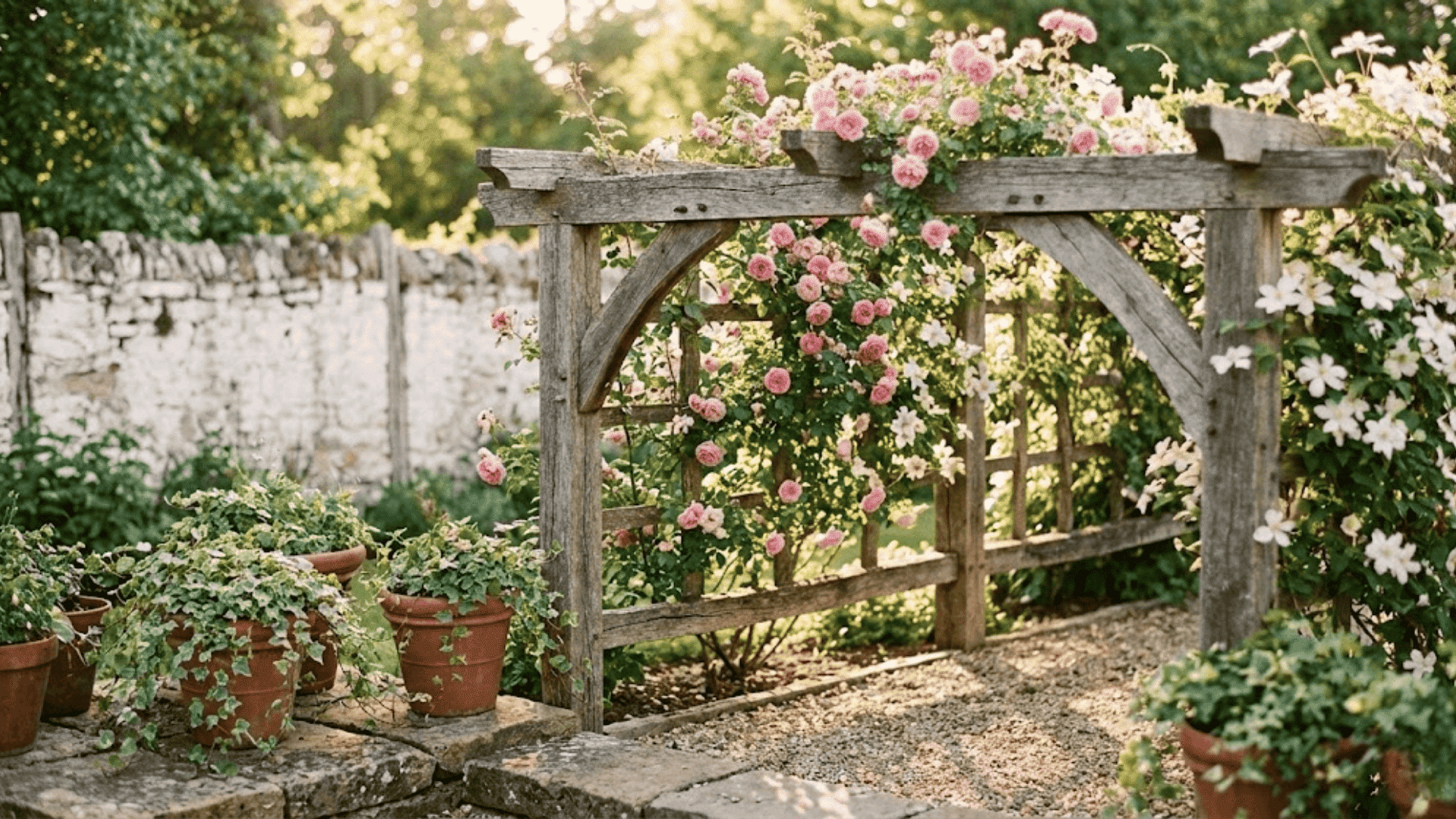
- For Flowering Vines: Arched or lattice designs beautifully showcase clematis, roses, and morning glories while adding romantic appeal.
- For Small Gardens and Patios: Compact wall-mounted or freestanding obelisk trellises maximize vertical space without overwhelming tight areas.
- For Modern Gardens: Clean-lined geometric designs in metal or painted wood create sleek, contemporary focal points.
- For Cottage Gardens: Rustic wooden arbors, branch trellises, or vintage ladder styles bring that charming, lived-in feel.
Choose based on what you’re growing and the vibe you want to create in your garden sanctuary.
Simple & Budget-Friendly Trellis Ideas
These no-fuss garden trellis ideas prove you don’t need fancy materials or advanced carpentry skills to create functional, beautiful vertical structures.
1. Bamboo Teepee Trellis
Best for: Pole beans, peas, morning glories
Skill level: Beginner
Estimated cost: $10-15
Perfect for beginners, this classic structure brings rustic charm while supporting pole beans, peas, or sweet peas.
Simply tie bamboo stakes together at the top and spread the bottoms in a circle. It’s affordable, sturdy, and breaks down easily for storage. Kids love helping with this project, too.
Materials:
- Bamboo stakes
- Garden twine or zip ties
2. Garden Twine and Stake Grid
Best for: Cucumbers, beans, small tomatoes
Skill level: Beginner
Estimated cost: $8-12
This minimalist approach creates a simple climbing framework ideal for annual vines. Hammer stakes into the ground and weave twine horizontally and vertically to form a grid pattern.
It’s temporary, customizable, and perfect for renters or anyone wanting a low-commitment option that still delivers results.
Materials:
- Wooden or metal stakes
- Heavy-duty garden twine
3. Recycled Branch Trellis
Best for: Climbing roses, clematis, sweet peas
Skill level: Beginner
Estimated cost: Free-$5
Forage fallen branches from your yard to create an organic, cottage-style trellis that blends seamlessly into naturalistic gardens.
Arrange branches in a fan or ladder shape and secure with twine. Each one becomes a unique piece of functional garden art with zero environmental impact.
Materials:
- Sturdy branches
- Garden twine or wire
4. Chicken Wire Frame Trellis
Best for: Peas, beans, cucumbers
Skill level: Beginner
Estimated cost: $15-20
Attach chicken wire to a simple wooden frame for an economical, effective climbing surface.
The wire mesh gives tendrils plenty of grip points while maintaining visibility. Paint the frame to match your garden aesthetic, or leave it natural for a farmhouse vibe.
Materials:
- Chicken wire
- Wooden frame pieces
- Staples or nails
5. Upcycled Ladder Trellis
Best for: Climbing roses, jasmine, flowering vines
Skill level: Beginner
Estimated cost: Free-$10
Give an old wooden ladder new life by leaning it against a wall or fence. Plants weave through the rungs naturally, creating layered visual interest.
This vintage-inspired option works beautifully in cottage gardens and adds instant character without any construction required.
Materials:
- Old wooden ladder
- Optional: paint or stain
6. Metal Tomato Cage Wall Trellis
Best for: Tomatoes, cucumbers, squash
Skill level: Beginner
Estimated cost: $20-30
Connect multiple tomato cages horizontally along a fence or wall to create an extended climbing surface.
This clever hack provides excellent support for heavy vegetables while maximizing growing space. It’s incredibly stable and reusable season after season.
Materials:
- Metal tomato cages
- Zip ties or wire
Wooden DIY Trellis Ideas
Wood offers timeless appeal and versatility. These garden trellis ideas range from traditional to contemporary, all built to last multiple growing seasons.
7. Classic Wooden Lattice Panel
Best for: Climbing roses, clematis, honeysuckle
Skill level: Intermediate
Estimated cost: $30-50
This traditional design features crisscrossed wood strips that create diamond-shaped openings.
Attach panels to posts or mount against walls for instant climbing support. Stain or paint them to complement your home’s exterior for a polished, coordinated look.
Materials:
- Wooden lath strips
- Wood screws or nails
- Posts (if freestanding)
8. Cedar Fan Trellis
Best for: Clematis, sweet peas, small climbing roses
Skill level: Intermediate
Estimated cost: $25-40
Arrange cedar slats in a radiating fan pattern for an elegant focal point. This design suits corners beautifully and provides graduated support as plants grow upward.
Cedar naturally resists rot, making it ideal for long-term outdoor use without chemical treatments.
Materials:
- Cedar slats
- Wood screws
- Central mounting board
9. Slatted Privacy Trellis
Best for: Jasmine, passion vine, ivy
Skill level: Intermediate
Estimated cost: $40-70
Build a tall, closely-spaced slat trellis that doubles as a privacy screen. Space horizontal boards a few inches apart to allow airflow while blocking sightlines.
Once plants fill in, you’ll have a living wall that’s both functional and gorgeous.
Materials:
- Wooden slats or boards
- Vertical support posts
- Wood screws
10. Rustic Pallet Wood Trellis
Best for: Beans, peas, small flowering vines
Skill level: Beginner to Intermediate
Estimated cost: Free-$10
Dismantle wooden pallets and reassemble the boards into a charming, weathered trellis. The naturally aged wood brings farmhouse style, and the project costs next to nothing.
Sand rough edges and treat with outdoor sealant to extend its life.
Materials:
- Wooden pallets
- Wood screws or nails
- Sandpaper
11. Crisscross Garden Obelisk
Best for: Beans, morning glories, clematis
Skill level: Intermediate
Estimated cost: $30-45
Create a striking four-sided pyramid structure with diagonal crosspieces. This freestanding design adds architectural height to garden beds and looks stunning even before plants climb.
It’s especially beautiful when placed among perennials or at bed corners.
Materials:
- Wooden stakes or boards
- Wood screws
- Wood glue
12. A-Frame Wooden Trellis
Best for: Cucumbers, beans, squash
Skill level: Intermediate
Estimated cost: $35-60
Two angled panels meet at the top to form a sturdy A-shape that maximizes planting area on both sides. This practical design creates shade underneath, perfect for heat-sensitive crops.
It’s incredibly stable and handles heavy vegetable loads with ease.
Materials:
- Wooden boards or lattice panels
- Hinges or screws
- Optional: wire mesh
Modern & Minimal Garden Trellis Ideas
Clean lines and industrial materials define these contemporary garden trellis ideas. They suit urban spaces and modern landscapes beautifully.
13. Wire and Eye-Hook Wall Trellis
Best for: Star jasmine, climbing hydrangea, ivy
Skill level: Beginner to Intermediate
Estimated cost: $15-25
Install eye-hooks in a grid pattern on your wall or fence, then string galvanized wire between them. This nearly invisible support system lets plants become the star.
It’s perfect for training vines into specific shapes or patterns.
Materials:
- Eye-hooks
- Galvanized wire
- Drill
14. Slim Black Metal Grid
Best for: Climbing roses, clematis, jasmine
Skill level: Advanced
Estimated cost: $40-80
Weld or connect thin metal rods into a simple grid for a urbane, gallery-like aesthetic. The dark finish disappears visually while providing strong support.
Mount it slightly off the wall for better air circulation and easier plant training.
Materials:
- Metal rods or rebar
- Welding equipment or metal brackets
- Mounting hardware
15. Concrete-Base Minimal Trellis
Best for: Small flowering vines, peas, beans
Skill level: Intermediate
Estimated cost: $25-40
Pour concrete bases and insert metal rods or wooden dowels to create ultra-modern freestanding supports. The weight keeps everything stable without guy-wires.
Paint bases to match your hardscaping for a cohesive, designed look.
Materials:
- Concrete mix
- Metal rods or wooden dowels
- Molds or containers
16. Geometric Copper Pipe Trellis
Best for: Lightweight vines, sweet peas, nasturtiums
Skill level: Intermediate
Estimated cost: $35-55
Cut copper pipes and connect them with elbow joints to form triangles, hexagons, or other geometric shapes.
The copper develops a beautiful patina over time, adding evolving visual interest. This lightweight design works wonderfully in containers.
Materials:
- Copper pipes
- Pipe connectors and elbows
- Pipe cutter
17. Floating Vertical Wire Trellis
Best for: Ivy, climbing vegetables, annual vines
Skill level: Intermediate
Estimated cost: $20-35
Tension wires vertically between top and bottom mounting points for a sleek, space-saving solution.
This design takes up minimal visual space while providing ample climbing surface. It’s ideal for narrow side yards or modern balconies.
Materials:
- Galvanized wire or cable
- Turnbuckles
- Mounting brackets
Small-Space & Container Trellis Ideas
These compact garden trellis ideas prove that limited space doesn’t mean limited possibilities. They’re designed specifically for balconies, patios, and container gardens.
18. Pot-Integrated Bamboo Trellis
Best for: Cherry tomatoes, peas, beans
Skill level: Beginner
Estimated cost: $10-15
Insert bamboo stakes directly into large containers and tie them together at the top. This self-contained system moves with your pot and provides instant vertical growing space.
It’s perfect for renters or anyone rearranging their garden layout seasonally.
Materials:
- Bamboo stakes
- Garden twine
- Large container
19. Balcony Railing Trellis
Best for: Herbs, small flowering vines, cherry tomatoes
Skill level: Beginner
Estimated cost: $15-25
Attach wire mesh or bamboo panels to balcony railings using zip ties or clamps. This maximizes underutilized vertical space without drilling or permanent installation.
It’s ideal for privacy screening while growing fresh herbs and flowers.
Materials:
- Wire mesh or bamboo panels
- Zip ties or mounting clamps
20. Window Box Mini Trellis
Best for: Dwarf sweet peas, nasturtiums, small-leaf ivy
Skill level: Beginner
Estimated cost: $5-10
Create tiny trellises scaled perfectly for window boxes using thin stakes or wire. Train compact varieties upward to create living curtains of flowers or foliage.
This charming detail adds cottage appeal to any home exterior.
Materials:
- Thin bamboo stakes or wire
- Garden twine
- Window box
21. Foldable Container Trellis
Best for: Annual vines, beans, container cucumbers
Skill level: Intermediate
Estimated cost: $20-30
Build a hinged trellis that folds flat for storage during the off-season. Use lightweight materials and simple hinges to create a portable structure.
This practical design suits annual container gardens where space and storage are precious.
Materials:
- Lightweight wooden slats
- Small hinges
- Garden staples or hooks
Statement & Decorative Trellis Ideas
These showstopping garden trellis ideas serve as garden focal points even before plants climb. They blend function with artistic expression.
22. Arched Garden Trellis
Best for: Climbing roses, wisteria, grapevines
Skill level: Advanced
Estimated cost: $60-120
Construct a graceful overhead arch that frames pathways or garden entrances. This romantic structure creates defined spaces while supporting heavy flowering vines.
Walk beneath cascading blooms for an unforgettable garden experience.
Materials:
- Wooden boards or metal rods
- Brackets or connectors
- Concrete for posts
23. Woven Willow Trellis
Best for: Clematis, sweet peas, lightweight flowering vines
Skill level: Intermediate
Estimated cost: $15-30
Weave flexible willow branches into organic, sculptural forms. This living art technique creates one-of-a-kind pieces with rustic charm.
The willow may even root and grow, becoming part of your garden’s permanent structure.
Materials:
- Fresh willow branches
- Garden twine
24. Painted Cottage Garden Trellis
Best for: Roses, clematis, morning glories
Skill level: Beginner to Intermediate
Estimated cost: $25-50
Take any basic wooden trellis and paint it in soft pastels or cheerful colors. Add decorative details like scalloped tops or carved finials.
This personalized touch makes your garden trellis ideas uniquely yours while complementing cottage-style plantings.
Materials:
- Basic wooden trellis frame
- Exterior paint
- Decorative wood elements
25. Living Trellis With Espaliered Plants
Best for: Apple, pear, fig trees, pyracantha
Skill level: Advanced
Estimated cost: $30-60
Train woody plants like fruit trees or shrubs into flat, geometric patterns against walls or fences.
This ancient technique creates living architecture that produces flowers and fruit. It requires patience but delivers stunning, productive results.
Materials:
- Wire or wooden supports
- Plant ties
- Wall-mounted brackets
Best Plants for DIY Trellises
Choosing the right plants makes all the difference in how your trellis performs and looks. Here’s a quick guide to pairing climbers with your garden trellis ideas.
- Flowering Climbers: Clematis, climbing roses, jasmine, and morning glories offer stunning blooms and fragrance while gracefully covering vertical structures throughout the growing season.
- Vegetables and Fruiting Vines: Pole beans, peas, cucumbers, and cherry tomatoes produce abundant harvests on trellises while saving valuable ground space in your garden beds.
- Perennials for Long-Term Beauty: Wisteria, climbing hydrangea, and honeysuckle return year after year, developing woody stems that create permanent garden features with minimal replanting effort.
- Annuals for Seasonal Variety: Sweet peas, nasturtiums, and scarlet runner beans grow quickly from seed, offering flexibility to change your garden’s look and color palette each season.
- Fruiting Vines for Edible Landscapes: Grapes, kiwi, and passion fruit combine beauty with productivity, creating lush coverage while rewarding you with delicious homegrown harvests.
Match your plant choices to your trellis strength and garden goals. Lightweight annuals suit temporary structures, while sturdy wooden or metal trellises handle the weight of perennial vines and fruit-bearing plants beautifully.
Materials Guide: What Works Best for DIY Trellises?
Selecting the right materials ensures your garden trellis ideas stand up to the weather while matching your aesthetic vision.
Here’s how different options compare for durability, cost, and style.
| Material Type | Best Options | Durability | Cost | Best For |
|---|---|---|---|---|
| Wood | Cedar, redwood, pressure-treated pine, bamboo | 5-15+ years with treatment | $-$$ | Traditional, cottage, and rustic garden styles |
| Metal & Wire | Galvanized steel, copper pipe, rebar, wire mesh | 10-20+ years, rust-resistant | $$-$$$ | Modern, minimal, and industrial aesthetics |
| Natural Materials | Willow branches, twigs, recycled branches | 2-5 years, biodegradable | $ | Organic, cottage, and eco-friendly gardens |
| Composite/Treated | Vinyl-coated wire, composite lumber | 15-25+ years, minimal maintenance | $$$ | Low-maintenance and long-term installations |
Cedar and redwood naturally resist rot without chemicals, making them ideal for organic gardens. Metal options require a higher upfront investment but offer superior longevity and support for heavy vines like grapes and wisteria.
Common Mistakes & Maintenance Tips for DIY Trellises
Building a trellis is just the beginning. Avoiding common pitfalls and maintaining your structure properly ensures your garden trellis ideas thrive for years to come.
- Underestimating Plant Weight and Anchoring Needs: Build sturdier than expected and anchor deeply, as mature vines and storms can topple lightweight or shallow installations.
- Choosing Unsuitable Materials: Untreated wood rots in soil contact, and unsealed surfaces degrade quickly, so select weather-appropriate materials and seal them properly.
- Ignoring Plant Growth Patterns: Match your trellis design to vine type, as twining plants need vertical supports while tendril climbers require horizontal structures.
- Skipping Seasonal Inspections: Check for loose screws, cracks, and rust spots each season to catch problems before they compromise the entire structure.
- Delaying Repairs: Replace damaged sections and reinforce high-stress areas immediately, as small issues spread quickly and lead to total failure.
Proper planning and regular care keep your trellises functional and beautiful. A little preventive maintenance saves you from costly replacements and keeps your climbing plants supported season after season.
The Bottom Line
I hope these DIY trellis ideas have given you the confidence to start your own vertical garden project.
Building a trellis doesn’t require expert skills or expensive materials. It just takes a bit of planning and the willingness to experiment with what works for your space.
Your climbing plants will thank you with lush growth and beautiful blooms that add depth and character to your garden.
I’d love to hear which design you’re planning to try first or see photos of trellises you’ve already built. Share your experiences in the comments below, and let’s keep the gardening inspiration flowing.