Wisteria tends to bloom on its own schedule, and that little bit of unpredictability is honestly part of what makes it so satisfying to grow.
In my years working with wisteria, I’ve noticed spring is when most gardeners see those iconic blooms, though exact timing depends on the variety, climate zone, recent weather, and how established the vine is.
A few types even surprise you with a gentler rebloom later in the season.
Ahead, you’ll find bloom windows by variety, a zone-by-zone timeline, how long those flowers actually stick around, common reasons wisteria skips blooming altogether, and practical ways to encourage a fuller display next year.
When Does Wisteria Bloom?
Most wisteria blooms between April and June, though the exact timing comes down to variety.
In my experience, Chinese wisteria tends to flower earliest, around April to May, and Japanese wisteria picks up shortly after, stretching from May into June.
American and Kentucky wisteria fall somewhere in between, blooming from late spring through early summer.
However, climate shapes this timeline just as much as variety does. Warmer regions often see blooms arrive earlier, while colder zones push flowering back, sometimes well into June.
Once the vine starts blooming, the show typically lasts several weeks, depending on the weather and the plant’s establishment.
What Month Does Wisteria Bloom by USDA Growing Zone?
Your USDA zone plays a bigger role in bloom timing than most people expect. Use the USDA Plant Hardiness Zone Map to find your zone, then check the table below for what to expect.
| USDA Zone | Typical Bloom Window | Notes |
|---|---|---|
| Zones 4–5 | Late May to early June | Cold winters delay blooming; late frosts can damage buds |
| Zones 6–7 | Late April through May | Most consistent, reliable flowering window |
| Zones 8–9 | March to April | Blooms arrive earliest; intense heat can shorten the display |
Wisteria Bloom Time by Variety
Not all wisteria bloom the same way, so knowing your variety clears up a lot of confusion.
Here’s how the four most common types compare.
1. Chinese Wisteria (Wisteria sinensis)
USDA Zone: 5–9
Bloom Period: April–May
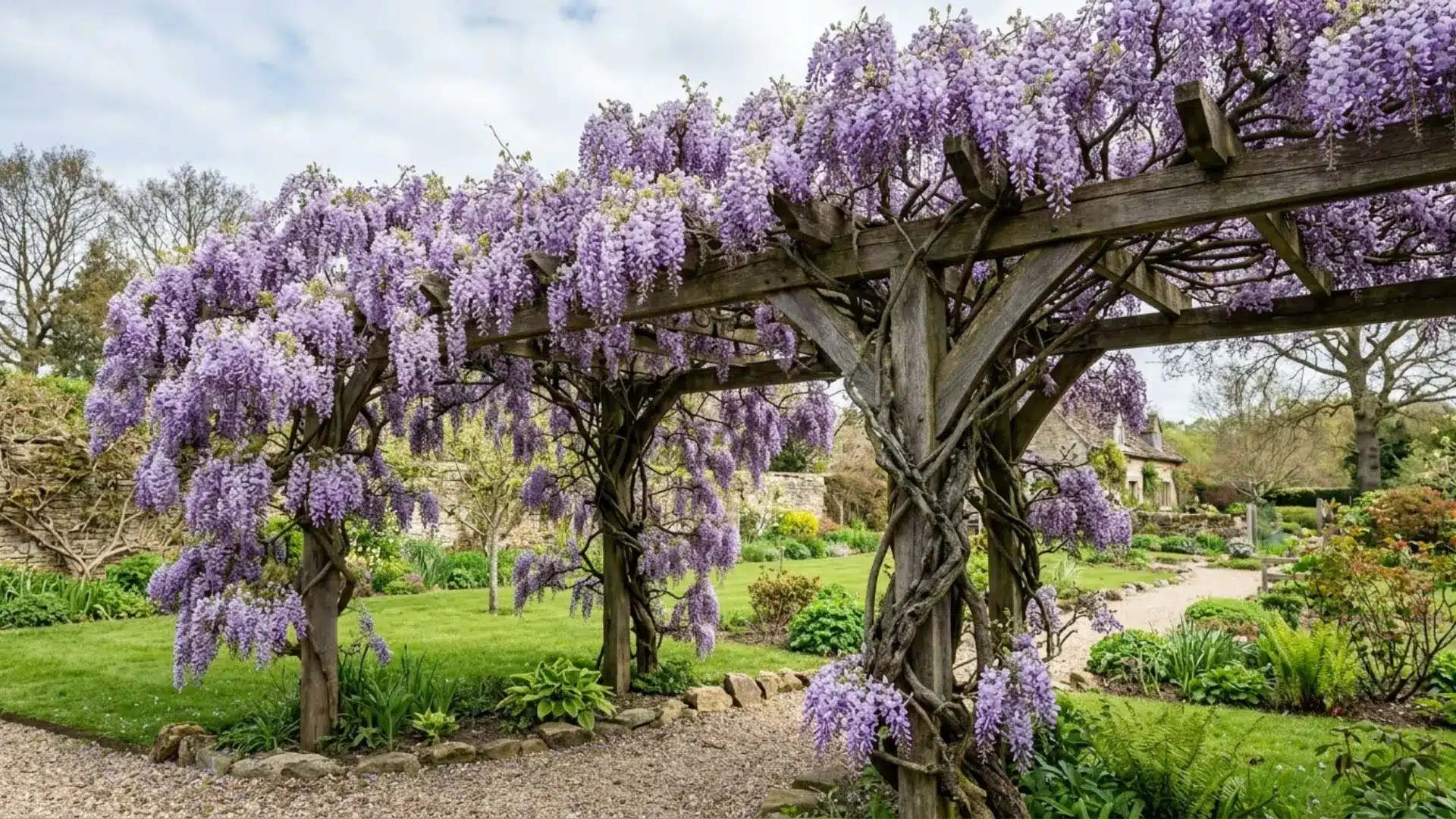
Chinese wisteria is known for blooming before or as its leaves emerge, which gives the vine a dramatic, cloud-like appearance in early spring. The flower clusters are dense and fragrant, often covering the entire vine at once.
In my experience, this variety tends to put on the most dramatic single-season show, though it’s also one of the more aggressive growers, so regular pruning helps keep both size and blooming in check.
2. Japanese Wisteria (Wisteria floribunda)
USDA Zone: 5–9
Bloom Period: May–early June
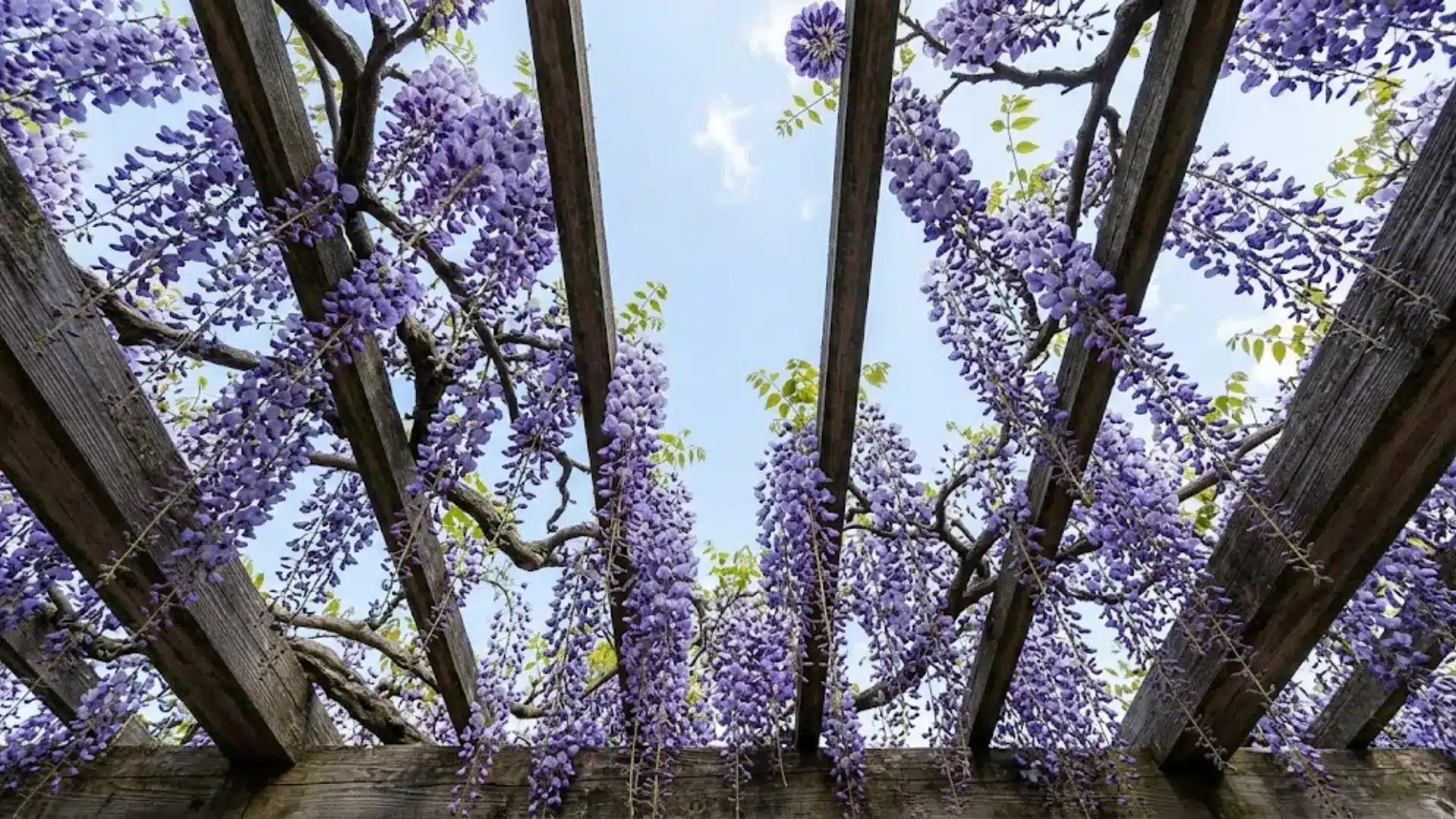
Japanese wisteria blooms a little later than its Chinese cousin, once leaves have already started to unfurl.
What sets it apart is cluster length, with racemes that can stretch far longer, creating that classic draping, waterfall effect.
The blooms open gradually from the base to the tip rather than all at once, which stretches the visual display and gives the flowering season a bit more staying power.
3. American Wisteria (Wisteria frutescens)
USDA Zone: 5–9
Bloom Period: May–June
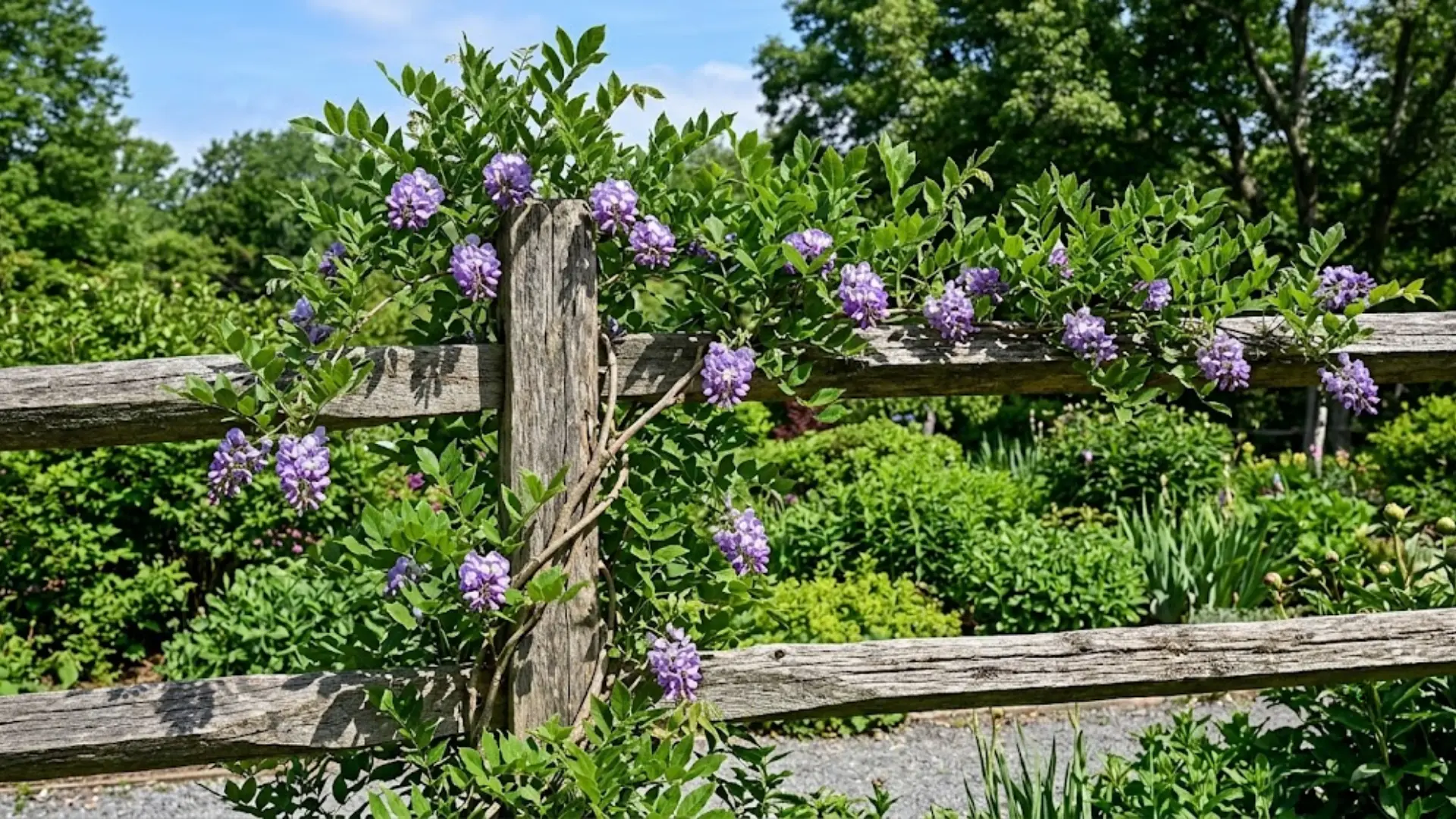
As a native species, American wisteria is a gentler choice for gardeners wary of invasive vines. It blooms after foliage appears, with smaller, more compact clusters than the Asian varieties.
It’s considerably less aggressive in its growth habit, making it easier to manage over the long term. Some plants also produce a light rebloom later in summer, giving you a second, smaller round of flowers to enjoy.
4. Kentucky Wisteria
USDA Zone: 3–9
Bloom Period: Late spring–early summer
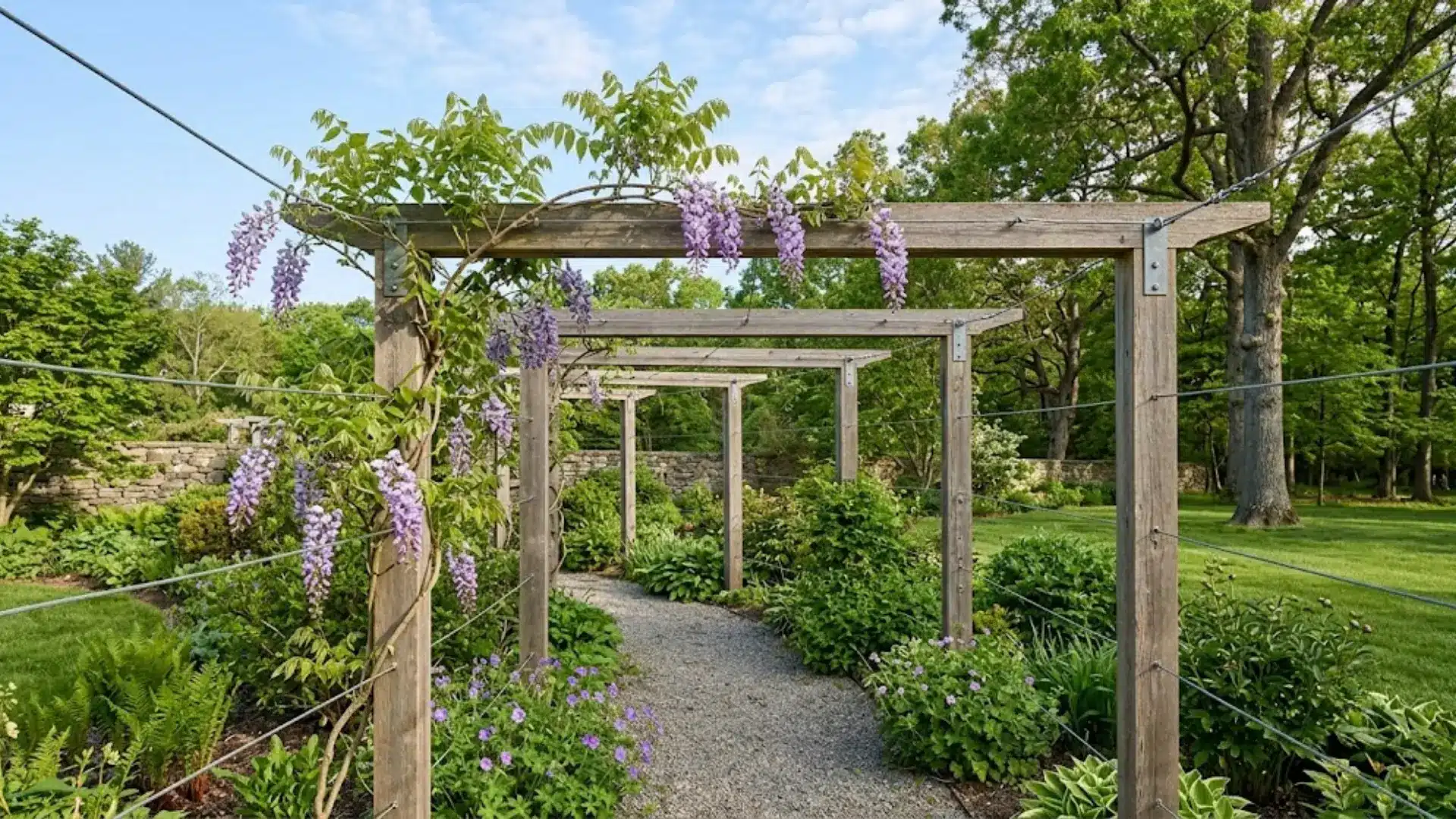
Kentucky wisteria shares American wisteria’s non-invasive nature but flowers at a younger age, so gardeners see results sooner. It’s also exceptionally cold-hardy, making it a standout pick for northern gardens.
So, according to my experience recommending wisteria for colder climates, this is often the variety that performs most reliably in harsh winters and short growing seasons.
How Long Does Wisteria Bloom?
Most wisteria stays in bloom for 2 to 4 weeks, though weather has the final say.
Cooler temperatures tend to stretch the flowering window, letting clusters hang on longer, while a hot spell can cut bloom time short as flowers fade fast in the heat.
Heavy rain and strong wind also take a toll, knocking petals loose before their time. Plant maturity matters too.
In my experience, older, well-established vines consistently bloom longer and more fully than younger plants that are still building the root system needed to support a big flush.
Can Wisteria Bloom More Than Once a Year?
Some wisteria varieties do offer a second flush, typically showing up in mid to late summer after the main spring display fades.
American and Kentucky wisteria are the most reliable rebloomers, while Chinese and Japanese types rarely repeat.
Proper summer pruning right after the first bloom encourages the vine to put energy toward new flower buds instead of just foliage. Weather plays a role too, since a mild, stable summer supports better rebloom odds.
A fuller bloom also tends to bring in more of the bees and other pollinators your garden relies on, which is a nice side benefit of a healthy rebloom.
Either way, expect this second round to be noticeably lighter, with fewer clusters and a shorter display than spring’s main event.
Why Isn’t My Wisteria Blooming?
A wisteria that refuses to flower is one of the most common frustrations I hear from gardeners, and usually it comes down to one of a handful of fixable issues.
Here’s how to figure out what’s holding your vine back.
Problem 1: Is Your Wisteria Just Not Old Enough to Flower Yet?
Solution: Grafted plants typically bloom within 2 to 3 years, nursery-grown plants take 3 to 5 years, and seed-grown vines can take 7 to 15 years. If your vine is still young, patience is really the only fix.
Problem 2: Is Your Wisteria Getting Enough Direct Sunlight to Actually Bloom?
Solution: Wisteria needs at least 6 hours of full sun daily to flower well, and shady spots push growth toward leaves instead. Relocate younger vines to a sunnier spot, or prune back whatever’s blocking the light.
Problem 3: Is Your Fertilizing Routine Feeding Leaves Instead of Flowers?
Solution: Nitrogen-heavy fertilizers encourage lush foliage at the expense of blooms. Switch to a low-nitrogen, phosphorus-rich formula, or skip fertilizer altogether if your soil is already fertile.
Problem 4: Could Your Pruning Schedule Be Cutting off Next Season’s Flowers?
Solution: Aggressive winter pruning can accidentally remove the buds set for spring. Stick to summer pruning right after bloom instead.
Problem 5: Did a Late Freeze Wipe out This Year’s Flower Buds?
Solution: A late-season cold snap can kill developing buds before they open, especially in colder zones. Choosing cold-hardy varieties like Kentucky wisteria helps reduce this risk.
How to Encourage More Wisteria Blooms?
A few consistent habits make the difference between a wisteria that just grows and one that actually flowers.
Here’s where to focus your energy.
- Step 1: Start with a grafted plant, so you’re not waiting years just to see your first bloom.
- Step 2: Plant it in full sun, giving it at least 6 hours of direct light every day.
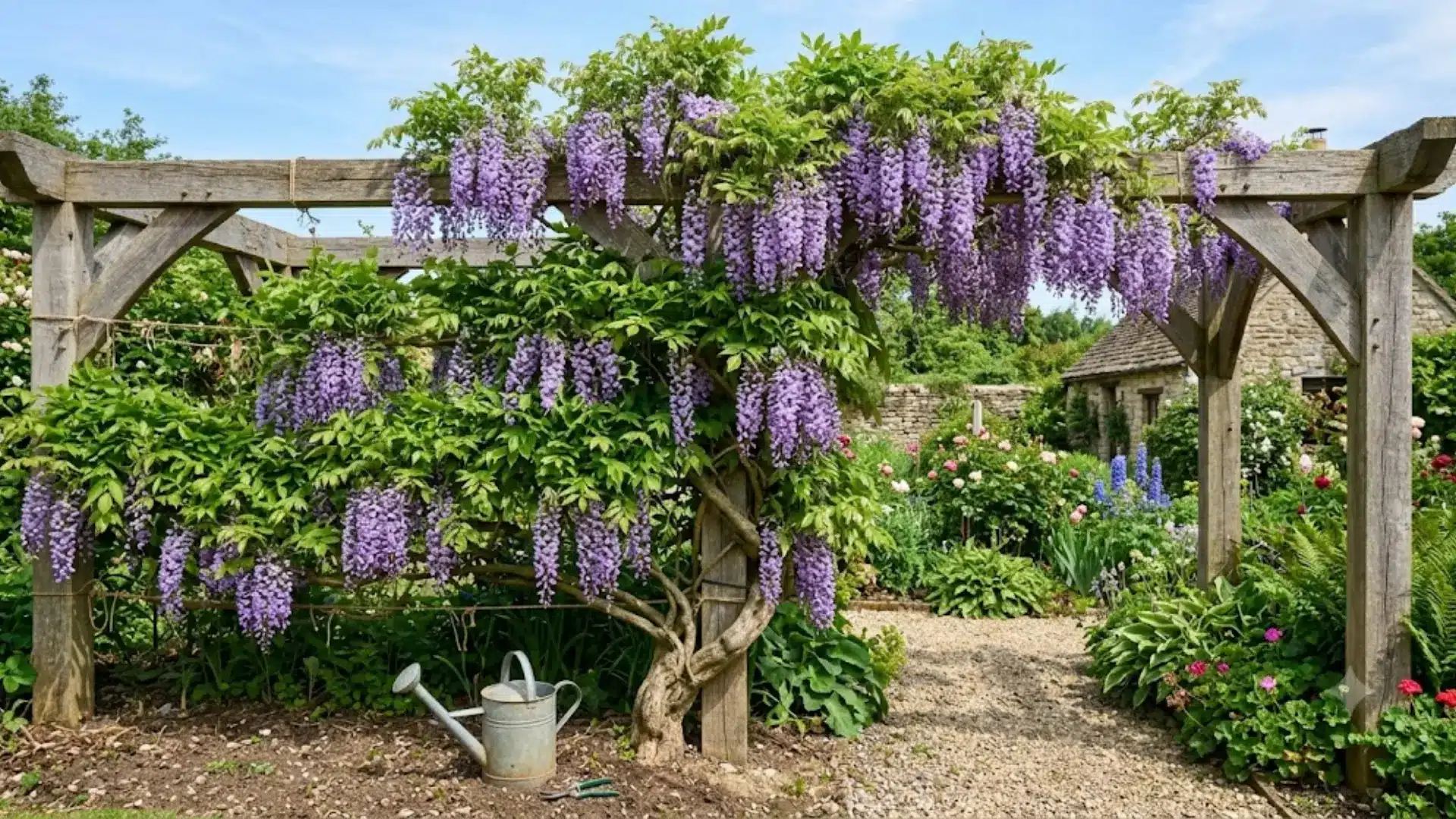
- Step 3:Train the vine onto a sturdy support early so its growth is guided toward flowering wood. If you haven’t built one yet, sturdy trellis and arbor designs built for heavy flowering vines can carry a mature wisteria for years.
- Step 4: Prune twice a year, once in summer right after bloom and again lightly in winter.
- Step 5: Water during dry spells and skip nitrogen-heavy fertilizer, reaching for a phosphorus-rich one only if your soil needs it.
Get these steps right from the start, and blooms tend to show up fuller and more reliably with each passing season.
Do Young Wisterias Bloom Right Away?
Not quite, and this is where a lot of gardeners lose patience too early. How long you wait really comes down to how the plant was propagated.
| Plant Type | Time Until Flowers | What’s Happening Beneath the Surface |
|---|---|---|
| Seed-grown | 7 to 20 years | Still in its long juvenile phase |
| Grafted | 2 to 5 years | Cut from wood that was already mature |
| Nursery-grown | Often 2 to 5 years | Propagated from already-blooming plants |
If quicker blooms matter to you, grafted or nursery-grown plants are the way to go, since seed-grown wisteria can take decades to mature enough to flower.
What Happens After Wisteria Finishes Blooming?
Once flowers fade, the vine shifts energy into foliage growth, filling out with leaves for the rest of the season.
You may also notice seed pods forming where blooms once were, though these aren’t necessary to remove.
If you’re ever unsure whether a pod belongs to wisteria or something else growing nearby, a quick look at common vine and tree seed pod shapes can help you tell them apart.
This is the ideal window for summer pruning, cutting back new growth to encourage flower bud formation for next spring.
Keep up regular watering, especially through dry stretches, and hold off on heavy fertilizing, since excess nitrogen now can work against future blooms.
These post-bloom habits quietly set the stage for a fuller display next year.
The Closing Note
Wisteria rewards a bit of patience, and once you understand its rhythm, the timing stops feeling like a mystery.
If you’re waiting on a young vine or troubleshooting one that skipped a season, small adjustments in sun, pruning, and care make a real difference.
Knowing when does wisteria bloom for your specific variety and zone takes the guesswork out of the wait, so you can plan your garden around that payoff moment instead of wondering if it’s coming at all.
Have a wisteria story of your own, a vine that took its time or a bloom that finally showed up? Share it in the comments below!
Frequently Asked Questions (FAQs)
Why Did My Wisteria Produce Leaves but No Flowers?
This usually points to too much shade, excess nitrogen, or a vine that’s simply still too young to flower. Improper pruning at the wrong time of year can also strip away next season’s flower buds.
Which Wisteria Blooms the Longest?
Japanese wisteria tends to have the longest display, thanks to its extended flower clusters that open gradually from base to tip. This staggered opening stretches the overall bloom window compared to other varieties.
Does Pruning Increase Flowering?
Yes, pruning at the right time (mainly in summer, right after bloom) redirects the plant’s energy toward forming new flower buds. Winter pruning, on the other hand, can accidentally cut those buds away.
Can Frost Stop Wisteria from Blooming?
A late frost right before or during bud break can kill developing buds before they ever open. This is especially common in colder zones where spring temperatures fluctuate.