
You pull one out, feel pretty good about it, and then a week later it’s back like nothing ever happened.
Sound familiar?
Dandelions are frustrating that way, and it’s truly not your fault.
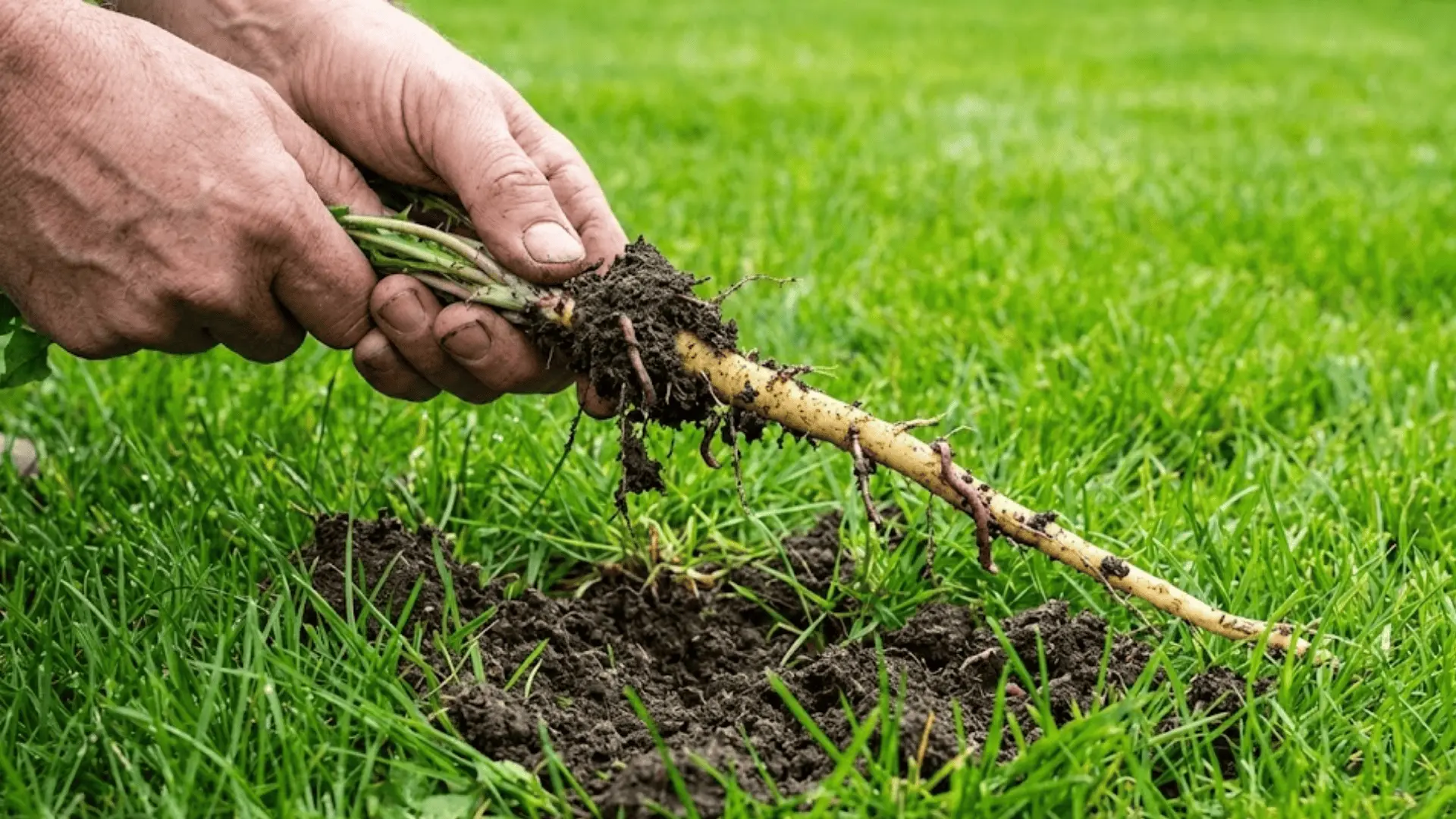
The real problem is happening underground, where their taproots dig surprisingly deep into the soil, storing enough energy to regrow even after the whole plant is gone.
A simple tug-and-toss was never going to cut it.
Getting rid of them permanently is absolutely possible once you start treating the actual root cause.
Why Dandelions Keep Coming Back?
Dandelions are basically built to survive. Their taproots can grow over ten inches deep, which means even if you pull the plant out, any tiny fragment left behind will simply regrow.
That alone makes them incredibly hard to beat.
Understanding their full life cycle explains why a single dandelion produces thousands of seeds that travel through the air and settle across your entire yard before you even notice.
They also have a knack for targeting thin, weakened patches of grass where they can establish themselves with very little resistance.
Knowing this changes everything about how you approach getting rid of them.
What Actually Kills Dandelions Permanently?
Pulling dandelions out and hoping for the best is a cycle that never really ends.
Here’s a breakdown of every method that actually works, so you can choose what fits your lawn, your timeline, and how hands-on you want to get.
1. Manual Removal: Getting the Taproot Out Completely
This method works, but only if you do it right. The goal is to remove the entire taproot without snapping it, because any fragment left behind will regrow.
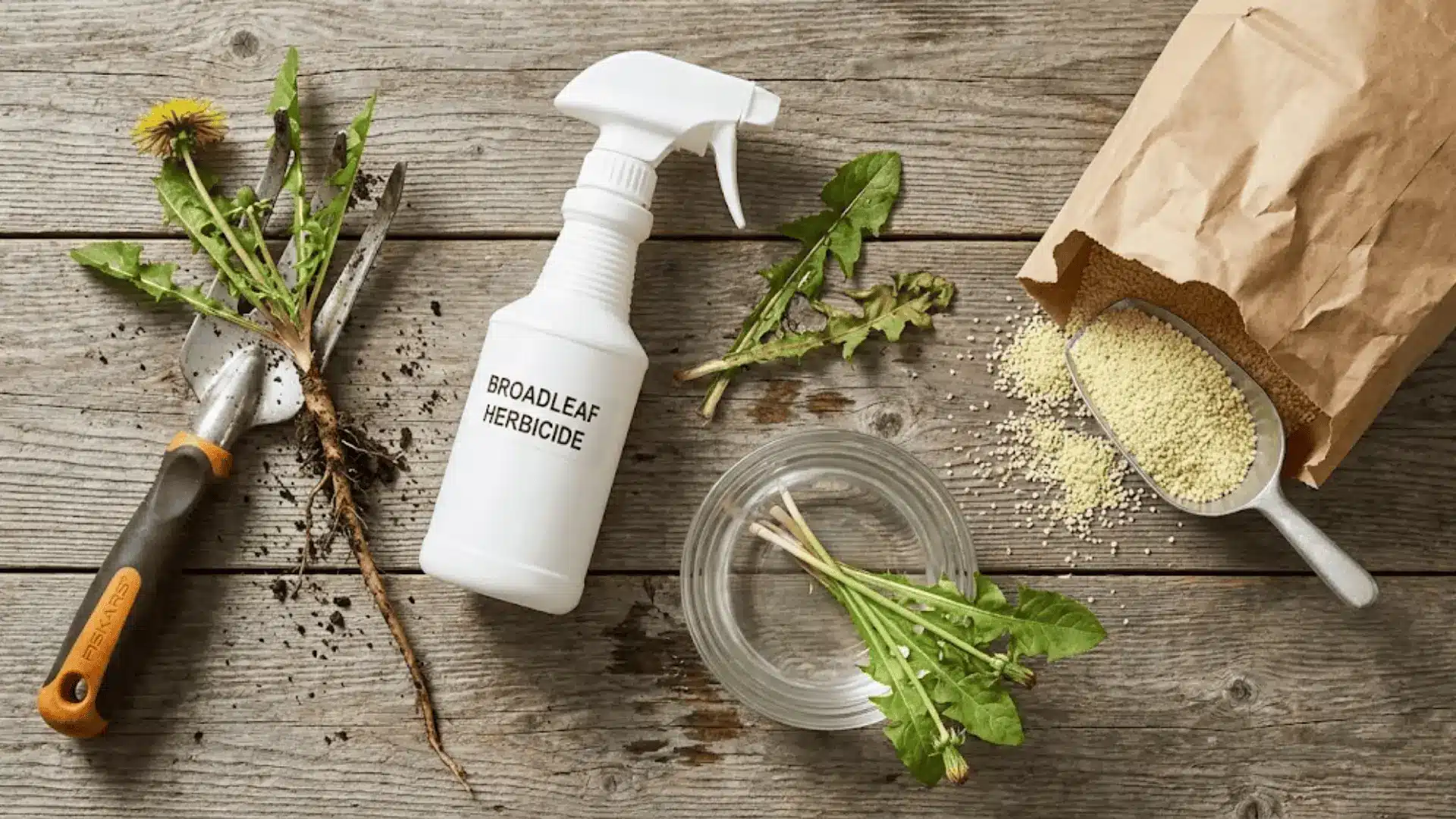
A tool like the Fiskars 4-Claw Stand-Up Weeder makes the job a lot easier, and it works best right after rainfall when the soil is soft and the root releases more cleanly. You can also find it at Home Depot or Lowe’s.
It’s chemical-free and pet-safe, but on compacted soil, removing the full root in one pull can be tricky. Dandelions have a long history, and their folk names reflect their deep roots, both literal and cultural.
2. Selective Broadleaf Herbicides: Targeted and Tough
These herbicides kill dandelions without touching your grass, making them one of the most efficient long-term solutions.
Look for active ingredients like 2,4-D, dicamba, and MCPP on the label. Ortho WeedClear Lawn Weed Killer Ready-to-Spray is a reliable go-to that kills over 200 broadleaf weeds right down to the root.
Fall is ideal because dandelions pull nutrients downward, drawing herbicide deeper. Spot treatment targets scattered weeds; broadcast suits widespread infestations.
3. Natural and DIY Methods: Low-Chemical Alternatives
If you prefer keeping things chemical-free, these options are worth trying, with some caveats.
- Boiling water poured directly onto the plant kills it on contact, but it can damage the surrounding grass, too.
- Vinegar solutions at high acetic acid concentration, like Green Gobbler 20% Vinegar Weed Killer, burn the leaves effectively but rarely reach deep enough to kill the root.
- Corn gluten meal acts as a natural pre-emergent, suppressing seed germination when applied at the right time.
- Natural methods work best as a preventive or supplementary strategy rather than a standalone fix for an established dandelion problem.
4. Pre-Emergent Herbicides: Stop Them Before They Start
Pre-emergents work by preventing dandelion seeds from germinating in the first place, which makes timing everything. Apply in early spring before soil temperatures consistently warm up.
Scotts Halts Crabgrass & Grassy Weed Preventer is a trusted option that covers a wide range of weed seeds.
Keep in mind these products have no effect on dandelions that are already established and growing, so pair them with another removal method for best results.
The Best Time to Kill Dandelions
Timing your treatment right can make the difference between dandelions that disappear and ones that keep bouncing back.
Here’s a quick breakdown of when to act and what to keep in mind.
| Season | Best Method | Key Tip |
|---|---|---|
| Fall | Broadleaf herbicide | Roots actively absorb nutrients, pulling treatment deeper |
| Early Spring | Spot treat or hand-pull | Target before flowering and seeding begins |
One thing people often overlook after treatment is mowing too soon.
Give it at least a few days before you mow so the herbicide has enough time to fully absorb through the leaves and reach the root.
How to Prevent Dandelions from Returning?
Getting rid of dandelions is one thing; keeping them gone is another. A healthy, dense lawn is your best long-term defense because dandelions thrive where grass is thin and weak.
- Keep your grass thick by overseeding bare or sparse patches so dandelions have nowhere to take hold.
- Mow at a higher setting to shade the soil and make it harder for weed seeds to germinate.
- Fertilize consistently to keep your grass strong, dense, and competitive against weeds.
- Improve soil drainage so your lawn doesn’t create the compacted, stressed conditions dandelions love.
- Apply a pre-emergent each spring to stop new seeds from germinating before they ever become a problem.
A little ongoing maintenance goes a long way. When your lawn is healthy and thriving, dandelions simply struggle to find a foothold.
Lawn Care Strategy for Long-Term Control
Treating dandelions is only part of the equation. Building a solid lawn care routine underneath it all is what actually keeps them from coming back season after season.
| Practice | What to Do | Why It Helps |
|---|---|---|
| Soil Testing | Test pH and nutrient levels annually | Corrects imbalances that weaken grass |
| Aeration | Aerate once a year in the fall or spring | Loosens compacted soil for deeper root growth |
| Regular Watering | Water deeply but infrequently | Builds stronger, more resilient turf |
| Avoid Scalping | Never cut more than a third of the blade | Keeps soil shaded and weed seeds out |
When to Call a Lawn Care Professional?
Sometimes dandelions get ahead of you, and that’s okay.
If you’re dealing with a severe infestation, yearly outbreaks that keep returning despite treatment, or a large property that’s simply too much ground to cover on your own, it’s worth bringing in a professional.
Lawn care services have access to commercial-grade treatments and can put together a seasonal plan that addresses the root cause, not just the symptoms.
Knowing when to hand it off is just as smart as knowing how to handle it yourself.
Wrapping It Up
Knowing what kills dandelions permanently is only half the battle; the other half is staying consistent with it.
A few smart choices, the right timing, and a little routine maintenance can completely change how your lawn looks and feels over time.
Dandelions are persistent, but so are good lawn habits.
Stick with what works, give your grass the care it deserves, and those stubborn yellow weeds will have a lot less room to show up uninvited.
Got a dandelion method that worked for you? Drop it in the comments below.




2 Responses
when should corn gluten be applied?
I am looking for a product that will kill
Danny Lyons only. What would be the number one cutter that you would recommend