

Some trees drop pods that rattle, spiral, or even explode when they hit the ground. Ever pick one up and ask yourself, “What tree is this from?”
I’ve been there too: curious, confused, maybe a little excited. Figuring out tree seed pods identification can be weirdly satisfying. It feels like matching the right puzzle piece to the bigger picture around you.
In this blog, you’ll learn how to tell seed pods apart using their shape, size, color, and more. You’ll get tips to help you spot them in your yard, on hikes, or even during walks in your neighborhood.
By the end, you won’t just be guessing. You’ll know what that pod came from and you might even start noticing ones you used to miss.
What Tree Seed Pods Can Show You About the Tree
Seed pods might look small or strange, but they’re a big clue when it comes to learning about trees. Trees grow seed pods to spread their seeds, it’s how they make sure new trees can grow. These pods come in many shapes, sizes, and colors depending on the tree. That’s what makes them so helpful.
Sometimes, the leaves and bark on different trees look a lot alike. But their seed pods? Not so much. A pod might twist, snap open, hang in clusters, or float away in the wind.
These unique traits can make it easier to tell trees apart.
Pods are especially useful in the late summer and fall, when they’ve matured and start falling to the ground.
So even when the leaves change or drop, you still have a solid way to figure out what kind of tree you’re looking at, just by checking the pod.
Tree Seed Pods Identification Basics

Some seed pods are easy to spot and name. Others can be tricky. It depends on how clear their shape is, how common they are in your area, and how much they’ve changed with weather or time.
When you start with tree seed pods identification, look closely at these things first:
- Shape: Is it flat, round, curved, spiky, or twisted?
- Size: Is it tiny like a pea or long like a bean?
- Texture: Smooth, rough, bumpy, or fuzzy?
- Color: Fresh green, brown, red, black, or something in between?
- Time of Year: Pods often fall in late summer or autumn, but some trees drop them in winter or spring too.
One big reason to begin with pods is that they stick around even after leaves fall. So when branches are bare, pods still give you something to work with.
How to Identify Tree Seed Pods

When you’re doing tree seed pods identification, shape is usually the easiest place to begin. Some pods are long and skinny like beans. Others are flat with wings that help them spin as they fall.
Some pods are round, like balls or puffed-up shells. Then there are the tough ones, woody or thick, almost like nuts.
Next, check the size and feel of the pod. Is it small or large? Thin or thick-shelled? Some pods have smooth surfaces, while others feel rough or bumpy.
You might notice some are soft and bend easily, while others are stiff or even snap when bent.
Color tells you a lot, too. Fresh pods are usually green. As they mature, they turn brown, gray, or even black. Dried-out pods can look very different from when they first dropped.
The season matters more than you might think. Some trees drop pods in spring, others in summer, and many in fall. If you find a pod in winter, it likely fell in late autumn.
Knowing when a tree usually drops its pods helps you rule out species that don’t match that timing.
Looking at these details together gives you a better chance at getting the ID right.
Telling Tree Seed Pods by Shape
Seed pod shape is one of the easiest ways to start figuring out what tree you’re looking at. Below are the main pod shapes and some trees that match each one. Use these clues to spot patterns and narrow down your search:
Long, Bean-Like Seed Pods
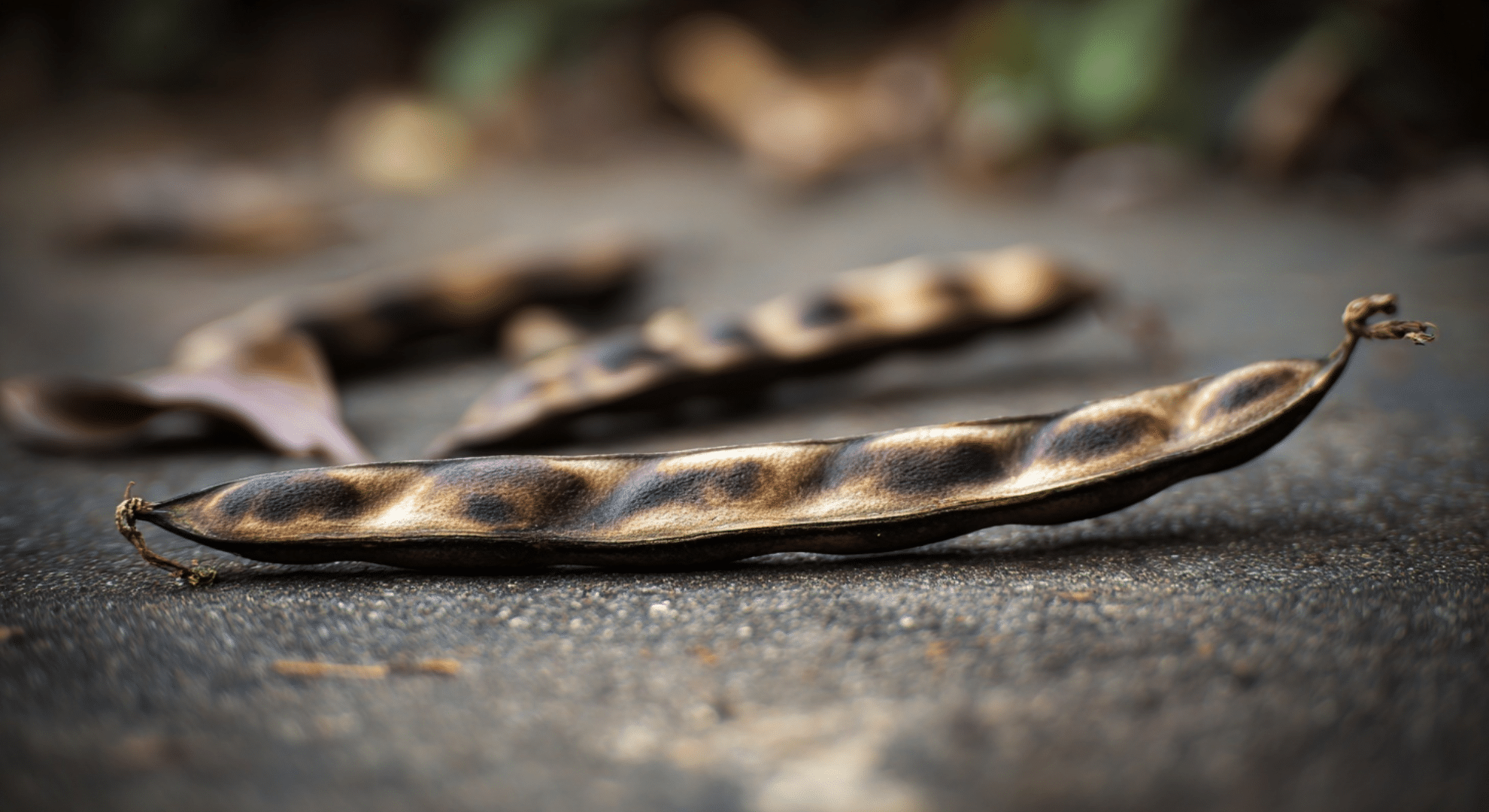
These pods are often curved or straight, and they hang in clusters or singly.
- Honey Locust: Long, twisted pods, up to 18 inches, dark brown when mature.
- Black Locust: Shorter and flatter than honey locust, usually 2–4 inches, dark and smooth.
- Catalpa: Thin, green pods that dry brown, often over a foot long.
- Redbud: Small, flat pods about 2–3 inches long, reddish-brown when mature.
These pods often rattle when dry and may stay attached to the tree in winter.
Flat or Papery Seed Pods
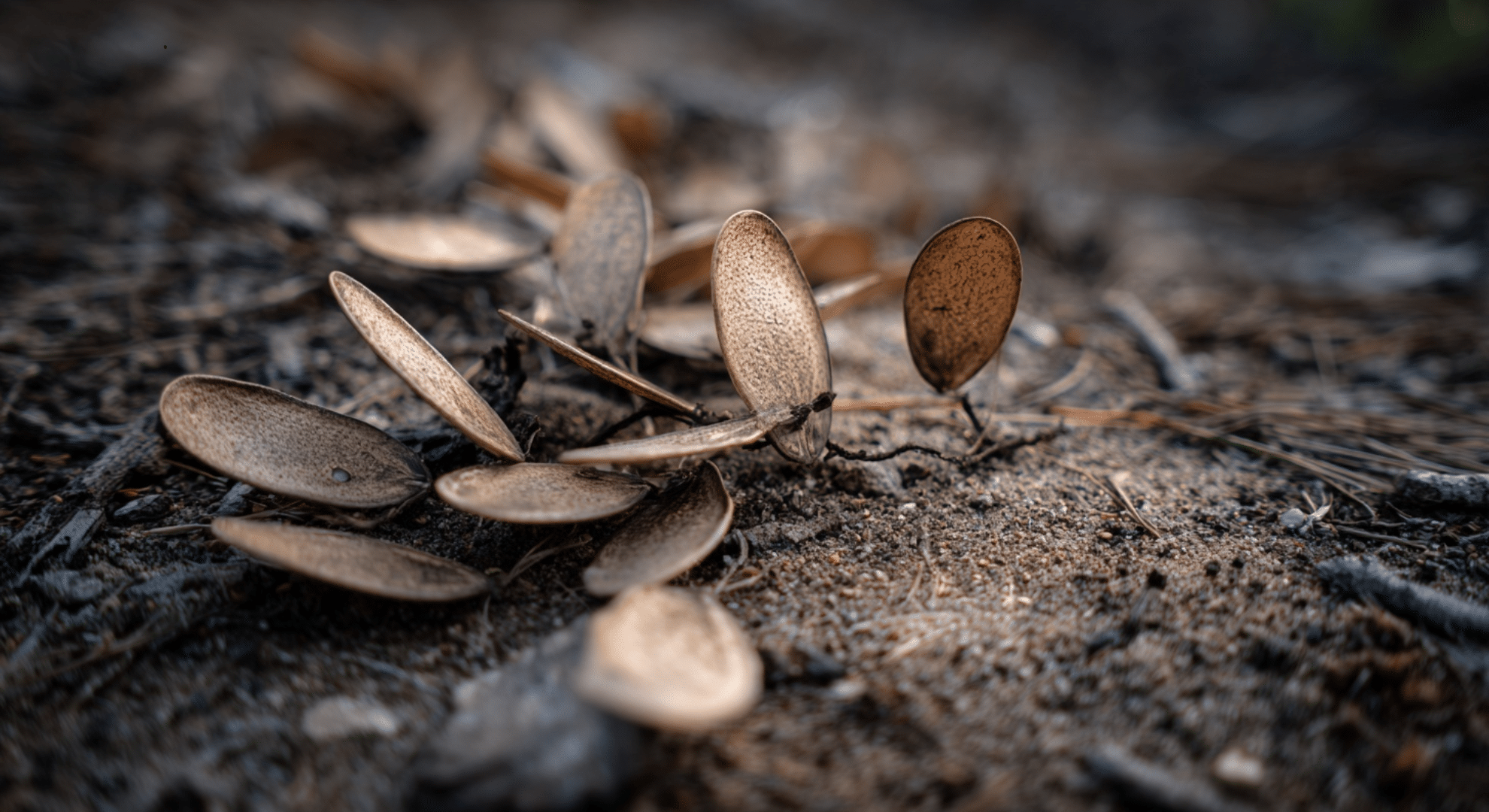
These are thin, often with winged edges that help them glide in the wind.
- Ash: Paddle-shaped with a single wing, about 1–2 inches long.
- Elm: Round with a single wing, about the size of a dime.
- Maple: Two-winged seeds called samaras that spin as they fall.
They’re often mistaken for flower petals or leaves until you look closely.
Round or Ball-Shaped Seed Pods
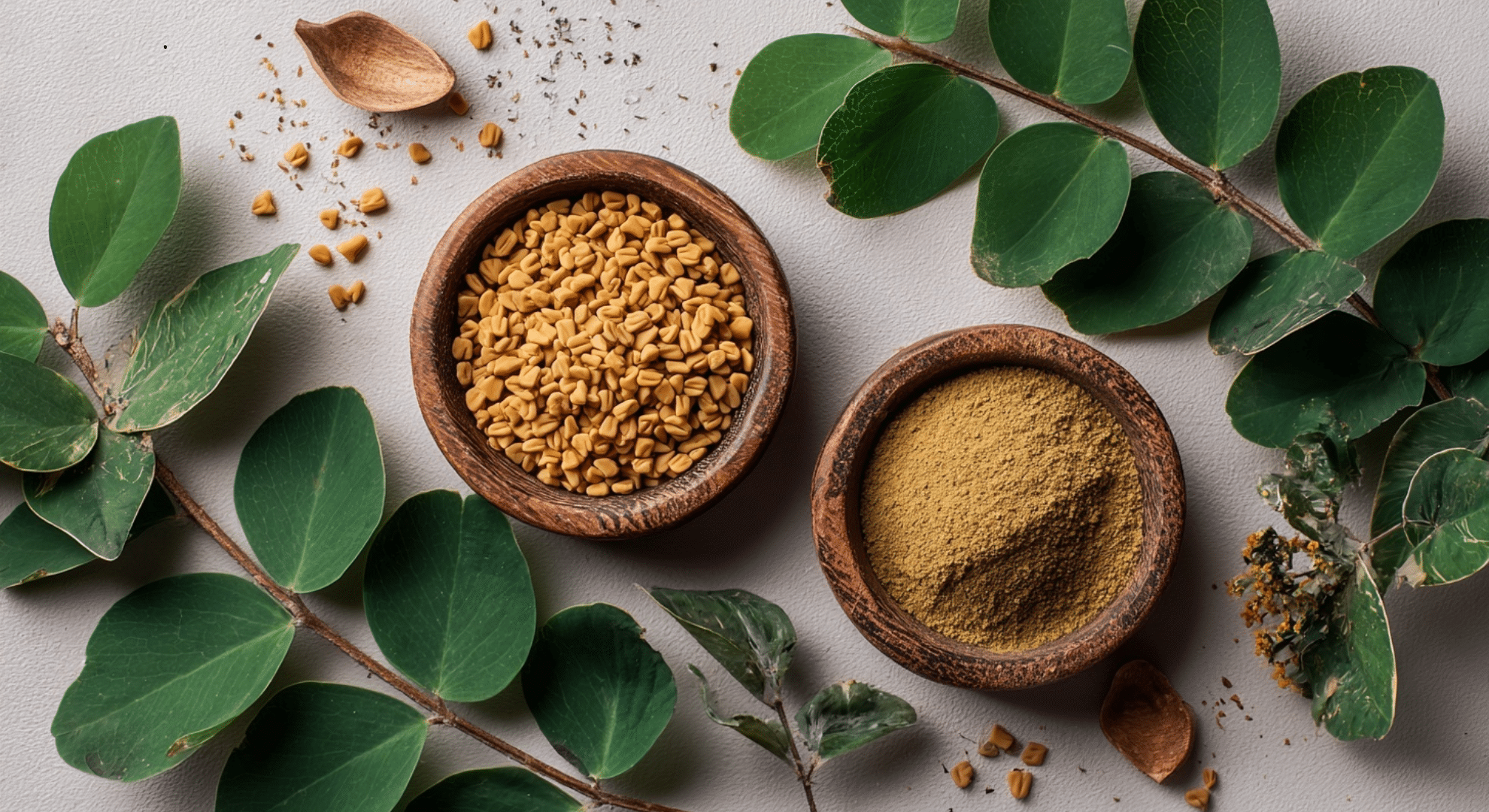
These pods may have spikes or thick outer shells.
- Sweetgum: Spiky balls, about 1 inch wide, hard and brown when mature.
- Buckeye: Smooth outer shell, splits open to reveal shiny brown seeds.
- Walnut: Large round pods with a thick green outer layer that turns black.
It’s easy to confuse these with fruit or nuts, but the pod is what protects the seed.
Thick, Woody, or Hard Seed Pods
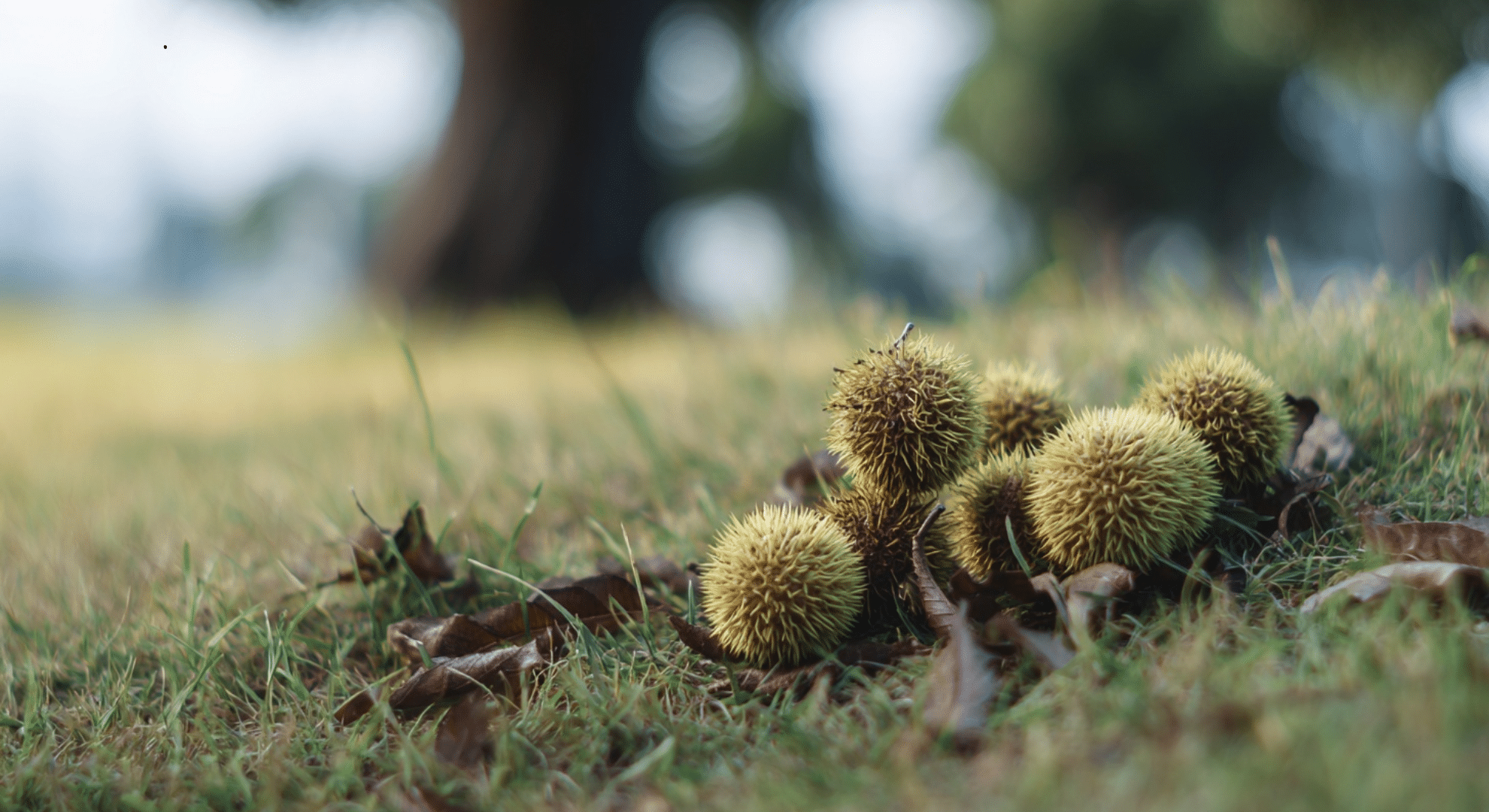
These pods are built to last and often stay on the ground for months.
- Acacia: Curved, woody pods that twist as they dry.
- Texas Mountain Laurel: Thick, red-brown pods, very hard, with bright red seeds inside.
- Kentucky Coffeetree: Large, dark pods with hard shells, about 5–10 inches long.
They don’t break down easily and are often found intact long after falling.
Quick Chart for Tree Seed Pods Identification
Need fast answers? This chart gives you a quick way to match tree seed pods to their traits. Use it as a starting point when you’re unsure what kind of tree a pod came from:
| Tree Name | Pod Shape | Pod Size | Texture | Common Regions | Season Pods Drop |
|---|---|---|---|---|---|
| Honey Locust | Long, twisted | 8–18 inches | Smooth, hard | Midwest, East US | Fall to Winter |
| Black Locust | Flat, narrow | 2–4 inches | Smooth, thin | Eastern US | Late Summer to Fall |
| Catalpa | Long, skinny | 10–20 inches | Smooth | South, Midwest | Fall |
| Redbud | Small, flat | 2–3 inches | Papery | Eastern and Central US | Fall |
| Ash | Winged, flat | 1–2 inches | Dry, papery | Widespread | Fall |
| Elm | Round, winged | 0.5–1 inch | Papery | North America | Spring |
| Maple | Double-winged | 1–2 inches | Papery | North US, Canada | Spring |
| Sweetgum | Spiky ball | 1–1.5 inches | Hard, rough | Southeast US | Fall to Winter |
| Buckeye | Round, smooth | 1–2 inches | Smooth, hard | Eastern US | Fall |
| Walnut | Round, thick shell | 2–3 inches | Rough, green to black | Midwest, East US | Fall |
| Acacia | Curved, woody | 3–6 inches | Hard, twisted | Southwest US | Summer |
| Texas Mountain Laurel | Oval, thick | 2–4 inches | Very hard | Texas, Southwest | Late Summer |
| Kentucky Coffeetree | Thick, hard | 5–10 inches | Rough, woody | Midwest, Northeast | Fall |
Use this chart when you’re in the field or sorting through collected pods. It helps narrow things down fast without needing to look everything up each time.
Common Tree Species That Produce Seed Pods
Here are more North American trees that drop seed pods, but ones that don’t get as much attention. These trees show up in parks, yards, along streets, and sometimes in the wild.
Some are native, and others were planted for their shade or flowers. Each one has its own pod traits worth noticing.
- Mimosa Tree (Non-native): A small ornamental tree with fern-like leaves and fluffy pink flowers. Produces flat, papery pods about 4–6 inches long that dry brown and split open.
- Golden Rain Tree (Non-native): Grows up to 30 feet. Known for its lantern-shaped seed pods that start green and turn brown. They’re light, hollow, and three-sided.
- Tree of Heaven (Non-native): Often found in cities and disturbed areas. Produces winged, twisted seed pods called samaras that turn reddish as they age.
- Wisteria (Tree Form) (Non-native): Usually a vine, but sometimes trained into a small tree. Produces fuzzy, bean-like pods about 4–6 inches long that hang through winter.
- Yellowwood (Native): A smaller tree with smooth bark and bright green leaves. Pods are flat, 2–4 inches long, and smooth with a slight curve.
- Mesquite (Native): Found in the Southwest. Drops long, tan-colored seed pods that are often twisted or curved. Some varieties have edible pods.
- Locust Bean Tree (Carob) (Non-native): Related to honey locust, but with thicker, straighter pods. Found in warmer regions and used for shade or food.
- These trees may not be as common as maple or ash, but spotting their seed pods adds more depth to your plant ID skills. Keep an eye out, you might see them more often than you think.
Can You Identify a Tree Using Seed Pods Alone?
Yes, sometimes you can figure out the tree just by its seed pod, especially if the pod has a clear shape, size, or texture that stands out. For example, sweetgum balls, maple “helicopters,” and honey locust pods are pretty hard to mix up.
But other times, seed pods alone aren’t enough. Some trees have pods that look alike, especially when they’re old, broken, or out of season. That’s when it helps to check leaves, bark, branch shape, or even where the pod landed.
A common mistake people make is ignoring the pod’s condition. Dried-up, cracked, or half-missing pods can throw you off. Another mistake?
Guessing too fast without comparing similar trees.
So while seed pods can get you close, don’t stop there if you’re unsure. Using a few extra clues can help you avoid wrong guesses and learn faster as you go.
Use all your senses: what you see, hear, and even smell can help you tell trees apart when seed pods alone aren’t enough.
How Leaves, Bark, and Tree Shape Help Confirm Identification
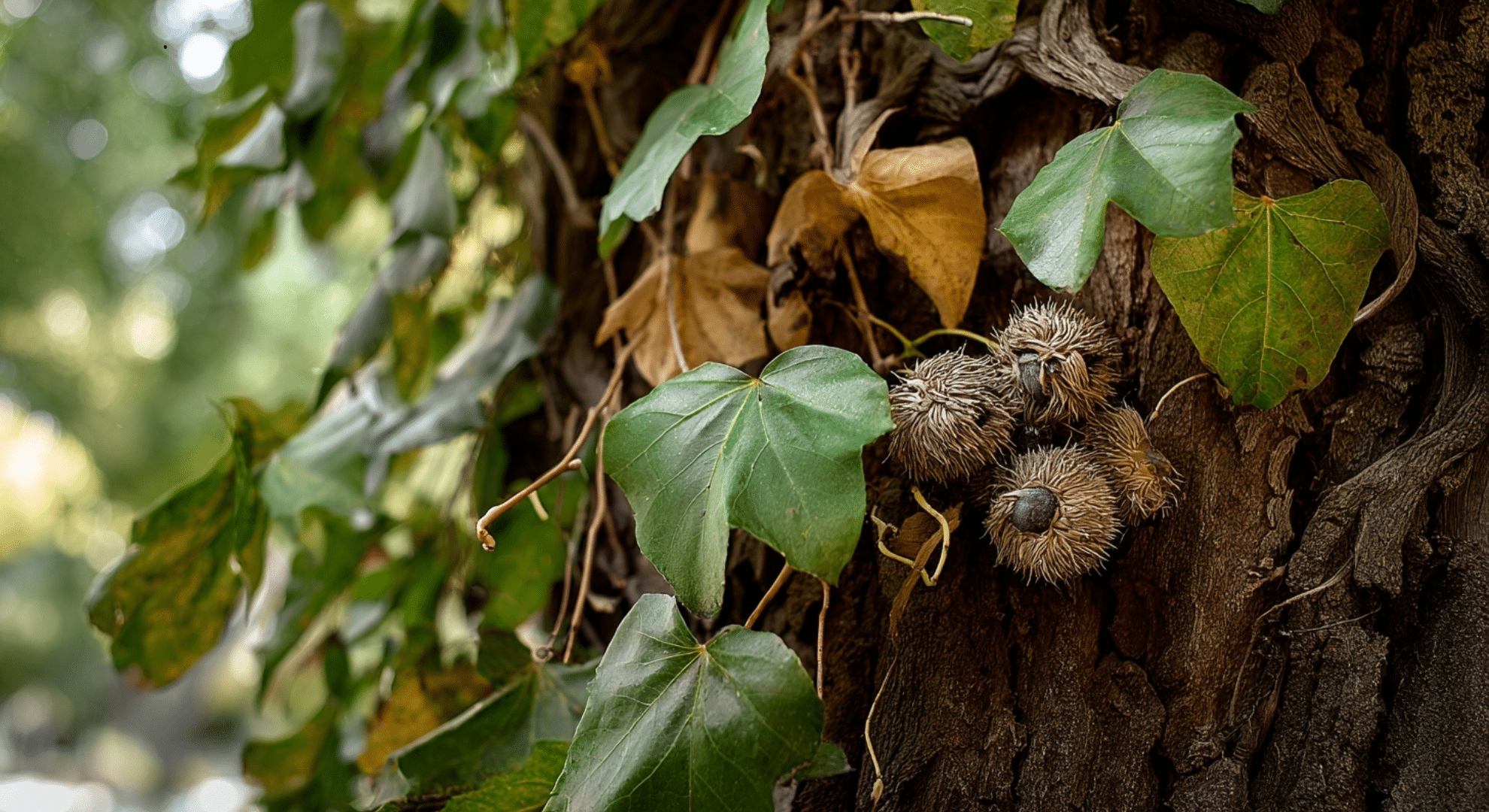
Seed pods give you a good start, but leaves, bark, and tree shape can seal the deal.
Leaf Shape and Arrangement: Look at how the leaves grow, are they opposite each other or staggered? Are they simple (one piece) or compound (many leaflets)? Redbud has heart-shaped leaves. Ash has compound leaves. These patterns are hard to miss once you know what to look for.
Bark Texture and Color: Bark can be rough, smooth, peeling, or deeply grooved. Some trees have light gray bark, others are dark brown. Bark stays put even when pods and leaves fall, great for winter ID.
Tree Height and Form: Is the tree tall and narrow, short and wide, or umbrella-shaped? Tree shape can rule out species quickly.
When you find a pod, check it against what you see on the rest of the tree. Matching pod traits with leaf, bark, and shape clues helps you confirm your guess with more confidence.
Regional Tips for Tree Seed Pod Identification
Where you live plays a big role in which seed pods you’ll come across. Trees grow based on climate, soil, and human planting choices so the pods you see in Texas won’t always match what’s found in northern states.
- Southern and Texas Trees: Warm-weather trees like mesquite, Texas mountain laurel, and acacia drop tough, woody pods. These trees often grow in dry areas and have pods built to last. Some, like golden rain trees, are planted for shade and produce odd-shaped or papery pods in summer and fall.
- Northern and Temperate Trees: You’ll see more maples, elms, ash, and buckeye. These drop lighter, flatter pods or winged seeds in spring and fall. Many grow in forests, parks, and older neighborhoods.
- Urban vs Wild Areas: Cities often have non-native trees like mimosa or tree of heaven. In wild areas, native species like black locust or walnut are more common.
Knowing what grows in your region helps narrow your search and helps you avoid guessing trees that don’t even grow near you.
Can You Grow Trees From Seed Pods?
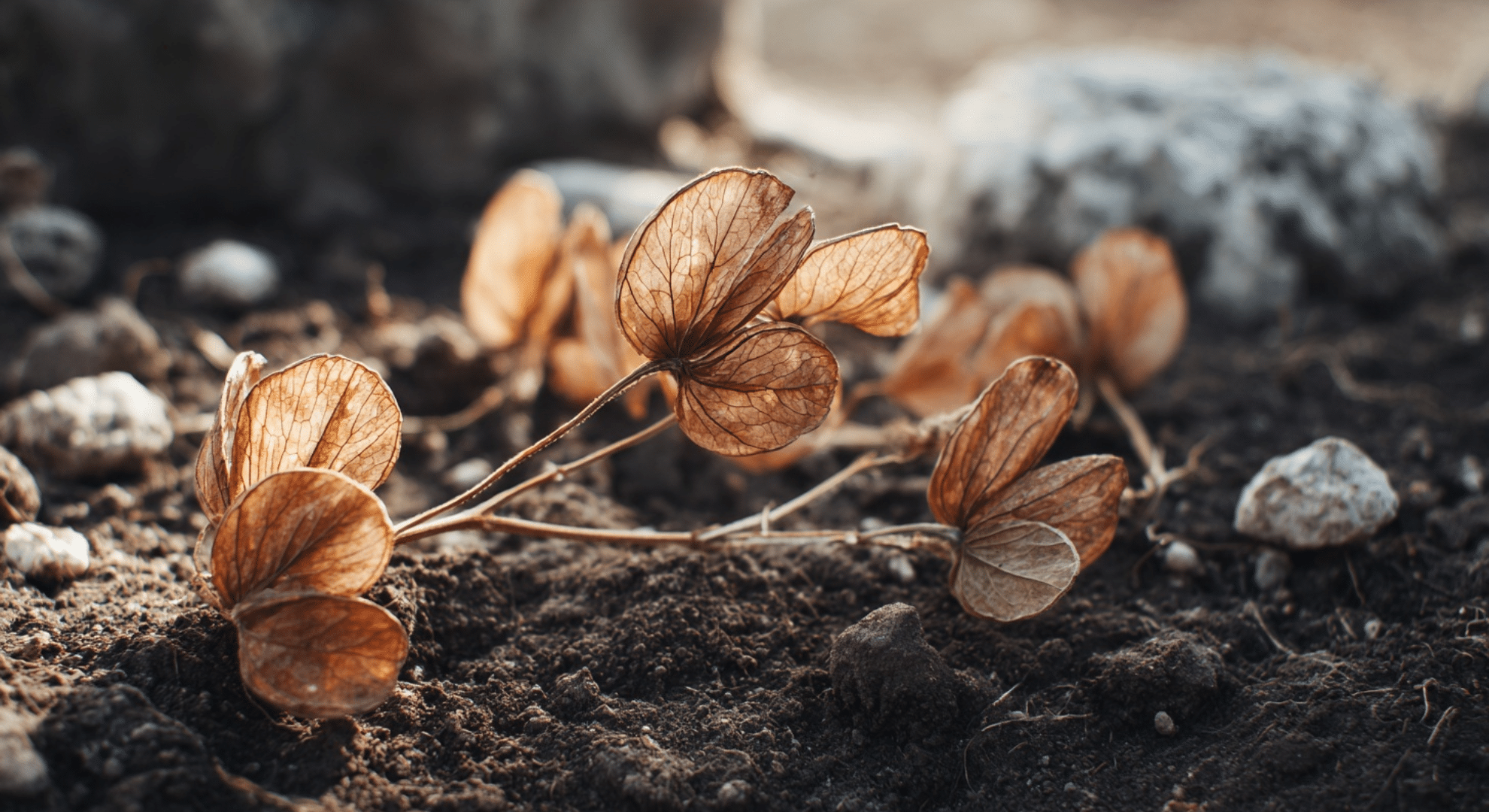
Yes, you can grow some trees from the seeds inside their pods, but success depends on the type of tree and how you handle the seed. Some pods are easier to work with than others.
Trees like redbud, catalpa, honey locust, and maple are great examples; they often grow well from seed with just a little prep. To get started, let the pod dry completely, then remove the seeds.
If the seed coat is thick or hard, soaking it in water overnight or gently scratching the surface can help it sprout faster. The best time to plant is usually in fall or early spring when the soil is cool and moist.
However, planting isn’t always a good idea. Some trees, like mimosa or tree of heaven, are invasive in certain areas and can spread quickly, pushing out native plants.
Others, like Texas mountain laurel or Kentucky coffeetree, have seeds that are hard to germinate without special care.
Always check if the tree is right for your space, local climate, and is not restricted in your region before planting. Growing a tree from a pod can be a fun and rewarding project, but it’s worth doing a little research first.
Are Tree Seed Pods Dangerous?
Some seed pods are safe to touch, but others can be harmful, especially to kids or pets who might try to chew or eat them.
A few trees have toxic pods or seeds. For example:
- Black locust: Pods and seeds are poisonous if eaten.
- Kentucky coffeetree: Seeds can be toxic when raw.
- Texas mountain laurel: Bright red seeds are very poisonous, especially to kids.
- Buckeye: Both the pod and seeds are unsafe if swallowed.
Safety Tips:
- Don’t let pets chew on pods in the yard.
- Teach kids not to pick up or open strange pods.
- Wear gloves if you’re cleaning up large amounts of pods you don’t recognize.
When Cleanup Helps: If a tree drops sharp, spiky, or toxic pods (like sweetgum or black locust), it’s smart to clean them up. This keeps play areas safe and walkways clear, especially during fall when pod drop is heaviest.
Conclusion
Learning about tree seed pods identification helped me slow down and really notice the small things around me, things I used to walk right past. It’s not just about naming trees.
It’s about paying attention to details, feeling more connected to the outdoors, and building a skill that sticks with you.
Now that you’ve got the basics, you can look at seed pods with fresh eyes. Try using what you learned next time you’re outside. You might be surprised how much you already recognize.
Keep looking, stay curious, and don’t stop learning. There’s always more to see out there.
If this got you thinking, check out the other blogs I’ve written; there’s plenty more to learn!




2 Responses
in childhood there was a row of these stately trees about 50′ tall, slender, their pods were 1/2″ hollow and open on ground, their were these little antennas on each end of the pods, the leaves were not needle kind but kinda like ‘silver Oak” forgot that was 65 years ago
l never saw a tree like it again… tree was upright with no boughs (sp) 50’ trunk had aggresive bark probably 2 ‘ diam beautiful,
deliberately chosen to border a community meeting building. what kind of tree u think it waz 1930’s perhaps planted
I enjoyed reading this blog. I have been collecting seed pods for a long time, as I find them interesting. Currently, I am painting seed pods in watercolor and acrylic. This will help me with some identification. Thank you.