Most houseplants don’t die from neglect; they die from too much love.
Overwatering is quietly the number one mistake plant parents make, and the tricky part is that it looks almost identical to underwatering.
If you’ve ever Googled how often to water indoor plants or stared at a droopy leaf wondering what went wrong, keep reading.
Simple rules, plant-specific watering schedules, and the telltale signs your plant is already sending you are all laid out here, and it’s a lot more straightforward than you’d think.
Getting the Water Balance Right
Plants aren’t just drinking water; they’re breathing through their roots. When soil stays too wet for too long, roots suffocate and rot before you even notice something’s wrong.
Overwatering is responsible for more indoor plant deaths than anything else, and it usually comes from good intentions.
What your plant actually wants is consistently moist soil, not soggy, compacted soil that never dries out.
Watering frequency, pot size, and soil drainage all work together, and once you understand that balance, keeping plants alive gets genuinely easier.
How Often to Water Indoor Plants?
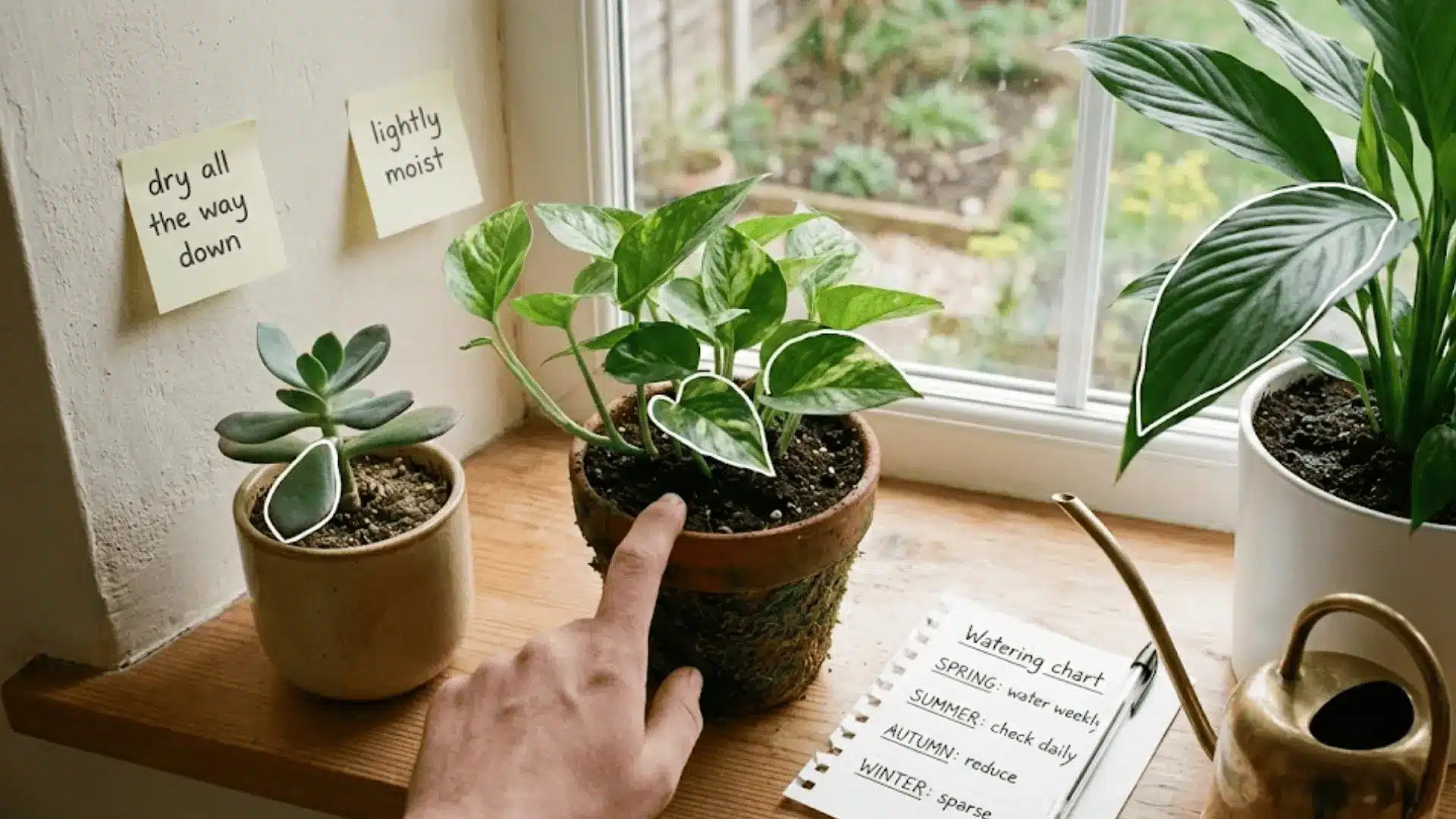
Watering isn’t really about a set schedule; it’s about reading your plant and adjusting as you go. A few general rules make that a whole lot easier.
Broad Guidelines That Actually Work
Before anything else, get into the habit of checking your soil before you water, not the calendar. A quick finger test tells you more than any schedule can:
- Most houseplants water when the top inch or two of soil feels dry to the touch.
- Succulents & cacti let the soil dry out much deeper, around two to three inches down, before watering again.
- Tropical plants like pothos and peace lilies prefer soil that stays lightly moist but never sits in water.
How the Seasons Change Everything
Your plant’s water needs don’t stay the same year-round, and adjusting with the seasons is one of the easiest ways to keep them thriving.
During spring and summer, plants are actively growing and drinking more, so watering more frequently makes sense.
Come fall and winter, growth slows down significantly, and overwatering becomes an even bigger risk. Pull back, let the soil dry a little longer between waterings, and your plants will be far better off.
A Quick Look at How Often to Water Common Houseplants
Every plant has its own rhythm, and knowing what yours generally prefers takes a lot of the guesswork out of your routine.
Some plants, like peace lilies and pothos, also double as air-purifying houseplants, quietly improving your indoor air while sitting on a shelf. Think of this as a starting point, not a strict rule.
| Plant Type | Frequency | Light Needs | Soil Preference |
|---|---|---|---|
| Succulents & Cacti | Every 2–3 weeks | Bright, direct | Fully dry between waterings |
| Spider Plant | Every 7–10 days | Indirect | Slightly dry between waterings |
| Peace Lily | Every 5–7 days | Low to indirect | Consistently moist |
| Pothos / Philodendron | Every 1–2 weeks | Low to indirect | Partially dry between waterings |
| Snake Plant | Every 2–3 weeks | Any | Fully dry between waterings |
Always check the soil before watering: humidity, pot type, and season can shift these numbers.
Your Plant is Talking: Here’s How to Listen!
Plants are pretty vocal once you know what to look for, especially common houseplants that are easy to grow indoors, which tend to show stress signals more visibly.
Before you reach for the watering can, check in with these signs first.
Underwater signals:
- Leaves look droopy, sad, or starting to curl inward
- Soil feels bone dry an inch or two down
- Leaf edges are turning brown and crispy
- The pot feels unusually light when you pick it up
Overwatering signals:
- Leaves are yellowing without an obvious reason
- Stems feel soft or mushy near the base
- You’re noticing fungus gnats hovering around the soil
- Soil stays wet for days after your last watering
Getting this right is less about a perfect schedule and more about checking in with your plant regularly. Once you start noticing these cues, overwatering becomes a lot harder to do by accident.
How to Stop Overwatering Before It Becomes a Problem?
Overwatering rarely happens all at once; it builds up quietly over time. A couple of small habit shifts are genuinely all it takes to turn things around.
Ditch the Fixed Schedule
Watering by the calendar is where most plant parents go wrong. Your plant’s needs shift with the seasons, the light, the humidity, and even the pot it’s sitting in.
Always let the soil guide you, not the date.
| Season | Watering Frequency | Soil Check Depth | Key Consideration |
|---|---|---|---|
| Spring & Summer | More frequent | 1–2 inches | Active growth, higher water uptake |
| Fall & Winter | Less frequent | 2–3 inches | Slow growth, higher overwatering risk |
| Humid Climates | Pull back slightly | 1–2 inches | Soil retains moisture longer |
| Dry/Heated Indoors | Increase slightly | 1–2 inches | Evaporation speeds up drying |
Small Habits That Make a Big Difference
The right setup does a lot of the heavy lifting for you.
- Always use pots with drainage holes so excess water has somewhere to go.
- Terracotta pots dry out faster and are naturally more forgiving for over-enthusiastic waterers.
- Match pot size to your plant; too large and the soil stays wet far longer than it should.
- A moisture meter takes the guesswork out entirely if you want something more precise.
Mistakes That are Easy to Make and Easier to Fix
Most watering problems come down to the same handful of habits. Here’s what to watch for and how to course-correct quickly.
- Watering After Repotting Immediately: Freshly repotted plants need a few days to settle before their next watering; jumping in too soon stresses the roots further.
- Using Cold Tap Water: Water that’s too cold can shock tropical plant roots. Letting it sit out for an hour brings it closer to room temperature.
- Watering Leaves Instead of Soil: Moisture sitting on leaves invites fungal issues; always direct water straight to the base of the plant.
- Ignoring Pot Material: Plastic retains moisture significantly longer than terracotta; watering both on the same frequency sets one of them up to fail.
- Misting as a Substitute for Watering: Misting raises surface humidity briefly but does nothing for root hydration; it’s a supplement, not a swap.
Once these habits click, most common plant problems sort themselves out naturally. Small, consistent checks beat any watering schedule out there.
The Closing Note
Learning how often to water indoor plants is less about memorizing rules and more about building a quiet, observant habit.
Check the soil, notice the leaves, adjust with the seasons, and trust yourself to read what your plant is telling you.
The more you tune in, the more intuitive it gets. And honestly, watching a plant genuinely thrive because of small, consistent care is one of the most rewarding parts of having them around.
Tried any of these tips? Drop your experience in the comments below!