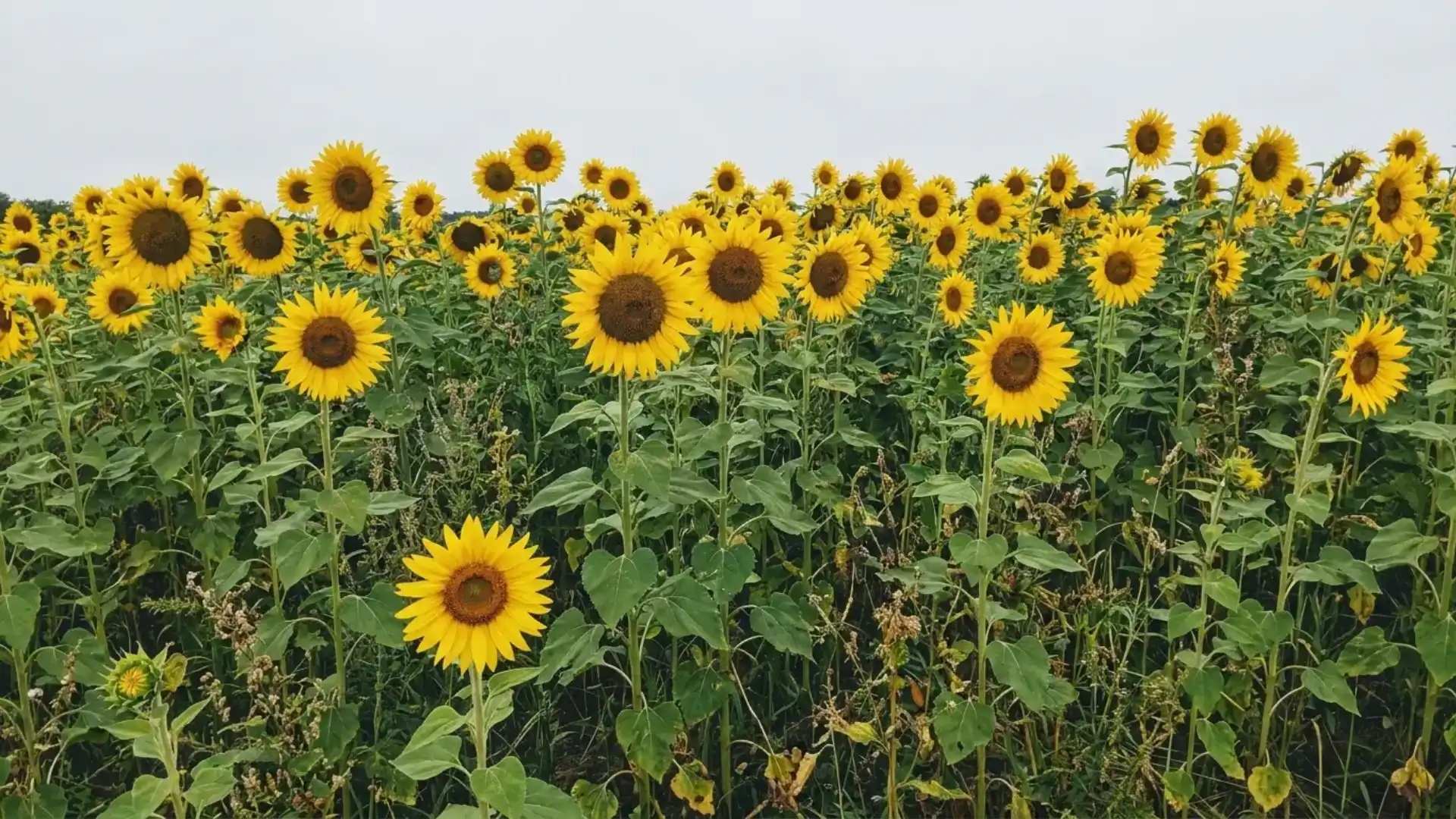
My first sunflower patch grew from three leftover seed packets and zero expectations.
I stuck them along a fence, walked away, and forgot about them for two weeks.
By July, they were taller than me, and I hadn’t done a single thing to earn that.
Growing sunflowers works that way more often than not: minimal effort, maximum payoff. They shrug off bad soil, skip past most pests, and still throw up blooms the size of dinner plates.
This blog covers choosing a variety, planting timing, feeding, container growing, and seed saving for next year.
Why Sunflowers Are One of the Easiest Flowers to Grow
Sunflowers ask for less than almost any other flower.
They germinate fast, often within a week, and rarely fail once the seed hits warm soil.
Their roots dig deep, which helps them shrug off dry spells that would stress shallower-rooted plants. Heat rarely slows them down. Compacted or poor soil doesn’t stop them either; the roots actually help break it up over time.
Established plants need little pest control, since few insects bother them seriously.
For a first-time gardener, that mix of speed, toughness, and low fuss is hard to match.
Choosing the Right Sunflower Variety Before You Plant
Choosing the right variety depends on a few simple decisions that align with your available space and objectives.
| Types | Key Traits | Best For |
|---|---|---|
| Single-stem | One large bloom, fast, uniform | Cut flowers, tight spacing |
| Branching | Multiple blooms over time | Borders, bigger harvests |
| Giant (Mammoth, American Giant) |
8-16 feet, large heads | Seed harvest, focal points |
| Dwarf (Teddy Bear, Big Smile) |
1-3 feet, compact | Pots, patios, no staking |
| Pollen-producing | Attracts pollinators, sheds pollen | Pollinator gardens |
| Pollen-free (ProCut, Sunrich) |
No mess, longer vase life | Cut flowers, indoors |
| Yellow, burgundy, bronze, bicolor | Wide range of shades | Matching garden or bouquet style |
| Open-pollinated | Stays true if replanted | Saving seeds yearly |
| Hybrid | Bred traits, won’t replant true | One-season growing |
Sunflower Bloom Timeline
Understanding the timeline helps you schedule succession plantings and predict initial blooms.
- Days to Maturity: Most varieties bloom in 50 to 100 days from planting, depending on the cultivar.
- Fast-Blooming Types: ProCut and Big Smile flower on the shorter end, around 50 to 65 days.
- Slower Giant Varieties: Larger cultivars like Mammoth can take closer to 80 to 100 days to mature.
- Bloom Season: Expect flowering from mid-summer to early fall, depending on seed planting time.
- Bloom Duration Per Flower: A single sunflower head typically stays in bloom for 3 to 4 weeks once open.
How to Plant and Care for Growing Sunflowers?
After choosing a variety, the next step is timing and setup.
Choose the correct planting window, location, and soil, and your sunflowers will mostly take care of themselves.
Best Time to Plant Sunflowers
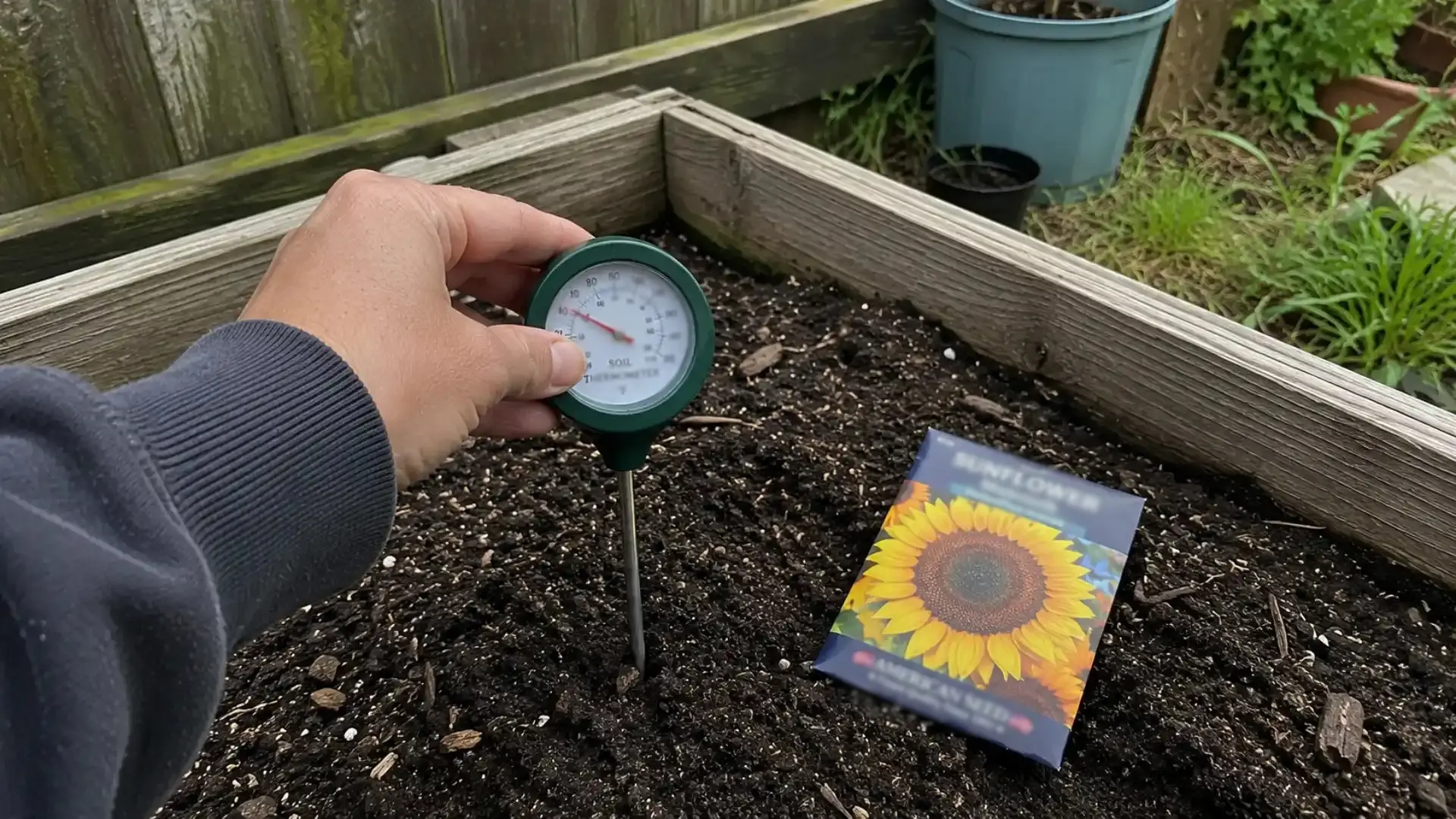
Sunflowers are tender annuals that cannot handle frost, so getting the timing right from the start makes a real difference in how well they germinate and establish themselves in the weeks that follow.
- Wait until all frost danger has passed and soil temperature reaches at least 50°F.
- Plant from late spring through early summer, adjusted for your USDA zone.
- Sow new rows every two to three weeks for continuous blooms all season.
Because sunflowers stall out in cold soil, reading soil temperature by zone before you sow gives a clearer picture than counting days on a calendar.
Tip: Use a soil thermometer instead of guessing. It takes the guesswork out of planting too early.
Choosing the Right Spot in Your Garden
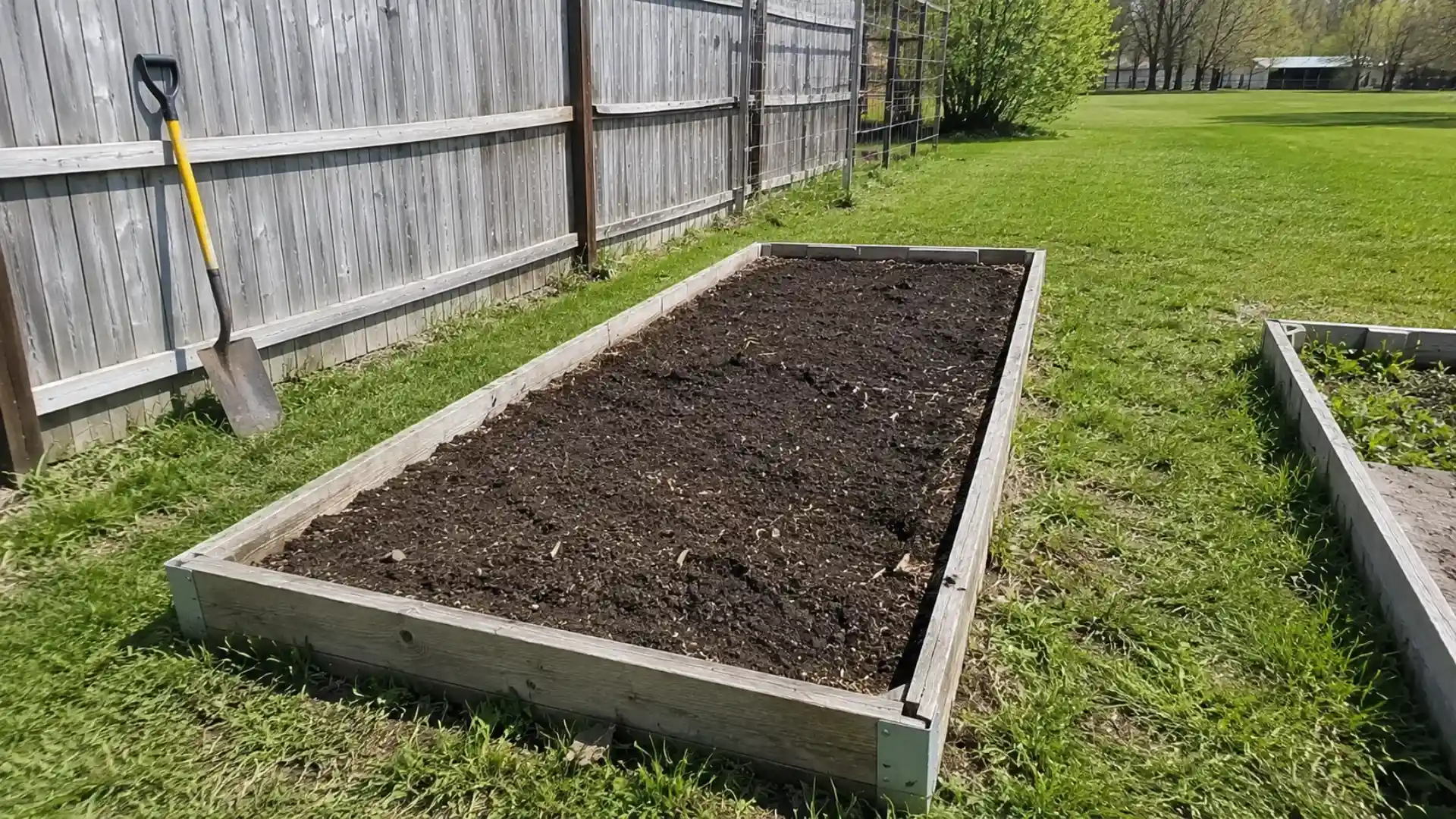
The spot you choose has a bigger impact on your sunflowers than almost any other decision, since it directly affects stem strength, root health, and how full and bright the blooms turn out.
A shady corner might still grow a stalk, but the flower head will lean and stay small. Full sun is non-negotiable here.
- Pick a site with 6-8+ hours of direct sunlight daily.
- Skip low-lying areas where water tends to pool.
- Add a windbreak or fence line for taller cultivars.
Tip: Morning sun with light afternoon shade helps in especially hot climates.
Preparing the Soil
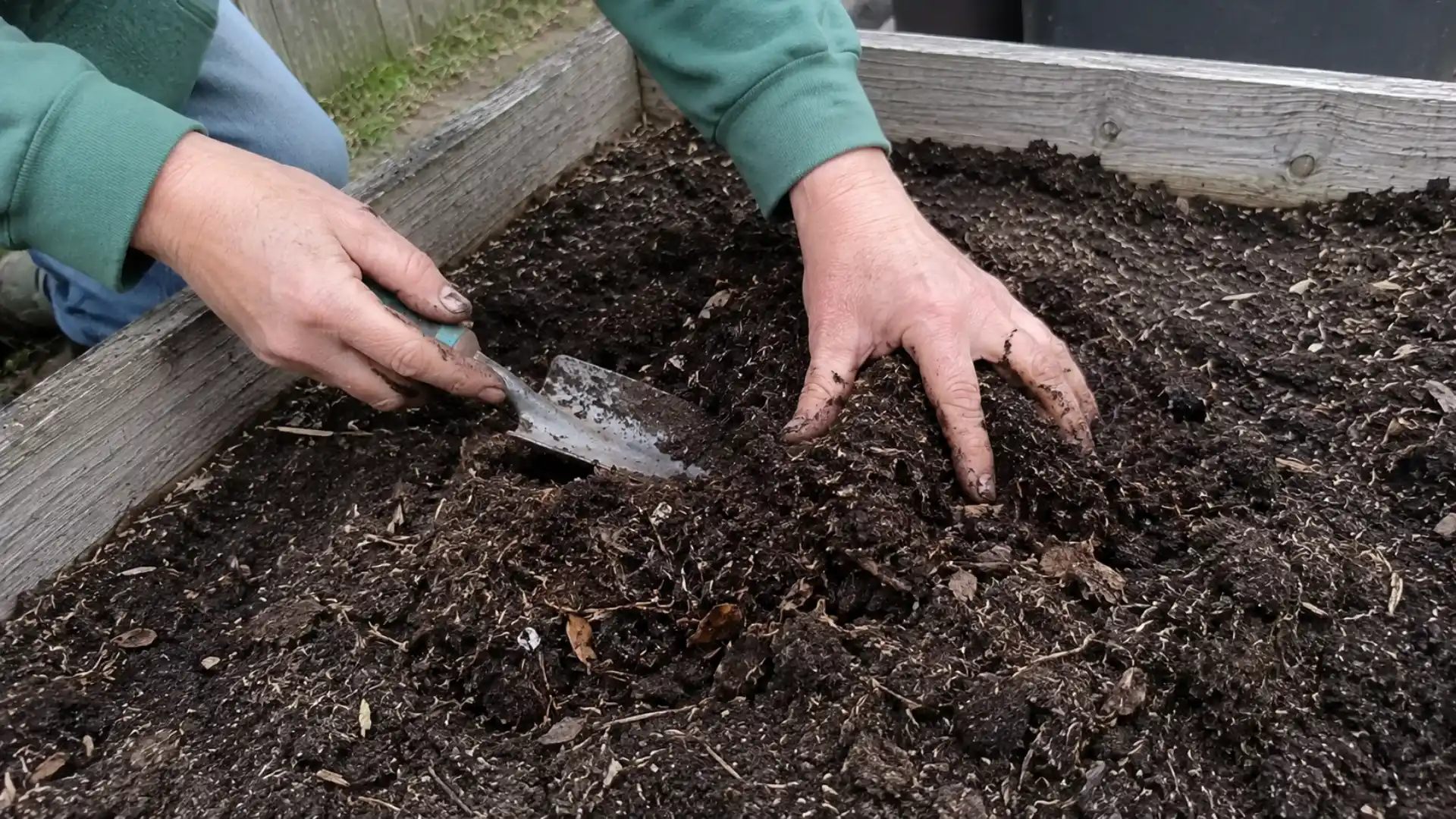
Sunflowers are not particularly fussy plants, but taking a little time to prep the soil beforehand goes a long way toward stronger roots, sturdier stems, and more consistent blooms.
- Aim for a pH range of 6.0 to 7.5.
- Work compost into heavy clay or compacted soil.
- Test soil before planting to catch any deficiencies early.
Planting the Sunflower Seeds
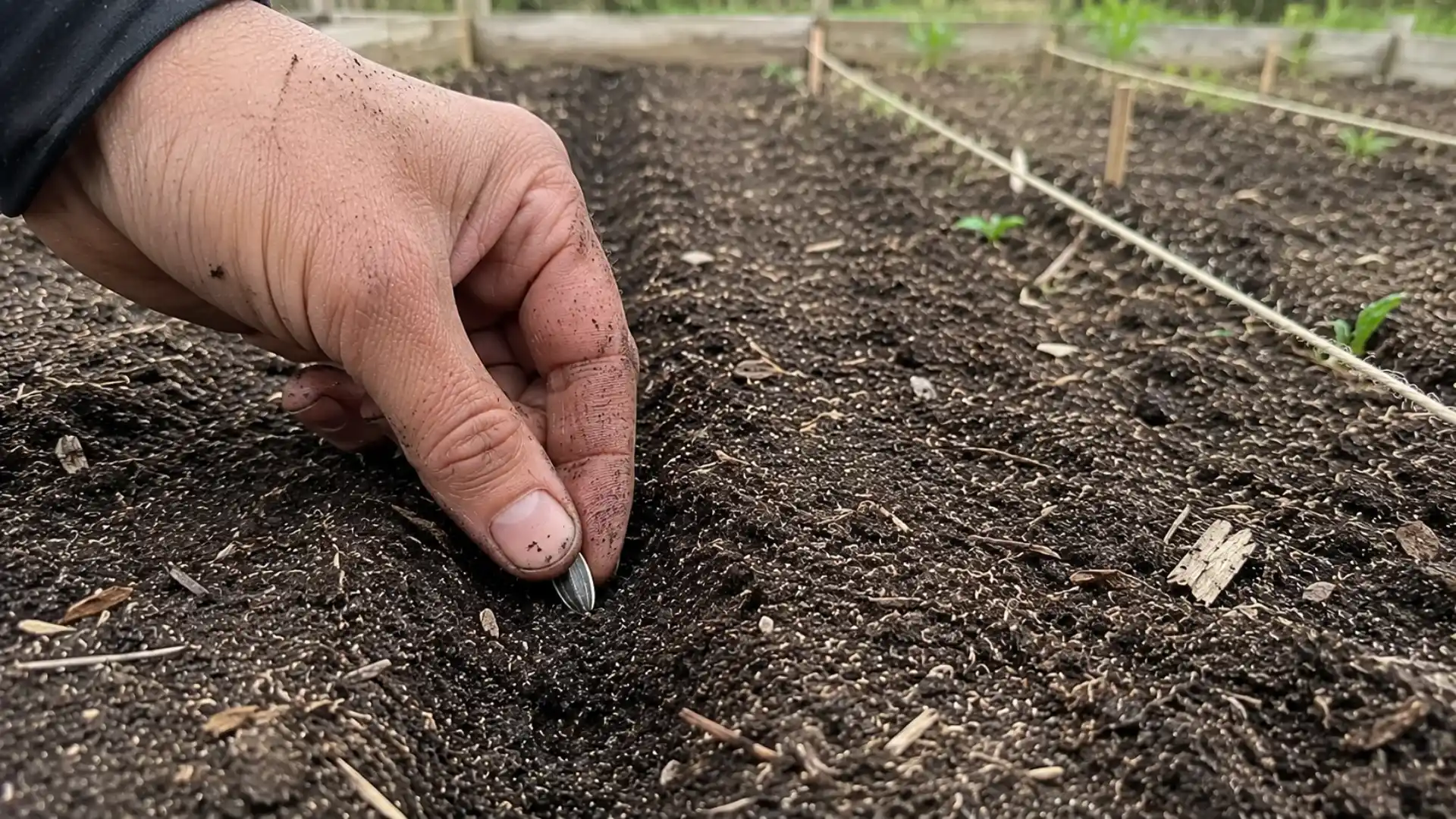
Planting sunflowers is fairly simple whether you sow seeds directly outdoors or start them indoors first, but getting the depth and spacing right early on prevents crowding and weak stems later.
- Direct-sow seeds 1 to 2 inches deep, spaced by variety type.
- Start seeds indoors in biodegradable pots for shorter growing seasons.
- Harden off transplants gradually before moving them outdoors.
Tip: Sunflowers dislike disturbed roots, so handle transplants gently and only once.
Watering Sunflowers the Right Way
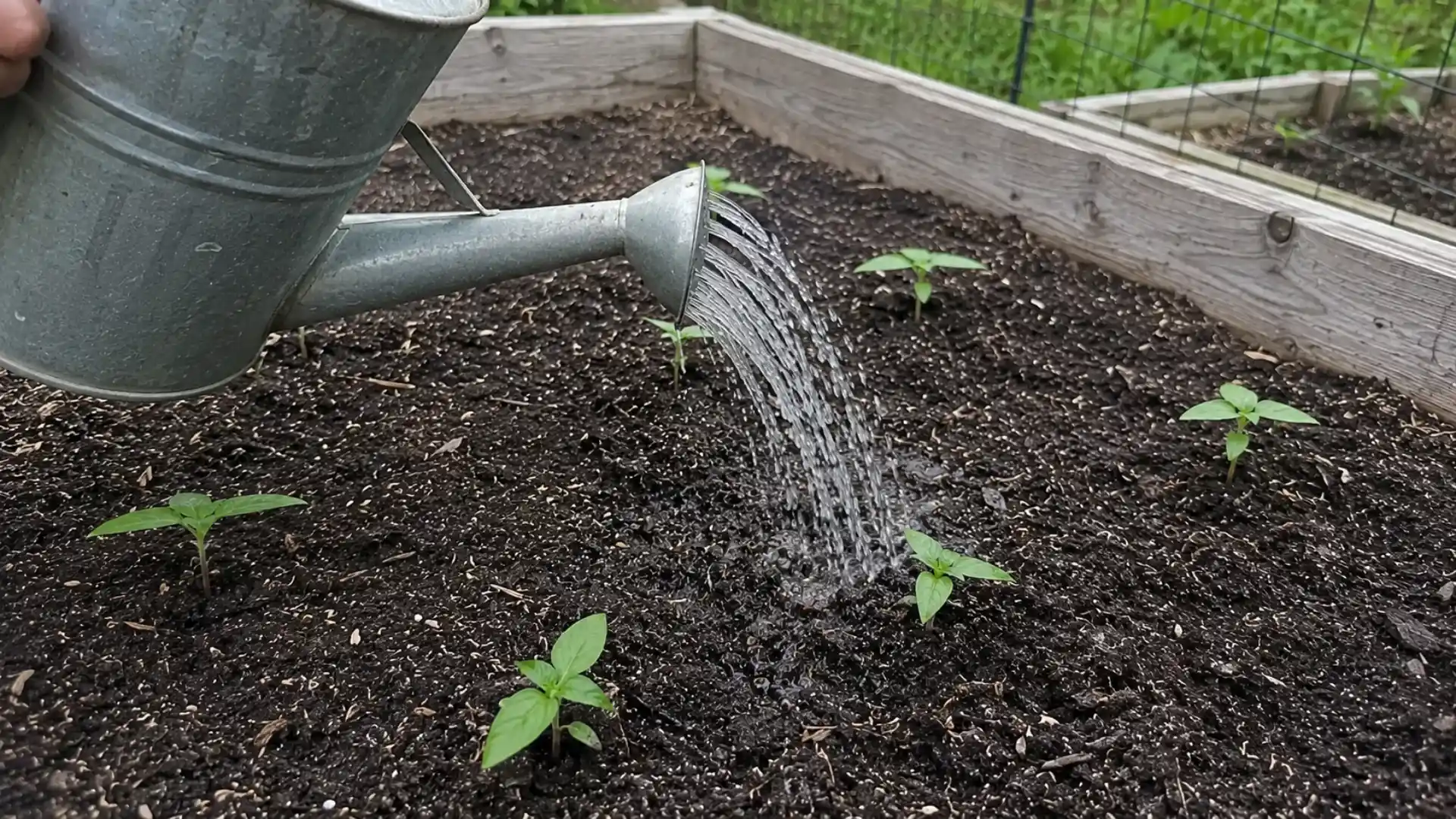
How much water your sunflowers need changes as they grow, so watering seedlings the same way you water an established plant usually does more harm than good. Young roots sit close to the surface and dry out fast.
Mature roots grow deeply and require a completely different rhythm.
- Water seedlings lightly and daily until roots establish.
- Switch to deep watering, about 1 inch per week, once established.
- Water at soil level, not overhead, to reduce fungal risk.
Tip: Containers dry out faster, so check soil moisture there daily during hot stretches.
Feeding Sunflowers for Bigger Blooms
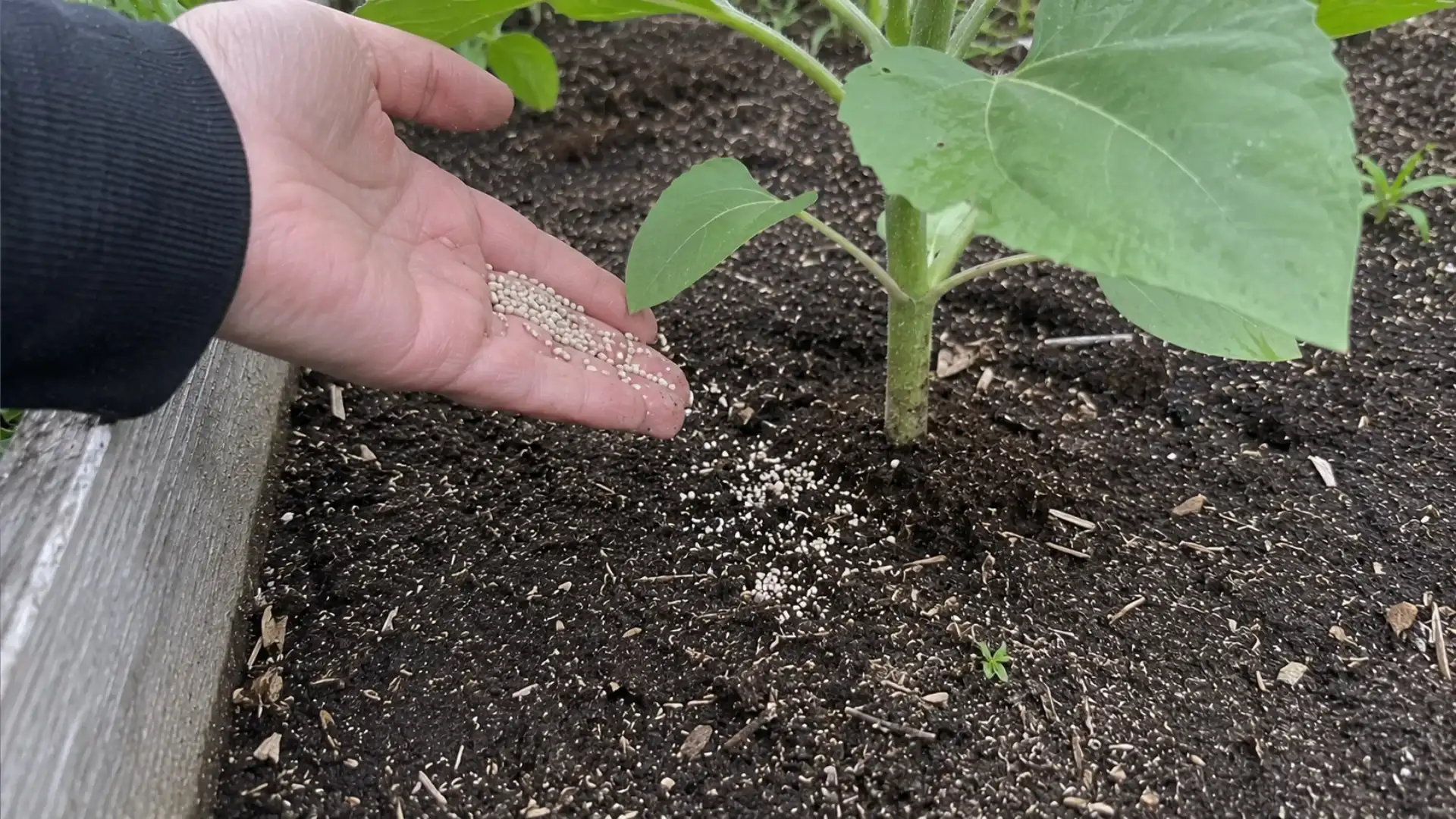
Fertilizer timing and type have a direct impact on how large and full your sunflower blooms turn out, and using the wrong formula is one of the most common mistakes gardeners make.
The wrong feed can grow a tall, leafy plant with a disappointing flower. Getting the ratio right fixes that fast.
- Use a balanced or phosphorus-rich fertilizer for stronger blooms.
- Avoid high-nitrogen formulas, which push leaves over flowers.
- Split fertilizer applications between planting and mid-season.
Staking and Supporting Tall Sunflowers
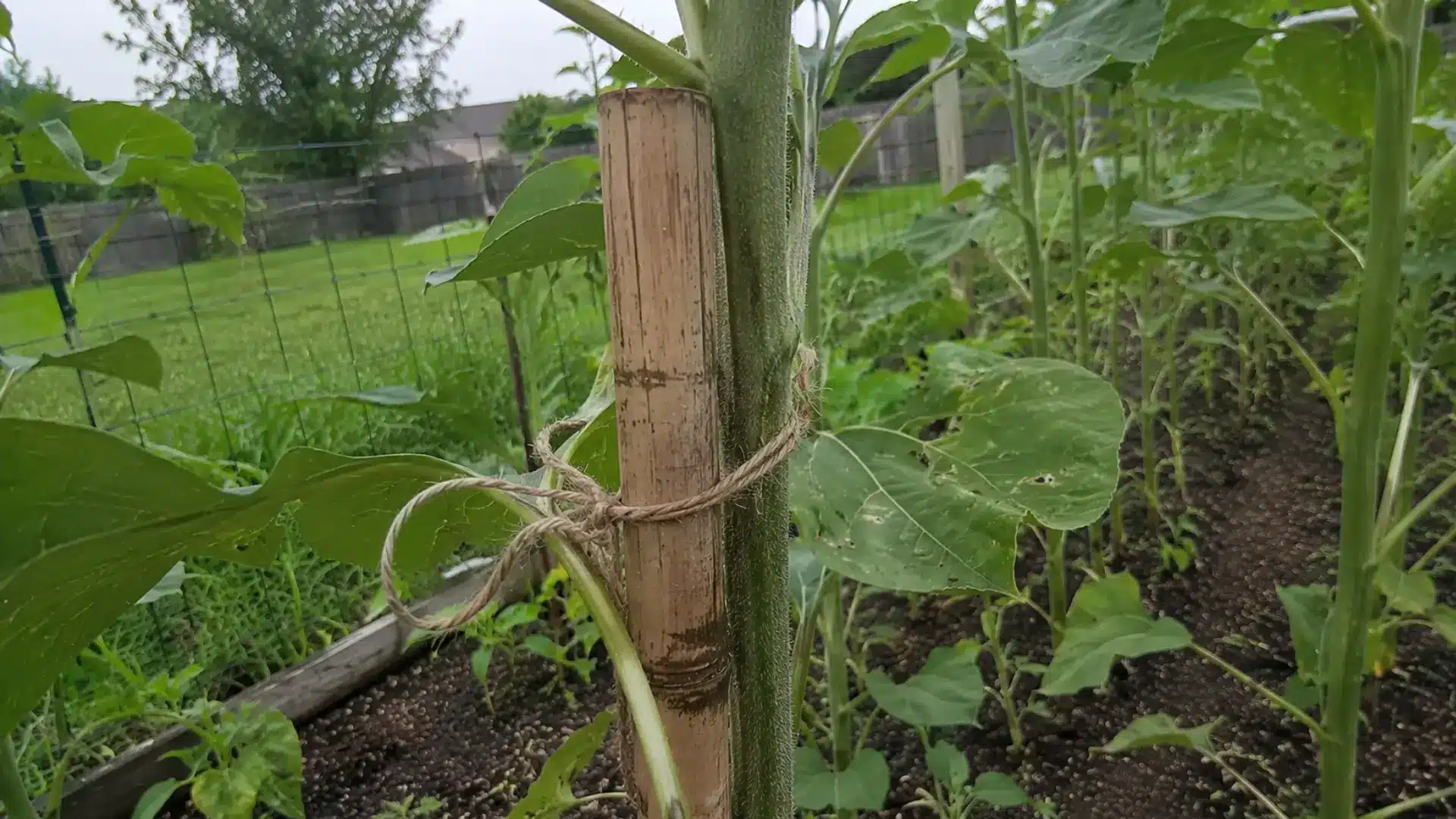
Giant varieties can grow impressively tall in a short amount of time, but that height also makes them prone to toppling in wind unless they get support early on. A single storm can snap an unsupported stalk overnight.
Staking early takes only a few minutes but saves time for the entire plant later.
- Drive a stake a few inches from the base before plants get top-heavy.
- Match stake height to the plant’s expected mature size.
- Tie stems loosely with soft twine to avoid damage.
Tip: For rows of tall sunflowers, a simple stake-and-string lattice works better than individual ties.
Weed Control and Mulching
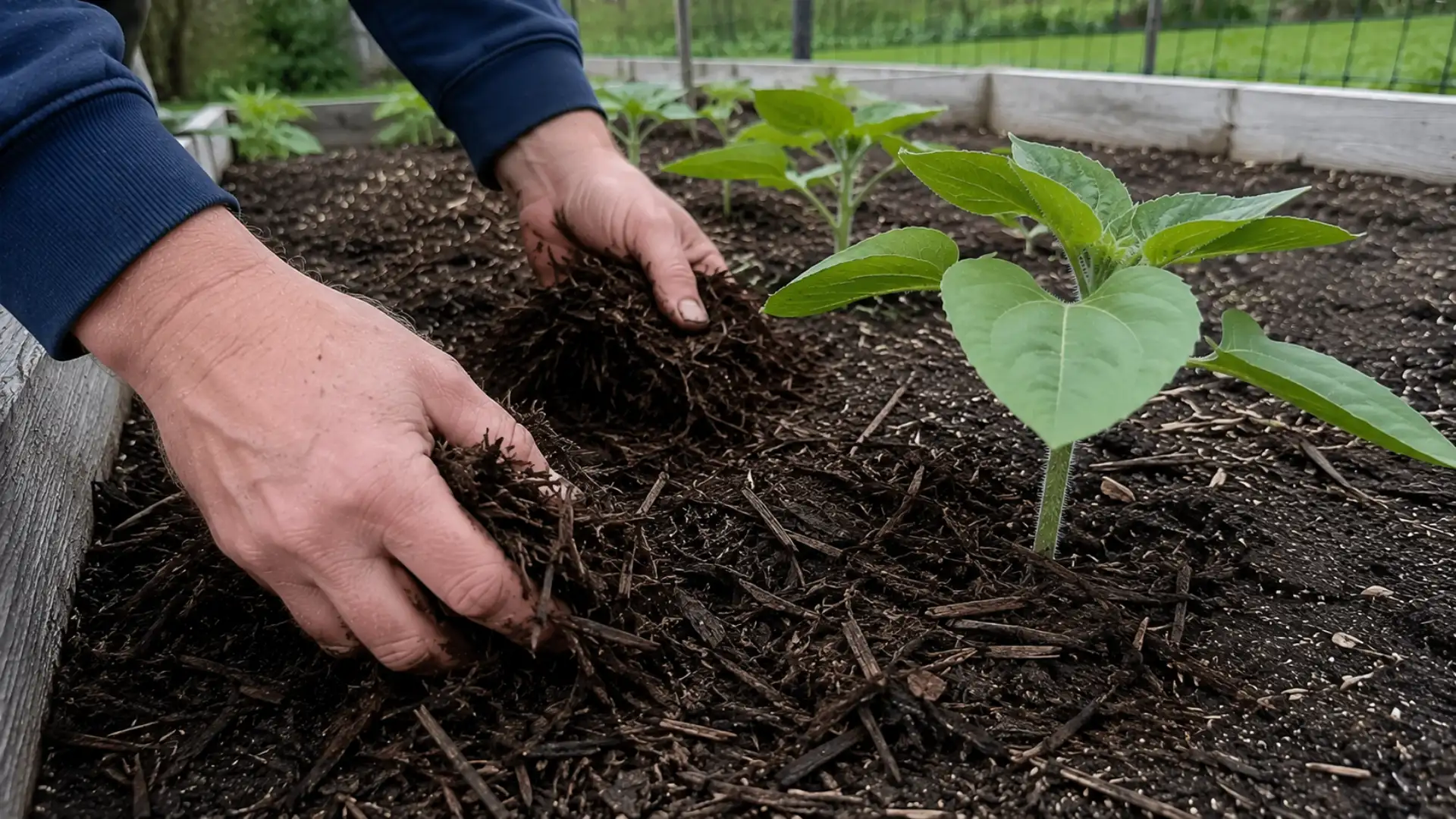
Weeds compete hardest with young sunflowers before the plants have a chance to establish themselves, so a bit of early upkeep saves a lot of hassle later in the season.
Weeds steal water and nutrients right when seedlings need them most. A dense mulch layer can address most of the issue on its own.
Finding the right mulch depth for beds keeps moisture in without smothering young sunflower roots.
- Hand-pull or hoe weeds while seedlings are young.
- Apply a 2- to 3-inch layer of mulch around the base.
- Reduce watering frequency once mulch is in place, since it holds moisture.
Tip: Once sunflowers are established, they usually outgrow and outcompete weeds on their own.
Growing Sunflowers in Pots and Containers
Containers give you flexibility; ground beds do not. Pots can be moved to chase sun, dodge a late frost, or shift indoors during a storm. Stick to one plant per pot; crowded roots stunt growth fast.
Self-watering containers ease the swings between soaked and bone-dry soil.
Blooms often run smaller than garden-grown giants, since roots have less room to fuel size. This makes containers a fit for balconies, patios, or small courtyards with no open ground.
Grouping several pots together creates a fuller look without needing a garden bed at all.
Start seeds straight in the final pot to skip a second root disturbance.
Common Sunflower Pests and Diseases
Sunflowers are generally low-maintenance, but a handful of pests and diseases can still show up over the season.
Most of these issues can be easily managed through regular observation. Learning to spot different aphid types early makes it much easier to catch a colony before it spreads to nearby stems.
| Category | Culprit | Signs | Prevention/Fix |
|---|---|---|---|
| Insects | Aphids | Clustered growth, distorted leaves | Blast with water; insecticidal soap |
| Stem weevils/borers | Weak stems, plants falling over | Rotate sites; remove affected stalks | |
| Cutworms | Seedlings cut at the base | Clear weeds; hand-pick at night | |
| Disease | Downy mildew | Yellow patches, gray fuzz underneath | Space well; rotate location yearly |
| Powdery mildew | White powder on leaves | Improve airflow; remove affected leaves | |
| Sclerotinia rot | Brown rot at stem base | Avoid overwatering; ask local extension | |
| Wildlife | Deer | Young plants eaten | Fencing or repellents |
| Birds | Seeds pecked from heads | Cover heads with mesh netting | |
| Squirrels | Dig up seeds, gnaw heads | Mesh covering; cayenne pepper |
Deadheading Branching Sunflowers
Branching varieties benefit from some maintenance after blooms fade. When a flower’s petals wilt and fall, follow the stem down to the next leaf node or side branch and remove it with clean, sharp pruners.
This redirects the plant’s energy from sustaining a faded bloom to focusing on growing new buds.
It also allows the plant to produce fresh flowers for several additional weeks. Check plants every few days during peak season to stay ahead of it.
Single-stem giants are a different story. These varieties produce just one large flower head per plant, so there is nothing to deadhead.
Instead, let that head mature fully on the stalk if you are planning to harvest seeds later.
Harvesting Sunflowers for Bouquets
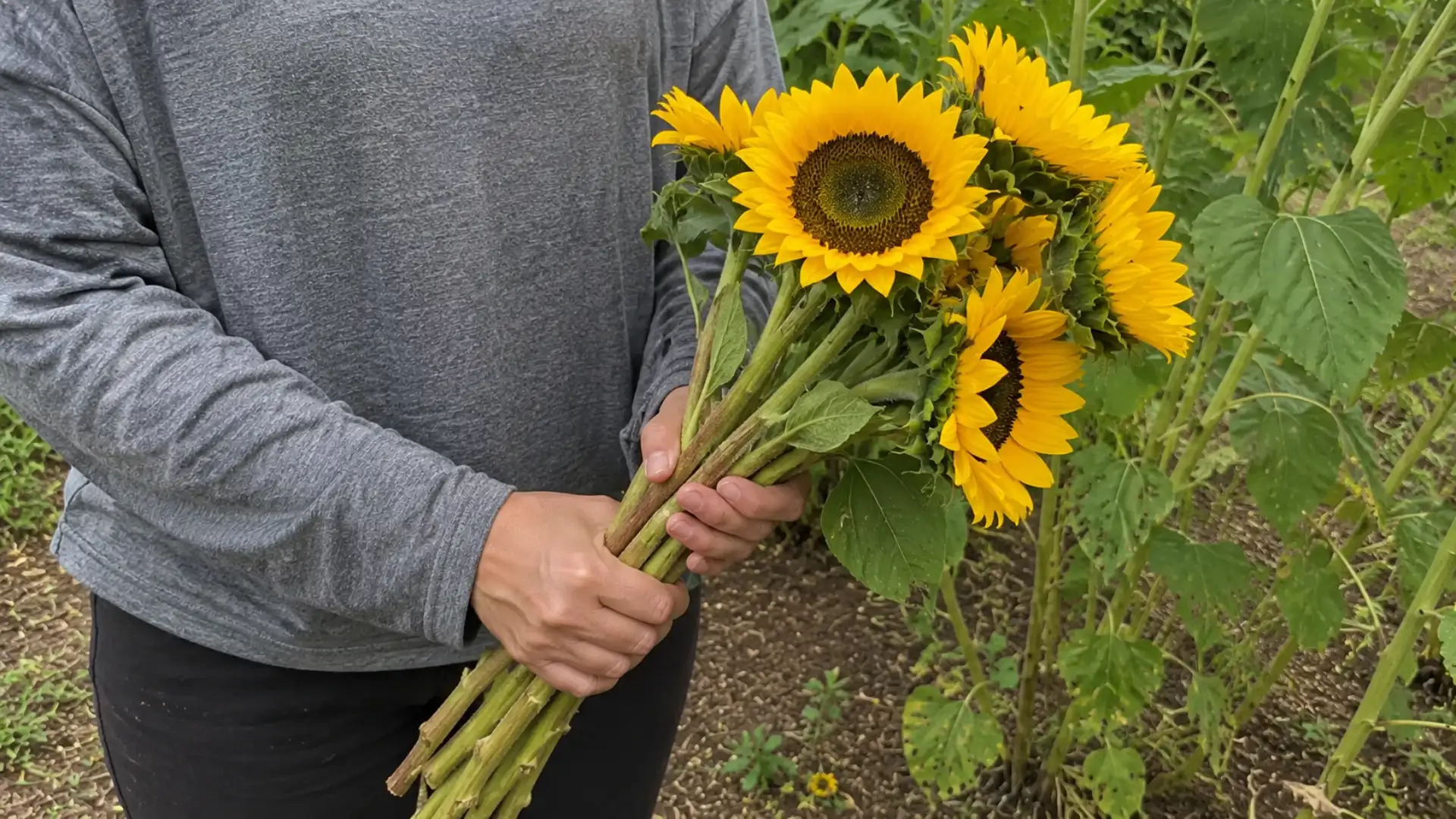
Consistent small practices during harvest can significantly influence the outcome.
- Best Time to Cut: Early morning, when stems are most hydrated, and temperatures are cool.
- Best Bloom Stage: Just as petals begin to lift away from the center, before the flower fully opens.
- Cutting Technique: Use clean, sharp shears and cut at a 45-degree angle for better water uptake.
- Stem Length: Leave at least 18 to 24 inches of stem for arranging flexibility.
- Leaf Removal: Strip any leaves that would sit below the waterline to prevent bacterial growth.
- Immediate Care: Place cut stems straight into a bucket of cool water.
- Expected Vase Life: 7 to 10 days when harvested and handled correctly.
A little care while cutting is all it takes. Follow these steps to keep your sunflowers fresh and bright beyond the first week in the vase.
Growing Sunflowers for Pollinators and Wildlife
Sunflowers bloom late in the season, right when many other nectar sources have faded.
That timing makes them a lifeline for bumblebees and native bees still active into fall.
Migrating monarch butterflies also stop at sunflower patches for a quick nectar refuel.
Skip insecticide sprays during bloom; even organic options can harm visiting bees. Chickadees and nuthatches join goldfinches at the seed heads once winter sets in, stretching the wildlife value well past summer.
A few unharvested plants left standing through frost keep feeding backyard birds all season long, at no extra effort on your part.
Growing Sunflowers Through the Seasons
Sunflower care changes with the seasons, and understanding each stage allows you to prevent issues rather than just respond to them.
| Season | What to Do |
|---|---|
| Spring | Sow seed once soil hits 50°F; stagger plantings every 2-3 weeks for continuous blooms |
| Early Summer | Watch for aphids and cutworms; stake tall varieties before they get top-heavy |
| Midsummer | Peak bloom for most varieties; deadhead branching types to keep new flowers coming |
| Late Summer & Fall | Let seed heads mature for saving, or leave them for birds; clear spent stalks once frost hits |
Common Mistakes to Avoid When Growing Sunflowers
Most sunflower issues often stem from a few small mistakes.
Avoiding these issues greatly streamlines the overall growth process.
- Too much water suffocates roots and leads to rot; let the top 2 inches of soil dry out between waterings.
- Encourages leaves over blooms; use a balanced or phosphorus-rich feed instead.
- Cold, wet soil delays germination and invites disease; wait until soil hits at least 50°F.
- Poor spacing limits airflow and invites fungal issues like downy mildew.
- Tall varieties left unsupported are prone to toppling in wind or heavy rain.
Wrapping Up
Growing sunflowers isn’t a project that needs constant attention, and that’s precisely the point.
Pick a variety suited to your space, get seed into warm soil, and water on a schedule the plant can count on.
That encompasses the majority of the work.
The rest is small: staking a tall stalk, pulling weeds, saving a seed head for spring. Watch the first bloom open, and you will understand why growing sunflowers hooks people who swore they didn’t have a green thumb.
Plant a row this season and tell me which variety pulled through best for you.
Frequently Asked Questions (FAQs)
Are Sunflowers Toxic To Dogs, Cats, or Other Pets?
No, sunflowers are non-toxic to dogs, cats, and humans, making them a safe choice for pet-friendly gardens.
Can I Grow Sunflowers From a Bag Of Birdseed?
Birdseed sunflowers can grow, but they are often hybrids or hulled, so germination and growth are not guaranteed.
Are Sunflowers Good Companion Plants For a Vegetable Garden?
Sunflowers attract pollinators and beneficial insects and offer light shade or a trellis for climbing vegetables.
How Long Do Saved Sunflower Seeds Stay Viable For Planting?
Properly dried and stored sunflower seeds typically stay viable for two to three years.
Can Sunflowers Trigger Pollen Allergies Indoors?
Pollen-free cultivars like ProCut or Sunrich avoid indoor allergy issues caused by pollen-producing varieties.