Most gardeners run into a handful of aphid types more often than others.
A few distinct features help you identify them. But traits vary within a species, so it pays to check your host plant first.
For years, I ignored the little bugs huddled on stems and under leaves. They seemed harmless until my plants curled and yellowed. Here’s how to tell each type apart, which plants each targets, and what to do once you find them.
What Are Aphids and How Do You Recognize Them?
The types of aphids you’re likely to see in a home garden are the green peach, black bean, oleander, woolly apple, rose, cabbage, potato, melon, pea, rosy apple, and lettuce root aphids.
The quickest way to tell them apart is the plant they’re on, then their color and any waxy coating.
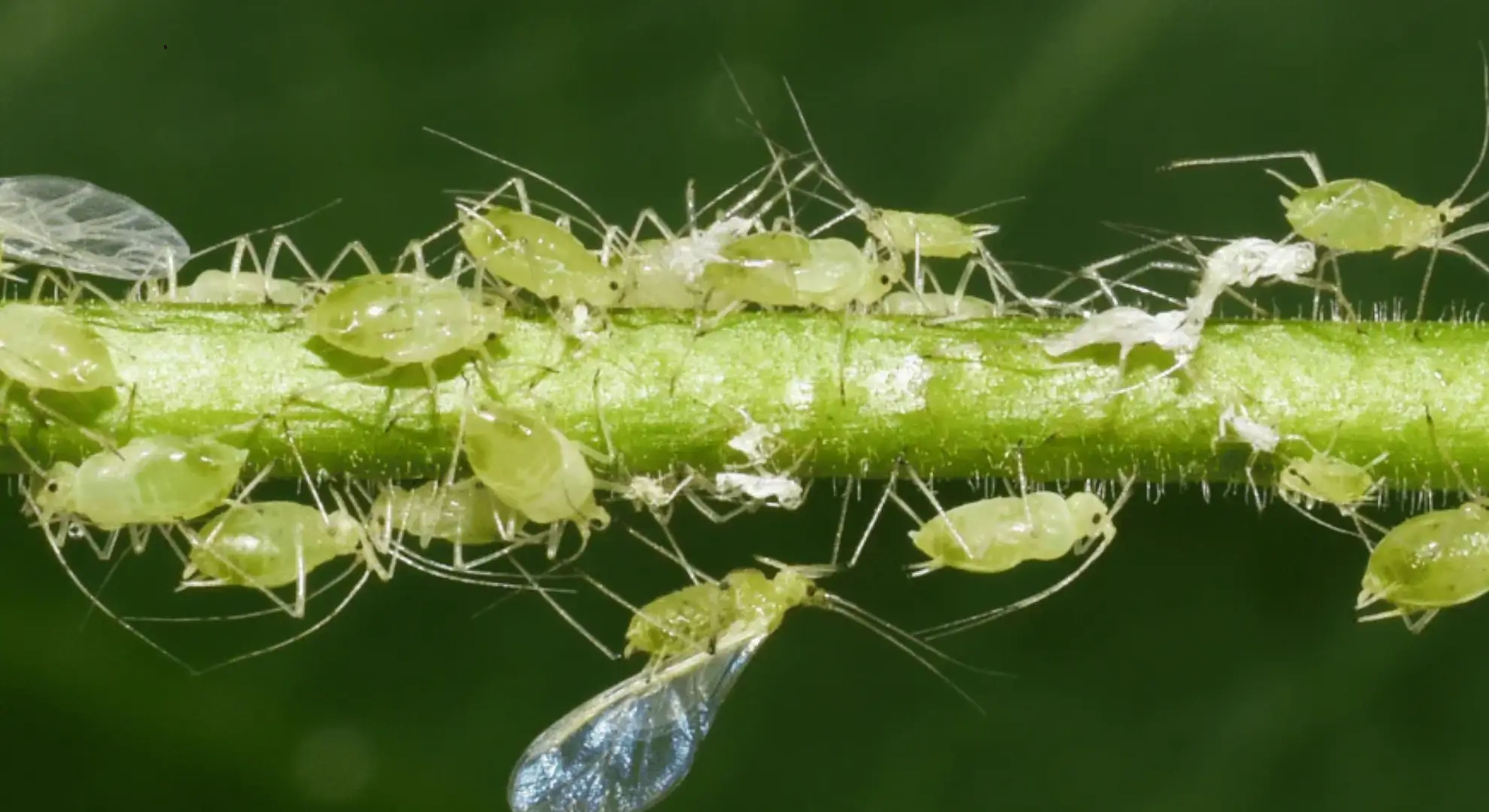
Aphids are small, soft-bodied insects that feed on plant sap. Most are about the size of a pinhead, and garden species run 1 to 7 mm (¼ inch or less) long. They have pear-shaped bodies and long legs, and they move slowly.
You’ll usually find them clustered on the undersides of leaves, along stems, and near buds.
That slow, clustered habit sets them apart from leafhoppers, which dart off as soon as you disturb them.
Woolly aphids are the exception. They and mealybugs both hide under white wax, so they’re easy to mix up.
Most aphids have a pair of tubelike cornicles at the rear, and no other insect shares that feature. If you spot the two tubes, you’ve confirmed an aphid, with the exception of root aphids, whose tubes are barely visible.
To feed, aphids pierce the plant with their mouthparts and suck out the sap, which is rich in sugar and fuels their growth and reproduction. When feeding is heavy, your plant may weaken, yellow, or curl.
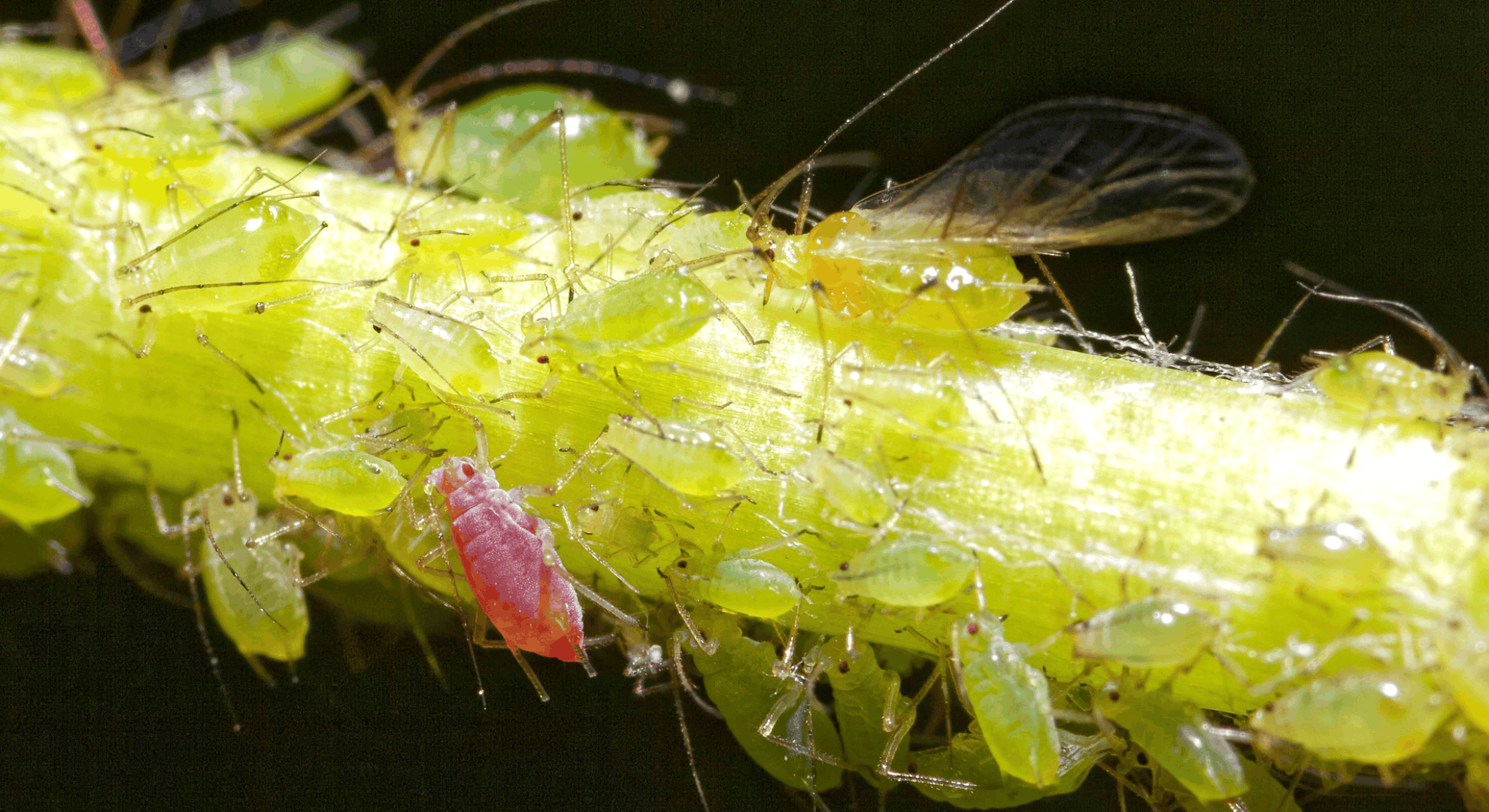
Color varies a lot, even within one species.
Aphids can be green, black, yellow, red, brown, or white, depending on species, age, and host plant, and some look like specks of dirt. So if the color isn’t clear, grab a hand lens and take a closer look.
Types of Aphids and How They Are Classified
Scientists have described about 5,000 aphid species around the world, but only a small share of them bother crops and garden plants. In most gardens, only a few types show up often.
Many species stick to certain wild plants or live in places people don’t usually notice.
Scientists sort aphids using fine details such as the length of the cornicles and the shape of the tail-like cauda.
These systems help researchers, but they’re usually too complex for everyday use. For gardeners and plant owners, aphids are grouped in simpler, more practical ways that focus on what they feed on, what they look like, and how they behave.
Common ways aphids are grouped:
-
By host plant: Some aphids only feed on one kind of plant (like rose aphids on roses).
-
By appearance: Their color and size can help you tell them apart (green, black, red, or covered in wax).
-
By behavior: Some grow wings and fly to new plants; others stay put and build large groups.
These groupings narrow down which aphid you have, and the host plant is usually the quickest clue.
Common Types of Aphids You’ll Likely See
Most people only notice a few kinds of aphids, even though many exist.
These common types often appear on garden plants, shrubs, and trees. They’re easy to spot once you know what to look for.
|
Aphid |
Color |
Where you’ll find it |
|---|---|---|
|
Green peach |
Pale green or brownish |
Peppers, potatoes, lettuce, stone fruit, asters |
|
Black bean |
Shiny black or dark brown |
Beans, nasturtiums, beets, celery |
|
Oleander |
Bright yellow, black legs |
Milkweed, oleander |
|
Woolly apple |
Purple-brown under white fluff |
Apple and pear bark |
|
Rose |
Green or pinkish-red |
Rose buds and shoots |
|
Cabbage |
Grayish-green, waxy |
Cabbage, broccoli, kale |
|
Potato |
Green or pink |
Potatoes, tomatoes, peppers |
|
Melon |
Yellow to near-black green |
Melons, cucumbers, citrus |
|
Pea |
Green, long legs |
Peas and other legumes |
|
Rosy apple |
Dull pink or purple-gray |
Apple leaves and young fruit |
|
Lettuce root |
Yellowish-white, waxy |
Lettuce roots |
Green Peach Aphid (Myzus persicae)
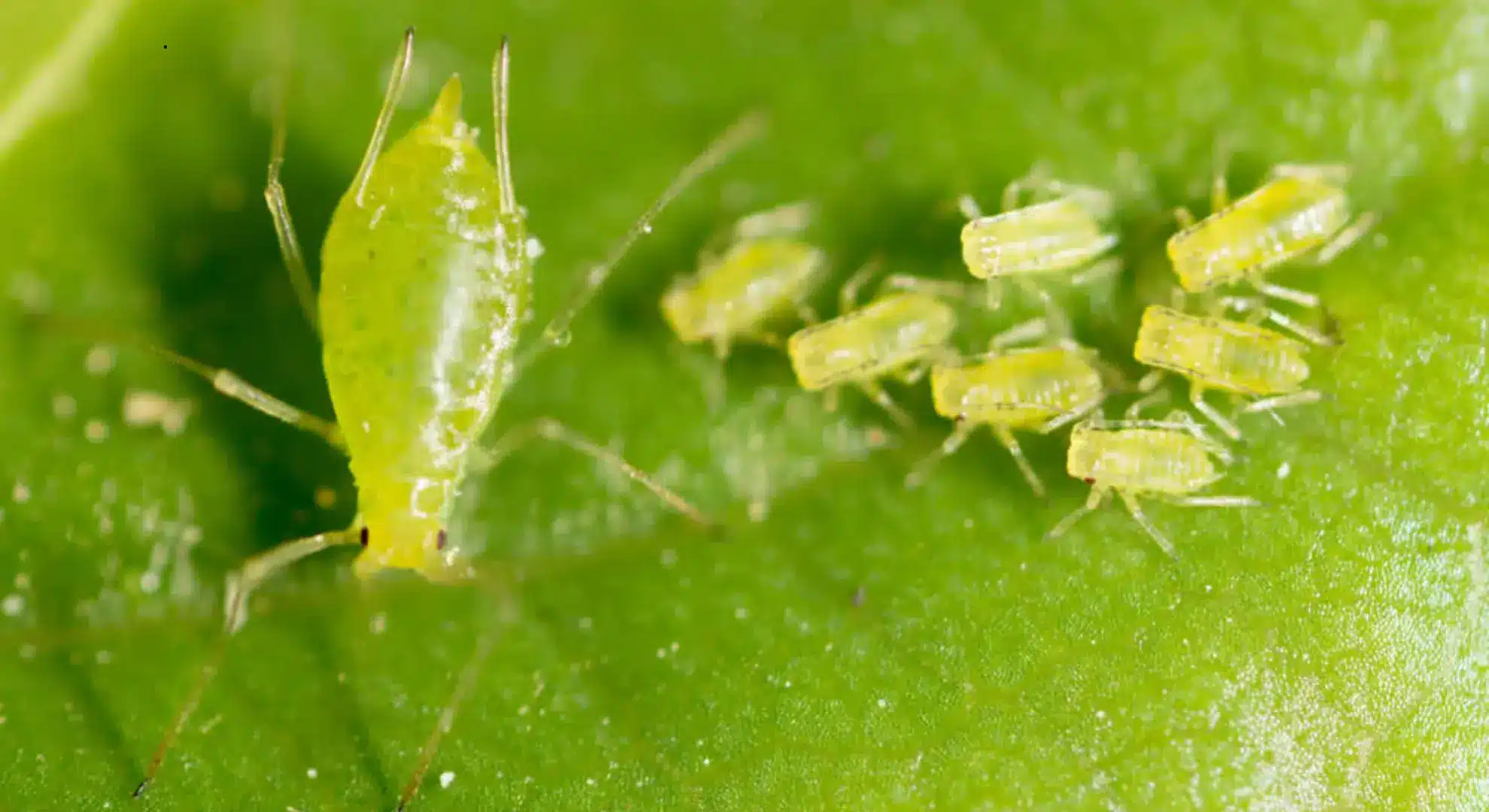
Green peach aphids are one of the most common aphids on garden plants.
They’re pale green or brownish, and winged adults have a dark patch on the abdomen. They often start on the lower leaves of peppers, potatoes, lettuce, spinach, stone fruit, and flowers like asters and dahlias.
Their color helps them hide, which makes early spotting tricky.
They also carry plant viruses from one plant to the next, so it’s worth catching them early in the vegetable garden.
Black Aphids
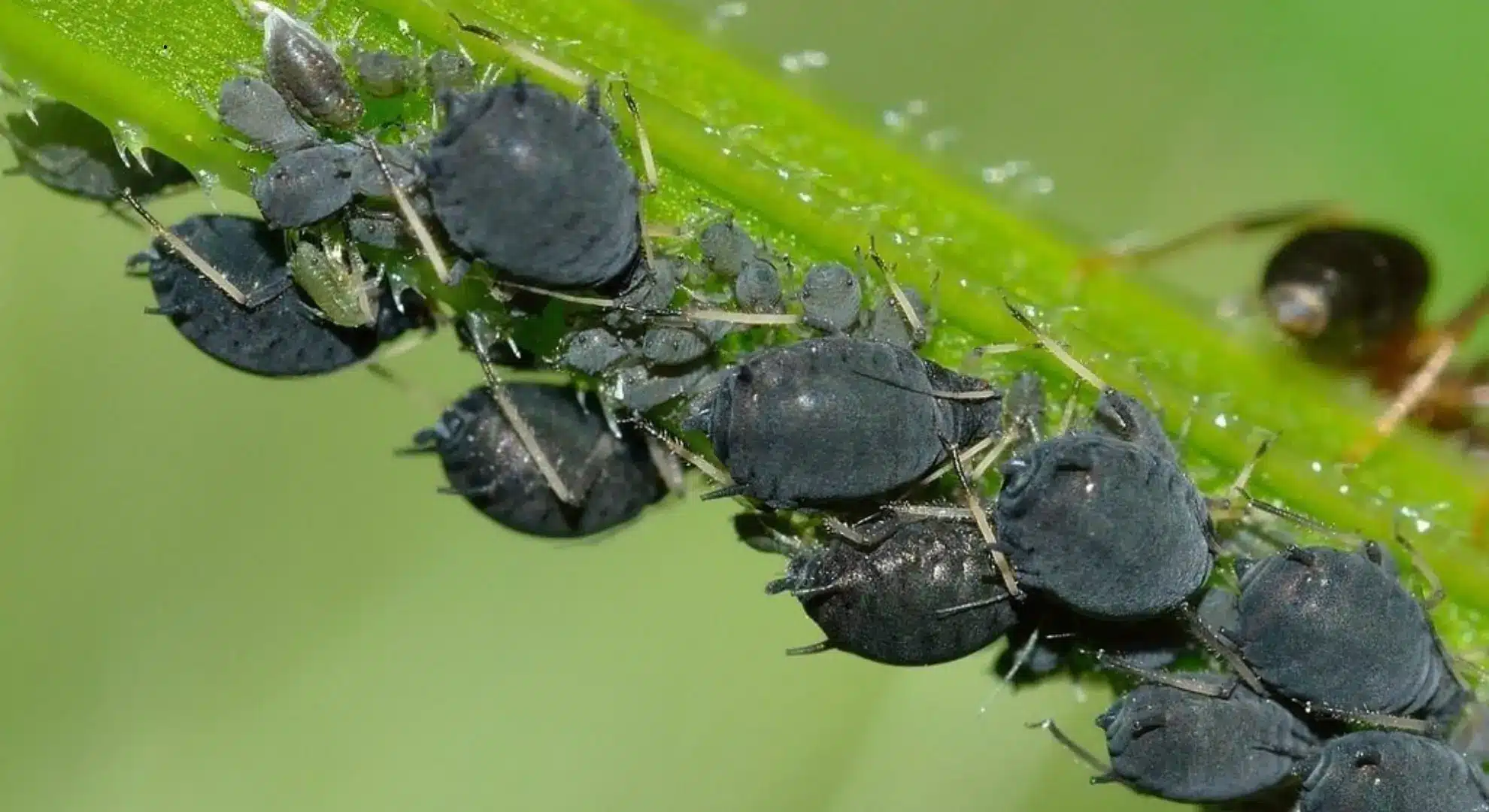
Black bean aphids form dense, shiny clusters on the soft parts of plants, especially near the tips.
Most are black or dark brown. You’ll often see them on beans, nasturtiums, spinach, beets, and celery.
Their dark color stands out, but the tight groups can make them look like dirt at first glance. They tend to show up in early summer and grow quickly. Small plants can lose their leaves fast, so pinch off infested tips as soon as you see them.
3. Oleander Aphid (Aphis nerii)
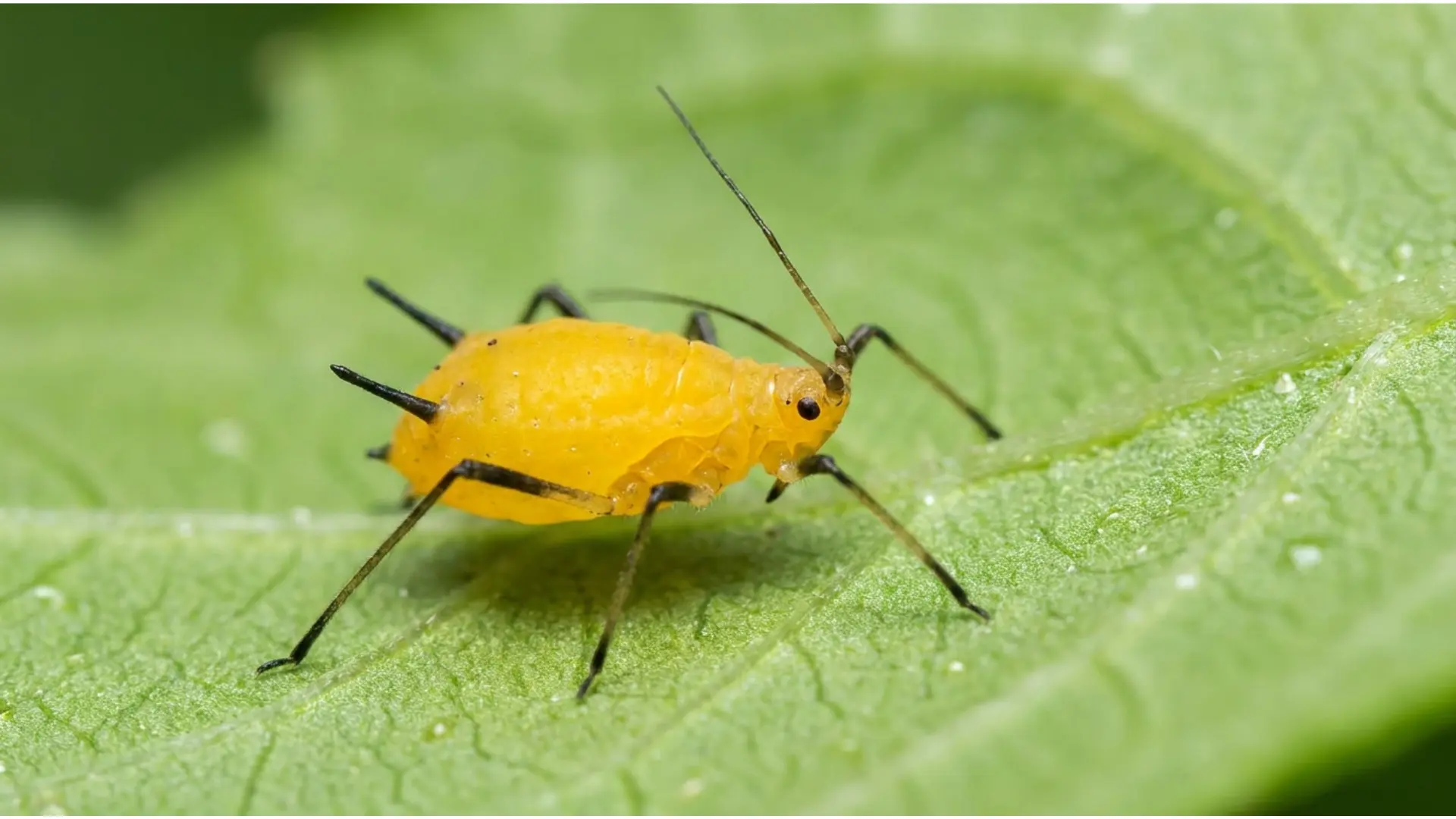
Oleander aphids are bright yellow with black legs and antennae.
They gather on milkweed and oleander, which is why some gardeners call them milkweed aphids.
Unlike most green aphids, their yellow color makes them easy to see.
They usually gather along stems or under leaves. The damage is mostly cosmetic, but the honeydew they leave can encourage sooty mold, so a strong spray of water usually does the trick.
4. Woolly Apple Aphid (Eriosoma lanigerum)
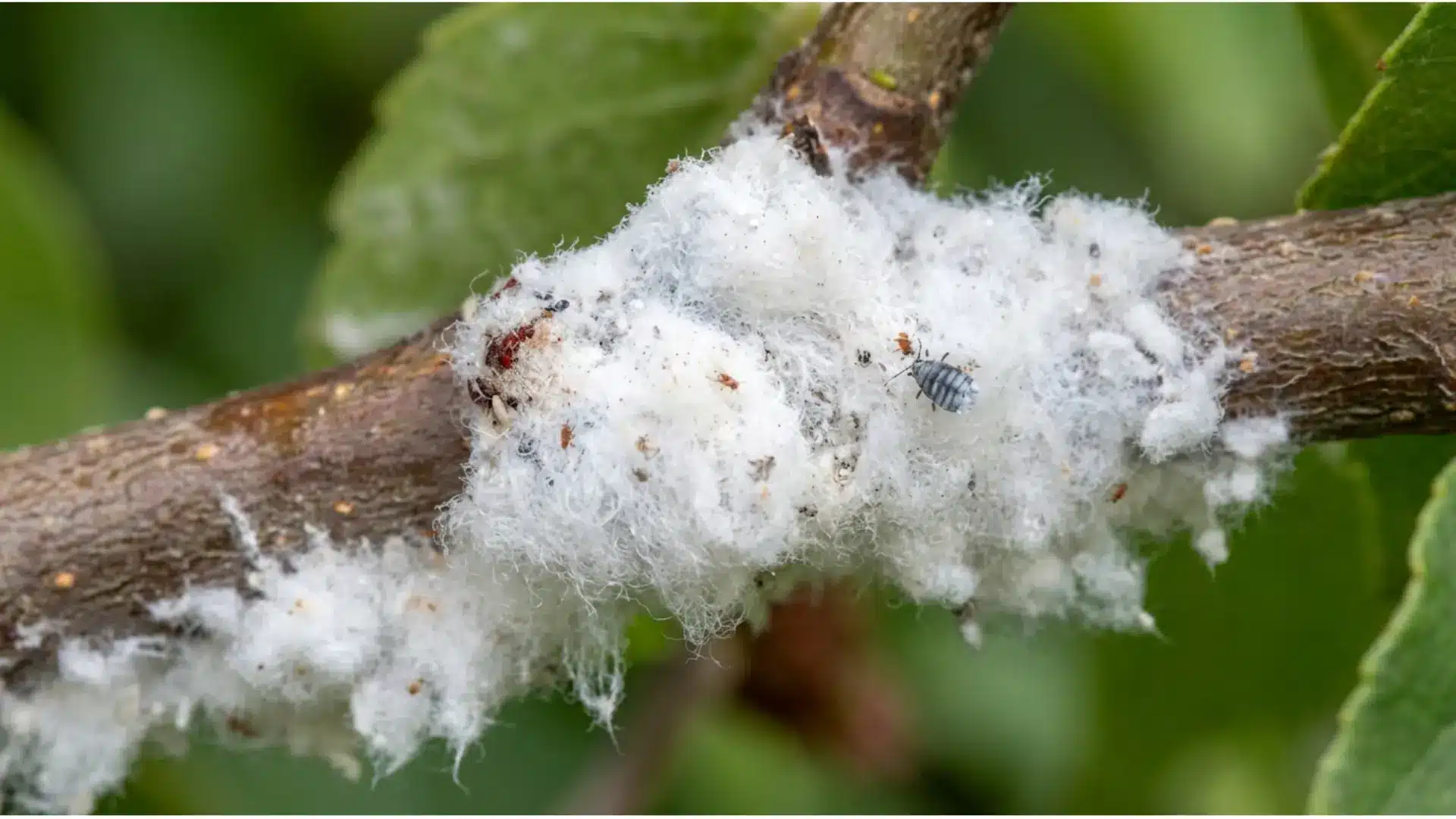
Woolly aphids look like they’re covered in cotton. That fuzzy coating protects them and makes them stand out.
Woolly apple aphids gather on the bark of apple and pear trees, especially on young trees and old pruning wounds, and other woolly aphids appear on elm and hawthorn.
Their white fluff can be mistaken for mold or fungus, but a closer look reveals purple or brown bugs underneath.
Left alone, they cause swollen knots on branches and even roots. Knock small colonies off with a strong blast of water before they settle in.
5. Rose Aphid (Macrosiphum rosae)
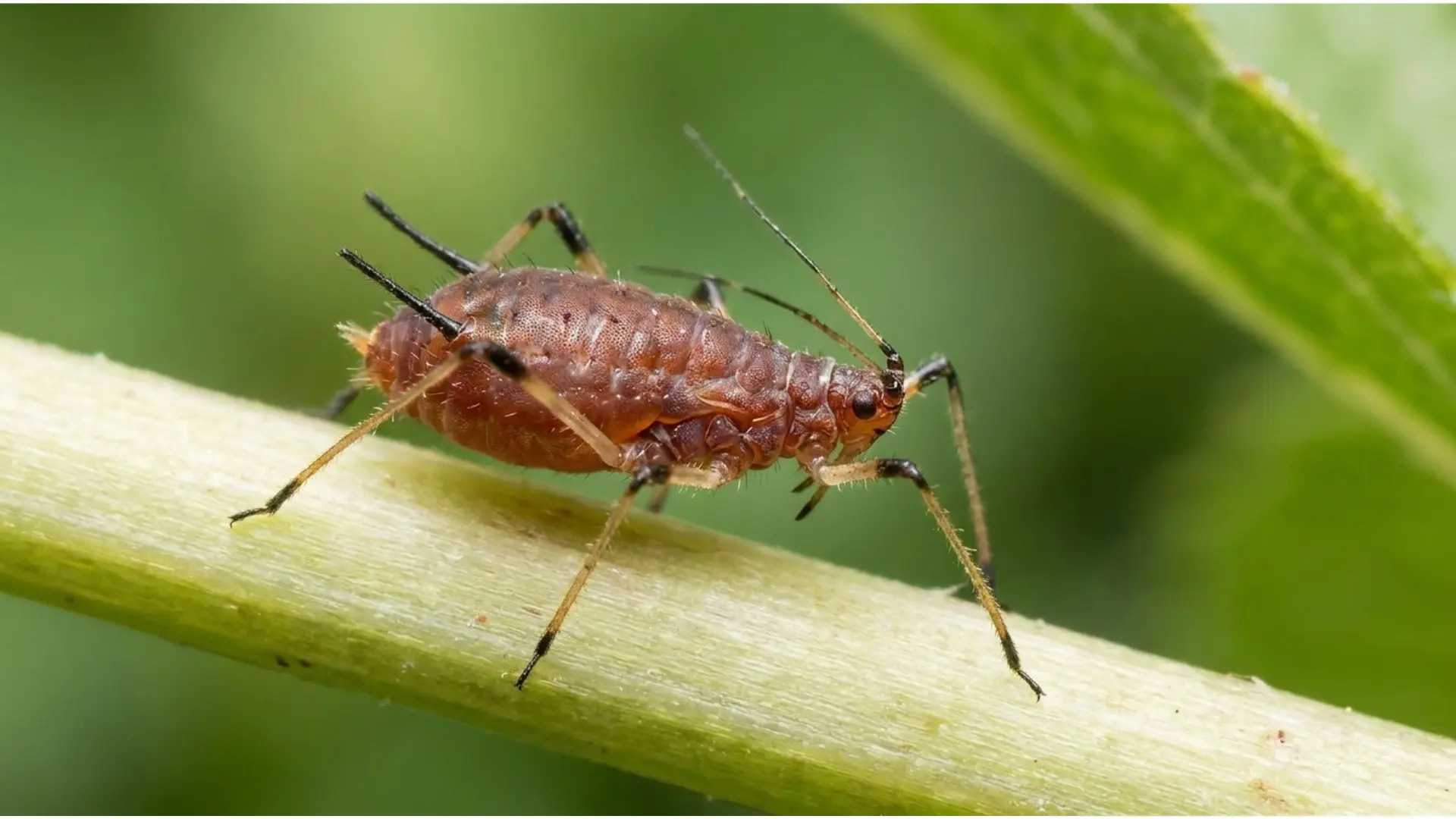
Rose aphids are small green or pinkish-red pests that feed on rose buds, young shoots, and leaves. They suck plant sap, causing curled leaves, weak growth, and distorted buds. They also produce sticky honeydew that attracts ants.
Control them with a strong spray of water, pruning, or insecticidal soap.
These kill only the aphids they touch, so follow the label for repeat sprays. Skip both on water-stressed plants and when it’s above 90°F (32°C).
6. Cabbage Aphid (Brevicoryne brassicae)
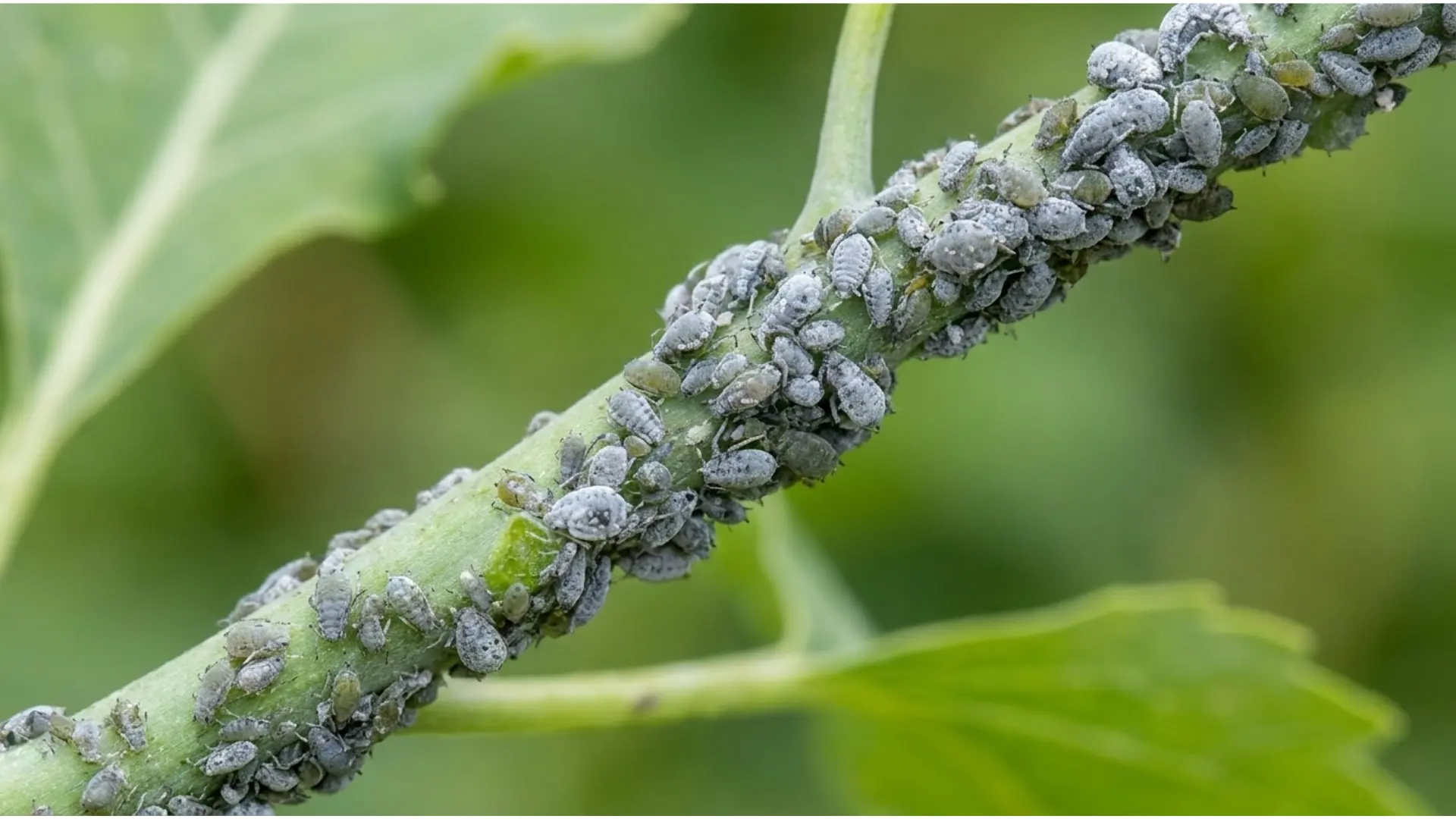
Cabbage aphids are small, grayish-green pests covered in a white, waxy coating.
They cluster on cabbage, broccoli, cauliflower, and kale and feed on plant sap. Heavy infestations cause curled leaves, stunted growth, and yellowing. Remove the worst leaves as you find them.
After harvest, pull out old brassica plants, since cabbage aphids can spend the winter as eggs tucked into the leaves.
7. Potato Aphid (Macrosiphum euphorbiae)
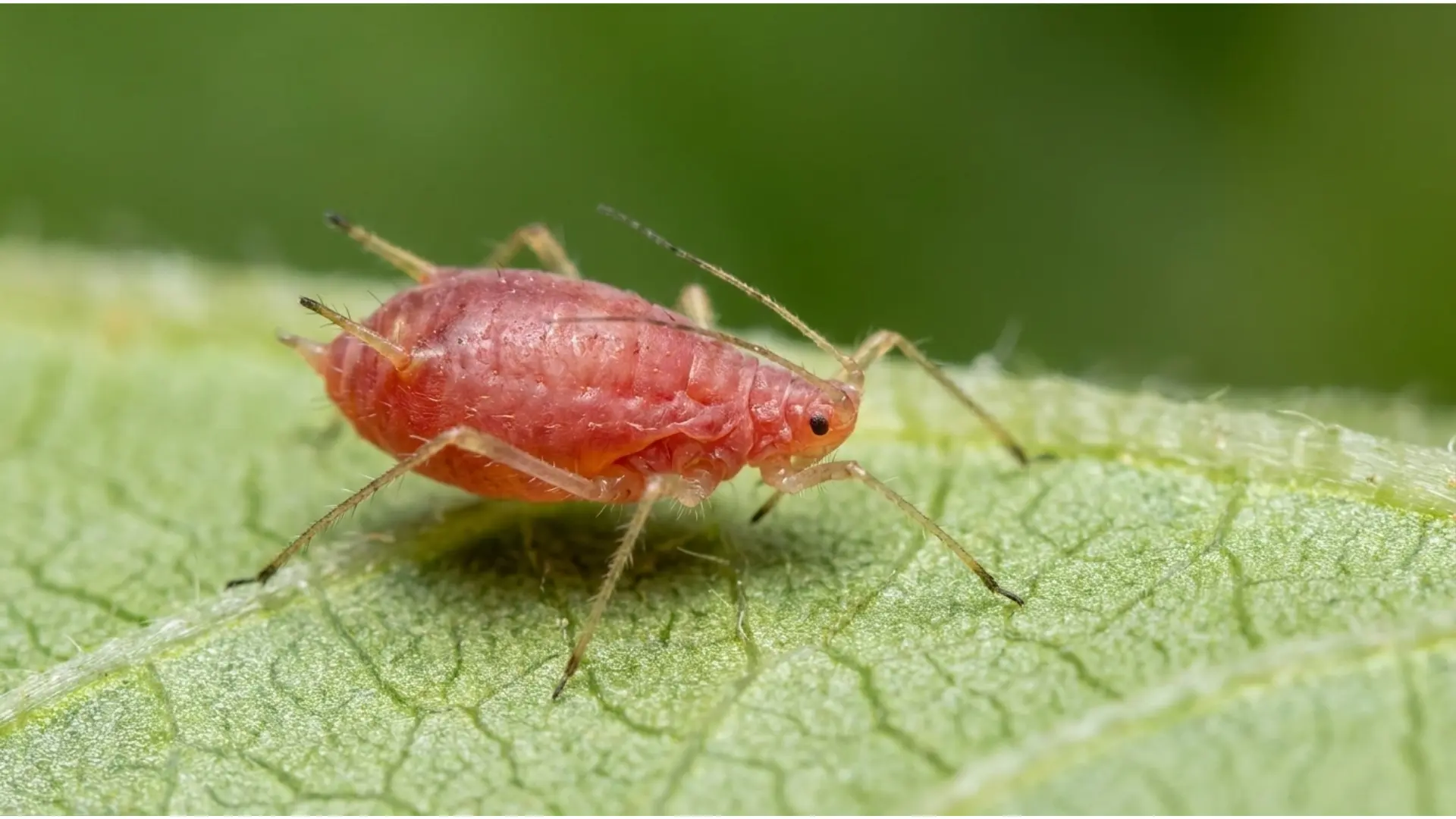
Potato aphids are soft-bodied pests, usually green or pink, with long legs and antennae.
The pink and green forms are natural color types, not diet-related changes.
They feed on potato plants, tomatoes, peppers, and other crops by sucking plant sap. Heavy infestations cause curled leaves, yellowing, and stunted growth.
Small colonies often get cleaned up by ladybugs and other predators, so watch for a few days before you reach for a spray.
8. Melon Aphid (Aphis gossypii)
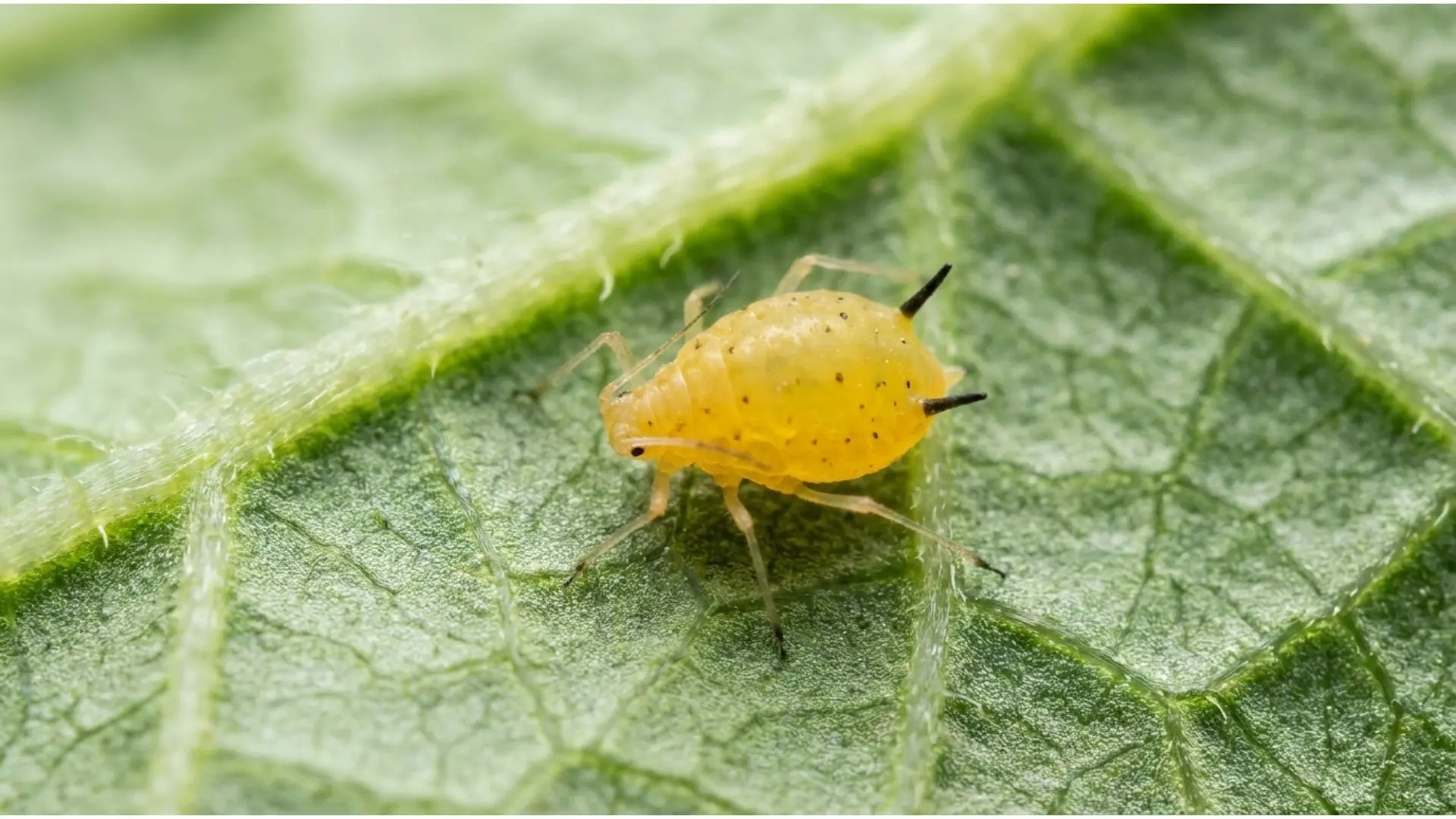
Melon aphids, also called cotton aphids, range from yellow to a green so dark it looks almost black. You’ll find them under the leaves of melons, cucumbers, citrus, and many ornamentals.
They stunt plants by feeding on new leaves and stem tips.
Unlike most aphids, they keep breeding in hot weather, so keep checking the undersides of leaves through summer.
9. Pea Aphid (Acyrthosiphon pisum)
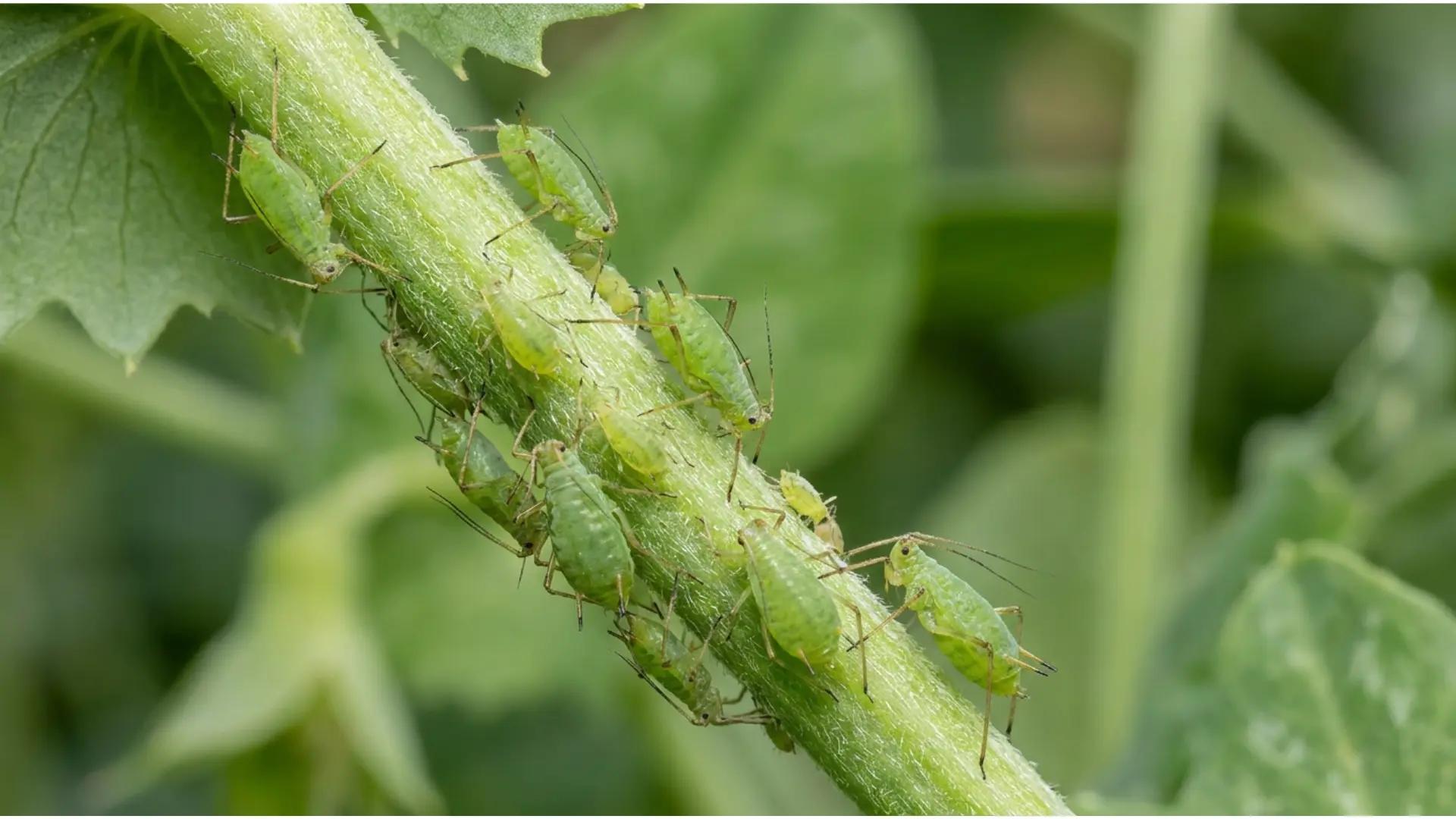
Pea aphids are bigger than most aphids, and they’re green with noticeably long legs.
They feed on peas and other legumes and like cool weather, so you’ll usually spot them in spring soon after planting.
They hide between leaves at first, then gather in groups that leave behind deformed, discolored leaves. Numbers drop in summer heat, but they can come back in fall if you don’t deal with them early.
10. Rosy Apple Aphid (Dysaphis plantaginea)
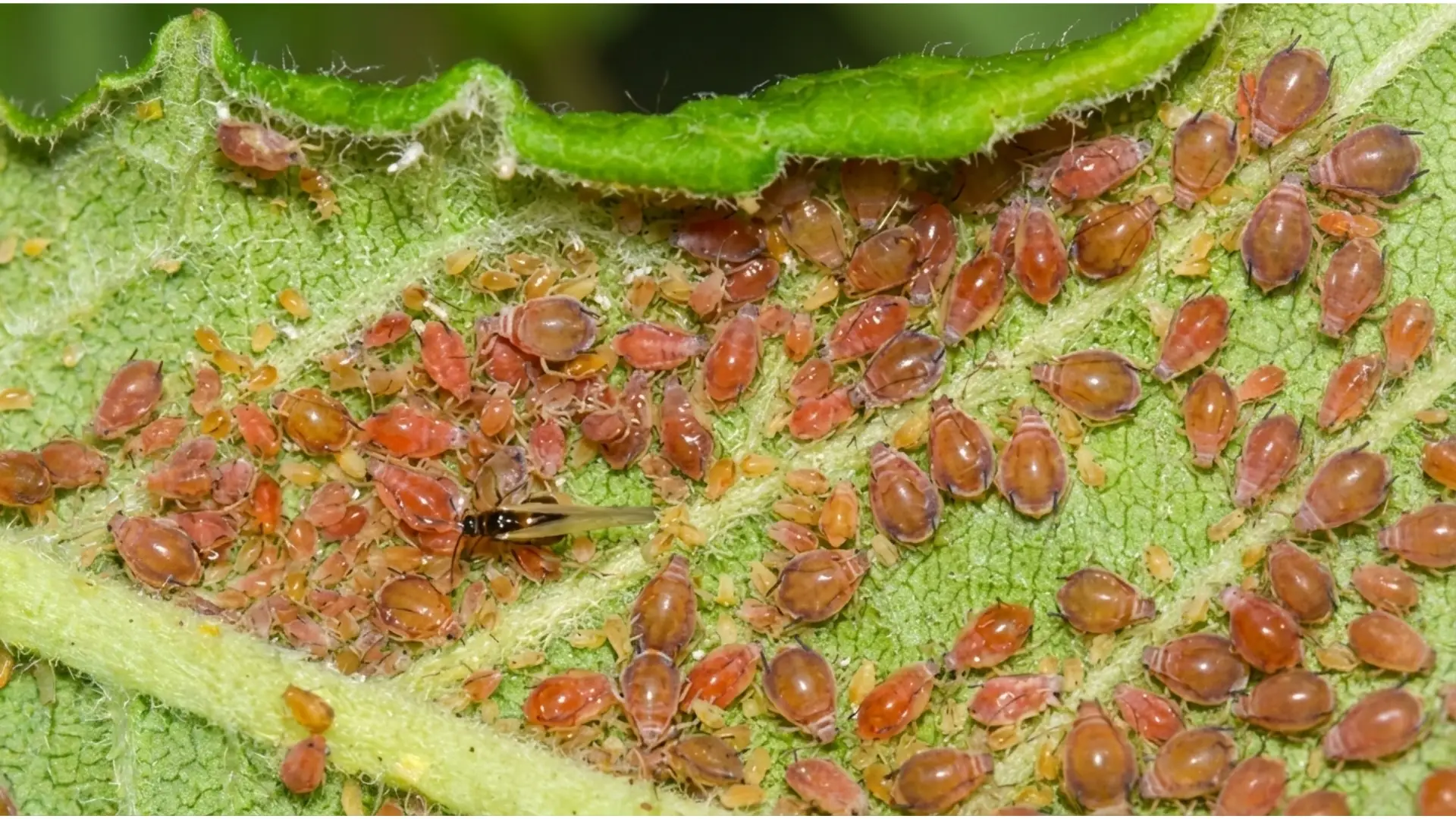
Rosy apple aphids are about 1/10 inch (2.5 mm) long and dull pinkish or purple-gray. They feed on apple leaves and young fruit in spring and early summer, curling the leaves and leaving small, misshapen apples.
By midsummer, winged forms fly off to plantain weeds and come back to the apple trees in fall to lay eggs.
Check the leaf clusters in spring before the leaves curl, and pull plantain weeds growing near your trees.
11. Lettuce Root Aphid (Pemphigus bursarius)
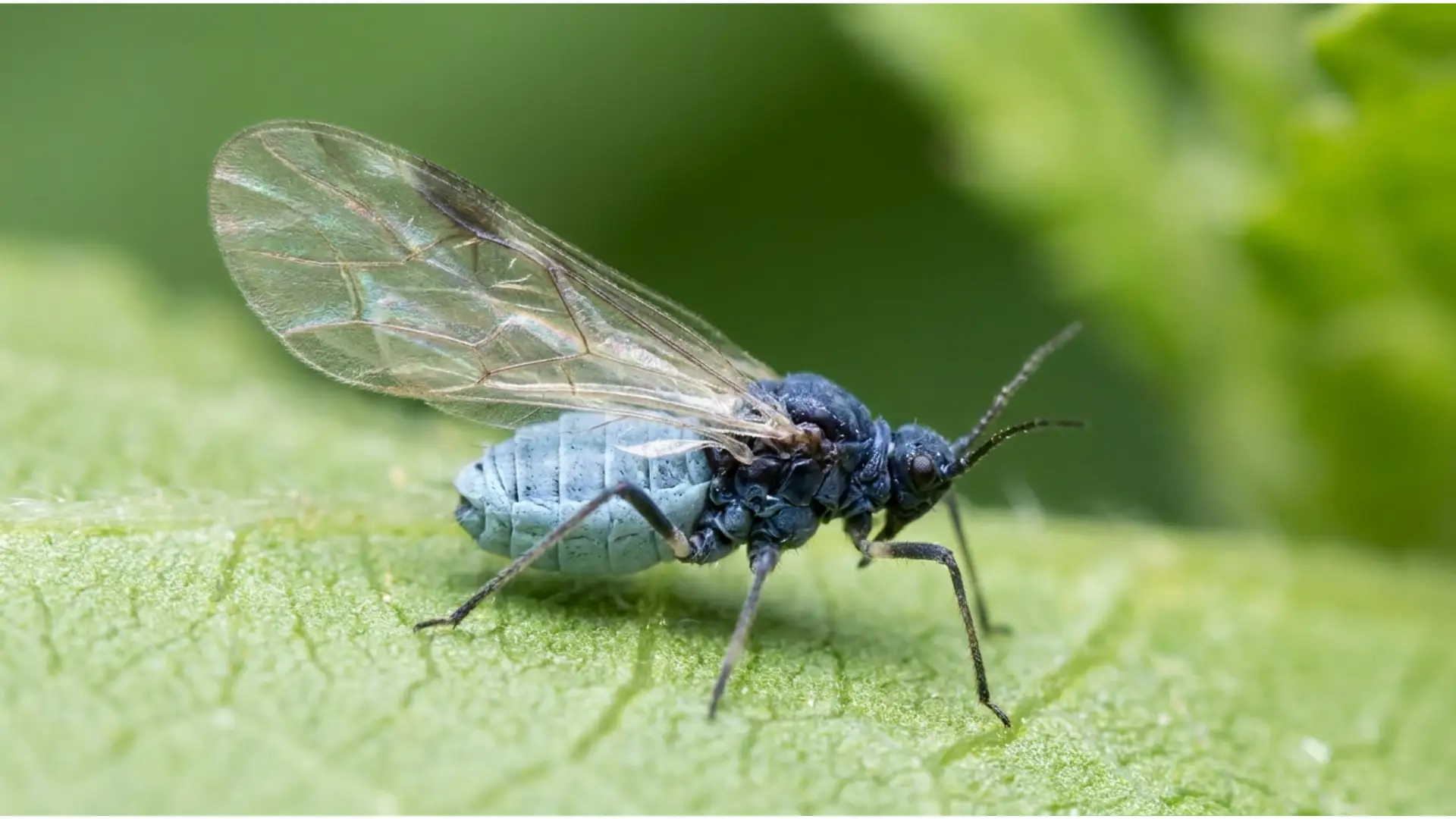
Lettuce root aphids are yellowish-white and live in clusters on lettuce roots, covered with white, powdery wax.
You won’t see them on the leaves, so the first clue is lettuce that wilts during the day.
They spend winter on Lombardy poplars and move to lettuce in summer. Sprays don’t reach them below ground, so avoid growing lettuce near those poplars, and if a bed was hit, work the soil deeply and let it dry out before you replant.
What an Aphid Infestation Looks Like
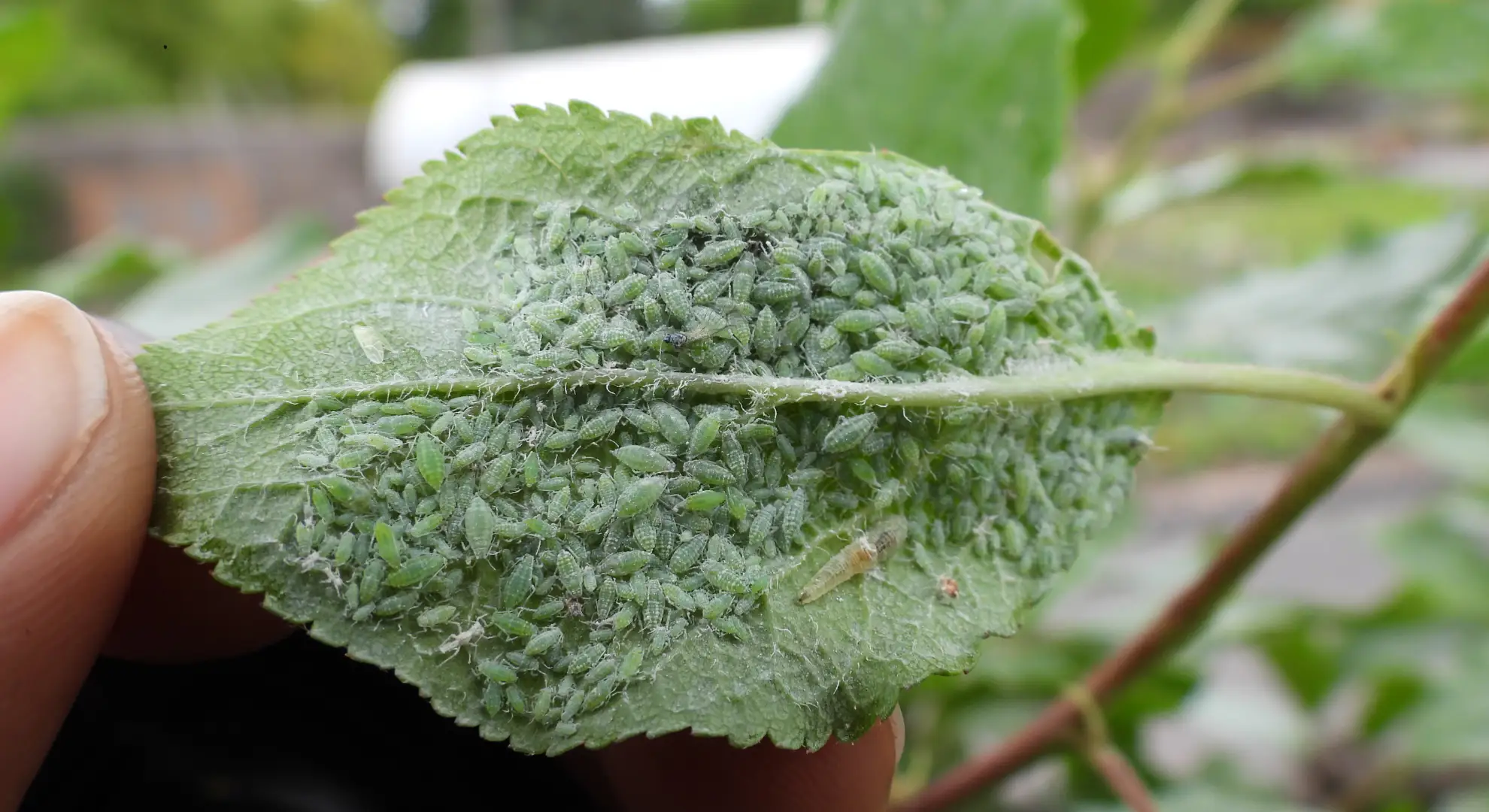
The first signs are usually curled or yellowing new leaves, sticky honeydew, and ants on the stems.
These signs build gradually, and in fact, you’ll often see the damage before you see the aphids.
Signs of Aphids on Plants
Early signs are easy to miss.
You might notice slight yellowing, twisted new leaves, or slowed growth, and it’s tempting to blame the weather.
If you’re busy, you may not notice at all. Next come the visible clusters. Look for small groups under leaves, around buds, and near stems, which will be green, black, yellow, or white, depending on the type.
As your plant loses sap, leaves curl inward or twist in odd ways, and they may feel sticky.
That stickiness is honeydew, a sugary residue that draws ants or leads to black sooty mold. Light infestations rarely hurt healthy plants. Trouble starts when you see yellow leaves, stunted shoots, or honeydew coating the foliage.
Catch it early, because curled leaves shelter aphids from both sprays and natural enemies.
How to Check a Plant for Aphids
-
Check plants at least twice a week when they’re growing fast.
-
Turn leaves over, since many aphids prefer the underside.
-
Look along the upwind edge of the garden and near plants that already have aphids.
-
Watch for ants climbing stems, which often point to aphids higher up.
How Aphids Spread and Multiply
Aphids spread fast because most give birth to live young without mating, and winged forms carry them to new plants.
Once they settle on a plant, a full-blown infestation can develop quickly.
| Factor | What Happens |
|---|---|
| Reproduction | Most aphids give birth without mating and produce live young |
| Growth Speed | In warm weather, a newborn can become a reproducing adult in 7 to 8 days, and one adult can produce up to 80 young in a week |
| Winged Aphids | Grow wings when the plant is crowded and fly to new areas |
| Seasonal Influence | Peak growth in spring and early summer, and some species lay eggs in colder months |
| Weather Conditions | Warm but not hot weather, about 65 to 80°F (18-27°C), is when many species do the most damage. Hot spells knock most species back, and heavy rain can slow them down |
Aphids are built to grow fast and spread far. That’s why one or two today can become a hundred by next week, if the weather’s right and the plant is soft enough to feed on.
Winged Aphids: Why They Appear and What They Mean
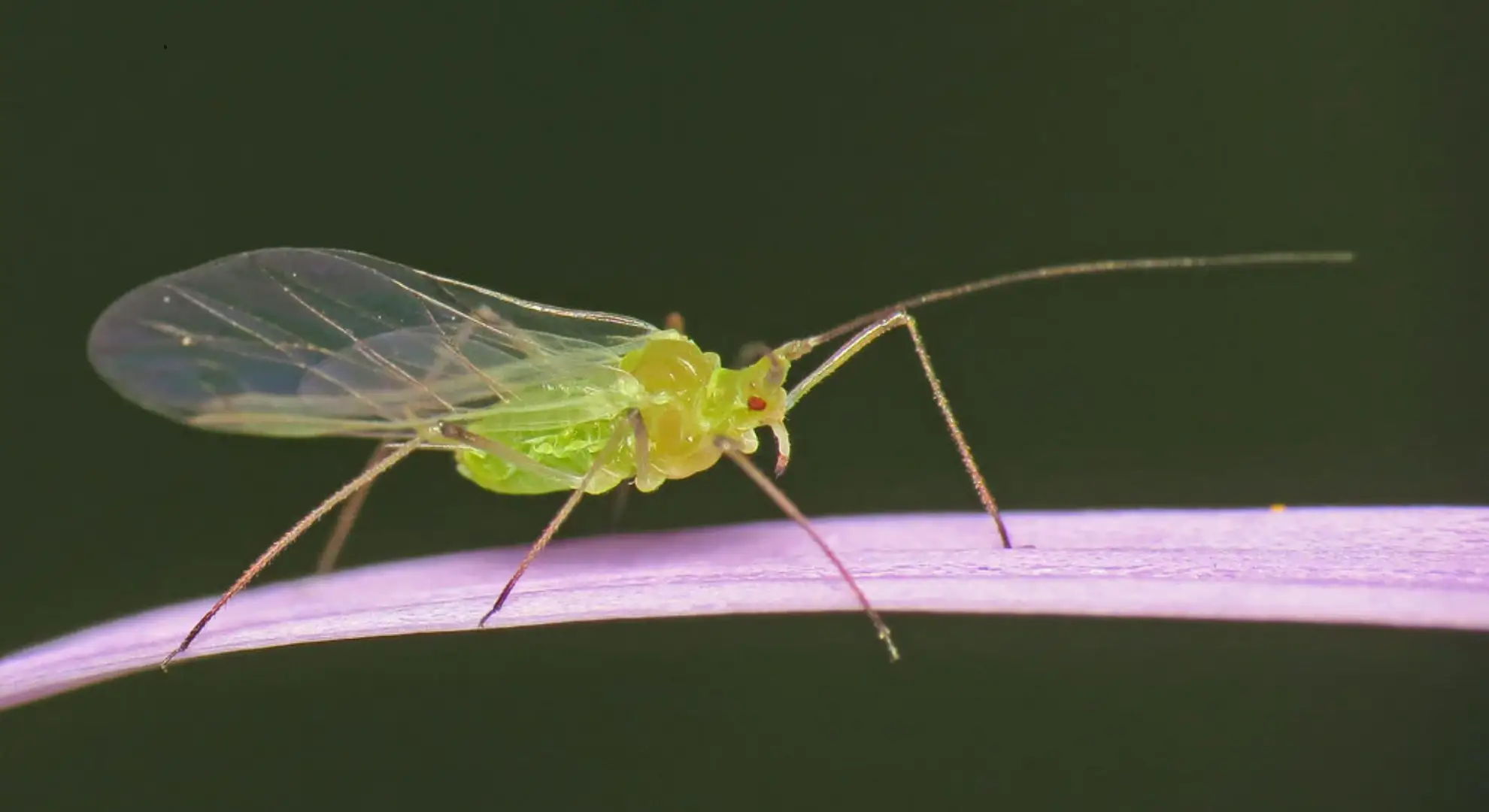
Winged aphids aren’t a separate type. They’re just a different form of regular aphids.
They develop wings when certain conditions push them to move.
1. What triggers wing development: When a plant gets too crowded, food runs low, or the plant becomes unhealthy, some aphids grow wings. This is a survival response. They fly off to search for new plants with more space and better sap.
2. How winged aphids change infestation patterns: These flying forms make it easy for aphids to jump from one plant to another, even across yards or garden beds. That’s how new infestations start, fast and far from the original spot.
3. Why seeing winged aphids matters: If you see winged aphids, it’s a warning.
It usually means the colony is crowded or the plant is struggling, though many species also make winged forms every spring and fall. They’re also likely spreading to other plants.
Catching them early can help stop the problem before it spreads through your entire garden.
Aphids and Ants: Why They Often Appear Together
If ants are crawling all over a plant, aphids are likely nearby too.
That’s because ants love honeydew. It’s like a steady sugar supply for them. To keep the honeydew coming, ants protect the aphids from predators like ladybugs and lacewings. They’ll even move aphids to better spots on the plant or carry them to new plants to start fresh colonies.
This relationship helps aphids grow faster and worsens the infestation. With ants guarding them, natural predators can’t do their job, and the aphid population keeps rising.
If you’re trying to get rid of aphids, you may also need to address the ants.
How to Break the Ant Connection?
-
Wrap a band of sticky barrier material around the trunk of an infested tree or shrub to stop ants climbing.
-
On young or thin-barked trees, apply the sticky material to a fabric or tape wrap instead of directly to the bark.
-
Use bait stakes on the ground, which target ants without harming aphids or their natural enemies.
-
Prune branches that touch buildings, the ground, or other trees, since ants use them as bridges.
Natural Enemies of Aphids
Aphids have many natural enemies, and many already live in or near your garden. These helpers keep aphid numbers in check with no effort on your part, so knowing who they are helps you protect them rather than accidentally removing them.
Aphids are a food source for many helpful bugs and birds, so it’s worth using sprays sparingly.
|
Natural Enemy |
How It Helps |
|---|---|
|
Ladybugs |
Adults and spiky larvae eat huge numbers of aphids. Don’t accidentally remove the larvae |
|
Lacewings |
Larvae, called aphid lions, grab and drain aphids. Adults lay eggs near colonies |
|
Hoverflies |
Adults look like small bees. The legless larvae eat aphids as they creep through colonies |
|
Parasitic wasps |
Females lay eggs inside live aphids. Puffed, tan, or bronze shells show the wasps are at work |
|
Aphid midges |
Orange larvae feed on colonies in sheltered spots |
|
Soldier beetles |
Adults and larvae eat aphids and other soft-bodied pests |
|
Spiders |
Web-building hunters catch winged aphids |
|
Birds |
Chickadees, wrens, and sparrows pick aphids off stems and leaves |
|
Fungi |
Certain fungi infect aphids in humid conditions, leaving their bodies fuzzy and discolored |
What to Do After You Identify Aphids
Once you’ve spotted aphids, your next step depends on how many there are and how your plant is doing.
You don’t always need to panic or jump straight to treatment.
Once you’ve spotted aphids, your next step depends on how many there are and how your plant is doing.
You don’t always need to panic or jump straight to treatment.
1. When monitoring is enough: If you see only a few aphids and your plant looks healthy, keep an eye on it.
Sometimes, natural predators like ladybugs show up and take care of the problem for you.
2. When you usually need to act: If you notice curling leaves, sticky sap, or large clusters of aphids, remove them immediately. Quick action helps prevent long-term damage or the spread to other plants.
3. Why identification still helps: Most aphid species respond to the same initial steps, so the exact species rarely changes the treatment.
The type still tells you where to look and what to expect. Woolly and leaf-curling types hide under wax or within curled leaves, so contact sprays reach them poorly. Check root feeders below ground.
4. Match the fix to the situation: Plant type, aphid type, and the severity of the infestation all shape the right response.
Starting simple is often better than reaching for strong sprays or chemicals right away.
How to Get Rid of Aphids
If you only see a few aphids, let the predators handle them.
Once leaves curl or honeydew builds up, start with the gentlest option.
-
Knock them off with a strong spray of water. This works best on sturdy plants, so repeat every few days.
-
Prune or wipe off the worst tips and leaves, and toss them in the trash.
-
Spray insecticidal soap or horticultural oil on both sides of the leaves. These only kill the aphids they touch, so follow the label for repeat sprays and skip them when it’s above 90°F (32°C).
-
Remove any ants from the plant so predators can reach the colony.
-
Use nitrogen fertilizer sparingly, as out encourages the soft growth aphids love.
Note that broad-spectrum insecticides kill the predators too, so aphids often return in bigger numbers.
Key Takeaways
Most garden aphids are one of a handful of species, and knowing the plant they’re on narrows it down fast.
Color isn’t a reliable ID on its own, since a pink aphid and a green one on the same plant can be the same kind.
Damage and ants often give aphids away before you spot the bugs themselves.
A light infestation can wait for predators. Bigger colonies may need water sprays, pruning, or insecticidal soap.
Next time you see curled leaves or sticky spots, take a closer look, and you might catch them before they spread. Always check the underside of leaves. That’s where they like to hide.
Frequently Asked Questions (FAQs)
Do Aphids Bite Humans or Pets?
No, aphids feed only on plant sap and cannot bite people or animals. Their mouthparts pierce plant tissue, so they pose no direct threat.
Are Greenfly and Blackfly the Same as Aphids?
Yes. Greenfly and blackfly are common names for green and black aphids. They aren’t true flies, and most adults don’t have wings at all.
What Attracts Aphids to a Garden?
Soft, nitrogen-rich new growth attracts aphids most, especially after heavy fertilizing. Stressed plants, sheltered spots, and ants that protect honeydew-fed colonies also make a garden more appealing.
Can Aphids Spread Plant Diseases?
Yes. As they feed, aphids pick up plant viruses and carry them to the next plant, which can stunt growth and distort leaves even when aphid numbers stay low.