I made the classic first-timer mistake the spring I finally decided to mulch my garden beds properly. I eyeballed it, bought what looked like enough bags at the hardware store, and drove home feeling prepared. Two hours later I had half my beds done and a trunk full of empty bags. Another trip to the store, another hour of work, and by the time I finished I had spent twice what I planned and most of my Saturday.
The next year I did the math first. It took about five minutes and saved me from the whole ordeal.
Getting mulch quantities right is one of those small planning steps that sounds tedious until you skip it. Too little and you are making a second run mid-project. Too much and you are staring at a pile of leftovers with nowhere to put them. Neither situation is fun. The good news is the calculation is straightforward once you understand what goes into it.
Why Depth Is the Number That Trips People Up
Most gardeners know they need to measure the length and width of their beds. That part feels obvious. What catches people off guard is depth, because the right depth changes depending on what you are trying to accomplish.
For general flower beds and garden borders, two to three inches of mulch is the standard recommendation. That layer is deep enough to suppress weeds and retain moisture without smothering plants or blocking water from reaching roots.
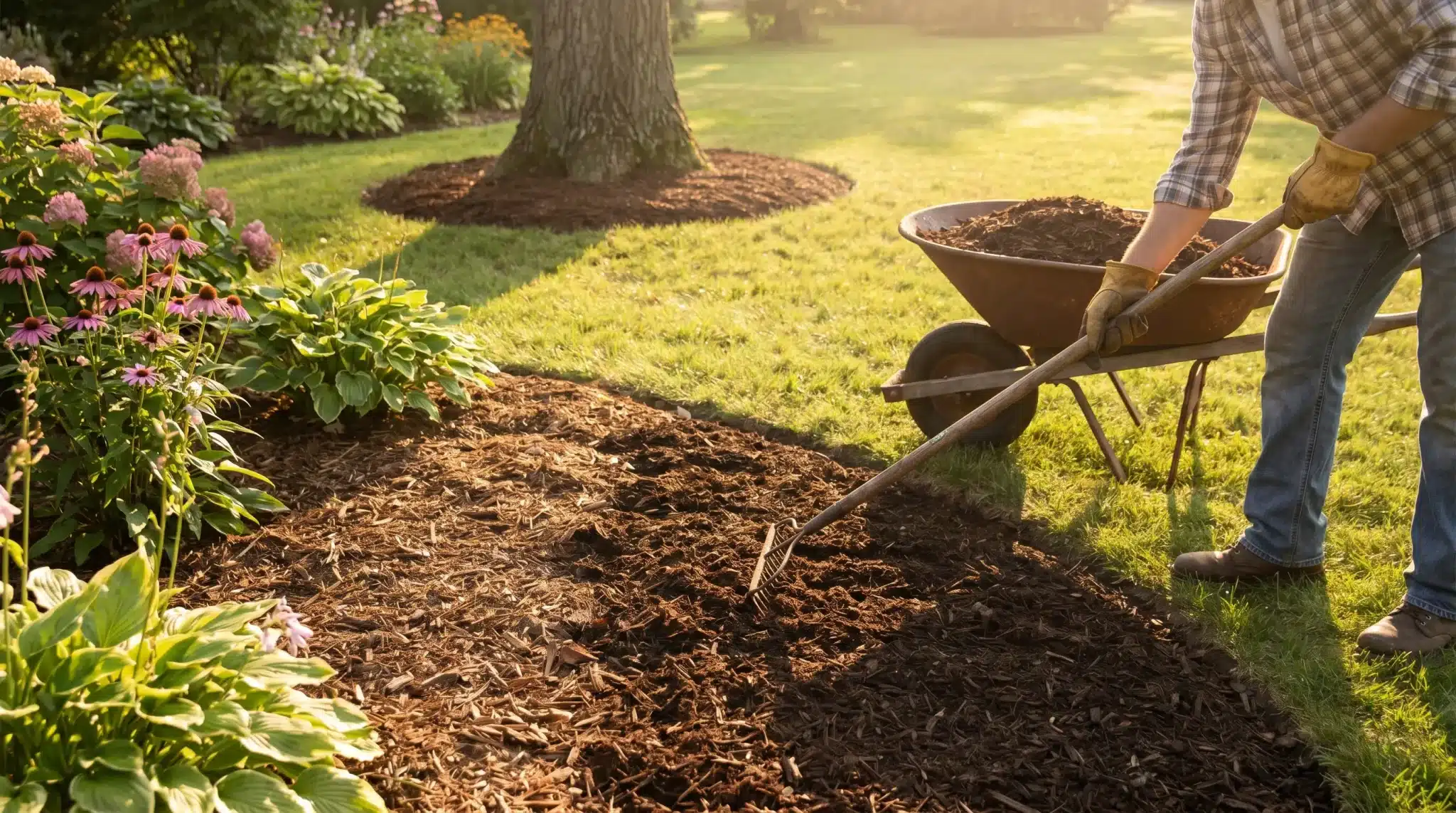
For areas around trees and shrubs, three to four inches works better. Larger root systems need more insulation and moisture retention, and the mulch ring around a tree takes more abuse from foot traffic and weather than a contained garden bed does.
For pathways or areas where you want longer-lasting coverage with minimal maintenance, four inches is appropriate. You are not worried about plant roots in those spots, so a thicker layer is purely practical.
Where people go wrong is defaulting to one inch because it feels like enough when you spread it by hand. One inch dries out fast, lets weeds through, and needs replacing within a few weeks. It ends up costing more over a season than doing it right the first time.
The Math Behind the Measurement
Once you know your target depth, the formula is simple. Measure your bed length and width in feet, multiply them together to get square footage, then multiply by your intended depth in inches. Divide that number by 324 to convert to cubic yards.
Written out: (length x width x depth in inches) divided by 324 = cubic yards needed.
So a bed that is 10 feet long, 4 feet wide, and needs 3 inches of mulch works out like this: 10 x 4 = 40 square feet. 40 x 3 = 120. 120 divided by 324 = 0.37 cubic yards.
That is a manageable number for a single bed. But most yards have multiple beds, and the totals add up faster than you expect. A few flower borders, a tree ring, and a garden bed along the fence can take you from a small afternoon project to needing a full cubic yard or more before you finish measuring everything.
If the math feels like extra work, a free mulch calculator handles it for you. Plug in your measurements and it spits out the exact cubic yards you need. It takes the same amount of time as the formula but removes the mental arithmetic entirely, which is worth something when you are trying to plan a project on a Saturday morning.
Measuring Beds That Are Not a Perfect Rectangle
Not every garden bed is a clean rectangle, and that is where people tend to give up on measuring and just guess. There are a few easy workarounds.
For curved or irregular beds, break the space into rough rectangles and calculate each section separately. Add them together at the end. Your numbers will not be perfectly precise, but adding a ten percent buffer to your final total handles the margin of error.
For circular beds, the formula is 3.14 x radius x radius x depth in inches, divided by 324. The radius is just half the diameter of the circle. So a circular bed that is 8 feet across has a radius of 4 feet: 3.14 x 4 x 4 = 50.24 square feet. From there the calculation runs the same as a rectangle.
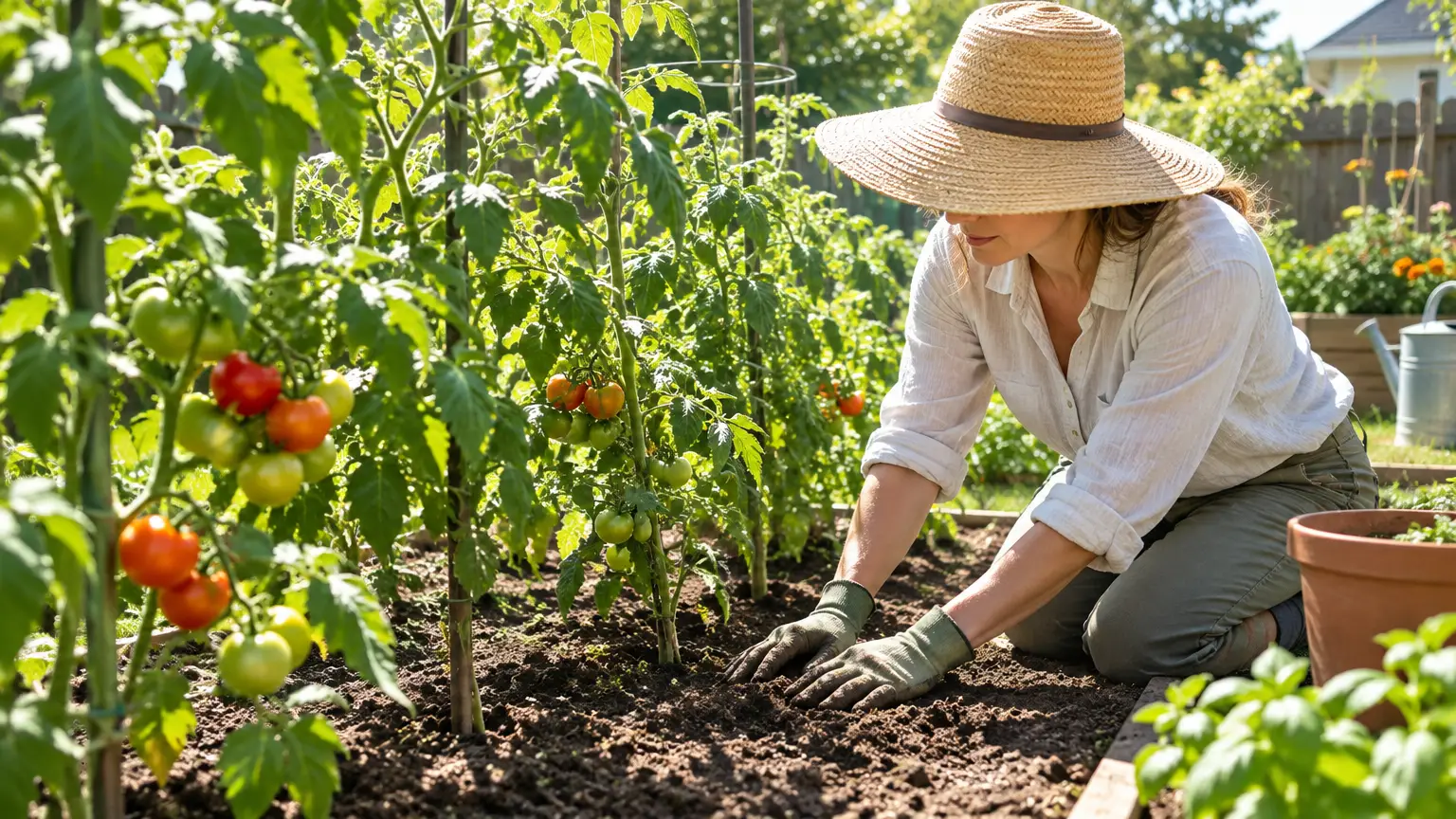
For beds with plants already in them, do not try to subtract the exact footprint of each plant. Just calculate the full bed area and accept that some mulch will not be used. Cutting around plants as you work takes care of it naturally.
Bags vs. Bulk: When the Math Changes
Bagged mulch is sold by the bag, typically in two cubic foot bags. So one cubic yard of mulch equals roughly 13.5 bags. That math is manageable for a small project covering a couple of hundred square feet at a shallow depth.
Once your total climbs past a cubic yard or two, bags start working against you in cost and effort. You are paying a premium for packaging, making multiple trips or loading a cart with twenty bags, and handling each one individually. The per-cubic-yard price on bagged mulch is almost always significantly higher than bulk.
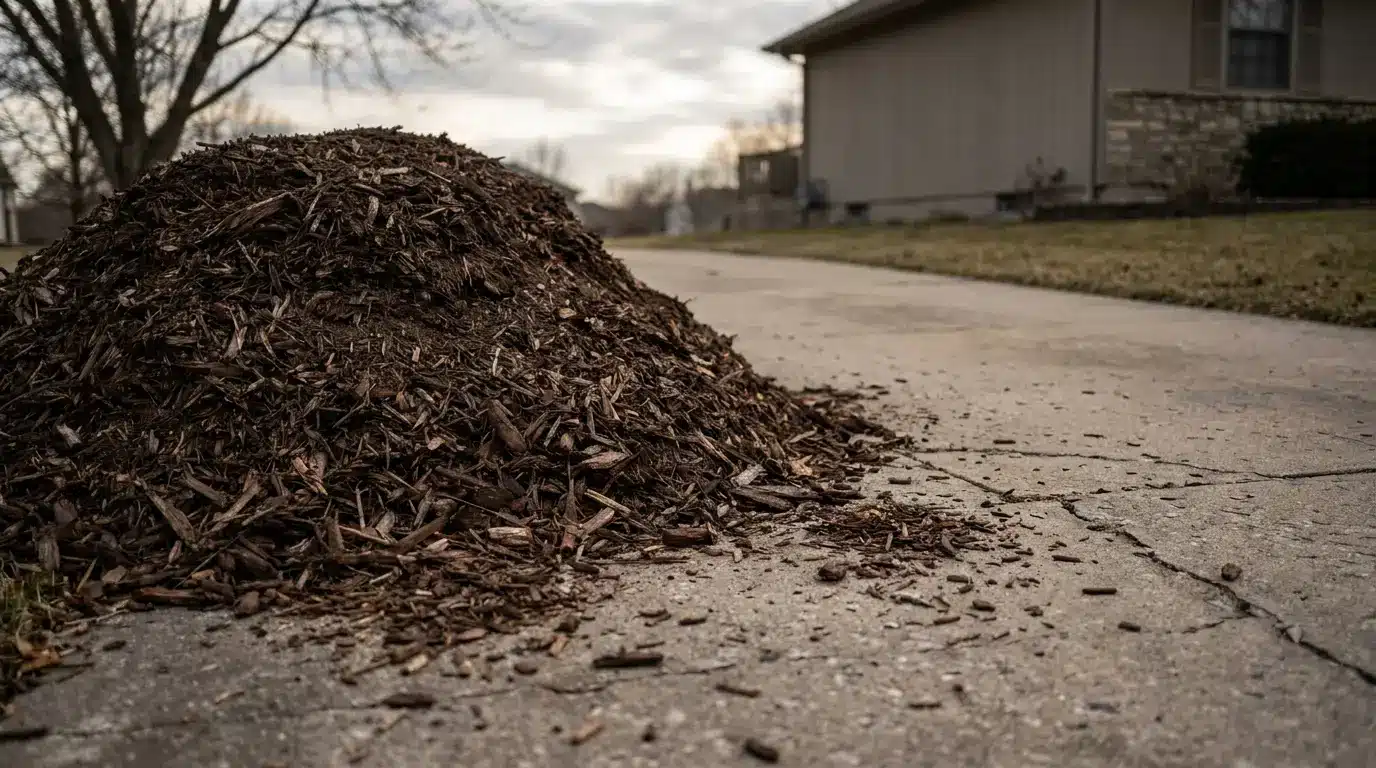
Bulk mulch is sold by the cubic yard and delivered directly to your driveway or spread across your beds by the crew if you opt for installation. For larger projects, one bulk delivery takes care of everything at once. Suppliers like Best Bark Mulch deliver bulk mulch by the yard throughout Waukesha County, which is worth knowing if you are looking at a project that covers multiple beds and the bag math is getting unwieldy.
The break-even point varies depending on where you buy, but most homeowners find that once they are buying three or more cubic yards, bulk delivery is cheaper per yard and significantly less work.
A Few Common Mistakes Worth Avoiding
Mulching too close to plant stems is the one that causes the most damage. Keep mulch a few inches back from stems and tree trunks. Piling it against the base traps moisture against the wood and invites rot and pests over time. The ring of mulch around a tree should look like a donut, not a volcano.
Skipping the weeding step before you mulch defeats most of the purpose. Existing weeds will push through a shallow layer and the mulch will not suppress seeds that are already in your soil. Pull the weeds, then mulch.
Finally, using the same depth everywhere regardless of what is planted there leads to uneven results. Match your depth to the purpose of each area and you will get consistent performance across the whole yard.
The planning stage takes less time than the second hardware store run. Measure your beds, calculate your total, add your buffer, and order once. Your Saturday will go a lot smoother.
the spring I finally decided to mulch my garden beds properly. I eyeballed it, bought what looked like enough bags at the hardware store, and drove home feeling prepared. Two hours later I had half my beds done and a trunk full of empty bags. Another trip to the store, another hour of work, and by the time I finished I had spent twice what I planned and that sounds tedious until you skip it. Too little and you are making a second run mid-project. Too much and you are staring at a pile of leftovers with nowhere to put them. Neither situation is fun. The good news is the calculation is straightforward once you understand That part feels obvious. What catches people off guard is depth, because the right depth changes depending on what you are two to three inches of mulch is the standard recommendation. That layer is deep enough to suppress weeds and retain moisture without smothering plants or blocking three to four inches works better. Larger root systems need more insulation and moisture retention, and the mulch ring around a tree takes more abuse from foot traffic and weather than a contained with minimal maintenance, four inches is appropriate. You are not worried about plant roots in those spots, so a thicker layer is because it feels like enough when you spread it by hand. One inch dries out fast, lets weeds through, and needs replacing within a few weeks. It ends up costing more over a season than Measure your bed length and width in feet, multiply them together to get square footage, then multiply by your intended depth in inches. Divide that number by 324 4 feet wide, and needs 3 inches of mulch works out like this: 10 x 4 = 40 square feet. 40 x 3 = 120. 120 divided by 324 = But most yards have multiple beds, and the totals add up faster than you expect. A few flower borders, a tree ring, and a garden bed along the fence can take you from a small afternoon project to needing a full cubic yard or more before you target=”_blank” rel=”noopener”>free mulch calculator</a> handles it for you. Plug in your measurements and it spits out the exact cubic yards you need. It takes the same amount of time as the formula but removes the mental arithmetic entirely, which is worth something when you are trying to plan a project and that is where people tend to give up on measuring and just guess. There are a break the space into rough rectangles and calculate each section separately. Add them together at the end. Your numbers will not be perfectly precise, but adding a ten percent buffer to your final total x radius x radius x depth in inches, divided by 324. The radius is just half the diameter of the circle. So a circular bed that is 8 feet across has a radius of 4 feet: 3.14 x 4 x 4 = 50.24 square feet. From there the calculation runs the do not try to subtract the exact footprint of each plant. Just calculate the full bed area and accept that some mulch will not be used. Cutting around plants as you work typically in two cubic foot bags. So one cubic yard of mulch equals roughly 13.5 bags. That math is manageable for a small project covering a couple of hundred square feet bags start working against you in cost and effort. You are paying a premium for packaging, making multiple trips or loading a cart with twenty bags, and handling each one individually. The per-cubic-yard price on bagged mulch is almost always and delivered directly to your driveway or spread across your beds by the crew if you opt for installation. For larger projects, one bulk delivery takes care of everything at once. Suppliers like <a href=”https://bestbarkmulch.com/” target=”_blank” rel=”noopener”>Best Bark Mulch</a> deliver bulk mulch by the yard throughout Waukesha County, which is worth knowing if you are looking at a project that covers multiple beds and the but most homeowners find that once they are buying three or more cubic yards, bulk delivery is cheaper per yard and Keep mulch a few inches back from stems and tree trunks. Piling it against the base traps moisture against the wood and invites rot and pests over time. The ring of mulch around a tree should look like a donut, Existing weeds will push through a shallow layer and the mulch will not suppress seeds that are already in your soil. Match your depth to the purpose of each area and you will get consistent Measure your beds, calculate your total, add your buffer, and order once. Your Saturday will