Moving already comes with plenty to think about. There are boxes to pack, utilities to switch, repairs to sort through, and a new place waiting for your attention. If you’ve spent months or years caring for a garden, the yard can start to feel like one more thing you’re supposed to finish before handing over the keys.
The good news is that your yard doesn’t need to look perfect before you move. It just needs to feel safe, tidy, and easy to understand. With a few smart choices, you can take care of the work that actually matters, skip the projects that won’t make much difference, and leave the property in good shape without spending your last few weeks digging, trimming, and rethinking every bed.
Start With Safety and Access
The best place to start is with anything that makes the yard easier and safer to walk through. Clear the main path to the front door, trim branches that brush against walkways, move loose pots out of busy areas, and pick up hoses, tools, stakes, or garden decor that could trip someone.
This matters even more if people will be visiting the property before you move. A clear path makes the yard feel cared for without requiring a full landscaping project. It also helps movers, inspectors, neighbors, or future owners move through the space without stepping over clutter or guessing where to walk.
Focus first on gates, steps, patios, sheds, side yards, and the route from the driveway to the entrance. When those areas are open and easy to use, the whole yard feels calmer and more manageable.
Handle the Yard Work People Notice First
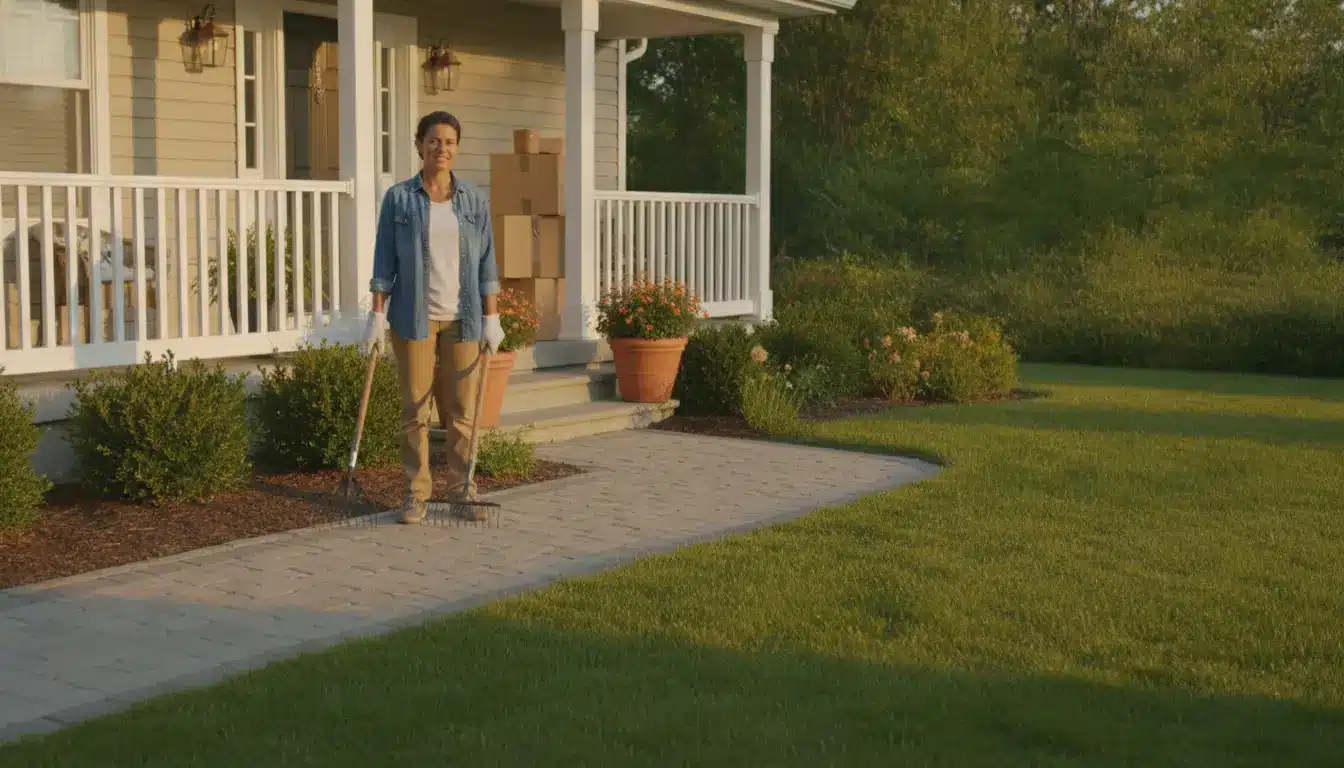
Once the main paths are clear, turn your attention to the areas people notice right away. Mow the lawn if you have one, pull obvious weeds near entrances, sweep the porch, and remove dead plants from containers or front beds. These small jobs can make the yard look cared for without turning your move into a full weekend of landscaping.
Look for anything that makes the space feel neglected at first glance. A sagging trellis, scattered branches, empty nursery pots, or overgrown grass along the walkway can distract from an otherwise healthy yard. Cleaning up those simple visual issues usually matters more than planting something new.
Try not to redesign beds or add last-minute color just to impress someone else. A clean, orderly yard makes a better impression than a rushed project that still needs time to settle in.
Skip the Projects That Won’t Pay You Back
Some yard projects feel urgent during a move because they’re visible, unfinished, or tied to plans you once had for the space. That doesn’t mean they’re worth doing now. Building new beds, replacing a tired patio, planting young trees, or starting a fresh landscape design can take more time and energy than you have when you’re about to leave.
Before taking on an outdoor project, ask whether it solves a real problem or simply makes the yard feel closer to the version you pictured. Fixing a broken gate latch is practical. Installing a new garden border because the old one looks plain can probably wait.
Moving is a good time to be honest about what’s worth your effort. If a project won’t improve safety, access, basic appearance, or your own peace of mind, it likely belongs off the list.
Be Careful About Moving Plants, Soil, or Outdoor Materials
If you’re attached to certain plants, it’s natural to want to dig them up and bring them along. That can work well for clean containers, healthy cuttings, saved seeds, or small potted plants, but it pays to be selective. Outdoor plants, loose soil, compost, mulch, and untreated wood can carry insects, eggs, disease, or invasive pests into the next yard.
Before packing anything from the garden, check leaves, stems, roots, and soil for damage, unusual spots, or signs of stress. Since moving plants and soil can spread invasive insects, plant diseases, and weeds, it’s better to leave anything questionable behind than bring a hidden problem to the next property.
This is also a good time to clean hand tools, empty planters, and brush soil off stakes or supports. A little care now can help your next garden start fresh instead of carrying old problems with it.
Know When Yard Work Stops Being Worth the Stress
At some point, yard work stops being helpful and starts taking over the move. Pulling weeds near the entrance, clearing the walkway, and removing dead plants can make sense. Rebuilding beds, replacing fencing, hauling mulch, or trying to fix every rough corner of the yard may not be worth the time when you’re already packing, scheduling movers, and preparing for closing.
If your move date is close and the yard still needs more attention than you can reasonably give it, weighing last-minute repairs, cleanup, and show-ready prep against a cash offer for your home puts the time, cost, and effort into clearer perspective.
The goal is to leave the outdoor space safe, tidy, and manageable. Once you’ve handled the basics, it’s okay to stop treating the yard like one more project that has to be perfect before you go.
Leave Helpful Notes for the Next Owner
A garden can be hard to read at first glance, especially when some plants are dormant, newly cut back, or tucked into beds that change with the season. A few simple notes can make the yard easier for the next owner to care for without turning the handoff into a big project.
Write down the things someone would want to know right away: which beds get the most sun, where perennials come back, what needs regular watering, and whether any plants need extra care during heat or cold. If there are irrigation timers, rain barrels, compost areas, or young trees, add a quick note about how you’ve been using them.
This is a thoughtful way to pass along the parts of the garden that took time to learn. You don’t need a full binder or a detailed map. A single page with the basics can help the yard keep growing after you’ve moved on.
Keep Your Next Yard Simple at First
Once you arrive at the new place, give yourself time before making big garden decisions. A yard can look simple on moving day, but sun patterns, drainage, wind, shade, and soil conditions often become clearer only after you’ve lived there for a few weeks.
Start with one small area that feels easy to manage. A container herb garden, a simple raised bed, or a few reliable flowers can help you settle in without adding another long project list. The best early choices are usually the ones that help you learn the space before committing to a full layout.
A new yard works better when you spend time planning your garden from day one instead of rushing into every bed, border, or planting idea at once. Keep the first season simple, watch how the space behaves, and let the garden grow with your routine.
A Clean Exit Is Better Than a Perfect Yard
By the time moving week arrives, the yard doesn’t need one last transformation. It needs to be safe, clear, and easy enough for someone else to understand. That might mean trimmed paths, empty containers, gathered tools, a quick garden note, and a few thoughtful decisions about what comes with you.
Let unfinished projects stay unfinished if they no longer make sense. Most gardens are always changing, and trying to make one look complete before you leave can turn a manageable move into a draining one.
A good exit gives the next person a yard they can work with and leaves you with enough energy to start fresh somewhere else. That’s worth more than spending your final days chasing a perfect version of a garden you’re about to leave behind.