My greenhouse finally grows the way I always wanted it to, though it took some trial and error to get there.
It looked simple enough from the outside, just four walls, some shelves, and a door that keeps the weather out.
But plants do not care how the structure looks; they care about airflow, light, and consistency, and I learned that the hard way over two rough seasons.
These greenhouse gardening tips cover what actually worked for me: setup decisions that hold up over time, plus the daily habits that keep plants healthy long after the excitement of a new greenhouse wears off.
What Greenhouse Gardening Involves?
Greenhouse gardening means growing plants inside a structure built to trap warmth. It blocks harsh weather too.
It gives a gardener far more control than an open garden bed ever allows.
Frost stops being a threat. So does wind. So do sudden temperature swings. A growing season can stretch well beyond what the local climate normally permits.
This post covers what that looks like in practice. It starts with the setup decisions that shape everything else.
Then it moves into the daily habits that keep plants healthy. It closes with seasonal adjustments and common mistakes worth watching for.
The goal is a greenhouse that actually earns its keep, not another patch of wilted seedlings.
Greenhouse Setup Basics To Consider
A few decisions need sorting out before a single seed goes into the soil, since they shape how the whole greenhouse performs later.
Let us have a look what actually matters before you start:
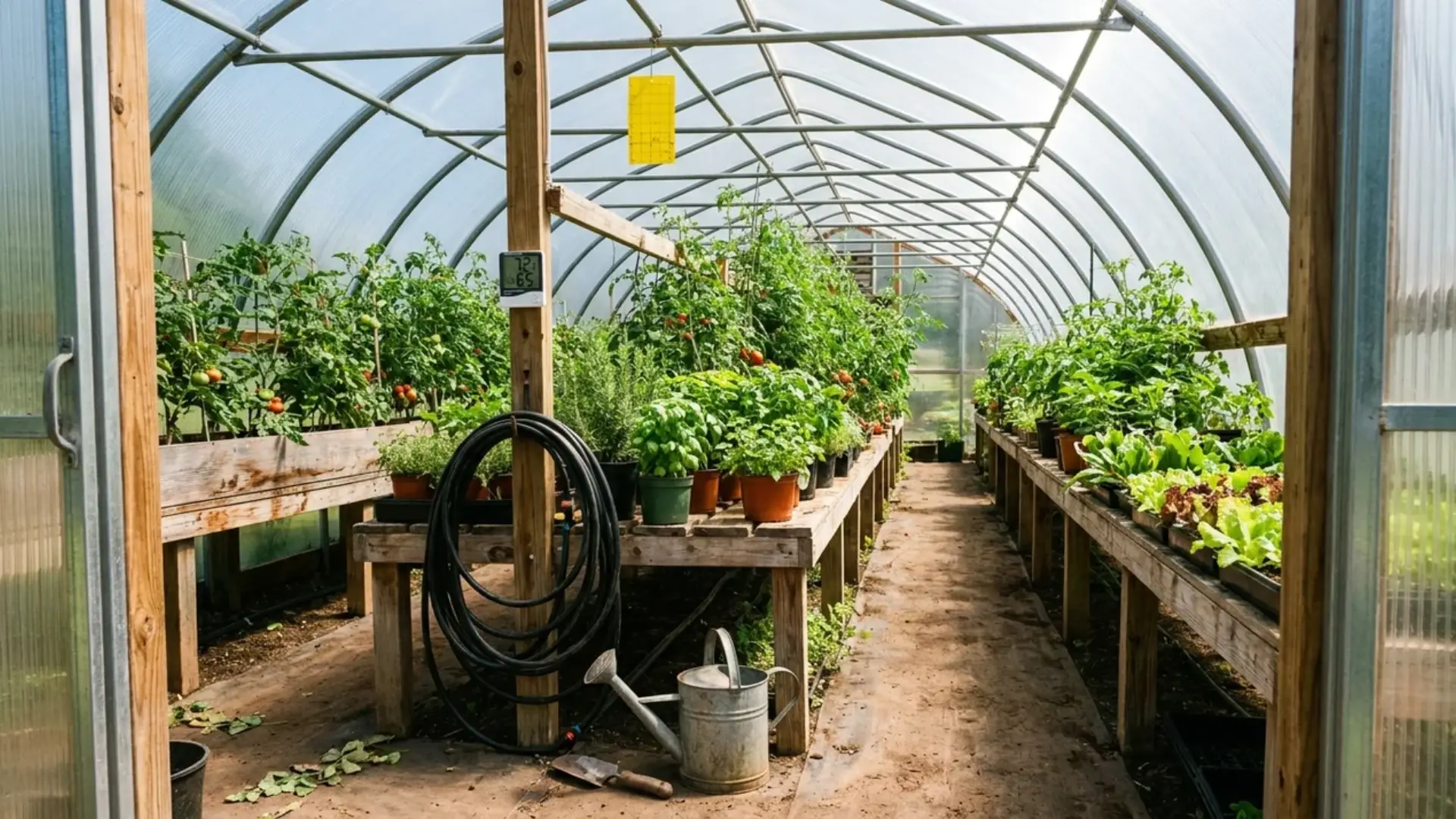
- Greenhouse Type: Budget and space decide between a cold frame, hoop house, or freestanding structure, each handling heat differently.
- Size: A greenhouse that feels roomy on day one usually fills up fast, so sizing a little larger than the current plant count often pays off within a season.
- Location: Direct sun for most of the day, clear of trees and fences, keeps temperatures steady and cuts reliance on heating.
- Ventilation: Roof vents paired with a small fan move stale air out before heat and humidity invite mold or pests.
- Irrigation: A timer-based drip system delivers steady moisture and removes the guesswork of hand watering.
- Layout: Shelves and benches keep every plant reachable without crowding airflow.
Getting these roughly right from the start saves far bigger headaches once the greenhouse is full and running.
Greenhouse Gardening Tips to Follow
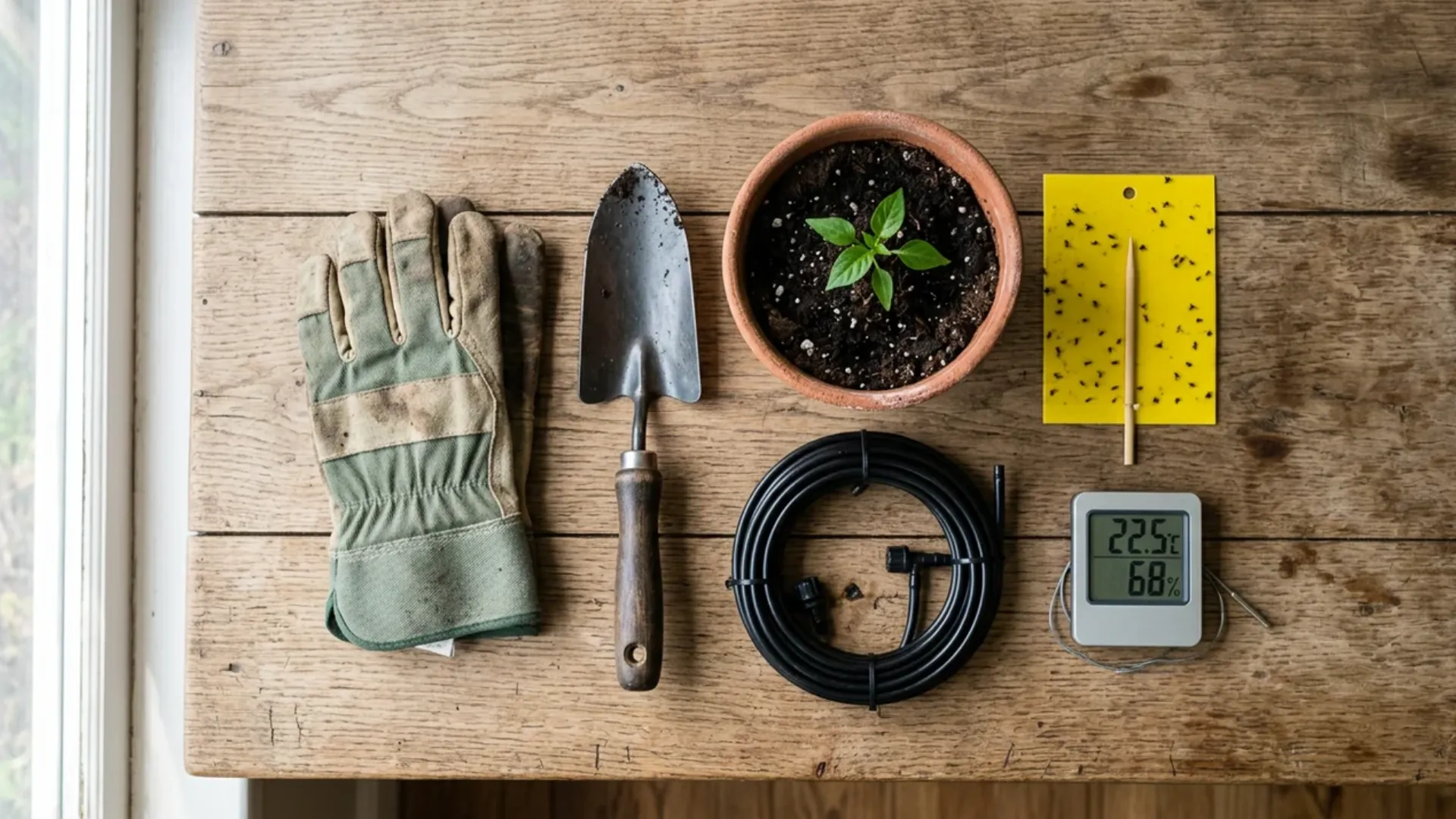
I picked up most of these habits the hard way, through trial, error, and a fair number of dead seedlings.
Here are those tips that made the biggest difference for me:
1. Choose a Sunlit Location
I learned early that light exposure makes or breaks a greenhouse. My first setup sat partly in a tree’s shadow.
Growth stalled no matter what else I did. I moved everything to a sunnier spot. Plants perked up within a week.
Morning light matters most. It warms the space early. It stretches the usable daylight hours plants get each day. That alone changed everything for me.
2. Maintain Steady Airflow Daily
Stale air turned into my biggest early problem. Heat and moisture built up by midday. I would walk in to find leaves damp and limp. Mold started creeping into the shadier corners.
Adding roof vents and a small fan fixed it almost overnight. Now I crack the vents every morning. The fan runs through the warmest hours. Air keeps moving all day long. Leaves finally stayed dry too.
Enclosed structures make mold prevention in tight spaces harder than in an open garden, since trapped humidity gives spores exactly the damp surface they need.
3. Control Indoor Temperature Ranges
My plants sulked whenever temperatures swung too far. I keep a thermometer near eye level and check it daily. I aim for a steady range, not perfection.
I put up shade cloth when afternoons get too hot. I close vents earlier on cool evenings.
Consistency mattered more than any single ideal number. A quick daily check became routine fast.
Both of these gave me readings I could trust:
- ThermoPro TP55 Digital Indoor Hygrometer Thermometer
- AcuRite 01083 Pro Accuracy Indoor Temperature and Humidity Monitor
4. Water Plants in the Mornings
I used to water whenever I remembered. My plants showed it through yellowing leaves. Growth was slow and uneven across the beds. Switching to mornings changed everything.
Soil absorbs moisture better before the day heats up. Leaves dry off before evening too.
That cuts down on fungal issues I used to fight constantly. Watering early also gives roots time to absorb before the sun climbs high.
5. Use a Quality Potting Mix
Garden soil was my first mistake. It compacted fast and brought pests in with it. My seedlings struggled to push roots through the dense texture.
Switching to a well-draining potting mix made for greenhouse use solved both problems at once. The soil-borne issues I used to see stopped appearing completely.
Roots finally had room to breathe, and drainage improved right away too. Plants grew noticeably faster after that. The reasoning comes down to drainage: potting mix over garden soil solves the compaction problem before it starts.
I have had good results with both of these bags:
6. Test and Amend Soil
I skipped soil testing for my entire first year. I paid for it with stunted growth I couldn’t explain. A basic at-home kit showed my pH was off.
It had been blocking nutrient uptake the whole time. Now I test twice a season. I amend based on what the results tell me.
Guessing at nutrients had wasted an entire season of otherwise healthy plants. Testing saves real time.
Either of these kits will tell you exactly what’s missing:
7. Rotate Crops Each Season
Growing tomatoes in the same bed season after season drained the soil faster than I expected.
The next crop always came in weaker. Rotating them with soil-replenishing crops like beans changed that completely.
I keep a rough map of what grew where each season. I stopped trying to keep it all in my head.
This one habit alone kept my beds far more productive year after year. It costs little but pays off.
8. Monitor Humidity Levels Often
Greenhouses trap moisture in ways an outdoor garden never does. I didn’t respect that at first. Mold showed up on leaves before I noticed anything was wrong.
It spread fast in the enclosed space. A cheap hygrometer changed that completely.
Now I catch rising humidity before it becomes a real problem. I check it every morning and adjust the vents whenever numbers climb too high.
9. Inspect Plants For Pests
Pests spread fast in an enclosed space, faster than I ever saw outdoors. Warmer months made it worse every time.
I walk through every few days now. I check the undersides of leaves where bugs like to hide. Catching an infestation early means the difference between pulling a few leaves and losing the whole plant.
Sticky traps also help me spot activity before it spreads further across the greenhouse.
These two traps make weekly checks quick:
10. Provide Consistent Natural Light
Some corners of my greenhouse got noticeably less light than others. The plants there always lagged behind no matter what else I tried.
I started rotating trays every week to even things out. Growth became far more uniform after that.
A simple grow light filled the gap during the darker winter months. Grow light wattage matters more than the fixture design, since underpowered lights leave seedlings reaching and thin.
11. Clean Tools and Surfaces
I used to skip cleaning until something visibly went wrong. By then it was always too late. Now I wipe down tools and surfaces after every use.
Dirty equipment spreads disease between plants faster than almost anything else. It’s a small habit that’s saved me a lot of trouble over time.
It takes only a few minutes but keeps every plant healthier in the long run.
Seasonal Greenhouse Gardening Adjustments
My greenhouse asks for different things depending on the season, and I learned that the hard way.
Here is how I adjust as the year moves along:
- Summer: Shade cloth over the roof and an open door through the hottest afternoons keep temperatures in check.
- Winter: Bubble wrap insulation and a low-set space heater hold in warmth without drying the air.
- Spring: Vents open gradually as outdoor temperatures climb back up.
- Fall: Shade comes down, and watering slows as growth naturally eases.
- Watering: Frequency shifts with the season, more in summer heat, far less in winter dormancy.
Once I stopped treating my greenhouse as one fixed environment, it stayed productive through every season.
Managing Greenhouse Pests and Disease
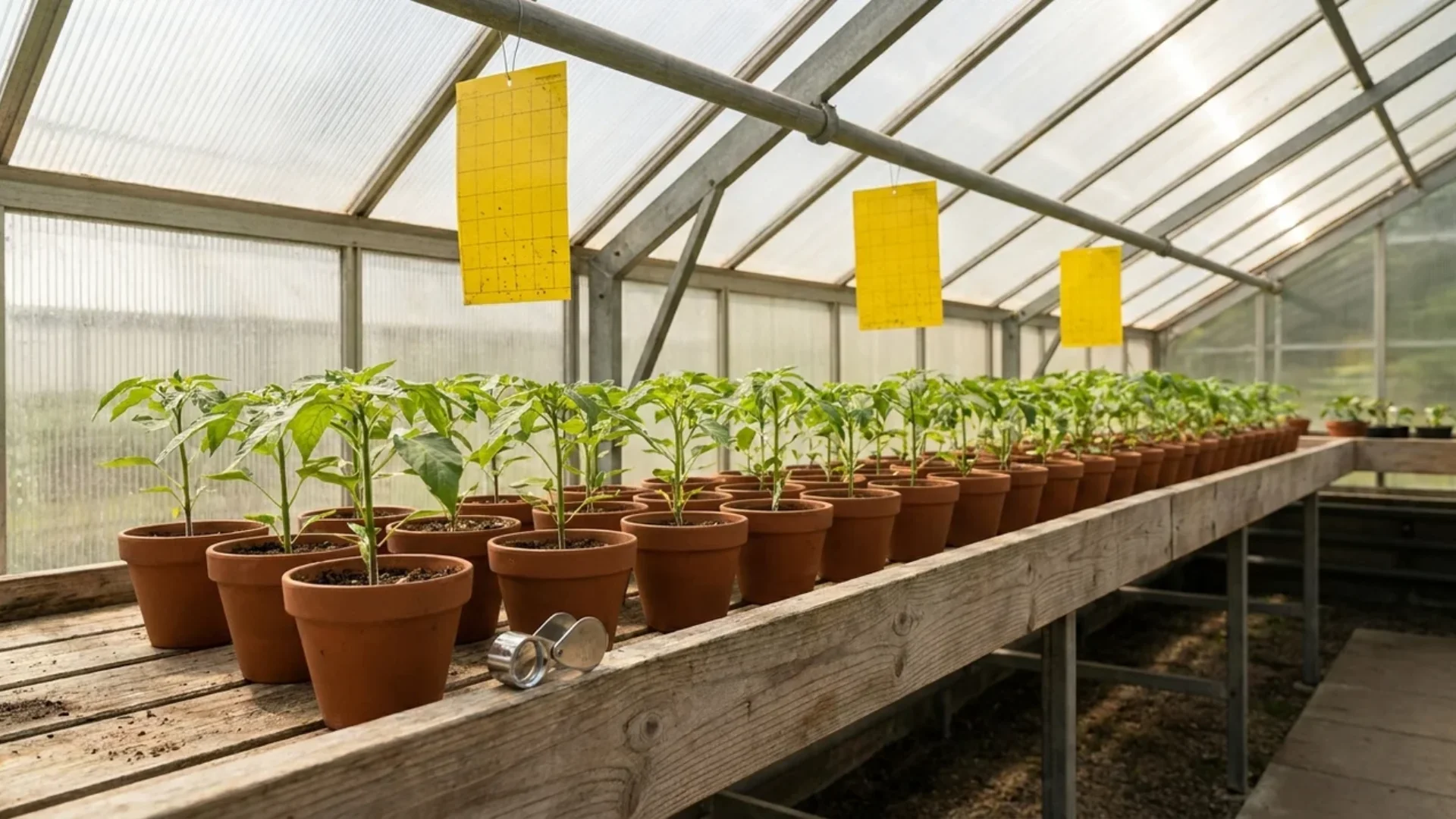
Enclosed spaces make pest problems spread faster than anything I dealt with outdoors, so prevention became non-negotiable early on.
Every new plant gets inspected before entering the greenhouse, since pests often hitch a ride in on fresh nursery stock.
Yellow sticky traps near the vents and benches catch early activity before it turns into a full outbreak, and I check them weekly.
Introducing beneficial insects like ladybugs and lacewings handles aphids and mites without a single spray.
Proper plant spacing improves airflow and makes conditions less hospitable for fungal disease.
I remove damaged leaves and remove them from the greenhouse the moment I spot them.
Common Greenhouse Gardening Mistakes to Avoid
These are the mistakes I see trip up most first-time greenhouse growers, myself included:
- Sizing it for today, not next season. Most first-time growers outgrow their greenhouse within a year, so leaving room for a few extra shelves or grow bags now saves a rebuild later.
- Watching daytime heat and ignoring nighttime drops. A warm afternoon can mask a greenhouse that loses most of its heat after dark, so checking the thermometer at night matters as much as checking it at noon.
- Packing in too many plants at once. Crowded shelves block the airflow that keeps mold and pests away, even with vents and fans running.
- Moving seedlings outdoors without hardening them off first. Seedlings raised entirely inside a greenhouse can scorch or wilt within hours of direct sun and wind if they are not introduced to it gradually over several days.
- Building benches or beds from treated lumber. Treated wood can leach chemicals into soil over time, which matters most for anyone growing food crops in containers that sit against the wood directly.
Frequently Asked Questions (FAQs)
What Plants Grow Best in a Greenhouse?
Tomatoes, peppers, cucumbers, and leafy greens tend to perform best for beginners, along with herbs like basil that thrive in steady warmth.
Does a Greenhouse Need Electricity to Run?
It depends on the setup. A basic greenhouse works fine without power, but fans, heaters, and grow lights need a nearby outlet.
Can a Greenhouse Be Used Through Winter Without Heating?
Yes, with enough insulation. Bubble wrap panels and a sheltered location can keep hardy plants going even without a heater.
What Size Greenhouse Works Best for Beginners?
A smaller structure is easier to manage at first, since it’s simpler to control temperature and humidity in a compact space.
Summing it Up!
I have made nearly every mistake this post covers, and my greenhouse is better for it now.
These greenhouse gardening tips came from years of trial and error, not a manual I followed perfectly from day one.
Getting the setup right made everything else easier, and staying consistent with the small habits made the biggest difference over time.
What’s the first thing you are planning to fix in your own greenhouse setup? Drop it in the comments; I would genuinely love to hear it.