You grab two bags at the store. One says topsoil. One says garden soil. Both look like dirt, and both cost about the same, so you toss one in the cart and hope for the best.
I’ve watched plenty of first-time gardeners make that exact call at checkout, and the results usually show up by midsummer.
That guess is where most failed gardens actually start.
Topsoil vs garden soil isn’t just a labeling difference. It’s the reason some plants thrive while others sit there, stunted, no matter how much you water them.
One builds structure. The other feeds roots. Mixing them up costs you time, money, and a whole growing season.
Let’s fix that, one section at a time.
Why Getting This Choice Right Matters
Most bags at the garden center say “soil” on the label, but topsoil and garden soil behave nothing alike once they’re in the ground. One builds structure. The other feeds roots.
Mixing them up costs real money- stunted vegetables, patchy lawns, raised beds that need redoing after one season.
The difference comes down to what each is made for: topsoil moves earth and fills space; garden soil grows plants. Knowing which one your project calls for saves both time and budget.
Below, we break down what sets them apart and how to pick the right one from the start.
What Is Topsoil?
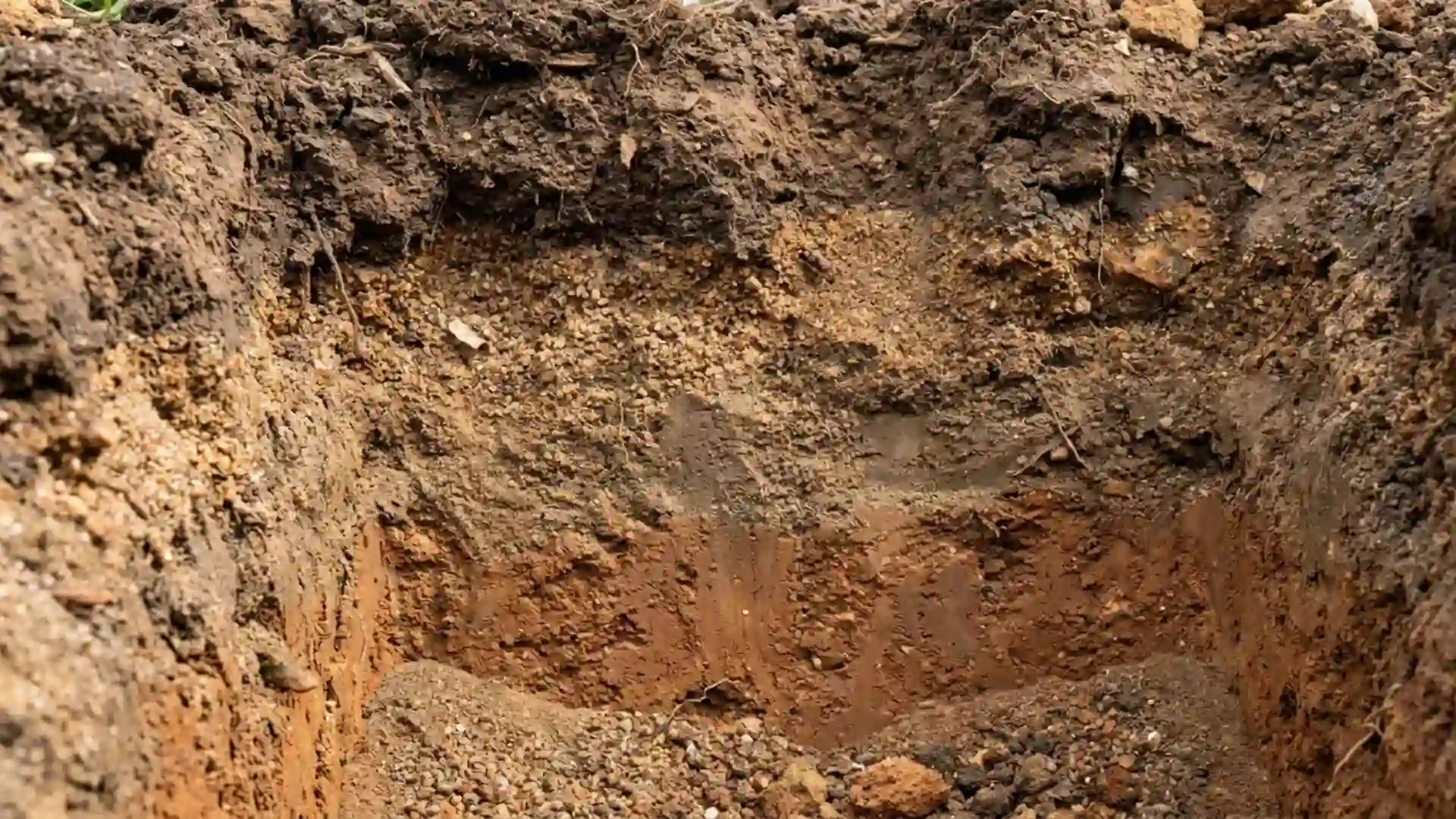
Topsoil is the natural layer sitting just beneath your feet, the first few inches of ground before construction or landscaping moves it elsewhere. It’s mineral-heavy, variable in quality, and built for structure rather than nutrition.
Topsoil is the earth’s surface layer, typically 2 to 8 inches deep, made of sand, silt, and clay.
Organic matter stays low, around 1 to 6 percent, since most of it gets stripped during construction or land clearing.
Quality depends heavily on the supplier’s source and screening process, so results vary by region.
Topsoil works best for:
- Grading and leveling yards
- Filling low spots
- Base layer under raised beds
- Backfilling trees and shrubs
What Is Garden Soil?
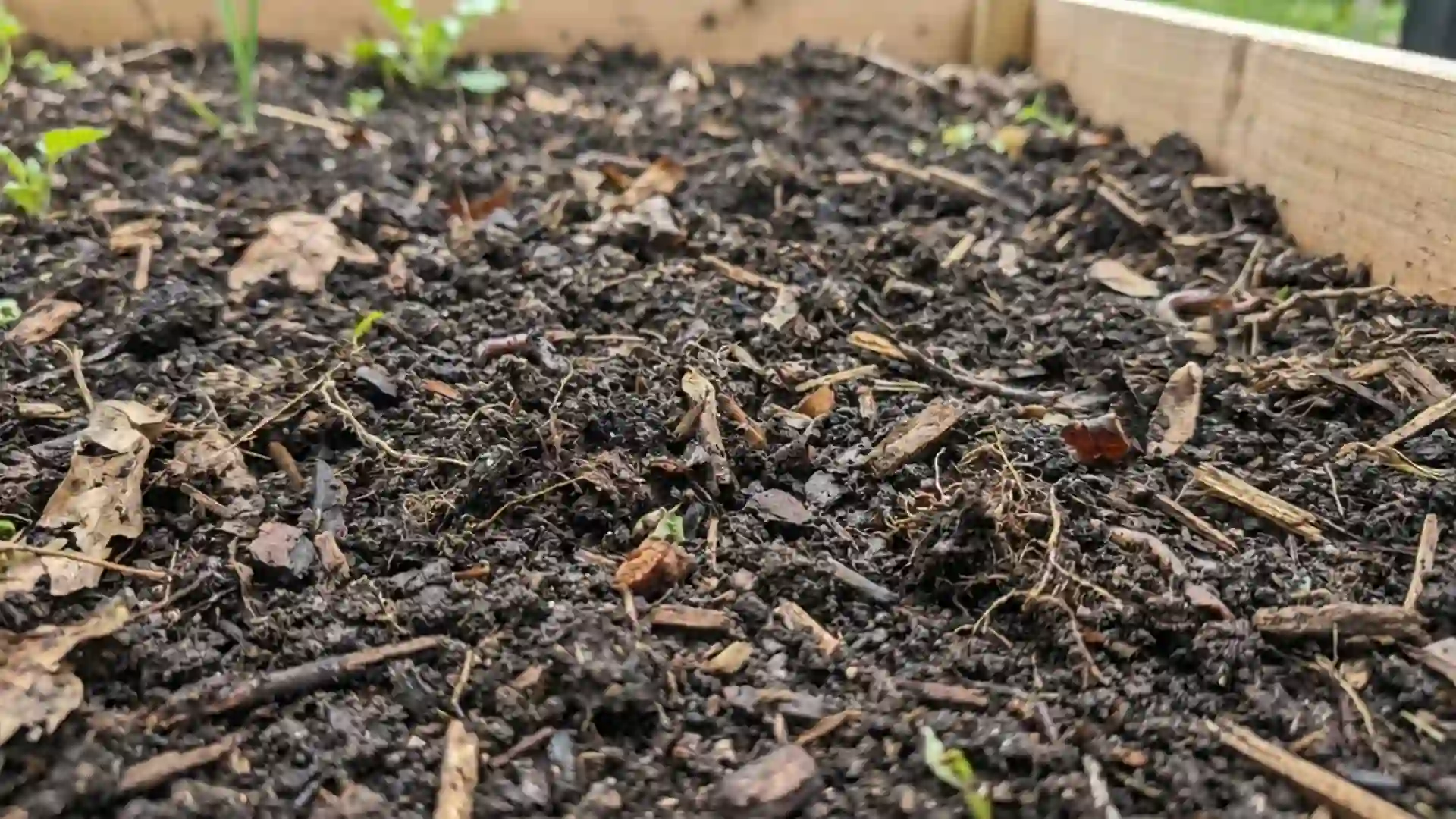
Garden soil starts where topsoil leaves off. It takes that mineral base and loads it with organic matter and nutrients, so roots have something to actually feed on. It’s built for growth, not just fill.
Garden soil combines a topsoil base with compost, aged manure, and peat moss or coir.
Many bagged versions include starter fertilizers with balanced NPK blends, and organic matter typically runs 20 to 50 percent, releasing nutrients slowly over the season.
Garden soil works best for:
- Vegetable beds
- Flower beds
- Containers and raised beds
- Anywhere active plant growth is the goal
Topsoil vs. Garden Soil- Side-by-Side Comparison
Reading definitions only gets you so far- seeing the two soils lined up side by side makes the differences click faster.
Purpose, nutrient levels, texture, drainage, and cost all shift depending on which one you’re working with.
The table below breaks down each factor at a glance, followed by the actual cost to bring home.
Comparing Purpose, Nutrients, Texture, and Cost
The table below outlines the key factors that distinguish the two, so you can match the right soil to your project without second-guessing.
|
Feature |
Topsoil |
Garden Soil |
|
Primary Purpose |
Filling, leveling, and grading |
Growing plants |
|
Nutrient Content |
Minimal to none |
High, often with starter fertilizer |
|
Organic Matter |
Low (1–6%) |
High (20–50%) |
|
Texture |
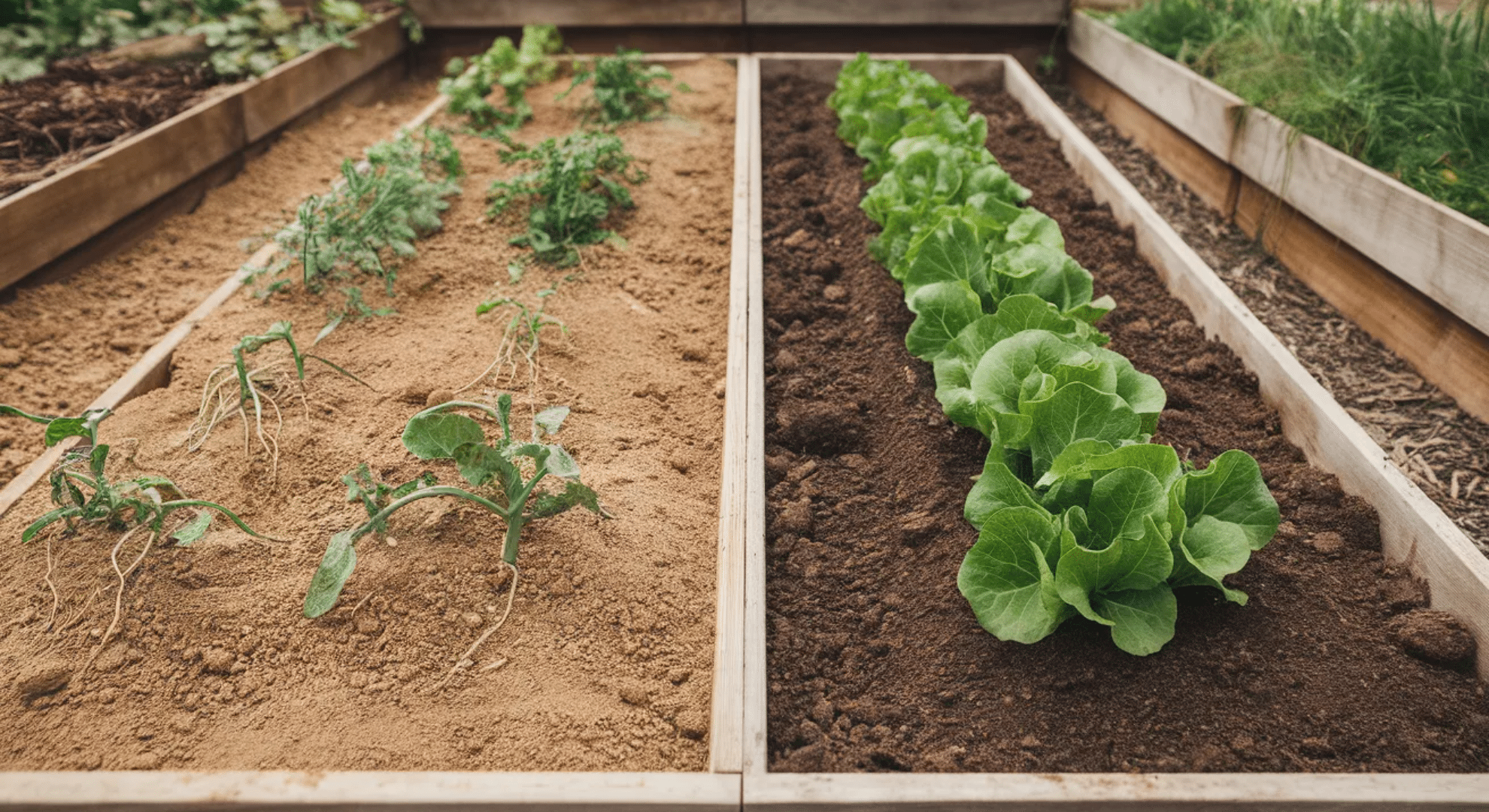
Dense and compacts easily |
Loose and well-draining |
|
Microbial Activity |
Low |
High |
|
Water Retention |
Poor |
Good |
|
Cost (per cu. yd.) |
$20–40 |
$30–60 |
|
Cost (per bag) |
Lower |
Higher |
Bulk pricing usually wins out on larger projects, while bagged soil makes sense for smaller beds or containers where you don’t need a full truckload delivered.
Once you know the price gap, the real question becomes which one your project actually calls for.
Signs You’re Using the Wrong Soil
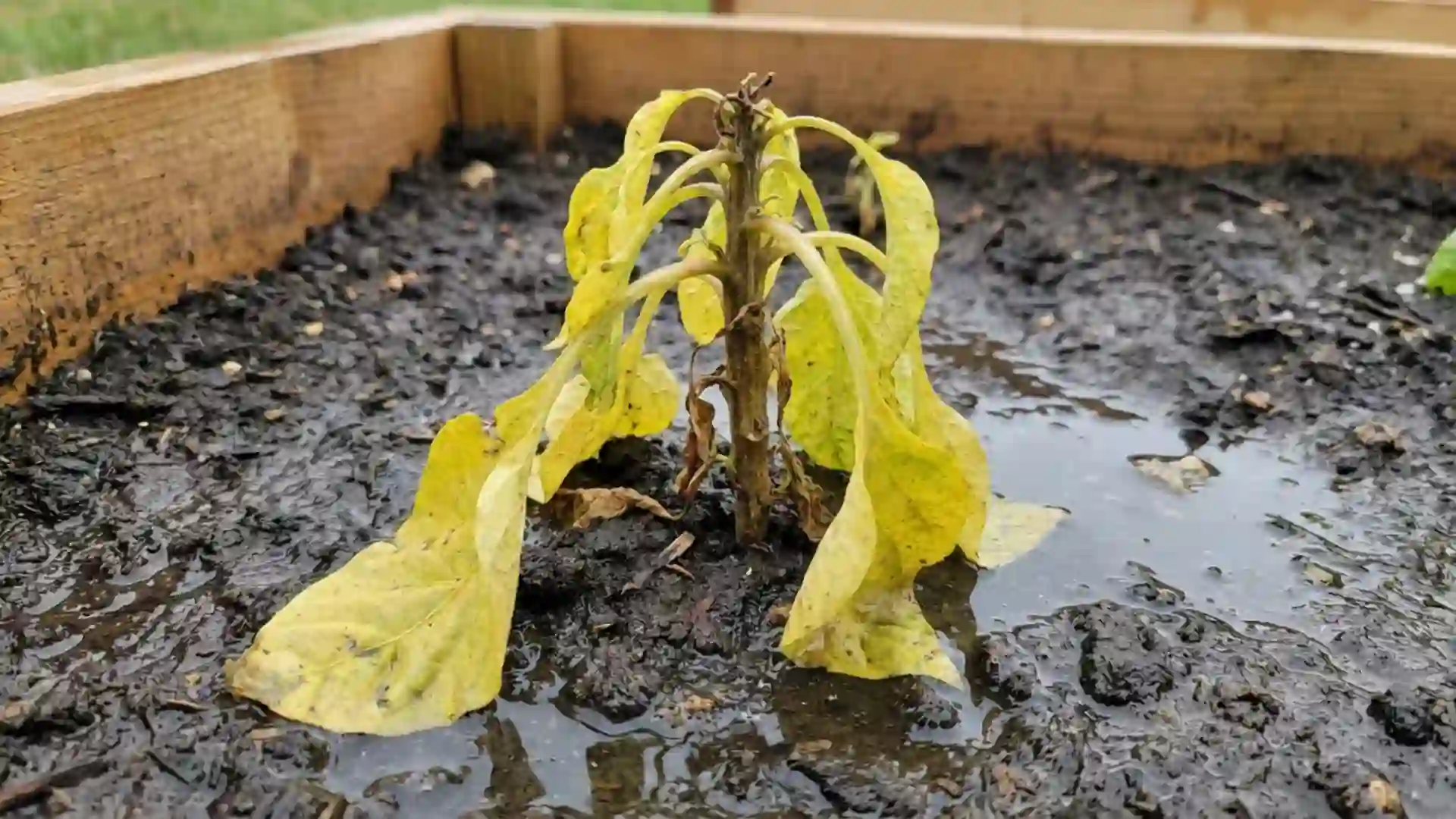
Sometimes the mistake shows up before you’ve even finished reading a comparison chart — your plants or lawn already told you.
Stunted growth, standing water, or a lawn that never fills in are all clues pointing back to soil choice.
In vegetable and flower beds, watch for:
- Stunted or slow growth
- Yellowing leaves
- Poor root development
- Water pooling instead of draining
In lawns and grading projects, watch for:
- Soil compaction
- Grass seed failing to establish
- Erosion after regrading (a few habits that help keep topsoil from washing away go a long way on sloped yards.
Catching these early saves an entire season.
When to Use Topsoil vs. Garden Soil
Knowing the difference on paper is one thing- applying it to your actual project is where most people get stuck.
Some jobs call for structure and volume; others call for nutrition and root support.
The table below lines up the most common use cases side by side, so you can match your project to the right soil without guessing.
|
Use Case |
Topsoil |
Garden Soil |
|
Grading and Leveling Ground |
Ideal for structure over nutrition |
Overkill and more expensive |
|
Base Layer Under Raised Beds |
Works well as a filler |
Not needed at this depth |
|
Backfilling Trees and Shrubs |
Suitable for established roots |
Best used only around the root ball |
|
Vegetable Gardens |
Too nutrient-poor on its own |
Ideal for heavy-feeding crops |
|
Flower Beds and Annuals |
Fine for native plants, weak for annuals |
Ideal for season-long blooms |
|
Containers and Raised Beds |
Too dense without amendments |
Ideal when combined with drainage material |
Once you see it laid out this way, the pattern is simple: reach for topsoil when the job is about moving or supporting earth, and reach for garden soil when the job is about feeding something that’s actively growing.
Best Soil for Specific Plants and Projects
General rules cover most cases, but specific plants often have their own preferences. What works for tomatoes isn’t always what a native perennial or a new lawn needs.
Here’s how the choice shifts by project:
- Vegetable gardens: Root crops like carrots need loose, well-draining garden soil to expand underground; leafy greens like spinach need steady nitrogen for continuous leaf growth.
- Flowers: Annuals (petunias, marigolds) need rich garden soil for a quick, one-season boost. Native perennials often do better in leaner soil, since excess nutrients can lead to leggy growth and fewer blooms.
- Shrubs and trees: Topsoil works fine for backfilling the hole, but mix in garden soil or compost near the root ball to help new roots establish.
- Lawns and grass seed: A thin topdressing layer, worked in for good seed-to-soil contact, matters more than nutrient density.
- Raised beds and containers: Garden soil is the base, but add perlite or sand for drainage -straight garden soil compacts in confined spaces. If you haven’t built the bed yet, figuring out a low-cost frame design is worth doing before you order soil, since the depth you settle on determines how much you’ll actually need.
Match the soil to what’s actually growing, and the rest of your care routine gets easier.
Can You Turn Topsoil Into Garden Soil?
If you already have topsoil on hand, you don’t need to start over. A few amendments can turn it into something plants can actually use.
It takes some upfront work, but it’s far cheaper than buying garden soil for an entire bed.
Here’s what to add and how much to add.
Amendments and Ratios by Plant Type
Spread 2–3 inches of compost for every 6 inches of topsoil and work it in thoroughly rather than leaving separate layers.
If the topsoil is clay-heavy, mix in perlite or coarse sand alongside the compost to improve drainage. Peat moss or coconut coir helps with moisture retention.
- Heavy feeders like tomatoes and squash perform best with a 60/40 compost-to-topsoil mix, while ornamentals generally thrive with a more balanced blend.
- Native plants usually prefer a leaner soil mix, as excessive compost or amendments can reduce their natural adaptability.
With the right ratio, plain topsoil performs almost identically to store-bought garden soil, at a fraction of the cost.
Mixing Topsoil and Garden Soil Together
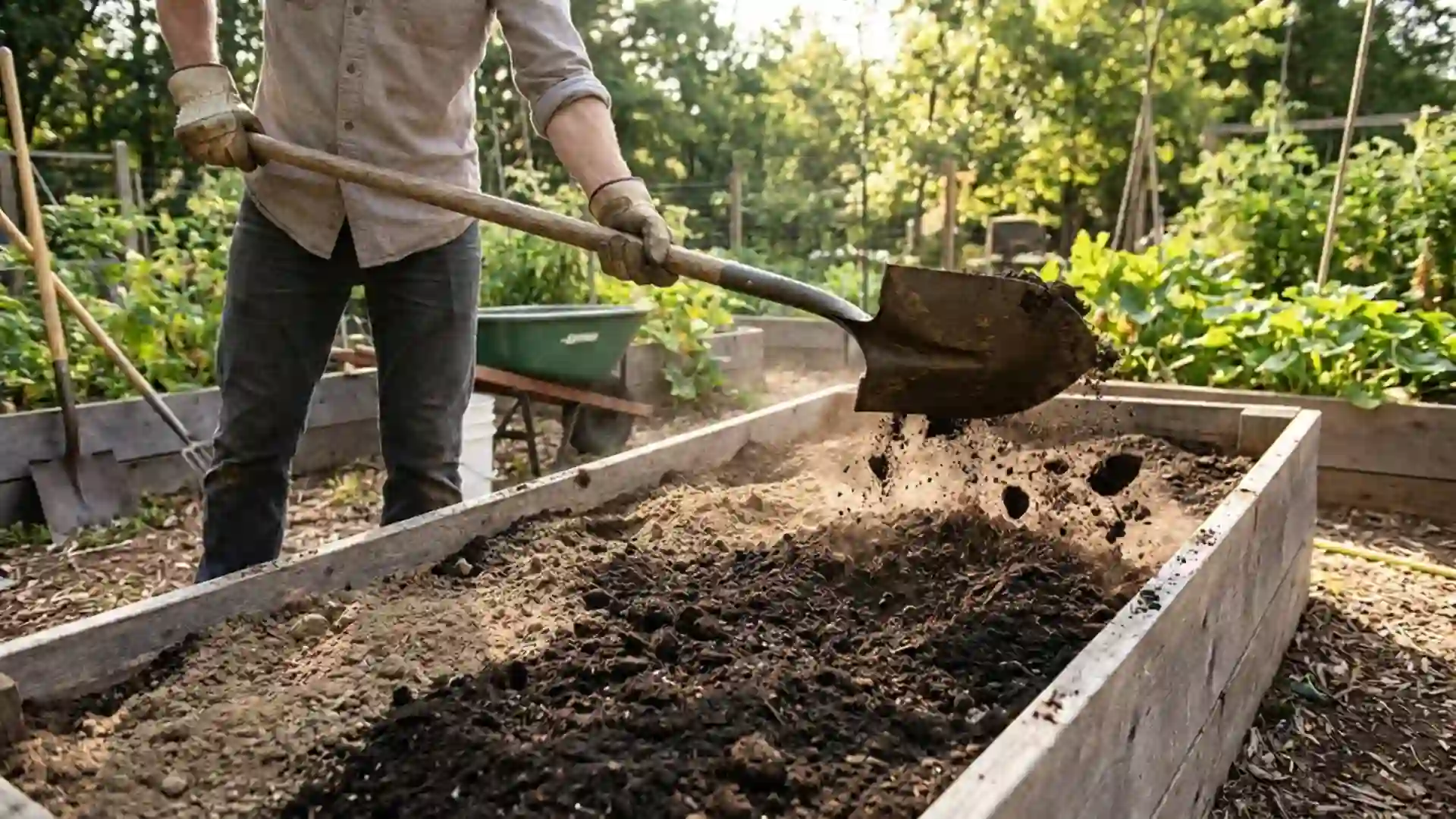
Blending both soils makes sense when you’re filling large or deep beds and don’t want to pay premium garden soil prices for the entire volume.
You get bulk and structure from topsoil, with nutrition from garden soil layered in.
A 50/50 mix works for most beds. Bump it to 60% garden soil for heavy feeders like tomatoes and squash, or flip the ratio for ornamentals with lower demands.
Spread the layers and work them together thoroughly with a shovel or tiller- don’t just dump one on top of the other and call it done.
Once the bed is filled and planted, a top layer keyed to what’s growing, not just any bag off the shelf, protects that work; it’s worth knowing what different mulch materials actually do before you cover the bed.
How Much Soil Do You Actually Need?
Buying too little means a second trip; buying too much means wasted money. A simple formula gets you close enough, and knowing when to go bagged versus bulk saves even more.
Coverage Calculator by Bed Size and Depth
Use this formula: length × width × depth (in feet) ÷ 27 = cubic yards needed.
Example calculations:
- A 4×8 ft bed at 12 inches deep = 4 × 8 × 1 ÷ 27 ≈ 1.2 cubic yards
- A 3×3 ft container at 18 inches deep = 3 × 3 × 1.5 ÷ 27 ≈ 0.5 cubic yards
- A 10×10 ft bed at 6 inches deep = 10 × 10 × 0.5 ÷ 27 ≈ 1.85 cubic yards
Round up slightly, since soil settles after watering.
Bagged vs. Bulk- Which Is More Cost-Effective
For small projects, bagged soil is easier to handle and transport. For anything over roughly 1–2 cubic yards, bulk delivery almost always costs less per yard.
- Bagged soil: best for containers, small beds, patch-up jobs
- Bulk soil: best for raised beds, large gardens, whole-yard grading
Factor in delivery fees when comparing bulk pricing, since some suppliers charge extra for small loads
Buying Guide- What to Check Before You Buy
Not all soil sold under the same label performs the same. Before handing over your money, it helps to know exactly what claims mean, what to ask suppliers, and which options hold up better in the long term.
The table below covers the essentials.
|
What to Check |
Why It Matters |
|
Organic Label |
Verify certification, as the label alone doesn’t guarantee chemical-free soil. |
|
Screened |
Indicates large rocks and debris have been removed, but not soil quality. |
|
Weed-Free |
Reduces weed seeds but doesn’t eliminate them completely. |
|
Topsoil Source (Bulk) |
Ask where it was excavated, as construction fill differs from natural topsoil. |
|
Contamination Screening (Bulk) |
Confirm the supplier screens for rocks, trash, and chemical residue. |
|
Delivery Logistics (Bulk) |
Check minimum order requirements, delivery fees, and where the soil will be placed. |
|
Peat-Free Alternatives |
Coconut coir retains moisture well while having a lower environmental impact than peat moss. |
Checking these details before buying saves you from paying for soil that looks fine on the label but falls short in the ground.
Testing Your Soil Before You Commit
A quick test before planting can save an entire season. Most issues show up with two simple checks you can do at home, though some situations call for a proper lab test.
- Squeeze test: Grab a handful of moist soil and squeeze. A tight ball that won’t crumble means clay-heavy soil; soil that falls apart instantly is too sandy.
- Percolation test: Dig a small hole, fill it with water, and track how fast it drains. Standing water after several hours signals poor drainage.
- Lab testing: Worth the cost when checking pH or suspected nutrient deficiencies, especially before a big planting investment.
Common Mistakes to Avoid
The same handful of mistakes account for most failed bids and wasted budgets. Watching for these can save both time and money.
- Using straight topsoil in vegetable beds without amendments; plants survive but rarely produce well
- Buying the cheapest bulk soil without checking source quality, risking rocks, clay clumps, or construction debris
- Skipping drainage tests, which lets standing water sit around roots and cause rot
- Tilling wet soil, which destroys structure and creates hard, compacted clumps once dry
- Planting immediately after adding new soil, instead of letting it settle and watering it in first
Avoiding these five mistakes alone puts you ahead of most first-time buyers and saves the time and money spent correcting them later.
Final Thoughts!
Topsoil vs garden soil really comes down to one question: are you building or growing?
Topsoil handles grading, filling, and backfilling. Garden soil handles anything you want to actually flourish, whether that’s vegetables, flowers, containers, or raised beds.
Get that match right, and everything else falls into place. Test what you buy. Mix it when it stretches your budget further. Feed your soil over time instead of treating it as a one-time purchase.
What soil mistake cost you a season? Drop it in the comments; I read every one, and it usually saves the next person some digging.
Frequently Asked Questions(FAQ’s)
Does the Color of Soil Indicate Its Quality?
Darker soil often means higher organic matter content, but color alone isn’t reliable- always check texture, smell, and drainage before judging quality.
Can Leftover Soil Be Stored and Reused Later?
Yes, if kept dry and covered. Garden soil loses potency over time, so refresh it with compost before reusing it the following season.
Is It Safe to Plant Edibles in Garden Soil Immediately After Buying?
Most bagged garden soil is safe immediately, but let it settle for a few days and water it in before planting for best results.
Can Topsoil Be Used for Erosion Control on Slopes?
Yes, topsoil is commonly used to stabilize slopes and support ground cover, since its denser texture holds better than loose garden soil.
Does Soil Expire or Lose Effectiveness over Time?
Bagged soil doesn’t expire, but nutrients and organic matter break down gradually, so soil sitting unused for over a year performs more weakly.