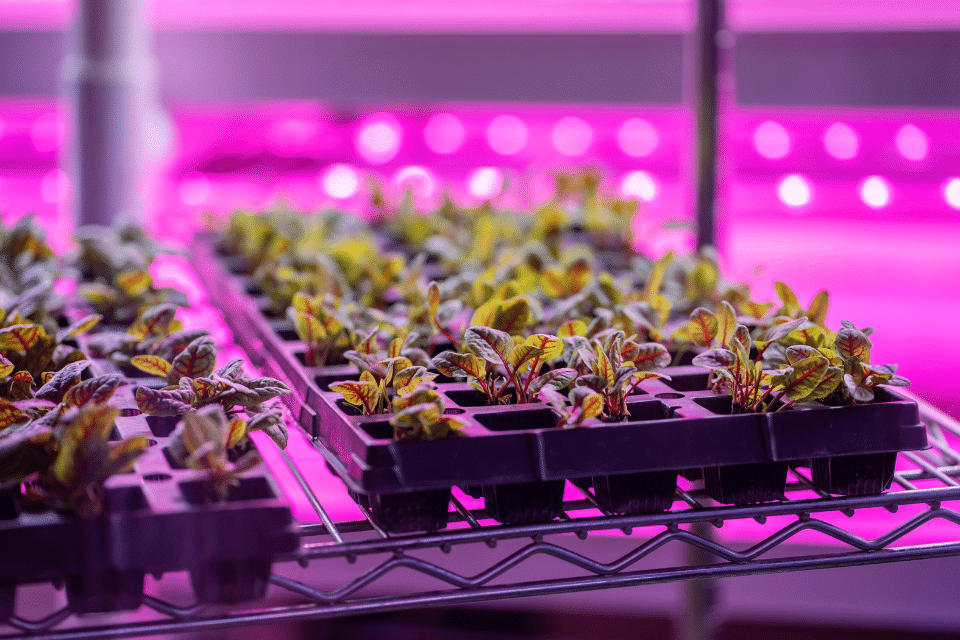
Choosing the right wattage is usually the first real decision when buying a grow light, and also the one most people get wrong. Too low a wattage, and the plant won’t grow properly; too high a wattage is a waste of money and generates unnecessary heat. The goal isn’t to find the “strongest” light, but the right amount of power for your actual space and plants.
The problem is that wattage looks simple on paper but gets messy in practice. Once you understand what it really represents, the decision becomes much easier.
What Wattage Actually Means
Wattage doesn’t measure brightness. It only tells you how much electricity a light consumes from the wall.
Think of it more like fuel usage than performance. A bigger vehicle might burn more fuel, but that doesn’t automatically make it better in every situation. Grow lights work the same way. Two lights with the same wattage can perform very differently depending on how efficiently they turn electricity into usable light for plants.
So wattage is useful, but only as a rough guide. It helps you estimate scale, not actual performance.
Don’t Fall for “Equivalent Wattage”
A lot of confusion comes from marketing terms like “2000W equivalent.” That number rarely reflects real power use. It usually just means the light is claimed to replace an older high-wattage bulb type.
The actual power draw is often far lower, sometimes 100–300W or even less.
What matters is real wattage, usually listed as input power, power consumption, or actual draw. If a listing doesn’t clearly show this, it’s usually a red flag.
The Simple Wattage Formula
When you’re choosing grow light wattage, there are really two things you need to think about: the size of your grow space and the type of plants you’re growing. These two factors always work together, and you can’t really make a good decision without both.
Grow Space
Space size is just as important as plant type. A small single pot obviously doesn’t need the same total wattage as a full 4×4 grow tent. The larger the area, the more evenly you need to distribute light, which naturally increases total power requirements.
Plant Type
Different plants have very different light demands. Low-light plants such as leafy greens or common houseplants don’t need much light to stay healthy. Medium-light plants like herbs or typical indoor foliage need more consistent coverage to grow evenly. Highlight plants, especially anything that flowers or produces fruit, require significantly more energy to perform well.
Practical Wattage Reference Table
Once you combine grow space and plant demand, a fairly consistent pattern appears. The table below gives a practical reference you can actually use when planning a setup:
|
Your Growing Area |
Low-Light Plants |
Medium-Light Plants |
High-Light Plants |
|---|---|---|---|
|
1 sq ft (single pot) |
10–20W |
20–30W |
30–50W |
|
2×2 ft (4 sq ft) |
40–80W |
80–120W |
120–200W |
|
2×4 ft (8 sq ft) |
80–160W |
160–240W |
240–400W |
|
3×3 ft (9 sq ft) |
90–180W |
180–270W |
270–450W |
|
4×4 ft (16 sq ft) |
160–320W |
320–480W |
480–800W |
|
5×5 ft (25 sq ft) |
250–500W |
500–750W |
750–1200W |
If you’re planning to expand your growing space or move on to plants that need stronger light, it often makes sense to take advantage of seasonal promotions in April when major brands offer discounts. For example, 420 Sales for 1000W LED grow light can make high-wattage upgrades much more affordable than usual.
Wattage Isn’t the Only Criterion
When choosing a grow light for your indoor garden, wattage is not a standalone decision factor. It works more like a reference point that helps you estimate the overall scale of a grow light, but it doesn’t fully describe how well the light will perform in your setup. Growers usually look at a few other key factors alongside wattage:
PPFD is the most direct indicator of how much usable light actually reaches your plants. It is more accurate than wattage, but it is not always clearly listed.
Light distribution matters just as much. A light that claims high wattage but only performs well in the center will still give poor results in a real grow space.
Efficiency (µmol/J) tells you how well the light converts electricity into usable plant light. Higher efficiency means you can achieve the same growth with less wattage.
Conclusion
Choosing the right grow light isn’t about picking the most expensive option—it’s about finding the right balance between wattage, spectrum, coverage, and efficiency for your specific setup.
If you focus on your grow space, plant type, and long-term goals, you’ll be able to select a lighting system that supports healthy growth and maximizes your yields.