Deciduous forest plants are the trees, shrubs, and wildflowers that grow in temperate deciduous forests, where most trees and shrubs lose their leaves each fall and regrow them each spring.
Almost everything in these woods runs on that leaf-drop calendar. Oaks and maples time their growth around it.
So do the smaller wildflowers on the forest floor, which bloom early before the trees block their light.
Decades of fallen leaves have also built up soil rich enough to support it all.
So what does it take to thrive in a forest that turns the lights off every summer? Timing, mostly.
Below, you’ll find the climate these forests need, the five layers plants grow in, common species with their height, bloom time, and wildlife value, and the threats these plants face today.
What Is a Temperate Deciduous Forest?
Temperate deciduous forests are ecosystems where most trees shed their leaves seasonally.
The word “deciduous” describes the trees themselves and the shedding process called abscission.
You will find these forests in three main regions: eastern North America, western and central Europe, and northeastern Asia (including parts of China, Korea, and Japan), wherever the climate supports four distinct seasons. Smaller pockets also occur in southern Chile and Argentina.
These regions receive steady rain and snow throughout the year, typically about 75–150 cm (30–60 inches) total.
Temperatures range from warm summers (around 30°C / 86°F) to cold winters (as low as about −30°C / −22°F). The growing season typically lasts 140–200 days. This seasonal rhythm shapes how plants grow, rest, and renew themselves.
The forest floor benefits from years of fallen leaves that break down into nutrient-rich soil that stays moist but drains well.
That fertility is also why people historically cleared so much of this forest for farmland.
Put that soil together with steady rain and a long growing season, and temperate forest plants have room for everything from 100-foot oaks to wildflowers a few inches tall.
Key Characteristics of Deciduous Forest Plants
Deciduous forest plants share a handful of traits shaped by one challenge: a climate that swings from hot summers to freezing winters. Here’s what sets them apart:
-
They shed their broad leaves each fall and enter dormancy to conserve energy during harsh winters.
-
Many canopy trees, such as oaks and hickories, have deep roots that anchor them firmly and let them access water and nutrients in rich forest soil.
-
Spring ephemerals (wildflowers that appear above ground only briefly in spring) bloom quickly before the canopy closes. They finish their above-ground growth in a few weeks, then retreat to their roots for the rest of the year.
-
Canopy trees thrive in full sunlight, while understory plants have adapted to grow in deep shade.
-
Broadleaf trees maximize photosynthesis during the growing season, then drop their leaves to reduce water loss.
Layers of Plant Life in a Deciduous Forest
Plants in a deciduous forest sort themselves into five vertical layers, and light decides who lives where.
Here is how these layers stack up:
|
Layer |
Plant Types |
Key Role |
|---|---|---|
|
Canopy Layer |
Oak, maple, beech trees |
Form the forest ceiling, providing shade and capturing most sunlight |
|
Understory Layer |
Dogwood, redbud, young saplings |
Thrive in filtered light, bridging the canopy and the ground |
|
Shrub Layer |
Blueberry, rhododendron, azalea |
Produce berries and flowers, support wildlife |
|
Herbaceous Layer |
Trillium, ferns, wild ginger |
Carpet the forest floor; many bloom before the canopy leafs out |
|
Forest Floor |
Moss, fungi, and decomposing leaves |
Break down organic matter, enrich soil constantly |
How dark does it get? Once the canopy fills in, often only about 1–2% of the sunlight hitting the treetops reaches the forest floor. That is why so many plants in the lower layers either flower early in spring or are built to tolerate deep shade.
Common Trees Found in Deciduous Forests
Canopy trees decide how much light, water, and leaf litter reaches everything growing below them.
These five are the ones you’ll run into most in eastern North America.
1. Oak
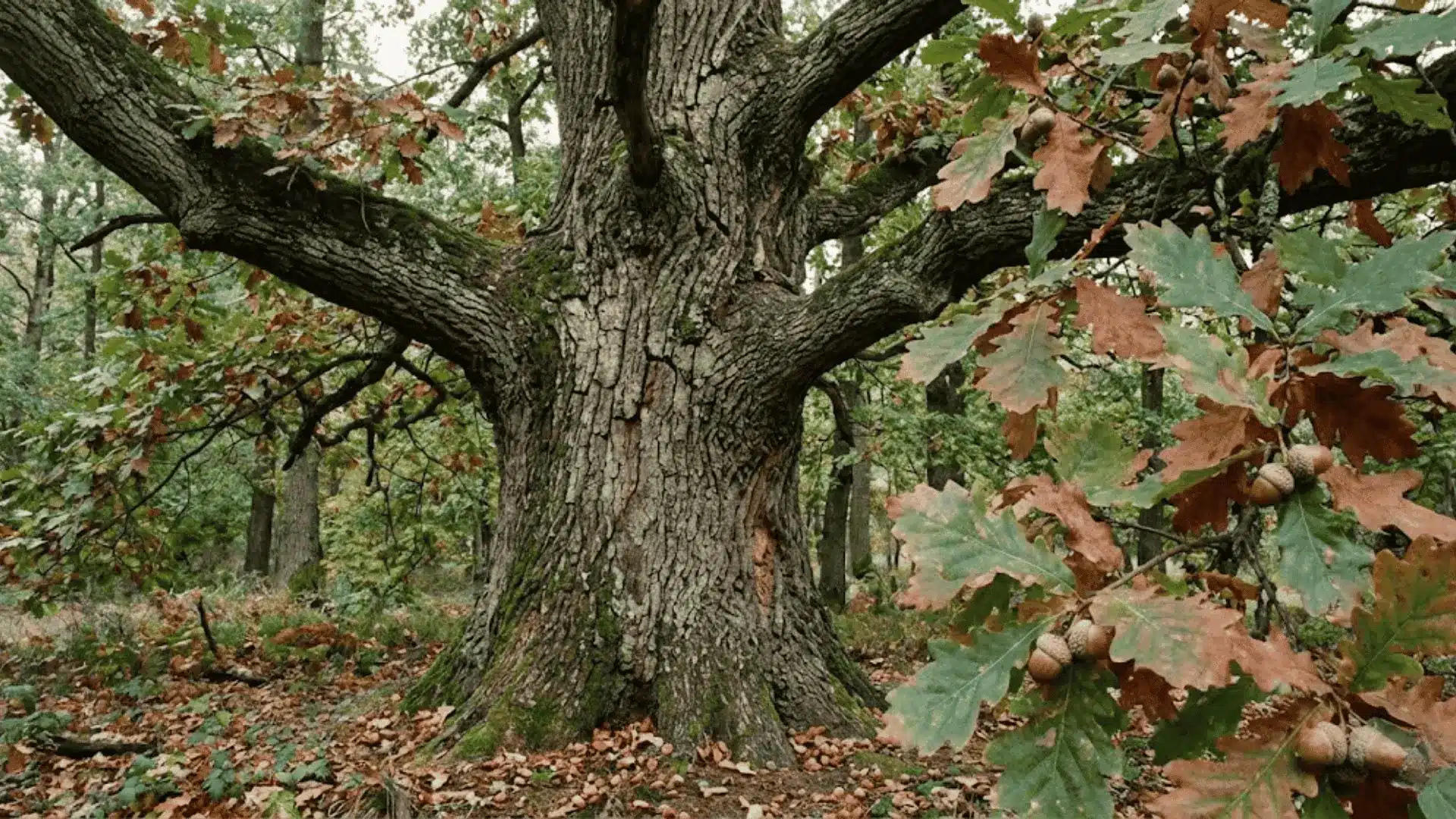
Leaf shape: Lobed with deep indentations
Height: 60–100 feet
Oak trees dominate many deciduous forests with their strong, spreading branches and deeply lobed leaves.
They turn rich bronze and russet in fall before dropping their leaves.
These trees support more caterpillar species than any other native tree. In the Mid-Atlantic alone, native oaks support about 534 species of butterflies and moths and produce acorns that feed wildlife through winter.
Their thick bark and deep roots make them incredibly resilient, often living for centuries and anchoring the forest ecosystem.
2. Maple
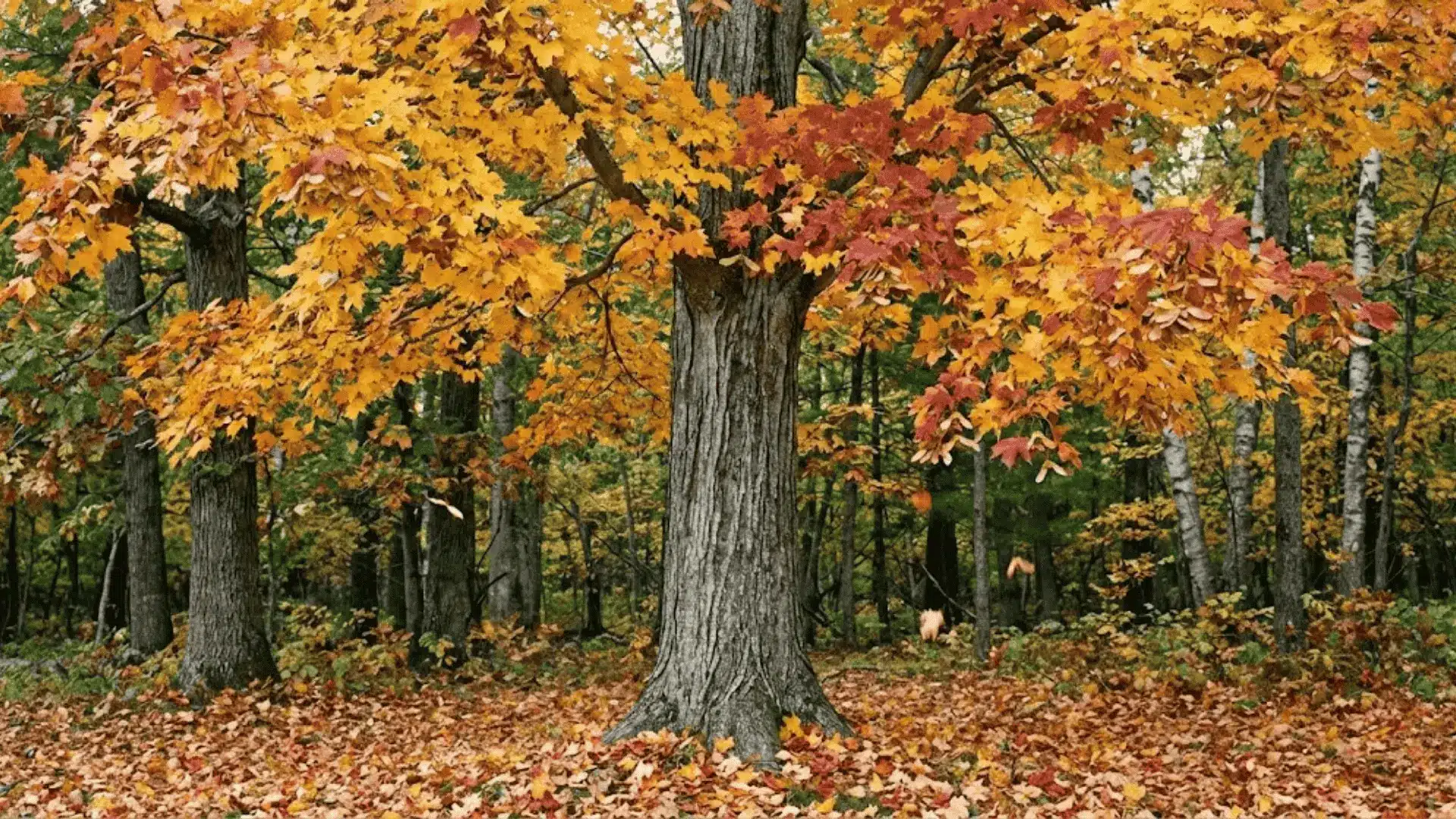
Leaf shape: Palmate with 3–5 lobes
Height: 50–75 feet
Maples are famous for their fall color, which runs from golden yellow to deep crimson.
Their winged seeds (samaras) spin through the air like helicopters.
Sugar maples produce the sap used for syrup, and the National Park Service puts the ratio at 32 to 40 gallons of sap for every gallon of syrup. Their dense canopy also casts heavy shade in summer.
Red and silver maples grow quickly, but sugar maple grows slowly to moderately, about a foot a year, and can live more than 200 years. All maples drop nutrient-rich leaf litter each autumn, feeding the soil.
3. Beech
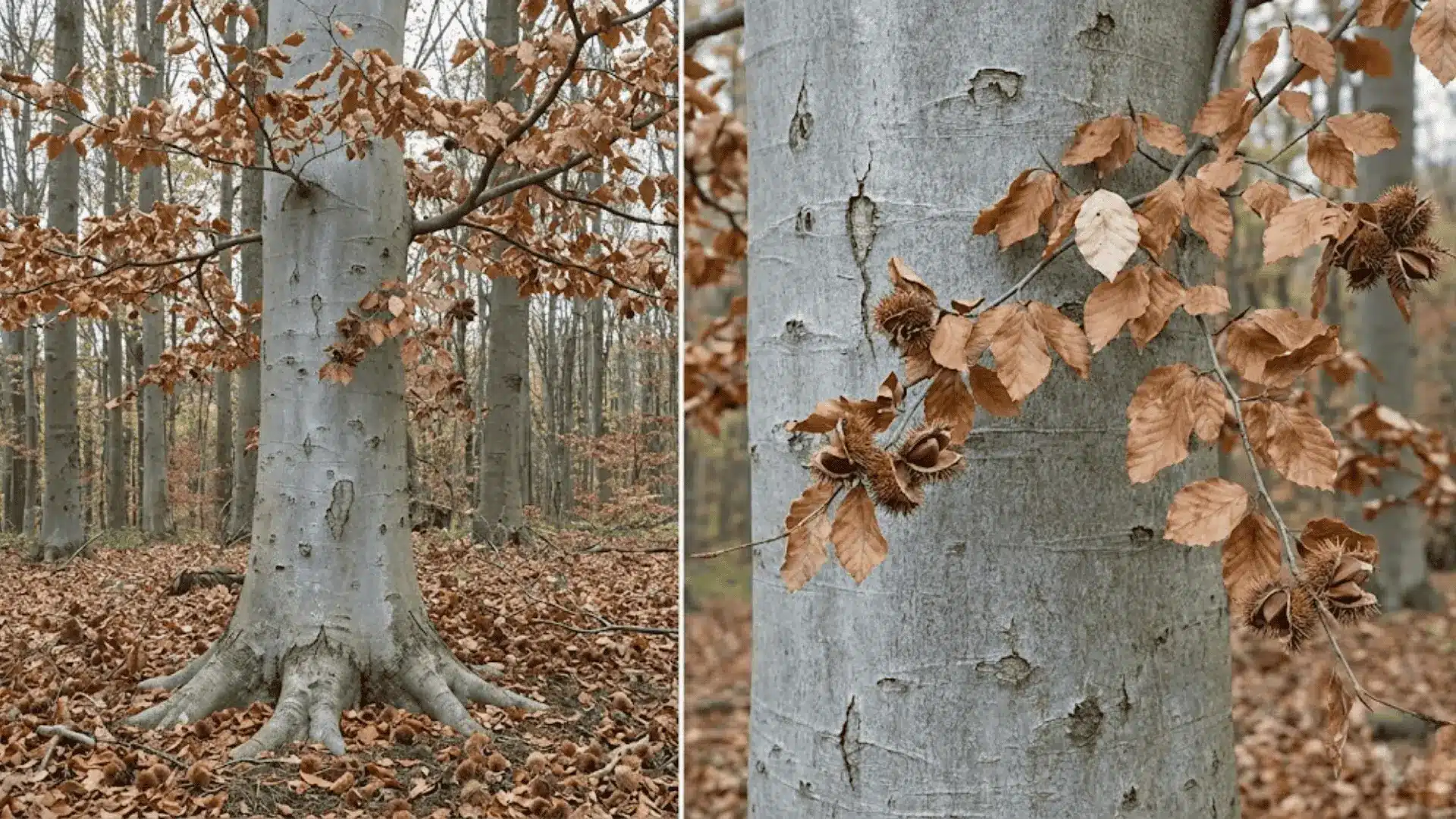
Leaf shape: Oval with toothed edges
Height: 50–70 feet
Beech trees have smooth, gray bark and often hold onto their bronze leaves well into winter, especially young trees and lower branches. Their triangular nuts feed birds and mammals throughout the cold months.
These trees grow in dense groves, creating deep shade that limits understory growth.
Their shallow root systems make them sensitive to soil compaction, but they’re long-lived and among the most shade-tolerant canopy trees, able to grow up slowly beneath other species.
4. Birch
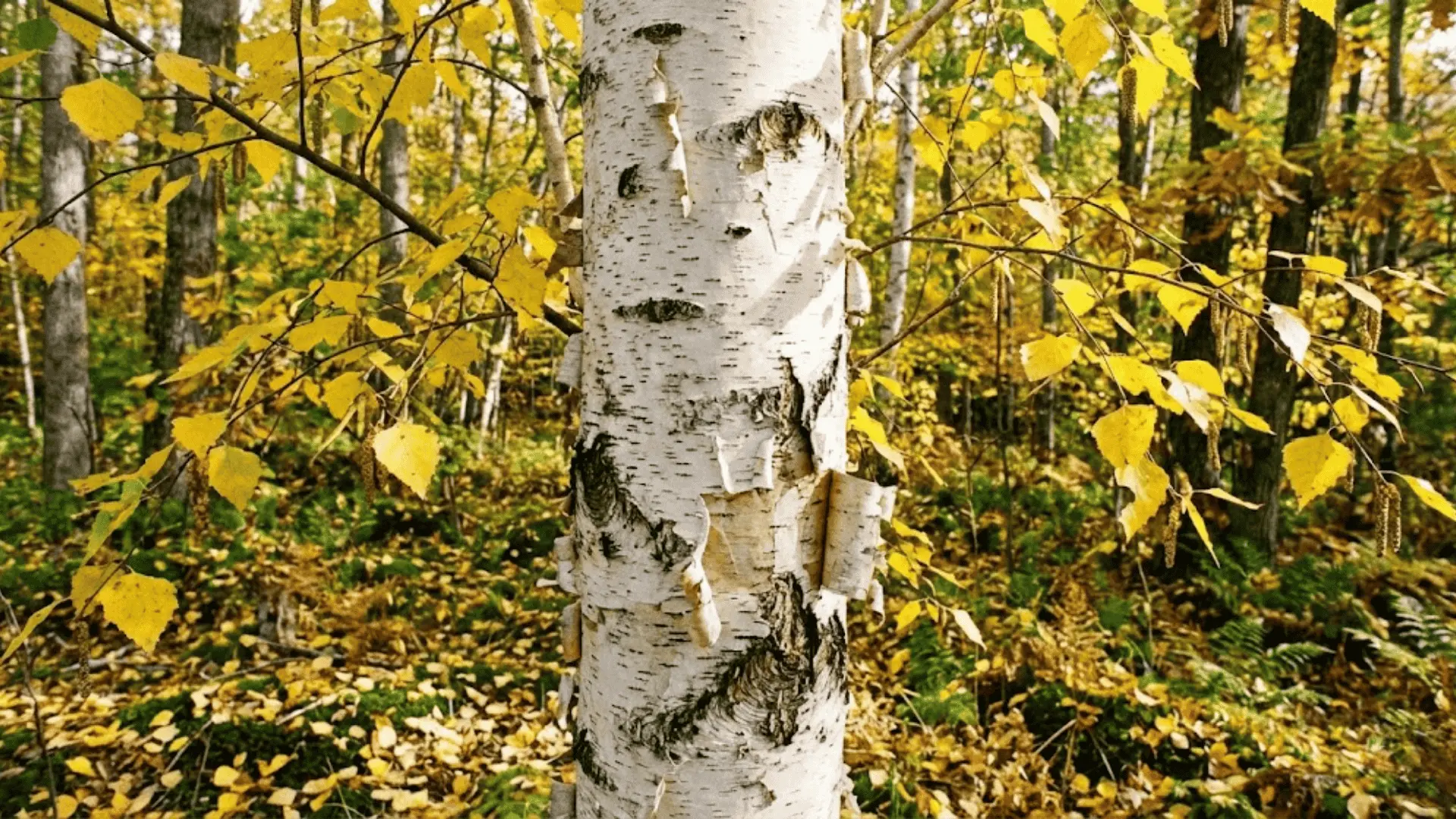
Leaf shape: Triangular to oval
Height: 40–70 feet
Paper birch is recognizable by its white, papery bark that peels in thin layers; other species, such as yellow birch and sweet birch, have bronze or dark bark.
They’re pioneer species that quickly colonize disturbed areas with their light, wind-dispersed seeds.
Birches also turn bright yellow in fall and release wind-borne pollen from dangling catkins in early spring.
They also host more than 400 caterpillar species. Though shorter-lived than oaks or maples (paper birch rarely lives beyond about 140 years), they play a vital role in forest regeneration.
5. Hickory
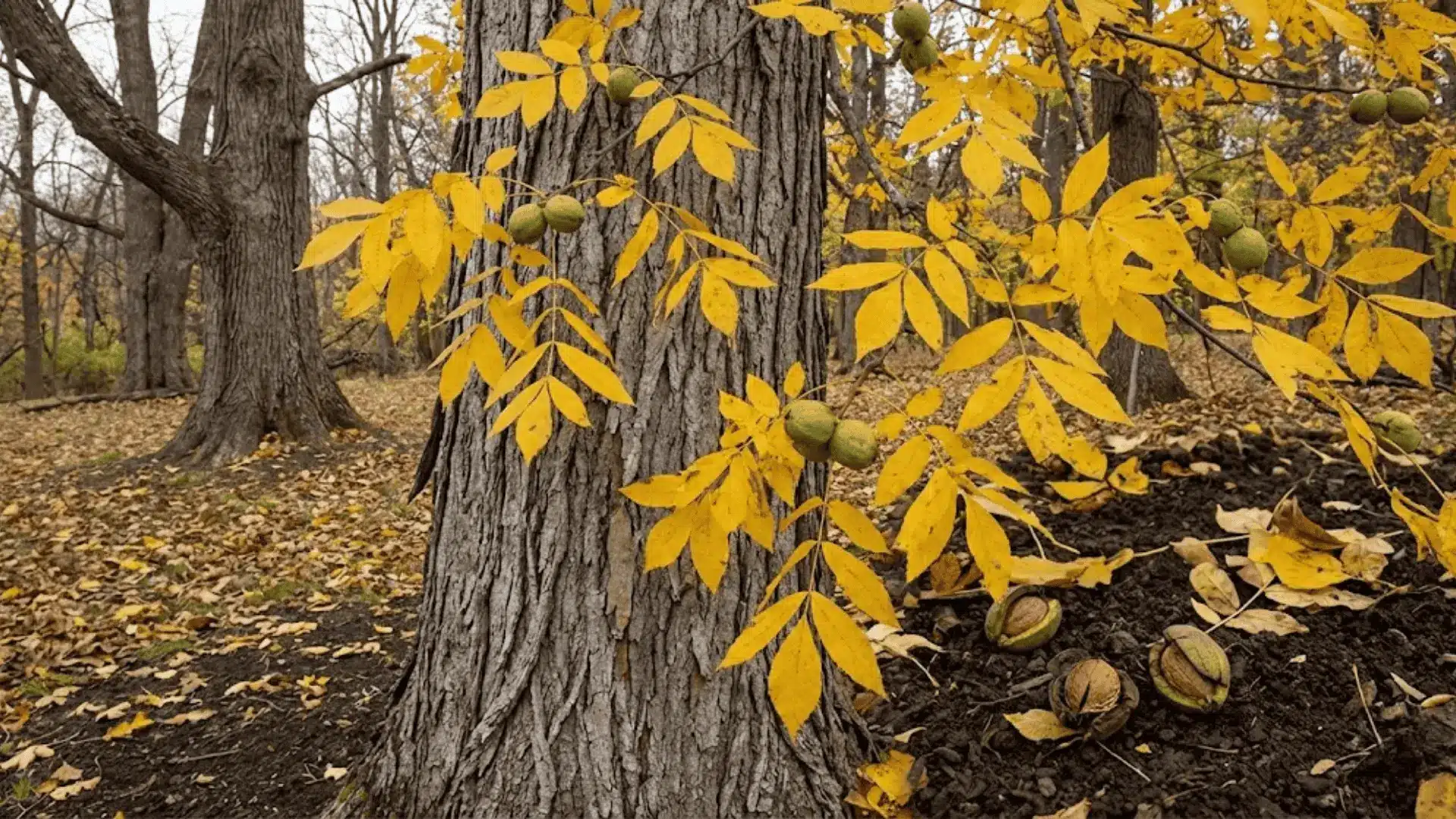
Leaf shape: Compound with 5–17 leaflets
Height: 60–80 feet
Hickory trees produce compound leaves that turn golden yellow in autumn.
Squirrels and other wildlife prize their thick-shelled nuts.
Hickories have famously hard wood and deep taproots that reach water during dry spells.
They grow slowly but steadily and become important components of mature forests in rich, well-drained soil. Oaks and hickories dominate much of the southern and central-eastern forests, while beech and maple are more common farther north.
More Canopy Trees Worth Knowing
Basswood, elms, aspens, and ashes also fill the eastern canopies. The American chestnut was once a dominant tree here until chestnut blight, a fungus introduced in the early 1900s, killed billions of trees.
|
Region |
Common Canopy Trees |
|---|---|
|
Eastern North America |
Oak, maple, beech, birch, hickory, basswood, elm, aspen, ash |
|
Europe |
English (pedunculate) oak, European beech, small-leaved lime |
|
Northeastern Asia |
Mongolian oak, Japanese beech, many maple species |
If you’ve ever picked up a winged maple seed or a hickory nut on a walk and weren’t sure what it was, a guide to tree seed pod identification can help you match the pod to the parent tree.
Shrubs and Small Plants of Temperate Deciduous Forests
The understory and shrub layers add texture, food, and seasonal color to deciduous forests.
These plants bridge the gap between towering trees and the forest floor:
6. Dogwood
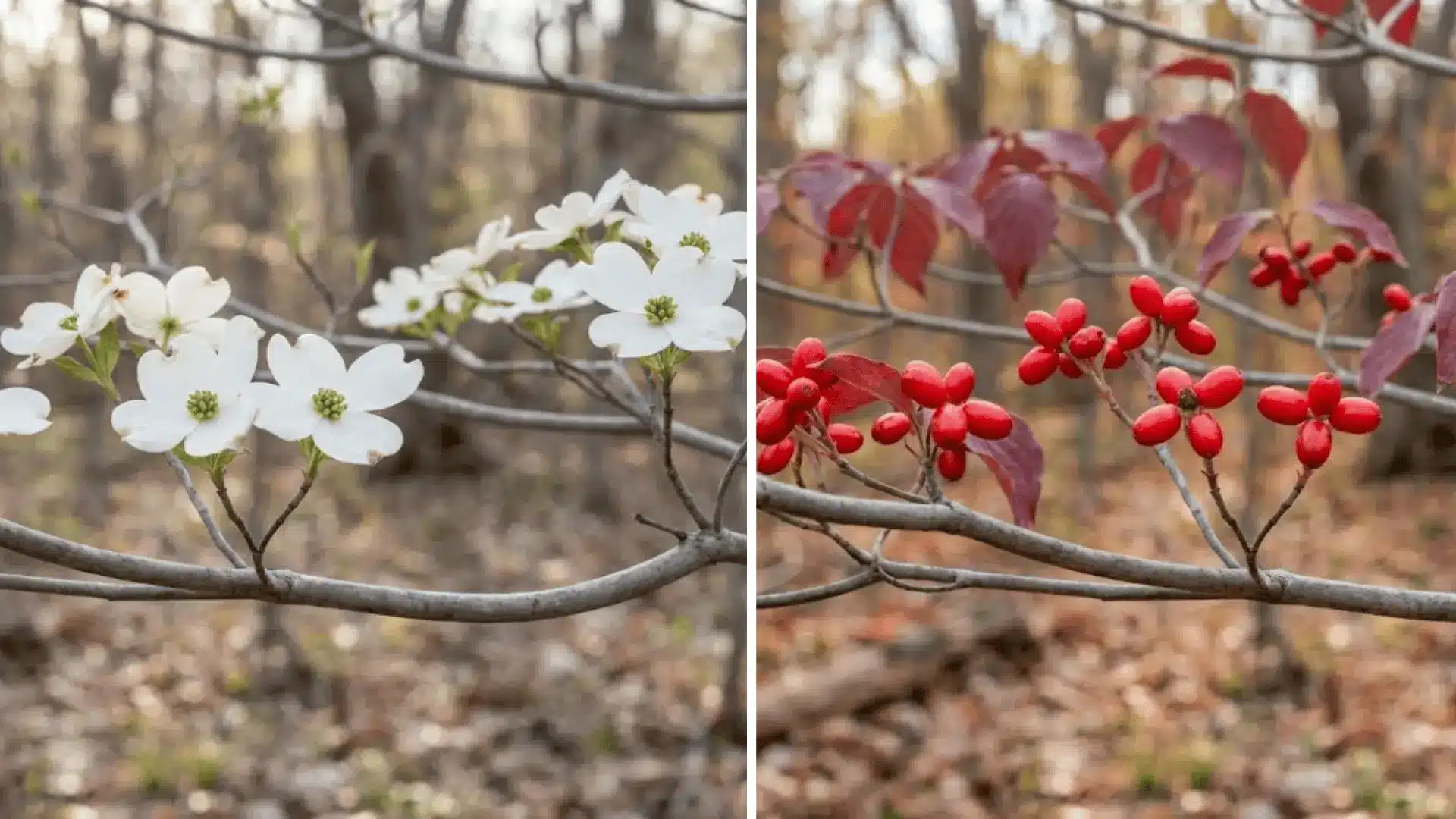
Wildlife value: Berries feed birds during fall migration
Flowering cycle: Early spring blooms
Flowering dogwood is a small understory tree that lights up the forest in spring, blooming before most trees leaf out.
What look like white or pink petals are actually bracts, modified leaves that frame the tiny true flowers. Several other dogwoods grow as shrubs. By fall, they produce bright red berries that migrating birds depend on.
Their layered branching creates nesting sites, while their dense foliage offers shelter.
Dogwoods prefer moist, acidic soil and partial shade beneath the canopy.
7. Witch Hazel
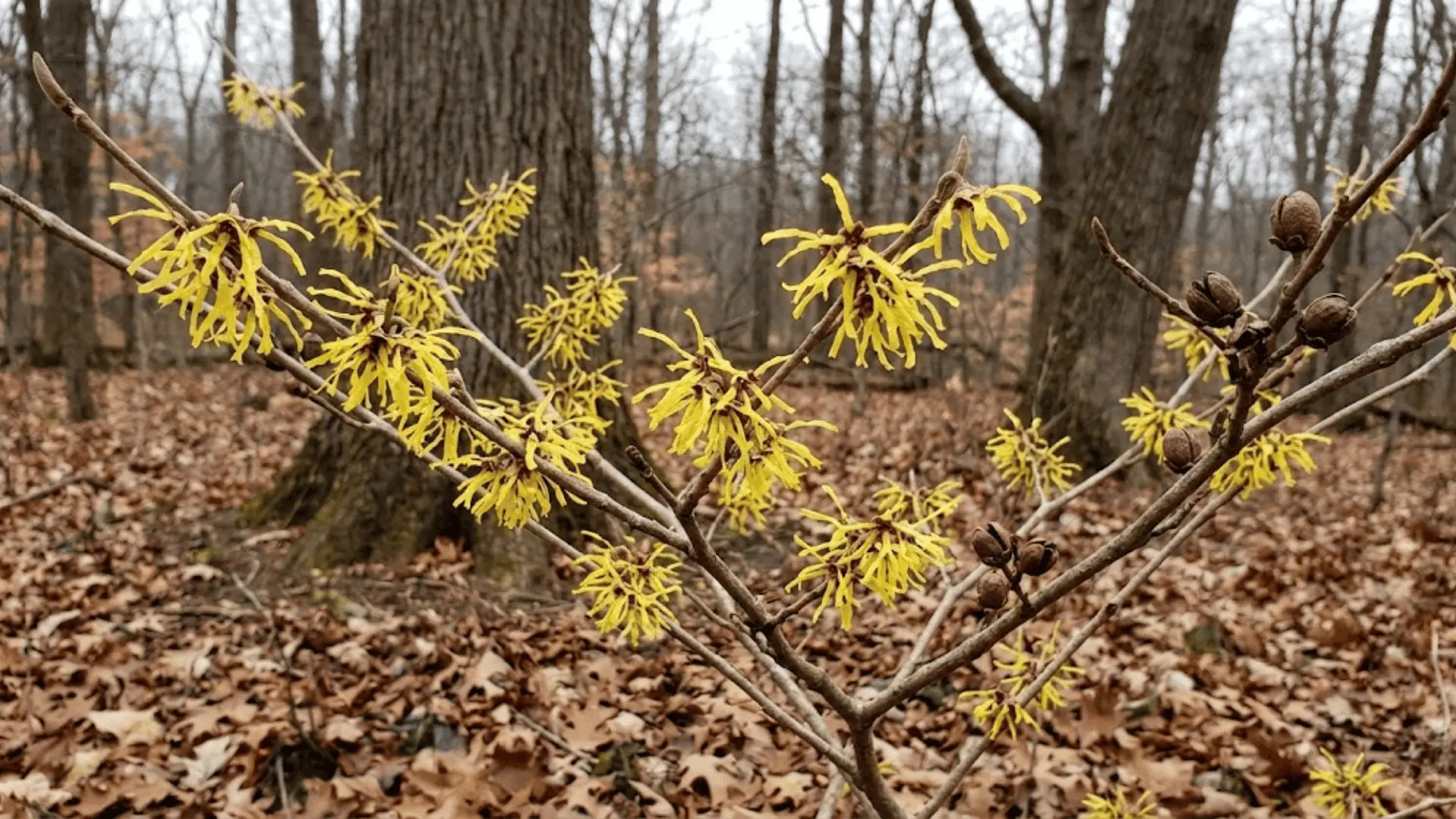
Wildlife value: Late-season nectar for pollinators
Flowering cycle: Fall to winter blooms
Witch hazel apparently never got the memo about spring. It blooms in late autumn or early winter with fragrant, ribbonlike yellow flowers, making it one of the few nectar sources left after most plants shut down for the year.
It’s also one of a handful of plants with exploding pods: the woody capsules ripen about a year after flowering, then split open and shoot their seeds several meters away.
Witch hazel thrives in understory conditions and has been used medicinally for generations; its extract is still sold as a skin astringent.
8. Serviceberry
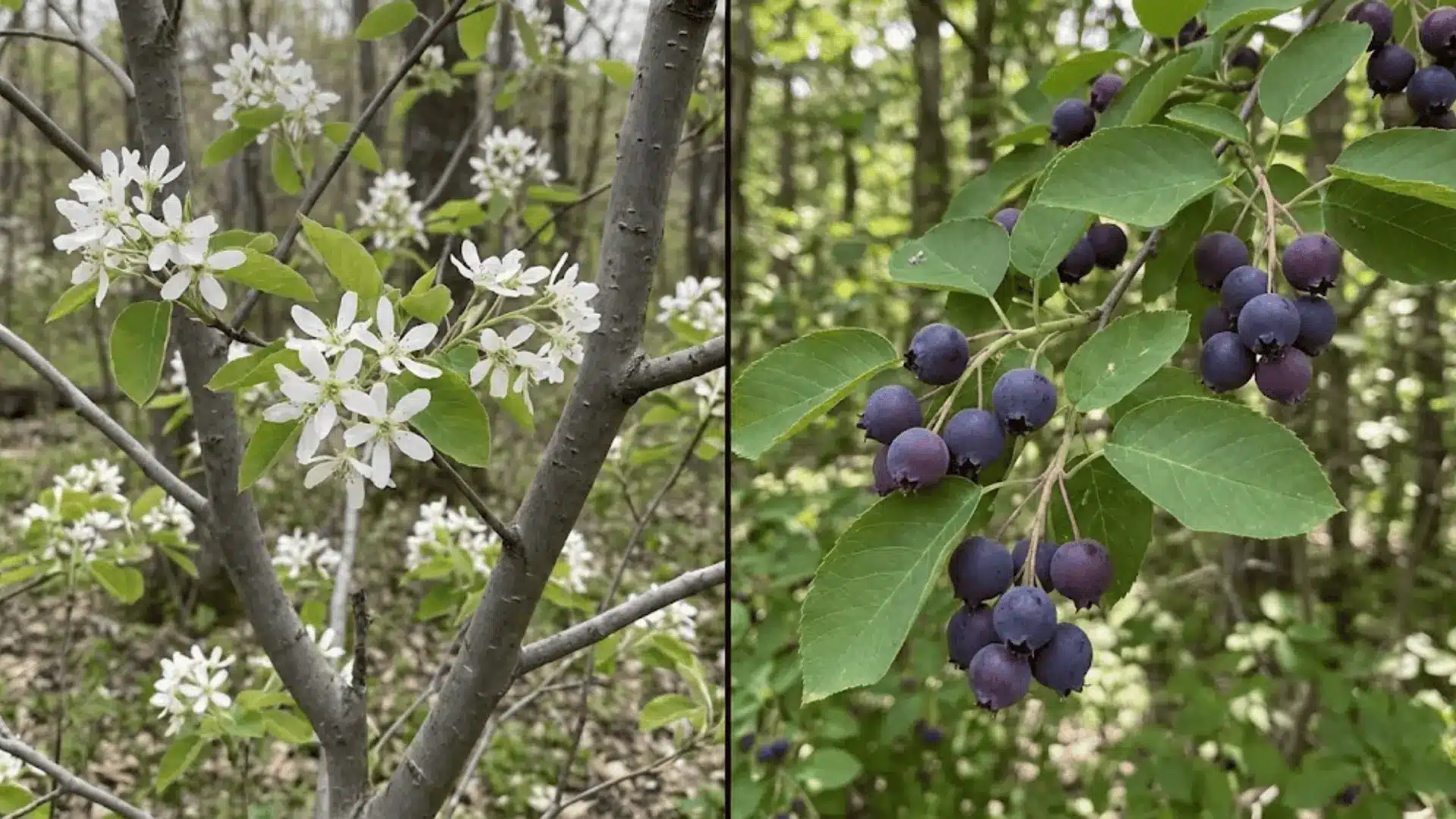
Wildlife value: Early berries for wildlife
Flowering cycle: Early spring, fruit in June
Serviceberry produces delicate white spring blossoms followed by sweet, edible berries that ripen in early summer.
These purple fruits feed birds, bears, and humans alike. The plant’s multi-season interest includes fall foliage in shades of orange and red. Serviceberry adapts well to various light conditions and grows as an understory tree or shrub.
9. Rhododendron
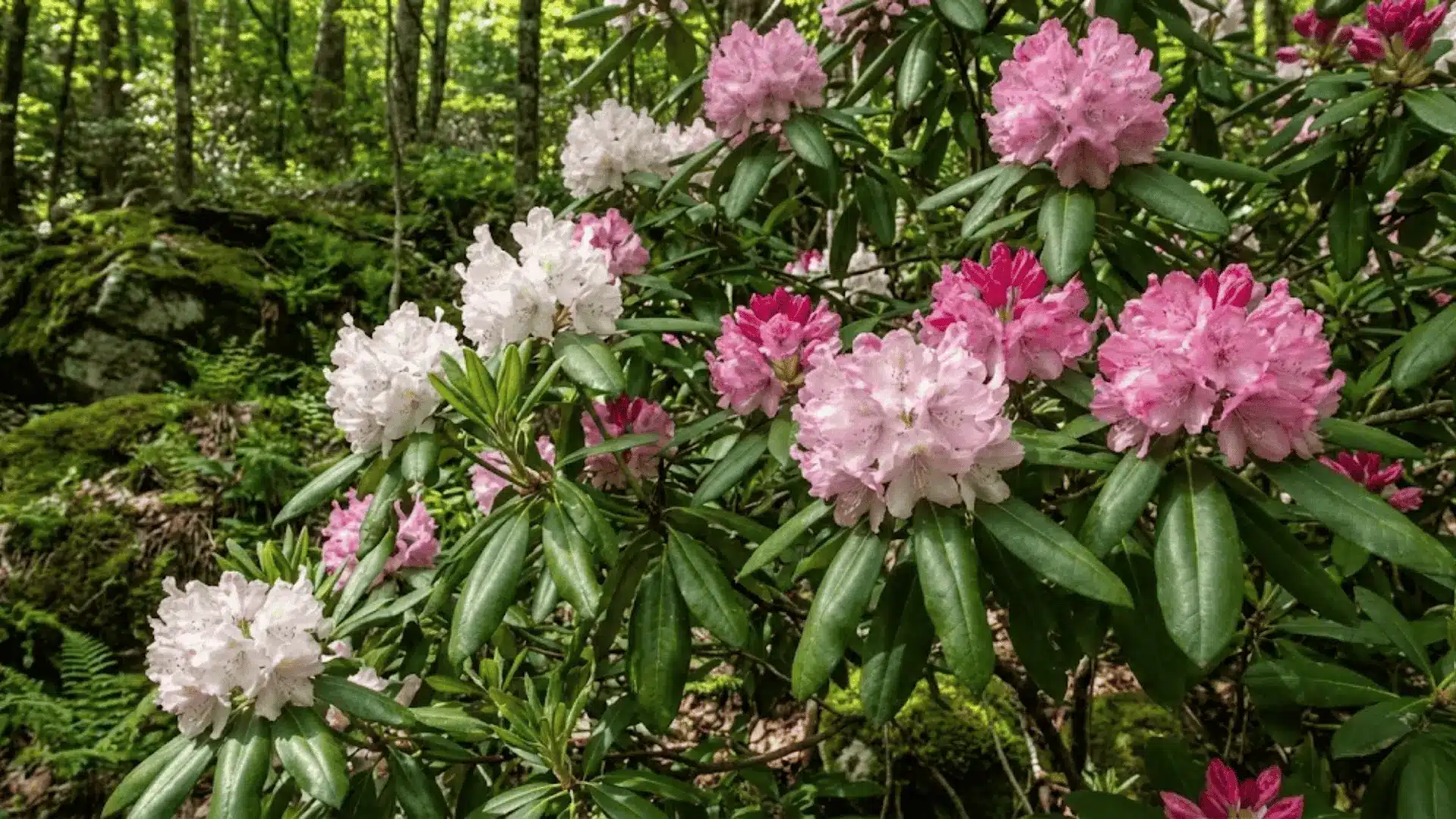
Wildlife value: Dense cover for ground-dwelling animals
Flowering cycle: Late spring to early summer
Rhododendrons create evergreen thickets in certain deciduous forests, particularly in mountainous regions.
Their showy flower clusters range from white to deep pink and bloom after spring ephemerals fade.
The leathery leaves persist year-round, providing winter shelter and reminding us that not every plant in a deciduous forest is deciduous. They prefer acidic, well-drained soil and are most abundant in areas with cool summers.
10. Viburnum
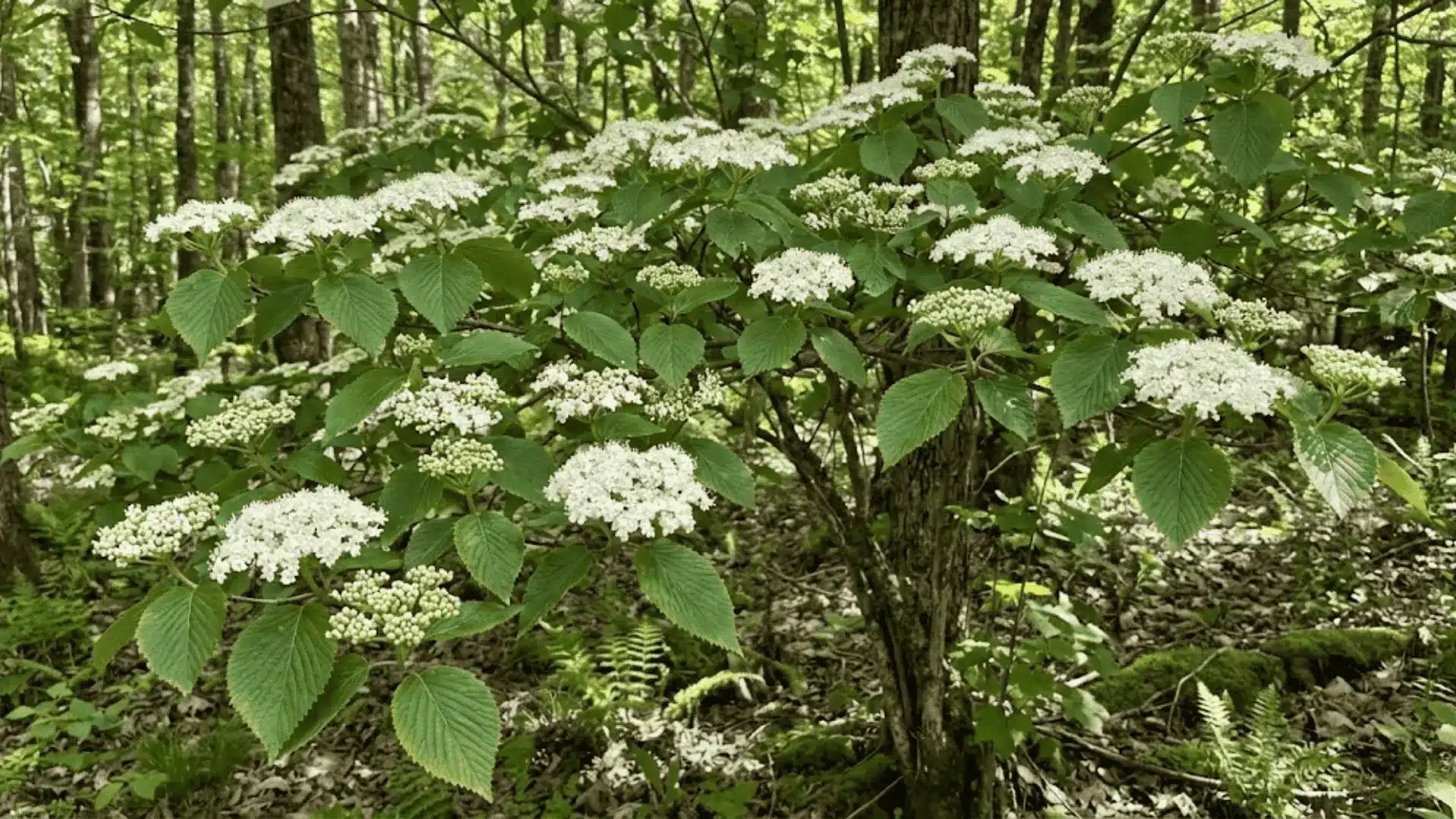
Wildlife value: Berries sustain birds through winter
Flowering cycle: Spring blooms, fall fruit
Viburnum shrubs produce flat-topped white flower clusters in spring that attract numerous pollinators. By autumn, they bear blue-black or red berries, and some species’ berries persist into winter when food is scarce.
Many viburnums turn burgundy in fall, adding seasonal color.
Their adaptability lets them thrive in a range of forest conditions.
Vines that Climb Toward the Light
Vines take a shortcut to the canopy. Instead of spending decades growing tall, Virginia creeper, wild grapes, and poison ivy climb tree trunks to reach the sun, and native American wisteria does the same in parts of the East.
Poison ivy is the one to recognize on sight. Its leaves grow in groups of three, and the oil in every part of the plant causes an itchy rash on contact.
Wildflowers and Ground Plants in Deciduous Forests
The herbaceous layer comes alive each spring with a burst of color before the canopy closes.
These plants have mastered the art of timing:
Safety Note: Several plants below, including bloodroot, mayapple, and jack-in-the-pulpit, are poisonous to people and pets. This section is for identification only, so never eat a wild plant you cannot identify with certainty, and contact Poison Control or your veterinarian if a child or pet swallows part of one.
11. Trillium
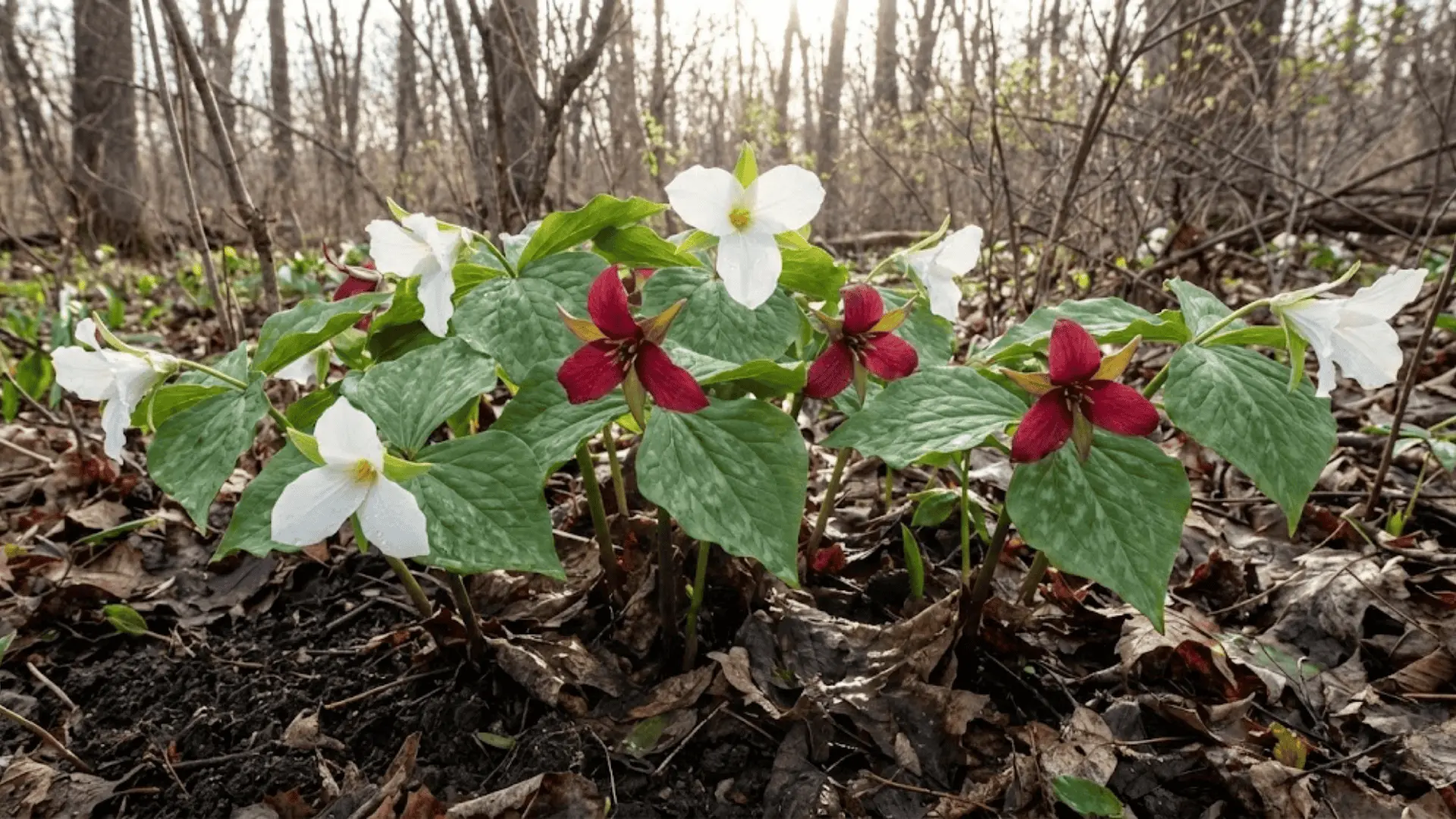
Spring ephemeral: Blooms April–May
Pollination timing: Early bees and flies
Trilliums are the classic three-petaled flowers of the eastern woods, pushing up through the leaf litter in early spring.
They flower for about two to three weeks, set seed, and usually die back by midsummer as the shade deepens.
Their large leaves capture maximum sunlight during the brief window.
Trilliums grow slowly, taking about seven years from seed to reach flowering maturity in shaded conditions. Ants spread their seeds, carrying them home for the fatty attachment (an elaiosome) and discarding the seed.
Because a trillium needs its leaves to store energy, picking one can weaken or kill the plant. So don’t.
12. Bloodroot
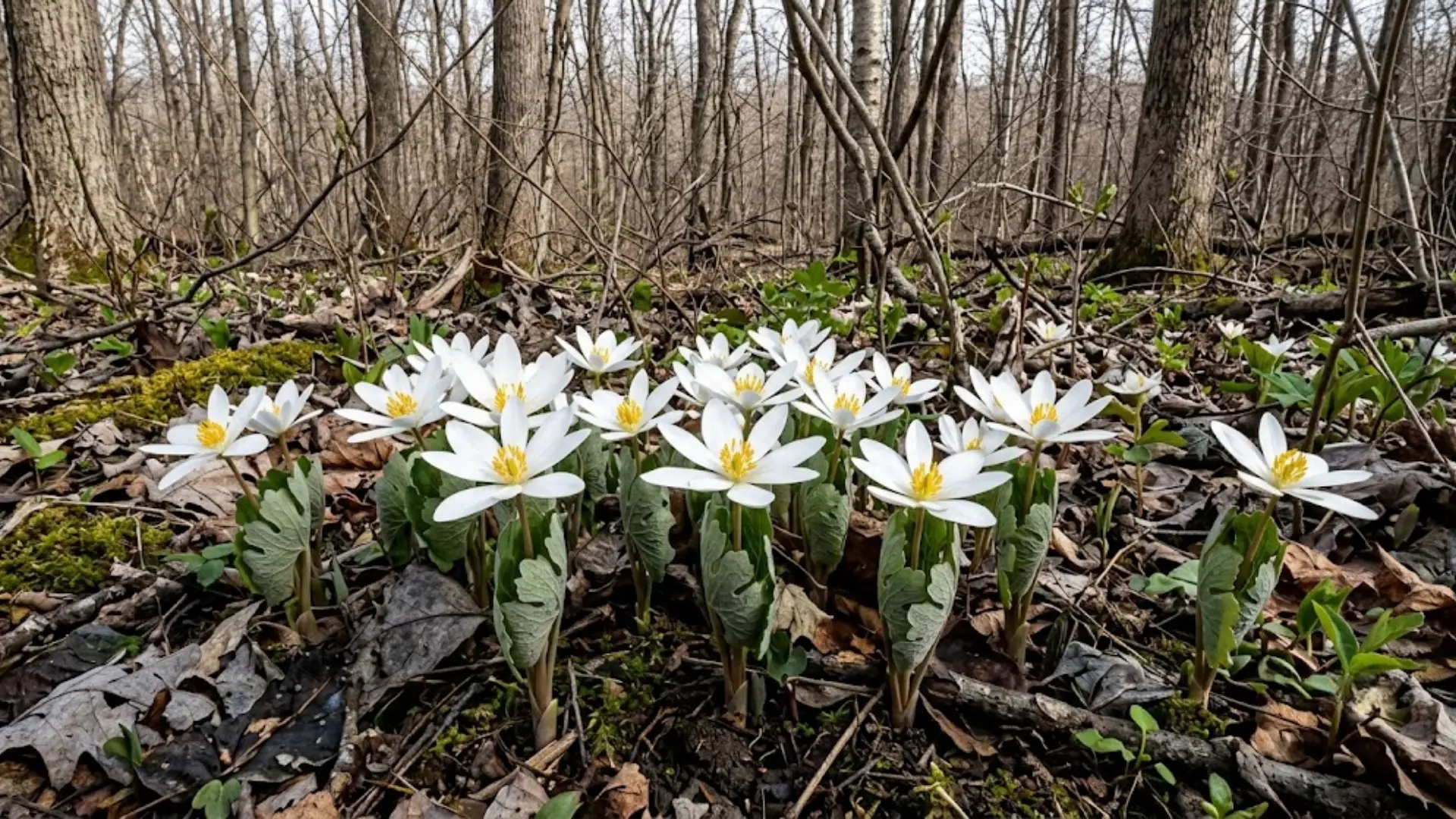
Spring ephemeral: One of the earliest bloomers
Pollination timing: March–April, by early bees and flies (it can self-pollinate if none visit)
Bloodroot produces pure white, star-shaped flowers that last only a day or two and open only in sunlight.
The plant gets its name from the red-orange sap in its roots, which is toxic and can irritate skin.
A single leaf wraps around each flower bud as it emerges, protecting it. Bloodroot’s rapid lifecycle allows it to photosynthesize intensely before trees leaf out, storing energy for the next year.
13. Mayapple
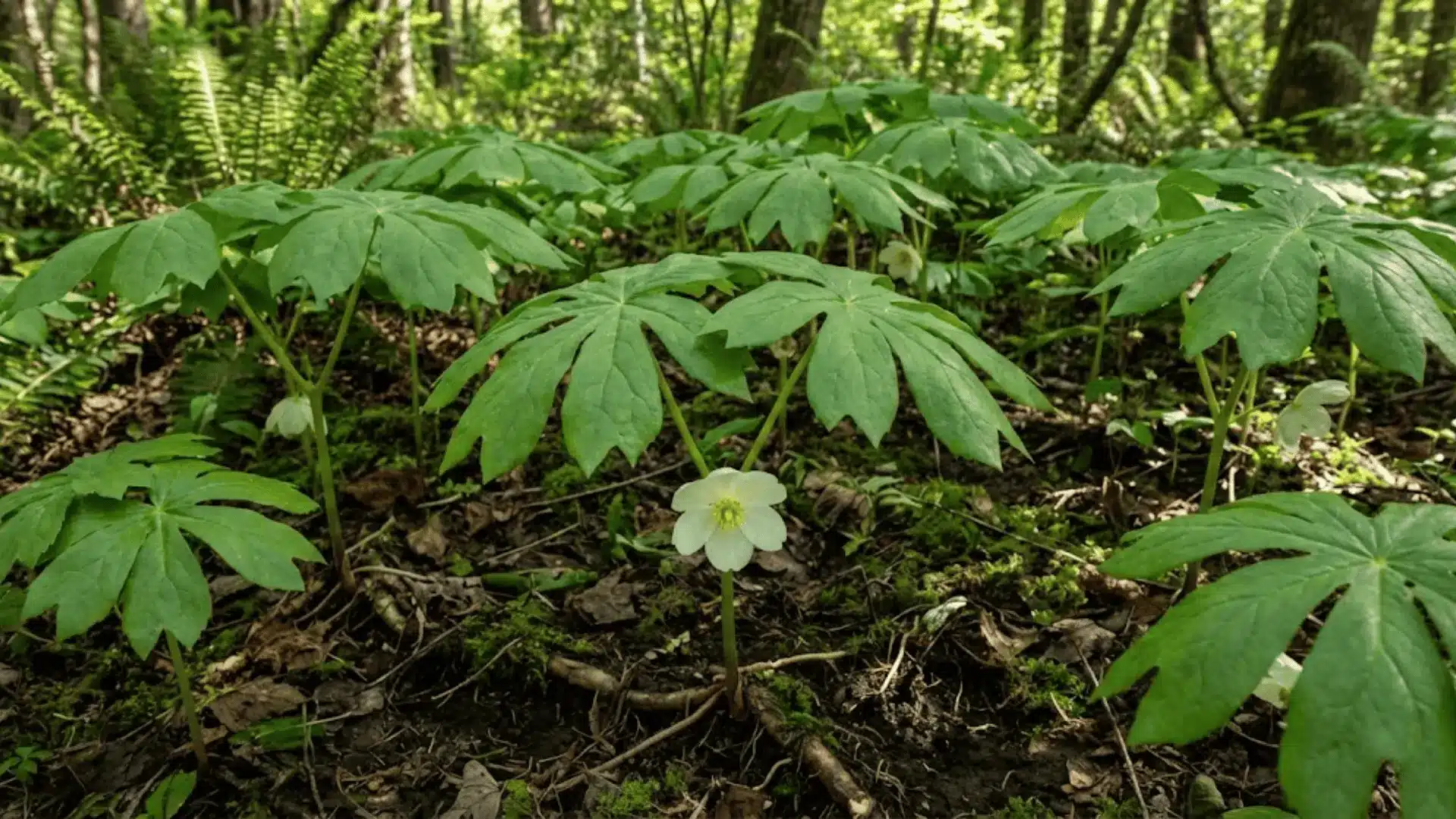
Spring ephemeral: Forms colonies via rhizomes
Pollination timing: Late spring, mainly bumblebees
Mayapples create umbrella-like leaf canopies that carpet the forest floor in colonies. A single white flower hides beneath the leaves and is pollinated by queen bumblebees that visit for pollen (the flower makes no nectar).
By mid- to late summer, they produce yellow, lemon-scented fruit. Everything except the fully ripe fruit is poisonous, so admire the umbrellas and leave the fruit to the box turtles, which eat it and spread the seeds.
The leaves die back by late summer, but its extensive underground rhizome network brings it back each spring.
14. Jack-in-the-Pulpit
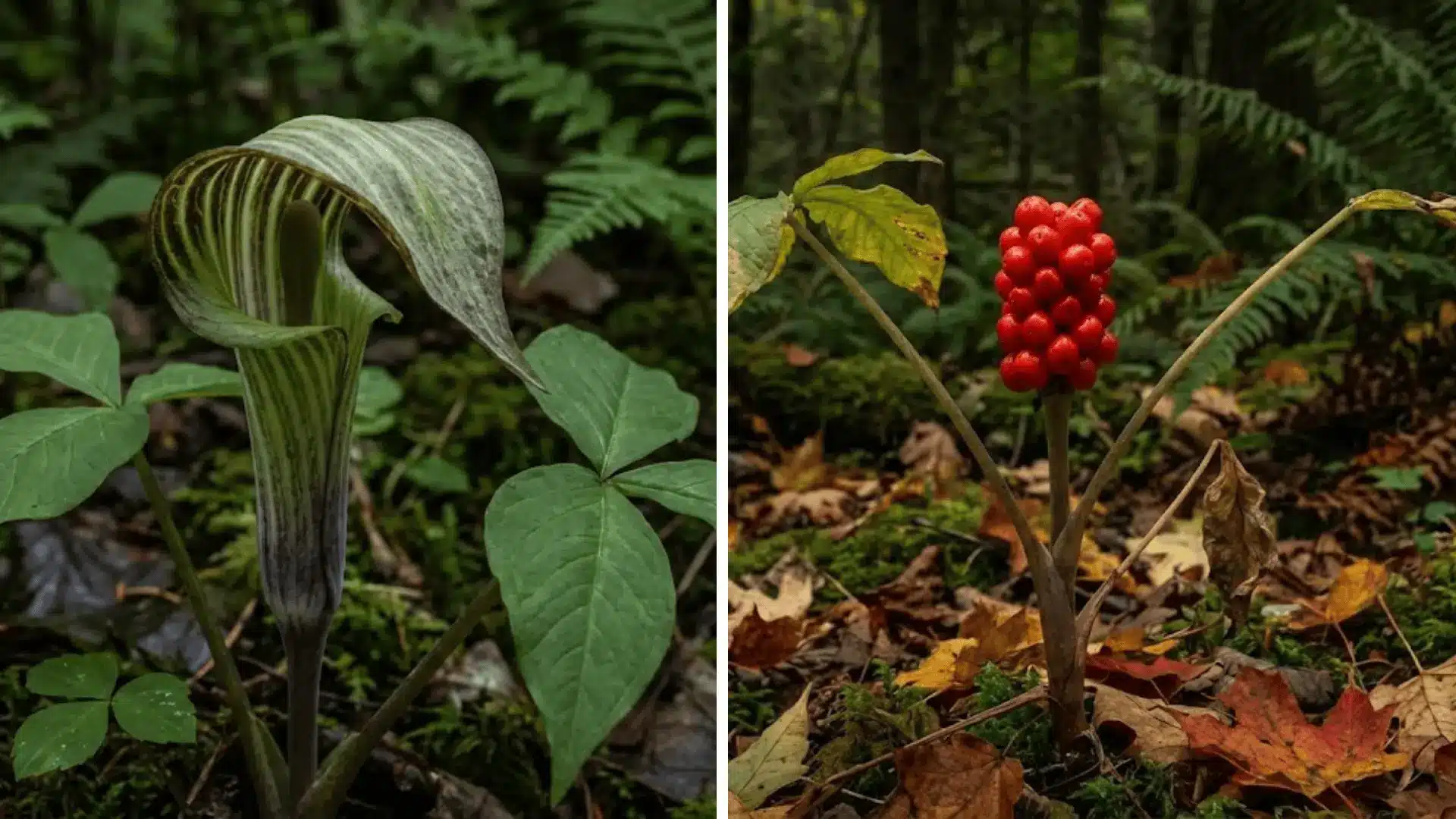
Shade adaptation: Thrives in deep forest shade
Pollination timing: Fungus gnats and small flies
Jack-in-the-pulpit has a distinctive hooded spathe sheltering a club-shaped spadix (a fleshy spike covered in tiny flowers).
This unusual structure traps small insects, ensuring pollination; gnats can escape male plants through a gap at the base, but are often trapped for good in female plants.
Plants can change sex based on available resources, becoming female only when large enough to support berries.
The bright red berry clusters appear in late summer and fall, providing food when many other plants have finished fruiting.
All parts contain calcium oxalate crystals that burn the mouth if eaten.
15. Ferns and Woodland Grasses
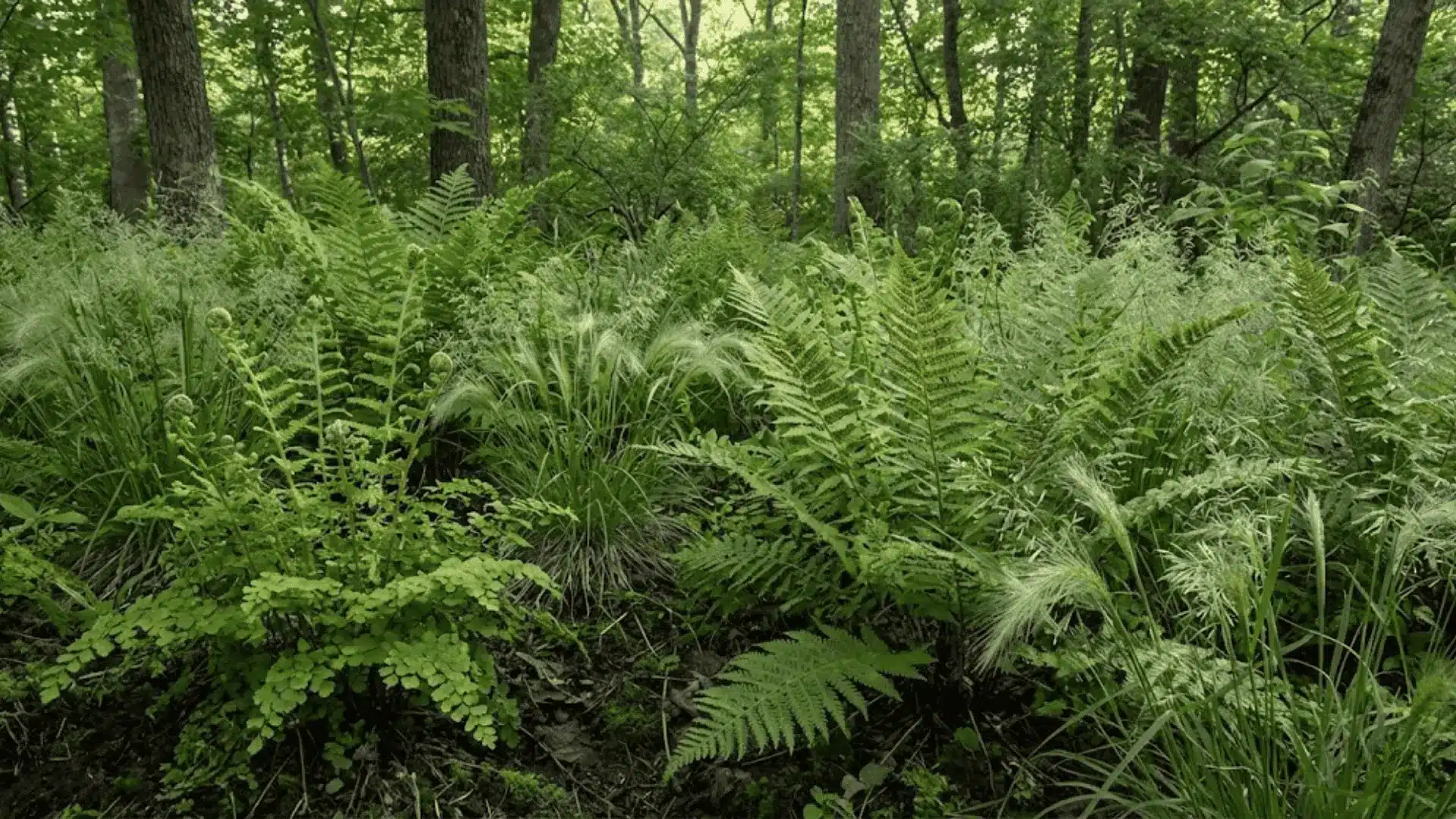
Shade adaptation: Excel in low-light conditions
Pollination timing: Reproduce via spores, not flowers
Ferns are perfectly adapted to shaded, moist environments, with delicate fronds that maximize light capture.
They reproduce by spores rather than seeds and require consistent moisture.
Woodland grasses like bottlebrush grass create an airy texture beneath the canopy. Both persist through summer after spring ephemerals vanish, maintaining green growth in dim forest light.
Adaptations That Help Plants Thrive in Deciduous Forests
Deciduous forest plants have developed ingenious survival strategies to handle dramatic seasonal shifts.
These adaptations allow them to maximize growth during favorable conditions while protecting them during harsh periods:
|
Adaptation |
How It Works |
Benefits |
|---|---|---|
|
Leaf Drop as Frost Protection |
Trees shed leaves and enter dormancy before winter |
Prevents water loss and tissue damage from freezing |
|
Timing Growth to Sunlight |
Spring ephemerals bloom before the canopy closes |
Captures maximum sunlight during brief windows; spring-active plants can gain 50–100% of their yearly carbon before canopy closure |
|
Water Conservation |
Deep roots, waxy coatings, thick bark |
Maintains moisture during droughts and winter |
|
Seed Dispersal Methods |
Wind-carried seeds, animal-cached nuts, ant-carried seeds, and berry transport |
Spreads offspring away from the parent, reducing competition |
A sugar maple shows how these strategies stack together: It drops its leaves for winter protection, times its leaf-out to catch spring sunlight, can wait for decades as a pencil-thin sapling in deep shade until a fallen tree opens a gap, and uses wind to scatter winged seeds.
Home gardeners can borrow that same idea for their own beds:
Plant in layers (a small tree or a few shrubs), mulch with shredded leaves the way the forest floor does, and group plants by moisture need. It’s one simple way to build a more sustainable garden.
Importance of Deciduous Forest Plants to the Ecosystem
Deciduous forest plants are the food and shelter for nearly everything else in the forest.
Their leaves, wood, roots, and the soil beneath them also store large amounts of carbon, which helps regulate the climate.
Through photosynthesis, they release oxygen and capture energy that flows through forest food webs. Their deep root systems stabilize soil and prevent erosion, while fallen leaves nourish communities of decomposers, fungi, and invertebrates below.
Does one plant group really matter that much? It does.
Oaks show it best. The hundreds of caterpillar species they host are a main food source that songbirds feed their nestlings.
Human Uses and Cultural Significance of Temperate Forest Plants
Deciduous forests have given us more than we often realize.
The hardwood floors beneath our feet, the maple syrup on our pancakes, the white-oak barrels used to age whiskey and wine, and the witch hazel in our medicine cabinets all come from these seasonal woodlands.
Indigenous peoples of the eastern forests made maple sugar long before European settlers arrived.
Foragers still gather wild mushrooms and ramps each spring, following traditions passed down through generations. Ramps grow slowly, so many guides now recommend taking a single leaf per plant rather than digging the bulbs.
Every autumn, millions plan trips around fall foliage, chasing fiery reds and golden yellows across hillsides.
Even our backyards reflect these forests, filled with native dogwoods and ferns that bring a piece of the wild home.
These plants aren’t just resources; they’re woven into how we live and what we love.
How These Plants Change Through the Seasons
Every plant in a deciduous forest follows the same four-season schedule, but each layer plays it a little differently.
|
Season |
Canopy trees |
Understory and forest floor |
|---|---|---|
|
Spring |
Buds open and new leaves expand as days warm; many trees flower before or as they leaf out |
Spring ephemerals emerge, bloom, and set seed while sunlight still reaches the ground |
|
Summer |
The canopy closes, and trees photosynthesize at full speed, building food reserves |
Light drops to a sliver; ferns and shade-tolerant plants carry on while ephemerals rest underground |
|
Fall |
Chlorophyll breaks down, revealing yellow and orange pigments, and some trees make new red pigments; trees pull nutrients back from their leaves before a sealing layer cuts each leaf loose |
Witch hazel blooms, and dogwood and viburnum berries ripen for migrating birds |
|
Winter |
Trees sit dormant, with next year’s buds already formed |
Roots and rhizomes hold the energy stored in spring and summer until the soil warms again |
The fall step is the one I find most clever. Trees reclaim much of the nitrogen and other nutrients in their leaves before dropping them, so the bright color you see is partly a tree packing up to leave.
Threats to Deciduous Forest Plant Life
Deciduous forest plants are dealing with several pressures at once, and people set most of them in motion:
-
Deforestation clears large tracts of forest for farming and development. This fragments habitats and changes seed dispersal. In the eastern area, people have already replaced most of the original forest with younger, second-growth woods.
-
Climate change is shifting the timing of the seasons. As a result, spring ephemerals may bloom before their pollinators appear.
-
Warmer springs cause North American canopy trees to leaf out earlier. This shortens the period when spring ephemerals receive enough sunlight.
-
Too many white-tailed deer eat native wildflowers and tree seedlings, but they avoid plants such as garlic mustard.
-
Introduced pests and diseases have repeatedly affected major canopy trees. Examples include chestnut blight, Dutch elm disease, emerald ash borer, and, more recently, beech leaf disease.
-
Poaching removes slow-growing wildflowers like trillium. These plants can take years to regrow.
-
Acid rain and nitrogen in the air weaken trees and alter which species can live in polluted soils.
-
As cities grow, pavement replaces forests. This creates heat islands and removes the wildlife corridors that plants need to disperse.
These threats rarely show up alone. Heat and drought weaken a tree, making it easier prey for invasive pests, and a fragmented forest has fewer seed sources to recover after disturbance.
Conservation and Protection of Temperate Deciduous Forests
Protected areas and national parks preserve the habitats where these plant communities grow without disturbance.
Sustainable forestry balances timber harvesting with regeneration, ensuring forests remain healthy for generations to come. Reforestation efforts restore degraded lands by replanting oaks, maples, and understory species.
Simple ways to help at home
-
Plant native shrubs, ferns, and woodland wildflowers instead of invasive ornamentals.
-
Pull garlic mustard before it sets seed.
-
Buy woodland wildflowers only from nurseries that propagate their own plants rather than digging them from the wild.
-
Fence small areas where deer are abundant so wildflowers and seedlings can recover.
Keep in mind that “nursery grown” and “nursery propagated” don’t mean the same thing.
A trillium dug from the woods and potted for a season can still be sold as nursery-grown, so ask the seller directly.
Wrap Up!
These forests do a lot of quiet work.
They feed wildlife, hold soil in place, and cycle nutrients back into the ground every year, and they’ve never once asked for our help. That work depends on the forests staying put, though, and deforestation, invasive species, and a warming climate are already putting notable pressure on the cycle.
You can do a small part at home with a few native shrubs or a patch of ferns in a shady corner, but the bigger job is keeping the forests we still have standing for the next hundred years.
Got a favorite deciduous forest plant, or spotted one growing somewhere you didn’t expect?
Tell me about it in the comments, because I’d love to know which one won you over, trillium or something stranger.
Frequently Asked Questions (FAQs)
1. What’s the Difference Between Deciduous and Coniferous Plants?
Deciduous plants drop their leaves each fall and regrow them in spring, while conifers like pine and spruce keep narrow, needle-like leaves year-round to save water through winter. A few conifers, such as larches and bald cypress, break the rule and drop their needles every fall.
2. How Long Do Deciduous Forest Trees Typically Live?
It varies a lot by species: white oaks commonly live 200–300 years, and a few have lived past 450. Sugar maples can exceed 200 years, while paper birch rarely lives beyond about 140 years in the wild.
3. Can You Grow Deciduous Forest Plants in a Home Garden?
Yes, understory and forest-floor plants such as ferns, wild ginger, and native dogwood do well in shaded gardens because they’re adapted to filtered light and moist, rich soil. Leave fallen leaves in place as mulch to recreate the forest floor.
4. Are Any Deciduous Forest Plants Poisonous?
Yes, mayapple (except its fully ripe fruit), bloodroot, and jack-in-the-pulpit are all toxic if ingested, and bloodroot sap can irritate skin. If a child swallows part of one, call Poison Control. For pets, call your veterinarian.