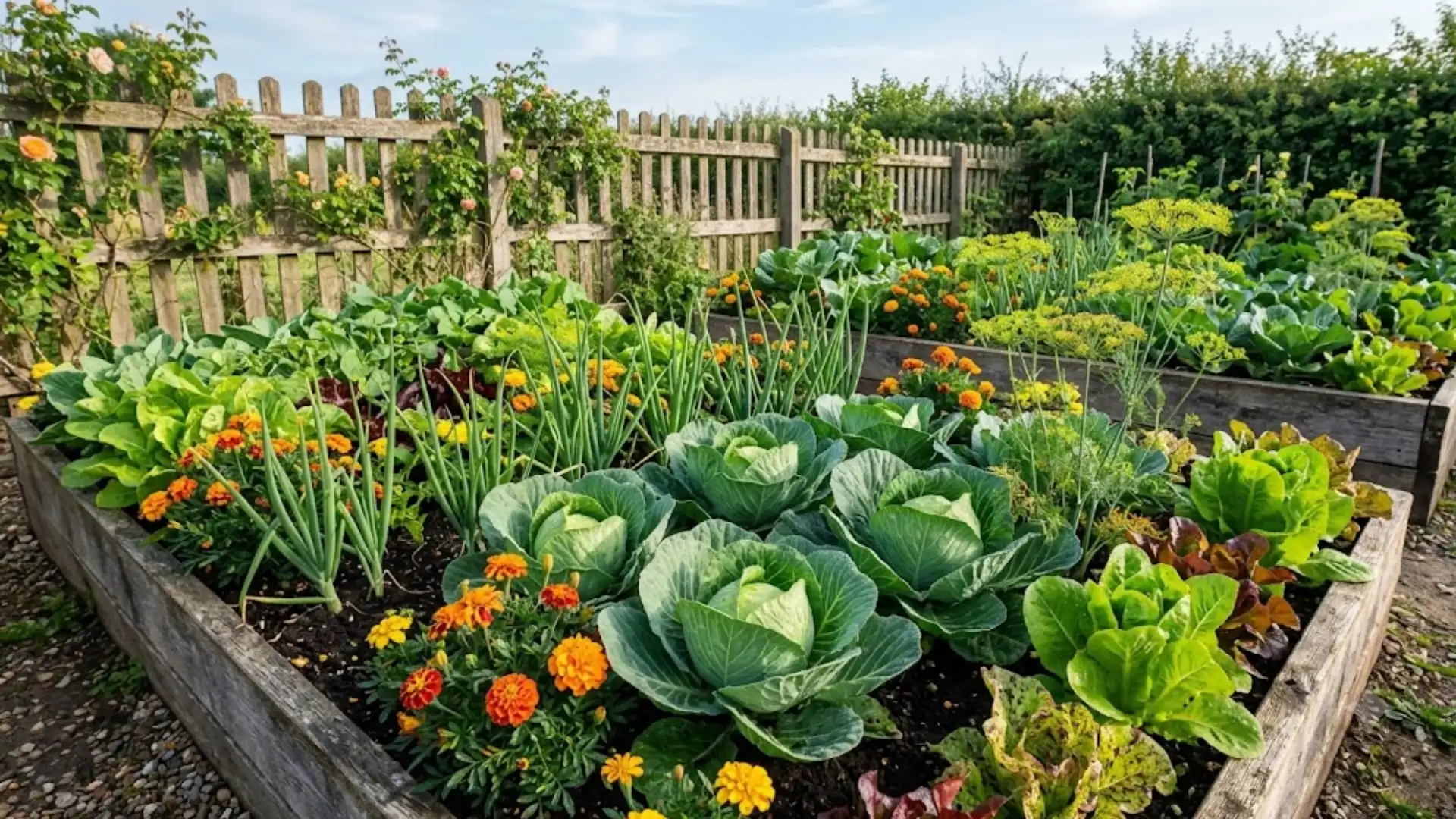
Cabbage worms chew through leaves in days.
Aphids cluster fast, and flea beetles leave a plant looking like buckshot hit it.
That’s what an unprotected cabbage bed invites. Add beans for nitrogen, onions for scent confusion, or nasturtiums as a sacrificial trap crop, and those same pests lose their easy target.
Not every pairing on a cabbage companion plants list earns its spot, though. Some rest on solid biology.
Others are recycled folklore with zero mechanism behind them.
How Companion Planting Helps With Pests, Soil, and Space
A cabbage bed functions as a miniature ecosystem rather than just a single crop.
Pests spread faster across a monoculture since nothing interrupts their search pattern.
Mixed plantings break that pattern fast. Soil benefits too. Different root depths pull nutrients from separate layers instead of draining one zone. Space stops going to waste.
Every gap becomes useful ground instead of bare dirt or weeds.
Three problems, one fix. Diversity manages work better than constant intervention.
A carefully organized bed demands less effort and produces more consistent results than planting a single crop.
Buddy System Theory
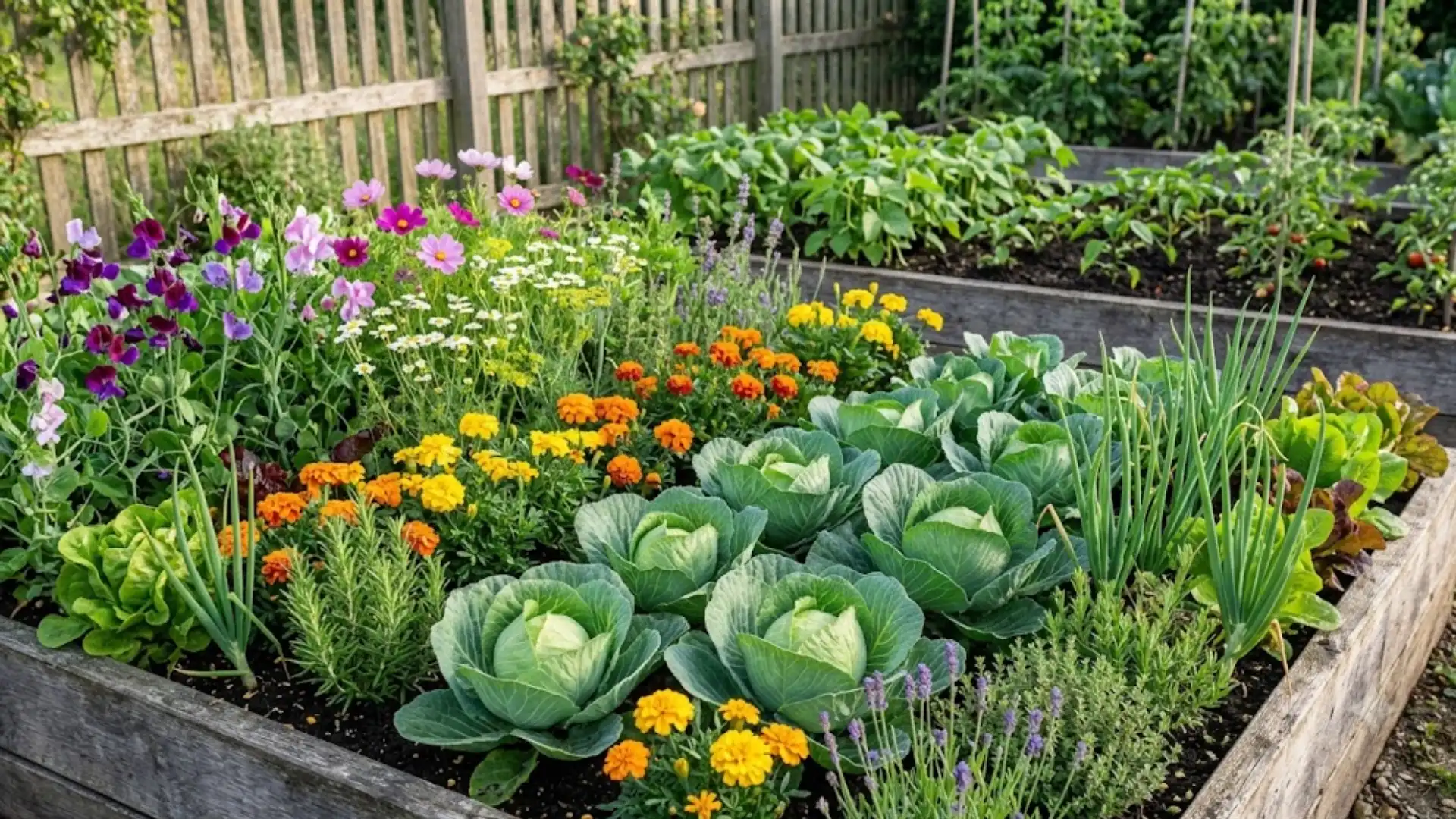
One plant bears all the weight on its own. When paired with a suitable neighbor, that weight divides evenly.
Diversity cushions failure, as one withstands drought, heat, or pests while others hold steady.
The idea behind pairing plants works much like assigning garden buddies: each one covers a gap the other can’t handle alone. No single plant does everything, but paired correctly, their weaknesses cancel out.
- One plant attracts predators while its buddy repels the pests that those predators hunt.
- One plant roots shallow while its buddy roots deep, sharing soil without conflict.
- One plant blooms early to feed pollinators before its buddy even flowers.
- One plant tolerates poor soil while its buddy demands richer conditions nearby.
This is not about finding a single perfect match.
Build small, functional partnerships that address specific problems your cabbage cannot solve alone.
What Community People Say About Cabbage Companion Plants
On Reddit, gardeners are split on companion planting’s real value for brassicas.
Skeptics call it mostly folklore, citing weak evidence and inconsistent results.
Row covers and insect netting get repeated praise as the only reliable pest barrier. Supporters point to specific wins: nasturtiums pulling aphids from tomatoes, marigolds helping with nematodes, and dill attracting predators.
Several note that ecology matters more than set plant pairs, since healthy insects must already be present nearby.
Intercropping by timing, not pest-deterrent pairing, gets credited as genuinely useful.
One commenter references a book, Plant Partners, examining the science behind these claims critically.
The Best Cabbage Companion Plants for a Thriving Garden
Cabbage does not need a crowd, just the right crew. These companions handle pests, boost soil nutrients, and optimize garden space, making your cabbage patch a productive team effort.
1. Beans
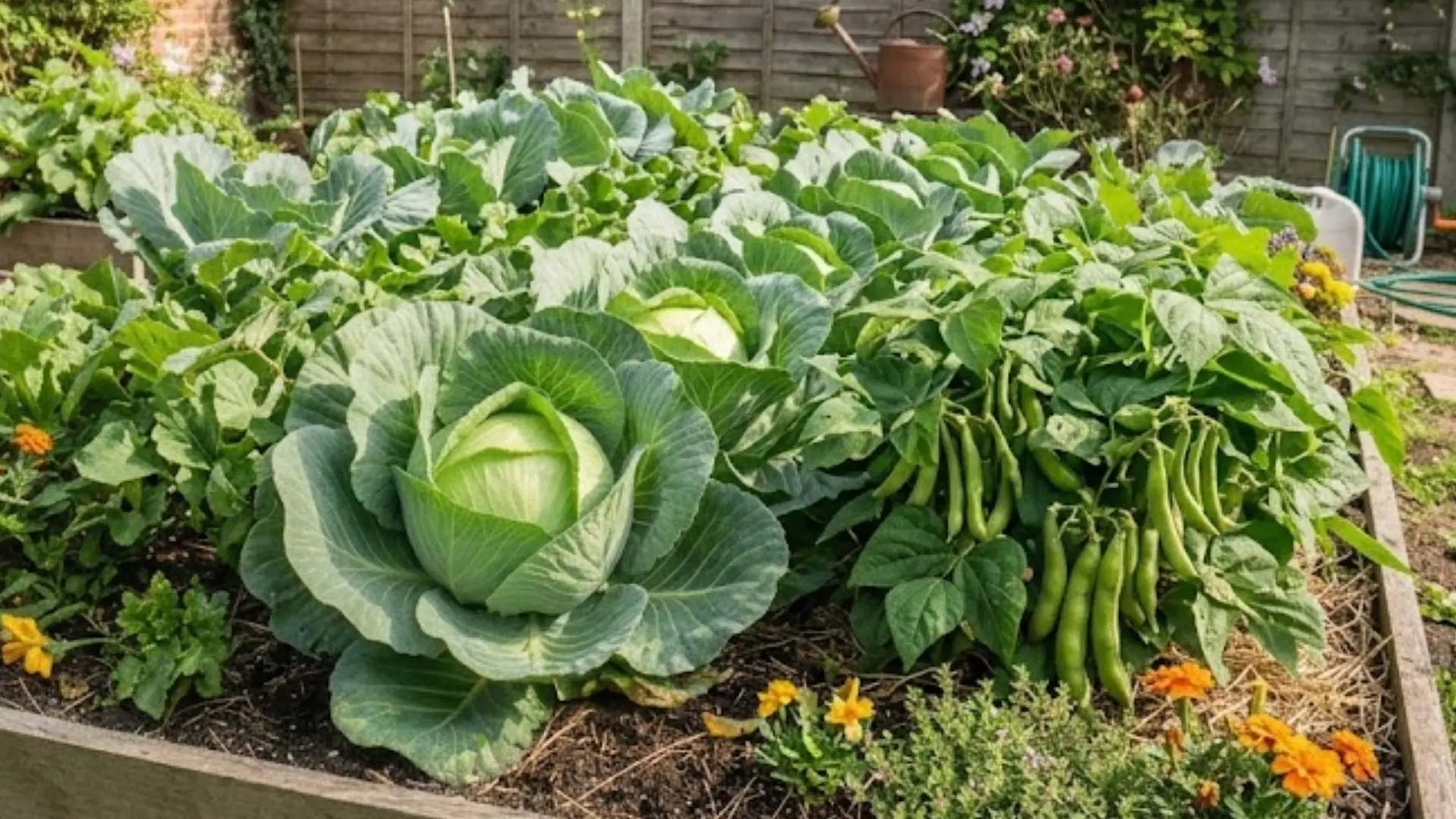
Beans are nitrogen-fixing champions, pulling nitrogen from the air and depositing it right into the soil where hungry cabbage can use it. Since cabbage is such a heavy feeder, this partnership practically feeds itself.
Pole beans also work well on trellises nearby, saving ground space for your cabbage heads to spread out.
Just give them enough room so the beans don’t shade out young cabbage seedlings. This pairing keeps your soil rich without extra fertilizer, and your garden budget will thank you too.
It also sidesteps the chemical plant food drawbacks that show up when a bed leans on bagged nutrients instead of this kind of natural nitrogen boost.
2. Peas
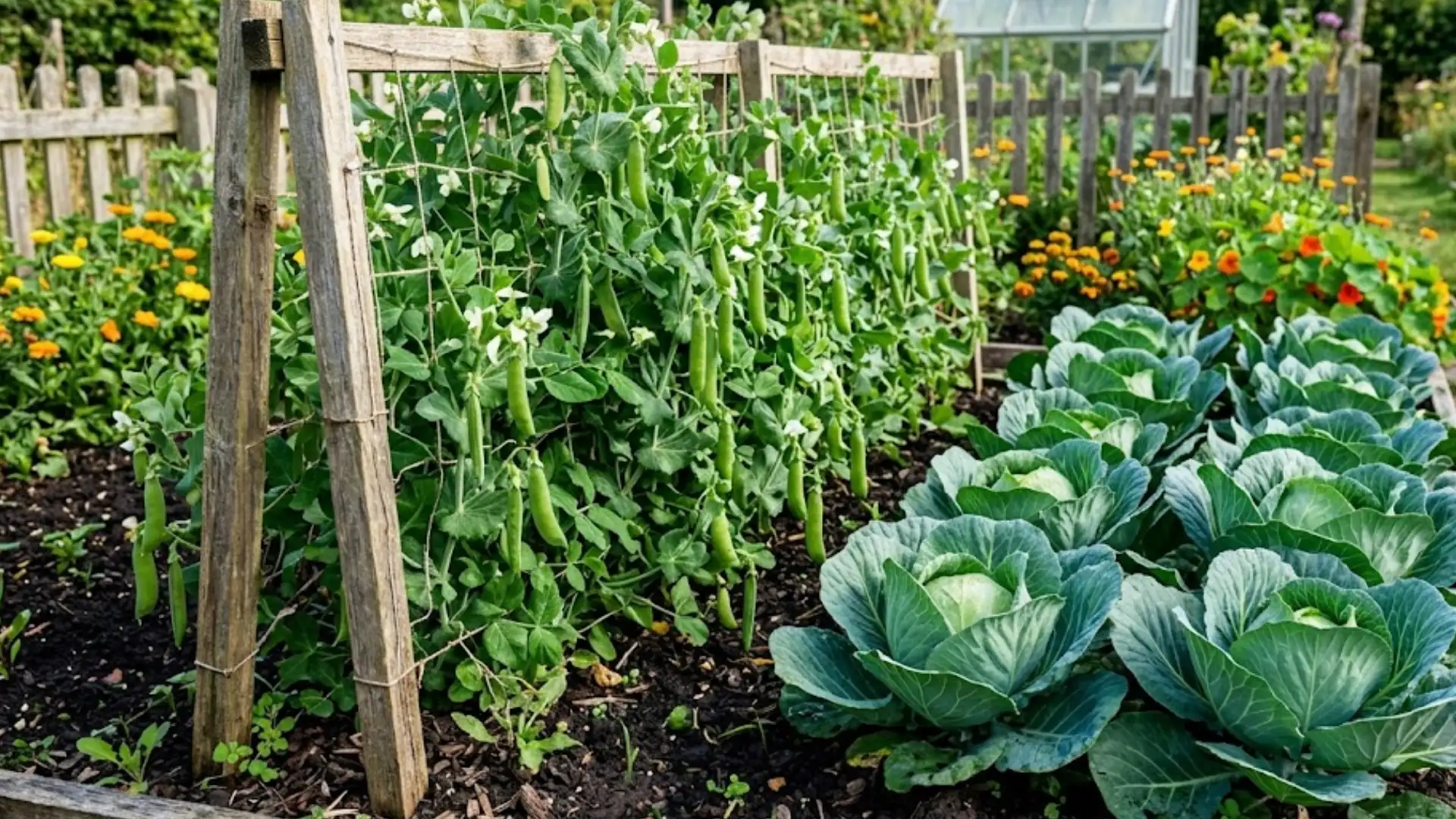
Peas add nitrogen back into the soil, giving cabbage the steady nutrient supply it craves all season long.
Plant peas early since they prefer cooler weather, right around the same time cabbage goes into the ground. As peas finish up, they leave behind nitrogen-rich soil just as cabbage hits its heavy growth phase.
It is a tag-team approach that works with the seasons instead of against them.
Fewer inputs, better timing, healthier heads. Peas quietly do the heavy lifting underground.
3. Onions
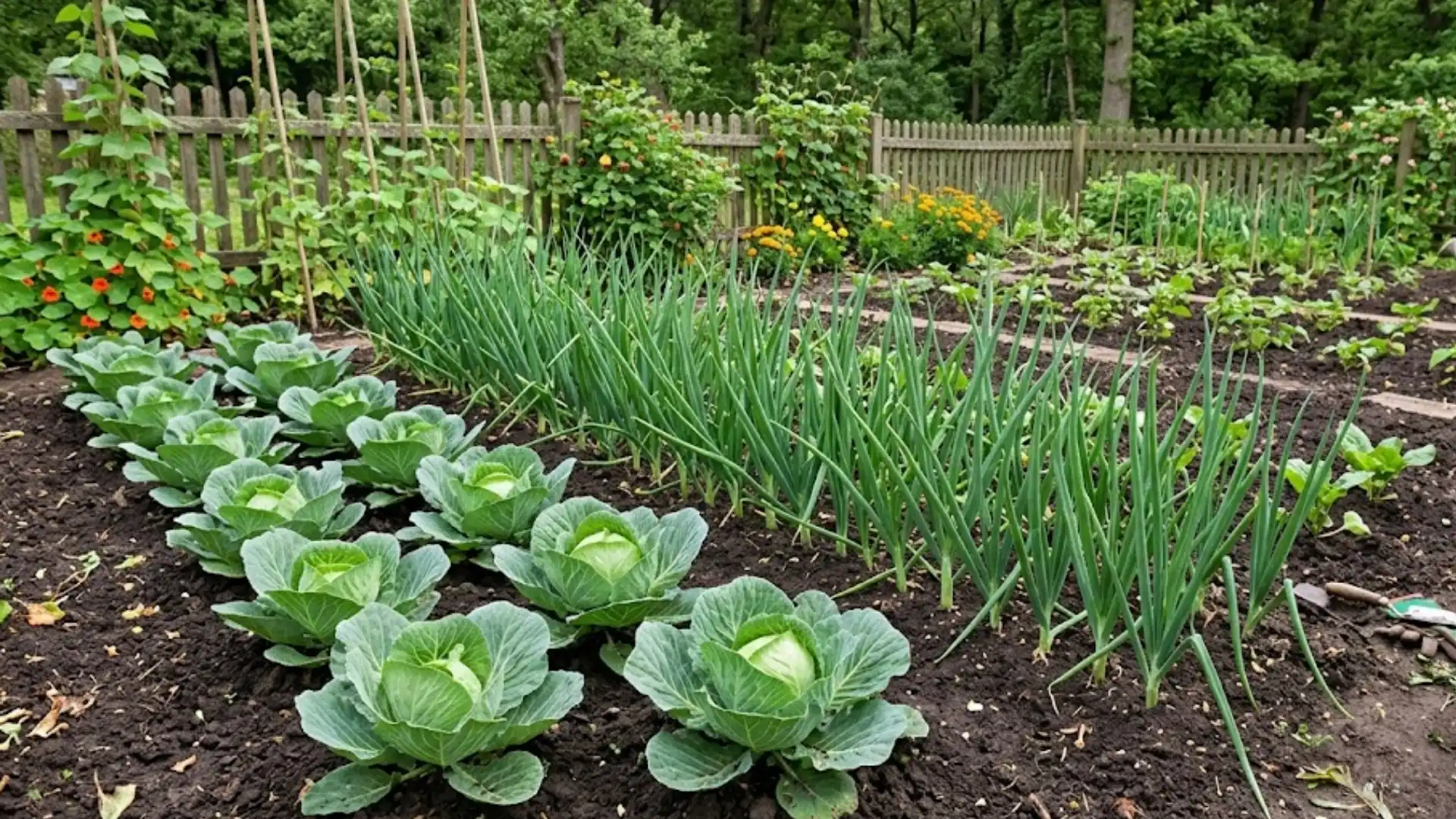
Onions emit a pungent scent that deters pests like cabbage worms and aphids.
Their strong smell masks cabbage’s scent, making it harder for bugs to find your plants.
Onions also take up minimal space, growing straight down rather than out, so they tuck neatly between cabbage rows. This pairing offers low effort and high reward, protecting your crop with minimal space and care.
4. Garlic
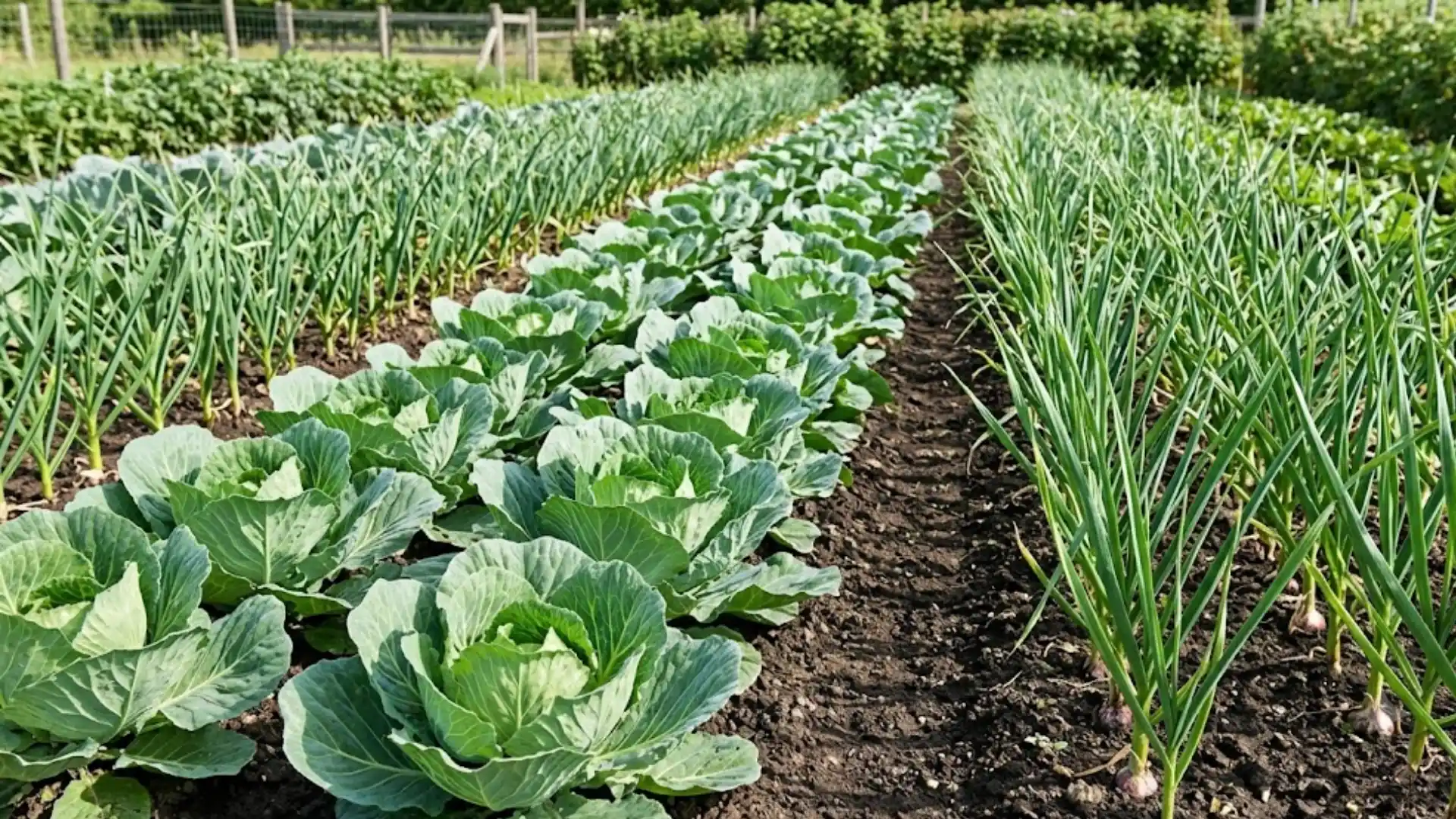
Garlic acts as a natural pest deterrent; its sulfur compounds repel aphids, cabbage loopers, and some soil-borne diseases.
Planting garlic near cabbage creates a protective scent barrier that confuses pests before they even land.
It also requires little maintenance and shares space well without competing aggressively for nutrients. Many gardeners tuck garlic cloves right along the border of their cabbage patch for a simple, low-maintenance shield.
Fewer pest problems mean healthier heads and less time spent on damage control.
5. Dill
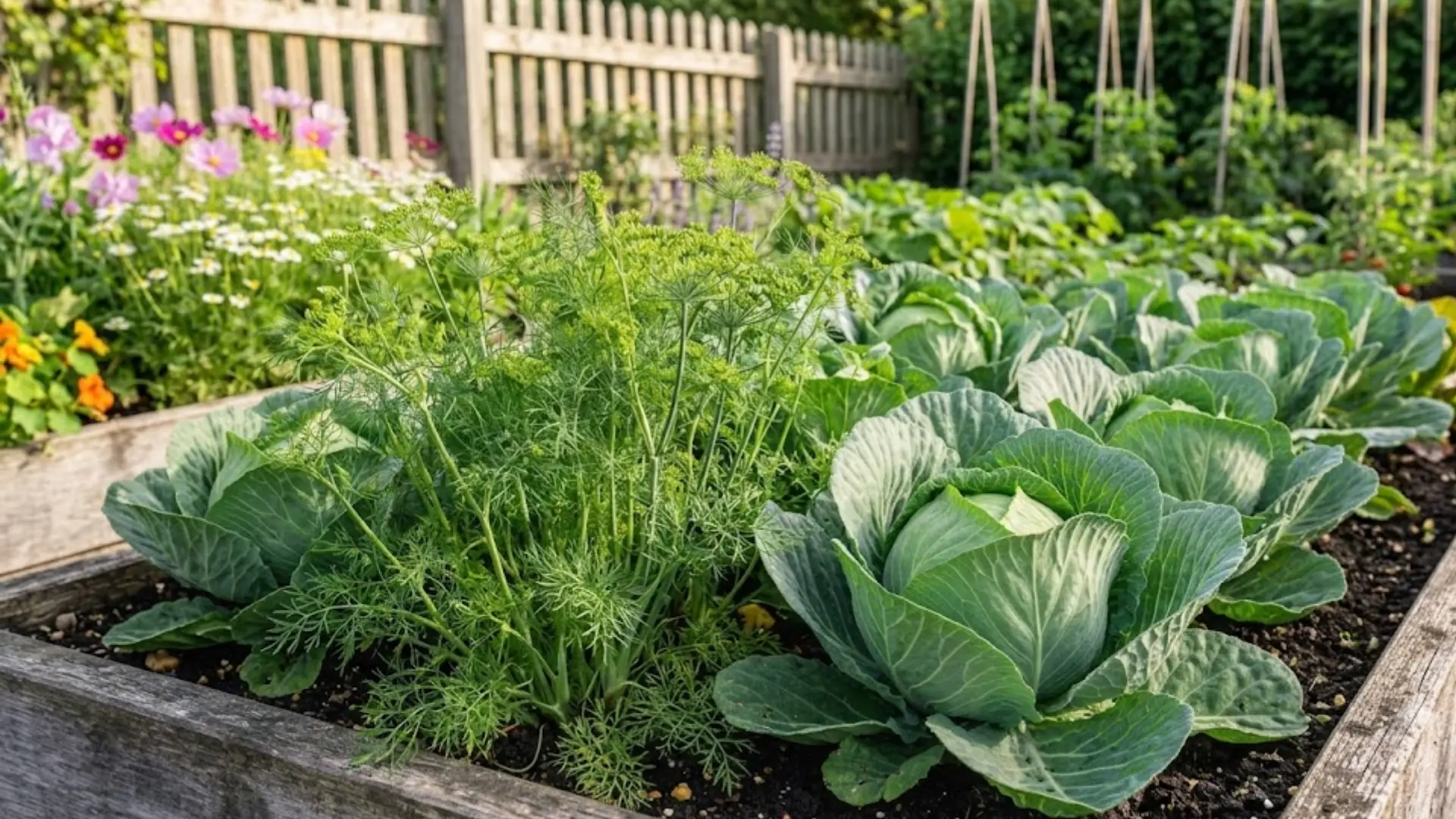
Dill helps keep pests away and draws in helpful insects in the cabbage garden.
Let a few dill plants flower nearby, and you’ve basically hired a pest control team for free.
Dill also grows tall and airy, so it won’t compete much for ground space or block sunlight from reaching your cabbage heads below.
6. Thyme
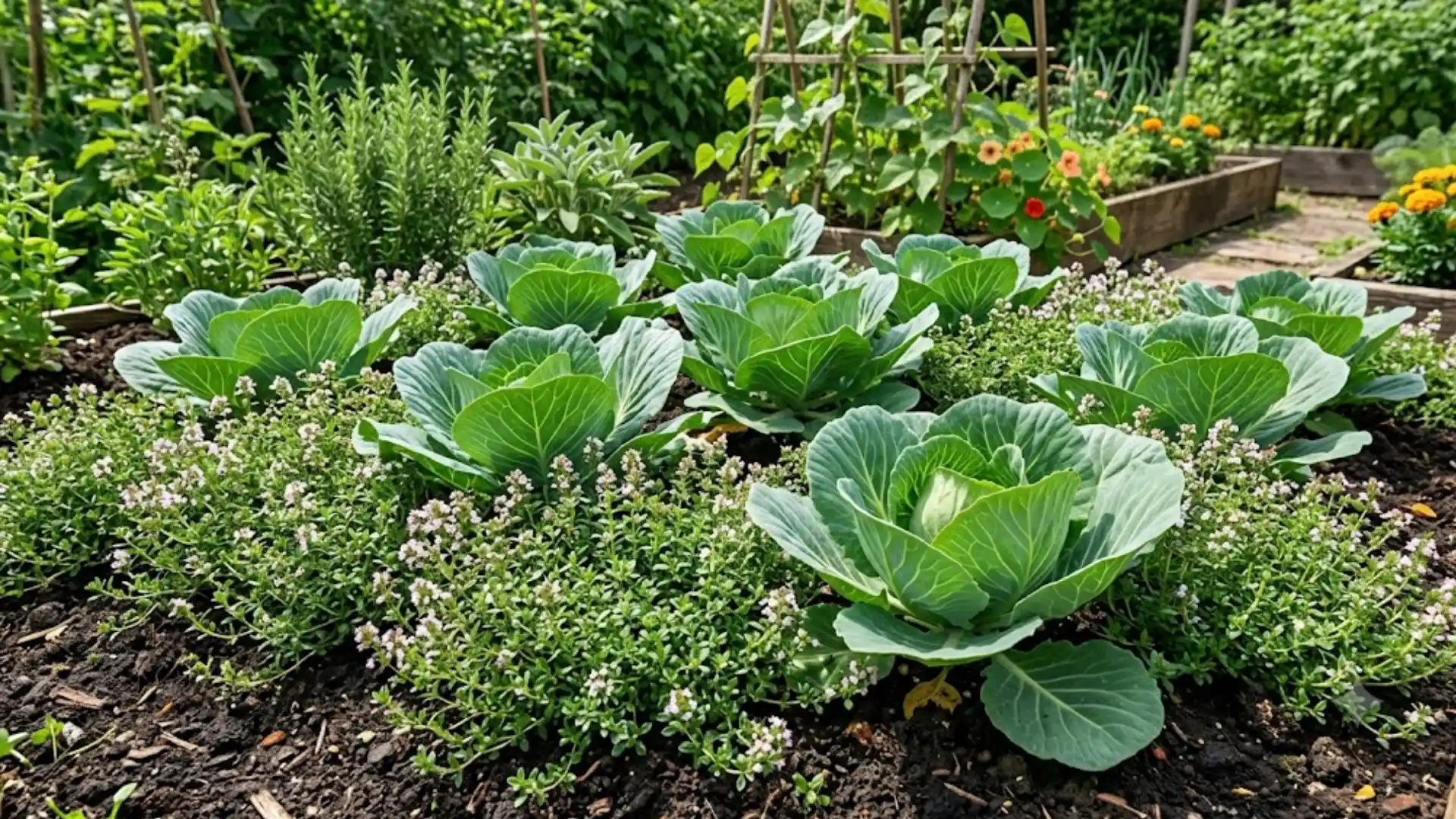
Thyme’s strong scent deters cabbage worms and loopers, making plants harder to find.
This low-growing herb also works as a mulch, covering bare soil and helping retain moisture during hot summer stretches.
Thyme requires minimal watering once established, so it won’t compete with cabbage for resources.
Plant it along the edges of your cabbage bed as a pest-repelling border that pulls double duty as ground cover.
7. Chamomile
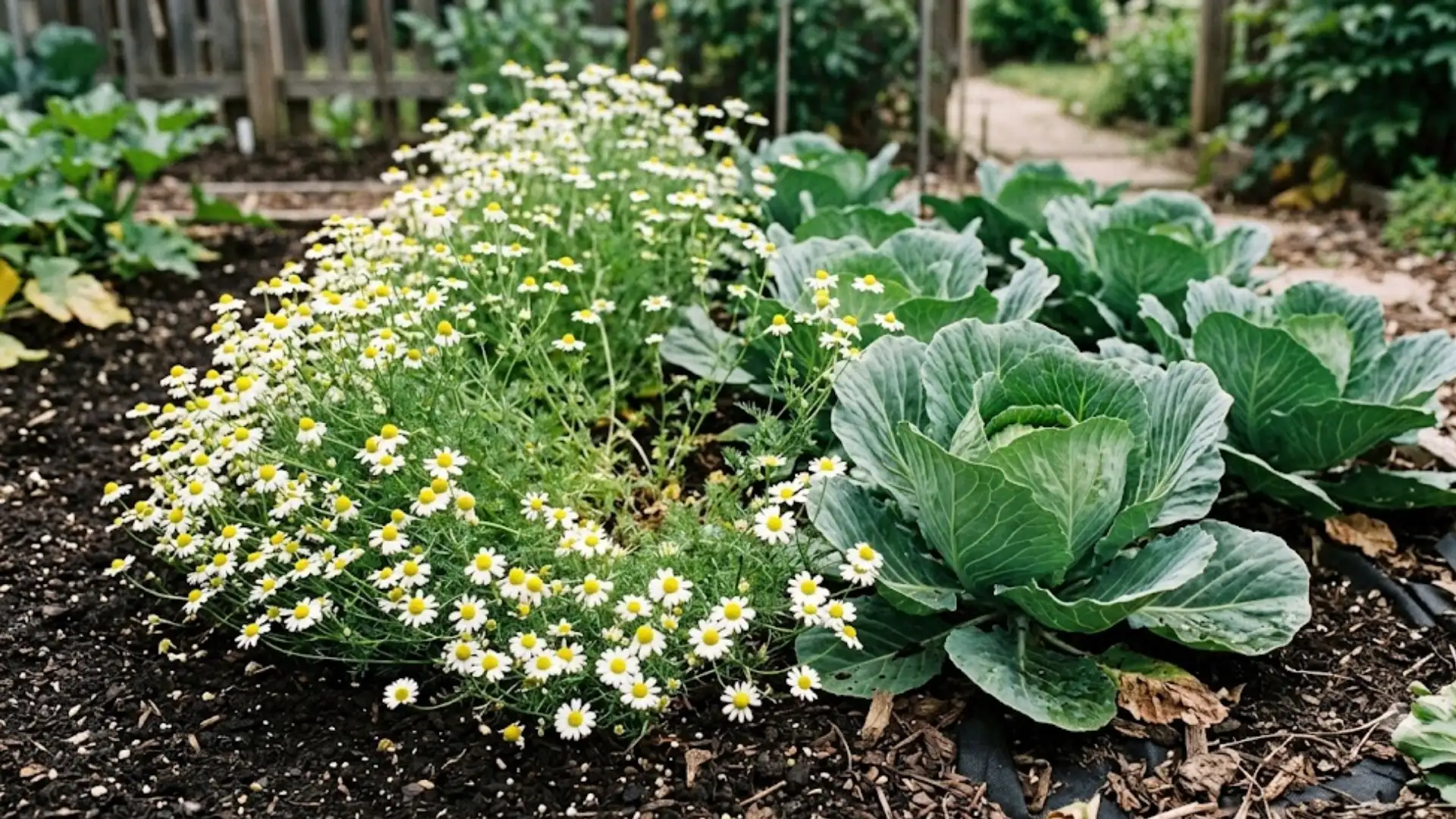
Chamomile might look delicate, but it packs a punch when it comes to supporting cabbage.
Its flowers attract beneficial insects like parasitic wasps while its scent helps mask cabbage from pests searching by smell.
Some gardeners believe this improves nearby vegetable flavor and vigor, though science lags behind folklore.
Either way, its low-growing habit and cheerful blooms make it a pleasant, functional addition to any cabbage bed.
8. Celery
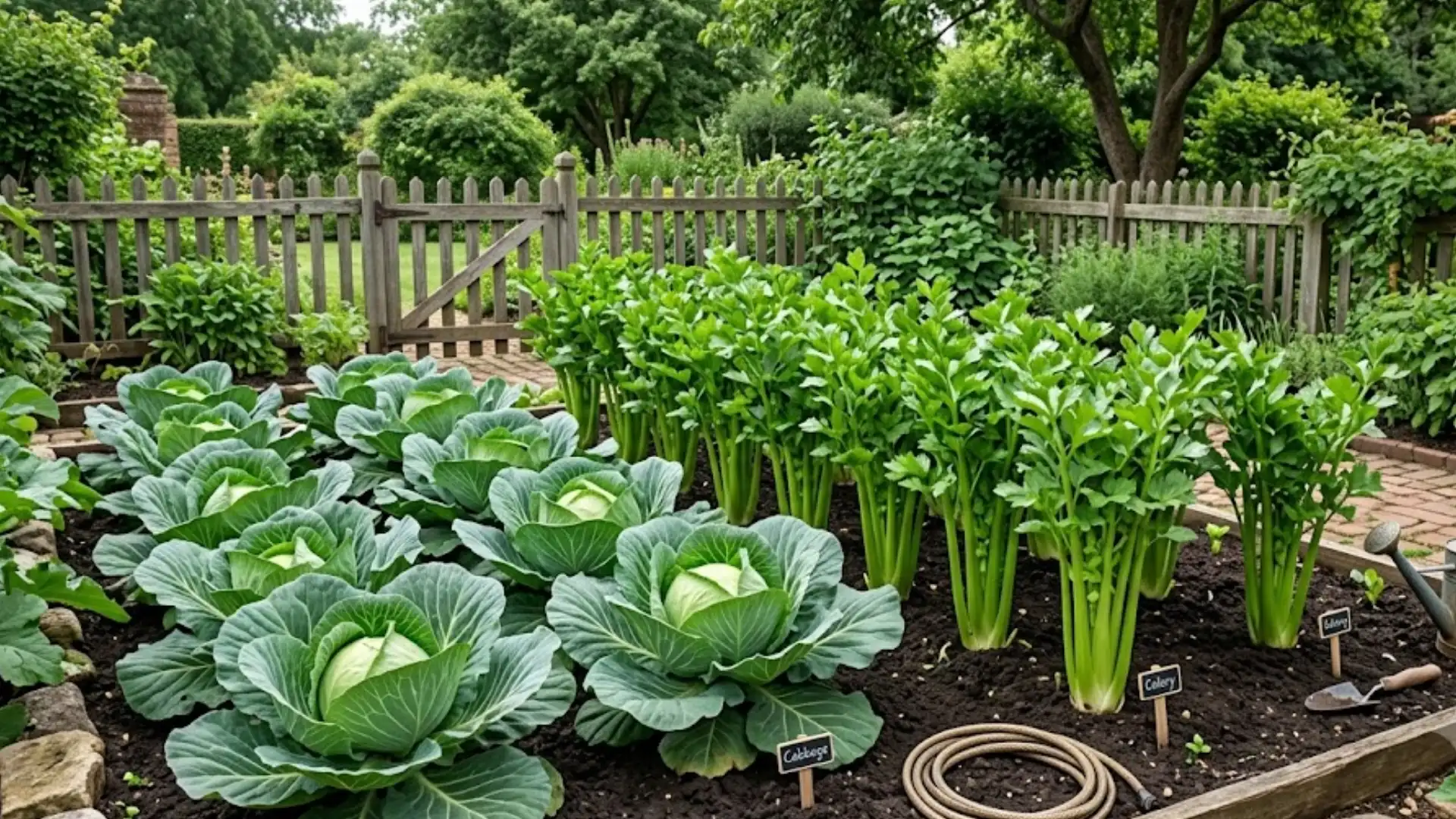
Celery pairs well with cabbage since they share similar soil and watering needs, reducing guesswork for gardeners.
Celery’s scent deters cabbage white butterflies, which cause leaf holes.
Since celery grows slowly and stays relatively compact, it won’t overshadow or crowd your cabbage heads as they mature.
This pairing works best when both are planted early, allowing crops to settle before summer heat.
9. Beets
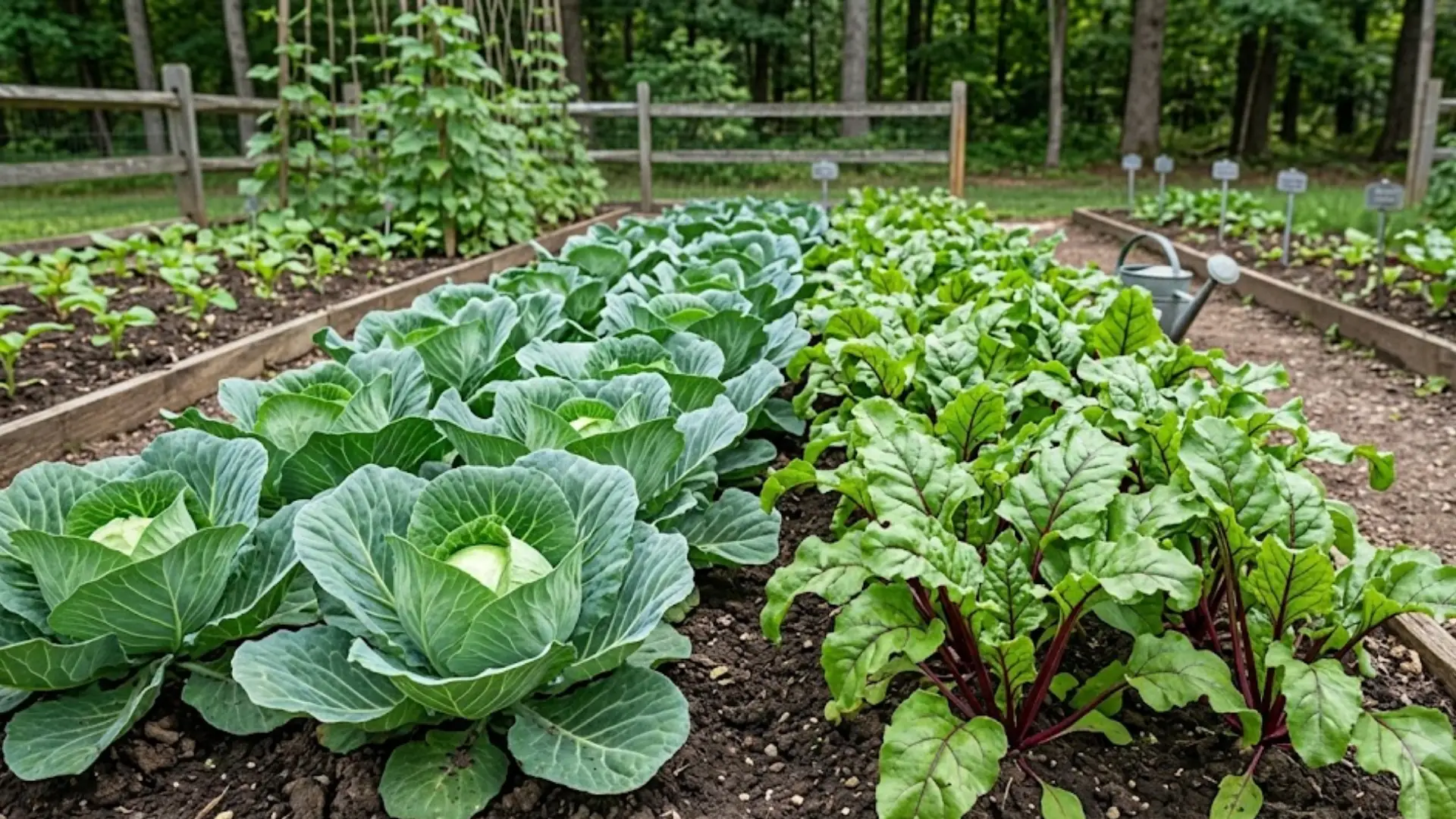
Beets bring something different to the table: minerals.
As they grow, beets pull magnesium and other trace nutrients up from deeper soil layers, enriching the topsoil where cabbage roots feed.
They also grow low and compact, filling in gaps between cabbage plants without competing for sunlight or space.
Since beets and cabbage have different root depths, they draw resources from separate soil zones, avoiding the underground competition that trips up so many other plant pairings.
10. Radish
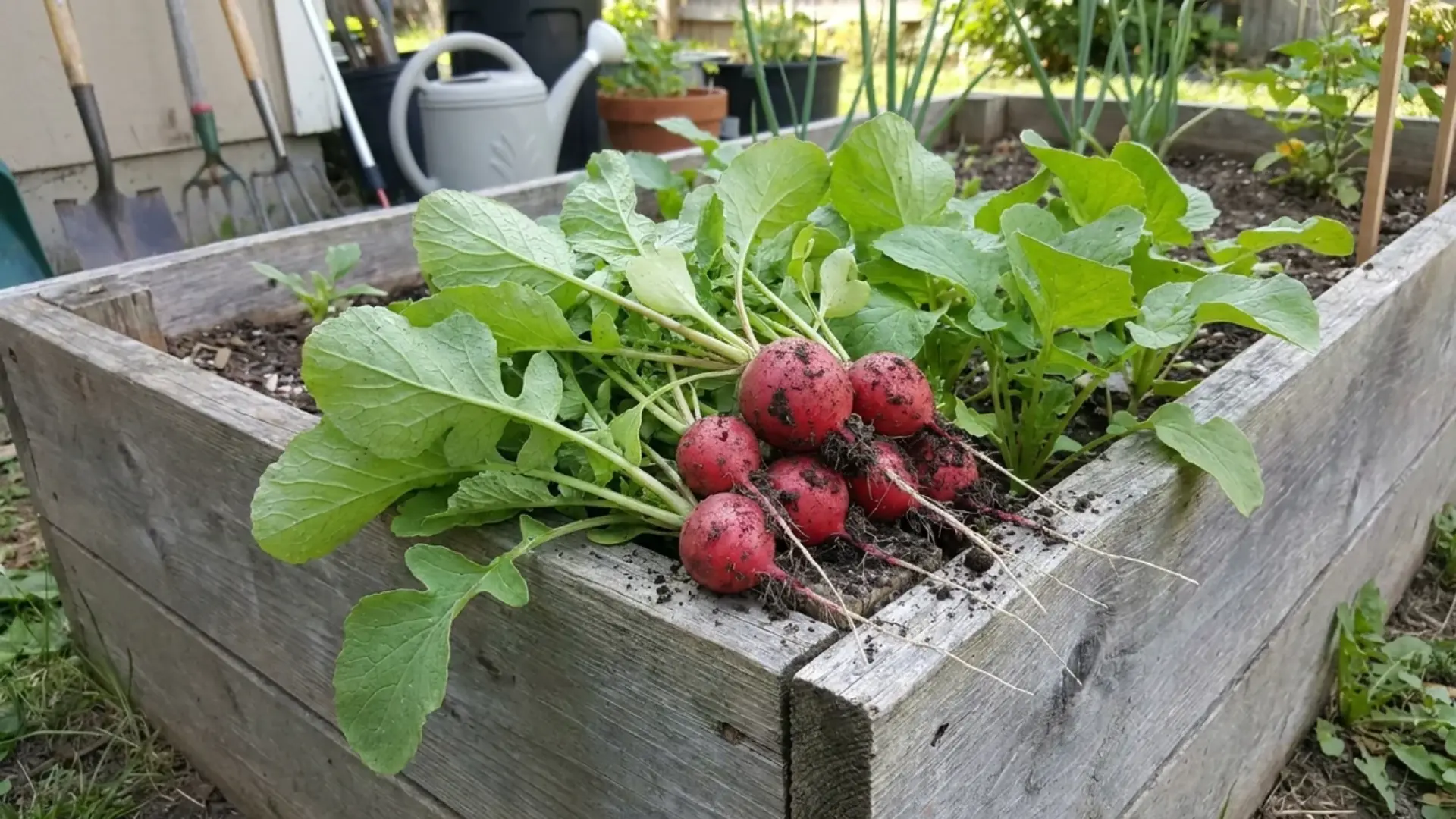
Radish attracts flea beetles away from cabbage leaves before damage occurs.
Fast-growing and quick to harvest, radish also breaks up compacted soil as it matures, improving drainage for nearby cabbage roots.
Since radish spends so little time in the ground, it doesn’t compete for long-term nutrients or space.
Tuck a few rows between young cabbage transplants for early-season pest protection that clears out of the way by the time cabbage really needs the room.
11. Spinach
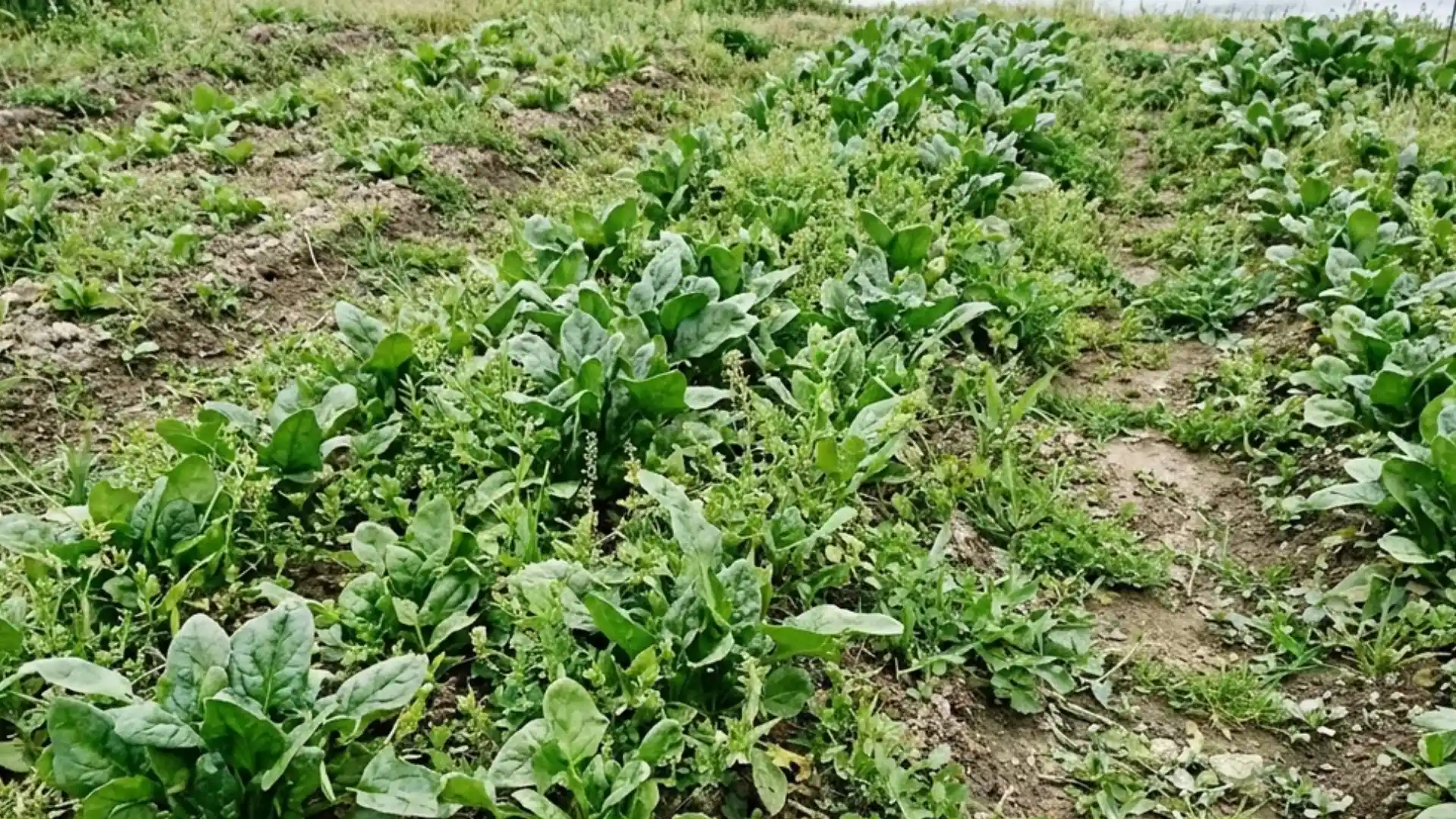
Spinach makes a quiet, low-growing companion that fills bare soil around cabbage without competing for sunlight or nutrients.
Its shallow root system stays out of cabbage’s way, and its dense leaves help shade the soil, holding in moisture during warmer stretches.
Spinach also matures quickly, often ready for harvest before cabbage needs the extra space.
This fast turnaround makes it an efficient use of ground that would otherwise sit empty while cabbage heads take time to develop.
12. Cucumber
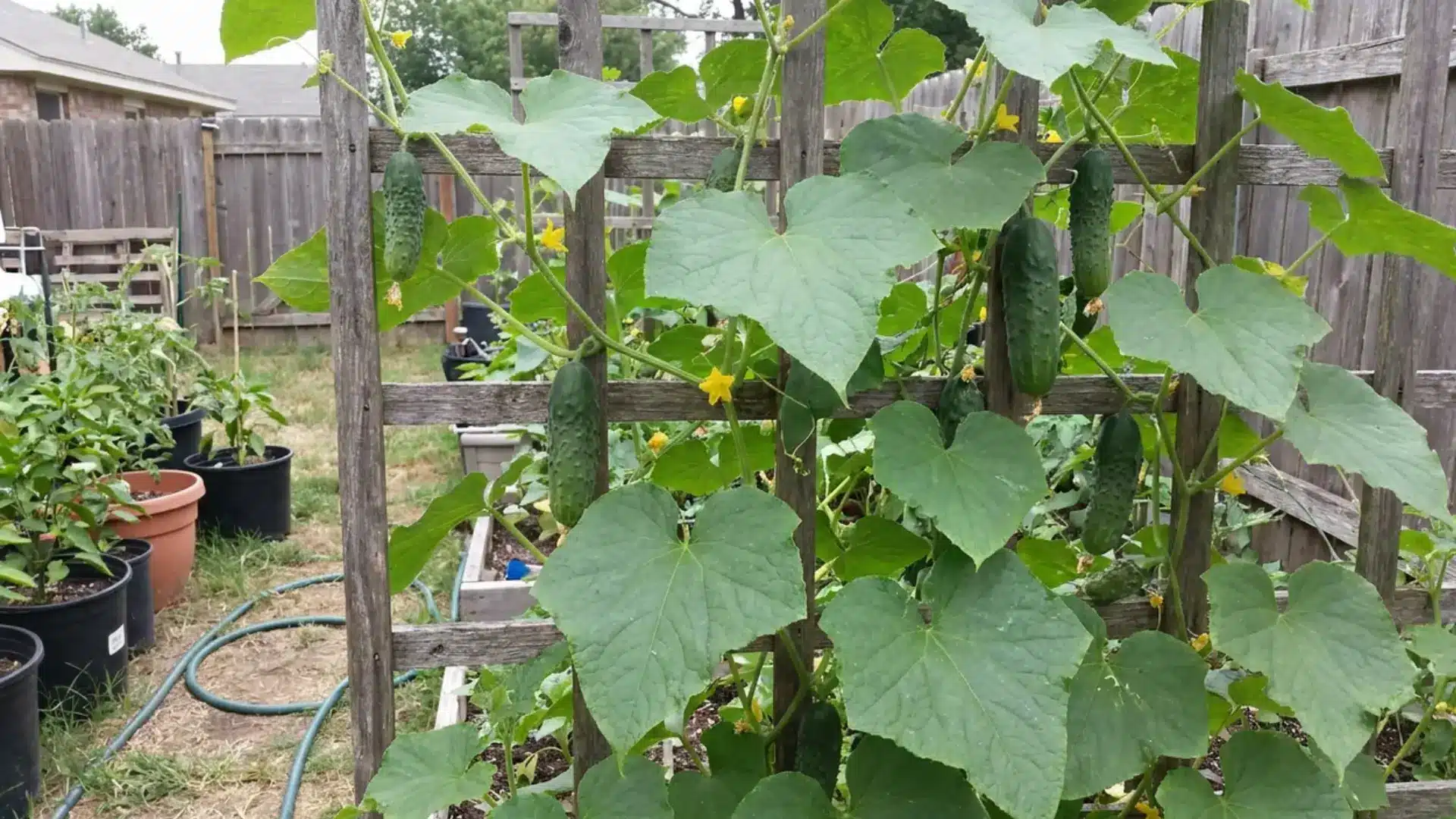
Cucumbers pair reasonably well with cabbage when given enough room, since their sprawling vines can act as living ground cover that suppresses weeds.
Cucumber’s broad leaves help shade the soil, reducing moisture loss around cabbage roots during hot summer days.
Just be sure to trellis cucumbers or give them ample space, since their vigorous growth can quickly overwhelm a bed if left unchecked.
Planted thoughtfully, this pairing balances soil coverage with pest resilience for both crops.
13. Borage
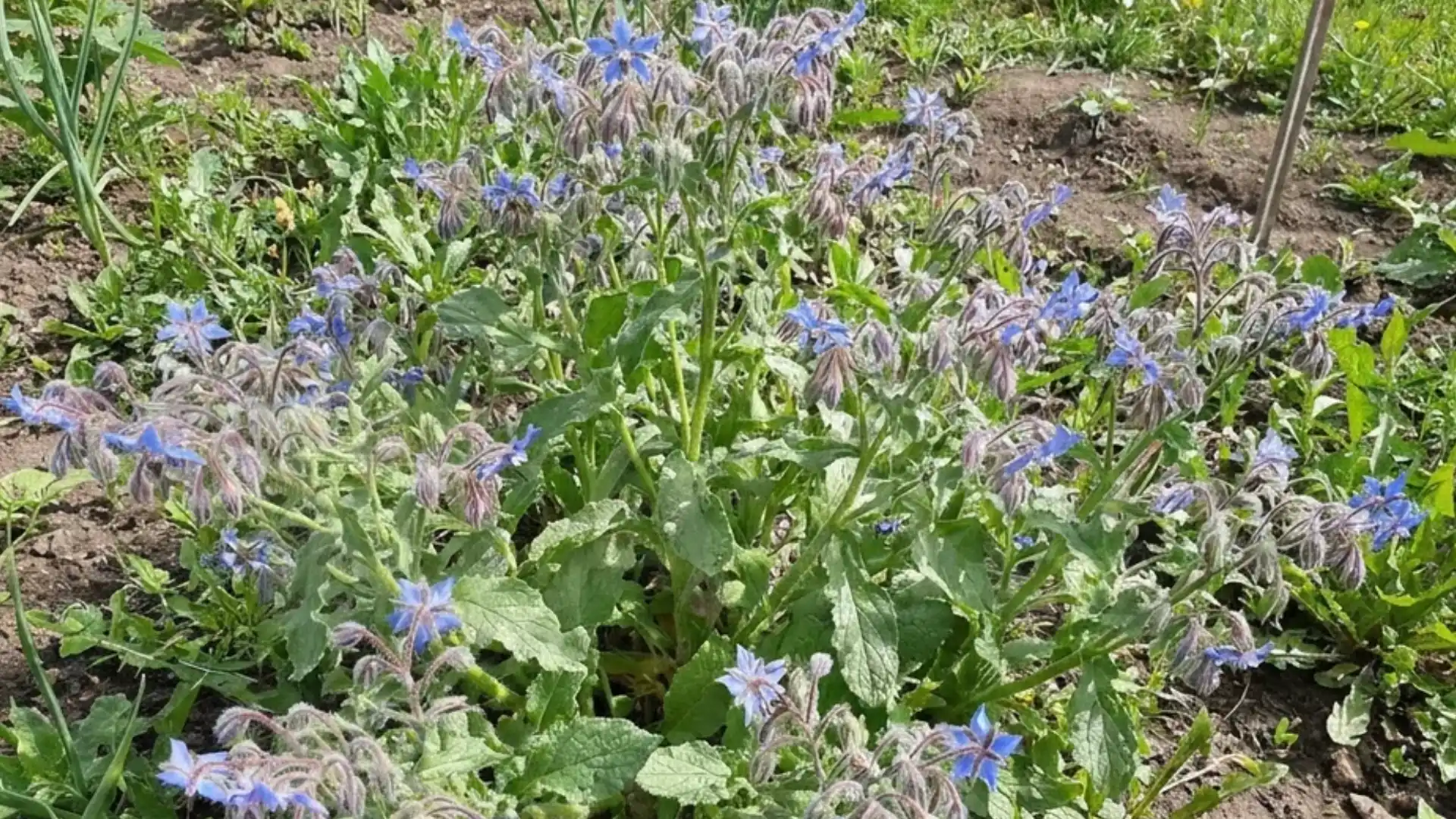
Borage draws in a steady stream of pollinators and predatory insects, including bees and tiny parasitic wasps that target cabbage worms.
Its fuzzy leaves and star-shaped blue flowers also seem to boost the vigor of nearby plants, though most of that credit goes to the pollinator traffic it generates.
Borage self-seeds easily, so once established, it tends to return season after season with little effort.
A few plants scattered near your cabbage bed keep beneficial insects coming back all summer.
14. Hyssop
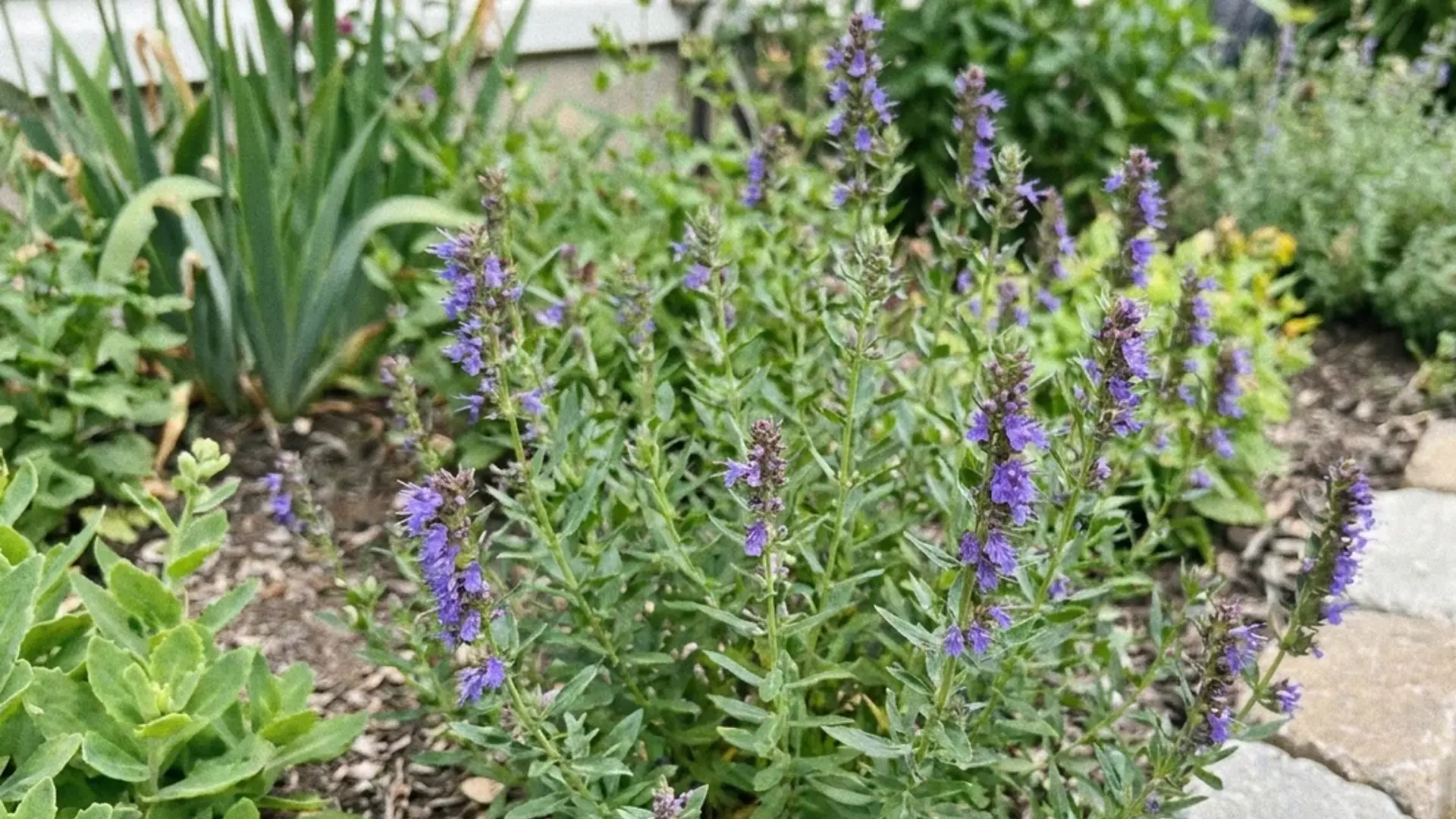
Hyssop’s strong, minty-anise scent helps confuse cabbage moths and other pests searching for host plants by smell.
This hardy perennial also attracts bees and butterflies when it blooms, adding pollinator support to the bed.
Hyssop prefers similar sunny, well-drained conditions as cabbage, making care straightforward.
Since it grows upright and does not spread aggressively, it tucks in nicely along borders or between rows without stealing space cabbage needs to fully develop.
15. Swiss Chard
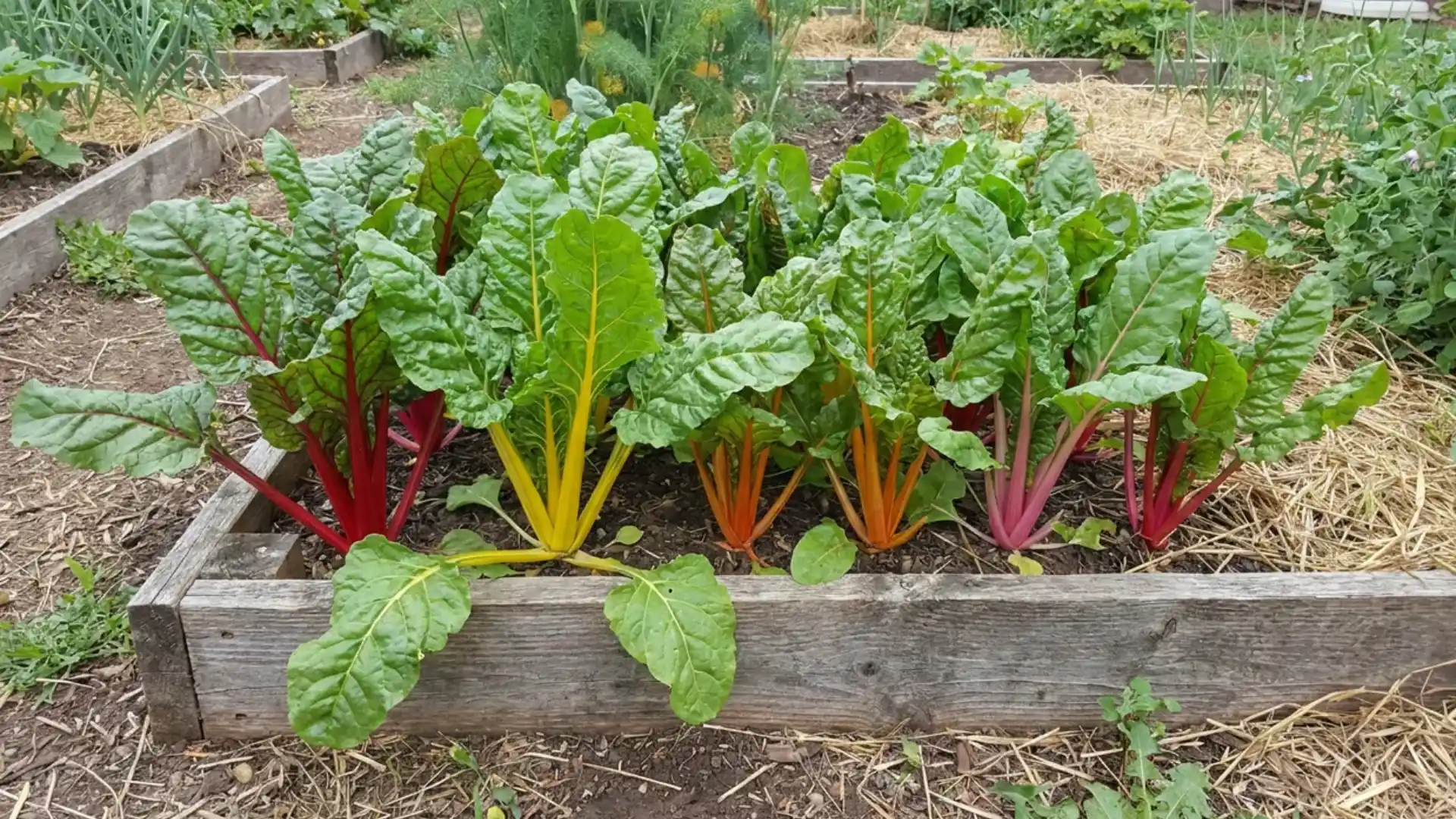
Swiss chard shares similar soil and watering preferences with cabbage, making bed planning simple without extra guesswork.
Its broad leaves help shade soil and retain moisture, benefiting shallow-rooted cabbage during dry spells.
Chard also grows at a different pace than cabbage, so the two rarely compete for nutrients at the same critical growth stages.
Harvest outer chard leaves continuously through the season, and it’ll keep contributing ground cover without ever needing much space of its own.
Herbs that Make Great Companions for Cabbage
Beyond seasoning your kitchen, these aromatic plants confuse pests, attract helpful insects, and keep your cabbage patch smelling as good as it grows.
16. Rosemary
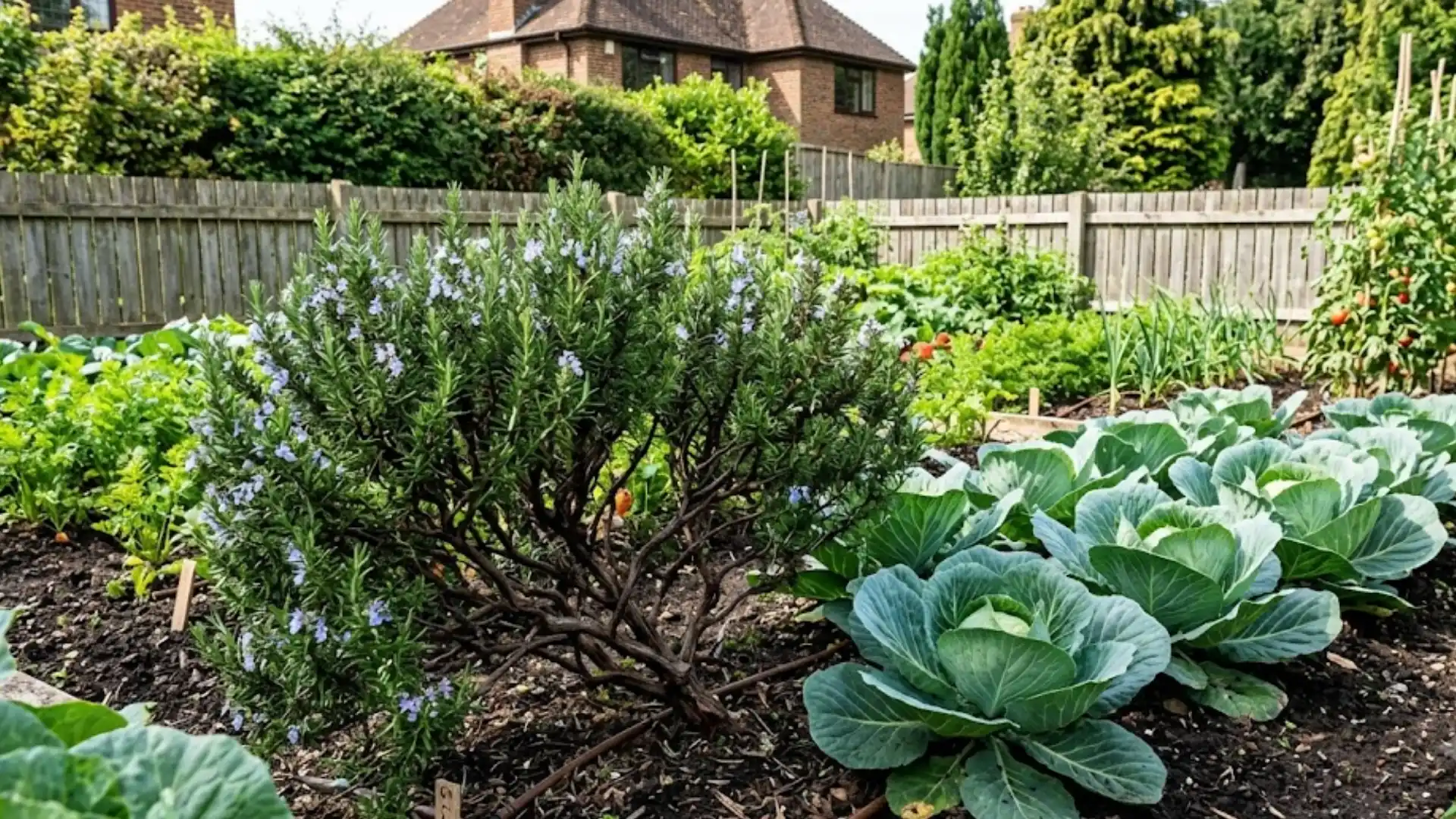
Rosemary’s woody, resinous scent is practically a “keep out” sign for cabbage moths and other flying pests looking to lay eggs on your plants.
This hardy perennial thrives in the same well-drained soil cabbage appreciates, making it a low-fuss neighbor.
Since rosemary grows upright and shrubby, it won’t sprawl into your cabbage rows or compete for ground space.
Plant it along the border of your bed and let its fragrance do the heavy lifting season after season, with little upkeep from you.
17. Sage
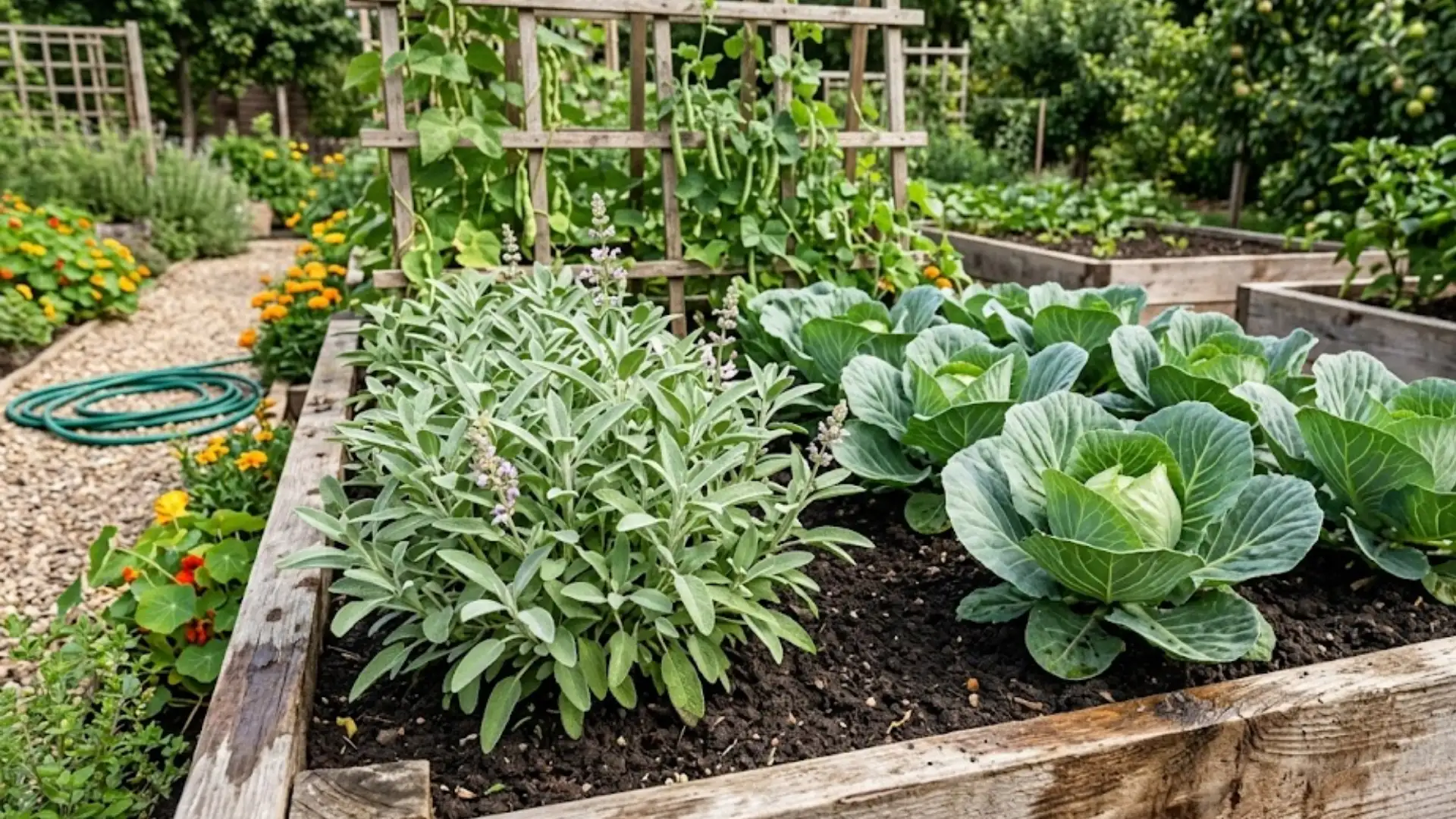
Sage brings a strong, musky aroma that cabbage moths and flea beetles want nothing to do with, making it a reliable pest deterrent.
It also attracts beneficial pollinators when it flowers, adding a bit of biodiversity to your cabbage bed.
Sage prefers similar sun and drainage conditions as cabbage, so their care overlaps nicely.
Just give it enough room to bush out a little, since sage can get woody and wide with age. A little pruning keeps it tidy and productive.
18. Mint
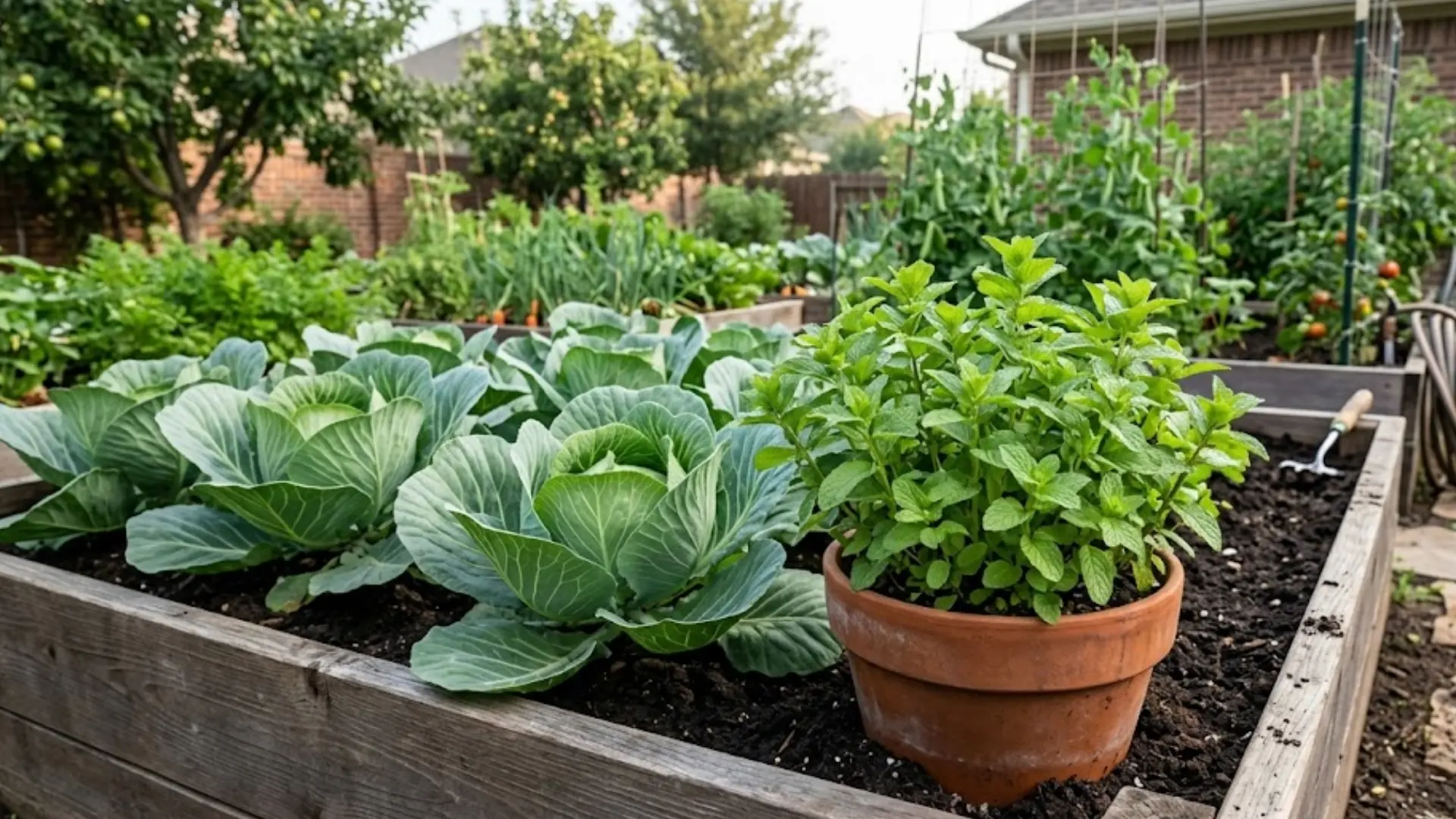
Mint repels cabbage moths, aphids, and ants with its intense, cooling scent, making it a solid pest-fighting companion.
That said, mint spreads aggressively through underground runners, so it’s best planted in containers and tucked near your cabbage bed rather than directly in the ground.
This keeps its pest-repelling benefits without letting it take over the entire garden.
A few strategically placed pots around your cabbage patch give you all the protection with none of the invasive headaches mint is known for.
19. Oregano
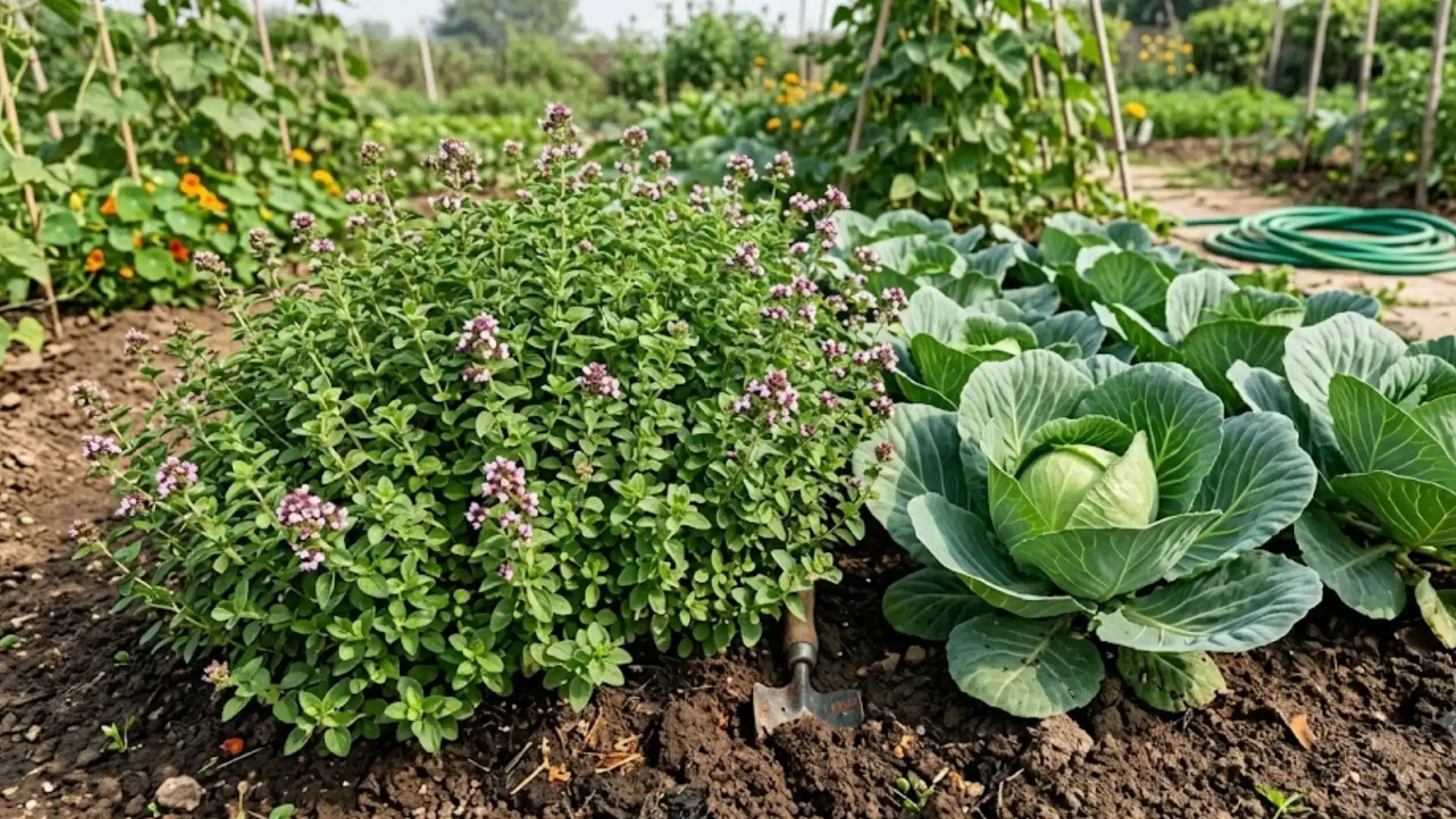
Oregano acts as a low-growing ground cover that suppresses weeds while its strong scent confuses cabbage pests searching for their next meal.
It thrives in the same sunny, well-drained spots cabbage prefers, making garden planning simple.
Oregano also attracts beneficial insects when it flowers, adding another layer of natural pest control to your bed.
Since it stays fairly compact and spreads slowly, it tucks neatly along pathways or borders without stealing space or nutrients from your cabbage heads.
20. Chives
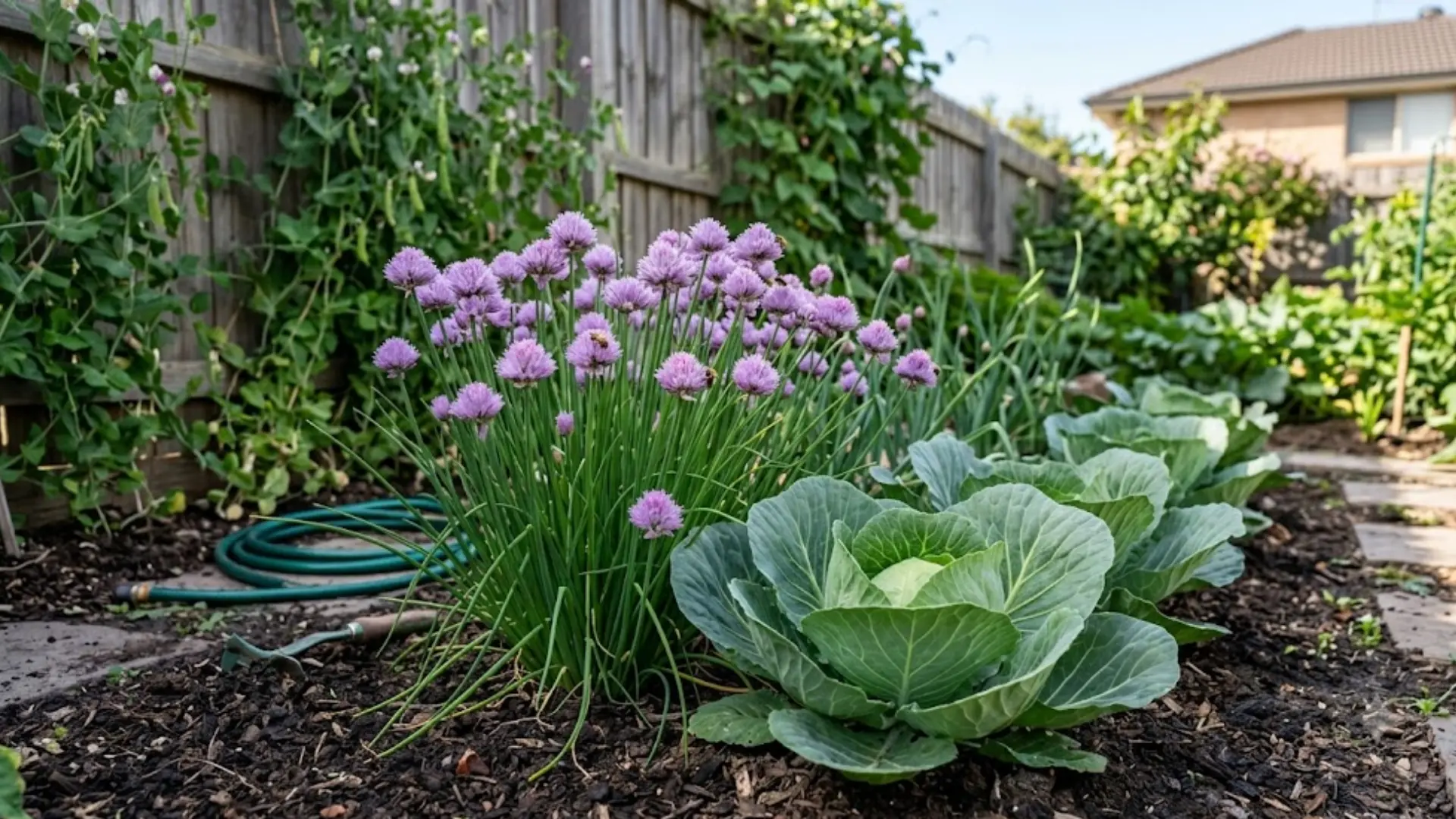
Chives release a mild onion-like scent that keeps aphids and cabbage worms guessing, offering steady protection without overwhelming the garden bed.
Their slender, upright growth habit means they tuck easily between cabbage plants without stealing space or sunlight.
Chives also produce cheerful purple blooms that attract pollinators and beneficial insects later in the season.
Low maintenance and quietly effective, chives are one of those companion plants that just keep working in the background all season long.
21. Lavender
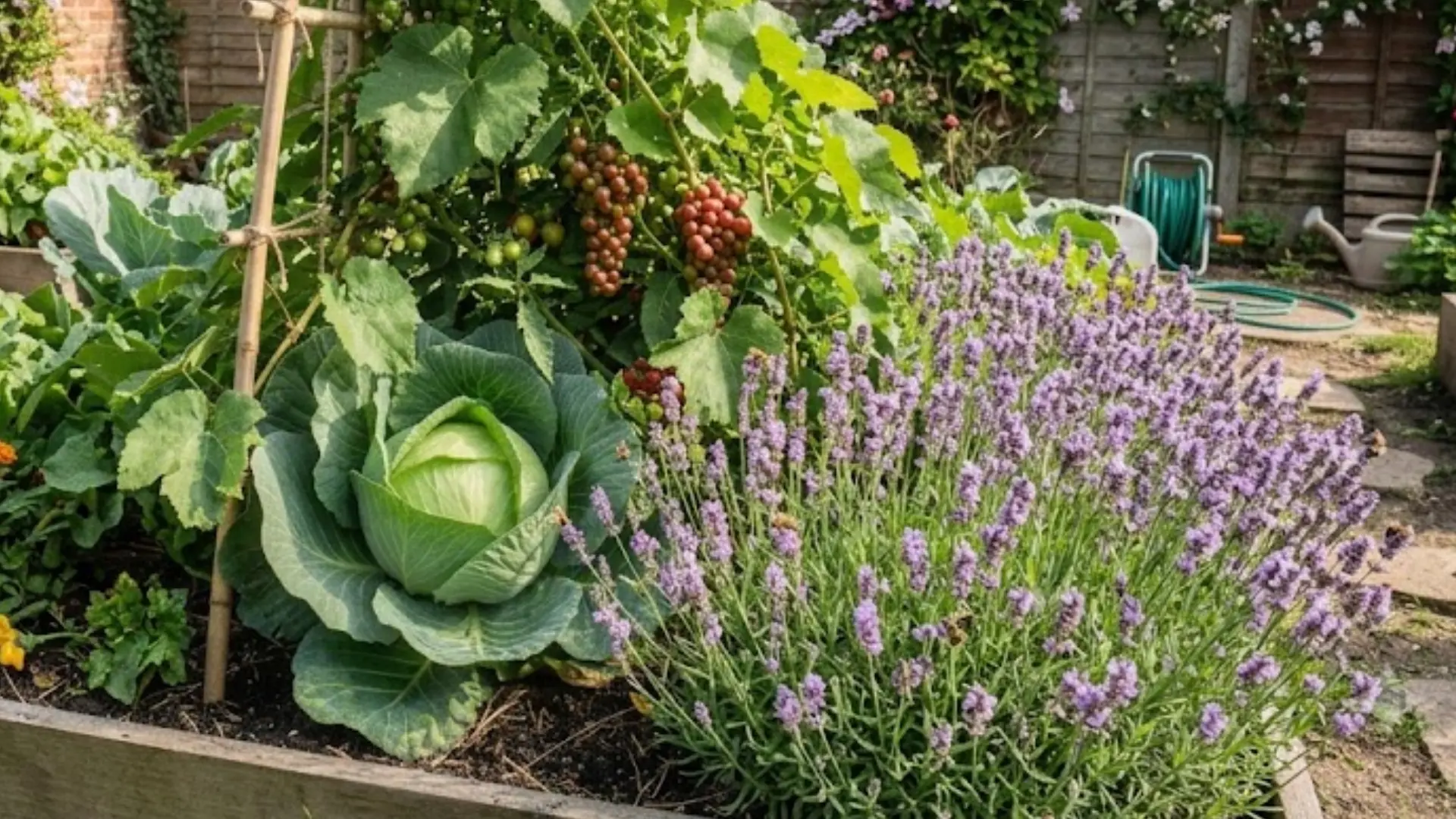
Lavender’s heavy floral scent throws off cabbage moths while drawing in bees and other pollinators that keep your whole garden thriving.
It prefers drier soil than cabbage, so plant it along the edges rather than mixing it directly into damp cabbage beds.
This border placement still delivers pest-repelling benefits without creating soggy conditions lavender dislikes.
Beyond function, lavender adds a pop of color and fragrance, making your cabbage patch as pleasant to walk through as it is productive.
22. Basil
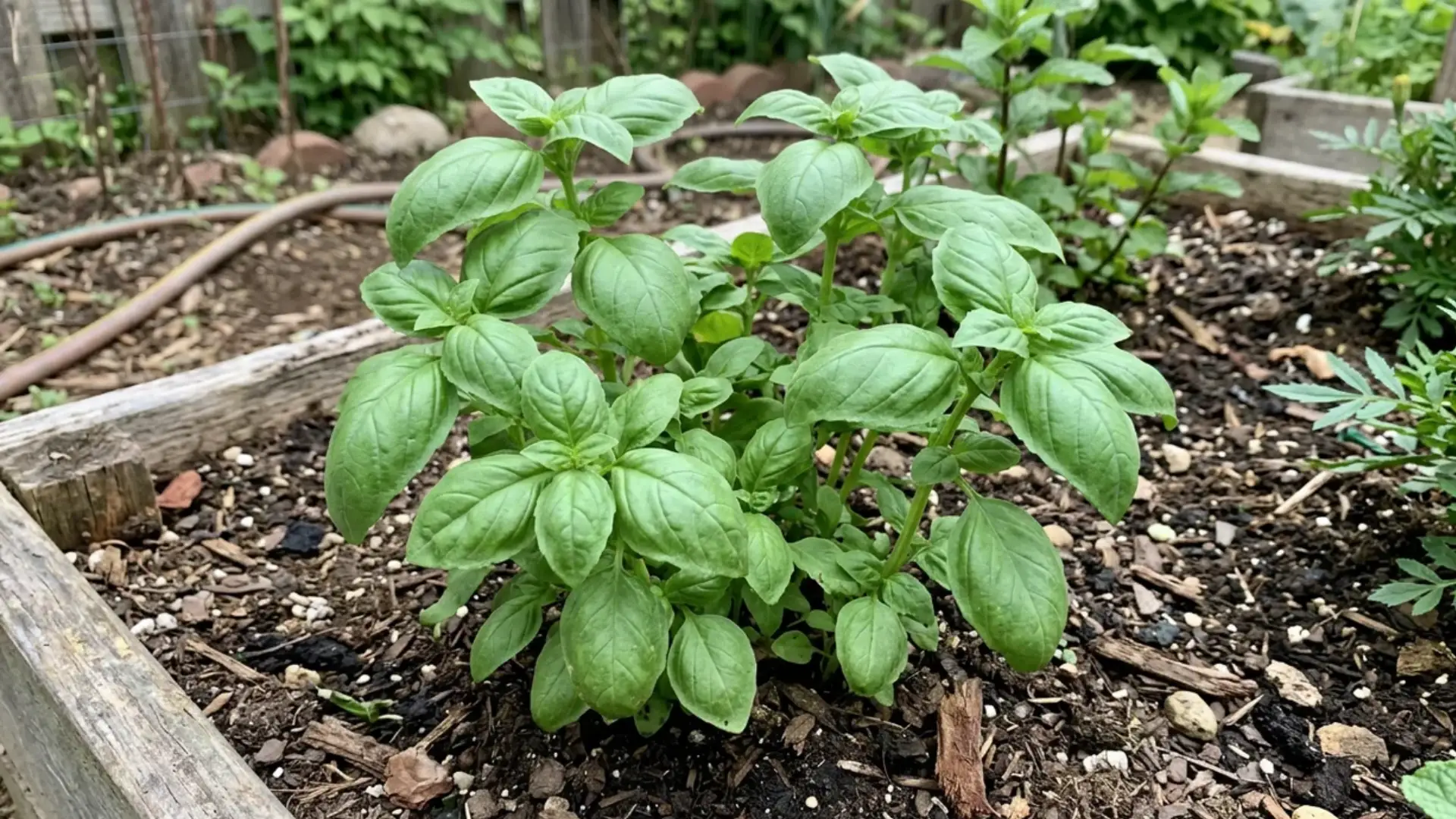
Basil’s strong, sweet scent helps mask cabbage from pests hunting by smell, particularly aphids and cabbage moths searching for host plants.
It also attracts pollinators when left to flower, adding a bit of extra support to the surrounding bed.
Basil prefers warm, sunny conditions similar to cabbage, though it appreciates a bit more consistent watering.
Since it stays fairly compact, it tucks easily between rows or along borders without demanding much extra space or competing for nutrients.
23. Fennel
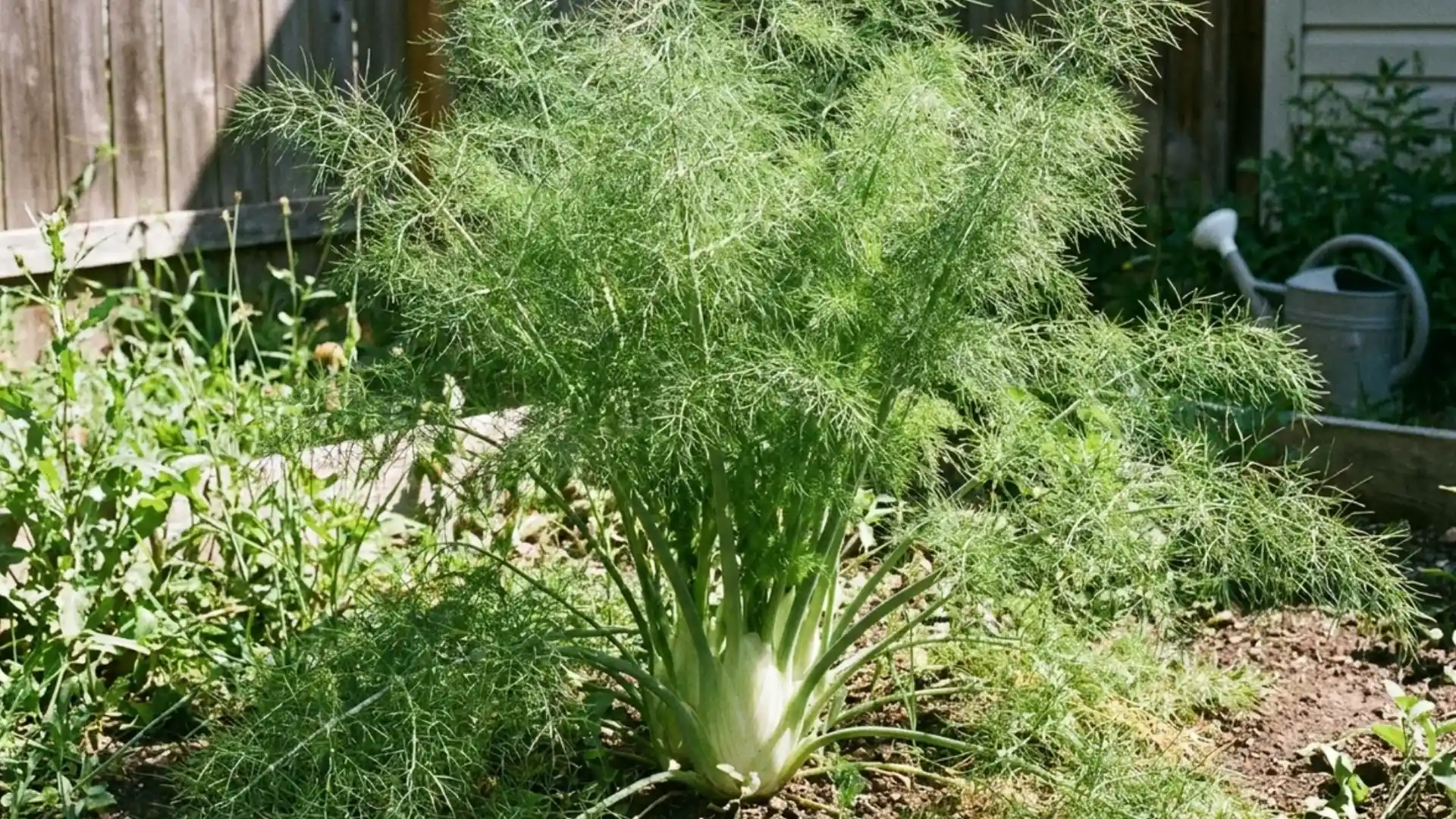
Fennel is a bit of an outlier since it can inhibit growth in many neighboring plants, but used carefully at a distance.
Its flowers attract beneficial insects like hoverflies and ladybugs that prey on cabbage pests.
Keep fennel planted well away from direct contact with cabbage roots to avoid any interference with growth.
Instead, use it as a distant border plant where its blooms can still pull in helpful predators without the competitive downsides of closer planting.
24. Parsley
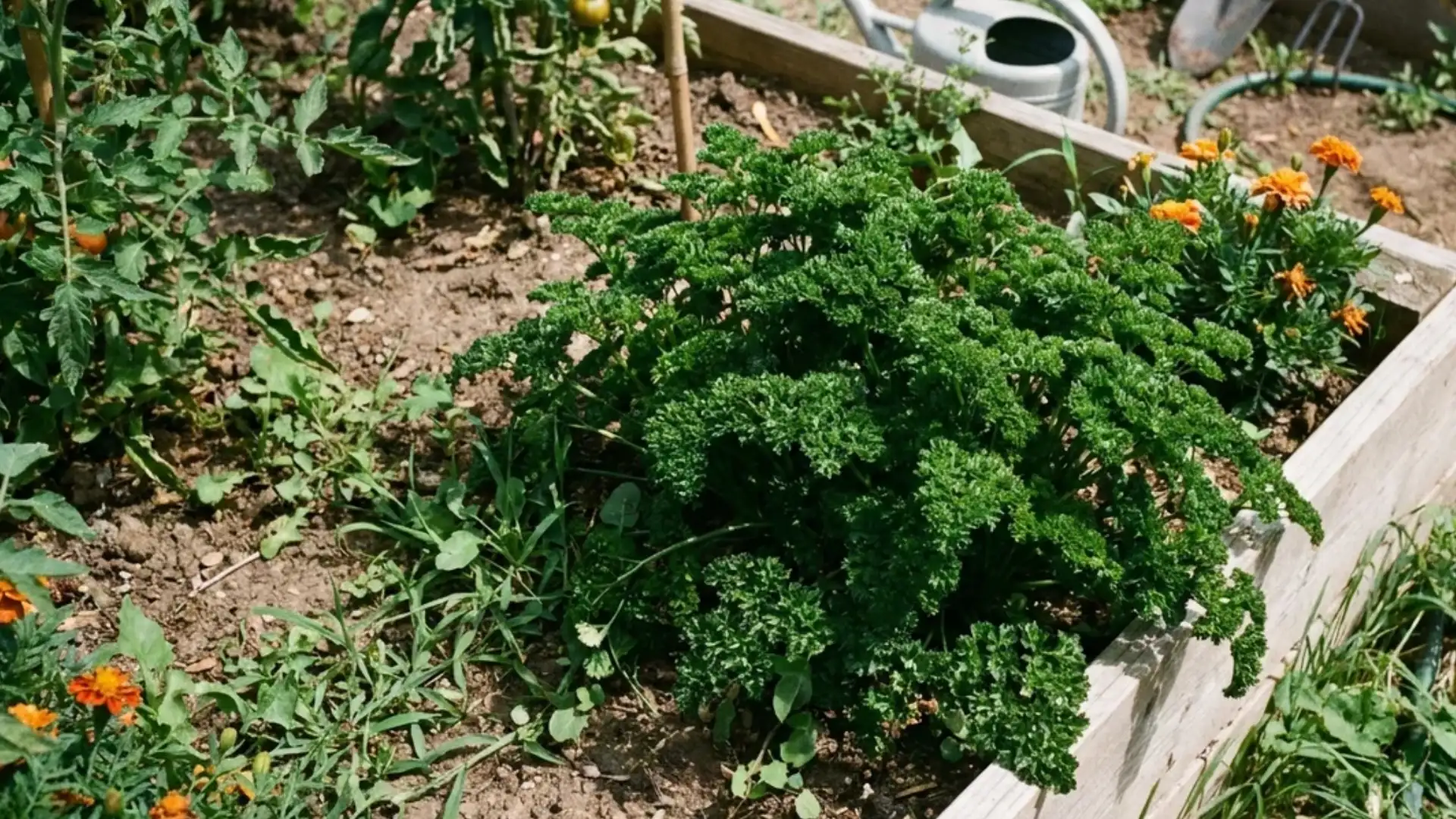
Parsley attracts beneficial insects like hoverflies and parasitic wasps when allowed to flower, giving cabbage extra backup against aphids and worms.
It grows low and compact, tucking easily between cabbage plants without competing for sunlight or significant soil space.
Parsley also prefers similar moisture levels to cabbage, simplifying watering schedules.
Since it’s slow to bolt in cooler weather, it provides season-long ground cover and pest support without much maintenance required from the gardener.
25. Tarragon
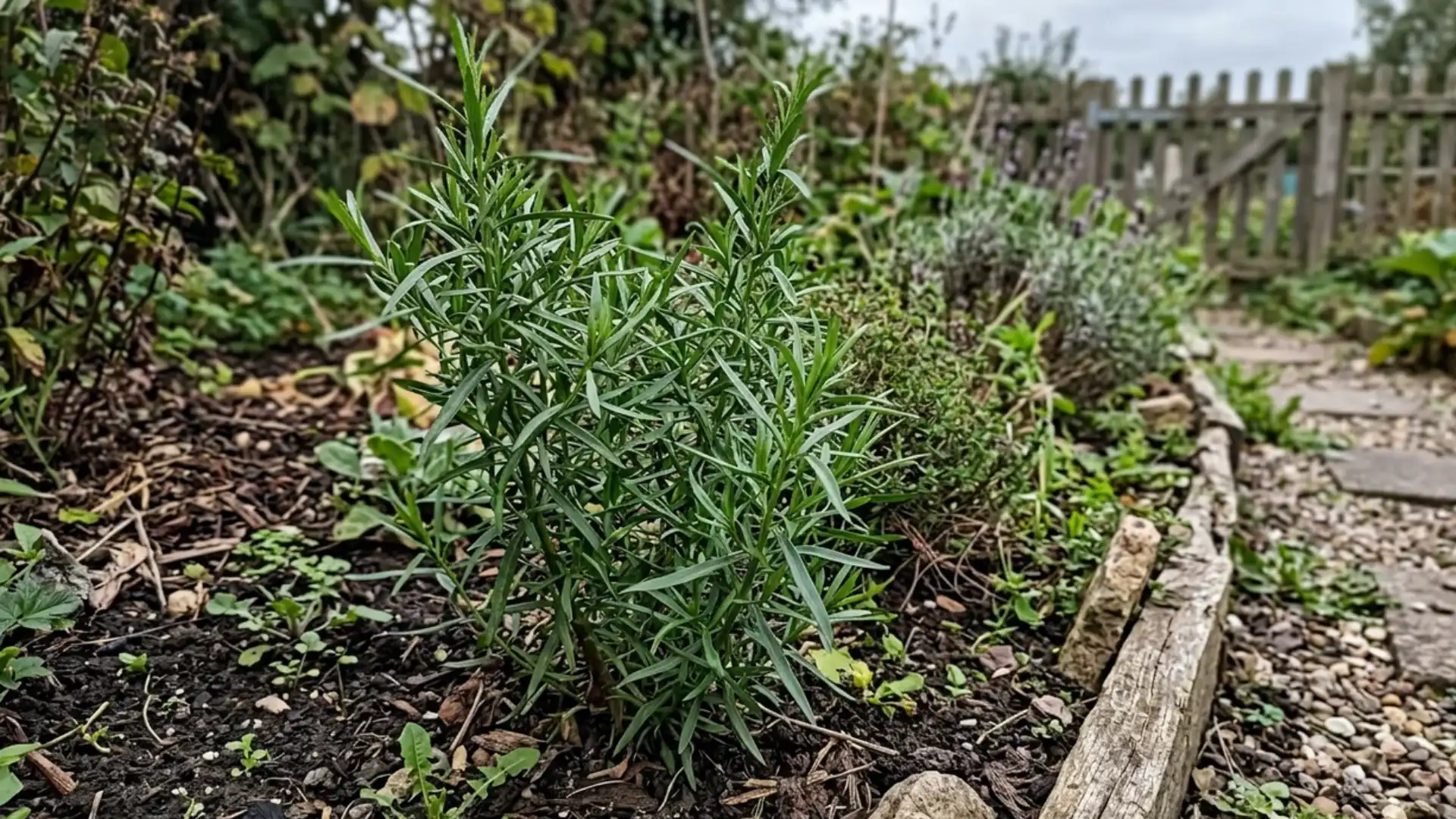
Tarragon’s distinct anise-like scent helps deter a range of common garden pests, including some that target cabbage directly.
This perennial herb grows upright and doesn’t spread aggressively, making it easy to place along borders without crowding cabbage rows.
Tarragon prefers well-drained soil similar to cabbage’s preferences, keeping care requirements aligned.
Once established, it needs minimal attention, quietly deterring pests season after season without asking much of busy gardeners.
26. Catnip
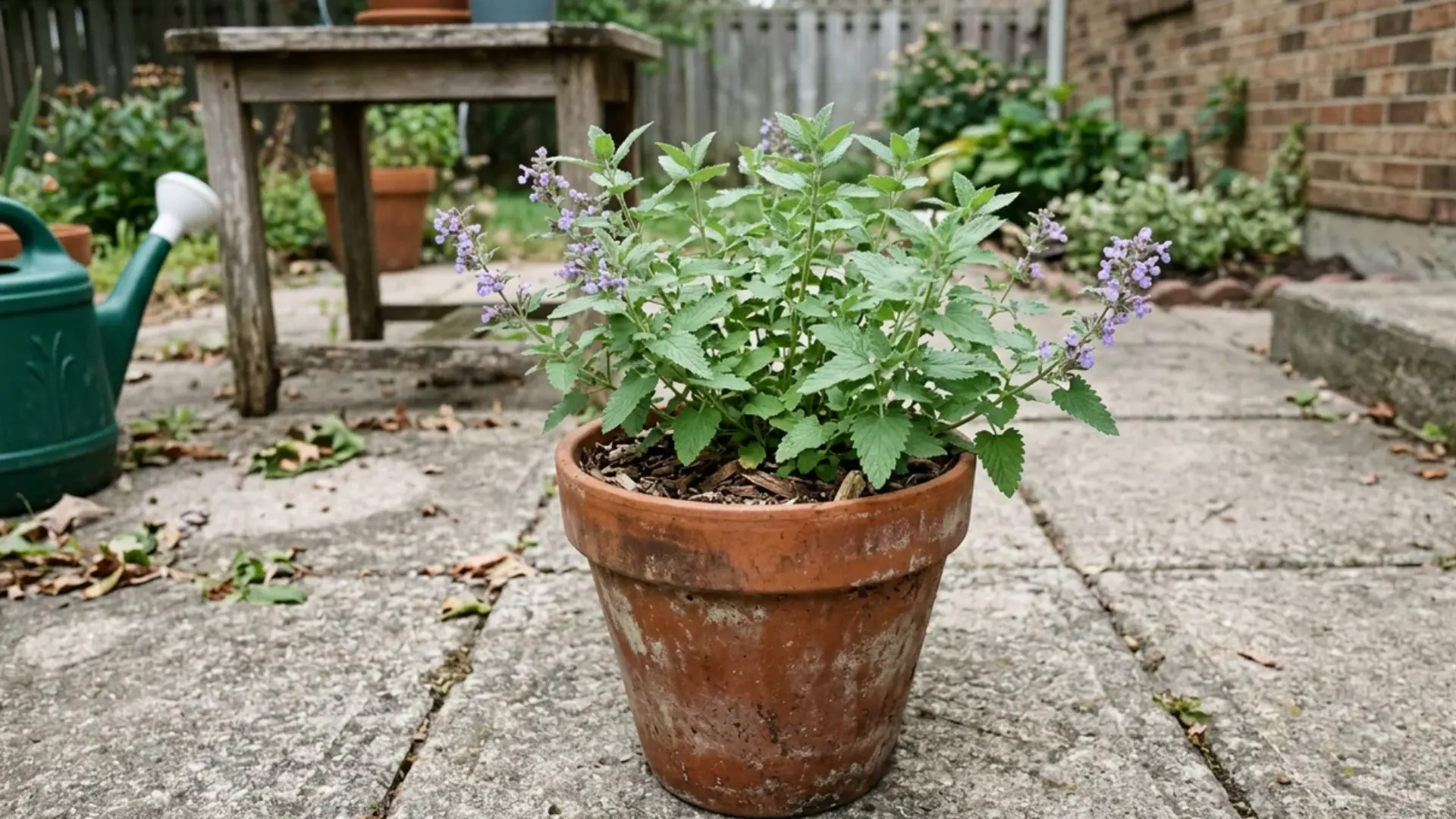
Catnip repels a surprising range of pests, including aphids, flea beetles, and cabbage loopers, thanks to its strong minty aroma.
Like mint, it can spread aggressively through the garden, so many gardeners keep it contained in pots placed near the cabbage bed rather than planting it directly in the ground.
This approach delivers pest-repelling benefits without the invasive spread.
Catnip also attracts pollinators when flowering, adding another layer of benefit to its already hardworking reputation.
27. Marjoram
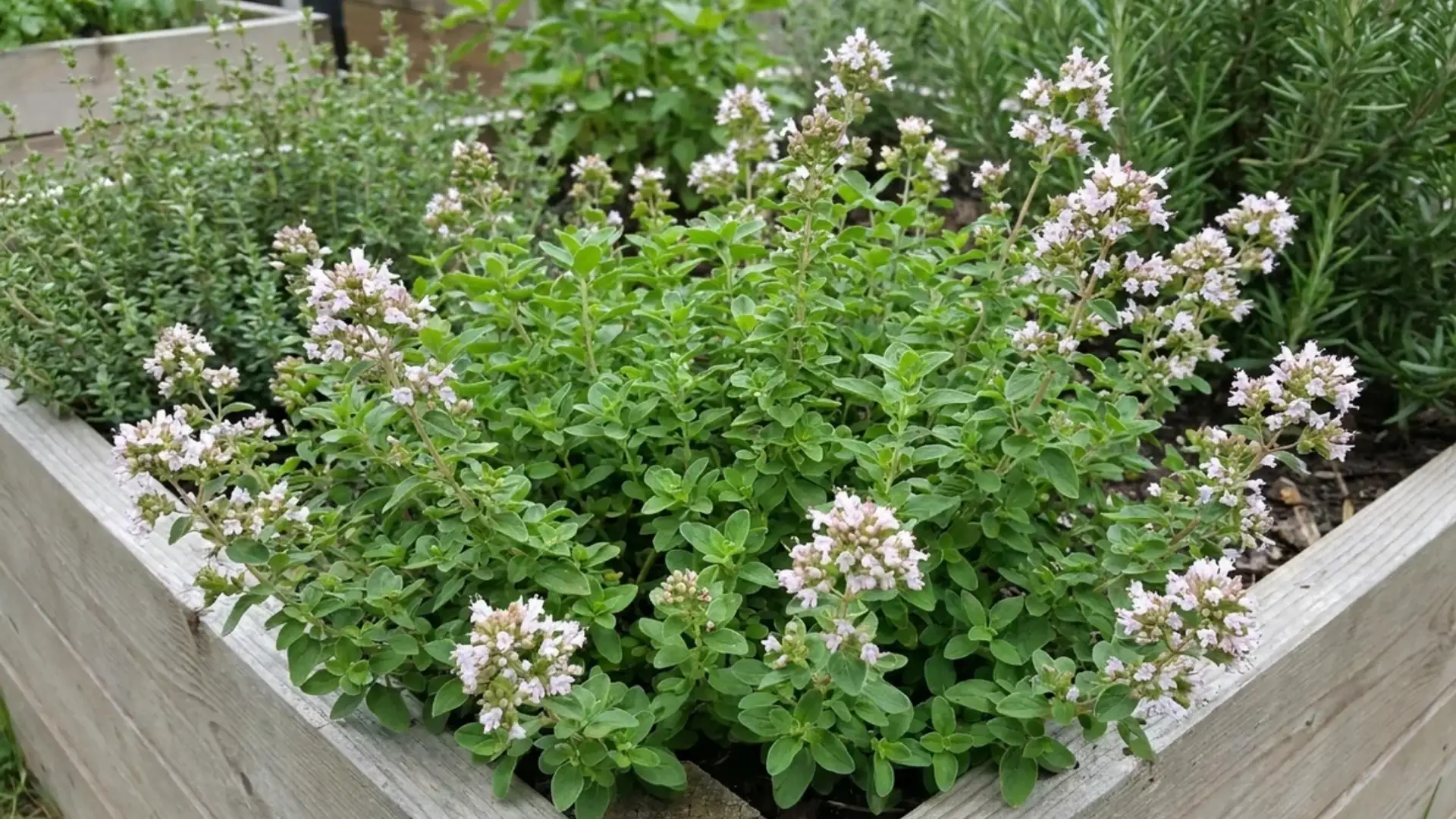
Marjoram shares many qualities with its close relative oregano, offering a strong scent that confuses pests while staying low and compact in growth habit.
It thrives in similar sunny, well-drained conditions as cabbage, simplifying bed planning and watering routines. Marjoram also attracts pollinators once it flowers, adding modest ecosystem support to the bed.
Since it spreads slowly and stays fairly contained, it fits neatly along borders or pathways without stealing space cabbage needs to fully mature.
Flowers to Plant Alongside Cabbage for Pest Control
These blooms lure pests away, invite in the good bugs, and add color to your cabbage patch, proving that pest control and curb appeal can absolutely coexist in the same garden bed.
28. Sunflowers
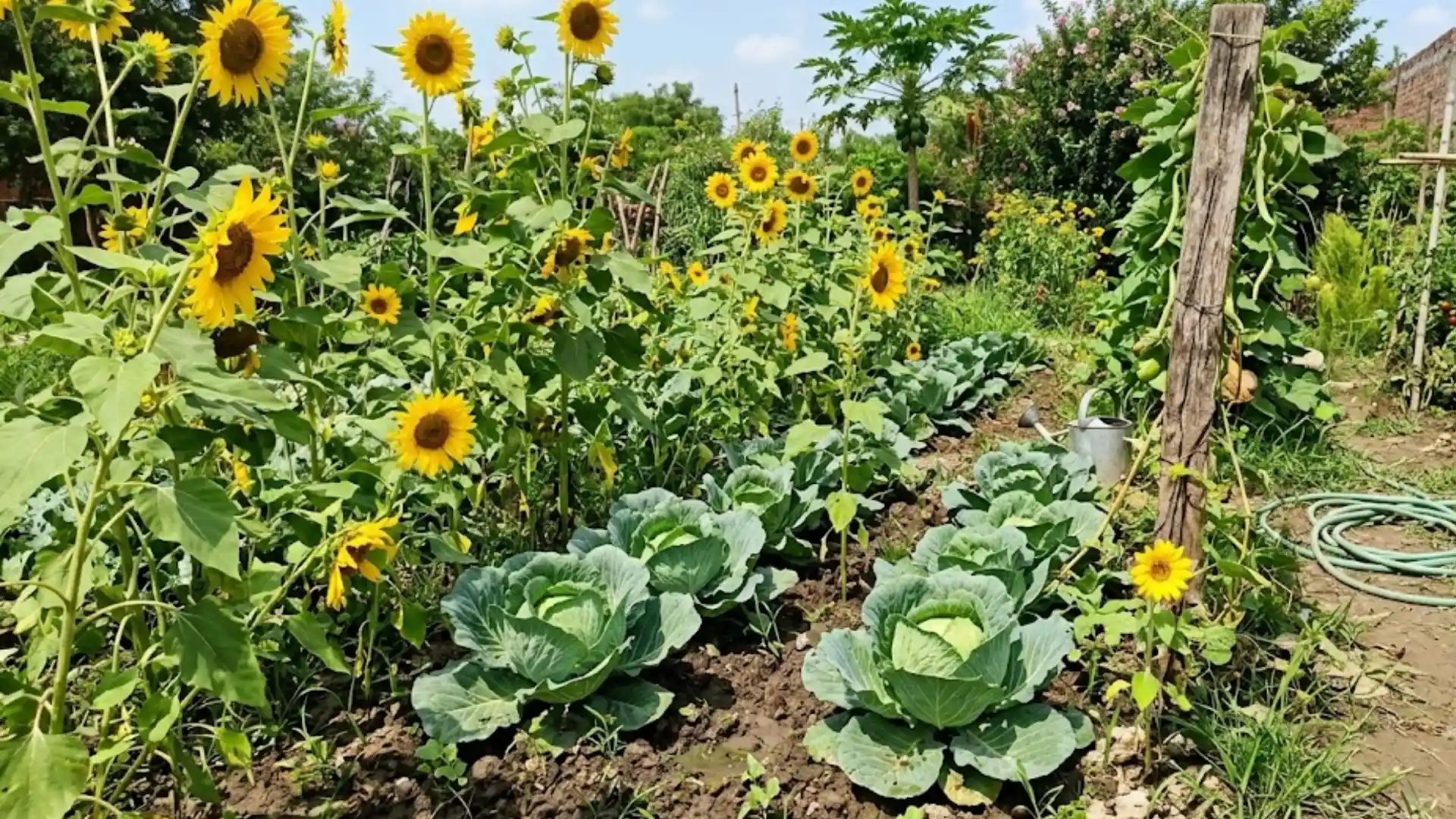
Sunflowers serve as a trap crop for aphids, drawing them upward and away from cabbage growing below.
Their tall stalks also attract ladybugs and other beneficial insects that help keep pest populations in check throughout the season.
Since sunflowers grow vertically, they won’t compete for ground space, making them a smart border plant for cabbage beds.
Just be mindful of shading, and place sunflowers on the north side of your cabbage rows so they don’t block essential sunlight.
29. Calendula
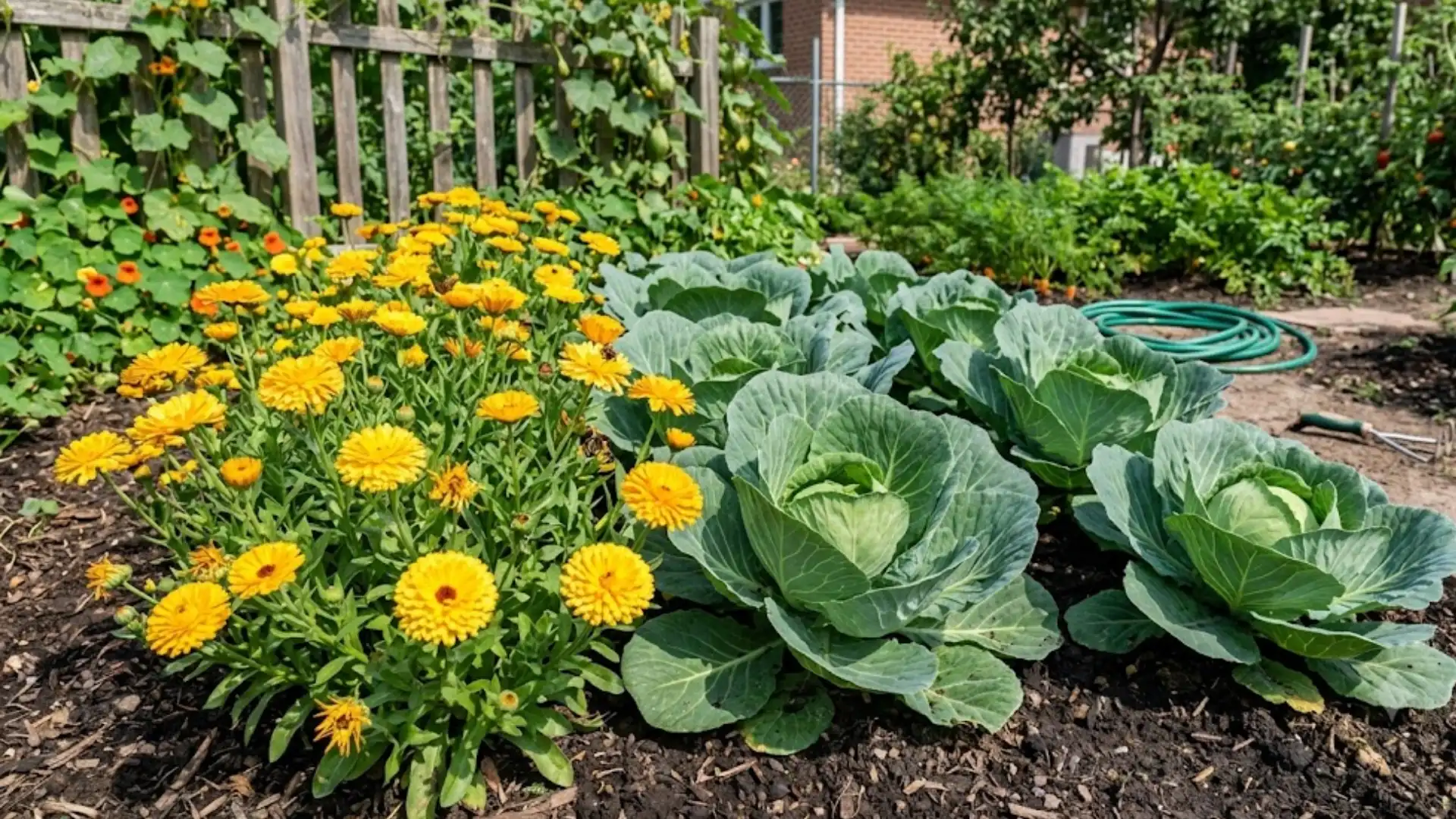
Calendula’s cheerful orange blooms attract ladybugs, lacewings, and hoverflies, all natural predators of aphids and other common cabbage pests.
It also acts as a mild trap crop, drawing some pests away from cabbage while simultaneously inviting in the beneficial bugs that clean them up.
Calendula grows low and bushy, fitting neatly along borders or between cabbage rows without demanding much space.
Its long blooming season means season-long pest support, plus a steady supply of cheerful color in your garden bed.
30. Alyssum
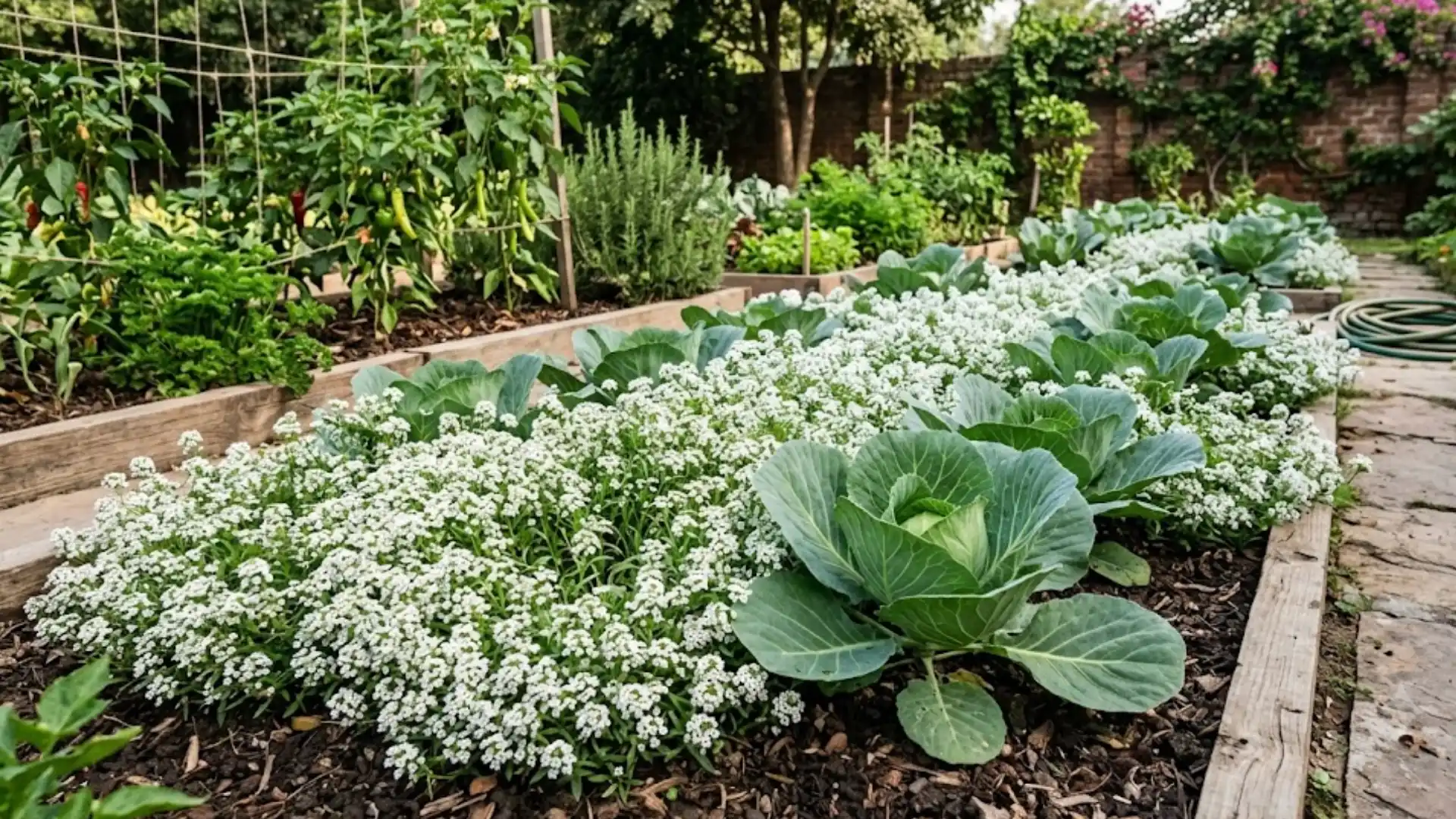
Sweet alyssum’s tiny clustered flowers are a magnet for hoverflies and parasitic wasps, both aggressive predators of aphids and cabbage worms.
This low, spreading groundcover fills gaps between cabbage plants, suppressing weeds while staying completely out of the way.
Alyssum blooms quickly and continuously, offering season-long support for beneficial insect populations.
Since it stays compact and shallow-rooted, it won’t compete with cabbage for nutrients or space, making it one of the easiest, most rewarding flowers to tuck into any cabbage bed.
31. Zinnia
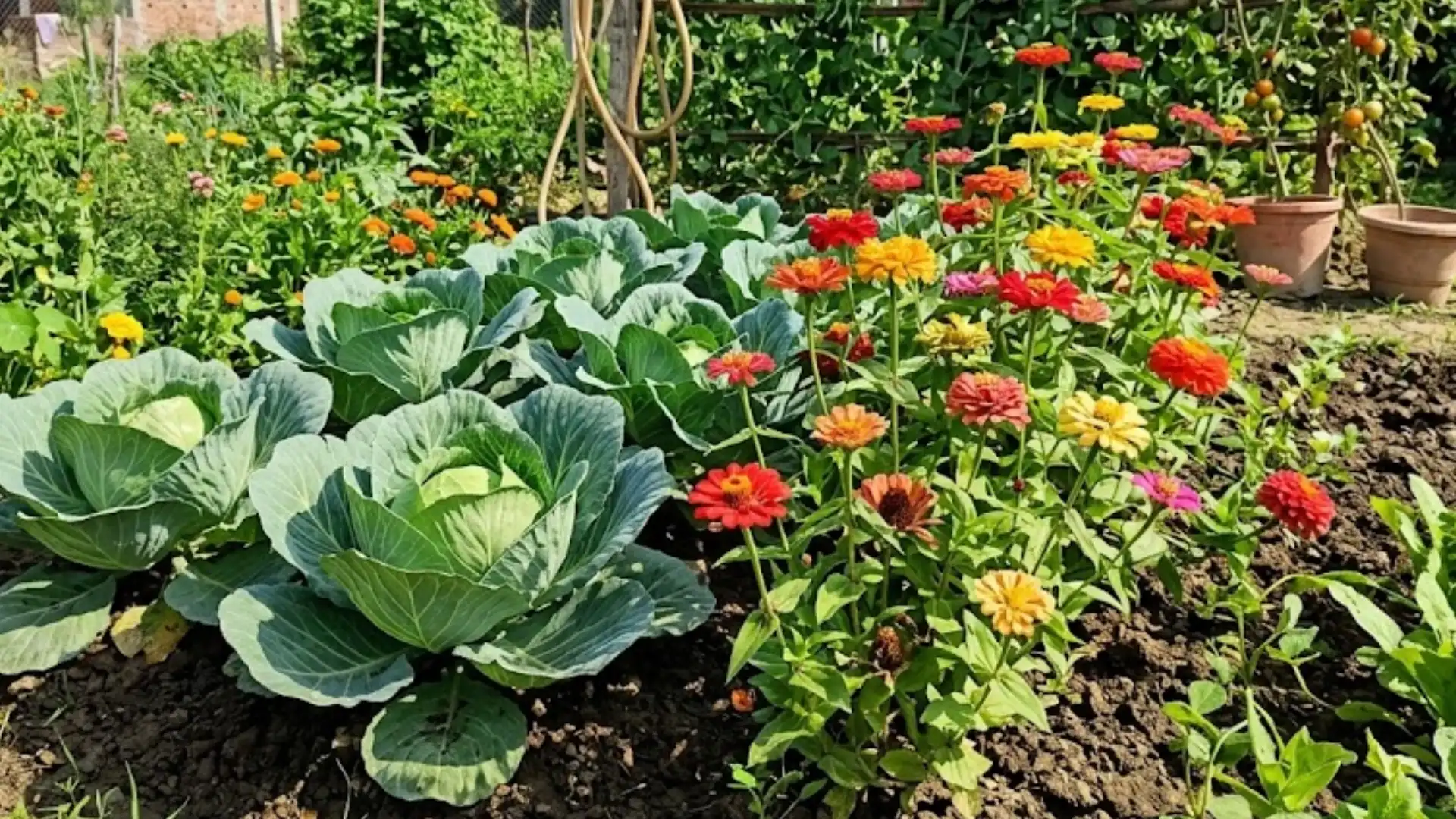
Zinnias bring bold, bright blooms that attract ladybugs, lacewings, and other beneficial insects known for hunting down aphids and cabbage worms.
Their tall, sturdy stems mean they won’t sprawl into cabbage rows, keeping garden layout simple and tidy.
Zinnias also bloom for months, offering consistent support for pollinators and pest predators throughout the growing season.
Easy to grow from seed and low maintenance once established, zinnias add reliable color and function without asking much in return from busy gardeners.
32. Cosmos
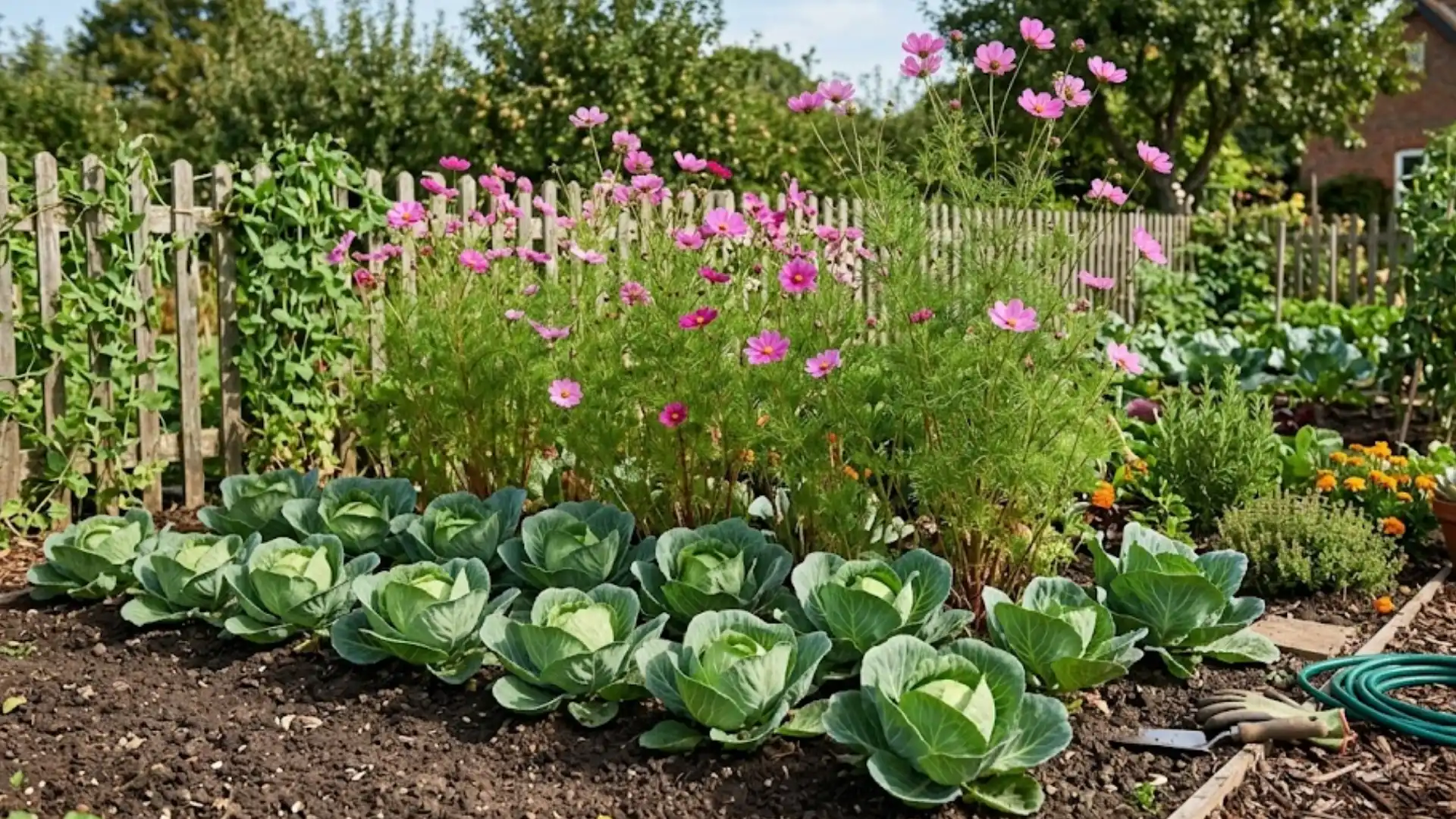
Cosmos flowers attract a wide range of beneficial insects, including hoverflies and parasitic wasps that keep aphid populations from spiraling out of control.
Their airy, delicate blooms do not cast heavy shade, so cabbage below still gets plenty of sunlight.
Cosmos also tolerates poor soil and minimal care, making it an easy addition for gardeners who want pest control without extra maintenance.
Plant a few scattered through your cabbage bed for natural pest support and a soft, colorful backdrop all season.
33. Yarrow
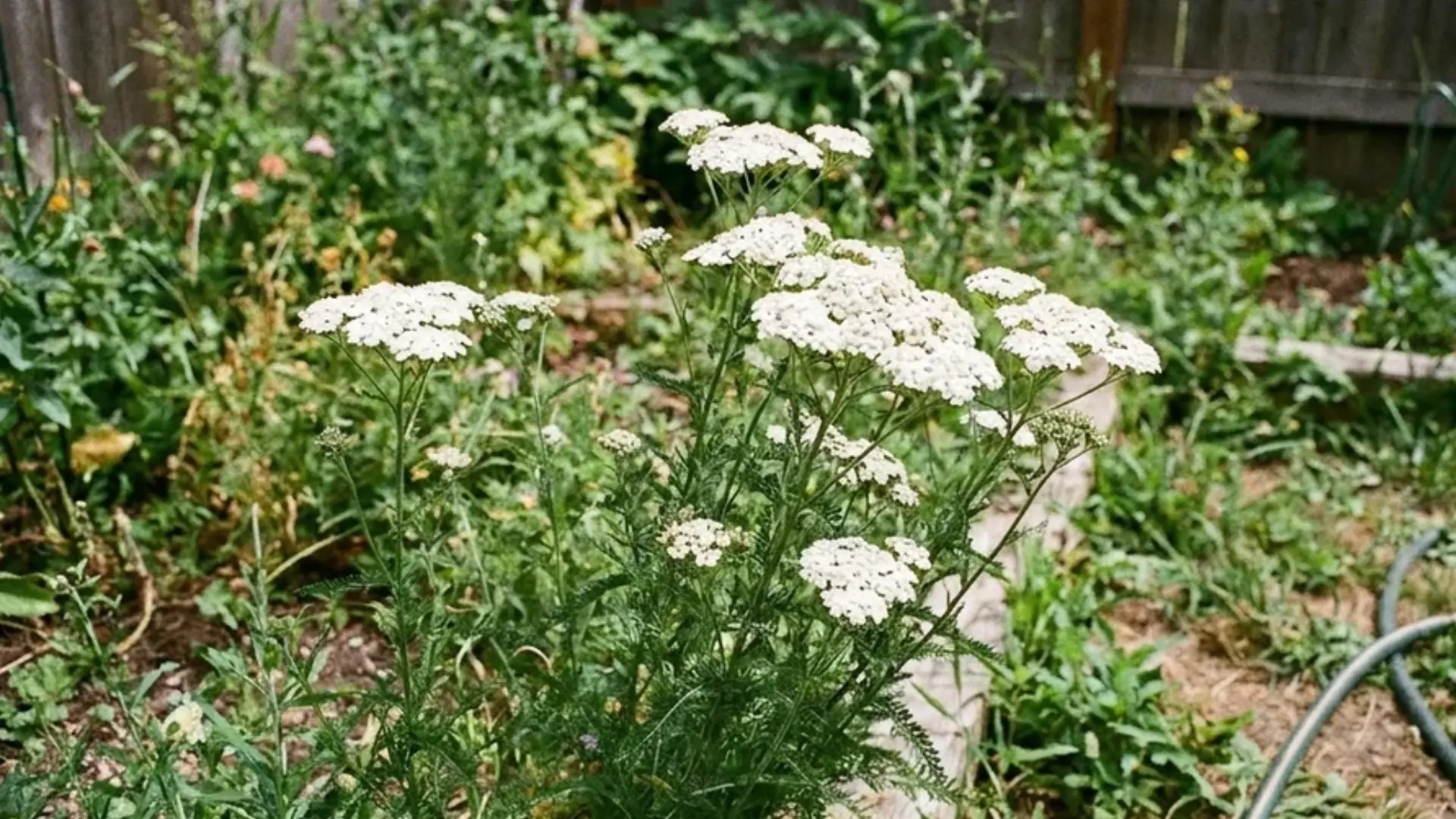
Yarrow’s flat-topped clusters of tiny flowers are a magnet for ladybugs, lacewings, and hoverflies, all reliable predators of cabbage-damaging aphids.
This hardy perennial tolerates poor soil and minimal watering, making it an easy, low-maintenance addition to any cabbage bed.
Yarrow also grows upright without sprawling, so it won’t compete for ground space or shade out cabbage below.
Once established, it returns year after year, offering consistent support for pollinators and pest predators with very little effort required.
34. Sweet Pea
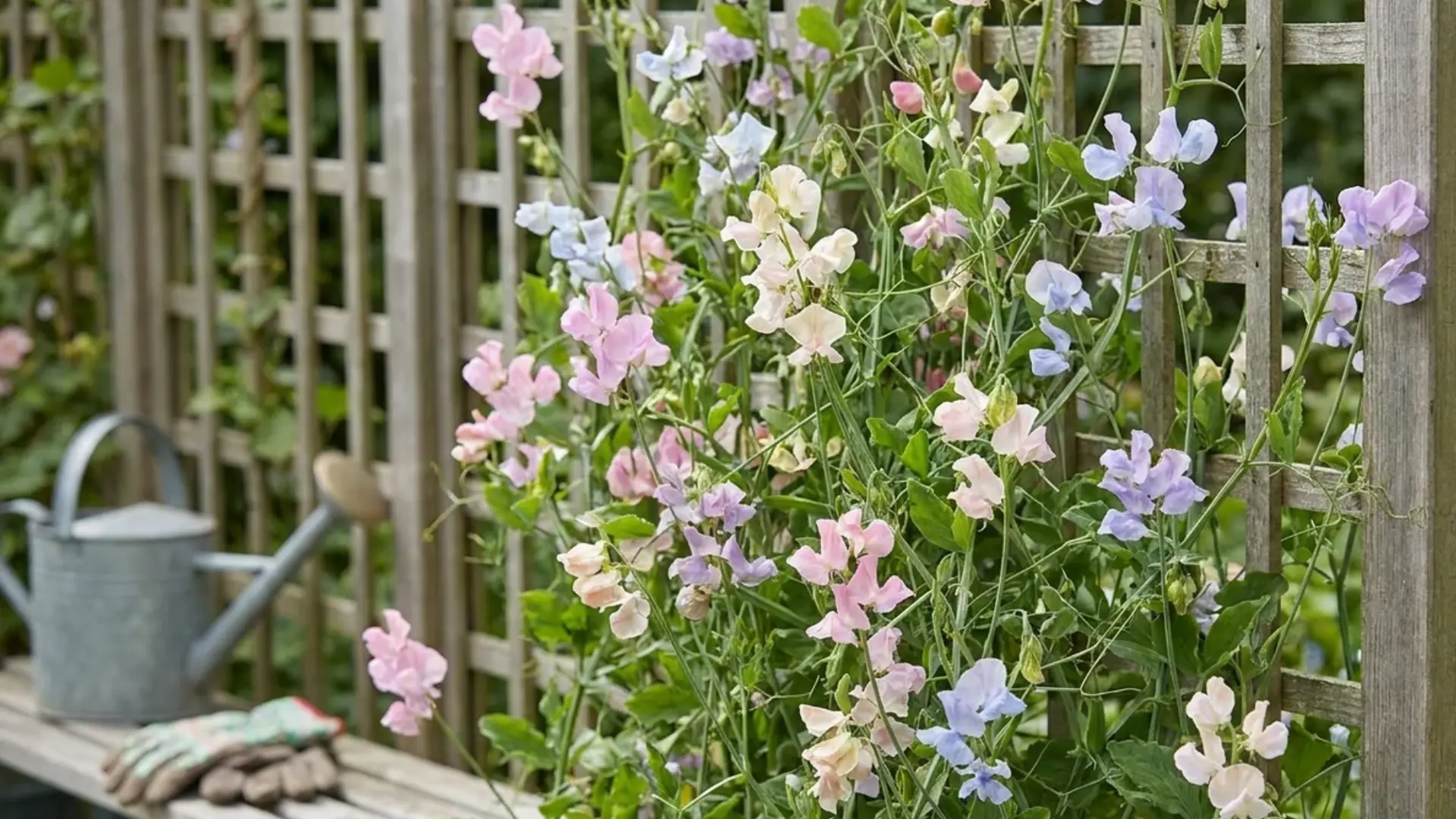
Sweet pea vines climb rather than sprawl, making them a space-efficient flower choice near cabbage rows.
Their fragrant blooms attract pollinators and beneficial insects, while the plant’s nitrogen-fixing roots quietly enrich the surrounding soil, much like their edible pea relatives.
Give sweet peas a trellis or fence, and they will climb up and out of cabbage’s way entirely.
This pairing provides pollinator support and soil enrichment without taking up extra ground space.
35. Geranium
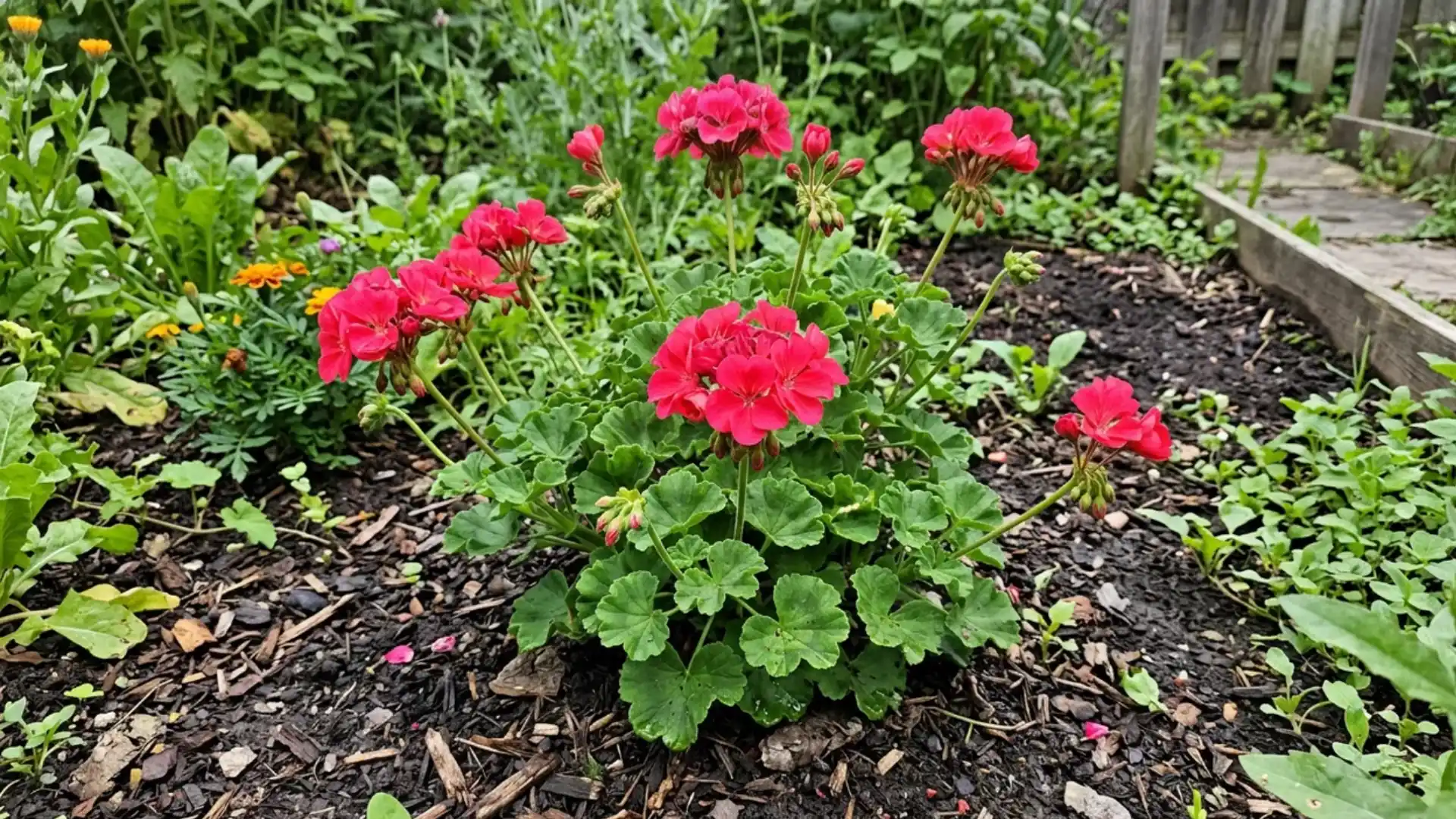
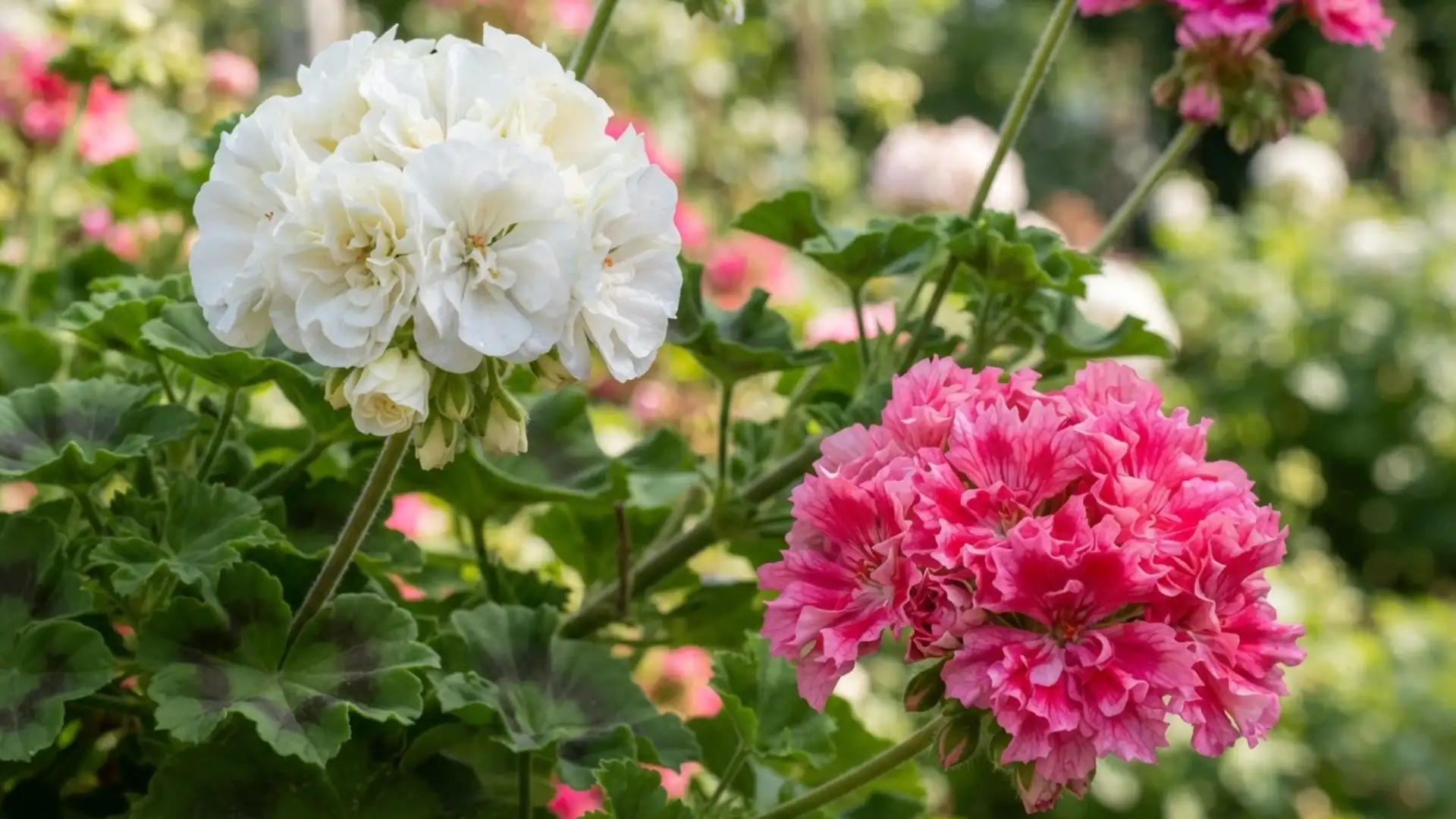
Geraniums, particularly scented varieties, give off a strong aroma that can help confuse cabbage worms and other common pests searching by smell.
Their compact, mounding growth habit fits neatly along borders or between cabbage rows without overwhelming the bed.
Geraniums also tolerate a range of soil conditions, making them forgiving companions for gardeners still dialing in their cabbage bed’s exact needs.
Their steady blooms add color throughout the season while quietly supporting pest deterrence.
36. Petunia
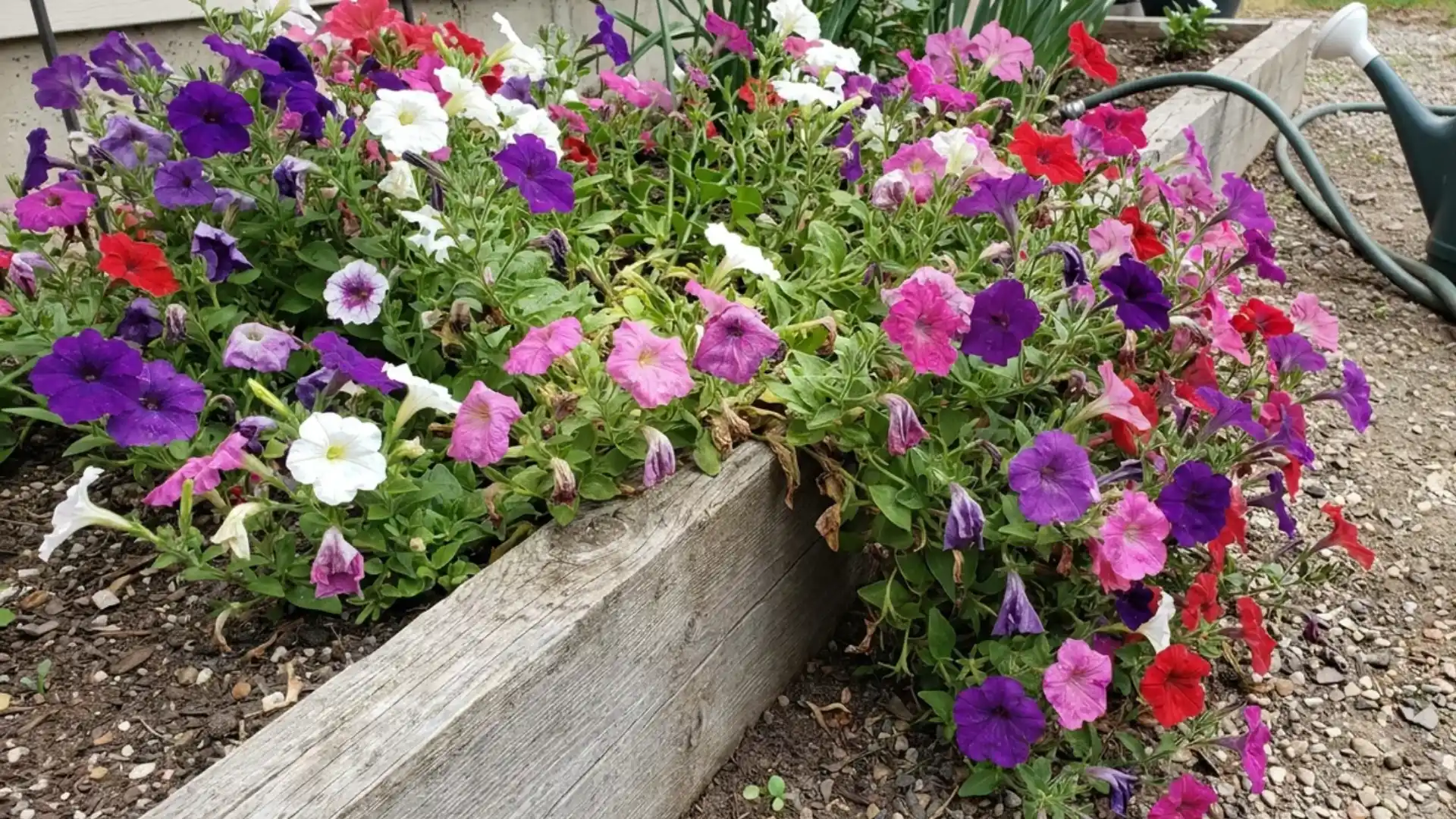
Petunias release a scent that many gardeners find effective at repelling aphids and certain beetles, offering a decorative layer of pest protection.
Their low, spreading habit fills gaps between cabbage plants, helping suppress weeds while adding continuous color through the growing season.
Petunias also tolerate a range of light conditions, making bed placement flexible.
Easy to grow from nursery starts, they require minimal care once established, fitting well into an already busy cabbage garden routine.
37. Chrysanthemum
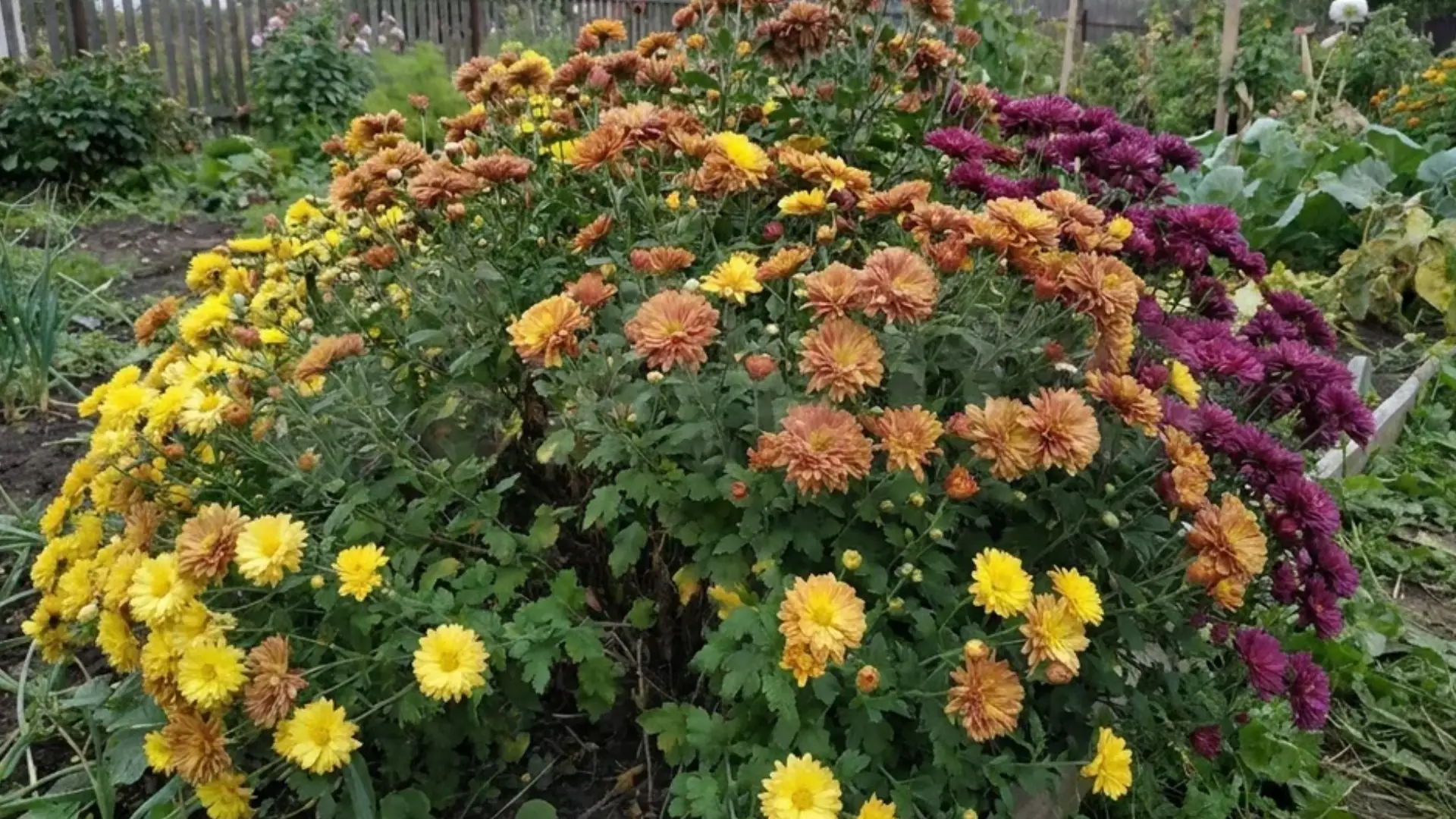
Chrysanthemums contain natural compounds historically used in pest control, and their presence alone can help deter certain insects from settling into the cabbage bed.
Their bushy growth habit works well as a border planting, adding late-season color when many other companion flowers have finished blooming.
Chrysanthemums prefer similar sunny conditions to cabbage, simplifying bed planning.
Since they stay relatively compact, they do not compete significantly for space or nutrients that cabbage needs to fully mature.
38. Dahlia
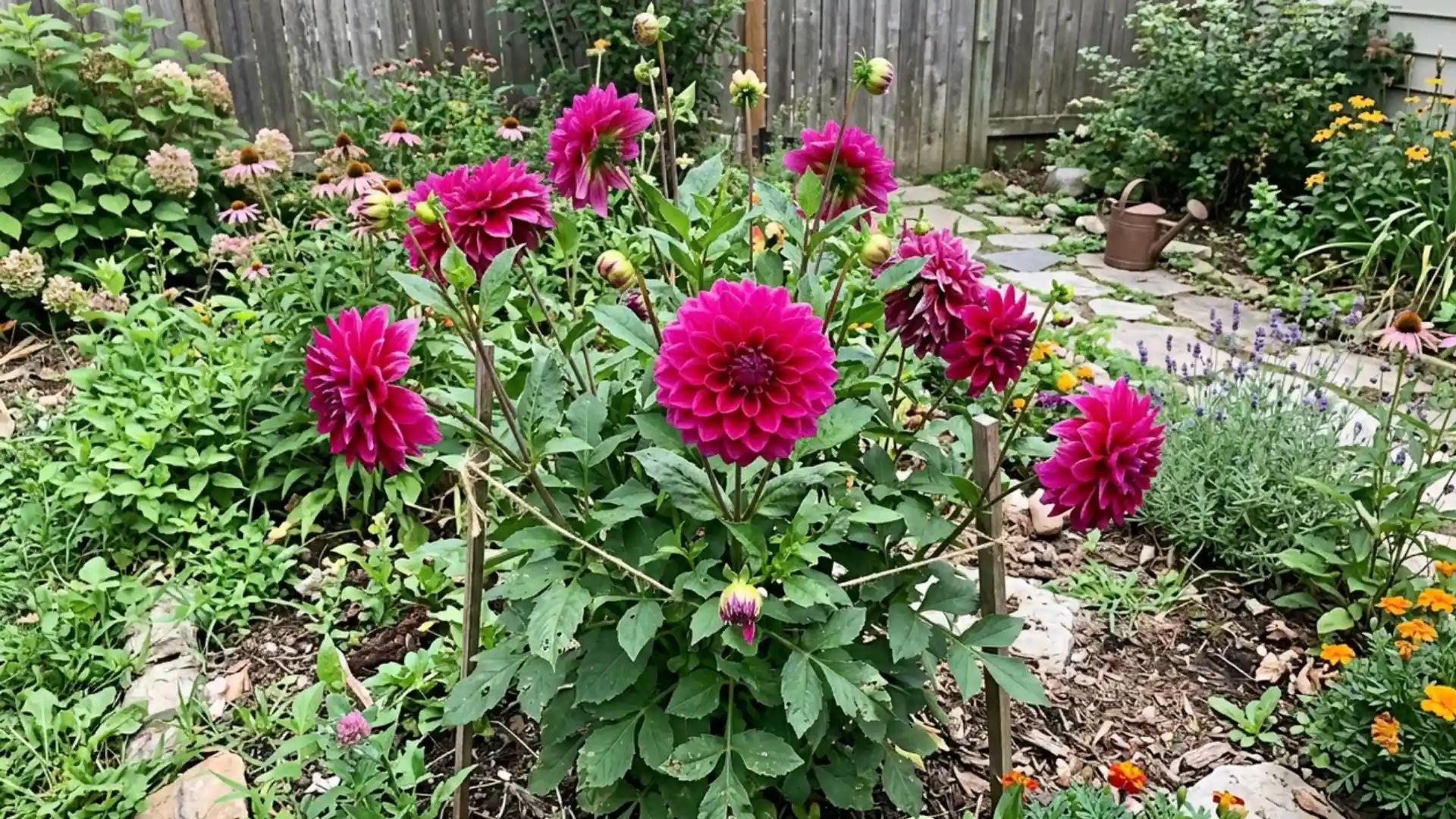
Dahlias bring bold, long-lasting blooms that attract a steady stream of pollinators and beneficial insects throughout the growing season.
Their tall, sturdy stems keep them from sprawling into cabbage rows, preserving garden layout and airflow.
Dahlias do best with consistent watering, which pairs conveniently with cabbage’s own moisture needs.
Planted as a backdrop or border, dahlias add dramatic color while quietly supporting the pest-predator ecosystem your cabbage bed relies on.
Plants That Should Never Be Planted Near Cabbage
These are better off in a different bed entirely, since planting them nearby can slow growth, invite pests, or cause more competition than either crop can afford.
39. Strawberries
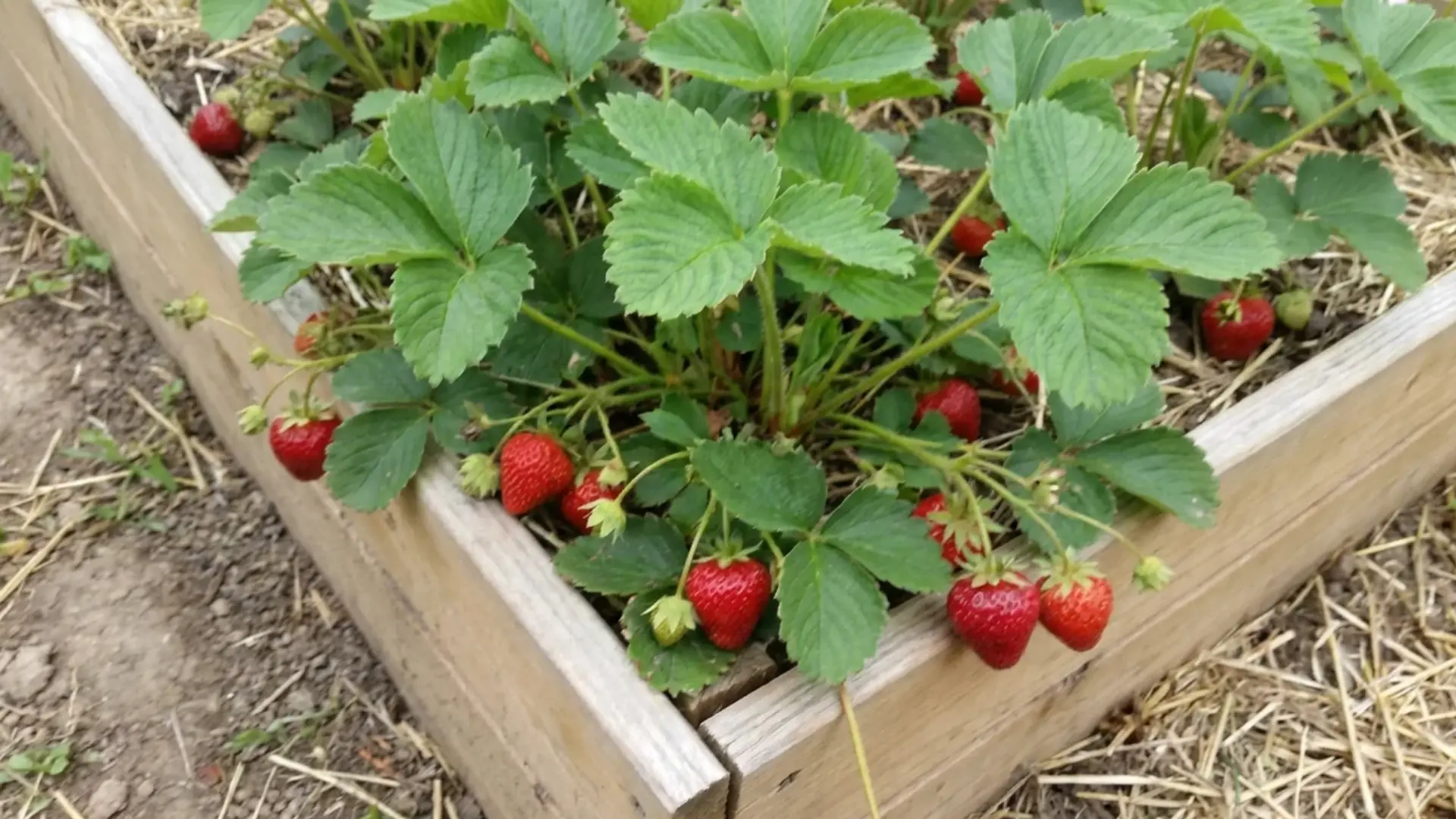
Strawberries and cabbage compete heavily for the same soil nutrients, leaving both plants undernourished if planted too close together.
Cabbage tends to win that competition, stunting strawberry growth and significantly reducing fruit production.
There is also evidence that cabbage releases compounds into the soil that can inhibit strawberry growth over time.
Keep these two in separate beds entirely, since the nutrient drain and chemical interference make this pairing one gardeners consistently regret by midseason.
40. Tomatoes
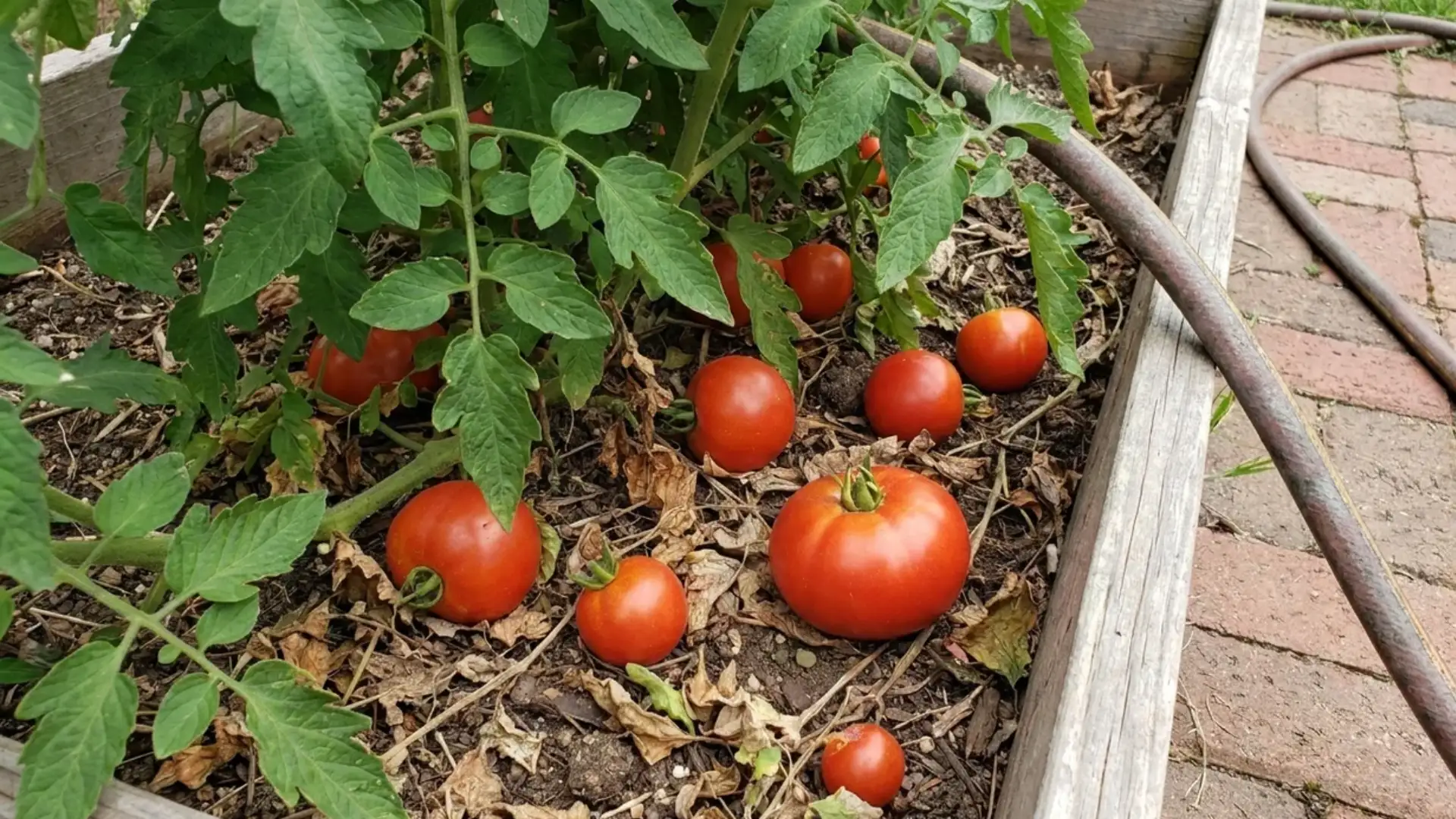
Tomatoes and cabbage rarely thrive side by side since both are heavy feeders competing for the same nitrogen-rich soil.
This shared appetite leaves neither plant with enough nutrients to reach full potential. That nutrient tug-of-war often shows up first as pale, yellowing tomato foliage, a sign worth catching before the harvest takes the hit.
Tomatoes can also attract pests that occasionally cross over and cause problems for nearby cabbage.
Since both crops need slightly different care routines and timing, separating them into different garden beds makes management easier and results noticeably better for both.
41. Grapes
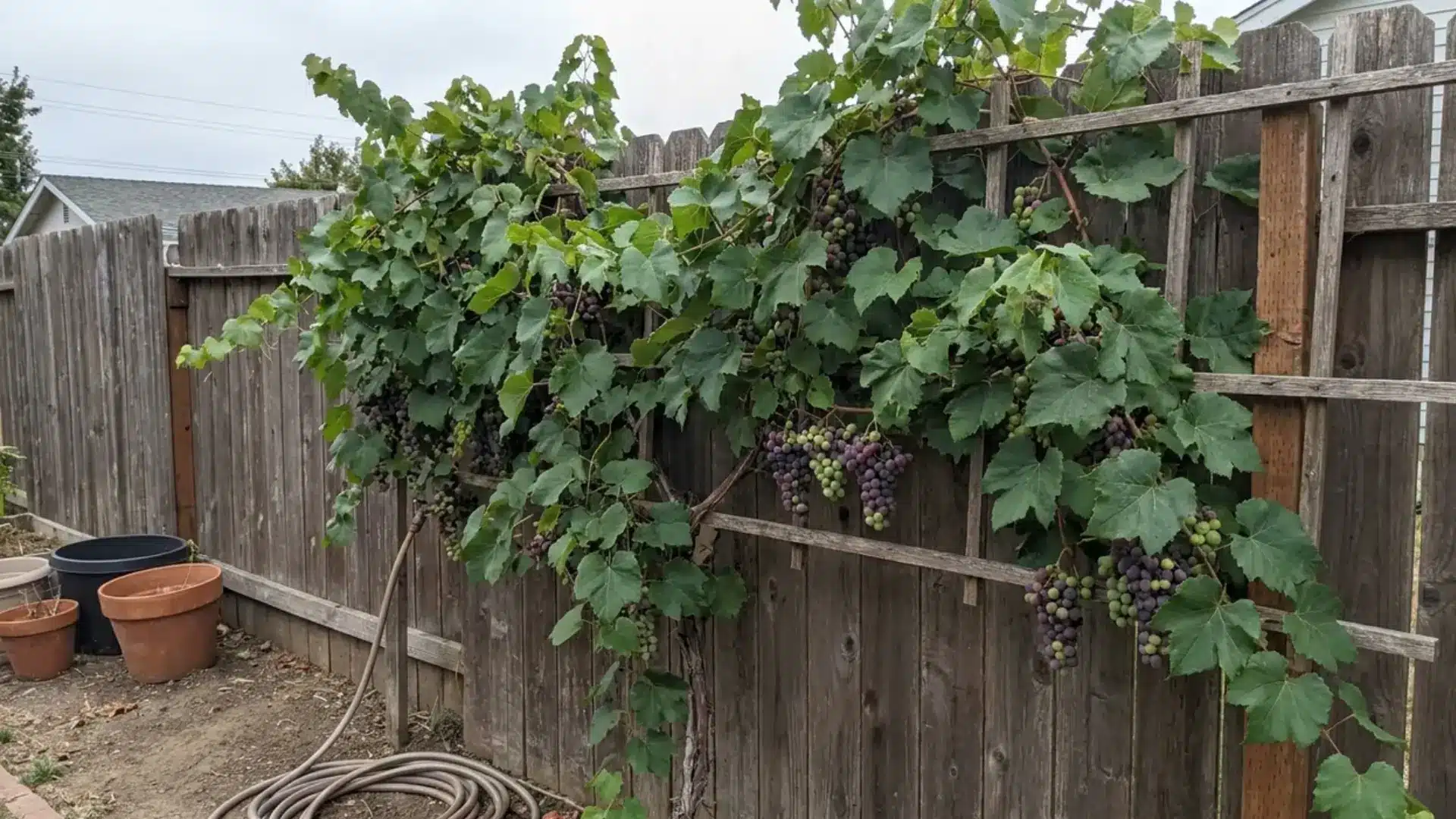
Grapes and cabbage make poor garden neighbors since cabbage can stunt grapevine growth through competitive root behavior and soil nutrient depletion.
Grapevines need consistent, undisturbed root systems to establish properly, and cabbage’s aggressive feeding habits disrupt that stability.
This pairing also complicates garden maintenance, since grapes require trellising and long-term placement while cabbage follows a shorter seasonal rotation.
For most home gardeners, keeping grapes in a dedicated area away from annual vegetable beds leads to better results for both.
Brassicas Together: Good Idea or Bad Idea?
Mostly a bad idea, with a few exceptions. Grouping cabbage with broccoli, kale, or cauliflower concentrates one pest problem instead of spreading risk across different plant families.
- One infestation can sweep through the entire bed at once.
- Treating multiple brassicas together does simplify pest patrols.
- Soil nutrients drain faster since all of them feed heavily on nitrogen.
- Rotating brassicas to a fresh bed each year works better than clustering them.
If space forces the issue, stagger planting dates and add non-brassica buffers between rows.
This one change reduces shared risk while maintaining your existing bed layout.
Companion Planting Layout Ideas for Different Garden Sizes
The right layout shifts depending on how much room you’re working with, not just which plants you pair.
Working out row spacing for your vegetable beds ahead of time makes it much easier to fit companions in without crowding anything out.
- Group cabbage with compact herbs and low growers; skip anything that vines or spreads aggressively.
- Pair one cabbage per large pot with a single companion at the base, avoiding crowding multiple plants.
- Alternate cabbage rows with companion rows instead of mixing everything into one bed.
- Dedicate border rows to pest-deterrent plants and keep cabbage rows separate for easier access.
- Use trellised climbers along fence lines to free up ground space for cabbage without sacrificing yield elsewhere.
Seasonal Companion Planting Plan for Spring and Fall Cabbage
Spring cabbage and fall cabbage call for different partners.
Spring crops need fast pest deterrents since warm weather brings bugs early.
Fall cabbage benefits from cold-hardy companions that withstand frost. Succession planting maintains productivity between harvests. Remove spent spring plants and replace with new fall varieties as temperatures fall.
Cover crops like clover work well in the gap between cabbage cycles, restoring nitrogen before the next planting.
Matching companions to the season, not just to cabbage itself, keeps the whole bed running efficiently year-round.
Companion Planting Mistakes that Reduce Cabbage Growth
Overcrowding is the most common mistake.
Packing companions too tight creates competition instead of cooperation. Ignoring sun requirements ranks second.
Shade-loving herbs planted in full sun struggle and stop pulling their weight.
Letting fast-spreading plants root directly in the bed causes problems too, since runners choke cabbage roots within weeks. Mismatched watering needs cause silent stress on one plant while the other thrives.
Skipping timing matters as well. Companions planted too late miss their protective window entirely.
Small oversights like these quietly undercut an otherwise solid pairing strategy.
Companion Planting vs. Row Covers vs. Organic Pest Control
Each method varies in effort, cost, and speed.
| Method | Setup Effort | Ongoing Cost | Best For |
|---|---|---|---|
| Companion Planting | Moderate, plan once | $10–$20/season for seed packets (reusable if you save seed) |
Long-term prevention |
| Row Covers | Low, quick install | $10–$30 upfront, reusable 2–3 seasons | Blocking flying pests early |
| Organic Pest Control | Low, ready-made | $8–$20/bottle of neem oil or insecticidal soap, often repurchased every few weeks | Fast fix once pests appear |
End Note!
What actually helps is understanding why a pairing works: nitrogen fixation, pest confusion, or smarter use of shared space.
Skip the pairings that sound good but lack any real mechanism behind them. Start small.
Try one or two combinations this season, watch what happens in your own soil, and adjust from there. Your climate, your pests, and your garden layout will always matter more than a generic list ever could.
Track results, keep what earns its place, and drop the rest without guilt.
Frequently Asked Questions (FAQ’s)
Can I Plant Cabbage Next to Broccoli or Other Brassicas?
Not ideally, since shared brassicas spread pests and disease faster through the bed.
How Far Apart Should Companion Plants Be from Cabbage?
Most companions do best 6 to 12 inches from cabbage.
Does Companion Planting Eliminate the Need for Pesticides?
No, but it cuts pest pressure enough that many gardeners skip pesticides entirely.
Can I Use Companion Planting in Raised Beds or Containers?
Yes, tighter spacing actually makes pairings easier to manage.
Do Herbs Need to Flower to Attract Beneficial Insects?
Mostly yes, since blooms are what draw in pollinators and predator insects.