
In my years working with home gardeners and small growers, the same question comes up every season: is the bag of synthetic fertilizer on the shelf actually doing more harm than good?
Fast, convenient, and reliably effective, synthetic fertilizers are the default choice at nearly every garden store and farm supply shop.
But that convenience comes with tradeoffs that rarely make it onto the label.
From soil degradation to water pollution and long-term cost creep, synthetic fertilizer disadvantages are well documented, yet they’re often overlooked until the damage is already visible.
If you’re managing a few acres or tending a backyard vegetable patch, the same question applies: what’s actually going into the soil, and at what cost?
This article breaks down what synthetic fertilizer disadvantages look like in practice, and what you can do to reduce them without giving up on productivity.
Why Synthetic Fertilizer Use Deserves a Closer Look
Synthetic fertilizers changed farming forever. Since their introduction in the early 20th century through the Haber-Bosch process, they’ve helped farmers grow far more food on far less land, supporting a global population that has grown from roughly 2 billion to over 8 billion.
Today, they remain a backbone of commercial agriculture and home gardening alike.
But decades of heavy use have revealed real costs to soil, water, and human health.
For farmers planning next season’s inputs, gardeners tending backyard beds, or policymakers shaping agricultural regulation, understanding these tradeoffs is part of making informed decisions about how food gets grown.
What Are Synthetic Fertilizers

Synthetic fertilizers are nutrient blends manufactured through industrial chemical processes rather than sourced from decomposed plant or animal matter.
They supply plants with concentrated, fast-acting nitrogen, phosphorus, and potassium in precise ratios.
How They Differ from Organic/Natural Fertilizers
Organic fertilizers come from natural sources like compost, manure, or bone meal, releasing nutrients gradually as microbes break them down.
Synthetic fertilizers skip that biological step. They’re chemically processed to be water-soluble and immediately available to plant roots.
That means faster green-up and quicker results, but also less contribution to soil structure and a much higher risk of runoff, since the nutrients aren’t bound to organic matter.
Common Types
Most synthetic fertilizers fall into a handful of well-known categories, each targeting a specific nutrient need:
- Urea: A concentrated nitrogen source made from ammonia and carbon dioxide; widely used but prone to volatilization if left on the soil surface.
- Ammonium Nitrate: Delivers both immediate and slightly slower-release nitrogen, common in commercial crop production.
- Superphosphate/Triple Superphosphate: Supplies phosphorus for root development, though it can affect soil microbial balance over time.
- Potash (Potassium Chloride/Sulfate): Provides potassium for plant strength and disease resistance.
The N-P-K Label Explained
Every fertilizer bag displays three numbers, and knowing what they mean makes label reading far less confusing:
|
Label Position |
Nutrient |
Role in Plant Growth |
|
First Number |
Nitrogen (N) |
Promotes leaf and stem growth and supports healthy green foliage. |
|
Second Number |
Phosphorus (P) |
Encourages strong root development, flowering, and fruit production. |
|
Third Number |
Potassium (K) |
Improves overall plant health, strength, and disease resistance. |
A bag labeled 15-5-10, for example, contains 15% nitrogen, 5% phosphorus, and 10% potassium by weight.
With that foundation in place, it’s easier to see exactly where synthetic fertilizer disadvantages start to show up, beginning with soil health.
Soil Health Disadvantages

Healthy soil is more than dirt holding a plant upright. It’s a living system of organic matter, microbes, and structure that takes years to build and surprisingly little time to damage.
Synthetic fertilizers feed plants quickly, but they often work against this system in ways that aren’t visible until the damage is already underway.
If you’re trying to judge where your own beds fall on that spectrum, it helps to first get a read on what type of soil you’re actually working with, since sandy and clay-heavy ground react to synthetic inputs differently.
How Continued Use Damages Soil
- Organic matter depletion and structural breakdown: Synthetic fertilizers add no organic material, so repeated use weakens soil structure over time, leading to compaction, poor water retention, and higher erosion risk.
- Disruption of beneficial microbes and earthworms: Microbes and earthworms feed on organic matter. Heavy synthetic use shrinks their populations, reducing natural aeration and nutrient cycling that healthy soil depends on.
- Acidification and pH drift: Ammonium-based nitrogen fertilizers gradually lower soil pH with continued use, locking up nutrients like phosphorus and calcium and making them harder for plants to absorb.
- Salt buildup and root burn: Highly concentrated synthetic fertilizers carry a high salt index. Overapplication can draw moisture from roots, causing visible burn or stunted plant growth.
None of these effects happen overnight, which is exactly why they’re easy to overlook.
Left unchecked, they compound, turning soil that once supported strong yields into ground that needs increasingly more input just to perform the same way.
Environmental Disadvantages

Beyond the farm, synthetic fertilizers leave a footprint that stretches from local waterways to the atmosphere.
Nutrient Runoff and Waterway Pollution
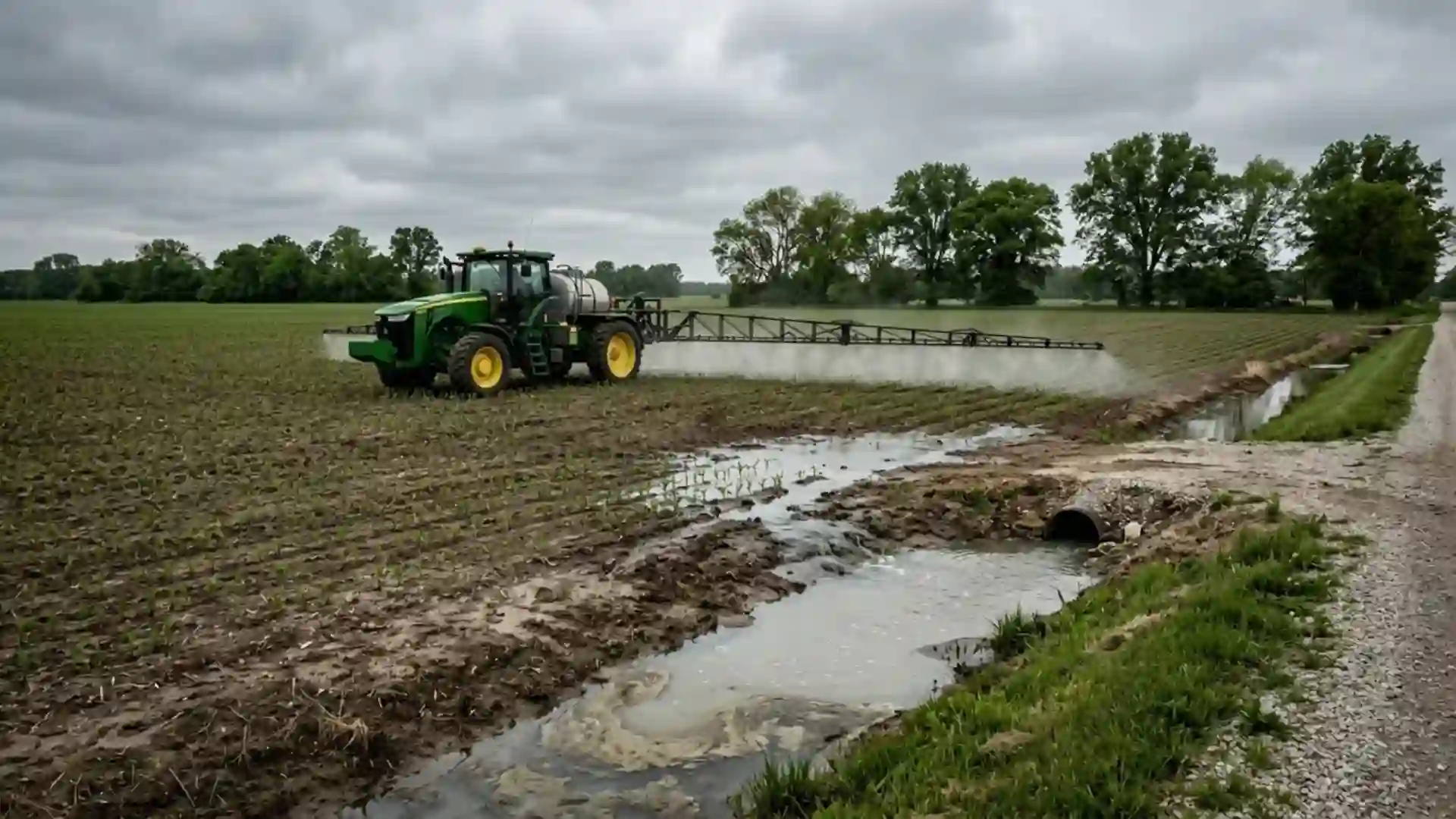
When synthetic fertilizers are overapplied, or it rains soon after application, excess nitrogen and phosphorus wash into nearby streams and rivers. This triggers eutrophication, a process where:
- Nutrient overload fuels rapid algae growth
- Algae blooms block sunlight and consume oxygen as they decompose
- Oxygen-depleted water suffocates fish and other aquatic life
The result is water that looks green and murky, in ecosystems that struggle to recover.
Real-World Example: The Gulf of Mexico Dead Zone
Nitrogen runoff from farms across the Mississippi River basin flows into the Gulf of Mexico, creating one of the largest dead zones on Earth.
Each summer, oxygen levels drop so low that fish, shrimp, and crabs are forced to flee or die.
This recurring event shows eutrophication isn’t a small-scale risk- it’s a documented, large-scale consequence of decades of fertilizer runoff reaching a single body of water.
Greenhouse Gas Emissions from Production
Manufacturing synthetic nitrogen fertilizer relies on the Haber-Bosch process, which converts atmospheric nitrogen into ammonia using extremely high heat and pressure.
This process consumes significant natural gas as both fuel and raw material, releases substantial carbon dioxide during production, and accounts for a meaningful share of agriculture’s total carbon footprint.
Even before fertilizer reaches a field, its production has already contributed to climate change.
Nitrous Oxide Release and Air Quality Impact
Once applied to soil, synthetic nitrogen fertilizers don’t just feed plants- a portion converts into nitrous oxide, a greenhouse gas roughly 300 times more potent than carbon dioxide.
This happens through microbial processes in the soil that release excess, unused nitrogen.
Beyond climate impact, ammonia emissions from fertilized fields also degrade local air quality, affecting nearby communities and contributing to smog formation in agricultural regions.
Health Risks Linked to Synthetic Fertilizers

Environmental damage isn’t the only concern- synthetic fertilizer use also carries direct implications for human health, particularly in agricultural communities.
- Nitrate contamination in drinking water: Excess nitrogen can leach into groundwater, contaminating wells and water supplies near farmland.
- Risks for infants and pregnant women: High nitrate levels are linked to methemoglobinemia (“blue baby syndrome”) and have been studied in connection with pregnancy complications.
- Occupational exposure for farm workers: Regular handling exposes workers to respiratory irritation, skin contact issues, and long-term chemical exposure risks.
These risks reinforce why responsible application and water testing matter as much as soil management itself.
This section covers general health risk research and is for informational purposes only. It isn’t medical advice. Anyone with concerns about well water or nitrate exposure should consult a doctor or have their water tested by a certified lab.
Economic and Long-Term Cost Disadvantages
Synthetic fertilizers look cost-effective upfront, but the long-term financial picture tells a different story.
Dependency, hidden expenses, and unpredictable pricing can quietly erode the savings farmers expect.
|
Cost Factor |
What Happens |
Long-Term Impact |
|
Rising Dependency & Diminishing Returns |
Soil becomes increasingly dependent on synthetic inputs as natural fertility declines. |
Higher fertilizer use is needed to maintain yields, increasing long-term costs. |
|
Hidden Costs |
Soil testing, pH correction, and remediation become necessary over time. |
Additional expenses and gradual yield decline that aren’t reflected in upfront costs. |
|
Price Volatility of Synthetic Inputs |
Fertilizer prices fluctuate with energy and natural gas costs. |
Makes budgeting more difficult during supply disruptions and price spikes. |
Common Application Mistakes That Make Disadvantages Worse
Most of the damage described above isn’t caused by using synthetic fertilizer itself. It’s caused by how it gets applied. A few recurring mistakes make every disadvantage on this list worse:
- Applying before heavy rain: fertilizing right before a forecasted storm sends most of the nutrients straight into runoff instead of into the soil.
- Guessing instead of testing: applying a standard rate without a soil test almost always means overapplying nitrogen, which drives both salt buildup and runoff.
- Skipping the water-in step: granular fertilizer left dry on the surface is more prone to nitrogen loss into the air and to burning grass or foliage it touches directly.
- Fertilizing on a fixed calendar instead of by growth stage: plants absorb nutrients efficiently only during active growth. Feeding dormant or stressed plants wastes product and adds to soil salt levels with no growth benefit.
Correcting these four habits alone removes a large share of the runoff and salt-related damage tied to synthetic fertilizer, without changing the product itself.
Crop and Regional Variability in Impact
Not all farms experience synthetic fertilizer disadvantages equally. Climate and crop type both shape where the risks concentrate most.
High-Rainfall vs. Arid Region Differences
High-rainfall regions face greater runoff risk, as excess water carries unabsorbed nutrients into nearby streams and groundwater faster.
Arid regions, by contrast, see less runoff but more salt accumulation, since limited rainfall can’t flush excess salts away from the root zone, increasing burn risk over time.
Crop Types More Vulnerable to Overfertilization
Some crops respond to excess nutrients far more severely than others:
- Leafy greens: Prone to nitrate accumulation in edible leaves when overfertilized
- Root vegetables: Sensitive to salt buildup, affecting texture and growth
- Fruiting crops (tomatoes, peppers): Excess nitrogen can boost foliage growth at the expense of fruit yield
- Legumes: Naturally fix nitrogen, so added fertilizer often goes to waste and increases runoff risk
How to Reduce the Negative Impact of Synthetic Fertilizers
Cutting out synthetic fertilizers entirely isn’t realistic for most farms, but reducing their harm is. A few practical adjustments can lower the risks covered above while keeping yields stable.
|
Strategy |
What It Involves |
Why It Helps |
|
Precision Application & Soil Testing |
Test the soil and apply only the nutrients needed. |
Reduces overapplication, runoff, and salt buildup. |
|
Crop Rotation & Cover Cropping |
Rotate crops and grow cover crops between seasons. |
Replenishes nutrients naturally and improves soil structure. |
|
Blending Synthetic & Organic Inputs |
Combine synthetic fertilizers with compost or manure. |
Provides quick nutrients while supporting long-term soil health. |
|
Timing & Slow-Release Fertilizers |
Apply fertilizer at key growth stages using slow-release products. |
Minimizes nutrient loss and improves fertilizer efficiency. |
None of these require abandoning synthetic fertilizers altogether- they simply make their use smarter, reducing long-term damage while still supporting healthy, productive crops.
Moving Toward Organic Alternatives- What It Looks Like in Practice
Reducing synthetic fertilizer use isn’t just a mindset shift- it involves specific products and a realistic timeline.
Knowing what to switch to, and how long the transition actually takes, makes the process far less intimidating for farmers and gardeners alike.
Organic Fertilizer Options Worth Considering
Several natural alternatives can replace or supplement synthetic inputs, each suited to different needs:
- Compost: Improves structure and feeds soil life
- Worm castings: Nutrient-rich with no burn risk
- Fish emulsion: Quick nitrogen boost for leafy growth
- Bone meal: Supports root and flower development
- Cover crops (clover, vetch): Fix nitrogen naturally between seasons
Transitioning and Recovery Timeline
Switching doesn’t happen overnight. Reducing synthetic use gradually, adding compost, and mulching helps soil life recolonize without shocking plants.
If you’re building or refreshing a bed as part of that transition, layering in compost the right way from the start gives soil microbes a head start instead of leaving them to catch up later.
Most soil shows visible improvement, better texture, more earthworm activity, and steadier growth, within one to two growing seasons of consistent organic practices.
Synthetic vs. Organic Fertilizer- Side-by-Side Comparison
With the disadvantages covered so far, it helps to step back and see how synthetic fertilizers actually stack up against organic alternatives across the factors that matter most: speed, cost, soil impact, and environmental risk.
|
Factor |
Synthetic Fertilizer |
Organic Fertilizer |
|
Nutrient Release |
Fast-acting; results in days |
Slow-release; works over weeks |
|
Soil Health |
Can reduce soil quality over time |
Improves soil structure and fertility |
|
Microbial Activity |
Heavy use may suppress beneficial microbes |
Supports beneficial soil microbes |
|
Environmental Impact |
Higher runoff risk and emissions |
Lower runoff risk and smaller environmental footprint |
|
Best For |
Fast crop growth and commercial farming |
Long-term soil health and sustainable gardening |
Neither option is universally better. The right choice depends on the timeline, budget, and soil goals a farmer or gardener is working with.
Final Thoughts!
Synthetic fertilizers aren’t going anywhere soon, and for good reason. They’ve helped feed billions of people efficiently.
But the disadvantages covered here, from soil degradation and water pollution to health risks and rising costs, are too significant to ignore.
The better approach isn’t necessarily abandoning synthetic fertilizers altogether, but using them with intention: testing soil, timing applications, and pairing them with organic practices where it makes sense.
Have you switched part of your garden or farm over to organic inputs, or are you still relying mostly on synthetic fertilizer? Share what’s worked (or hasn’t) in the comments.
Frequently Asked Questions(FAQ’s)
Can Synthetic Fertilizers Be Used Safely in Home Gardens?
Yes, following label instructions, watering thoroughly after application, and avoiding overuse significantly minimize risks like root burn and nutrient runoff.
Why Do Farmers Still Prefer Synthetic Fertilizers Despite the Risks?
They offer predictable nutrient ratios, faster results, and lower upfront costs, making them practical for large-scale, time-sensitive commercial farming operations.
Does Rain Right After Fertilizing Increase Runoff Risk?
Yes, heavy rainfall soon after application washes unabsorbed nutrients into nearby waterways before plants have time to absorb them.
Are There Government Regulations on Synthetic Fertilizer Use?
Many countries regulate application rates and timing near water bodies, though enforcement and strictness vary significantly by region and crop type.




2 Responses
Thanks so much for opening up our mindset, most farmers are dieing in silent with the costs they incur in synthetic inputs without them understanding the negative consequences, IPM, IDM, ISM will help reduce the incidence, And continuous unlocking of the farmers minds to gradually switch to Organic farming Thus promoting sustainability
So educative to some people like me who really practice and passionate on organic production farming 😜