You’ve probably crouched down, picked up a long, slender seed pod off the ground, and thought, wait, which locust tree even dropped this?
It’s a surprisingly common moment, and one that’s worth getting right.
These two trees look deceptively similar on the surface, but they behave very differently in a landscape, and the pods are honestly one of the easiest places to start telling them apart.
Knowing what you’re looking at matters for your garden, your livestock, and especially if you’re dealing with a tree that’s quietly taking over more space than you gave it permission to.
What is a Black Locust Tree?
Black locust, or Robinia pseudoacacia, is native to the Appalachian region but has spread across much of North America. It grows tall and narrow with deeply furrowed, rope-like bark that’s pretty hard to miss up close.
Its pods are flat, smooth-edged, and papery thin, usually carrying around four to eight seeds inside.
They run somewhere between two and four inches long and tend to drop and persist through fall into winter, often blanketing the ground long after the leaves are gone.
If the pod feels almost like dried parchment in your hand, you’re likely looking at black locust.
What is a Honey Locust Tree?
Honey locust, or Gleditsia triacanthos, is native to central North America and is widely used in landscaping for its airy canopy and tough adaptability.
It comes in thorned and thornless varieties, though wild ones often have intimidatingly large thorn clusters along the trunk.
The pods are where it gets really distinctive. They’re long, thick, twisted, and often curved or spiraled, sometimes reaching over a foot in length.
Inside sits a sticky, sweet pulp with seeds embedded throughout. They tend to drop in late fall and can linger on the ground well into winter, looking almost like dark, leathery ribbon candy.
Key Differences Between Black Locust and Honey Locust Pods
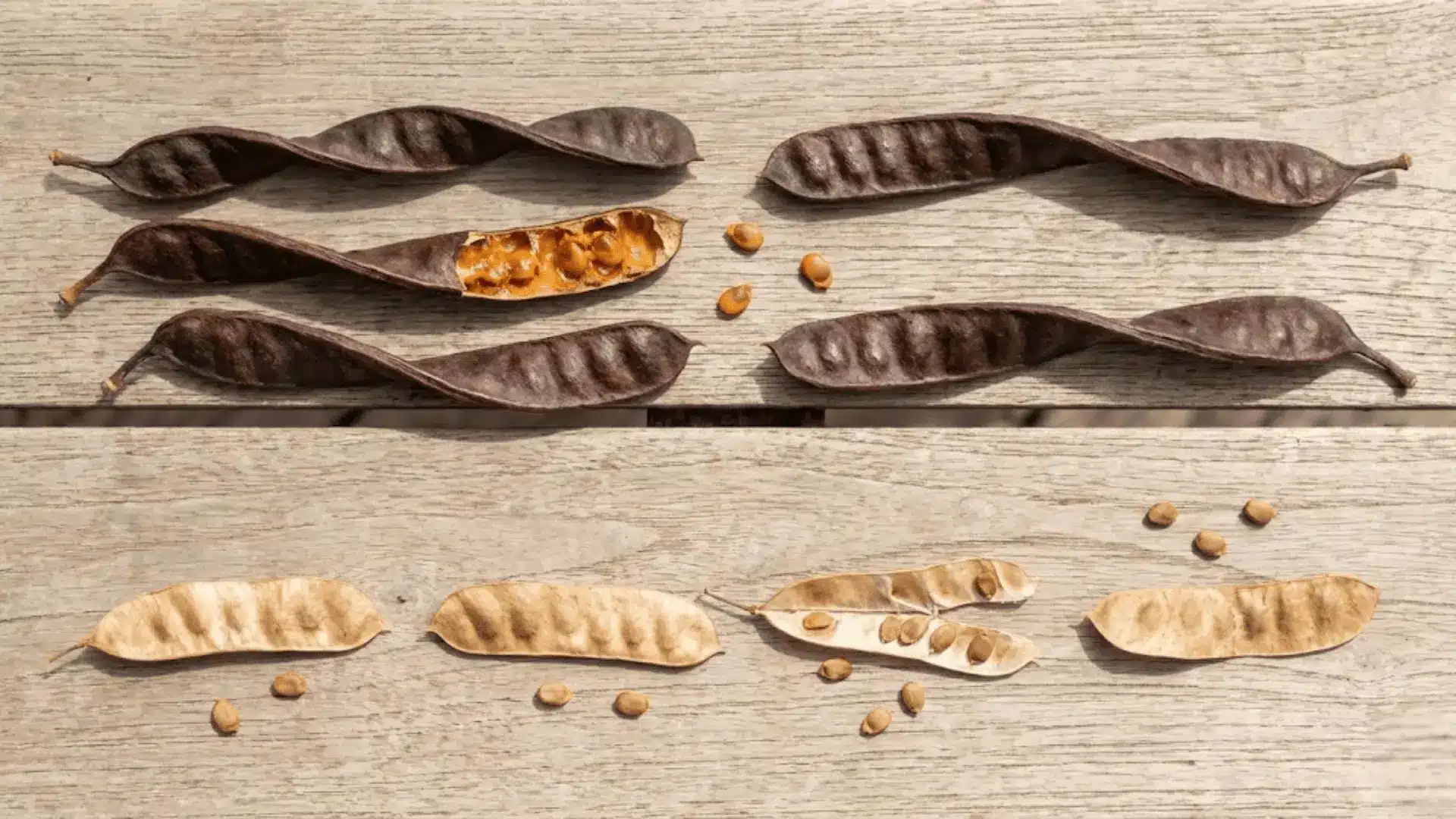
Once you hold both pods side by side, the differences are hard to unsee. Here’s a closer look at what actually sets them apart.
1. Size
Honey locust pods typically range from 12 to 18 inches long, sometimes even longer, while black locust pods stay between 2 and 4 inches.
That’s a significant difference, and honestly, one of the easiest first clues when you find pods on the ground. If it’s long enough to drape over your hand, you’re almost certainly looking at honey locust.
2. Shape and Texture
Black locust pods are flat, thin, and papery, the kind that crinkle when you squeeze them. Honey locust pods are thick, leathery, and often twisted or curved along their length in a way that makes them look almost sculpted.
Running your fingers along one versus the other is genuinely one of the fastest ways to tell them apart without needing to know anything else.
3. Interior Contents
Crack open a honey locust pod, and you’ll find a sticky, sweet-smelling pulp cushioning around 12 to 14 seeds inside, something that genuinely surprises most people the first time.
Black locust pods are dry with 4 to 8 seeds in a papery shell. Wildlife seek honey locust pods for pulp, a useful clue for observing animal activity.
4. Thorns on the Tree
Black locust has small, paired thorns around half an inch long, sitting neatly at the base of each leaf, easy to miss if you’re not looking closely.
Honey locust in its wild form is a completely different story, with branched thorns reaching up to 3 inches or longer, growing in aggressive clusters directly from the trunk. Once you’ve seen them, you won’t confuse the two trees again.
Toxicity & Safety Considerations
This is one section worth pausing on before you make any decisions about the trees on your property.
Knowing which locust you’re dealing with could genuinely protect your animals, especially during the fall when locust pods and cottonwood fluff cleanup tend to hit at the same time.
Black Locust
Black locust is the one to be more careful around, especially if you have animals that graze or roam freely near it.
- The bark, leaves, and seeds all contain robin, a toxic protein harmful to livestock, horses, and pets.
- Even small amounts can trigger symptoms like weakness, labored breathing, and gastrointestinal distress.
- Horses are particularly vulnerable and have been fatally poisoned by chewing on black locust bark.
- Fallen pods and leaves should be cleared from areas where animals graze.
Honey Locust
Honey locust sits on the friendlier end of the spectrum, though it still comes with a few things worth knowing.
- Generally considered far less toxic than black locust across most of its parts.
- The sweet pulp inside the pods has historically been used as supplemental livestock feed.
- Wild varieties with large thorns pose a physical safety risk to grazing animals.
- Moderation still matters since overconsumption of the pods can cause digestive upset in some animals.
Uses of Each Tree
Both trees bring something genuinely useful to the table, just in very different ways depending on what you’re working with.
| Feature | Black Locust | Honey Locust |
|---|---|---|
| Primary Use | Timber and outdoor construction | Ornamental landscaping |
| Wood | Exceptionally rot-resistant | Less prized for timber |
| Best For | Fence posts, decking, outdoor structures | Shade trees, urban planting |
| Environmental Role | Nitrogen-fixer, improves soil | Erosion control, land stabilization |
| Landscaping Appeal | Fragrant white spring flowers | Airy canopy; filters light beautifully |
Seasonal Identification Tips
Locust trees give you different clues depending on the time of year, and knowing where to look each season makes identification a lot more reliable.
It pairs well with a broader understanding of tree seed pod identification if you’re still getting comfortable with it.
- Fall is the easiest time to identify pods since both trees drop them in the late season, and they’re fresh, intact, and easy to compare.
- In winter, honey locust pods persist on the ground longer and are hard to miss given their size, while black locust pods break down faster.
- Spring and summer leaves tell a clear story, too; both have compound leaves, but honey locust leaflets are smaller and more delicate-looking.
- Bark is a reliable year-round identifier; black locust has deeply furrowed, rope-like ridges, while honey locust bark is flatter with smaller plates.
- Wild honey locust trunks often have dramatic, branched thorn clusters that make identification almost instant, even from a distance.
Once you start layering these seasonal cues together, you’ll find yourself identifying these trees almost automatically without needing to wait for pods at all.
The Bottom Line
Once you know what you’re looking at, telling black locust pods vs honey locust pods apart starts to feel almost second nature.
Every twisted, leathery pod and every flat, papery one tells a little story about the tree it came from and how it fits into the landscape around it.
These trees have so much more going on than most people realize, and noticing those details is honestly one of the quiet pleasures of spending time outdoors.
If this field guide helped you finally figure out what’s growing in your yard, drop a comment below and tell us what you found!