Roses have always carried something beyond beauty; they hold moments we want to preserve.
I’ve learned this through years of tending gardens and arranging blooms, watching how some fade within days while others linger for weeks.
The difference rarely comes down to luck. It lives in the soil we choose, the angle of our scissors, even the water temperature in our vases. Each rose tells us what it needs if we know how to listen.
This guide explores the quiet rhythms of rose care, from the garden bed where stems first emerge to the crystal vase on your windowsill, uncovering why some blooms endure, and others falter before their time.
How Long Do Roses Typically Last?
The lifespan of a rose shifts with its environment. Cut roses brought home from the market usually grace us with 5-7 days, though freshness at purchase and room temperature quietly shape this timeline.
In a vase with attentive care, that window stretches to nearly two weeks; the water quality and how we trim the stems become surprisingly crucial.
Without water, cut roses begin their decline within hours, making timing essential for events and celebrations.
Garden roses behave differently altogether, blooming on their stems for one to two weeks while drawing nourishment from roots and soil, their endurance tied to variety and the weather’s temperament.
If you’re growing roses from the ground up, understanding which mulch works best for flower beds can help maintain the moisture and soil quality that keeps blooms thriving longer.
Key factors:
- Stem preparation extends vase life significantly
- Temperature and humidity accelerate or slow fading
- Garden varieties outlast cut stems when left rooted
Key Factors That Affect Rose Longevity
Understanding what influences rose lifespan turns care from guesswork into intention. These elements work together, each one quietly supporting or undermining the bloom’s vitality.
| Factor | What Matters | Why It Affects Longevity |
|---|---|---|
| Freshness at Purchase | Firm petals, vibrant color, tight buds | Fresh roses hold more stored energy and moisture for extended resilience |
| Temperature & Humidity | Cooler spaces (60–70°F), away from direct sun | Heat accelerates petal transpiration, causing premature wilting |
| Water Quality | Filtered or room-temperature tap water | Bacteria and minerals block stem pathways, starving petals of hydration |
| Vase Cleanliness | Thoroughly washed, residue-free vases | Bacterial films create environments where stem rot thrives |
| Rose Variety | Spray, long-stem, or garden roses | Petal density and stem structure determine post-cut sustainability |
I’ve noticed that the smallest shifts, like switching to filtered water or choosing a genuinely clean vase, often make the most dramatic difference.
The same principles of attentive care apply across flower varieties; sweet pea flowers respond just as gracefully to thoughtful nurturing.
Roses reward attention with time!
How to Make Roses Last Longer?
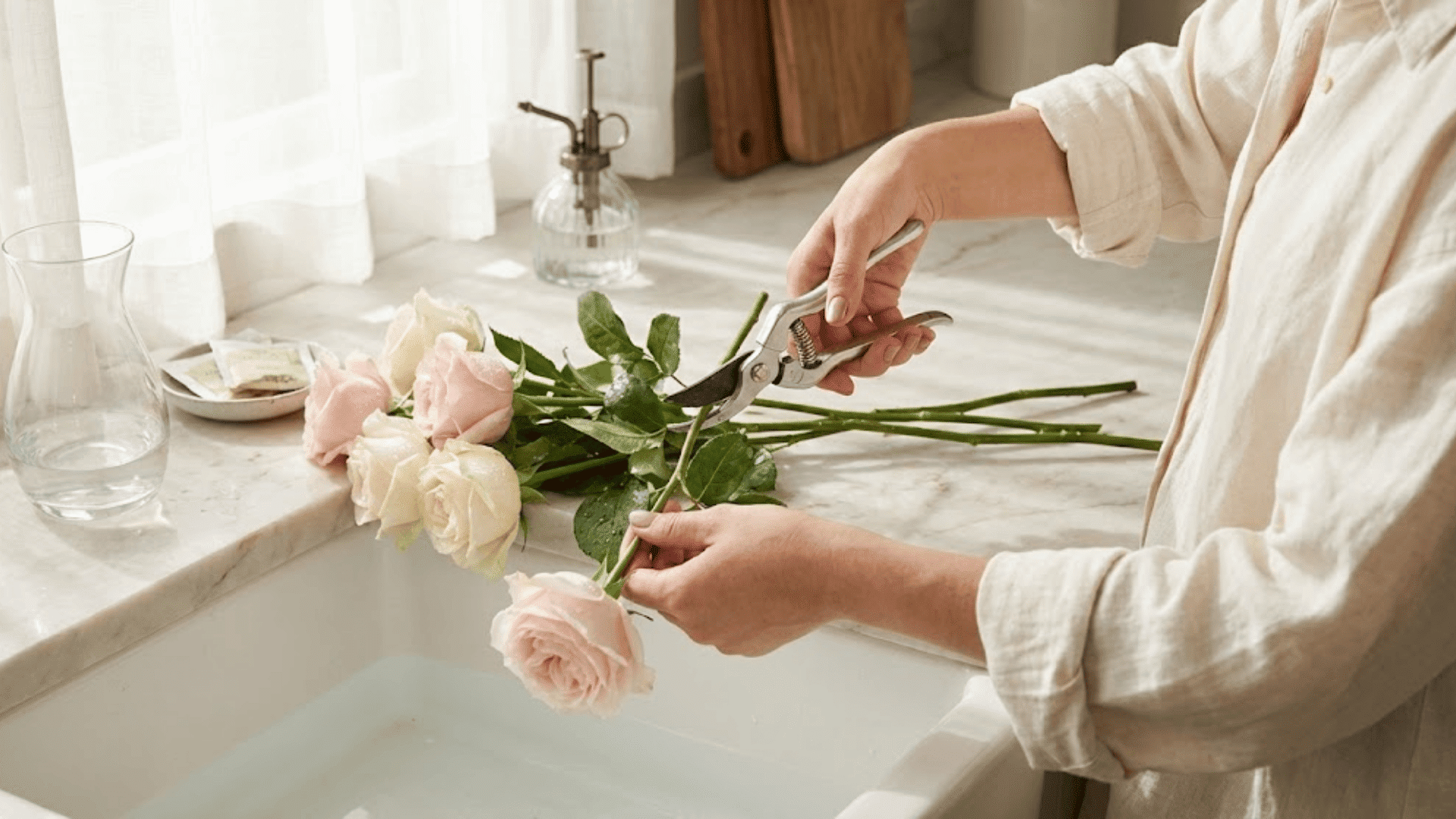
These practices have shaped how I approach every arrangement. They’re not rigid rules but rhythms that roses respond to, small gestures that accumulate into weeks of beauty.
1. Start With a Clean Vase
I always begin here, even when I’m tempted to skip it. A quick scrub with dish soap removes invisible residue, but for stubborn buildup, a diluted bleach solution works wonders. Rinse thoroughly afterward.
Think of it as preparing clean soil before planting. The vase becomes the rose’s entire world, and bacteria from previous arrangements can cut days from its lifespan before you’ve even added water.
2. Trim the Stems Properly
Cut at a 45-degree angle, removing about an inch from the bottom. This angle increases the surface area for water absorption. I still remember learning the underwater cutting technique during my early greenhouse days.
It felt unnecessary at first, but air bubbles truly do block stem pathways. Now it’s second nature. The water flows uninterrupted, reaching every petal with the hydration it needs.
3. Remove Lower Leaves
Any foliage sitting below the waterline invites decay. I strip leaves from the lower third of each stem, leaving the upper greenery intact for visual balance.
It takes an extra minute, but submerged leaves release bacteria that cloud the water and shorten bloom life dramatically. The stems stay cleaner, the water stays fresher, and the roses seem to breathe easier in their vase.
4. Use Flower Food
Those little packets contain sugar for energy, biocide to fight bacteria, and citric acid to balance pH. If you’ve run out, mix a teaspoon of sugar, a few drops of bleach, and a squeeze of lemon juice into lukewarm water.
A florist I consulted with years ago told me, “Commercial or homemade, it doesn’t matter as long as you’re feeding them something.” She was right. Both formulas extend vase life when used consistently.
5. Change Water Regularly
Every day or two, I refresh the water completely and add new flower food. Stale water becomes a breeding ground for microbes that clog stems. It feels like a small ritual now, this daily tending.
The roses respond visibly, their petals staying supple and colors holding true longer than they would in neglected water that’s gone murky and stale.
6. Keep Roses Cool
Roses prefer temperatures between 65 and 72°F, away from direct sunlight, heating vents, or even the warmth radiating from electronics. Heat stress causes petals to dry and curl at the edges.
I’ve seen this play out countless times in client homes where a beautiful arrangement wilts prematurely simply because it sat near a sunny window. The difference between a sunny spot and a shaded corner can mean three extra days of blooms.
7. Mist the Petals
A light spray each morning mimics dew, hydrating petals from the outside while the stem draws water from within. Don’t drench them, just a gentle mist that settles on the surface.
This works especially well in dry climates or air-conditioned rooms where humidity drops. The petals stay plump and velvety instead of developing that papery texture that signals decline.
8. Refrigerate Overnight
Florists do this routinely, and I’ve adopted it for arrangements I particularly want to preserve. Before bed, move your roses into the refrigerator, away from fruit that releases ethylene gas. The cold slows respiration and aging.
By morning, they look revived, their stems firm and colors deepened. It’s not necessary every night, but before an event or when you notice early wilting, this trick buys precious time.
How to Revive Wilting Roses?
Even with careful attention, roses sometimes falter. I’ve rescued countless arrangements that seemed beyond saving, and the methods below have proven remarkably effective when applied promptly.
Wilting often stems from blocked water pathways or dehydration rather than true death. When I notice drooping heads or soft stems, I move quickly.
These revival techniques work best within the first day of wilting, before cellular damage becomes irreversible.
Revival Techniques
Each method targets a specific cause of decline, whether air bubbles or severe dehydration.
| Method | When to Use | How It Works |
|---|---|---|
| Recut the Stems | First sign of wilting | Remove 1-2 inches at a 45-degree angle underwater to clear blockages and restore water flow |
| Warm Water Submersion | Moderate drooping | Submerge entire stems (not blooms) in lukewarm water for 30-60 minutes to rehydrate tissues |
| Remove Guard Petals | Outer petals are browning or loose | Gently peel away damaged outer petals to redirect energy toward healthier inner layers |
| Hot Water Shock | Severe neck bending | Place stems in 100°F water for 2-3 minutes, then transfer to cool water; heat forces water uptake rapidly |
I learned the hot water method from a flower market vendor who’d been working with roses for decades. She demonstrated it on stems I’d written off as lost. Within an hour, those drooping necks had straightened, and the blooms lasted three more days in my kitchen.
Common Mistakes That Make Roses Die Faster
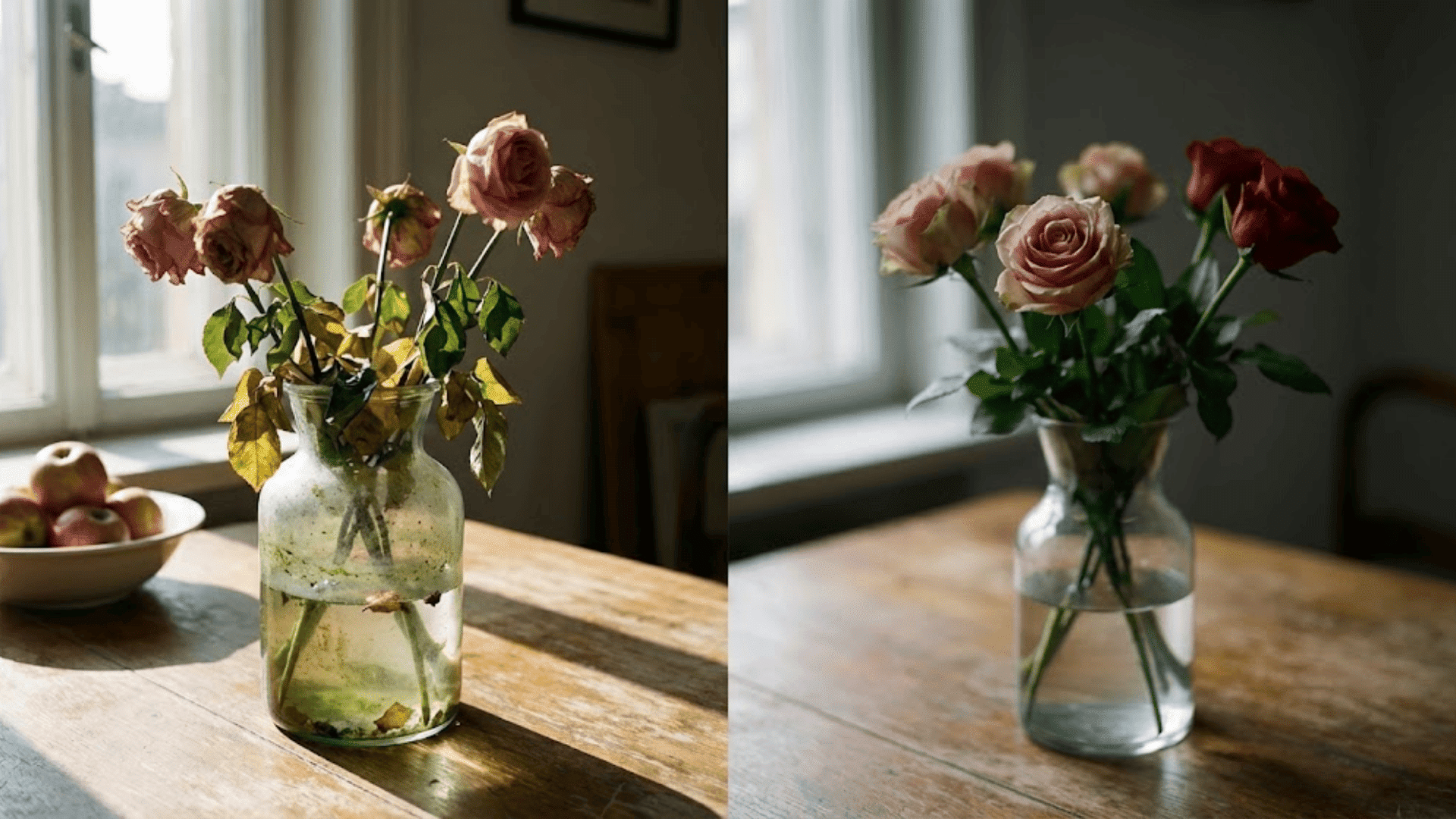
Over the years, I’ve noticed patterns in arrangements that fade quickly. These missteps seem minor in isolation, but they compound into days lost.
- Submerged leaves turn the water in a vase nto a bacterial breeding ground within hours.
- Dull or unwashed vases carry residue that blocks stems before fresh water even helps.
- Extreme water temperatures shock the stems instead of nourishing them.
- Sunlight and heat sources accelerate moisture loss and petal wilting dramatically.
- Nearby fruit releases ethylene gas that triggers premature aging in blooms.
I’ve made most of these mistakes myself, especially in my earlier years tending greenhouse arrangements. Now I recognize the signs immediately when consulting with clients.
How Long Do Different Types of Roses Last?
Not all roses age at the same pace. Their structure, petal density, and breeding determine how they hold up once cut or how long they bloom in the garden.
| Rose Type | Average Lifespan | Characteristics |
|---|---|---|
| Red Classic Roses | 7-10 days in a vase | Hardy, tightly packed petals hold moisture well; they are the most resilient for arrangements |
| Spray Roses | 5-7 days in a vase | Multiple smaller blooms per stem; delicate but abundant, ideal for fuller bouquets |
| Garden Roses (Peony-Style) | 4-6 days in a vase | Lush, loosely layered petals that open dramatically but fade faster due to their softness |
| Preserved & Eternity Roses | 1-3 years | Treated with glycerin and dyes; requires no water or care, maintaining appearance indefinitely |
Research published in Scientific Reports confirms that rose cultivar characteristics and post-harvest handling directly influence vase life duration.
I’ve always gravitated toward garden roses despite their shorter lifespan. There’s something about those unruly, romantic blooms that feels worth the tradeoff, even when they fade a few days earlier than their classic counterparts.
Extended Care Tips for Special Occasions
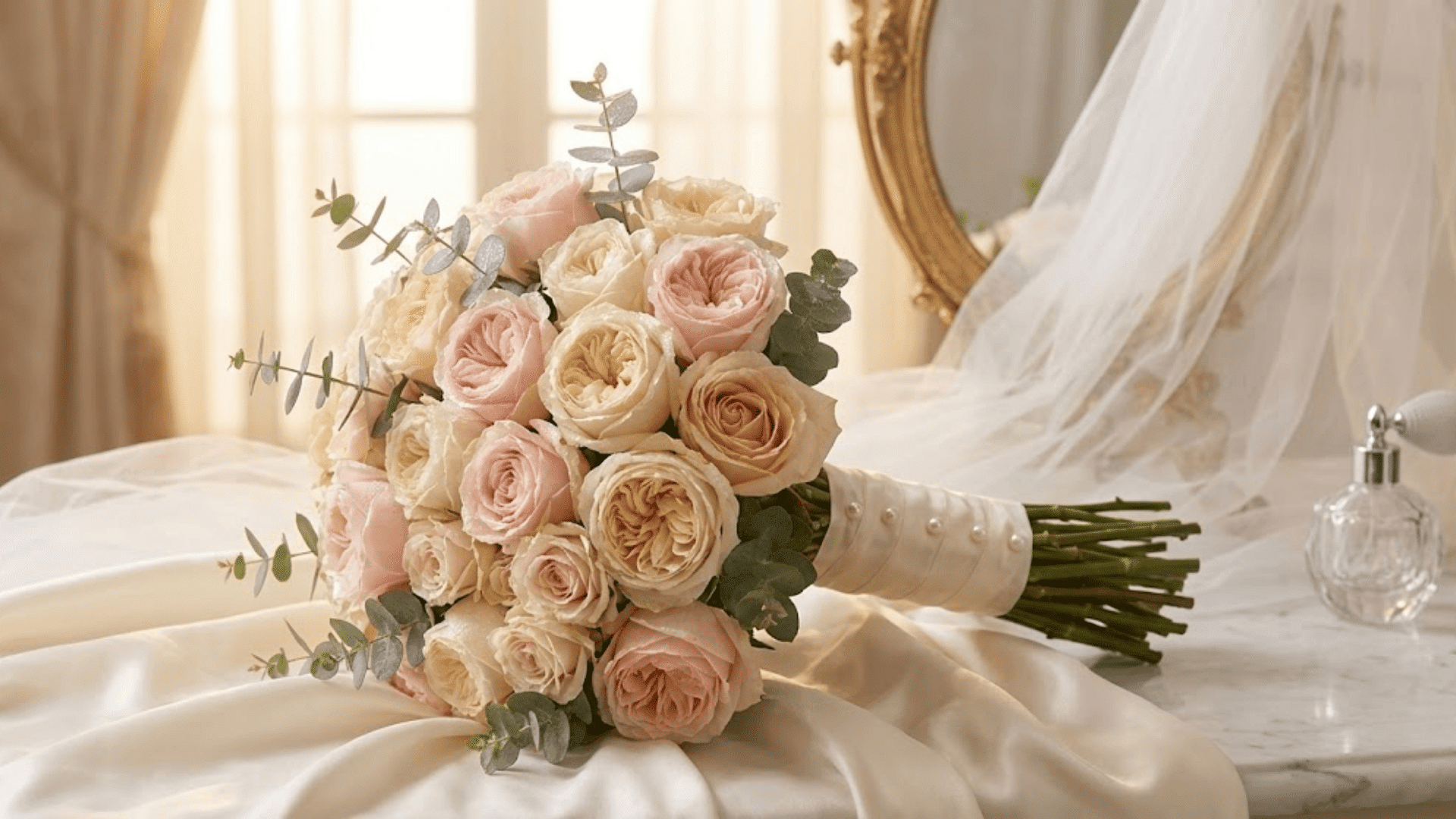
Roses for celebrations demand extra attention. The stakes feel higher when they’re marking moments we want to remember, and a little foresight makes all the difference.
1. Weddings
Wedding roses carry weight beyond their beauty. I’ve learned that timing and temperature control become critical when arrangements need to look pristine for hours.
- Store arrangements in a cool space (55-65°F) the night before, away from direct airflow.
- Transport in climate-controlled vehicles with stems secured in water-filled containers.
- Mist petals lightly an hour before the ceremony to restore any moisture lost during setup.
2. Gifting Roses
A bouquet loses its impact if it arrives wilted. The presentation matters as much as the blooms themselves, and small choices protect that first impression.
- Wrap stems in damp paper towels covered with plastic wrap for transit.
- Include a small packet of flower food with care instructions written on the card.
- Time the delivery for early morning or evening to avoid midday heat exposure.
3. Large Rose Bouquets
Managing fifty or more stems requires different strategies. The sheer volume means bacterial growth accelerates faster, and water depletes more quickly.
- Change water every day without exception; bacteria multiply rapidly in crowded vases.
- Trim stems in batches underwater rather than all at once to maintain efficiency.
- Split oversized arrangements into multiple containers if a single vase becomes too cramped for proper circulation.
Special occasions amplify every detail, but they also teach us what truly matters in rose care. What works for a single stem scales beautifully when applied with intention to grander arrangements.
The Closing Note
The question of how long roses last doesn’t have a single answer, but understanding what shapes their lifespan gives us control over the outcome.
Through years of working with these blooms, I’ve watched simple habits like clean vases and angled cuts add days to arrangements that might otherwise fade prematurely.
Roses respond to care with resilience. They reward our attention by lingering just a little longer, holding their color through one more dinner, one more morning.
What methods have worked best in your experience? I’d love to hear your thoughts in the comments below.