I still remember the year I got my hydrangea pruning completely wrong. That summer, every single bloom disappeared, and I had no idea why.
Turns out the timing depends entirely on when your hydrangea forms its flower buds in the first place.
Cut an old wood variety too early, and you snip away next year’s flowers before they even form. New wood types are more forgiving.
You can prune them anytime through late winter into early spring.
Reblooming hydrangeas need a gentler touch since they flower on both new and old wood. Know your variety first, then reach for the shears.
When is the Best Time to Prune Hydrangeas?
The quickest way to answer this is simple. Check which type you are growing, then match it to the table below.
Timing comes down to where your hydrangea sets its buds – on old wood, new wood, or both- and that single detail changes everything about when the shears should come out.
| Hydrangea Type | Where It Blooms | Best Pruning Time |
|---|---|---|
| Bigleaf | Old wood | Right after flowering |
| Mountain | Old wood | Right after flowering |
| Oakleaf | Old wood | Right after flowering |
| Climbing | Old wood | Usually minimal pruning; prune after flowering if needed |
| Smooth | New wood | Late winter to early spring |
| Panicle | New wood | Late winter to early spring |
| Reblooming Bigleaf/Mountain | Old + new wood | Early spring or after first flush, lightly |
This breakdown lines up with the University of Maryland Extension’s guide to pruning hydrangeas, a resource horticulturists rely on for identifying bloom type before making a single cut. Once you know where your plant falls on this list, the rest of the process gets a lot less confusing.
Why Hydrangea Pruning Time Depends on Old Wood vs. New Wood?
Old wood means stems that grew during the previous season or earlier.
Flower buds form on these stems before winter even arrives, so cutting them back too late simply removes next year’s flowers before they get a chance to open.
New wood works the opposite way.
These hydrangeas grow their flowering stems during the current season, and their buds have not overwintered on old growth at all, which is exactly why they tolerate a much harder prune in late winter.
Reblooming varieties flower on both, so pruning too early sacrifices that first flush, while cutting too much later shortens the rebloom altogether.
When and How to Prune Every Hydrangea Type?
Each hydrangea species follows its own internal clock, and knowing the type growing in your yard removes all the guesswork.
Here is a breakdown of every wide variety and the exact window that keeps blooms coming.
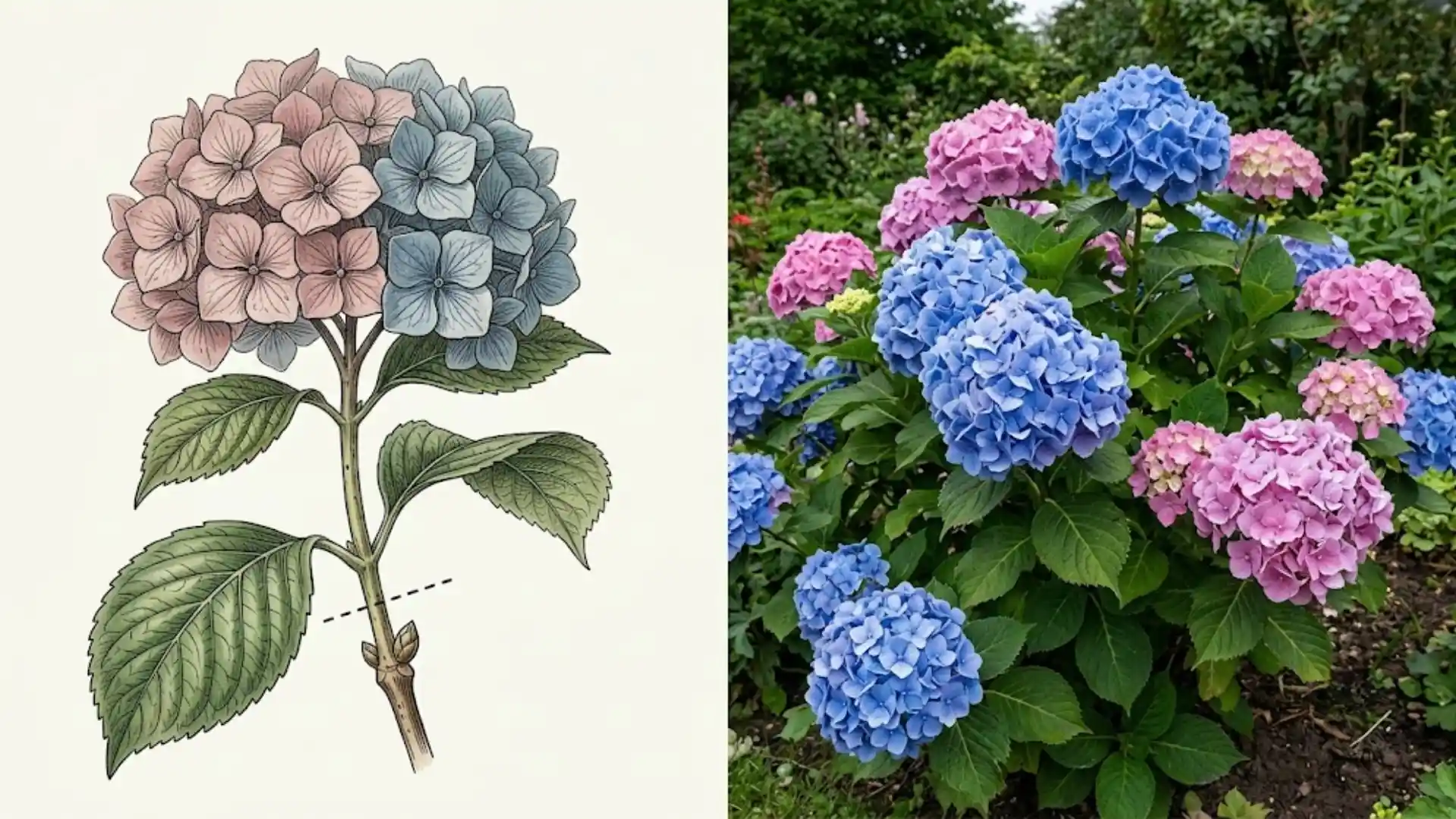
1. Bigleaf Hydrangea (Hydrangea macrophylla)
When to Prune
Both mophead and lacecap forms bloom on old wood, so timing here matters more than with almost any other type. Prune immediately after flowering fades.
A shrub that looks perfectly healthy can still skip blooming entirely if it gets an aggressive spring cut, since that removes buds already set for next year.
How to Prune
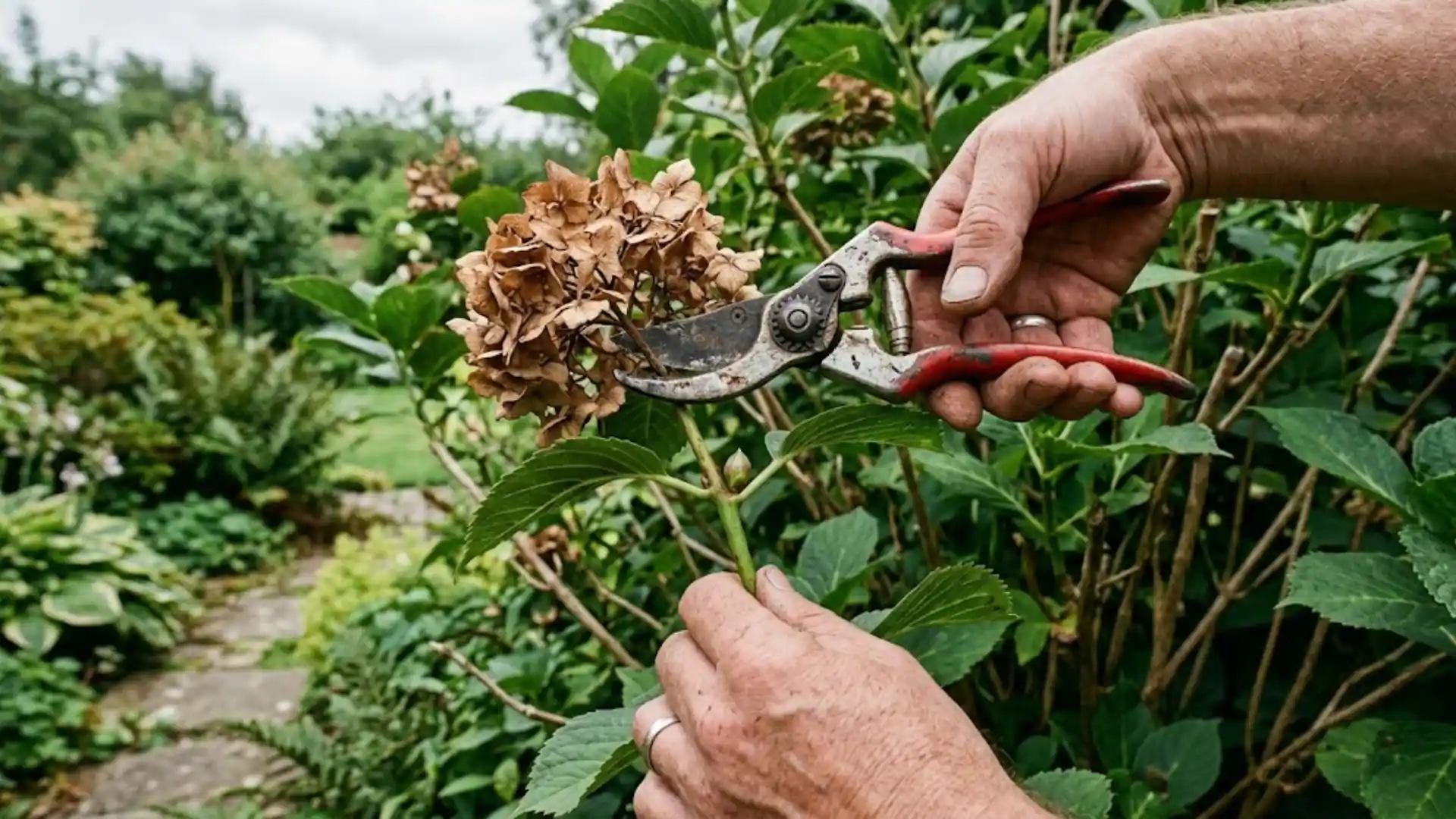
- Cut spent blooms back to the next healthy bud right after flowers fade.
- On older, overgrown plants, remove up to 1/3 of stems at the base in late summer to renew growth.
- Otherwise, remove only dead, weak, or damaged stems.
- Leave healthy old stems untouched through fall and winter.
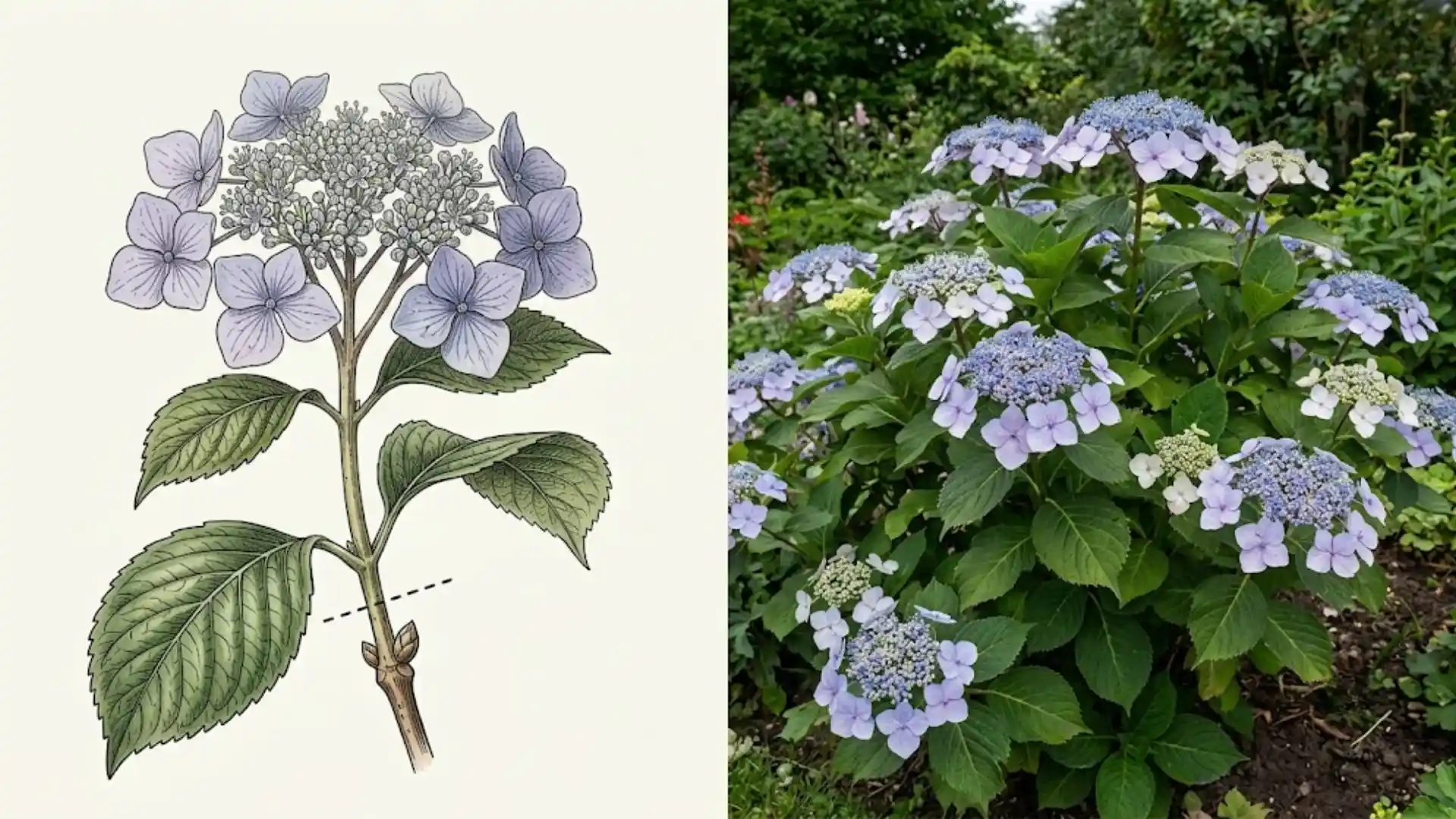
2. Mountain Hydrangea (Hydrangea serrata)
When to Prune
Mountain hydrangea follows the same old wood pattern as its bigleaf cousin.
According to the University of Maryland Extension, you can trim it to about 12 inches off the ground right after flowering. Late-season cuts are the single biggest threat to next year’s flowers.
How to Prune
- Prune shortly after flowering ends, cutting back to about 12 inches if you need size control.
- Keep every other cut selective and minimal.
- Avoid shaping or structural cuts later in the year.
- Otherwise, remove only dead or damaged wood.
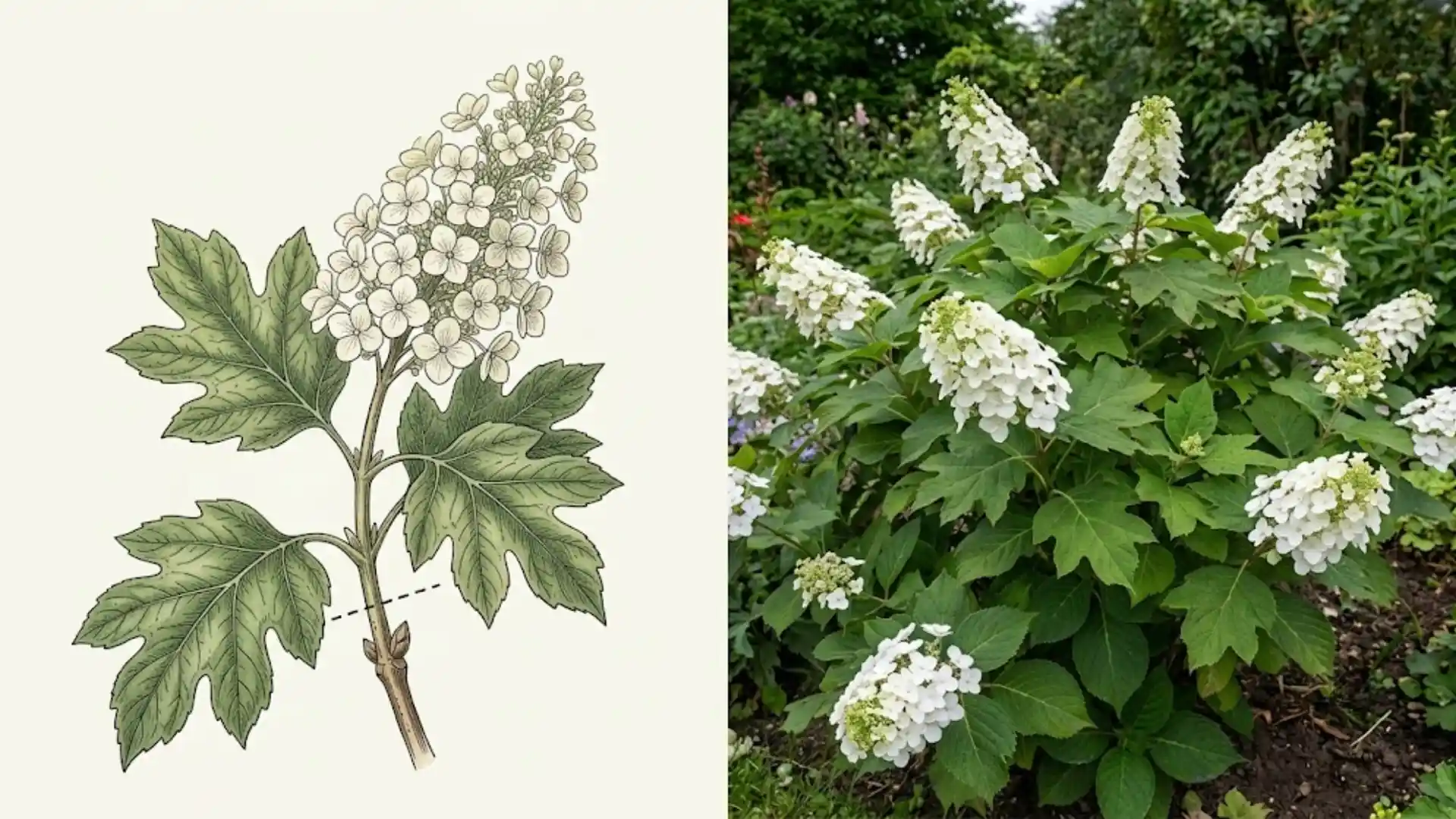
3. Oakleaf Hydrangea (Hydrangea quercifolia)
When to Prune
Oakleaf blooms on old wood too, and its distinctive lobed, oak-shaped leaves make it easy to identify even without flowers.
Clemson Cooperative Extension recommends pruning soon after flowering to maintain size and shape, giving the plant enough time to develop next season’s buds. This variety rarely needs pruning at all.
How to Prune
- Prune soon after flowering, only if shaping is needed.
- For overgrown plants, remove about 1/3 of the oldest, thickest stems down to the ground each year as renewal pruning.
- To rejuvenate a badly overgrown shrub, cut the entire plant back to 12-18 inches in late winter, accepting a year or two of reduced blooms.
- Avoid pruning close to fall or winter.
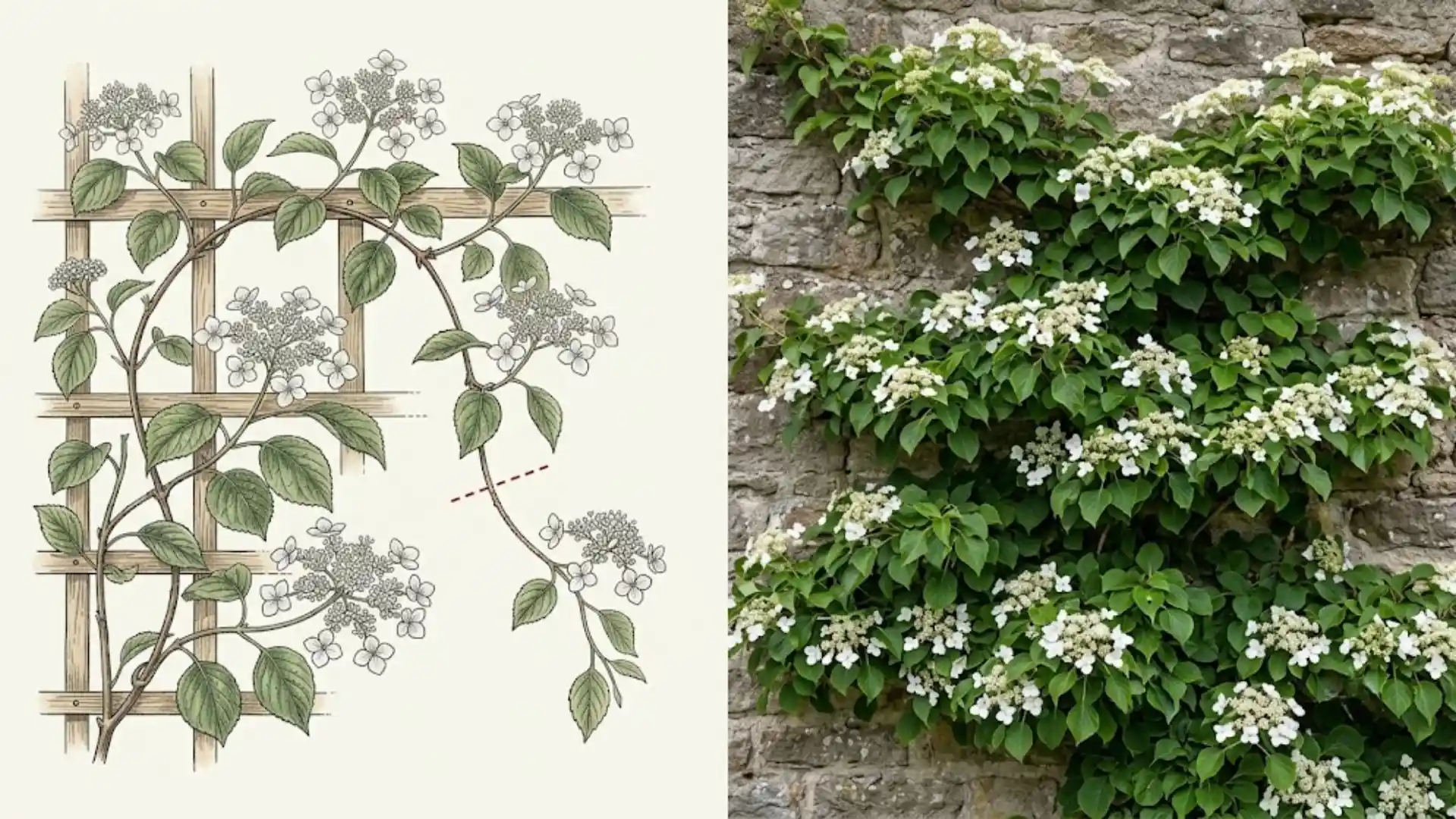
4. Climbing Hydrangea (Hydrangea anomala subsp. petiolaris)
When to Prune
This vining variety rarely asks for routine pruning. If size or shape becomes a concern, prune after flowering rather than before.
Most of the work here is control, not maintenance. If you’re training this vine along a fence or wall, it helps to plan the vertical garden structures it will eventually cover before growth gets away from you.
How to Prune
- Skip pruning unless you need to manage size.
- Cut back wayward stems to a healthy side shoot or leaf node after the flowering period ends.
- Remove excessively long or wandering stems close to their point of origin.
- Trim away any damaged growth as it appears, at any time of year.
5. Smooth Hydrangea (Hydrangea arborescens)
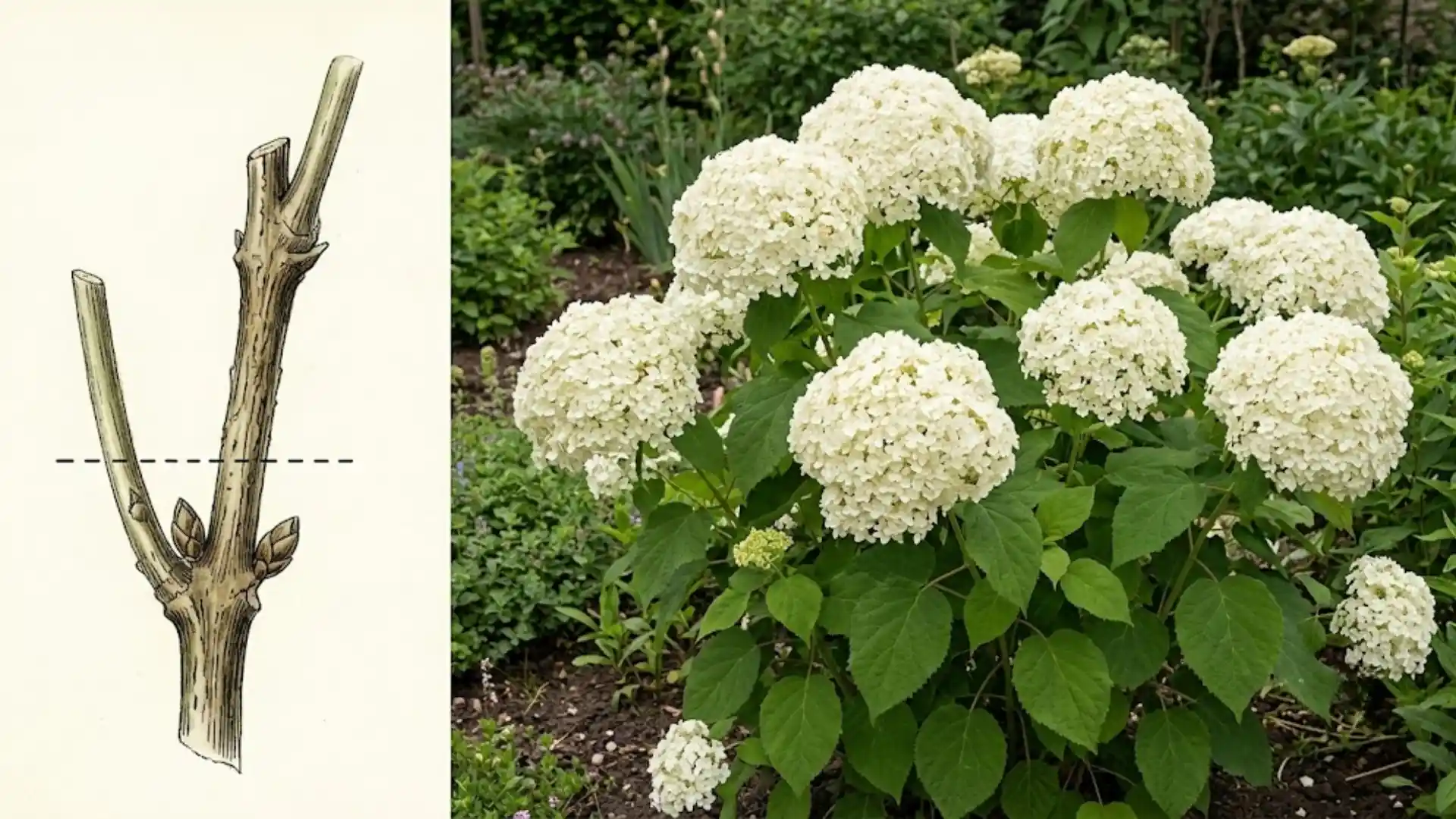
When to Prune
Smooth hydrangea, including the popular ‘Annabelle’ cultivar, blooms on new wood, which makes it one of the most forgiving types to prune.
University of Maryland Extension notes it can be cut to about 12 inches off the ground. It tolerates far harder pruning than any old-wood type.
How to Prune
- Prune in late winter or early spring, before new growth starts.
- Cut back stems to roughly 12-18 inches from the ground for larger blooms, or as low as 6 inches for a more compact, tidy shape.
- Remove weak or spindly stems at the base entirely.
- Leave a few sturdy framework stems if the variety tends to flop under bloom weight.
6. Panicle Hydrangea (Hydrangea paniculata)
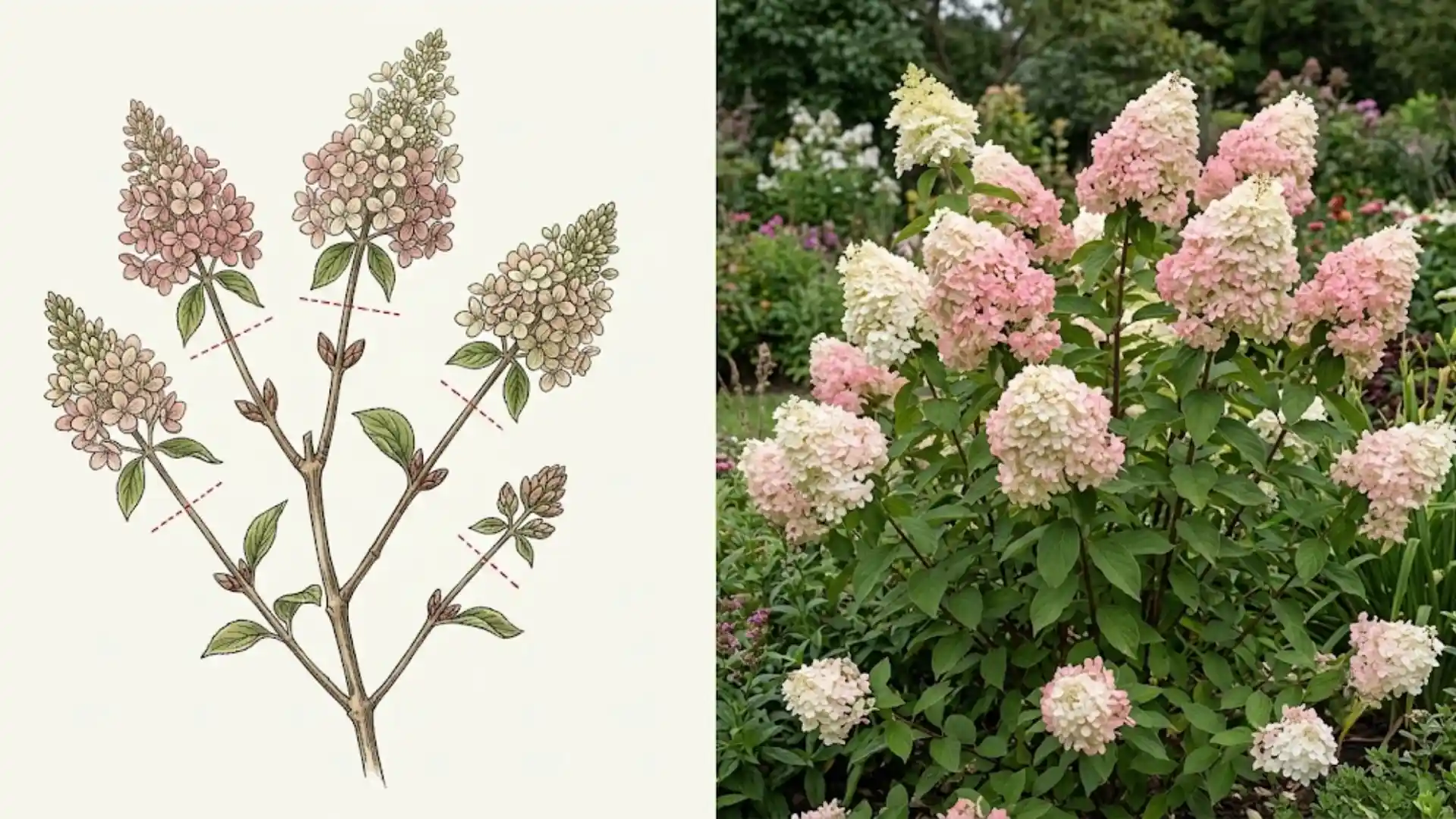
When to Prune
Panicle hydrangea also flowers on new wood and handles harder pruning well. Prune in late winter or early spring, before new growth emerges.
Cutting too aggressively, though, can still leave stems weak and floppy under the weight of heavy blooms, even within the right season.
How to Prune
- Prune before new growth begins, cutting back to a sturdy framework roughly 2 feet off the ground.
- Avoid cutting back to the ground, which encourages weak, floppy new growth.
- Remove crossing, damaged, or overly thin stems entirely.
- Shape lightly on established plants to avoid top-heavy new growth.
7. Reblooming Hydrangeas, Including ‘Endless Summer’
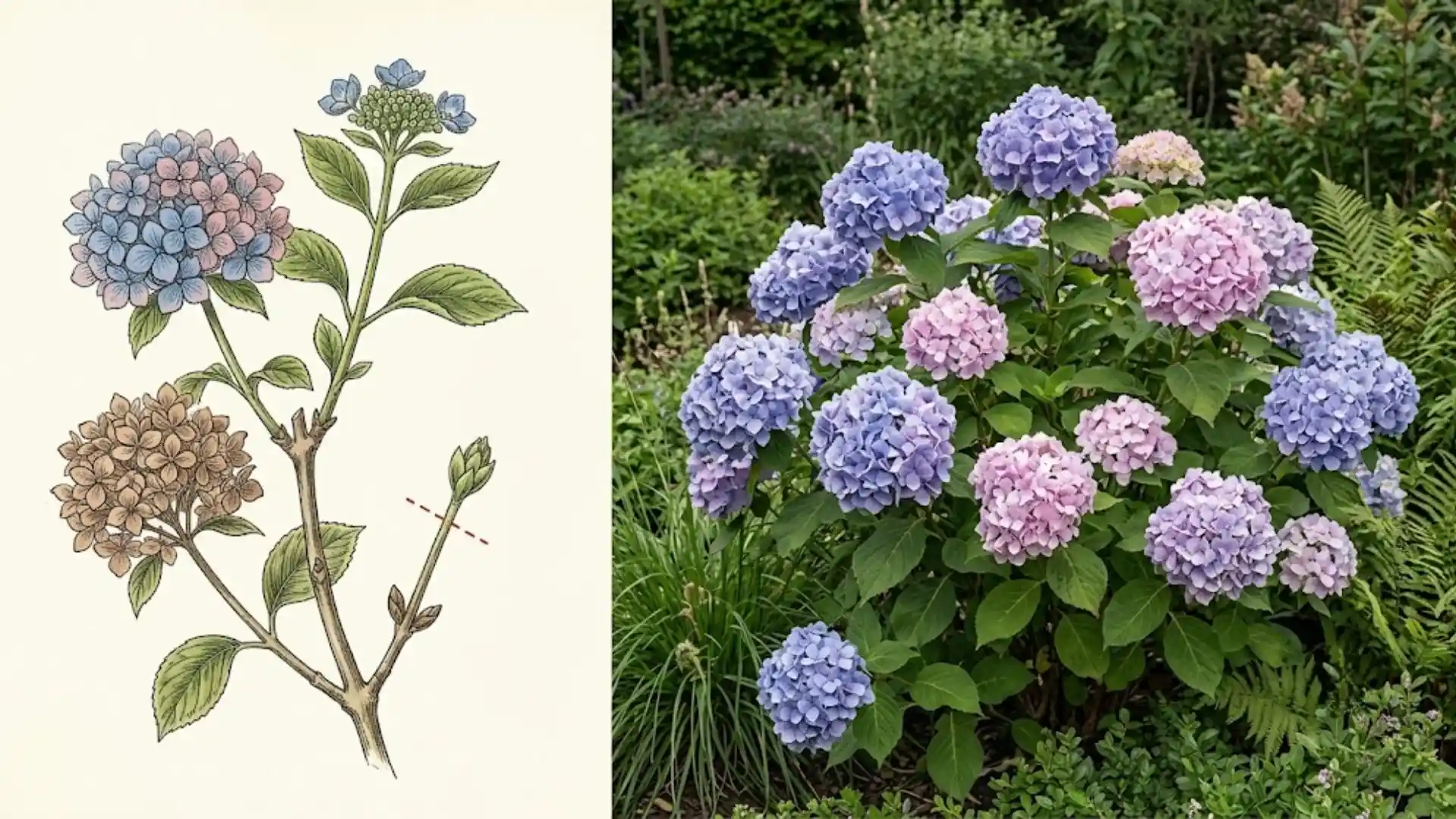
When to Prune
Reblooming varieties flower on both old and new wood, so they need a lighter touch than standard bigleaf types.
Pruning too early sacrifices the first flush, while heavier cuts can shift the timing and length of the second bloom. Not every cultivar in a reblooming series behaves the same way.
How to Prune
- Prune lightly in early spring, removing only dead or weak stems.
- Cut spent blooms back to the next healthy bud after the first flush fades, rather than cutting stems hard.
- Avoid removing more than a small portion of healthy old wood at any one time.
- Check your specific cultivar’s habit before attempting any heavier structural pruning.
How to Tell Which Hydrangea You Have Before Pruning?
“When to prune” cannot be answered reliably until the plant itself is identified. A few visual and situational clues make that easier than it sounds.
- Flower Shape: Mophead usually means bigleaf, lacecap points to bigleaf or mountain, cone-shaped clusters mean panicle, rounded snowball clusters mean smooth, and oak-shaped leaves confirm oakleaf.
- Plant Label or Cultivar Name: The botanical name is far more reliable than a common name, since cultivars within the same species can carry very different pruning habits
- Last Year’s Flowering Pattern: Blooms on stems that survived winter suggest old wood, while flowers only on fresh new growth suggest new wood, though this works best as a secondary clue rather than the sole method.
- Growth Habit and Vine Form: A climbing, attaching habit narrows things down to climbing hydrangea regardless of flower shape.
- When Identification Still Isn’t Clear: Limit any cuts to dead, damaged, or diseased wood, and observe the plant through one full growing season before making a larger cut.
Where your hydrangea sits in the yard matters too, since many varieties are among the best shade-tolerant garden picks for beds that only get a few hours of morning sun.
Guessing wrong risks removing next year’s flower buds entirely, so conservative pruning is always the safer bet until the type is confirmed.
Can You Cut Hydrangeas All the Way Back to the Ground?
New-wood types like smooth and panicle hydrangeas tolerate hard cutting, but that does not mean ground-level pruning is always the best choice.
Old-wood types are different entirely: cutting them to the ground removes next year’s flowers along with the stems.
Hard pruning does push vigorous new growth, but that vigor often comes at the cost of bloom quality or timing, producing fewer, later, or floppier flowers.
This is also where the “snowball bush” confusion creeps in, since not every rounded bloom belongs to a hydrangea that forgives a hard cut.
Should You Prune Hydrangeas Every Year?
No, not necessarily. Pruning mainly serves a few specific purposes, including removing dead or damaged growth, controlling size, maintaining shape, rejuvenating older shrubs, and encouraging fuller growth.
Outside of those situations, many hydrangeas stay healthy and attractive with little or no annual pruning at all.
Recent extension guidance backs this up, noting that routine cutting is not necessary unless the plant genuinely needs shaping or correcting.
Pruning out of habit, rather than need, is where most mistakes happen.
If a shrub already looks full, healthy, and well-shaped, the best move some years is simply leaving the shears untouched.
What to Do If Your Hydrangea is Not Blooming?
Not every flowerless season points back to pruning, so it helps to rule out a few other causes before assuming the shears are to blame.
- Pruning at the Wrong Time: Cutting an old wood variety in fall, winter, or too early in spring removes the flower buds already formed for that year.
- Winter Cold Damaging Flower Buds: A hard freeze or a late spring frost can kill developing buds even on a plant that looks perfectly healthy otherwise.
- Not Enough Light: Hydrangeas growing in heavy shade often produce lush foliage but few or no flowers, especially toward the top of the shrub.
- Too Much Nitrogen in the Soil: Excess nitrogen, often from nearby lawn fertilizer, pushes the plant toward leafy growth at the expense of blooms.
- The Plant is Still Establishing: Younger hydrangeas can take a couple of growing seasons to build enough root mass to support a full bloom display.
- The Cultivar Behaves Differently Than Expected: Some reblooming and newer varieties have bloom habits that do not match older, more familiar pruning advice.
- Over-Fertilizing or Over-Watering: Too much of either can shift the plant’s energy away from flower production even when light and pruning are correct.
Once you rule out these possibilities one by one, the cause usually becomes clear, and the fix is often as simple as adjusting the pruning schedule or the plant’s growing conditions for next season.
The Bottom Line
Every hydrangea has its own rhythm, and once you know whether yours blooms on old wood, new wood, or both, pruning stops feeling like guesswork.
Knowing when to prune hydrangeas really comes down to one thing – identifying your plant first, then letting its natural cycle guide the shears.
Get that part right, and the blooms tend to take care of themselves year after year.
What type of hydrangea is growing in your garden? Drop a comment below, and let’s figure out its ideal pruning window together.
Frequently Asked Questions (FAQs)
What Month is Best to Prune Hydrangeas?
It depends entirely on the type. Old wood bloomers do best pruned right after flowering, usually mid to late summer, while new wood types prefer late winter or early spring before growth starts.
Should Hydrangeas Be Cut Back for Winter?
Not usually, and for old wood types it can actively cost you next year’s blooms. Dried flower heads left through winter also add structure and visual interest to the garden.
Should I Cut off Dead Hydrangea Blooms?
Removing spent blooms right after they fade is safe for most types and can tidy up the plant’s appearance. Just cut back to the next healthy bud rather than deep into old wood.
How Do I Know if My Hydrangea Blooms on Old or New Wood?
Check the flower shape, cultivar name, and last year’s bloom pattern together for the clearest answer. When still unsure, treat it as old wood and prune conservatively until a full season confirms otherwise.
Do Hydrangeas Need to Be Pruned Every Year?
No, many hydrangeas stay healthy and full-shaped with little or no annual pruning. Pruning is only necessary for size control, shaping, removing damage, or rejuvenating an older shrub.