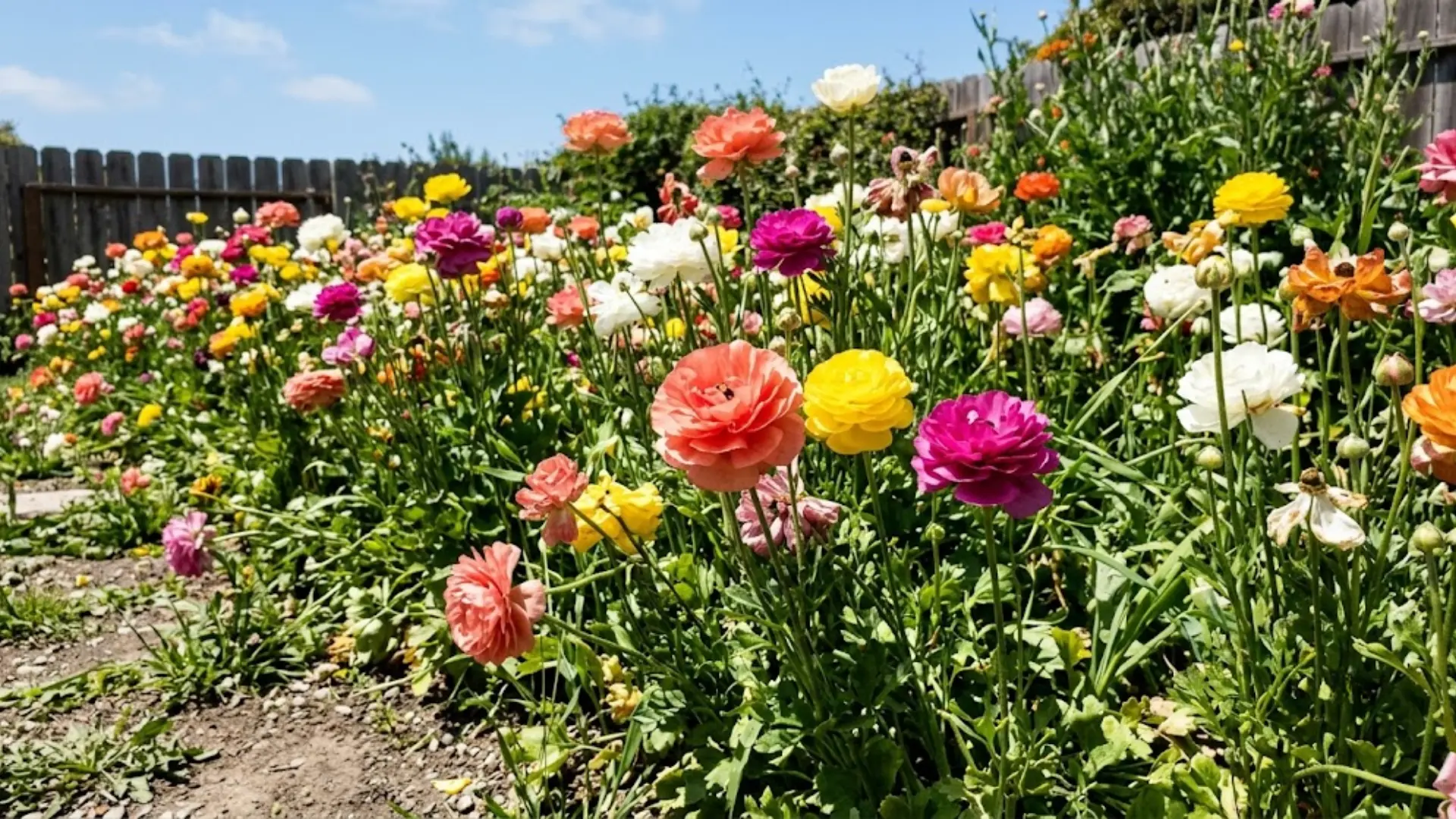
Ranunculus earns its reputation with petal after paper-thin petal, layering into blooms that look more like tiny roses than anything else growing in a garden.
Their bloom time depends largely on when the corms go into the soil and the local climate.
Fall-planted ranunculus in warmer regions bloom starting in late winter and carry through spring. Spring-planted ranunculus in colder regions bloom later, arriving in late spring and easing into early summer.
Gardeners who’ve grown these corms season after season know that getting the timing right is what gives you blooms that last.
Here’s where to start.
Watching a Ranunculus Corm Turn Into a Flower
Ranunculus corms are small, claw-shaped tubers that store the plant’s energy before it ever breaks ground. They arrive dry and shriveled, which throws off a lot of first-time growers, but that’s simply their dormant state.
Once planted, roots establish first, followed by leafy growth, then buds that slowly swell before opening into full bloom. After flowering fades, the plant returns to dormancy, storing energy in the corm for the next cycle.
From planting to first bloom generally takes around 90 days, though soil temperature and growing conditions can shift that window earlier or later.
Getting the planting depth right matters for ranunculus corms just as much as it does for spring bulbs like tulips. Too deep slows root development, too shallow risks frost exposure.
When Do Ranunculus Bloom?
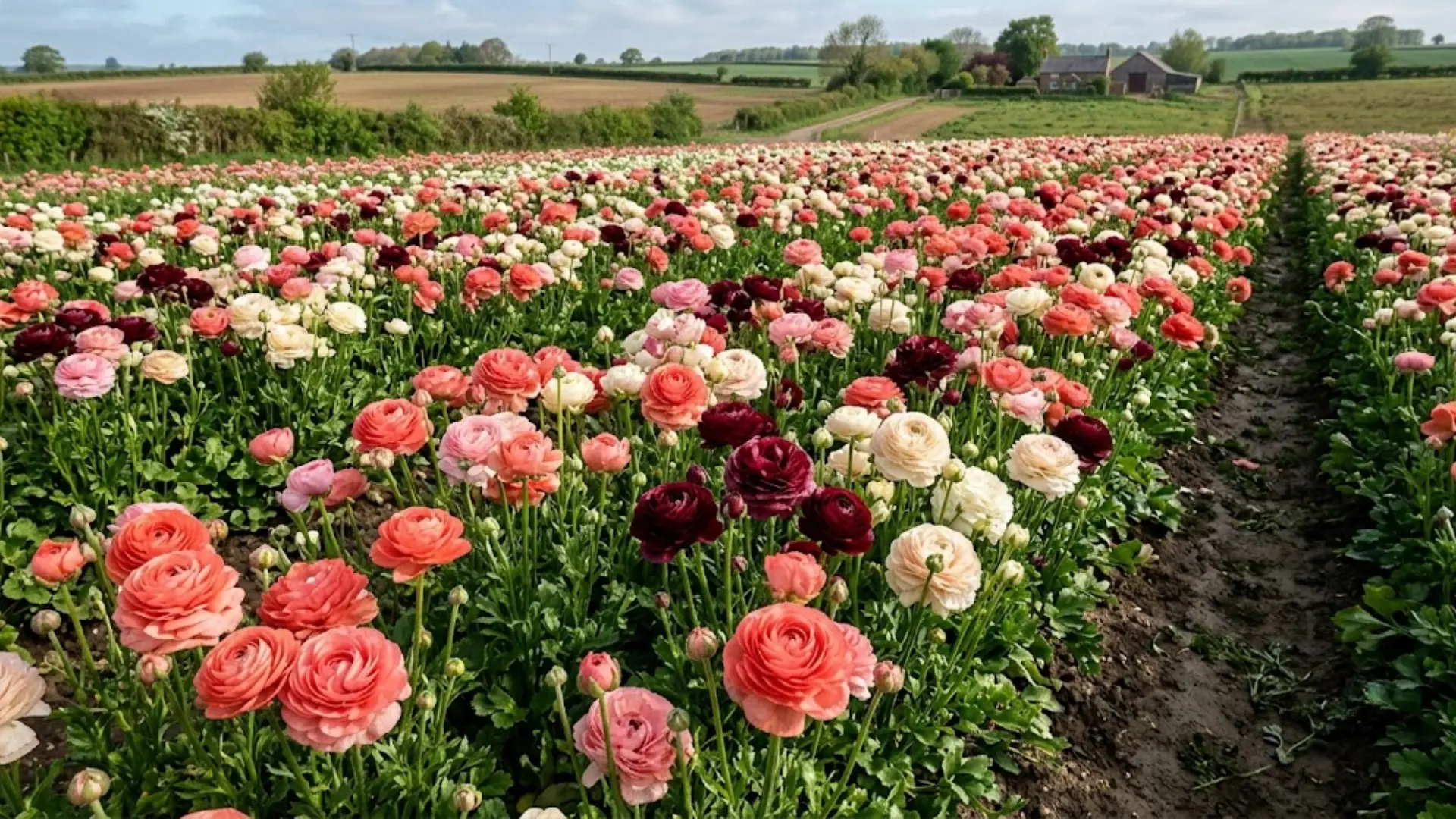
Bloom time isn’t fixed; it shifts based on your hardiness zone and when the corms go into the ground. Once you match planting time to your climate, the rest of the bloom cycle falls into place naturally.
Bloom Time in Warm Climates (Zones 8–10)
Gardeners in warmer zones plant corms in fall, letting them settle into cool soil before winter. This timing gives roots a head start, so flowering begins as early as late winter and carries into peak bloom through spring.
Because temperatures stay mild longer, the flowering season stretches out. This often means weeks of continuous color before summer heat pushes the plant back into dormancy.
Bloom Time in Cold Climates (Zones 4–7)
Colder regions don’t allow fall planting since corms can’t survive hard freezes in open soil. Instead, planting happens in late winter or early spring once the ground softens.
This pushes bloom time later, with flowers typically opening in late spring.
Blooming wraps up by early summer, right before rising temperatures push the plant into dormancy, giving growers a shorter but still reliable flowering window.
USDA Zone Bloom Chart
|
USDA Zone |
Planting Time |
Expected Bloom Time |
Grow as Annual or Perennial |
|---|---|---|---|
|
Zone 4 |
Early spring |
Late spring–early summer |
Annual |
|
Zone 5 |
Early spring |
Late spring–early summer |
Annual |
|
Zone 6 |
Late winter–early spring |
Late spring |
Annual |
|
Zone 7 |
Late winter–early spring |
Late spring |
Annual (perennial with heavy mulch) |
|
Zone 8 |
Fall |
Late winter–spring |
Perennial |
|
Zone 9 |
Fall |
Late winter–spring |
Perennial |
|
Zone 10 |
Fall |
Late winter–spring |
Perennial |
Readers can check their exact zone using the USDA’s interactive zip code lookup tool before planning their planting schedule.
The Real Reasons Ranunculus Bloom Sooner or Later
Bloom timing isn’t left to chance; it responds to a handful of growing conditions that gardeners can actually influence.
Here’s what shifts the timeline earlier or later:
- Planting date sets the baseline for the entire bloom cycle, since everything after germination follows from this starting point.
- Temperature drives growth speed, with cooler soil slowing root development and warmer conditions accelerating it toward bud formation.
- Sunlight exposure determines how much energy the plant converts for blooming, with six or more hours of direct light producing faster, fuller flowering.
- Soil drainage protects the corm from rot, and poorly drained soil can delay or completely stall bloom development. Raised beds help with this since they naturally shed excess water away from the corm.
- Pre-sprouting the corms indoors before planting jumpstarts root growth, often leading to earlier blooms and sturdier, more resilient plants.
- Variety differences mean some ranunculus cultivars naturally bloom faster than others, even under identical growing conditions.
- Microclimate factors, like nearby structures or elevation, can shift bloom timing slightly even within the same USDA zone.
Getting bloom timing right comes down to reading these variables together rather than any one, since planting date and temperature rarely tell the full story.
How Long Do Ranunculus Bloom?
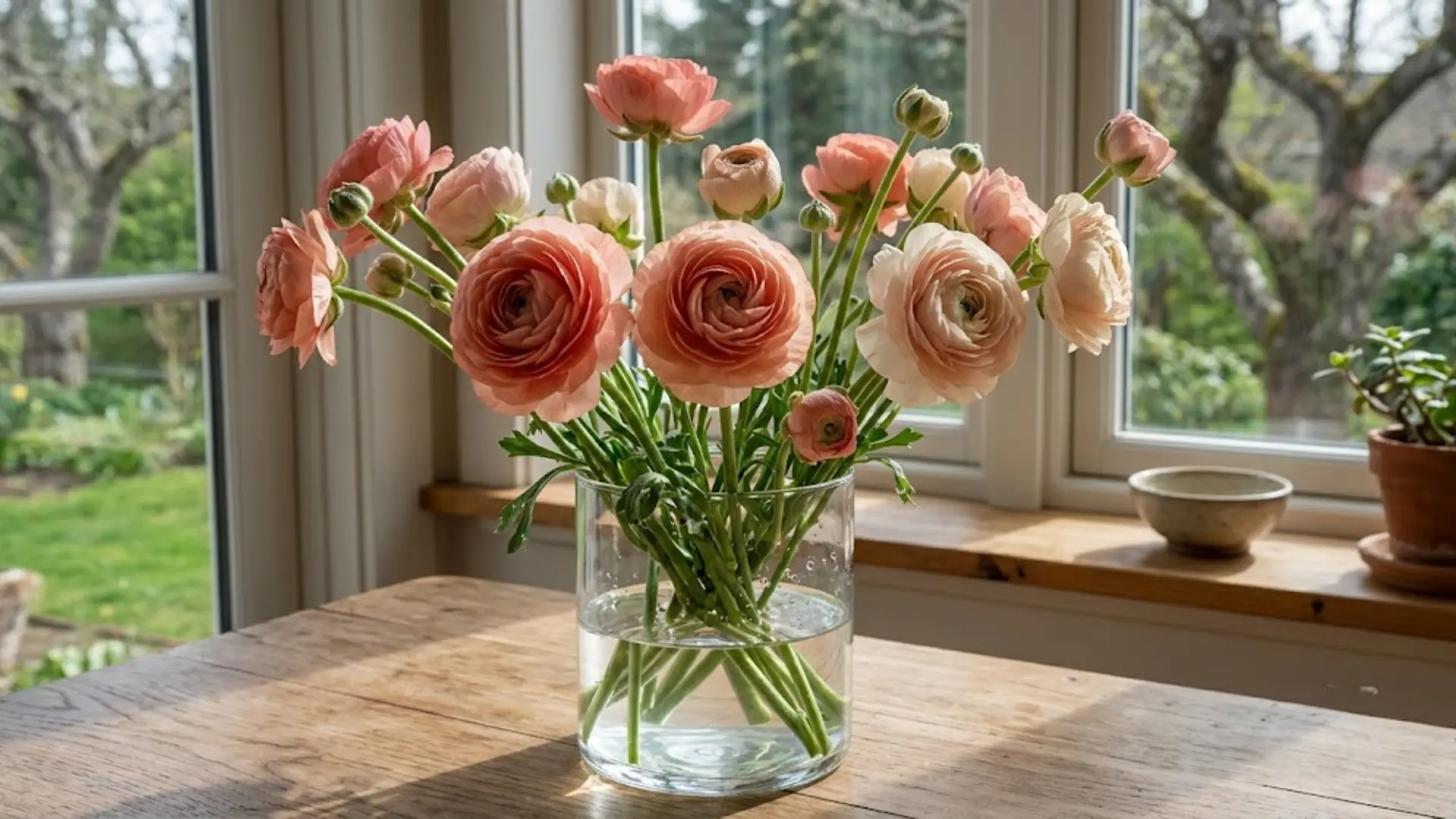
Once flowering starts, ranunculus typically stays in bloom for 4 to 7 weeks, with the exact length shaped by local temperatures.
Unlike plants that flower all at once, ranunculus produces blooms in succession, so new flowers keep opening as older ones fade.
Cool weather stretches this window further, slowing the plant’s pace and extending color for weeks longer than expected. Heat has the opposite effect, pushing the plant toward dormancy faster and cutting the season short.
Cut and placed in a vase, ranunculus blooms hold up for around 10 days, making them a favorite among cut flower growers.
Why Aren’t My Ranunculus Blooming?
A few common issues explain most bloom failures, and nearly all of them come down to a simple fix once you know what to look for.
|
Problem |
Possible Cause |
Solution |
|---|---|---|
|
Lots of leaves but no flowers |
Too much nitrogen |
Switch to a bloom-boosting, low-nitrogen fertilizer |
|
Small blooms |
Poor soil |
Amend with compost before the next planting cycle |
|
Rotting corms |
Wet soil |
Raise beds or plant in well-draining soil |
|
No sprouts |
Frozen or damaged corms |
Pre-check corms and skip any that feel soft or brittle |
|
Buds dropping |
Heat stress |
Shade plants during peak afternoon heat |
|
Weak flowering |
Insufficient sunlight |
Relocate to a spot with 6+ hours of direct sun |
Caring for Ranunculus Once the Blooms are Done
Once flowering ends, let the foliage die back naturally instead of cutting it early, since the plant is still feeding energy back into the corm.
In colder zones (4–7), corms should be dug up once leaves yellow and stored in a cool, dry place for replanting next fall.
In warmer zones (8–10), corms can stay in the ground year-round, since mild winters won’t damage them.
If left in the ground anywhere colder, corms risk rotting or freezing before the next growing season begins.
Best Companion Plants That Bloom at the Same Time
Pairing ranunculus with other spring bloomers creates a layered display, where different heights, colors, and textures come together at once instead of one flower dominating the bed.
These combinations work especially well in a flower bed near your entrance, where layered blooms get the most visibility.
|
Companion Plant |
Bloom Time |
Why It Pairs Well |
|---|---|---|
|
Anemones |
Early to mid spring |
Same low height keeps the front of the bed dense |
|
Tulips |
Early to mid spring |
Upright stems add height without blocking light |
|
Poppies |
Mid spring |
Thin petals contrast ranunculus’s tighter blooms |
|
Sweet peas |
Mid to late spring |
Climbing habit fills vertical gaps |
|
Iceland poppies |
Early spring |
Similar cool-toned color echoes ranunculus |
|
Snapdragons |
Mid spring |
Spiked form breaks up rounded shapes |
|
Delphiniums |
Late spring |
Tall spires anchor the back as ranunculus fades |
|
Foxgloves |
Late spring |
Adds height as spring turns to summer |
|
Forget-me-nots |
Early to mid spring |
Low foliage softens bare stems at the base |
The Closing Note
Ranunculus rewards patience more than any other spring bulb, turning a few dry, unassuming corms into weeks of layered, rose-like color once the timing lines up with your climate.
Fall planting gives an early start in warmer zones, and spring planting works just as well for cooler regions willing to wait a little longer.
Knowing when ranunculus blooms takes the guesswork out of the season and helps you plan a garden that stays colorful for weeks. Pair that timing with the right care, and each bloom cycle gets a little more rewarding than the last.
I’ve grown these corms in raised beds for a few seasons now, and the timing is really what separates a handful of blooms from weeks of color. Share your planting timeline or favorite variety in the comments below.
Frequently Asked Questions (FAQs)
Can Ranunculus Bloom in Pots?
Yes, ranunculus grows well in containers as long as the pot has good drainage and enough depth for corm development. Full sun and consistent moisture matter just as much in pots as they do in garden beds.
How Many Flowers Does One Corm Produce?
A single healthy corm produces 5 to 15 blooms over its flowering period, with jumbo-grade corms sometimes producing more. I’m not certain of an exact figure since it varies by corm size and variety, so treat this as a general range.
How Cold Can Ranunculus Tolerate?
Ranunculus corms handle light frost well, and established plants tolerate temperatures down to around 23°F to 25°F before the corms are at risk of freezing and rotting. Hard freezes below this range can damage or kill unprotected plants.
Are Ranunculus Good Cut Flowers?
Yes, ranunculus is a favorite among florists for its long stems and layered petals. Cut blooms hold up well in a vase, lasting around 10 days with fresh water.