You know that feeling when you’re sifting through your grandmother’s china cabinet or eyeing a gorgeous vintage plate at an estate sale?
There’s always that whisper of hesitation—could this be unsafe? It’s such a common worry, especially when we’ve all heard those cautionary tales about lead.
Here’s what’s reassuring: while the U.S. never dropped a single overnight ban on lead in dishware, regulations have grown impressively strict over the decades.
What follows covers the timeline of these rules, current safety limits, how to assess antique pieces, and which testing methods actually work.
Was Lead Ever Fully Banned in Dishes?
Lead in dishware was never completely outlawed in the U.S. Instead, regulations set strict limits on how much lead can leach into food.
Manufacturing restrictions focus on reducing lead content during production, while allowable trace limits dictate what’s safe for consumer use.
The FDA established these leachable lead thresholds rather than banning the element entirely, since trace amounts can still appear in glazes and decorative finishes.
Enforcement happens through random testing, import inspections, and manufacturer compliance checks.
So when you hear “lead ban,” what really exists is a tightly controlled system that keeps exposure well below harmful levels for everyday dining.
Timeline of Lead Regulation in U.S. Dishware
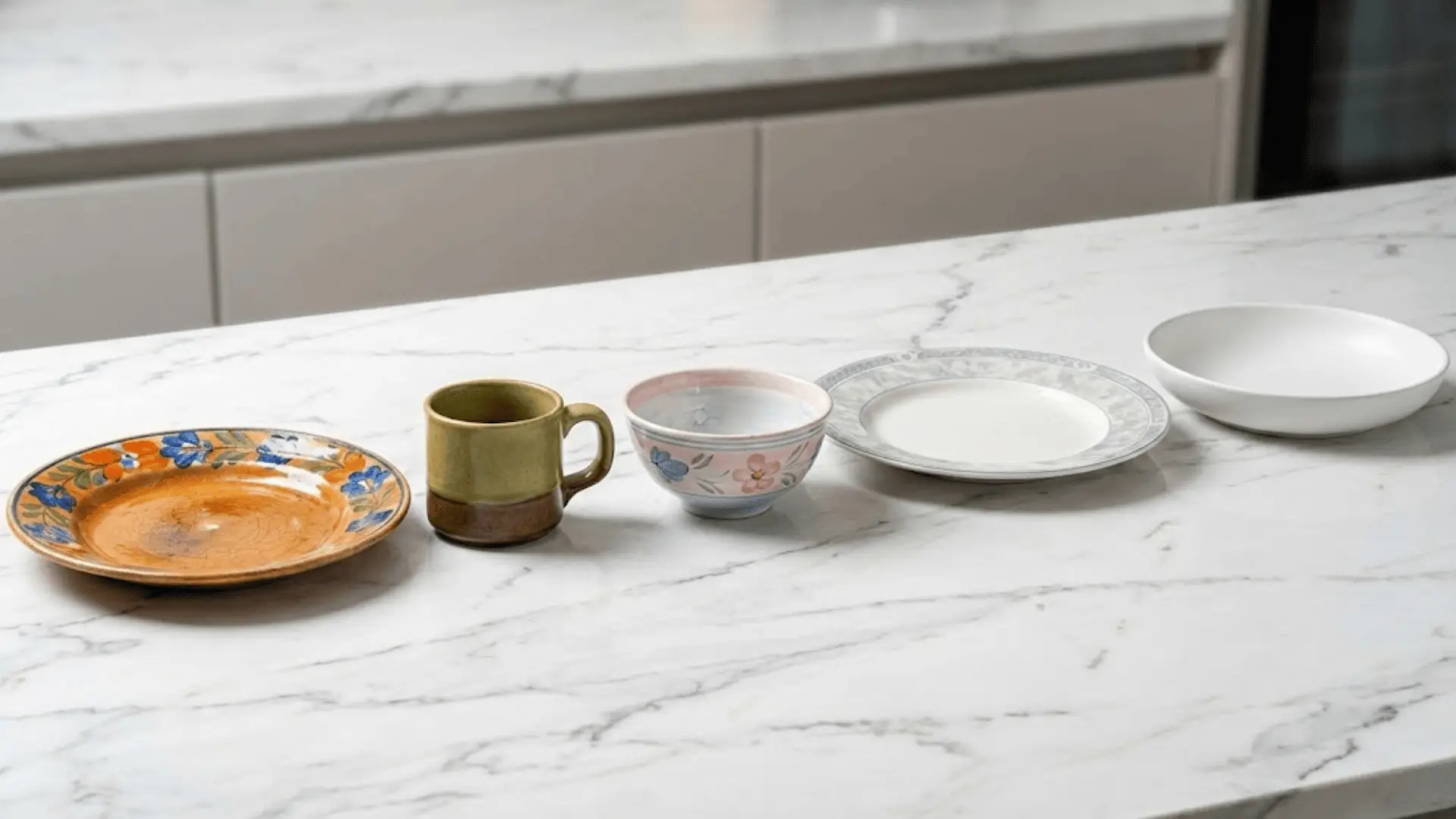
Understanding when and how regulations evolved helps put your heirloom pieces into proper context.
The shift from widespread lead use to today’s tight controls spans several decades, with each era bringing new awareness and stricter standards.
Pre-1970s: Widespread Lead Glazes
Lead was prized in ceramic production for its ability to create brilliant colors, smooth finishes, and lowered firing temperatures.
Most manufacturers and consumers had little awareness of the health risks, so lead-based glazes dominated both domestic production and imports.
Vintage pieces from this period often contain significant lead content, as no regulations existed to protect consumers from leaching hazards.
1971: Lead-Based Paint Ban
Congress passed the Lead-Based Paint Poisoning Prevention Act, prohibiting lead paint in federally funded housing and on children’s products like toys.
While this primarily targeted residential paint, it marked a broader public health shift in recognizing lead dangers.
Around this same time, the FDA began setting initial limits on leachable lead in ceramicware, starting at 7 ppm for certain categories.
1980s–1990s: FDA Sets Leaching Limits
The FDA actively worked with manufacturers throughout this period to reduce dietary lead exposure from dishware.
By 1992, the agency strengthened its ceramicware regulations with the current tiered system: flatware at 3 ppm, small hollowware at 2 ppm, and cups or mugs at 0.5 ppm.
Testing protocols using acidic solutions simulated real-world food contact, establishing the foundation for modern compliance.
2010s–Present: Stricter Oversight & Import Monitoring
Federal agencies intensified enforcement through random testing, import alerts, and recalls of non-compliant products.
The FDA regularly detains shipments from countries with weaker manufacturing standards and maintains updated lists of problematic ceramics.
California’s Proposition 65 added even stricter state-level requirements, pushing manufacturers toward lead-free alternatives and requiring warning labels on products exceeding its thresholds.
What Does the FDA Currently Allow?
The FDA permits specific maximum lead leaching levels based on dishware type: flatware-like plates allow up to 3 ppm, small hollowware, such as bowls, permits 2 ppm, and cups or mugs have the strictest limit at 0.5 ppm.
Testing involves soaking items in a 4% acetic acid solution for 24 hours to simulate acidic foods like tomato sauce or citrus juice.
Decorative pieces marked “not for food use” face no leaching restrictions but must display permanent warnings on their base.
Items without these labels are assumed to be food-safe and must meet federal thresholds. Modern lead-free dinnerware brands have emerged to eliminate these concerns entirely.
Symptoms of Lead Exposure from Dishware
Lead doesn’t stay locked in glaze forever. When acidic foods like tomato sauce, citrus juice, or coffee sit in lead-containing dishes, they gradually pull the metal into what you’re eating or drinking.
Over time, this silent exposure can affect your health in ways you might not immediately connect to your dishware.
- Acidic Foods Accelerate Leaching – Tomatoes, vinegar, citrus, and coffee break down glaze and release more lead into your meal.
- Long-Term Exposure Damages Organs – Chronic lead absorption can harm the kidneys, the nervous system function, and cardiovascular health.
- Children Absorb Lead More Readily – Young bodies absorb four to five times more lead than adults, affecting brain development and behavior.
- Pregnant Women Face Dual Risks – Lead crosses the placenta and can impact fetal development while also affecting maternal health.
If you regularly use vintage or imported ceramics, especially for acidic foods, consider testing them.
While dishware isn’t the primary lead poisoning source today, small exposures add up, and protecting vulnerable family members starts with knowing what’s on your table.
Imported and Handmade Pottery: What to Know?
Imported ceramics from countries with less stringent regulations often exceed U.S. lead limits, particularly traditional pottery from Mexico, China, and certain Asian regions.
Artisans use old kilns with lead or fire glazes at low temperatures, causing lead to remain unstable and leach easily. Those gorgeous hand-painted souvenirs from your travels might look great, but could be risky.
Concerns about porcelain releasing chemicals when heated apply primarily to lower-quality imports.
Before using imported or handmade pieces with food, ask sellers about lead-free certification, check for “not for food use” warnings, and consider testing questionable items.
When in doubt, display them rather than dine from them.
The Bottom Line
The question of when the U.S. banned lead in dishes doesn’t have a simple answer because there was never one sweeping prohibition.
Instead, regulations tightened gradually over several decades, creating the safety standards we rely on today. While modern dishware is generally safe, vintage pieces and imports still warrant caution.
Testing questionable ceramics, avoiding acidic foods in older dishes, and staying informed about FDA guidelines can protect your household.
Have thoughts or experiences with vintage dishware safety? Drop a comment below and share what you’ve learned about keeping your kitchen both beautiful and safe.