I used to swat fruit flies without a second thought; just tiny bugs, right? But once I learned how much they can tell us about life, I saw them differently.
The fruit fly lifespan is short, but it packs a lot of meaning into those few days. I started asking: how long do they live, and why do scientists care so much about them?
Now you’re here, probably wondering the same thing. How can something so small be so important? In this blog, you’ll find clear answers.
You’ll see how long fruit flies live, what shortens or extends their life, and why their tiny existence matters. You’re about to learn a lot from a bug that barely lives a week.
Why People Ask About Fruit Flies
Fruit flies often show up without warning. One day, there’s none, and the next, they’re flying around the kitchen.
This sudden appearance leads many people to wonder where they came from and how long they’ll stay. Some are researching for school, while others are simply trying to manage a home problem.
Even though fruit flies have short lives, they often seem to stick around longer than expected. This leads to questions about their life cycle and how fast they reproduce.
Understanding their lifespan helps explain how infestations start and why they can grow quickly. It also makes it easier to find the right time to clean up or take action before the cycle begins again.
Understanding the Fruit Fly Lifespan and Life Cycle
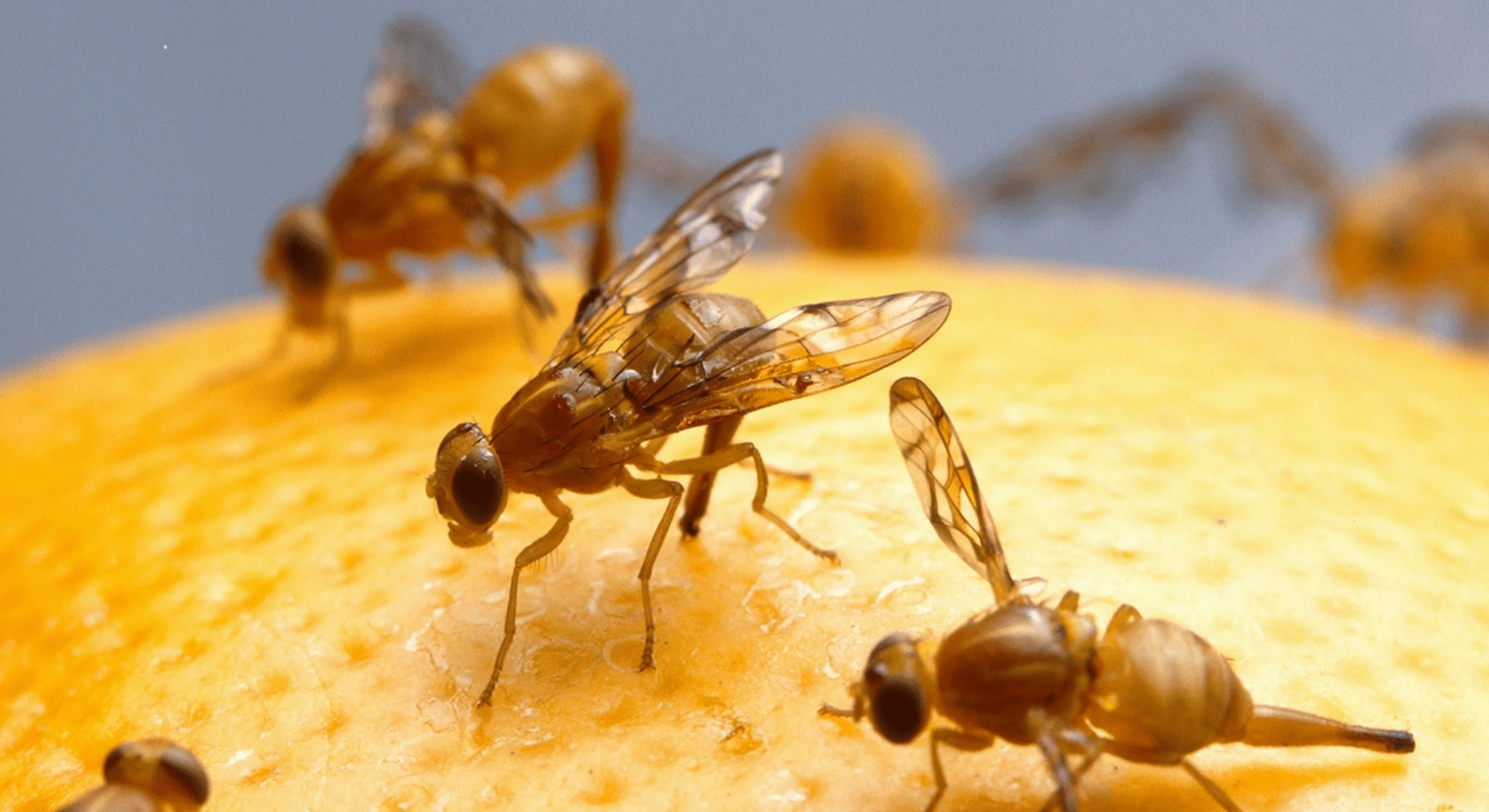
Fruit flies usually live between 40 to 50 days, but many things can change that. Temperature, food, and environment all play a role.
In warmer places, they grow faster and may live shorter lives. In cooler spaces, their development slows, which can slightly extend their time.
Their life begins as an egg, then turns into a larva, then a pupa, and finally an adult. This entire process can happen in just 8 to 10 days under the right conditions.
Once they become adults, fruit flies focus almost entirely on feeding and laying eggs. A single female can lay hundreds of eggs in her short life. That’s how a small problem quickly turns into a bigger one.
Even though they don’t live long, their rapid growth means there can always be a new group right behind the last. That’s why infestations seem like they never end.
Knowing how long fruit flies live helps with both learning and control. It shows how fast they can multiply and gives a clear idea of when to act.
By understanding the life cycle of a fruit fly, it’s easier to break the pattern and keep them from spreading.
Adult Fruit Fly Lifespan vs. Full Life Cycle
The fruit fly lifespan includes several quick stages, but the adult phase is only part of the full picture. Here’s a clear breakdown to show how much time they spend in each stage and how fast they can grow:
| Stage | Time Spent (Approximate) | Details |
|---|---|---|
| Egg | 1 day | Laid on moist, rotting food surfaces |
| Larva | 4–5 days | Feeds and grows quickly |
| Pupa | 4–6 days | Develops into an adult inside a casing |
| Adult | 30–40 days | Lives to feed and lay eggs |
| Full Life Cycle | 8–10 days to become an adult | The entire growth from egg to adult happens fast |
As you can see, the full cycle from egg to adult happens in about a week, but the adult fruit fly lifespan can last over a month. This quick cycle is why infestations can grow so fast if left alone.
How Long Do Fruit Flies Live in a House?
In a typical home, fruit flies live about 30 to 40 days once they reach adulthood. The exact number can change depending on the temperature, how much food is around, and how easy it is for them to lay eggs.
Warm kitchens with ripe fruit, spills, or open trash bins give them the perfect place to live and reproduce.
Even though a single adult doesn’t live very long, the problem is that they lay eggs quickly.
A female can lay hundreds of eggs in her short life, and those eggs can become new adults in just over a week. That’s why fruit flies seem to keep coming back, even after cleaning.
To stop them from living longer in your home, it helps to remove food sources, keep surfaces dry, and take out trash often.
Less food means fewer eggs and a much shorter stay for any fruit flies.
What Factors Affect How Long Fruit Flies Live?

Several things can change how long fruit flies live. Their environment, food, and other daily conditions all play a role. Here are the main factors that affect the fruit fly lifespan inside homes and other indoor spaces:
Temperature
Fruit flies live longer in cooler spaces and grow faster in warmer ones. Higher heat speeds up their life cycle but shortens their lifespan. Cooler air slows their development and can extend how long they survive as adults.
Food Availability
Access to ripe fruit, sugary liquids, or leftovers keeps fruit flies alive longer. Without a steady food source, their life is shorter. Plenty of food also supports faster egg-laying, which makes infestations harder to control over time.
Humidity
Moist places help fruit flies stay alive longer. They need damp surfaces to lay eggs and for larvae to grow. Dry conditions slow down their activity and reduce how long they can survive inside homes or closed spaces.
Breeding Conditions
Fruit flies reproduce quickly if they find the right place. Dirty drains, trash bins, or old fruit provide ideal spots. Without a place to breed, even adult flies die off sooner, stopping the next generation from growing.
How Long Can Fruit Flies Live Without Food or Water?
Fruit flies can only survive about 2 to 4 days without food or water. Their bodies are small and lose moisture quickly, so they need constant access to sugary liquids and damp surfaces to stay alive.
Without food, they grow weak fast and stop reproducing.
Water is just as important. Even if food is available, they won’t live long without moisture. Dry conditions shorten their lifespan and stop eggs from hatching.
This is why cleaning up spills, sealing fruit, and drying out sinks or drains can help get rid of them.
Once their basic needs are removed, fruit flies die off quickly and stop coming back in large numbers.
Will Fruit Flies Go Away on Their Own?
No, fruit flies will not go away on their own. Even though their lifespan is short, that alone doesn’t stop the problem.
Adult flies may die off in a few days or weeks, but by then, they’ve already laid eggs. Those eggs turn into new flies quickly, starting the cycle again.
Larvae often hide in places you can’t see, like drains, trash bins, or bits of rotting fruit. So even if the adults disappear, the next group is already growing.
Waiting it out usually makes things worse. The longer you wait, the more chances they have to breed.
To stop them, you need to clean up food sources, block breeding spots, and stay consistent for at least a few weeks.
Common Myths About Fruit Fly Lifespan
There are many misunderstandings about how long fruit flies live and how they behave. These myths can lead to missed steps and make infestations harder to control:
- Fruit flies only live for a day: In reality, adults can live for 30 to 40 days in good conditions.
- Killing the adults ends the problem: Eggs and larvae stay behind and grow into more flies.
- They appear out of nowhere: Most come from produce, drains, or trash where eggs were already laid.
- Cold kills them right away: Cold slows them down, but it doesn’t always kill them quickly.
- They only lay eggs on fruit: They also use damp places like drains, mops, and trash bins.
- They’ll go away if ignored: Waiting usually gives them more time to multiply.
These myths make control harder. Knowing the facts helps you act early and stop fruit flies for good.
Conclusion
Learning about the fruit fly lifespan gave me a whole new way to look at such a tiny pest. I used to think swatting a few was enough. Now I know it’s all about timing and cutting off their next move before it starts.
You’ve got the same info now. Use it.
Don’t just react; get ahead of them. Watch where they gather, clear out their hiding spots, and give it a week or two of steady effort. That’s when you’ll start seeing real change.
One last thought: fruit flies aren’t stubborn, they’re just fast. But now, you’re faster.
Want more tips that actually work in real life? Go check out the other blogs. They’re written just like this: clear, honest, and made to help!