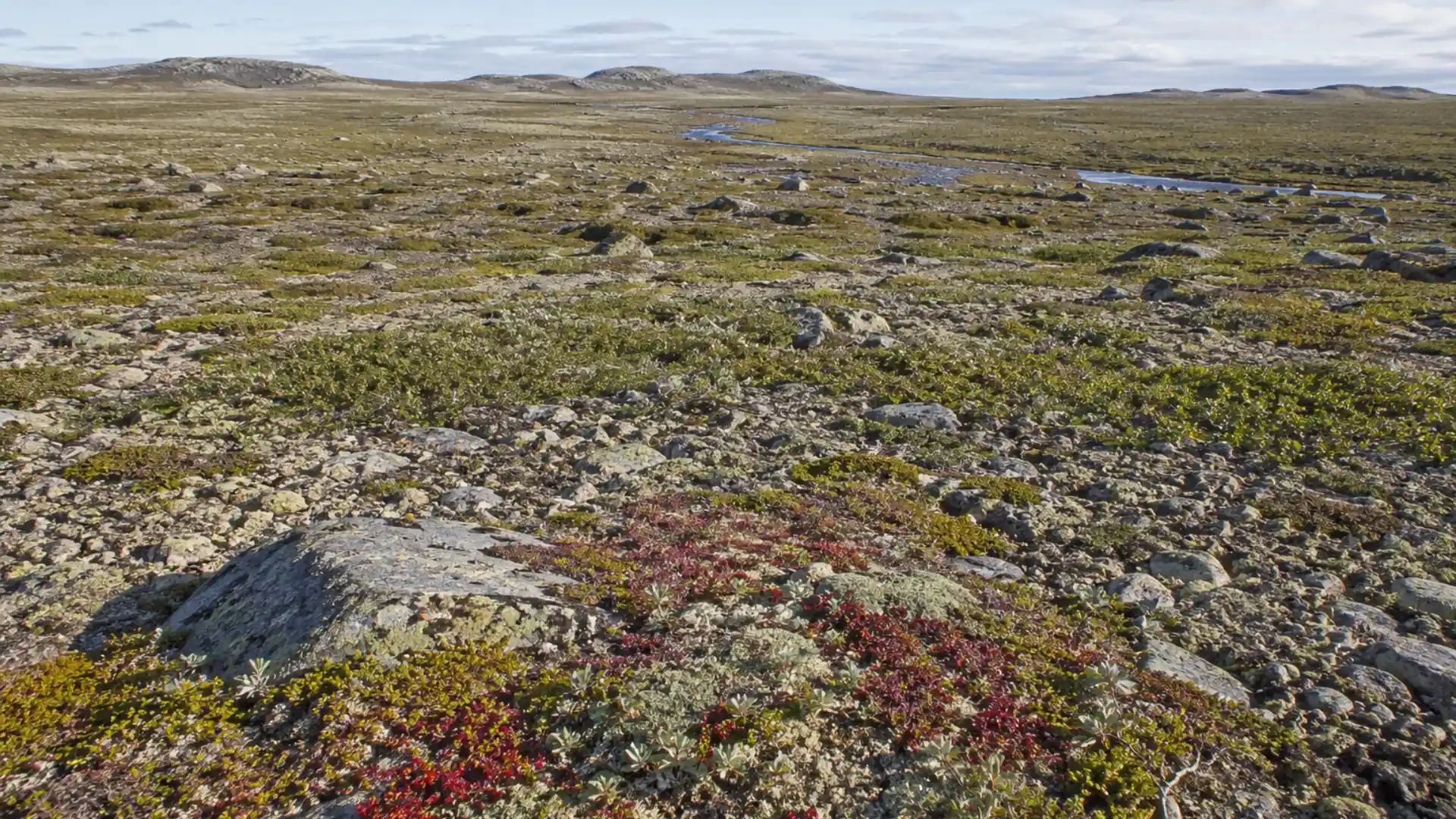
A stretch of Arctic ground can look flat, grey, and completely empty from a distance.
That is exactly what I assumed too, until I dug into how many tundra plants actually survive there.
Freezing temperatures, permafrost, and barely any nutrients still cannot stop a surprising range of species from taking hold.
Dwarf shrubs, small flowering plants, grasses, sedges, mosses, and lichens all root themselves here. They stay low and hold tight against the cold.
Each one on this list carries its own quiet trick for making it through conditions that would wipe out almost anything else.
What Are Tundra Plants?
Tundra plants are the cold-hardy species that grow across some of the harshest landscapes on Earth.
This includes the Arctic tundra in far northern latitudes and the alpine tundra found above the tree line on high mountains.
Both regions share freezing temperatures, strong winds, short growing seasons, and low precipitation.
Much of the Arctic tundra also sits over permafrost, with only a shallow active soil layer on top.
These harsh, shifting conditions keep trees from taking root, which is why low, ground-hugging vegetation like dwarf shrubs, grasses, and lichens dominates instead.
Tundra Plants and the Adaptations That Help Them Survive
Every plant on this list has figured out its own way to hold on when the odds are stacked against it. Here is what each one looks like, where it grows, and the trick that keeps it alive.
1. Arctic Willow
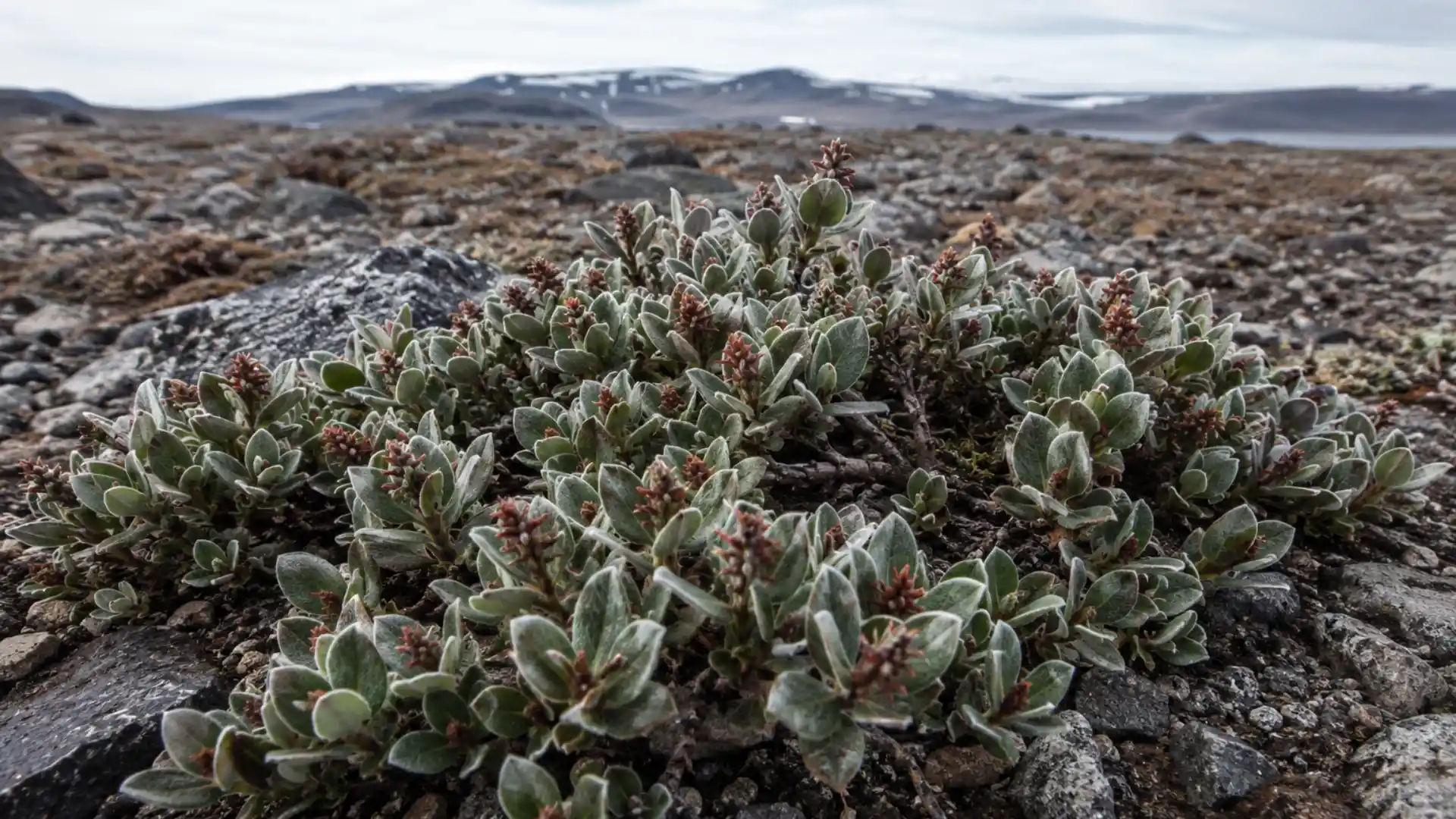
- Scientific name: Salix arctica
- Species: Arctic
- Appearance/Identification: A creeping, mat-forming plant with small oval leaves covered in fine silvery hairs
Despite growing only a few inches tall, the Arctic willow is technically a woody willow, so yes, it counts as a tree by classification even though it never looks like one.
Its ground-hugging habit keeps it out of the worst wind, and the hairy leaf surface traps a thin layer of warmth.
I find it one of the more surprising entries on this list simply because “tree” is the last word most people would use to describe it.
2. Arctic Poppy
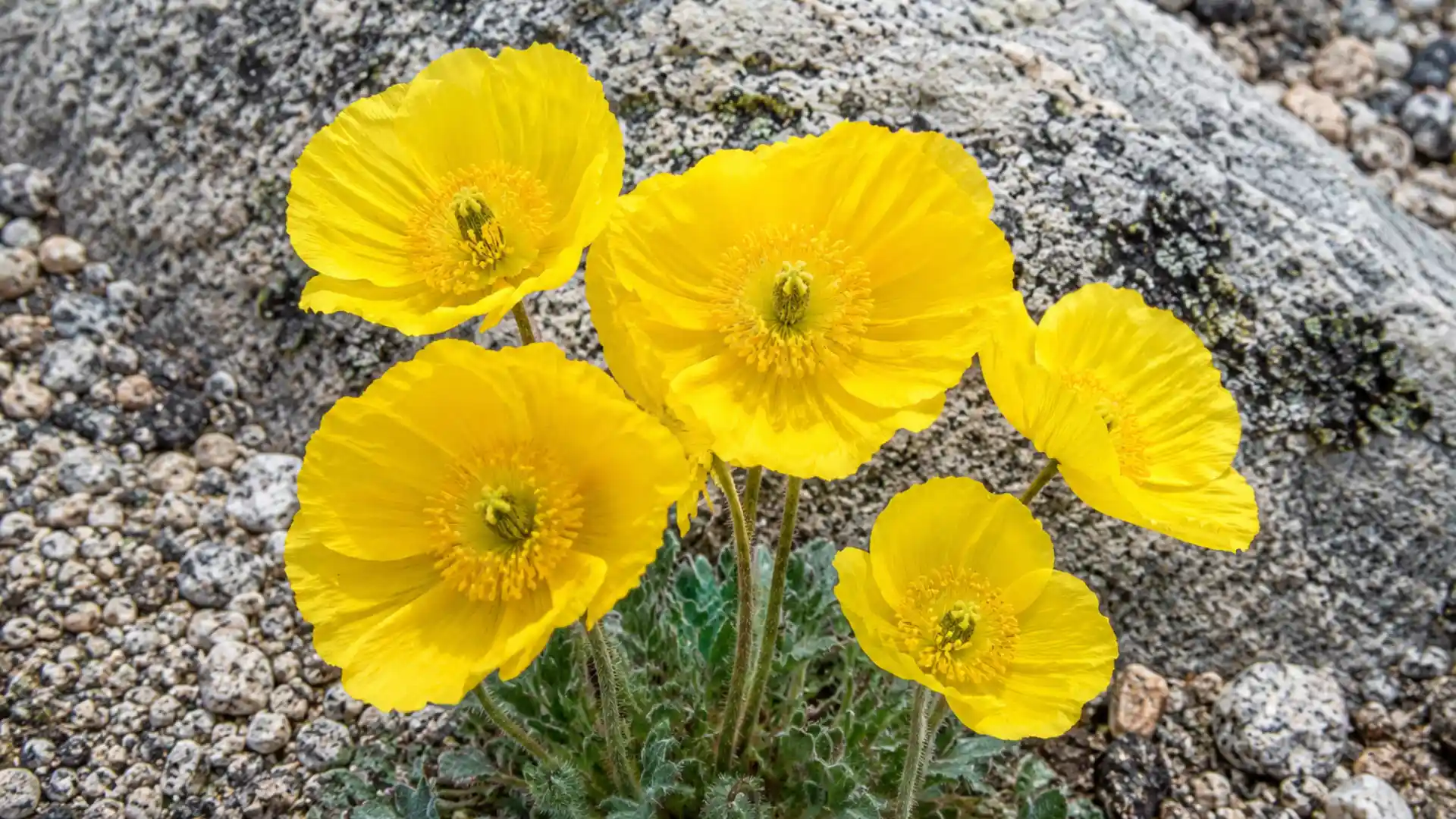
- Scientific name: Papaver radicatum
- Species: Arctic
- Appearance/Identification: Small, papery yellow flowers on thin stems above a low tuft of leaves
The Arctic poppy makes the most of a growing season that barely lasts a few weeks.
Its flowers turn to track the sun through the day, a behavior called heliotropism, which keeps the bloom warmer and more attractive to the handful of pollinators active in the region.
That small movement can make a real difference to seed production when every warm hour is limited.
3. Purple Saxifrage
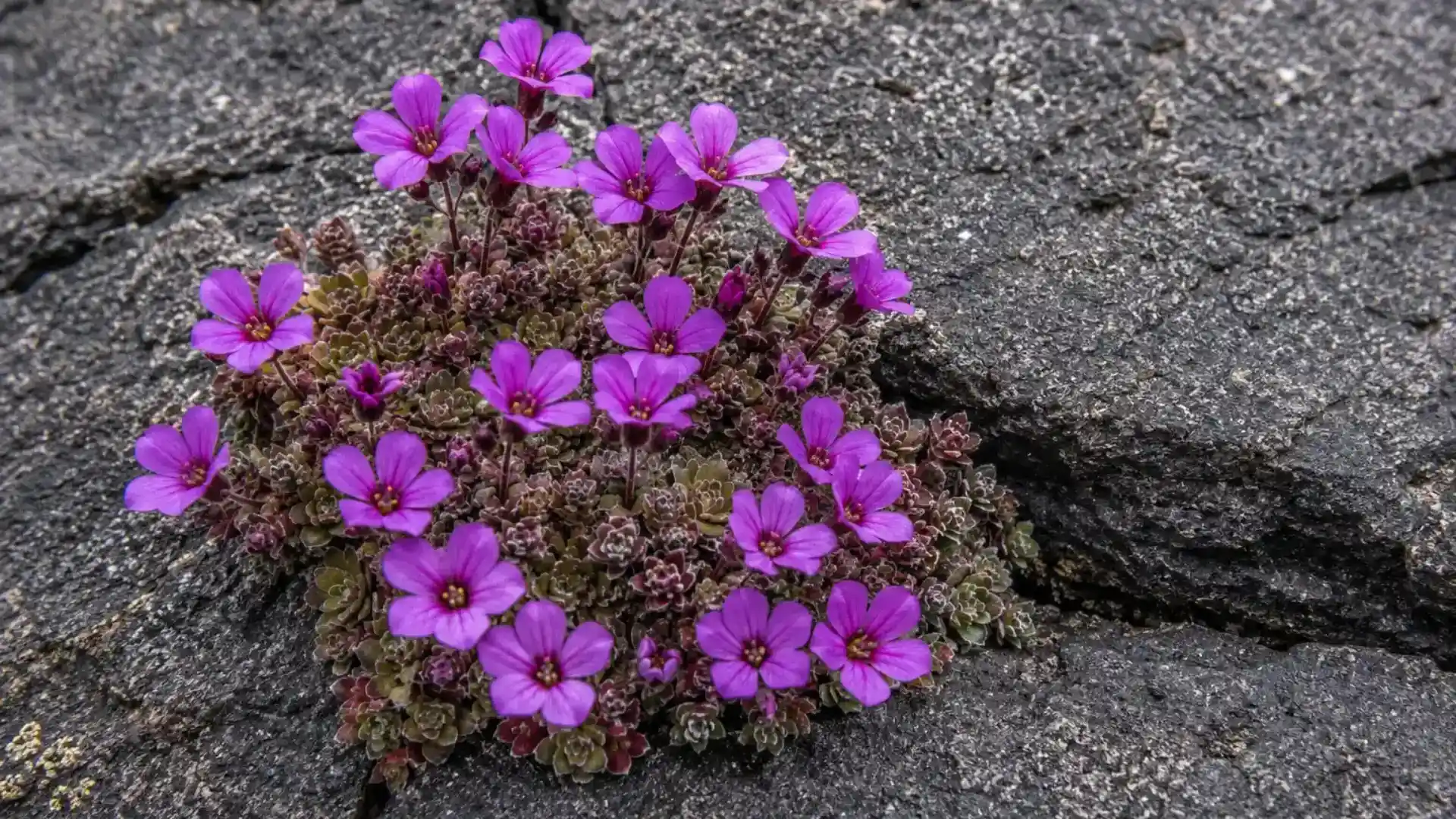
- Scientific name: Saxifraga oppositifolia
- Species: Both
- Appearance/identification: A dense, cushion-forming plant with tiny leaves and bright purple-pink flowers
Purple saxifrage is often one of the first plants to bloom once snow melts, sometimes flowering while patches of ice are still nearby.
Its compact, cushion-like form keeps the plant low and tight, reducing wind exposure and helping retain heat near the ground.
That early start gives it a head start on reproduction before the short season closes again.
4. Moss Campion
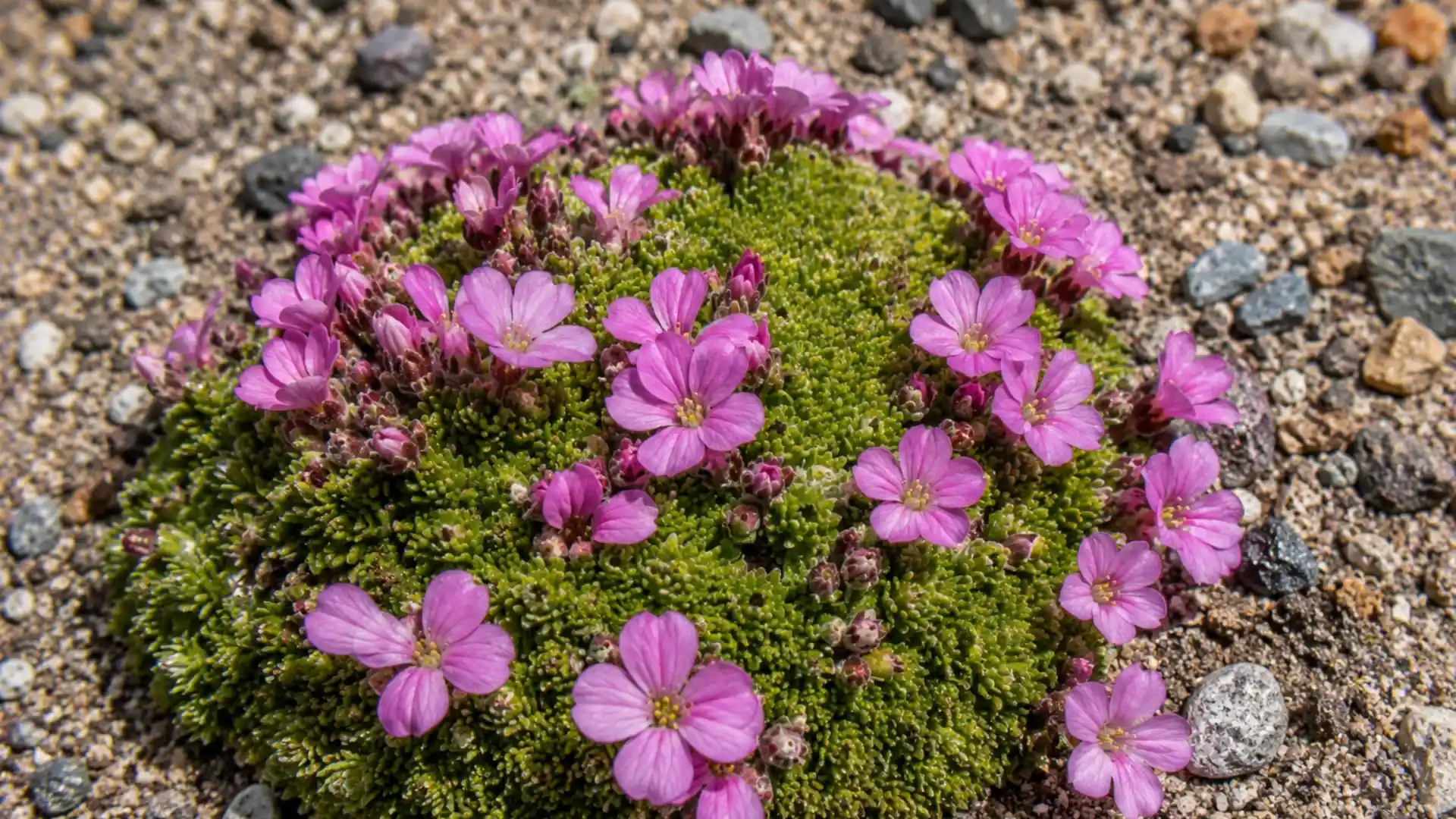
- Scientific name: Silene acaulis
- Species: Both
- Appearance/Identification: A tightly packed, dome-shaped cushion covered in small pink to purple flowers
Moss campion grows so densely that the inside of its cushion can stay noticeably warmer and calmer than the air just outside it.
This self-made microclimate protects the plant’s core from wind and cold, and it also creates a small shelter where insects sometimes take refuge.
It is a good example of how growth shape alone can double as a survival strategy.
5. Mountain Avens
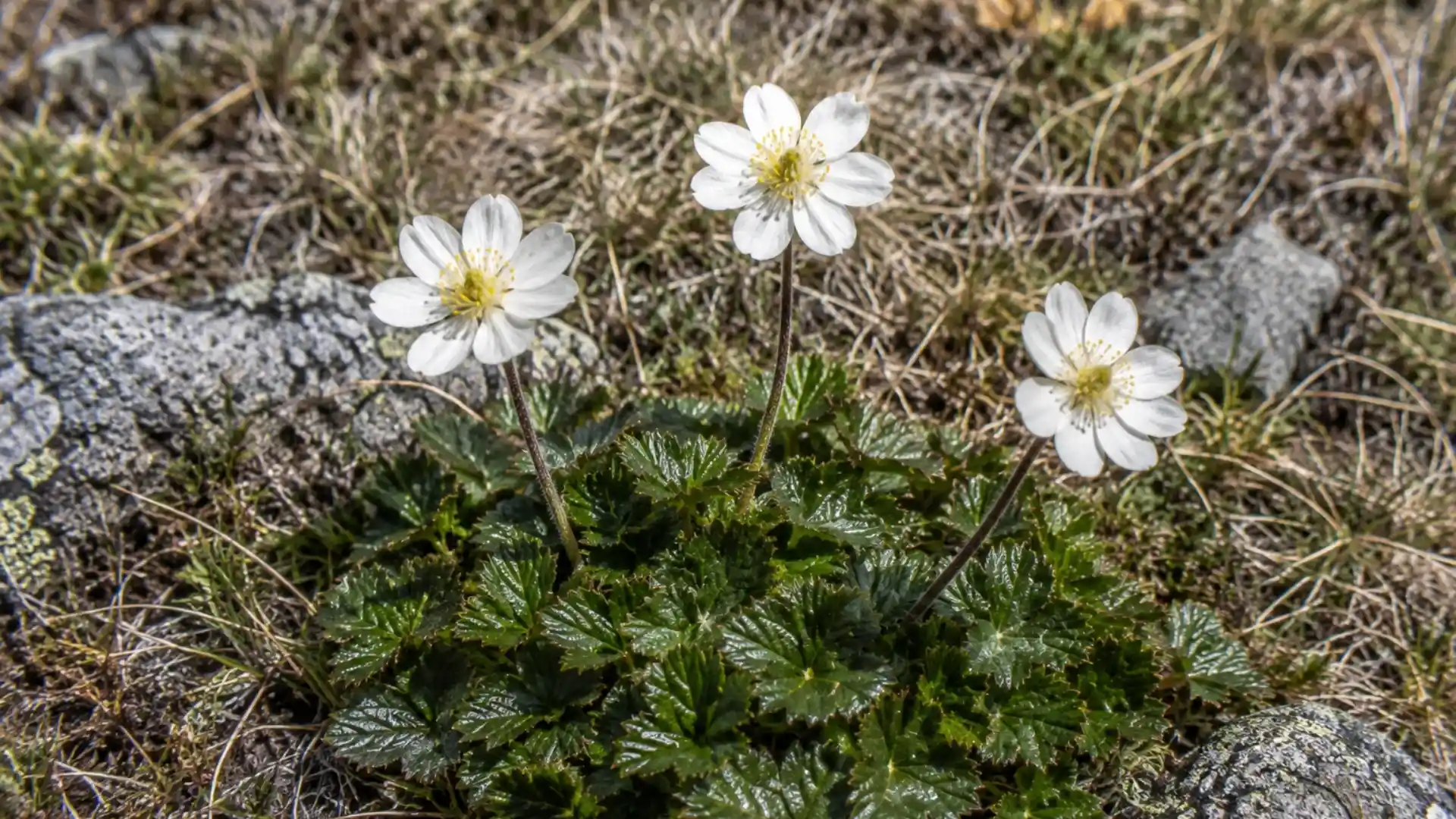
- Scientific name: Dryas octopetala
- Species: Both
- Appearance/Identification: A ground-hugging, evergreen plant with glossy leaves and white, eight-petaled flowers
Mountain avens spreads outward instead of upward, forming dense mats that stay close to the soil.
Its evergreen leaves let it start photosynthesizing the moment temperatures allow, without waiting to regrow foliage first.
This mat-forming approach shows up again and again in tundra vegetation, and mountain avens is one of the clearest examples of why it works so well here.
6. Arctic Lupine
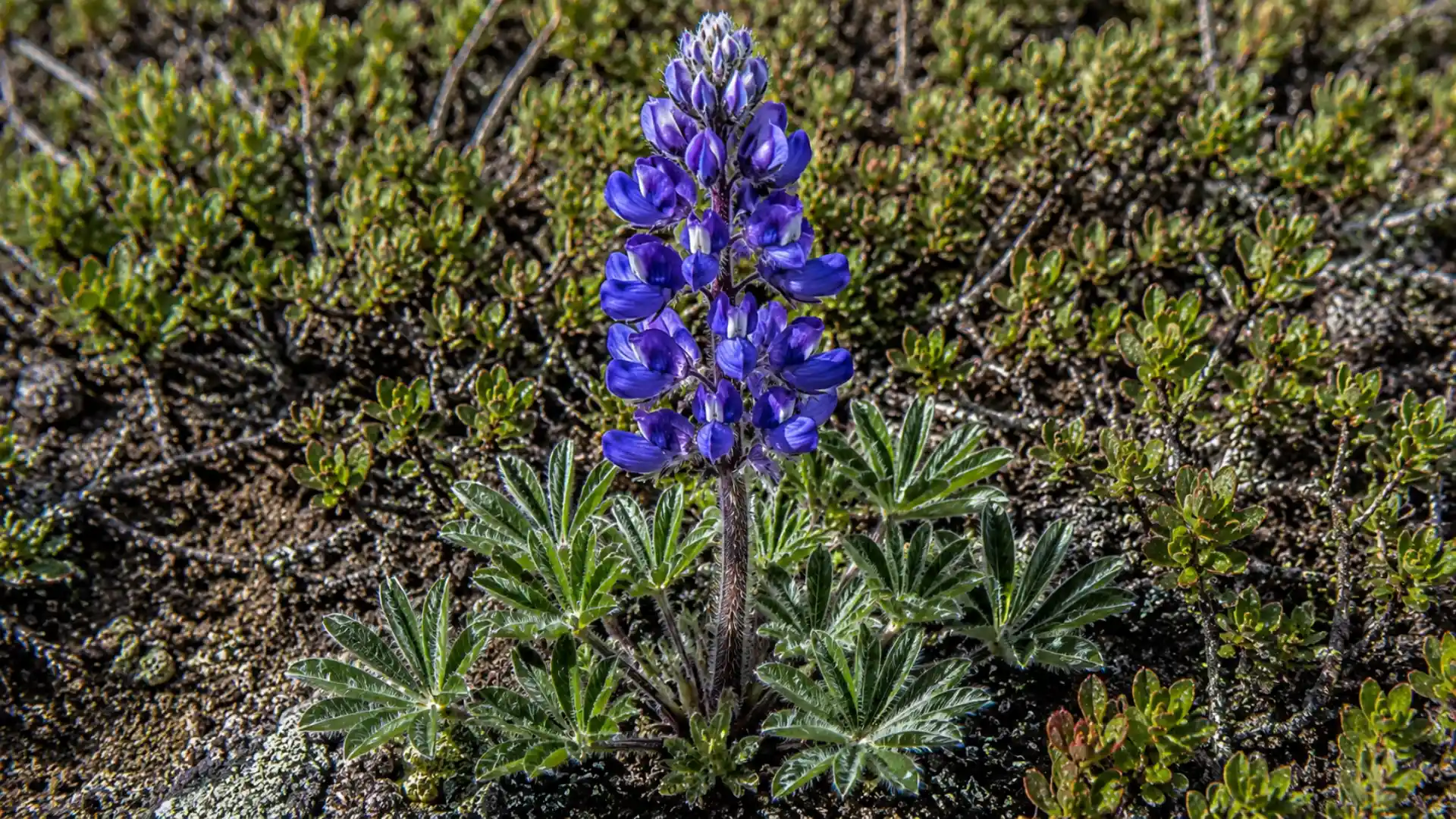
- Scientific name: Lupinus arcticus
- Species: Arctic
- Appearance/Identification: Tall spikes of purple-blue flowers rising above hairy, palm-shaped leaves
The fine hairs covering Arctic lupine’s leaves and stems do more than one job.
They help reduce water loss in dry, windy conditions and act as a light buffer against cold air moving across the plant’s surface.
Compared to some of the lower cushion plants on this list, the lupine’s more upright form makes it one of the taller and more visually striking tundra wildflowers.
7. Bearberry
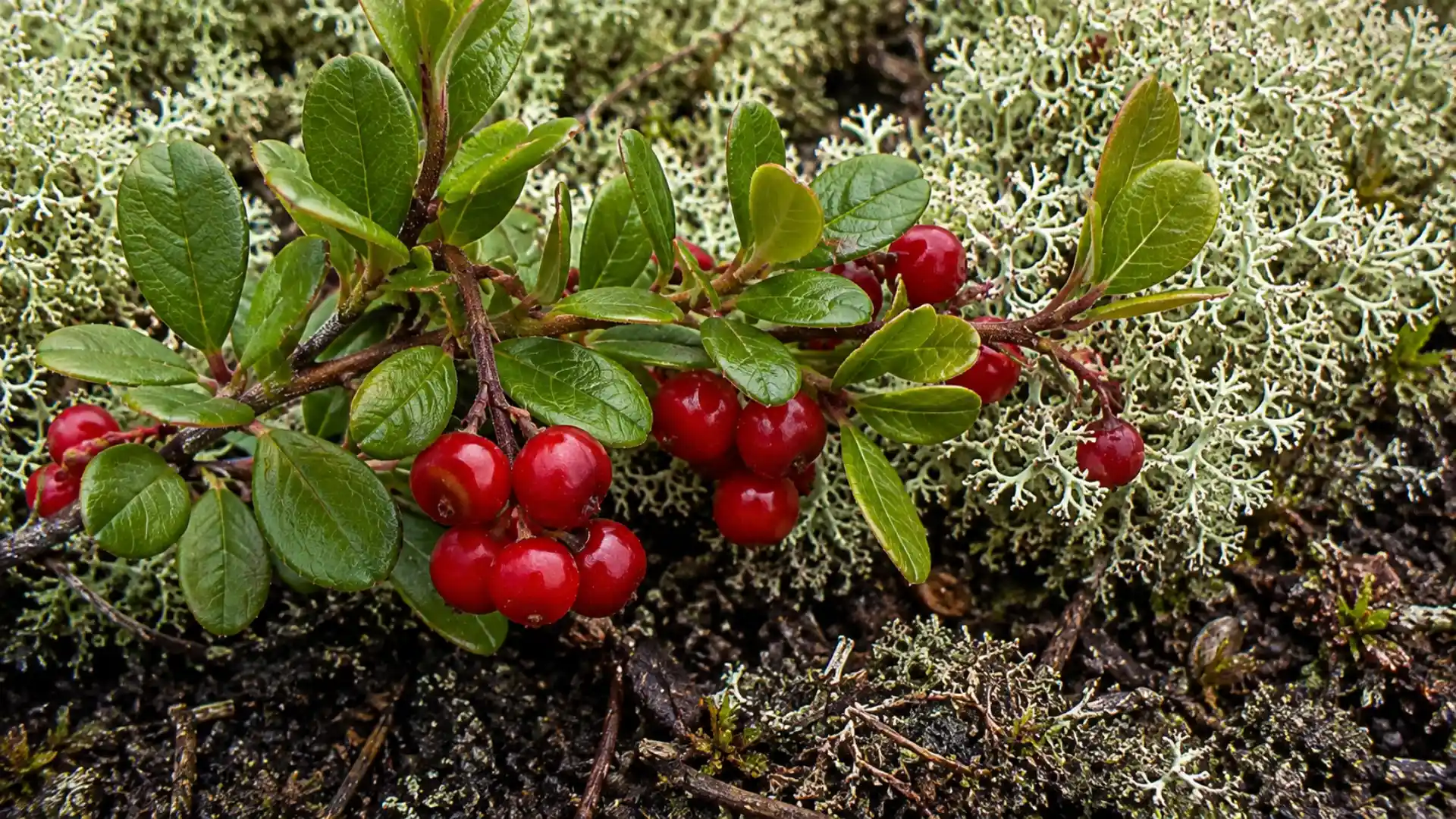
- Scientific name: Arctostaphylos uva-ursi
- Species: Both
- Appearance/Identification: A low, spreading evergreen shrub with leathery leaves and small red berries
Bearberry’s tough, leathery leaves are built to withstand cold, wind, and dry air without dying back each year.
Its creeping stems root as they spread, letting the plant expand into dense ground cover rather than growing tall and exposed.
The bright red berries are one of the easier identification markers, and they also serve as a food source for wildlife through the colder months.
8. Labrador Tea
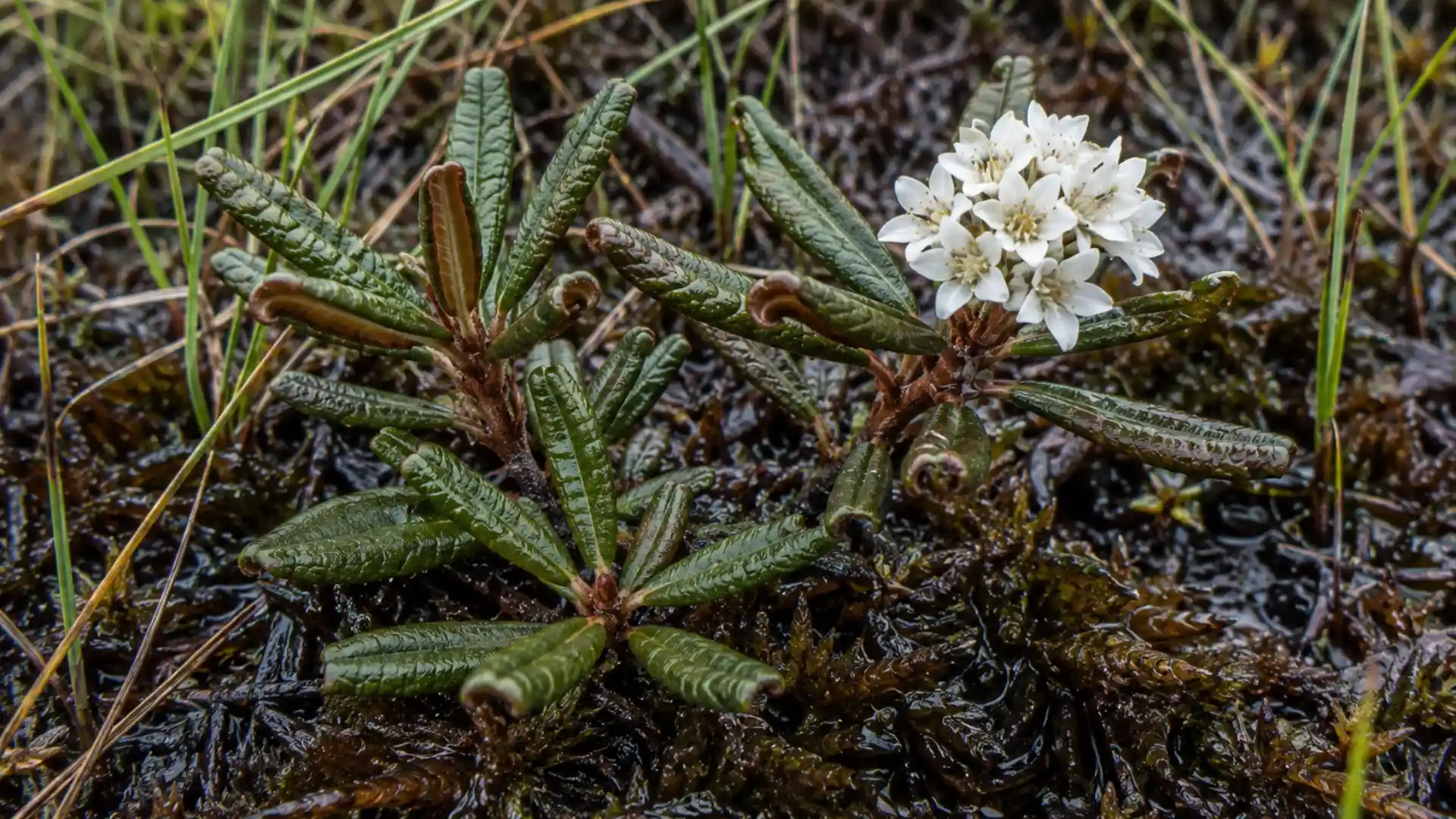
- Scientific name: Rhododendron groenlandicum
- Species: Arctic
- Appearance/Identification: An evergreen shrub with narrow leaves that curl at the edges and have a fuzzy underside
Keeping its leaves through winter means Labrador tea skips the yearly cost of building an entirely new set of foliage once the short growing season starts.
The rolled leaf edges and fine hairs on the underside both help cut down on moisture loss in dry, windy conditions.
It is a common sight across Arctic and subarctic wetlands and open tundra alike.
9. Arctic Bell-Heather
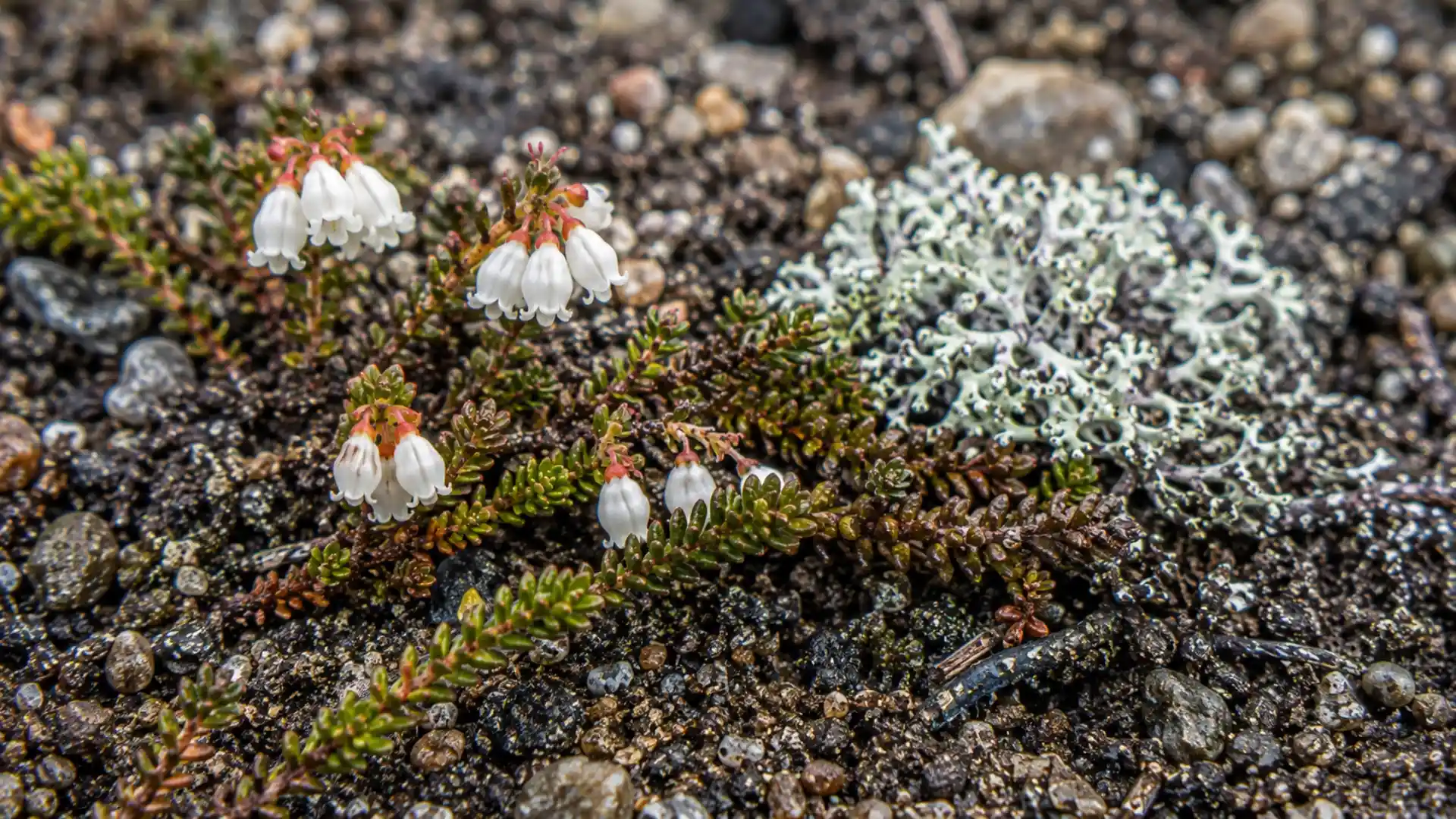
- Scientific name: Cassiope tetragona
- Species: Arctic
- Appearance/Identification: A low evergreen shrub with tiny, scale-like leaves and small bell-shaped white flowers
When a growing season only lasts a few weeks, regrowing leaves from scratch every year is a costly gamble.
Arctic bell-heather avoids that problem entirely by keeping its small, tightly packed leaves year-round, ready to function as soon as conditions allow.
Its low, shrubby form also keeps it sheltered close to the ground, out of the harshest wind.
10. Crowberry
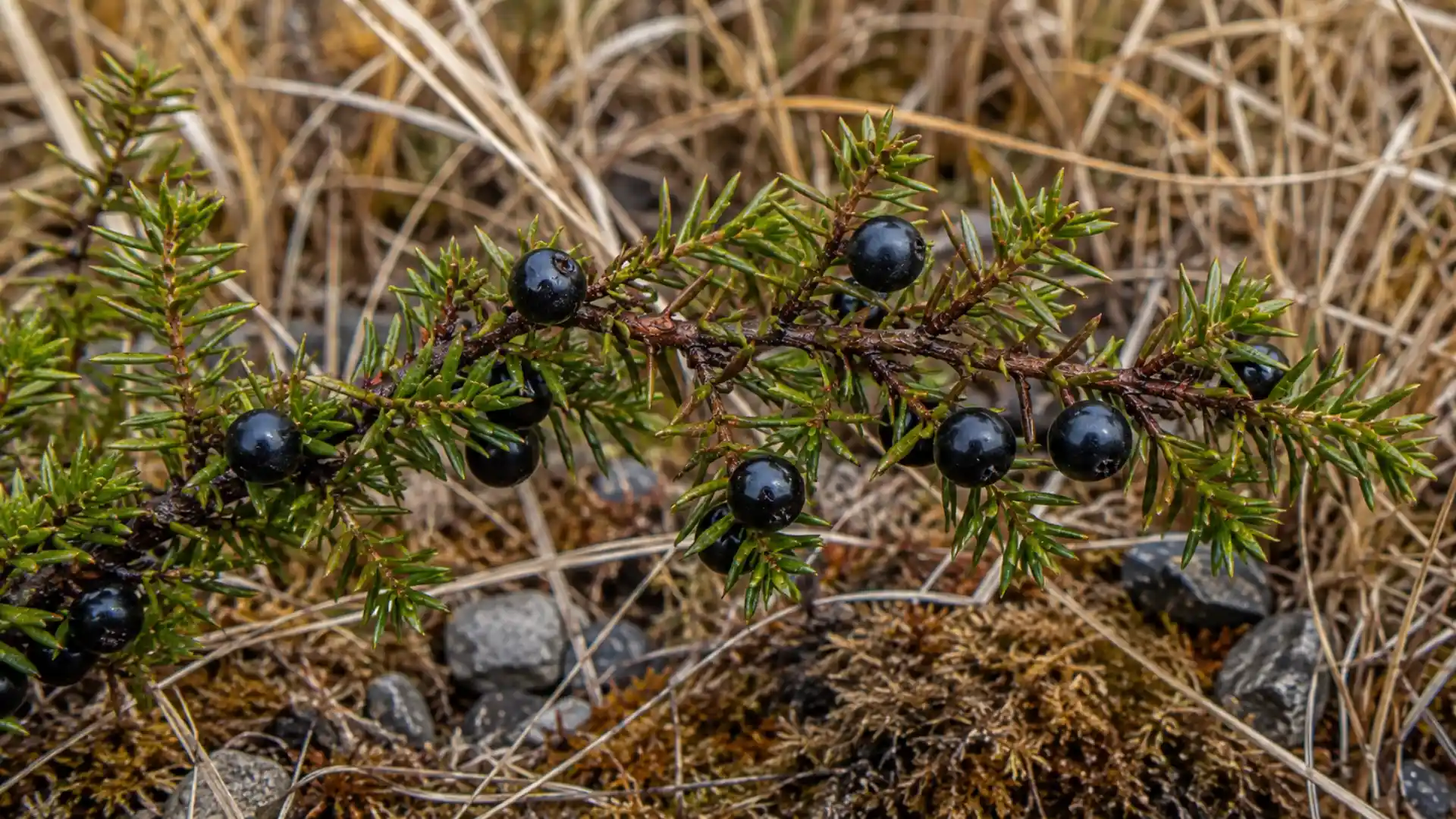
- Scientific name: Empetrum nigrum
- Species: Both
- Appearance/Identification: A low, spreading evergreen shrub with needle-like leaves and small dark berries
Crowberry grows in dense, ground-hugging mats that limit exposure to cold, drying wind, similar in principle to what bearberry does.
The needle-like leaves reduce surface area, which helps the plant conserve moisture.
Its dark berries persist into winter in some regions, making it a useful food source for birds and small mammals when little else is available.
11. Bog Bilberry
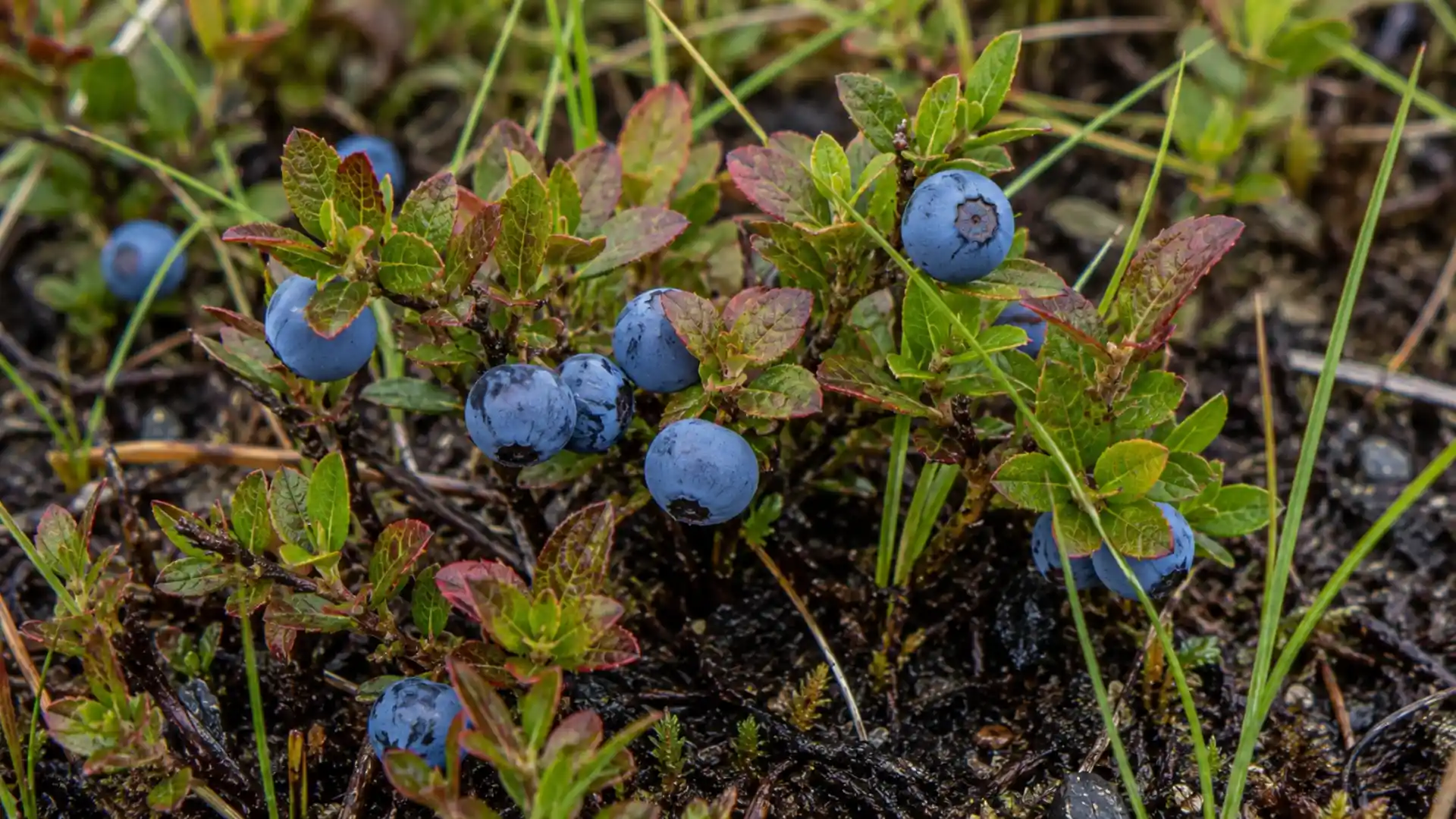
- Scientific name: Vaccinium uliginosum
- Species: Both
- Appearance/Identification: A low, deciduous shrub with small rounded leaves and pale blue, edible berries
Unlike several of the evergreen shrubs on this list, bog bilberry loses its leaves each year, putting more of its energy into a compact, dwarfed form instead.
That small size reduces how much of the plant is directly exposed to wind and cold.
Its berries are edible and have long been gathered by people living in Arctic and alpine regions.
12. Cotton Grass
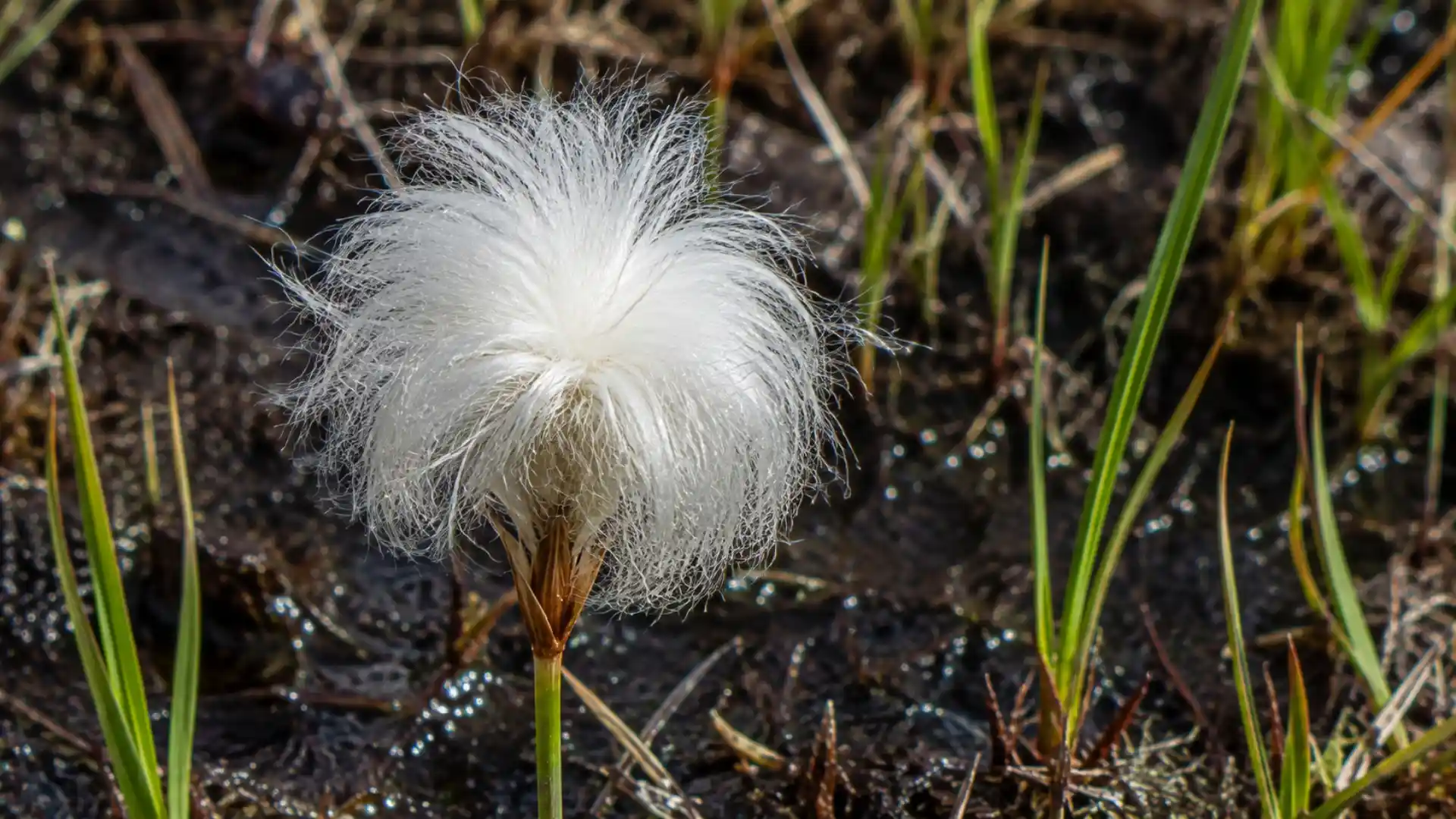
- Scientific name: Eriophorum spp.
- Species: Both
- Appearance/identification: A tussock-forming sedge topped with soft, white, cotton-like seed heads
Cotton grass grows in dense clumps called tussocks, which cluster many individual shoots tightly together at the base.
This clumped growth traps warmth near the plant’s core and offers some shelter from wind, similar to the microclimate effect seen in cushion plants.
The fluffy white seed heads are one of the most recognizable sights across open tundra in summer.
13. Alpine Fescue
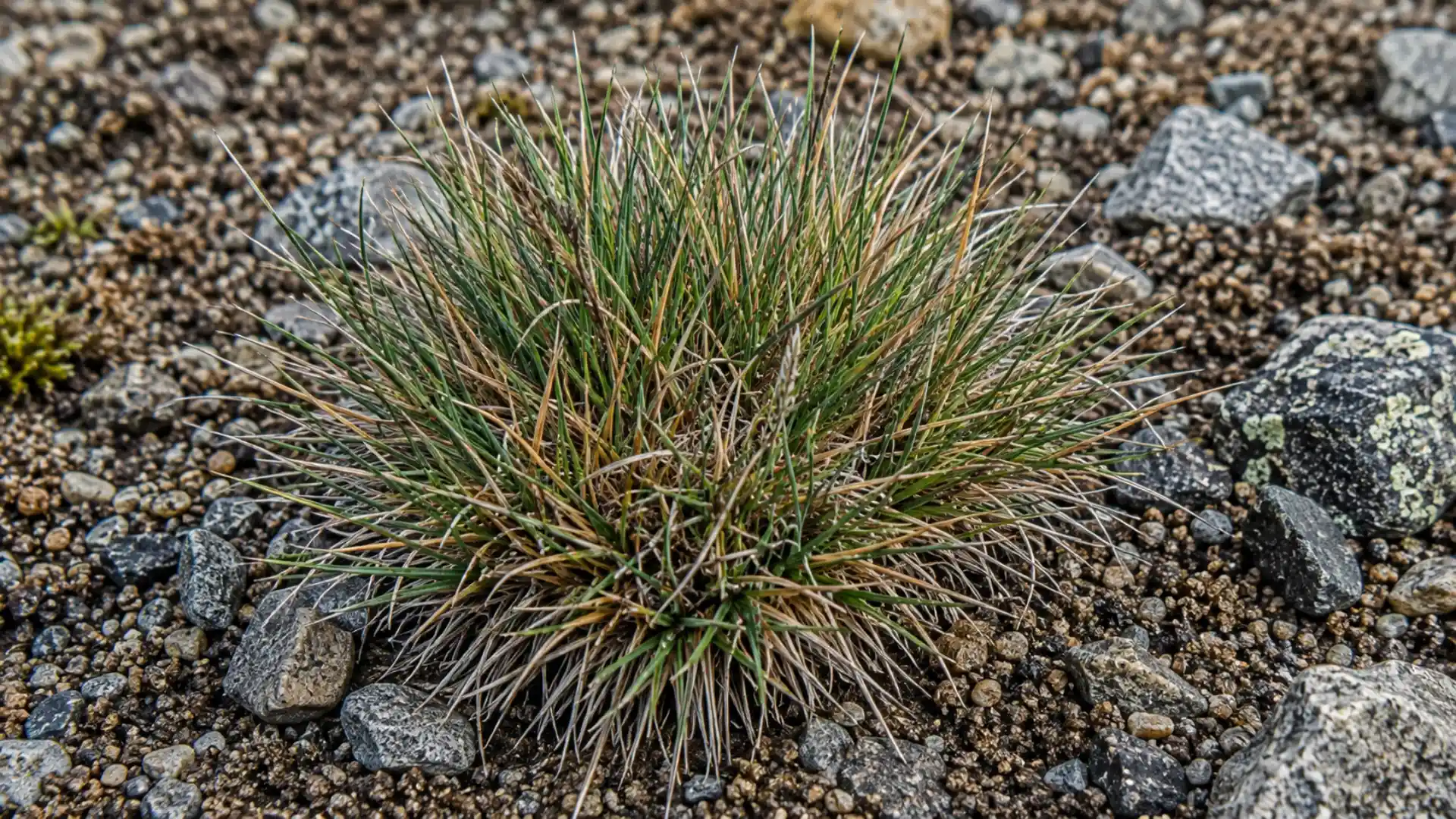
- Scientific name: Festuca brachyphylla
- Species: Alpine
- Appearance/Identification: A compact, low-growing grass forming small tufted clumps
Alpine fescue reminds us that tundra vegetation is not limited to wildflowers and dwarf shrubs.
As a true grass, it grows in tight tussocks close to the ground, which helps it avoid the worst of the wind at higher elevations.
It fills a different ecological role than the flowering plants around it, often stabilizing thin alpine soils where little else can take hold.
14. Black Alpine Sedge
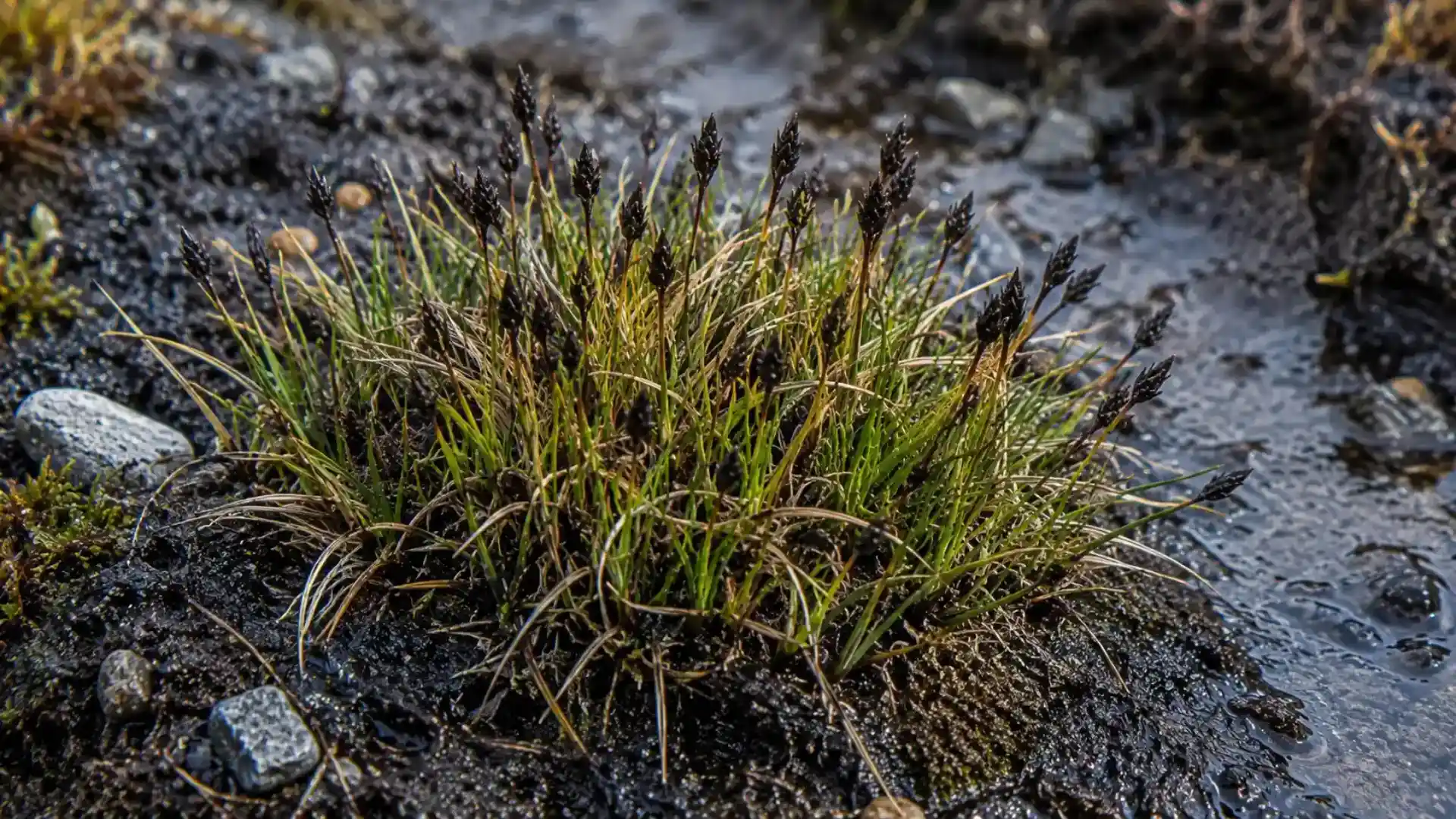
- Scientific name: Carex nigricans
- Species: Alpine
- Appearance/Identification: A compact, grass-like sedge with dark seed heads growing in dense tufts
Sedges like this one occupy some of the coldest, most exposed patches of alpine terrain, often in areas where snow lingers well into the growing season.
Its compact, clumped growth form keeps the plant low and protected, much like the tussock-forming grasses nearby.
Sedges as a group play a quiet but important role in holding tundra soils together.
15. Lance-Leaved Stonecrop
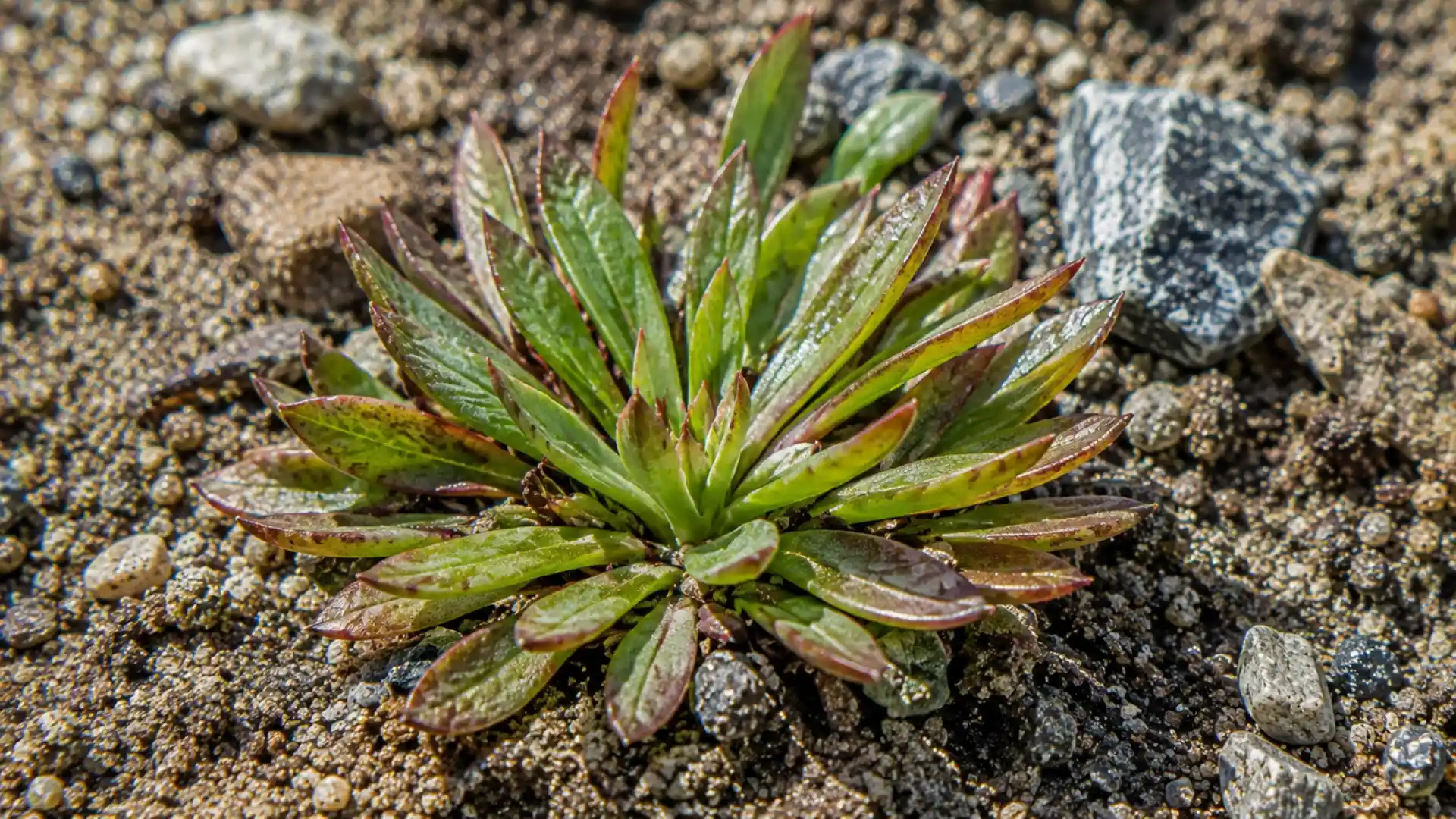
- Scientific name: Sedum lanceolatum
- Species: Alpine
- Appearance/Identification: A small, succulent-like plant with fleshy, lance-shaped leaves arranged in loose rosettes
This stonecrop stores water directly in its thick leaves, a strategy that helps it cope with the dry, well-drained soils common at high elevations.
Its low, rosette-forming growth keeps it close to the ground and out of direct wind.
Among the plants on this list, it stands out as one of the few with a distinctly succulent appearance.
16. Woolly Pussytoes
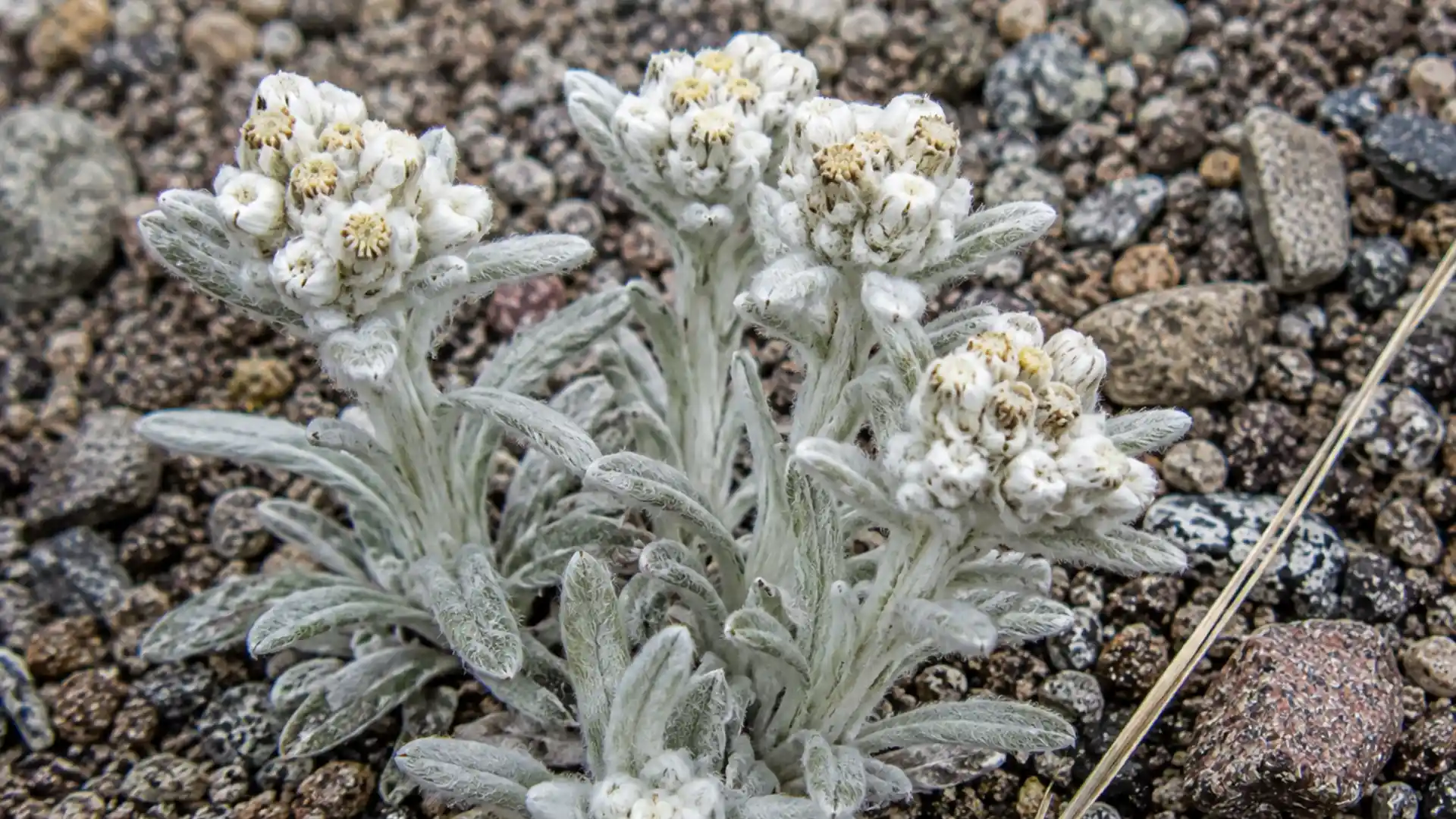
- Scientific name: Antennaria lanata
- Species: Alpine
- Appearance/Identification: A fuzzy, silver-grey plant with dense hairs covering its leaves and small clustered flower heads
Woolly pussytoes might be the clearest example on this list of the “hairy plant” adaptation.
The dense covering of fine hairs across its leaves helps buffer the plant against wind and reduces moisture loss in dry alpine air.
That same fuzzy texture is also what gives the plant its common name, since the flower clusters resemble small paws.
17. Alpine Snowbell
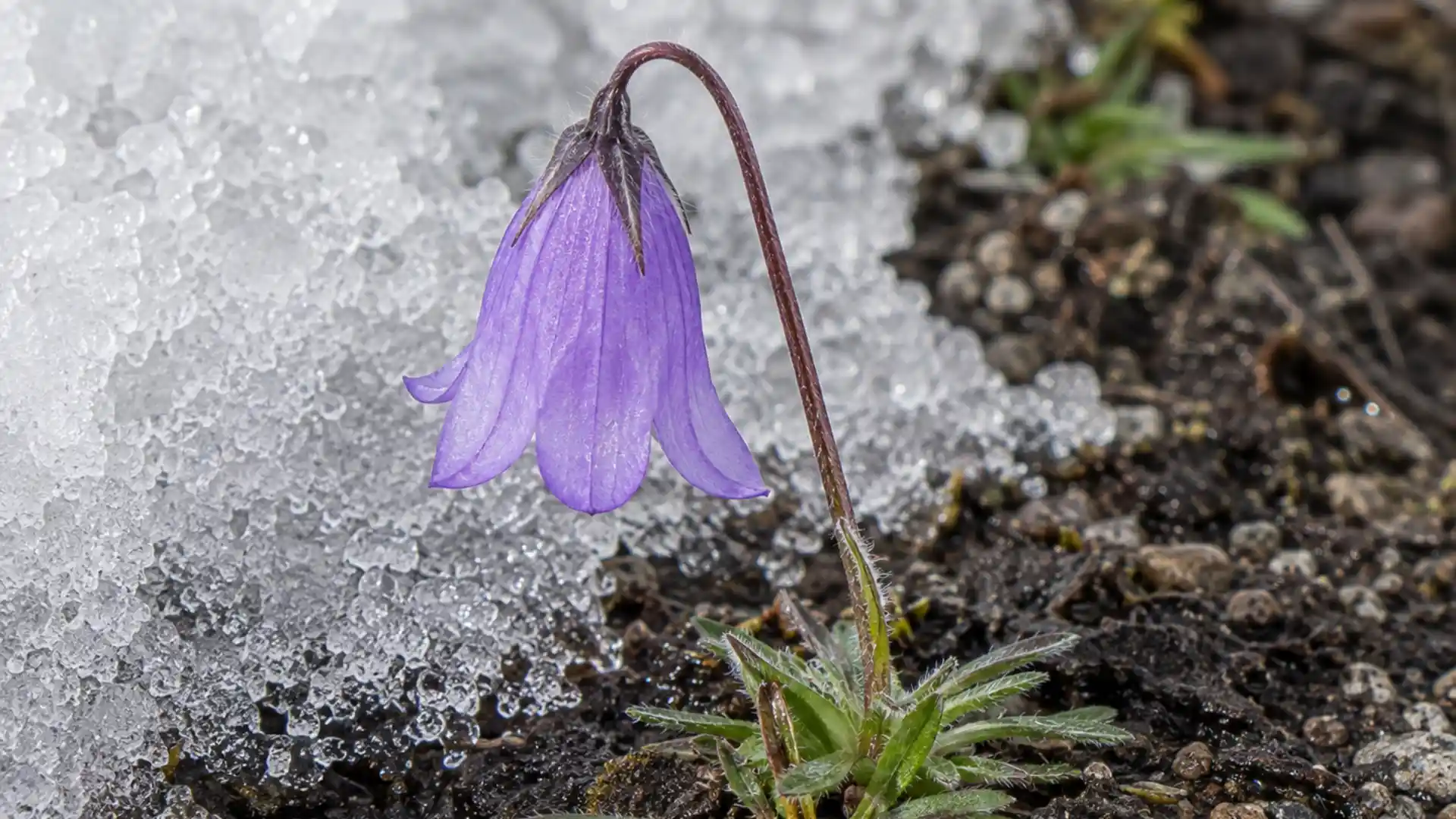
- Scientific name: Soldanella alpina
- Species: Alpine
- Appearance/Identification: A small perennial with delicate, bell-shaped purple flowers on thin stems
As a perennial, alpine snowbell does not need to rebuild its entire structure from seed each year.
Instead, it relies on resources stored from previous seasons, giving it a faster start once conditions turn favorable.
Its delicate, nodding flowers are a familiar sight in alpine meadows just after snowmelt, often appearing before many other species have emerged.
How Do Tundra Plants Survive in Such Harsh Conditions?
I spent a while trying to figure out how anything holds on in a place with so little warmth, and it comes down to a handful of physical strategies that keep showing up across very different species.
Here is what tundra plants actually rely on to make it through.
- Low, cushion-shaped growth keeps plants out of the wind and lets some species build a warmer, more sheltered pocket of air around themselves.
- Shallow, spreading roots stay within the seasonally thawed active layer instead of pushing into the permafrost below, which never fully thaws.
- Fine hairs on leaves and stems trap a thin layer of air for insulation and reduce moisture loss in constant wind.
- Evergreen foliage lets certain shrubs skip the yearly cost of regrowing leaves, so they can start photosynthesizing the moment conditions allow.
- Fast growth and early flowering let plants take full advantage of a growing season that sometimes lasts only a few weeks.
- Perennial life cycles mean many species regrow from established roots each year rather than starting over from seed as an annual would.
- Darker pigments or compact leaf shapes in certain species help absorb more heat or limit water loss, though these traits vary from plant to plant rather than applying across the board.
What stood out to me while researching this is that no single adaptation does all the work. Each species relies on two or three of these traits, which is what makes survival in the tundra possible at all.
What Types of Plants Grow in the Tundra?
Once you start looking past the individual species, a clearer picture emerges of the main plant groups that make up tundra vegetation.
The same way plant life shifts across climate types elsewhere, tundra vegetation breaks down into a handful of clear categories too. Here is how they break down.
| Plant Type | What Defines It | Examples From This List |
|---|---|---|
| Dwarf Shrubs | Low, spreading, and woody | Arctic willow, bearberry, crowberry, bog bilberry |
| Flowering Plants | Herbaceous, blooms briefly | Arctic poppy, arctic lupine, alpine snowbell |
| Grasses | Compact, wind-resistant tufts | Alpine fescue |
| Sedges | Grass-like, thrives in wet ground | Cotton grass, black alpine sedge |
| Mosses | Holds moisture, stabilizes soil | Found across Arctic and alpine tundra |
| Lichens | Fungus-algae partnership | Common ground cover across Arctic tundra |
| Cushion Plants | Tight, dome-shaped mounds | Moss campion, purple saxifrage |
| Evergreen Plants | Keeps foliage year-round | Labrador tea, Arctic bell-heather, mountain avens |
This lines up with National Geographic’s view of tundra vegetation as shrubs, grasses, mosses, and lichens (source). Alpine zones simply add more flowering and cushion-forming plants on top of that base.
Why Don’t Trees Grow in the Tundra?
Trees need deep, stable roots and a long stretch of warm months to grow tall, and tundra offers neither.
Permafrost blocks roots from reaching any real depth, while a short growing season, harsh cold, and constant strong wind limit how much a plant can build up each year.
Thin, nutrient-poor soil adds another barrier.
In alpine settings, this cutoff shows up clearly as the tree line, the elevation above which trees simply stop appearing.
Arctic willow bends this rule in a strange way, since it is technically a tree species that never grows more than a few inches tall.
Do Tundra Plants Grow Back Every Year?
Most tundra plants are perennials. They do not start over from seed each year.
Some, like Labrador tea and mountain avens, stay evergreen and hold their leaves through winter. Others, like bog bilberry, are deciduous.
They drop their leaves before the cold sets in and grow new ones each spring.
Either way, these plants store energy in their roots over winter.
That stored energy lets them restart growth fast once conditions improve, without wasting any of the short season rebuilding from scratch.
Wrapping It Up
Tundra plants prove that survival does not need size or speed, just the right shape, timing, and patience.
Cushion-forming saxifrage, evergreen bell-heather, tiny arctic willows – each one of these tundra plants has quietly worked out how to hold its ground where almost nothing else can.
The next time frozen, windswept land crosses your path, it might be worth a second look.
There is likely more growing beneath the surface than expected.
Which of these plants surprised you the most? Drop a comment and let me know.
Frequently Asked Questions (FAQs)
Are Any Tundra Plants Edible?
Yes, species like bearberry, bog bilberry, and crowberry produce berries long gathered by Arctic communities. Some tundra plants are toxic, though, so proper identification matters before foraging.
How is Climate Change Affecting Tundra Plants?
Warming temperatures are letting shrubs grow taller and crowd out lichens that animals like caribou depend on. This is an actively shifting area of research, so it is worth checking current sources.
Can Tundra Plants Be Grown in a Home Garden?
Some, like moss campion and certain saxifrages, thrive in alpine rock gardens with well-drained soil and cool summers. Most Arctic species are harder to replicate outside their native conditions.
How Long Do Tundra Plants Typically Live?
Many perennials live for decades due to extremely slow growth, especially among cushion plants and dwarf shrubs. Exact lifespans vary by species, so treat any number as an estimate.
Do Tundra Plants Grow in Antarctica Too?
Yes, though Antarctic tundra supports far fewer species, mostly mosses, lichens, and a couple of flowering plants. Its extreme isolation and ice cover make it one of the least plant-friendly tundra types.