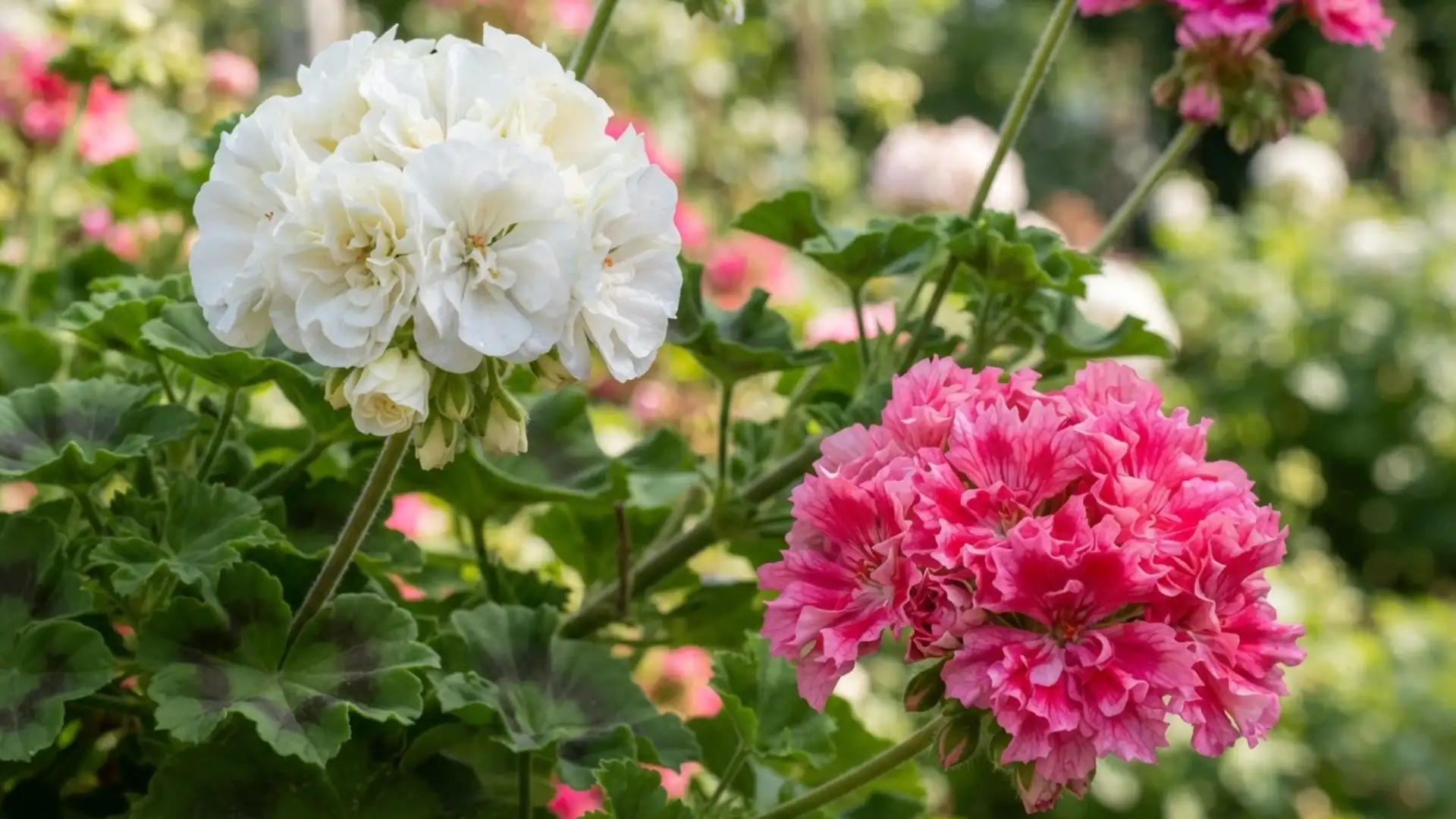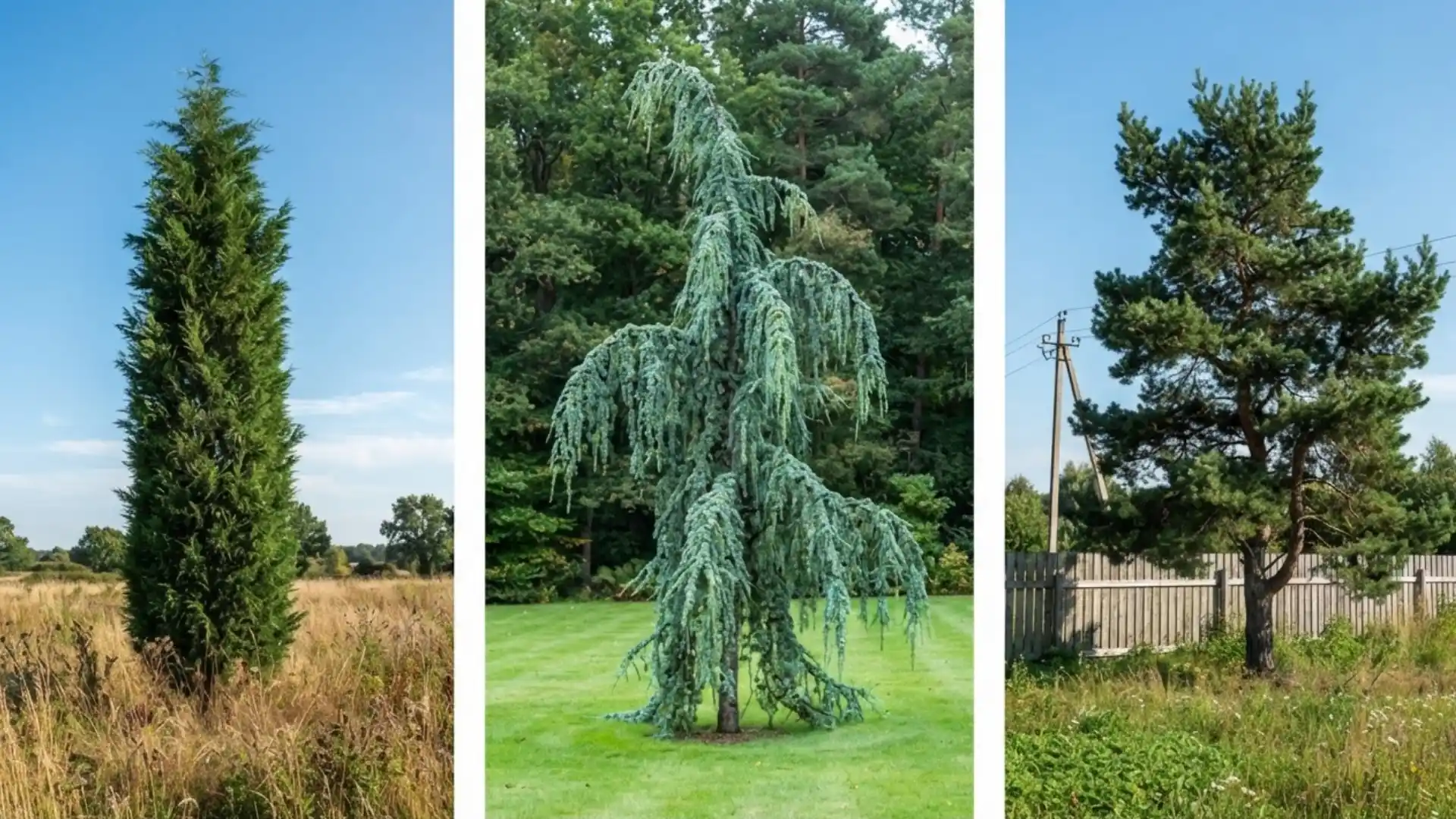
Deciduous forest plants are the trees, shrubs, and wildflowers that drop their leaves every fall and grow new ones every spring.
That single trait is what “deciduous” actually means, and it shapes almost everything else about how these plants live.
Oaks and maples time their growth around it. So do the smaller wildflowers on the forest floor, which bloom early before the trees block their light.
Decades of fallen leaves have also built up soil rich enough to support it all.
So here is a simple walk through what these forests need, which plants actually grow in them, and why they are worth knowing about.
What is a Temperate Deciduous Forest?
Temperate deciduous forests are ecosystems where trees shed their leaves seasonally, a process called “deciduous.”
You will find these forests across North America, Europe, and East Asia, wherever the climate supports four distinct seasons.
These regions receive moderate rainfall throughout the year, with temperatures ranging from warm summers to cold winters. This seasonal rhythm shapes how plants grow, rest, and renew themselves.
The forest floor benefits from years of fallen leaves breaking down into nutrient-rich soil that stays moist yet drains well.
This combination of climate and soil creates perfect conditions for temperate forest plants to thrive, supporting everything from massive canopy trees to tiny spring wildflowers.
Key Characteristics of Deciduous Forest Plants
Deciduous forest plants have evolved remarkable traits that help them survive and flourish through dramatic seasonal shifts.
Here’s what sets them apart:
- They shed their broad leaves each fall and enter dormancy to conserve energy during harsh winters.
- Their deep root systems anchor them firmly while accessing water and nutrients from rich forest soil.
- Spring ephemerals bloom quickly before the canopy closes, completing their life cycle in weeks.
- Canopy trees thrive in full sunlight, while understory plants have adapted to grow in deep shade.
- Broadleaf structures maximize photosynthesis during the growing season, then drop to reduce water loss.
Each trait serves a purpose, helping plants survive the changing seasons and find their place in the forest’s layers.
Layers of Plant Life in a Deciduous Forest
Deciduous forests are structured in distinct vertical layers, each supporting different types of plant life based on light availability and growing conditions.
Here is how these layers stack up:
|
Layer |
Plant Types |
Key Role |
|---|---|---|
|
Canopy Layer |
Oak, maple, beech trees |
From the forest ceiling, providing shade and capturing most sunlight |
|
Understory Layer |
Dogwood, redbud, young saplings |
Thrive in filtered light, bridging the canopy and the ground |
|
Shrub Layer |
Blueberry, rhododendron, azalea |
Produce berries and flowers, support wildlife |
|
Herbaceous Layer |
Trillium, ferns, wild ginger |
Carpet the forest floor, bloom before leaves emerge |
|
Forest Floor |
Moss, mushrooms, and decomposing leaves |
Break down organic matter, enrich soil constantly |
Each layer depends on the others, creating a connected system where light, water, and nutrients flow between levels.
Common Trees Found in Deciduous Forests
The canopy trees of deciduous forests are the backbone of these ecosystems, shaping the environment for everything that grows beneath them.
Here are the key species you will encounter:
1. Oak
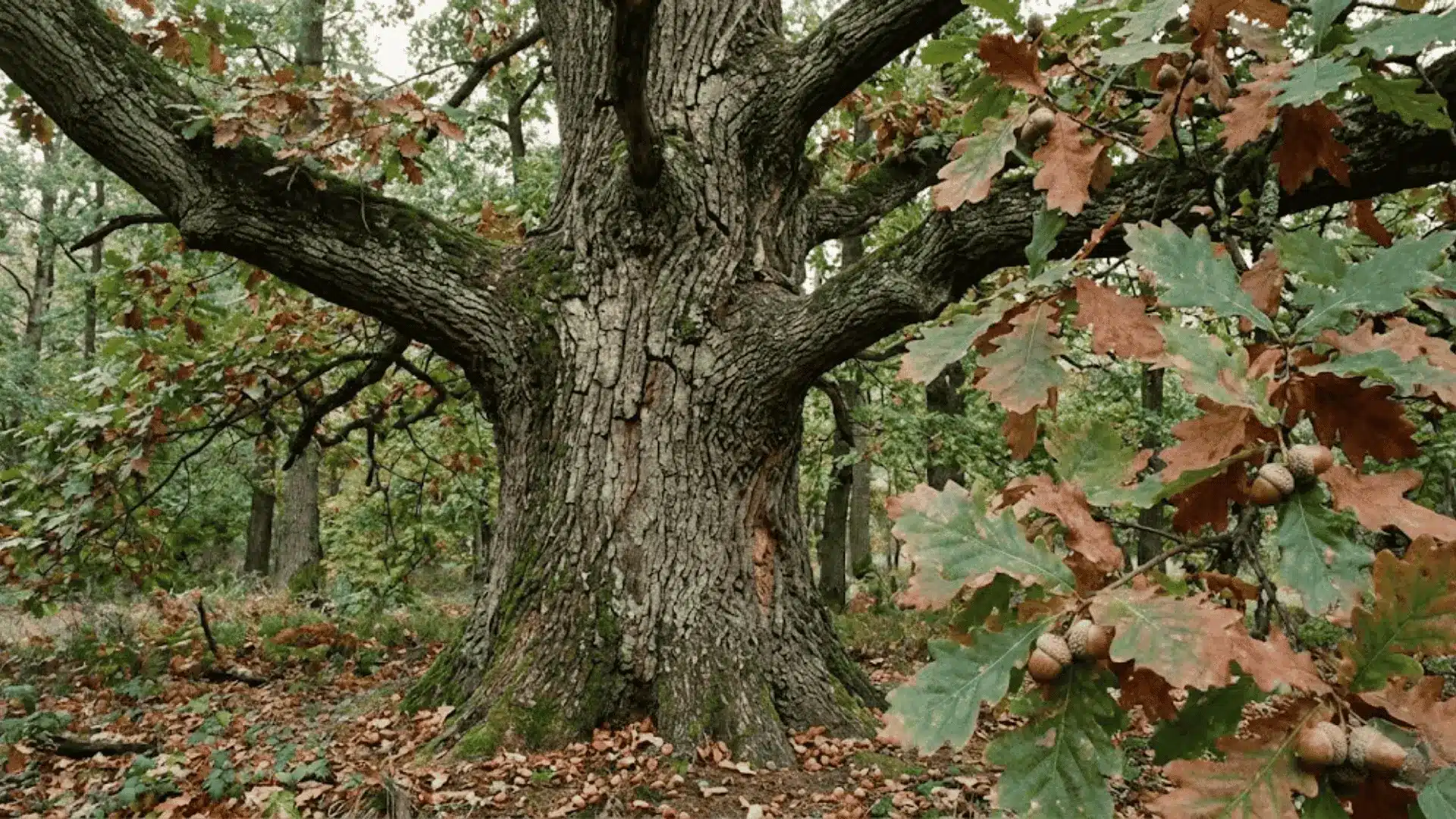
Leaf shape: Lobed with deep indentations
Height: 60–100 feet
Oak trees dominate many deciduous forests with their strong, spreading branches and deeply lobed leaves. They turn rich bronze and russet in fall before dropping.
These trees support hundreds of insect species and provide acorns that feed wildlife through winter. Their thick bark and deep roots make them incredibly resilient, often living for centuries and anchoring the forest ecosystem.
2. Maple
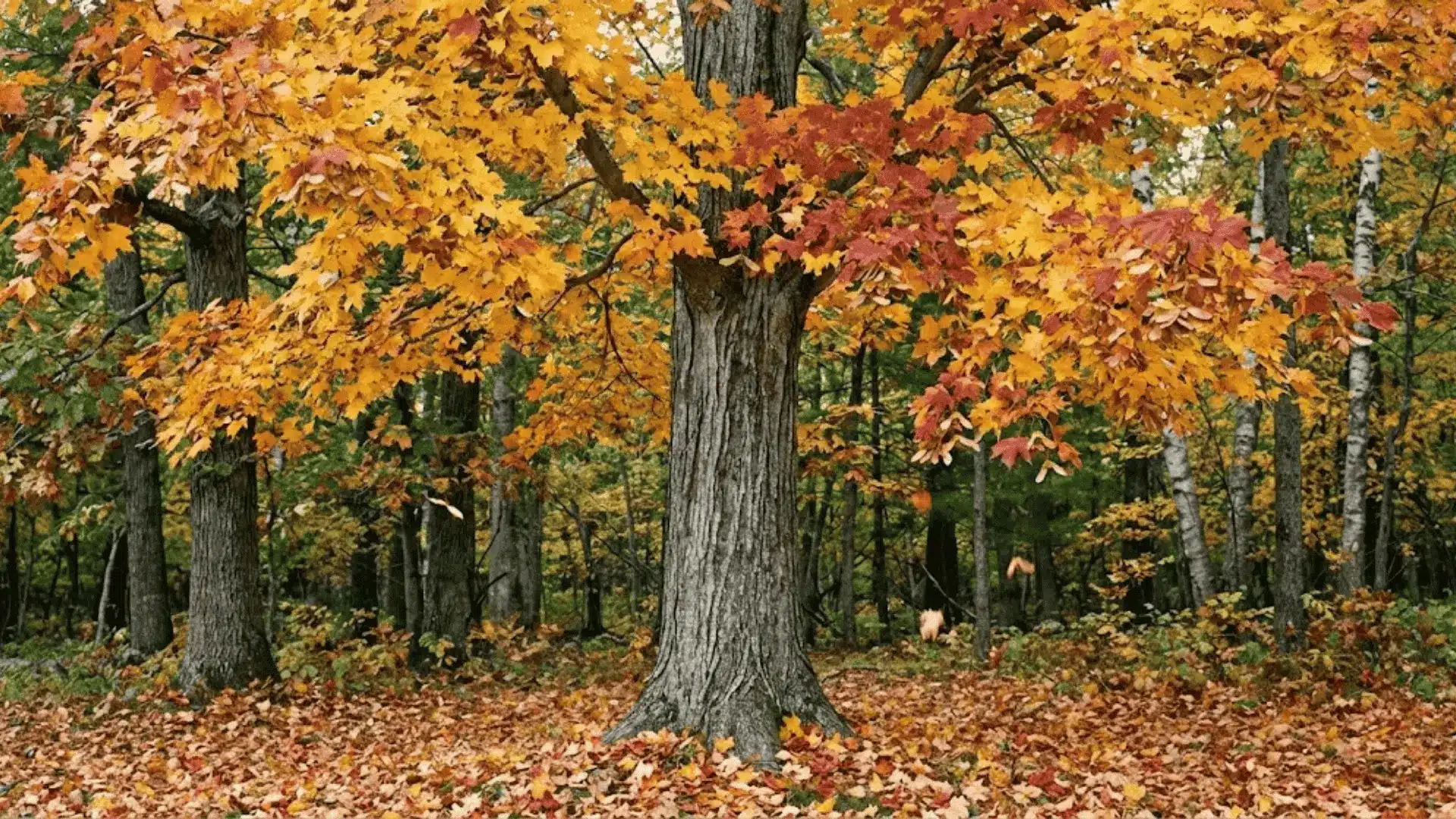
Leaf shape: Palmate with 3–5 lobes
Height: 50–75 feet
Maples are famous for their vibrant fall colors, ranging from golden yellow to deep crimson. Their winged seeds (samaras) spin through the air like helicopters.
Sugar maples produce the sap used for syrup, while their dense canopy provides crucial summer shade. They’re fast-growing and create nutrient-rich leaf litter that enriches the soil each autumn.
3. Beech
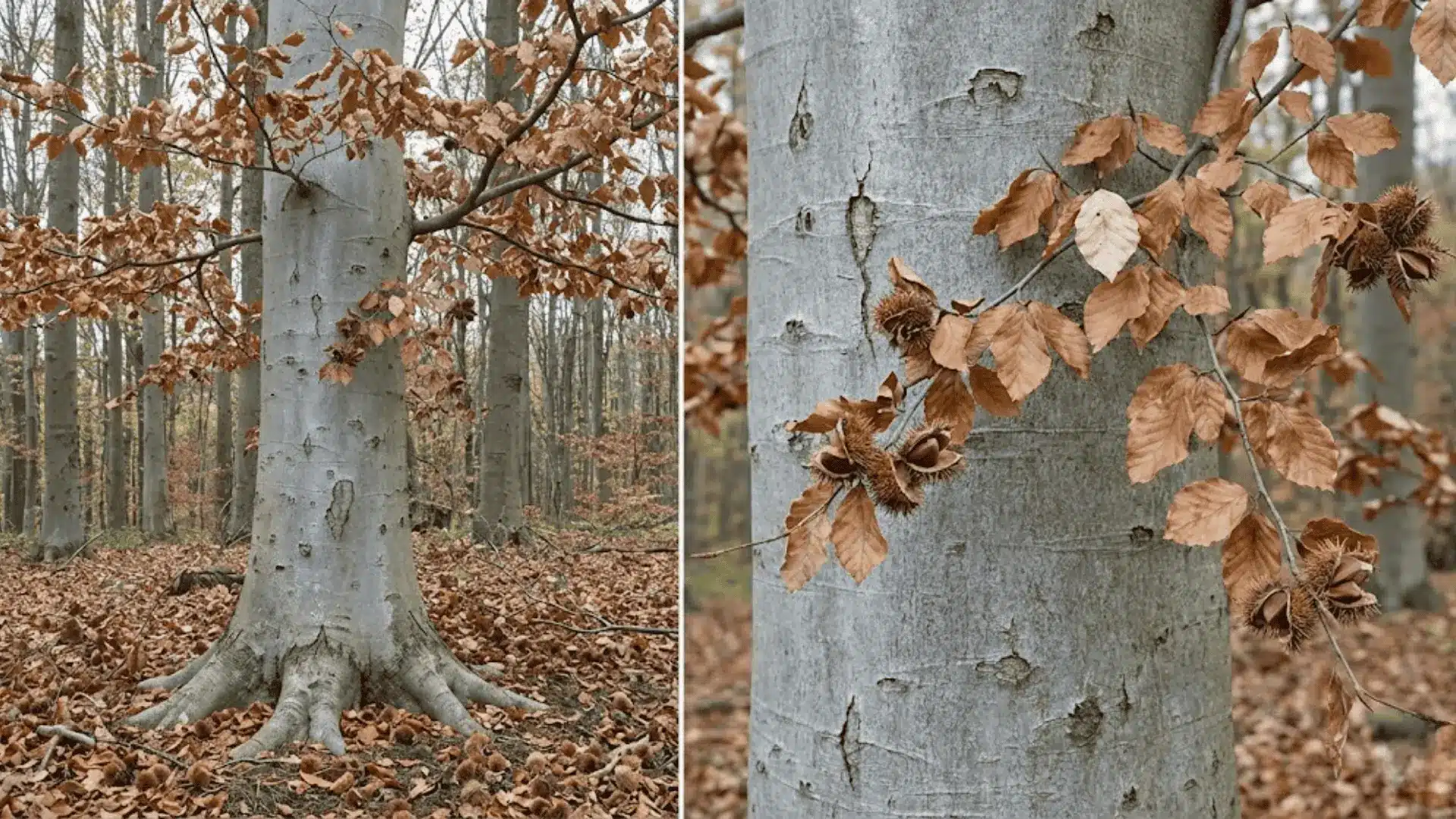
Leaf shape: Oval with toothed edges
Height: 50–70 feet
Beech trees have smooth, gray bark and hold onto their bronze leaves well into winter. Their triangular nuts feed birds and mammals throughout the cold months.
These trees grow in dense groves, creating deep shade that limits understory growth. Their shallow root systems make them sensitive to soil compaction, but they’re long-lived and shade-tolerant when young.
4. Birch
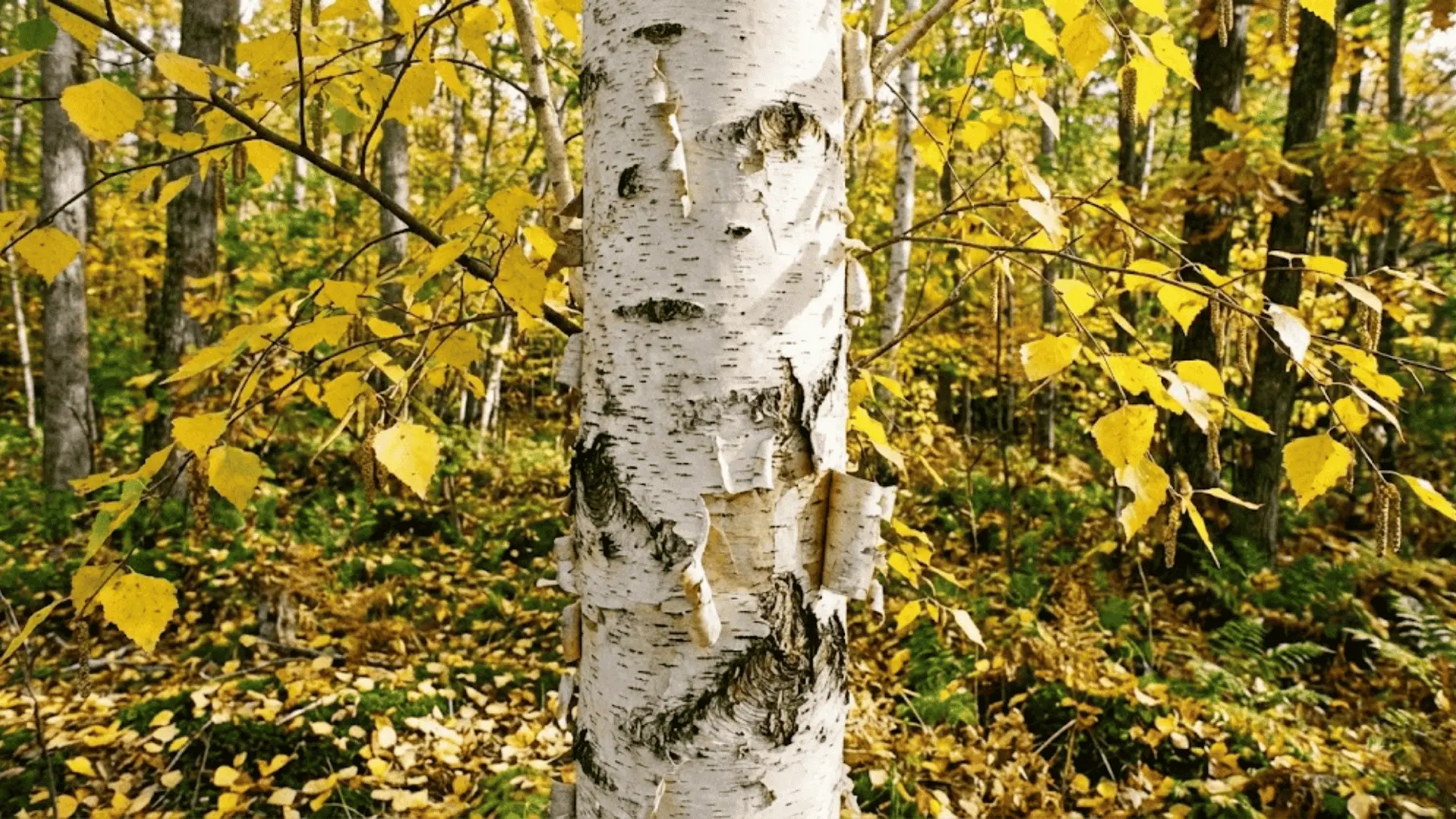
Leaf shape: Triangular to oval
Height: 40–70 feet
Birch trees are recognizable by their distinctive white, papery bark that peels in thin layers. They’re pioneer species, quickly colonizing disturbed areas with their light, wind-dispersed seeds.
Birches also turn bright yellow in fall and provide early spring pollen for insects. Though shorter-lived than oaks or maples, they play a vital role in forest regeneration.
5. Hickory
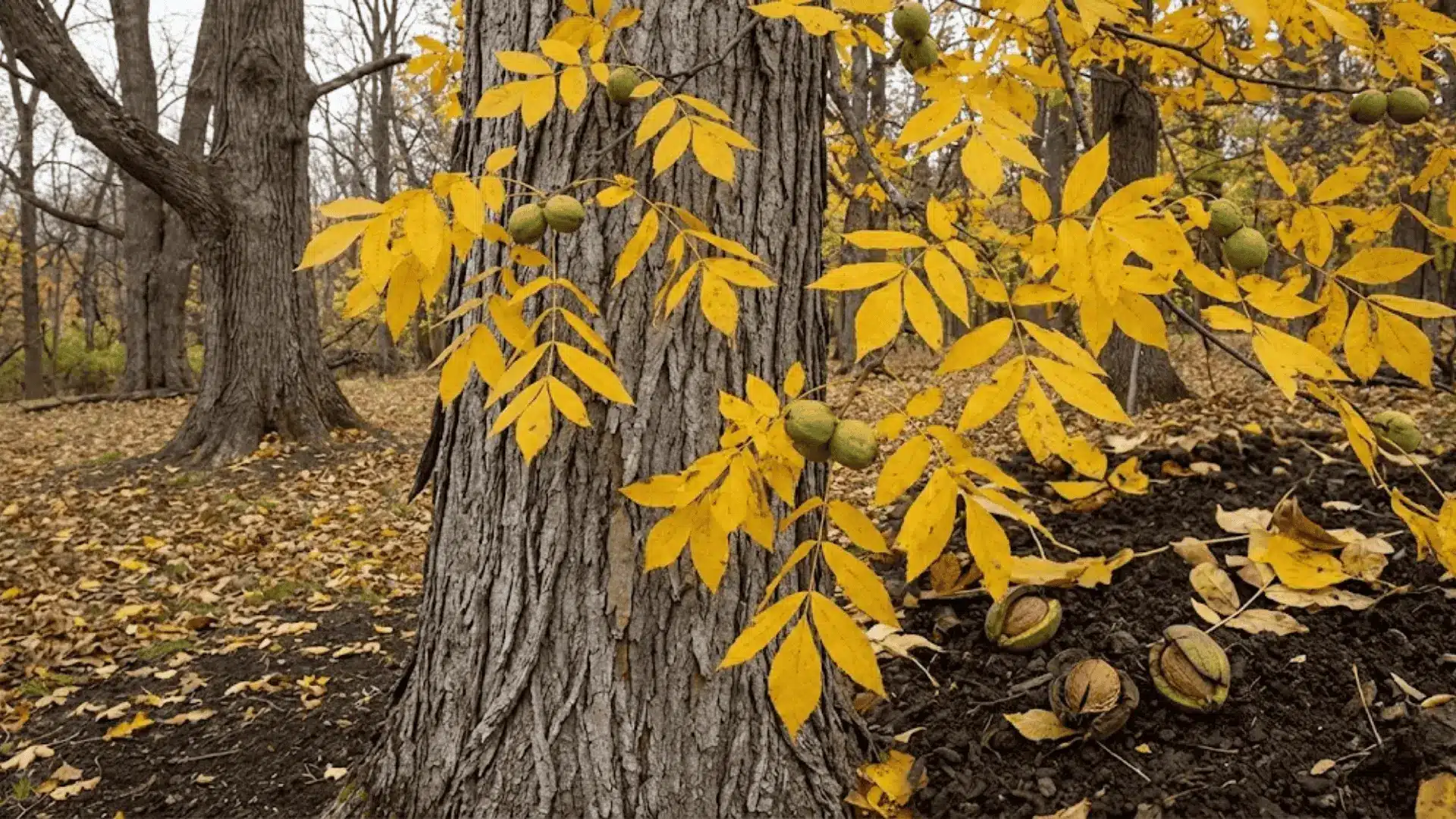
Leaf shape: Compound with 5–17 leaflets
Height: 60–80 feet
Hickory trees produce compound leaves that turn golden yellow in autumn. Squirrels and other wildlife prize their thick-shelled nuts.
Hickories have extremely hard wood and deep taproots that access water during dry periods. They grow slowly but steadily, becoming important components of mature forests with rich, well-drained soil.
If you’ve ever picked up a winged maple seed or a hickory nut on a walk and weren’t sure what it was, tree seed identification basics can help you match the pod to the parent tree.
Shrubs and Small Plants of Temperate Deciduous Forests
The understory and shrub layers add texture, food sources, and seasonal color to deciduous forests. These plants bridge the gap between towering trees and the forest floor:
6. Dogwood
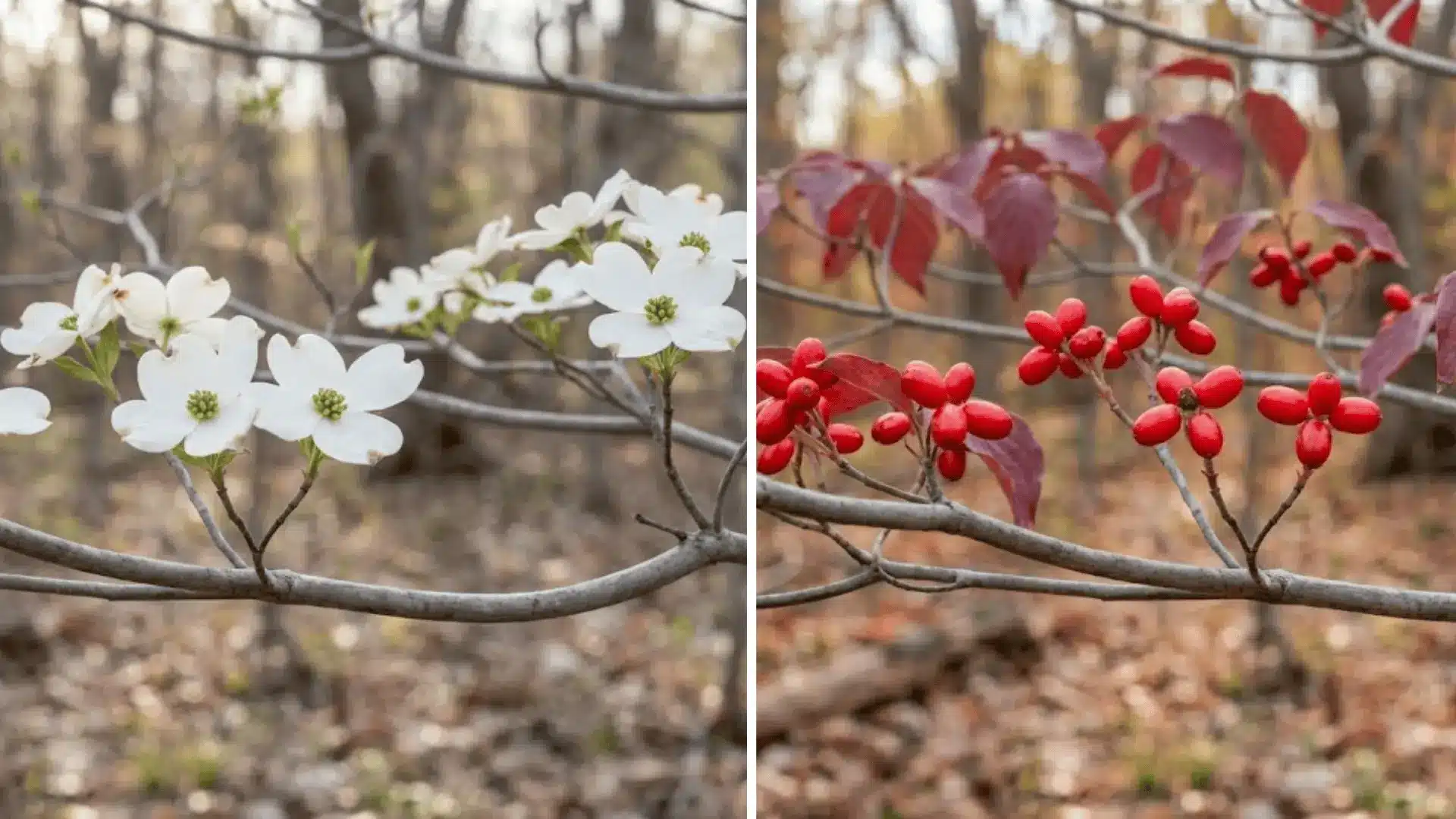
Wildlife value: Berries feed birds during fall migration
Flowering cycle: Early spring blooms
Dogwood shrubs light up the forest with their showy white or pink bracts in spring, blooming before most trees leaf out.
By fall, they produce bright red berries that migrating birds depend on.
Their layered branching creates nesting sites, while their dense foliage offers shelter. Dogwoods prefer moist, acidic soil and partial shade beneath the canopy.
7. Witch Hazel
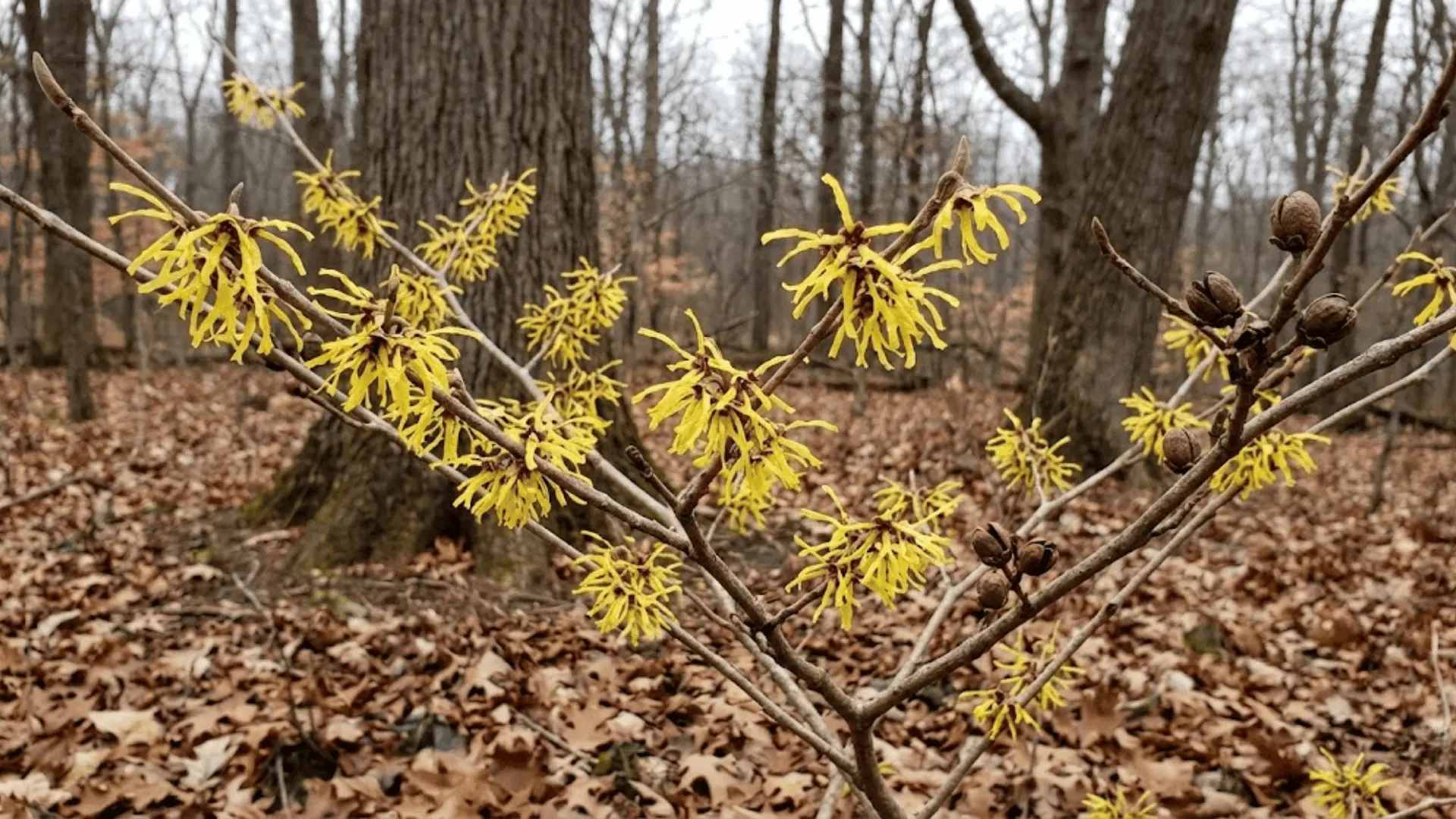
Wildlife value: Late-season nectar for pollinators
Flowering cycle: Fall to winter blooms
Witch hazel defies convention by blooming in late autumn or early winter with fragrant, ribbonlike yellow flowers. This unusual timing provides crucial nectar when few other plants are flowering.
The woody capsules explosively release seeds the following year. Witch hazel thrives in understory conditions and has been used medicinally for generations.
8. Serviceberry
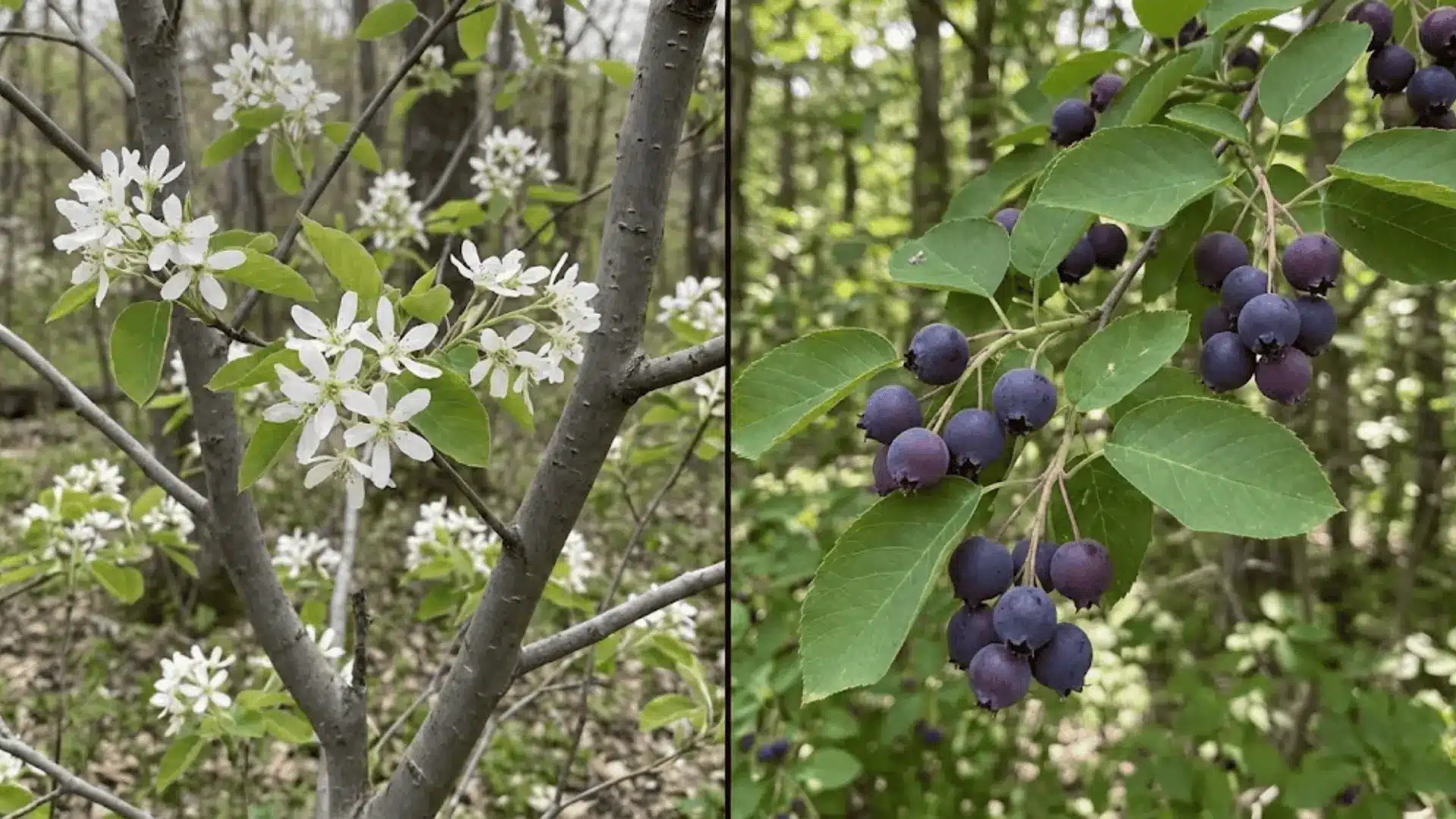
Wildlife value: Early berries for wildlife
Flowering cycle: Early spring, fruit in June
Serviceberry produces delicate white spring blossoms followed by sweet, edible berries that ripen in early summer. These purple fruits feed birds, bears, and humans alike.
The plant’s multi-season interest includes fall foliage in shades of orange and red. Serviceberry adapts well to various light conditions, growing as an understory tree or shrub.
9. Rhododendron
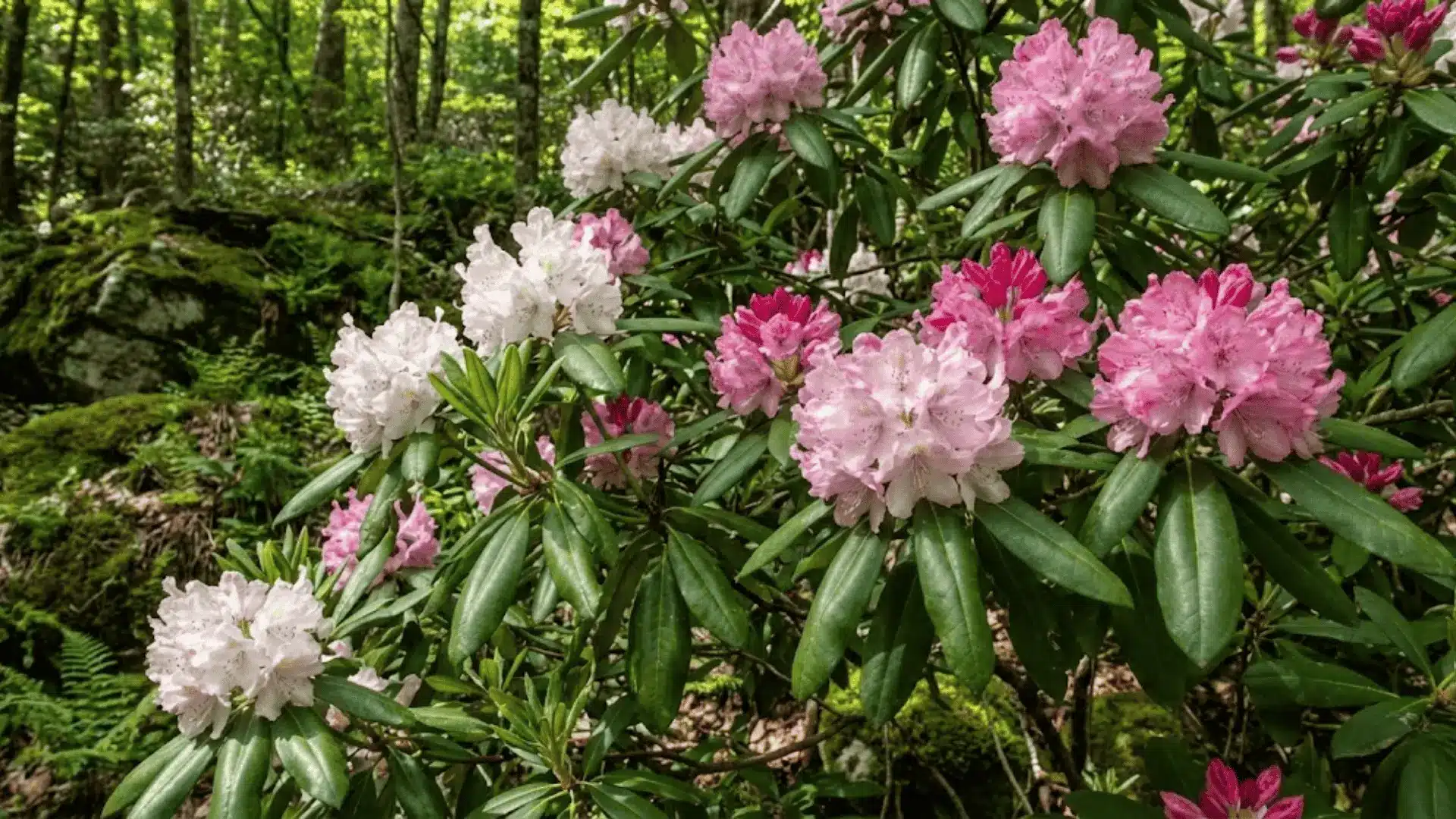
Wildlife value: Dense cover for ground-dwelling animals
Flowering cycle: Late spring to early summer
Rhododendrons create evergreen thickets in certain deciduous forests, particularly in mountainous regions. Their showy flower clusters range from white to deep pink and bloom after spring ephemerals fade.
The leathery leaves persist year-round, providing winter shelter. They prefer acidic, well-drained soil and are most abundant in areas with cool summers.
10. Viburnum
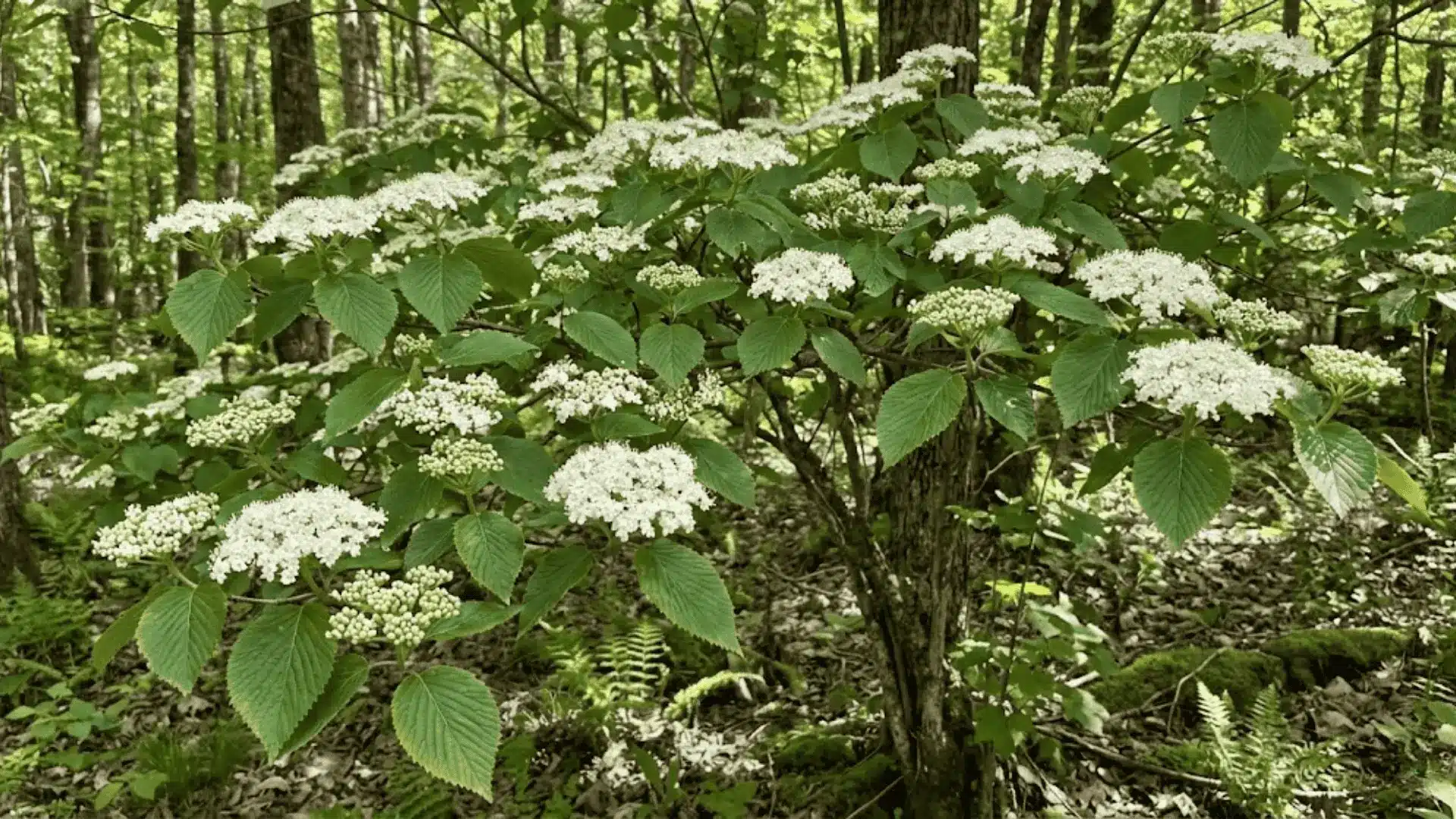
Wildlife value: Berries sustain birds through winter
Flowering cycle: Spring blooms, fall fruit
Viburnum shrubs produce flat-topped white flower clusters in spring that attract numerous pollinators. By autumn, they bear blue-black or red berries that persist into winter when food is scarce.
Many viburnums have burgundy fall foliage, adding seasonal color. Their adaptable nature allows them to thrive in various forest conditions.
Wildflowers and Ground Plants in Deciduous Forests
The herbaceous layer comes alive each spring with a burst of color before the canopy closes. These plants have mastered the art of timing:
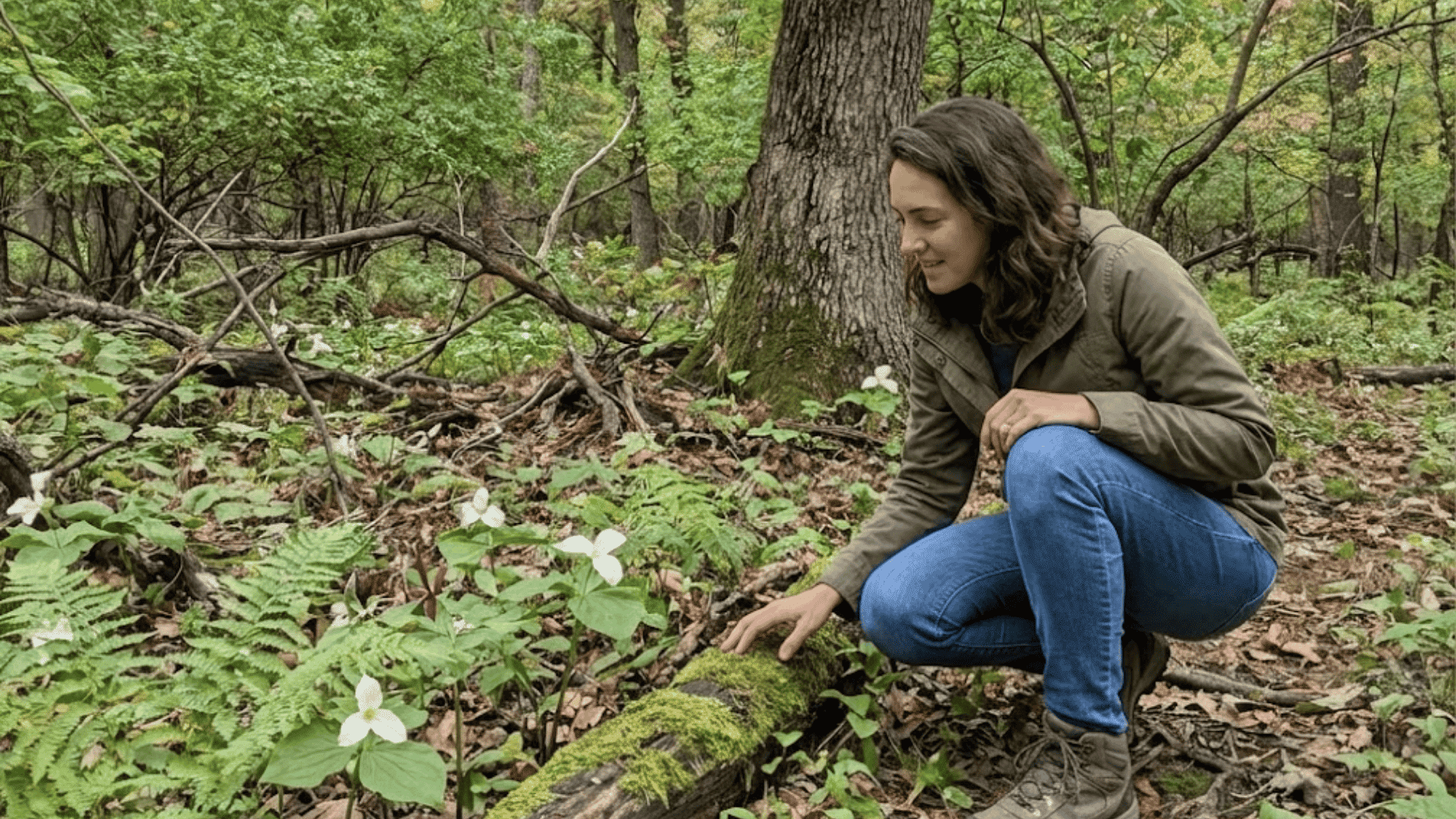
11. Trillium
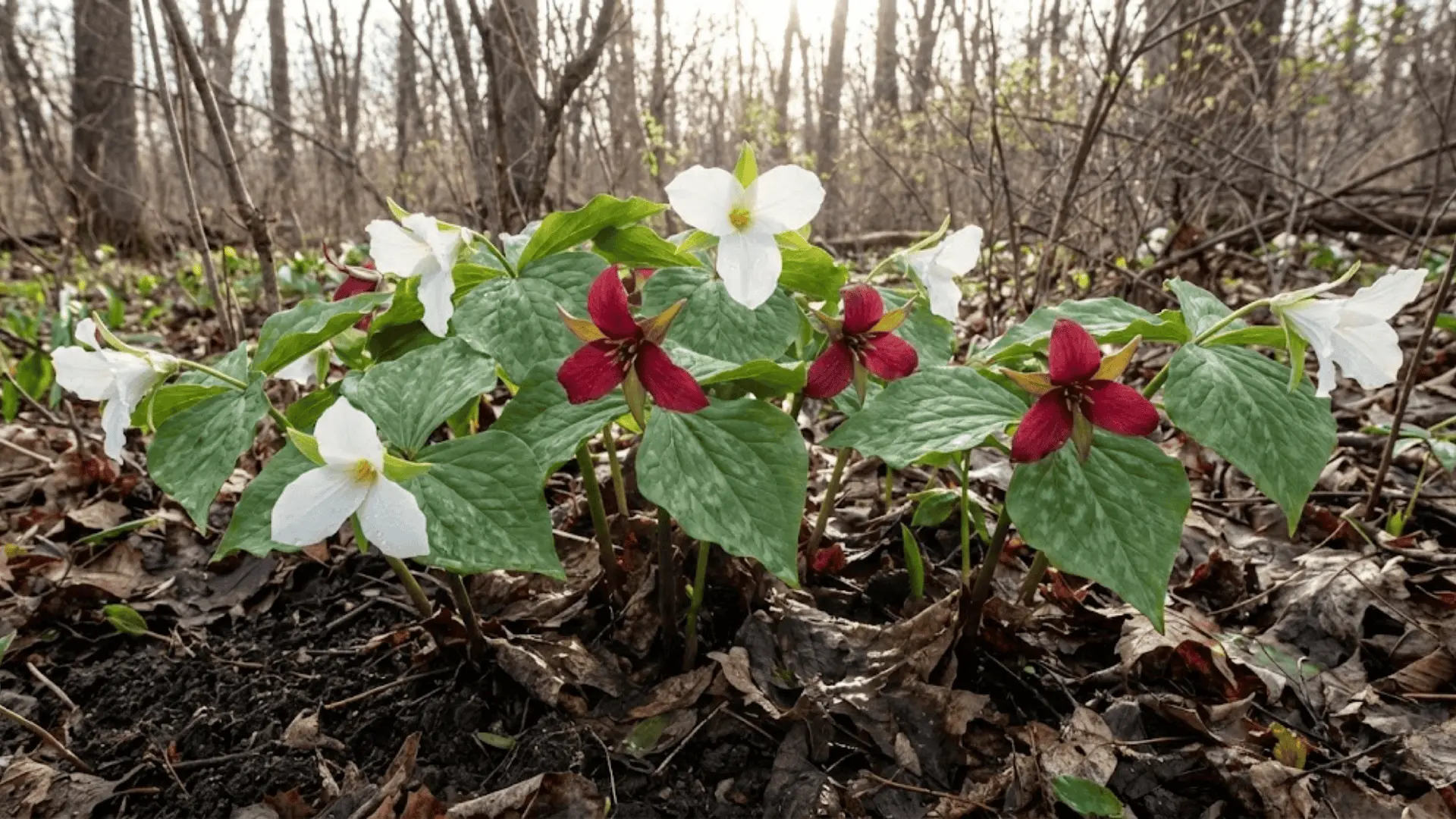
Spring ephemeral: Blooms April–May
Pollination timing: Early bees and flies
Trilliums are iconic three-petaled flowers that emerge from the leaf litter in early spring. They complete their entire growth cycle in weeks, blooming, setting seed, and going dormant before summer shade arrives.
Their large leaves capture maximum sunlight during the brief window of opportunity. Trilliums grow slowly, taking years to reach flowering maturity in shaded conditions.
12. Bloodroot
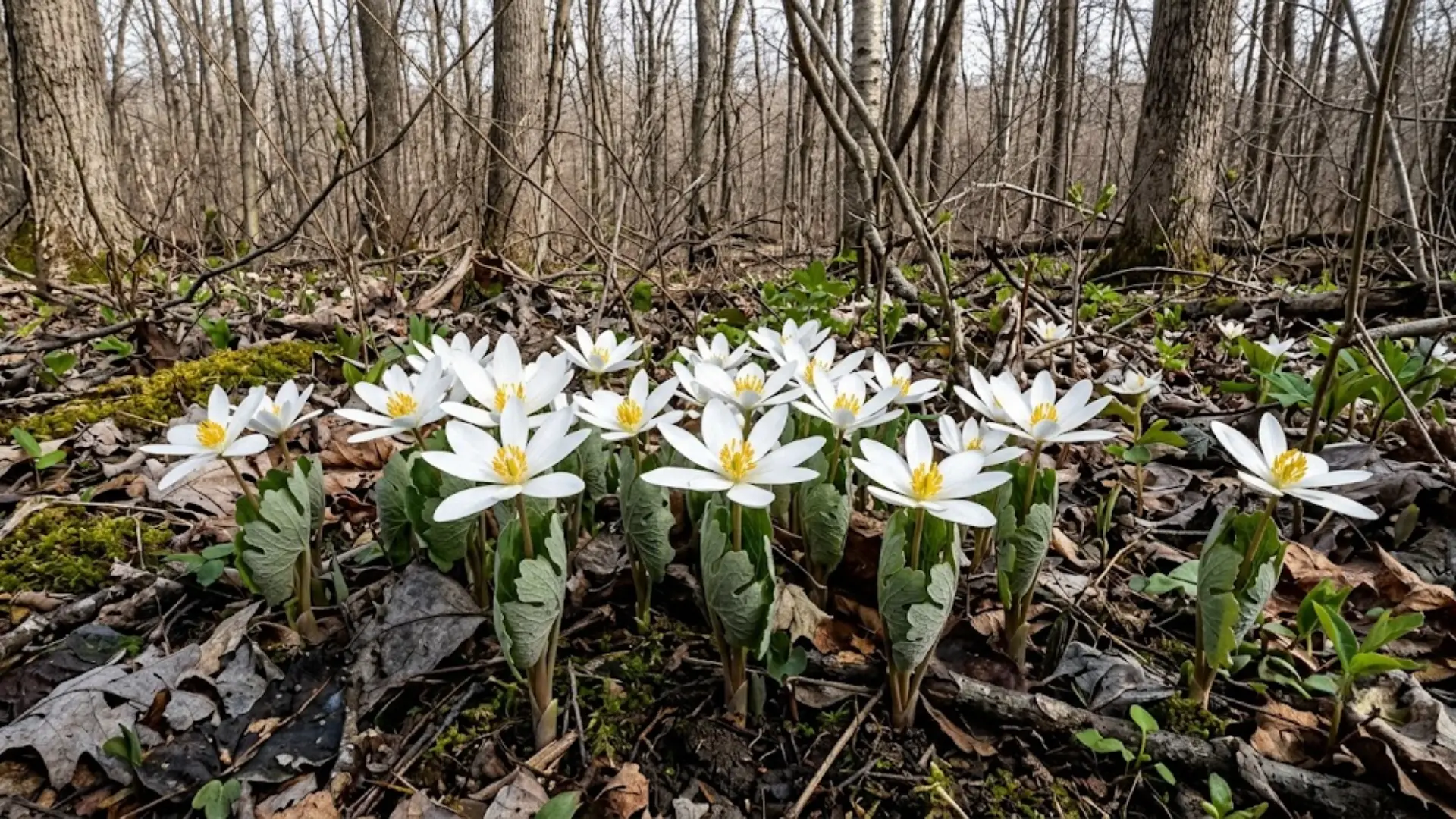
Spring ephemeral: One of the earliest bloomers
Pollination timing: March–April, before most insects emerge
Bloodroot produces pure white, star-shaped flowers that last just days, opening only in sunlight. The plant gets its name from the red-orange sap in its roots.
A single leaf wraps protectively around each flower bud as it emerges. Bloodroot’s rapid lifecycle allows it to photosynthesize intensely before trees leaf out, storing energy for the next year.
13. Mayapple
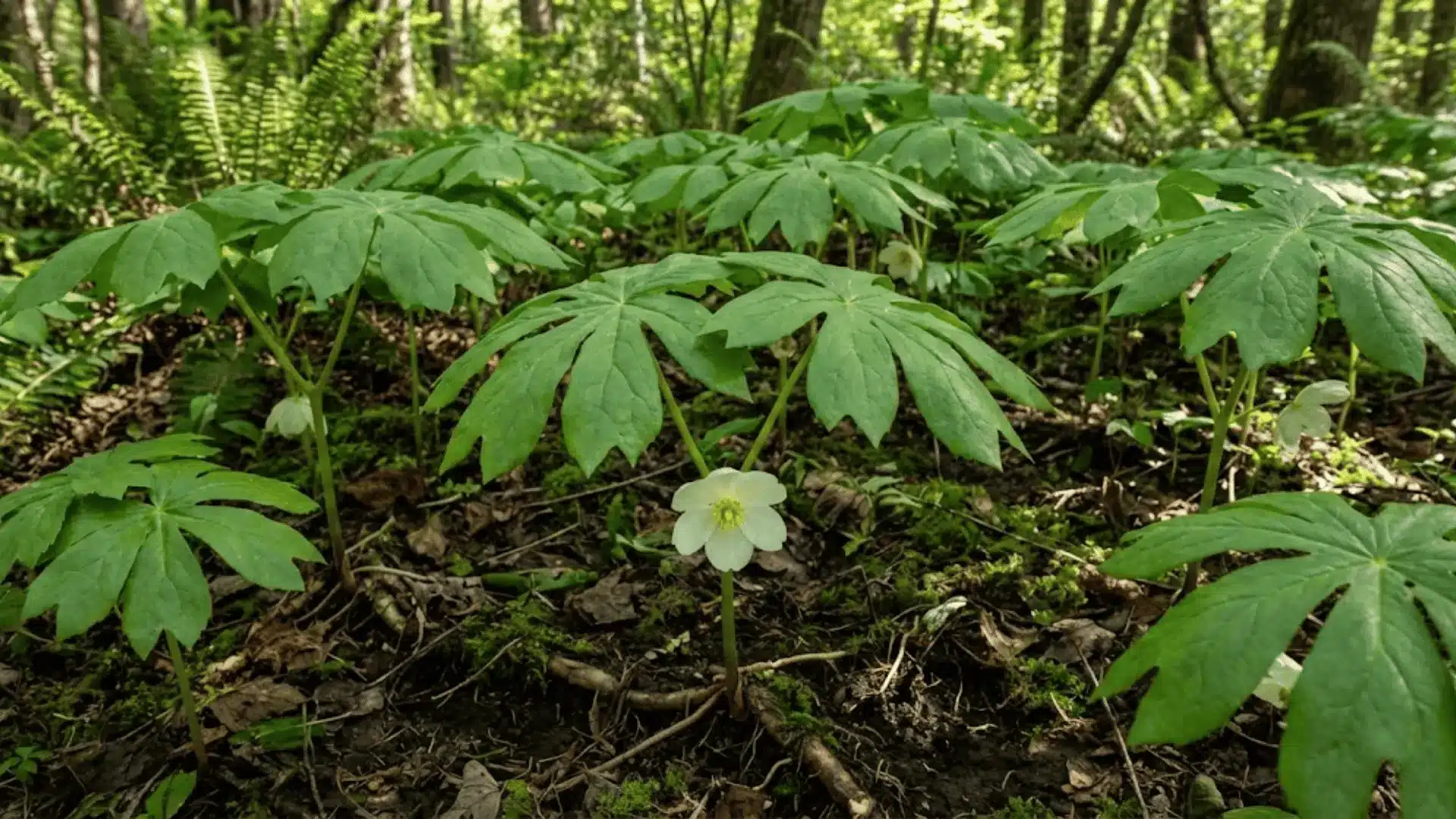
Spring ephemeral: Forms colonies via rhizomes
Pollination timing: Late spring, mainly bumblebees
Mayapples create umbrella-like leaf canopies that carpet the forest floor in colonies. Their single white flower hides beneath the leaves, pollinated by bumblebees seeking shelter.
By midsummer, they produce yellow, lemon-scented fruit. The entire plant dies back after fruiting, but its extensive underground rhizome network ensures it returns each spring.
14. Jack-in-the-Pulpit
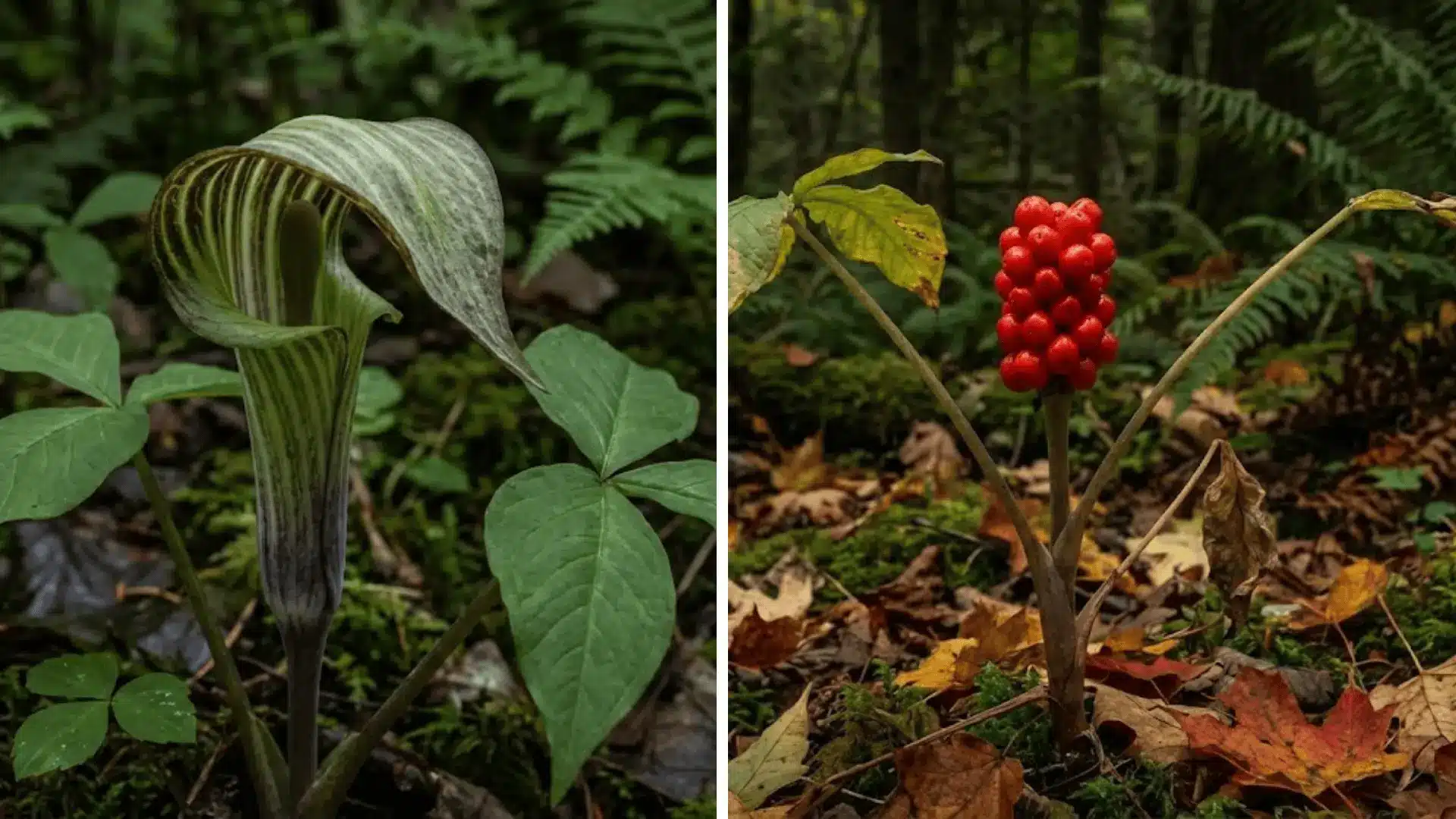
Shade adaptation: Thrives in deep forest shade
Pollination timing: Fungus gnats and small flies
Jack-in-the-pulpit has a distinctive hooded spathe sheltering a club-shaped spadix. This unusual structure temporarily traps small insects, ensuring pollination.
Plants can change sex based on available resources, becoming female only when large enough to support berries. The bright red berry clusters appear in fall, providing food when many other plants have finished fruiting.
15. Ferns and Woodland Grasses
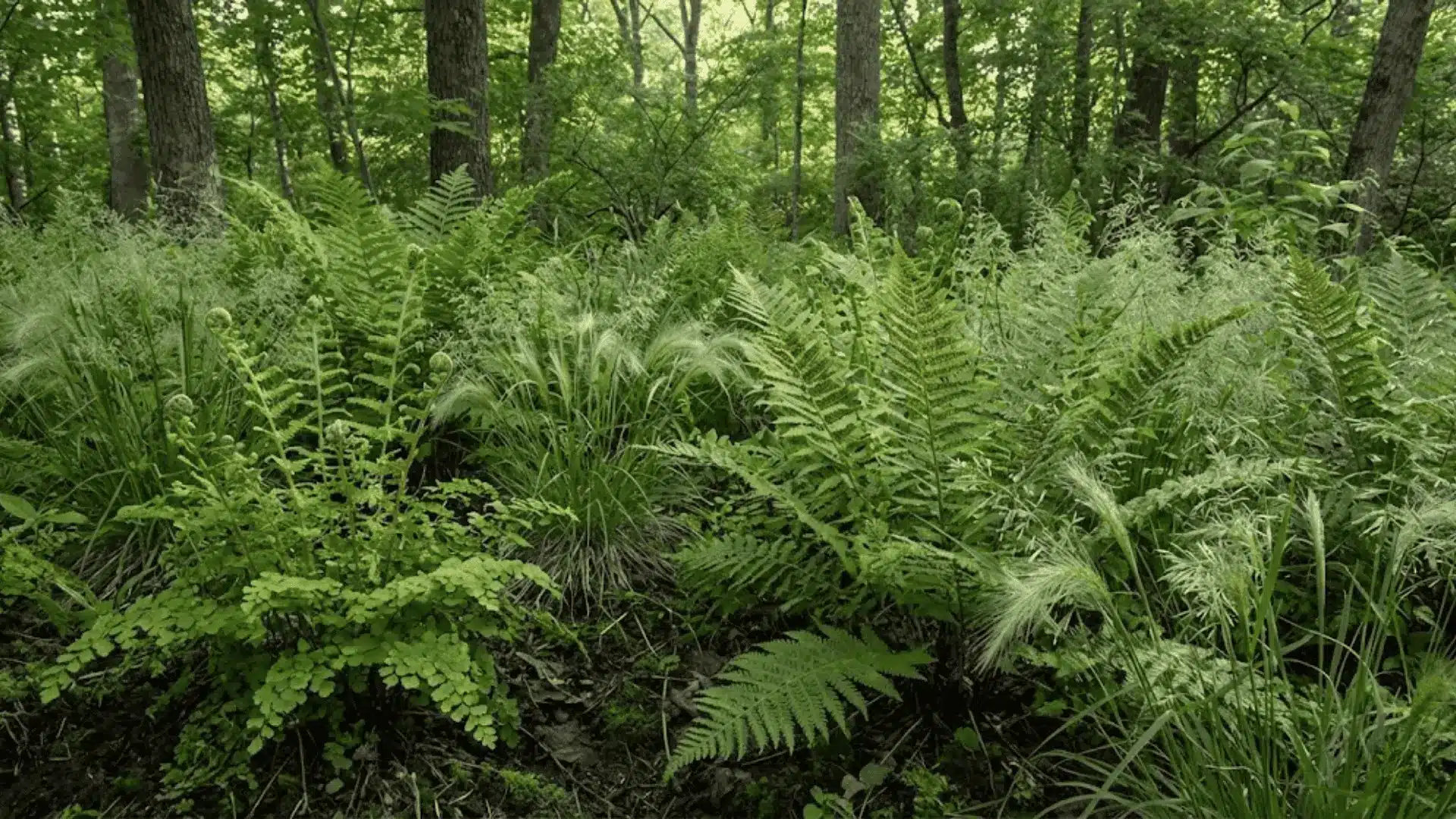
Shade adaptation: Excel in low-light conditions
Pollination timing: Reproduce via spores, not flowers
Ferns are perfectly adapted to shaded, moist environments, with delicate fronds that maximize light capture. They reproduce through spores rather than seeds, requiring consistent moisture.
Woodland grasses like bottlebrush grass create an airy texture beneath the canopy.
Both persist through summer when spring ephemerals have vanished, maintaining green growth in dim forest light.
Adaptations That Help Plants Thrive in Deciduous Forests
Deciduous forest plants have developed ingenious survival strategies to handle dramatic seasonal shifts.
These adaptations allow them to maximize growth during favorable conditions while protecting themselves during harsh periods:
|
Adaptation |
How It Works |
Benefits |
|---|---|---|
|
Leaf Drop as Frost Protection |
Trees shed leaves and enter dormancy before winter |
Prevents water loss and tissue damage from freezing |
|
Timing Growth to Sunlight |
Spring ephemerals bloom before the canopy closes |
Captures maximum sunlight during brief windows |
|
Water Conservation |
Deep roots, waxy coatings, thick bark |
Maintains moisture during droughts and winter |
|
Seed Dispersal Methods |
Wind-carried seeds, animal-cached nuts, and berry transport |
Spreads offspring away from the parent, reducing competition |
A sugar maple shows how these strategies stack together: it drops its leaves for winter protection, times its leaf-out to catch spring sunlight, conserves water through its waxy surface, and uses wind to scatter winged seeds.
Home gardeners can borrow that same idea for their own beds.
Mulching and grouping plants by moisture need is one way to build a more sustainable garden, much like the layered root systems.
Importance of Deciduous Forest Plants to the Ecosystem
Deciduous forest plants are ecological powerhouses that sustain entire ecosystems. They provide habitat and food for countless species while their leaves and wood store massive amounts of carbon, helping regulate our climate.
Through photosynthesis, they produce the oxygen we breathe and create the energy that flows through forest food webs.
Their deep root systems stabilize soil and prevent erosion, while fallen leaves feed communities of decomposers, fungi, and invertebrates below.
This biodiversity means each plant species supports dozens of others, creating relationships where the health of one directly shapes the survival of many.
Human Uses and Cultural Significance of Temperate Forest Plants
Deciduous forests have given us more than we often realize.
The hardwood floors beneath our feet, the maple syrup on our pancakes, and the herbal remedies in our cabinets all come from these seasonal woodlands.
Foragers still gather wild mushrooms and ramps each spring, following traditions passed down through generations.
Every autumn, millions of people plan trips around fall foliage, chasing those fiery reds and golden yellows across hillsides.
Even our backyards reflect these forests, filled with native dogwoods and ferns that bring a piece of the wild home.
These plants aren’t just resources; they’re woven into how we live and what we love.
Threats to Deciduous Forest Plant Life
Deciduous forests face mounting pressures that threaten their delicate balance and the plant communities that have thrived here for millennia.
Here are the major challenges:
- Deforestation clears vast stretches for agriculture and development, fragmenting habitats and disrupting seed dispersal patterns.
- Climate change shifts seasonal timing, causing spring ephemerals to bloom before pollinators emerge and stressing trees beyond their tolerance.
- Invasive species like garlic mustard and Japanese barberry outcompete native plants, altering soil chemistry and blocking regeneration.
- Pollution from acid rain and nitrogen deposition weakens trees and changes which species can survive in contaminated soils.
- Urban expansion replaces forests with pavement, creating heat islands and eliminating the wildlife corridors that plants depend on for dispersal.
These threats compound each other rather than acting in isolation, making forests less resilient with each passing year.
A warming climate-stressed tree becomes more vulnerable to invasive pests, while fragmented forests struggle to recover from any disturbance.
Conservation and Protection of Temperate Deciduous Forests
Protecting deciduous forests requires action at every level. Protected areas and national parks preserve critical habitats where plant communities thrive undisturbed.
Sustainable forestry balances timber harvesting with regeneration, ensuring forests remain healthy for future generations.
On a smaller scale, native plant gardening brings forest species into our yards, supporting local wildlife and reducing the spread of invasive species.
Reforestation efforts restore degraded lands by replanting oaks, maples, and understory species.
Whether protecting existing forests or creating new ones, each effort counts toward maintaining these vital ecosystems.
The Closing Note
These forests do a lot of quiet work. They feed wildlife, hold soil in place, and cycle nutrients back into the ground every year, without needing any help from us.
That work depends on the forests actually staying put, though. Deforestation, invasive species, and a warming climate are already putting pressure on that same cycle.
You can support it on a smaller scale too. Planting native shrubs or a patch of ferns in a shaded corner of your yard brings a piece of that system home, and protecting the forests still standing keeps the larger cycle going.
Got a favorite deciduous forest plant, or spotted one growing somewhere you didn’t expect? Let me know in the comments.
Frequently Asked Questions (FAQs)
What’s the Difference Between Deciduous Plants and Coniferous Plants?
Deciduous forest plants drop their leaves each fall and regrow them in spring. Coniferous plants like pine and spruce keep narrow, needle-like leaves year-round, which helps them conserve water through winter.
How Long Do Deciduous Forest Trees Typically Live?
It varies a lot by species. Oaks can live for centuries, while faster-growing, shorter-lived trees like birch generally do not last nearly as long. I’d recommend checking species-specific lifespan estimates if you are planting for the long term.
Can You Grow Deciduous Forest Plants in a Home Garden?
Yes. Understory and forest-floor species such as ferns, wild ginger, and native dogwood adapt well to shaded home gardens, since they are already suited to filtered light and moist, leaf-rich soil.