You notice it while rinsing out a mason jar. A small brown speck, moving. Then another, near the bag of lentils you harvested and dried last fall. By the time you’ve spotted a third one on the pantry shelf, the calm of a Sunday morning has quietly shifted into something more unsettling.
Most bug guides will tell you to check your mattress. That’s reasonable advice — but if you’re a home gardener, the likelier culprit is sitting on the shelf above your stove, in the dried herbs you bundled last August, or in the seeds you saved from this year’s squash.
This guide is about where these tiny brown bugs in your house actually come from, and what to do once you’ve found them.
Common Reasons Why You Have Small Brown Bugs in Your House
If you’ve spotted tiny brown bugs in your kitchen and you can’t figure out where they came from, the most useful thing to know is this: they almost always have a source, and that source is almost always something dry and forgotten. A spice jar from two years ago. A bag of lentils pushed to the back of a shelf. Seeds you saved last fall and stored in a paper envelope.
These pests don’t just materialize out of thin air. They breed and feed inside a specific food source first, only migrating into your living space once that population booms or the food runs out.
For gardeners especially, the entry routes are a little more varied than most guides suggest:
- Pantry staples like flour, oats, and dried fruit are the most common source, often infested before they even arrive home from the store
- Home-dried herbs are a frequent but overlooked host, particularly for cigarette beetles, which are drawn to dried botanicals of almost any kind
- Saved seeds stored in paper packets or open containers are vulnerable over a long winter, especially if the storage area has any warmth or humidity
- Birdseed and dry pet food left in open bags attract the same species as pantry bugs and are often the last place people think to check
- Fresh-cut flowers can bring adult carpet beetles inside from the garden, where they spend most of their lives feeding on pollen before looking for a place to lay eggs indoors
Helpful Tips on How to Effectively Reduce Little Brown Bugs in Your House
One of the most consistent mistakes homeowners make with small brown bug infestations is treating the symptom — the visible insects — rather than the source, which in the case of carpet beetles and grain beetles is almost always an overlooked organic material: a forgotten bag of grain, animal-based fibers in a closet, or a bird nest in a wall cavity.
Correctly identifying the species, tracing it to origin, and applying targeted treatment is what separates a professional pest control service from a consumer product spray — the latter addresses what you can see, the former addresses what you can’t. Here is a helpful step-by-step guide on how to get rid of pantry bugs from your home:
Step 1: Find the Source Before You Do Anything Else
Start in the kitchen and pantry, and go through everything — not just the items you use regularly. Flour, oats, cornmeal, dried beans, spices, and rice are the most common hosts, but infestations often start in something that gets pushed to the back of a shelf and forgotten. Open each container and look for fine powder, webbing, tiny holes in packaging, or the insects themselves. Check along the shelf edges and in the corners of drawers too, since beetles spread quickly once a source is depleted.
If you don’t find anything in the kitchen, move to wherever you store birdseed, dry pet food, or saved seeds from the garden. These are the places most people overlook, and they’re frequently the actual origin of what shows up in the pantry weeks later.
For carpet beetles specifically, the source is usually fabric rather than food. Check stored woolens, the corners of closets, under rugs, beneath heavy furniture, and anywhere pet hair accumulates. Carpet beetle larvae avoid light and tend to feed in dark, undisturbed spots, so the damage is often well underway before anyone finds it.
Step 2: Decide What to Toss, What to Treat, and What to Seal
Toss heavily infested food into a bag, knot it securely, and take it outside. If you have nearby dry goods that look fine but make you nervous, freeze them for four days to neutralize hidden eggs. Everything else should go straight into glass or heavy plastic storage. Beetles easily chew through paper and thin bags, making airtight jars your best defense against a second wave.
Step 3: Clean the Storage Area Thoroughly
Removing the source deals with the population, but eggs and larvae can survive in the cracks along shelf edges, in the hinges of cabinet doors, and in accumulated debris at the back of drawers. Vacuuming is the most effective way to address this — use a crevice attachment and go along every seam, corner, and joint before wiping down the surfaces with warm soapy water.
Avoid applying pesticide sprays directly inside food storage areas. For pantry beetles, removing the source and cleaning thoroughly is sufficient in most cases, and introducing chemicals near food creates its own problems. The exception is carpet beetles, where a targeted treatment along baseboards and in closet corners may be warranted if the infestation is established — but that’s a decision best made after confirming the species.
Step 4: Change the Habits That Let Them In
Keeping bugs out usually comes down to storage. Common habits like storing saved seeds in paper envelopes or leaving bulk pet food open can inadvertently welcome beetles. These aren’t bad habits, they just pose a risk over time.
A few small tweaks will protect your space. Move dry goods into sealed containers immediately. You should also freeze saved seeds for a few days before long-term storage, and always shake out garden cut flowers outside. Finally, check the back of your shelves every month to ensure nothing gets forgotten.
Step 5: Still Finding Bugs? Here’s When to Call a Licensed Pest Inspector
If you’ve cleared the pantry, deep-cleaned the shelves, and switched everything to sealed containers and the beetles are still showing up, the source probably isn’t where you’ve been looking. Infestations that keep coming back often originate in wall voids, ventilation, or a forgotten storage area that didn’t get checked the first time around.
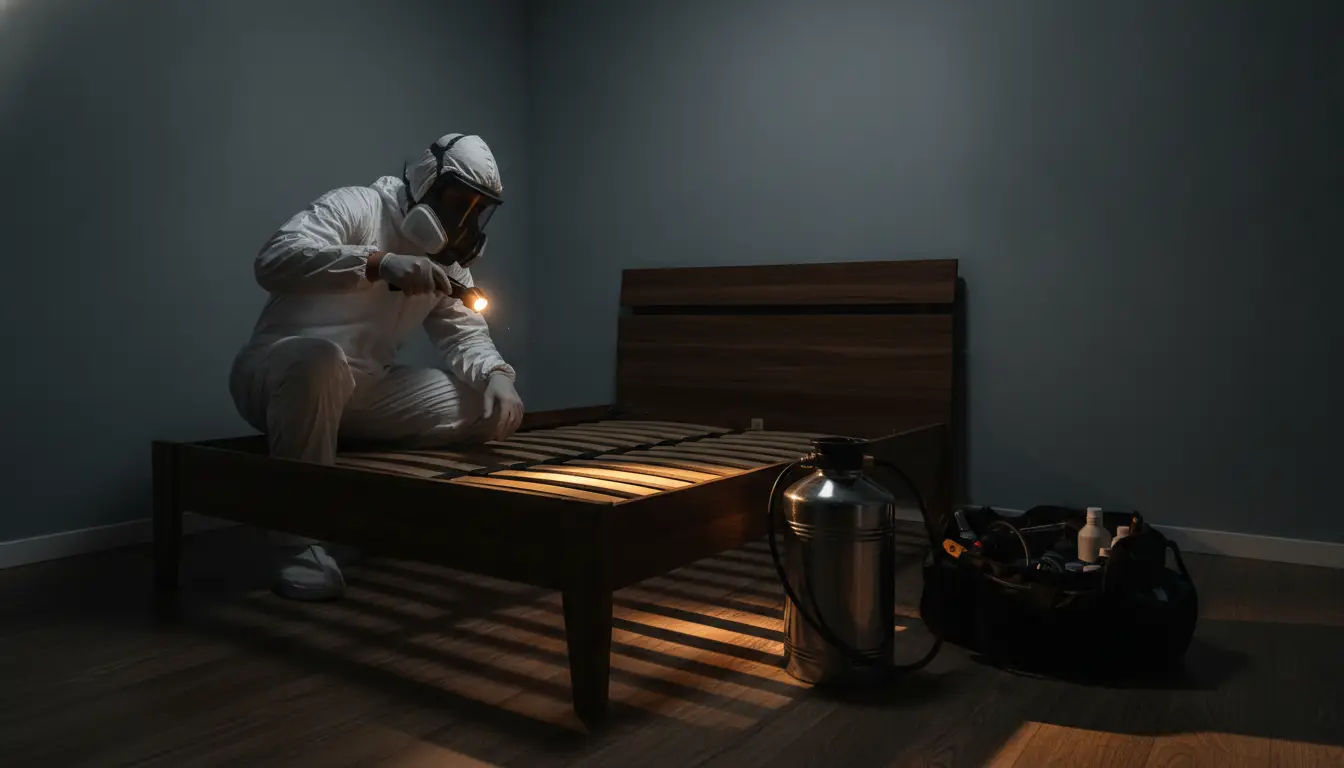
At that point, calling a pest control inspection expert is worth it. Getting the species confirmed and the actual origin located saves a lot of time compared to another round of cleaning that may not address the real problem. It’s especially useful when beetles are appearing in rooms with no obvious food source, when fabric or structural damage keeps turning up, or when the infestation started with garden material and has since spread somewhere you can’t account for.
Final Takeaway
A small brown bug on a pantry shelf is almost never random. It came from somewhere specific, and that somewhere is almost always something you grew, dried, or stored yourself.
The good news is that once the source is gone and the storage habits are tightened up, most infestations don’t come back. Work through the steps, check the places that are easy to overlook, and if the problem persists after a thorough cleanout, a professional inspection is the most efficient way to find what’s still being missed.
Content Scores
|
Originality AI Score https://app.originality.ai/share/s58xa9gbyl6okd13
|
|---|
|
CopyScape
|