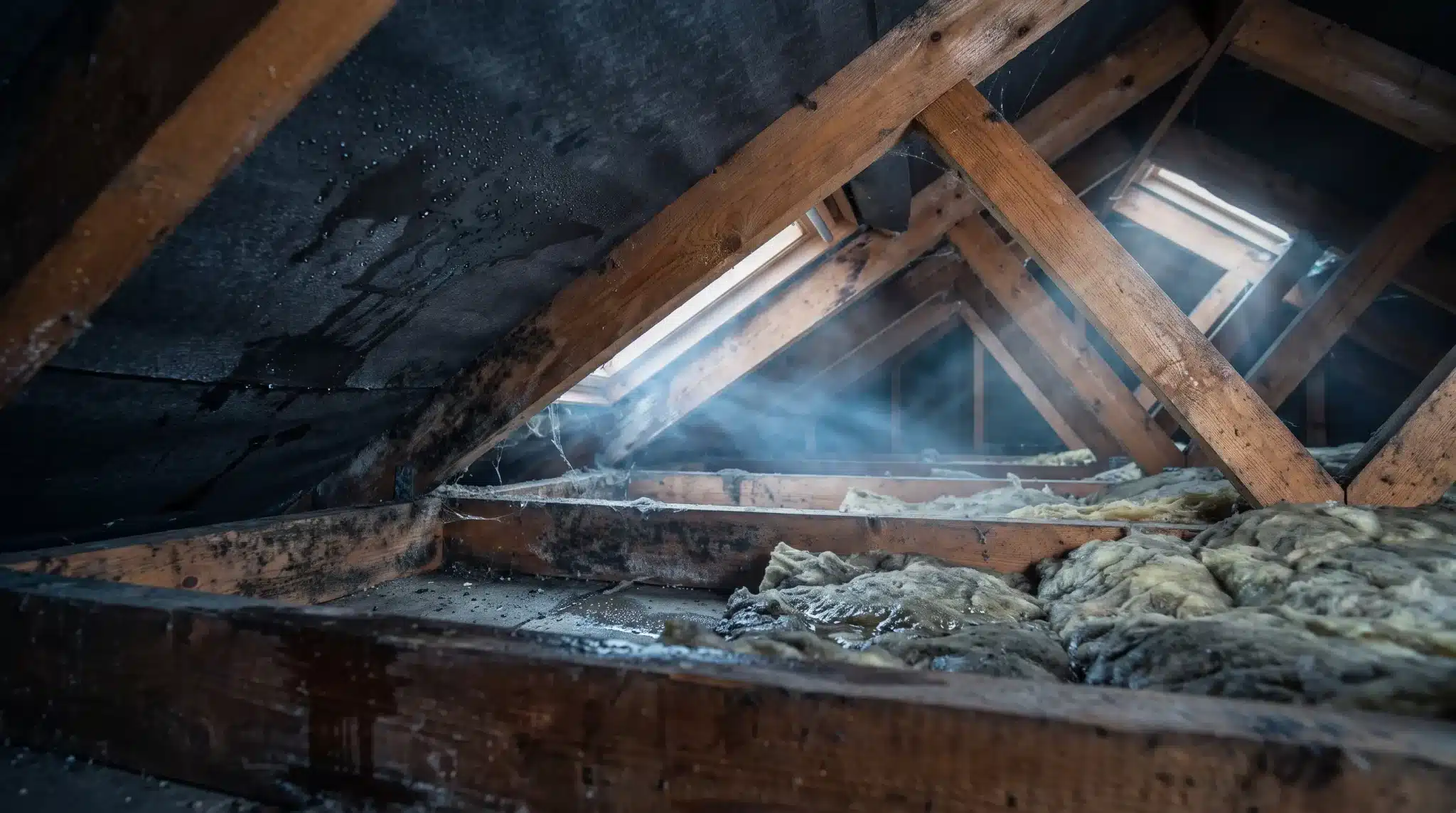
Loft moisture is one of those household problems that often stays hidden until it has already caused damage. A slightly musty smell, dark patches on roof timbers, damp insulation, or beads of water on the underside of roofing felt can all point to the same underlying issue: trapped moisture with nowhere to go.
In many cases, the problem is not a leaking roof at all. It is condensation. And more often than not, condensation in a loft is closely linked to poor roof ventilation.
Understanding that connection matters because moisture in a roof space is not just a cosmetic concern. Left unchecked, it can reduce insulation performance, encourage mould growth, damage timber, and shorten the lifespan of roofing materials.
Why Moisture Builds Up in Lofts
Everyday life produces a surprising amount of moisture. Cooking, showering, drying clothes indoors, and even breathing all release water vapour into the air. Warm air naturally rises, and if that humid air finds its way into the loft, it can become a problem.
During colder months, the loft space is usually much cooler than the rooms below. When warm, moist air reaches cold surfaces such as roof felt, rafters, or tile underlay, it condenses into water droplets. This is the same principle as condensation on a cold window, only in a place you may not check very often.
Modern Homes Can Make the Problem Worse
Older homes were often draughtier, which was not ideal for energy efficiency but did allow moisture to escape more easily. Modern upgrades have changed that. Better insulation, double glazing, sealed loft hatches, and improved airtightness all help keep heat inside, but they can also reduce natural air movement.
That means moisture management has to be more deliberate. A well-insulated home still needs controlled airflow, especially in the roof space.
How Roof Ventilation Helps Control Loft Moisture
Roof ventilation works by allowing fresh air to enter the roof space and moist air to leave. In a typical cold roof construction, air enters at low level, usually around the eaves, and exits at high level, often through ridge or tile vents. This steady movement helps keep the roof space closer to the outside air temperature and prevents moisture from lingering.
Ventilation does not “heat” the loft. In fact, a properly ventilated cold loft should remain cold in winter. Its job is to remove water vapour before it condenses or, if condensation does form occasionally, to allow it to dry quickly.
The Balance Between Insulation and Ventilation
One common mistake is assuming that more insulation is always better, regardless of where it goes. Insulation is essential, but if it is pushed too far into the eaves, it can block airflow from soffit or eaves vents. The loft may feel well insulated, but the roof timbers above it could be sitting in stagnant, damp air.
If you are upgrading insulation, fitting a new roof covering, or dealing with recurring condensation, it is worth understanding which ventilation products suit the roof design. Resources from experienced suppliers and roofing ventilation specialists can help homeowners and tradespeople identify appropriate options such as eaves vents, ridge ventilation, abutment ventilation, and tile vents without relying on guesswork.
Warning Signs That Your Loft Has a Ventilation Problem
Loft moisture rarely announces itself dramatically at first. It tends to leave clues. Some are obvious, while others are easy to overlook during a quick glance through the hatch.
Look out for:
- Water droplets on roofing felt or breathable membrane
- Black mould on rafters, trusses, or stored items
- Damp or flattened loft insulation
- A musty smell in the loft or upstairs rooms
- Rust on metal fixings, nail heads, or stored tools
- Staining on ceilings near external walls or roof junctions
- Frost forming inside the loft during very cold weather
Not every sign automatically means ventilation is the only issue. A cracked tile, damaged flashing, blocked gutter, or leaking pipe can also introduce moisture. The key is to distinguish between water coming in from outside and condensation forming from inside air.
Breathable Membranes Are Not a Complete Substitute
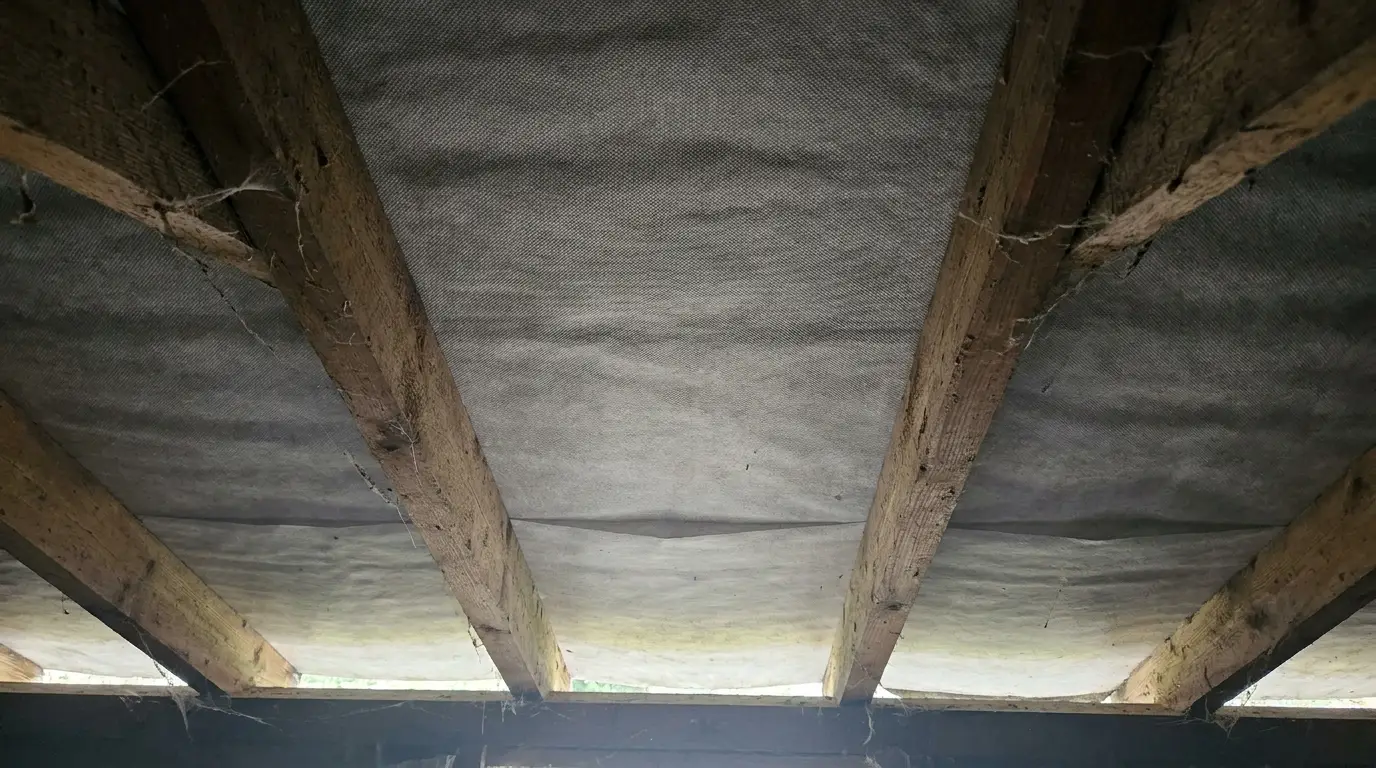
Many modern roofs use breathable membranes beneath tiles or slates. These are designed to allow water vapour to pass through while providing secondary protection against rain or snow ingress. They are useful, but they are not a magic cure for poor airflow.
In practice, the performance of breathable membranes depends on the whole roof system. The roof pitch, covering type, insulation position, internal humidity levels, and external weather conditions all play a part. In some roofs, additional ventilation is still necessary.
This is particularly true where a home has high humidity levels, where the loft floor has gaps around pipework or downlights, or where insulation has reduced air movement at the eaves.
The Role of Air Leakage from the Home Below
Ventilation is only one side of the moisture equation. The other is reducing the amount of warm, humid air that enters the loft in the first place.
Small gaps can move a lot of moisture over time. Common weak points include loft hatches, recessed light fittings, service penetrations, ceiling cracks, and gaps around pipes or cables. Sealing these areas can significantly reduce condensation risk.
Practical Steps That Make a Difference
Start with the basics. Use extractor fans in bathrooms and kitchens, and make sure they vent outdoors rather than into the loft. Avoid drying laundry indoors without ventilation. Keep internal doors closed when showering or cooking, and use trickle vents where available.
In the loft itself, check that insulation is not blocking the eaves. If stored boxes are packed tightly against the roof slope, they may also restrict airflow. A loft should not be treated like an airtight storage cupboard; air needs room to move.
When Loft Moisture Needs Professional Attention
A small amount of condensation during extreme weather may not be unusual, especially after a sudden cold snap. But persistent dampness, mould, or wet insulation should not be ignored.
Professional advice is especially important if the roof has recently been re-covered, insulation has been upgraded, or moisture appears only in certain areas. Localised damp may point to a defect, while widespread condensation often suggests a ventilation or air leakage issue.
A competent roofer or building surveyor can assess whether the existing ventilation meets the needs of the roof structure and whether any defects are contributing to the moisture problem.
A Healthy Loft Depends on Controlled Airflow
The link between loft moisture and roof ventilation is simple in principle but often misunderstood. Moisture will always be present in homes; the question is whether the building can manage it safely.
Good ventilation gives that moisture an escape route. Combined with effective insulation, careful air sealing, and sensible humidity control indoors, it helps protect the roof structure from long-term damage.
If your loft feels damp, smells musty, or shows signs of condensation, do not assume it is just “one of those winter things.” It is your home telling you that the balance between warmth, moisture, and airflow needs attention. Address it early, and you can prevent a minor condensation issue from becoming a costly roof problem.