
Almost every house has one. A back bedroom, a room over the garage, or a corner office stays a few degrees colder than everything else, no matter where the thermostat sits. There are only two basic explanations: either the room loses heat faster than it gets it, or the heat never fully arrives.
Telling the two apart saves money. Start with the house, since many of its fixes cost little and take an afternoon, and if the clues point to heat that never reaches the room, that’s the point where a heating system repair service earns its visit.
You won’t need special tools. One thermometer you carry from room to room, a flashlight, an incense stick or a strip of tissue paper, and two or three cold evenings will tell you most of what you need to know.
Step One – Measure Before You Guess
Before you change anything, build a simple temperature map. Use the same thermometer in every room, take readings at about the same time each evening, and note the outdoor temperature and whether it’s windy.
Hold your hand in front of each supply register while the heat runs and write down whether the air feels strong, weak, warm or barely warm.
After a couple of nights, a pattern usually appears. A single cold room points to something about that room: its windows, its walls, or its duct. A whole cold floor suggests the system isn’t sending enough heat upstairs or down.
When the cold sits at the far end of the house, the long duct runs to that end become the main suspect. Write the pattern down, because every later step depends on it.
When the House Is Losing the Heat
If warm air pours out of the register and the room still feels chilly, the heat is arriving and escaping. The building shell is the place to look.
Windows and Exterior Doors
Old single-pane windows, double-pane units with failed seals, and worn weatherstripping all leak heat. To find drafts, light an incense stick on a windy day and move it slowly around window sashes, door frames, and trim. Wherever the smoke bends or flutters, air is moving. A strip of tissue taped to a pencil works too.
Insulation Gaps
Certain rooms are cold by design. Rooms over unheated garages, finished attics with sloped ceilings, bonus rooms, and additions often have thin or missing insulation in exactly the places that matter.
An uninsulated attic hatch in a bedroom ceiling can make a noticeable difference by itself. If several rooms show these signs, a professional energy audit with a blower door test can pinpoint where the heat goes.
Air Leaks You Can’t See
Some leaks hide behind finished surfaces. Electrical outlets and switches on exterior walls let cold air in around their boxes. The rim joist, where the house framing sits on the foundation, is a common gap in basements. Openings around plumbing and wiring that run into the attic pull warm air up and out of the rooms below.
When the Heat Isn’t Reaching the Room
If the air from the register is weak or lukewarm while other rooms get a strong, warm flow, the walls aren’t the issue. The problem lies in how the system delivers heat.
Weak or No Airflow at the Register
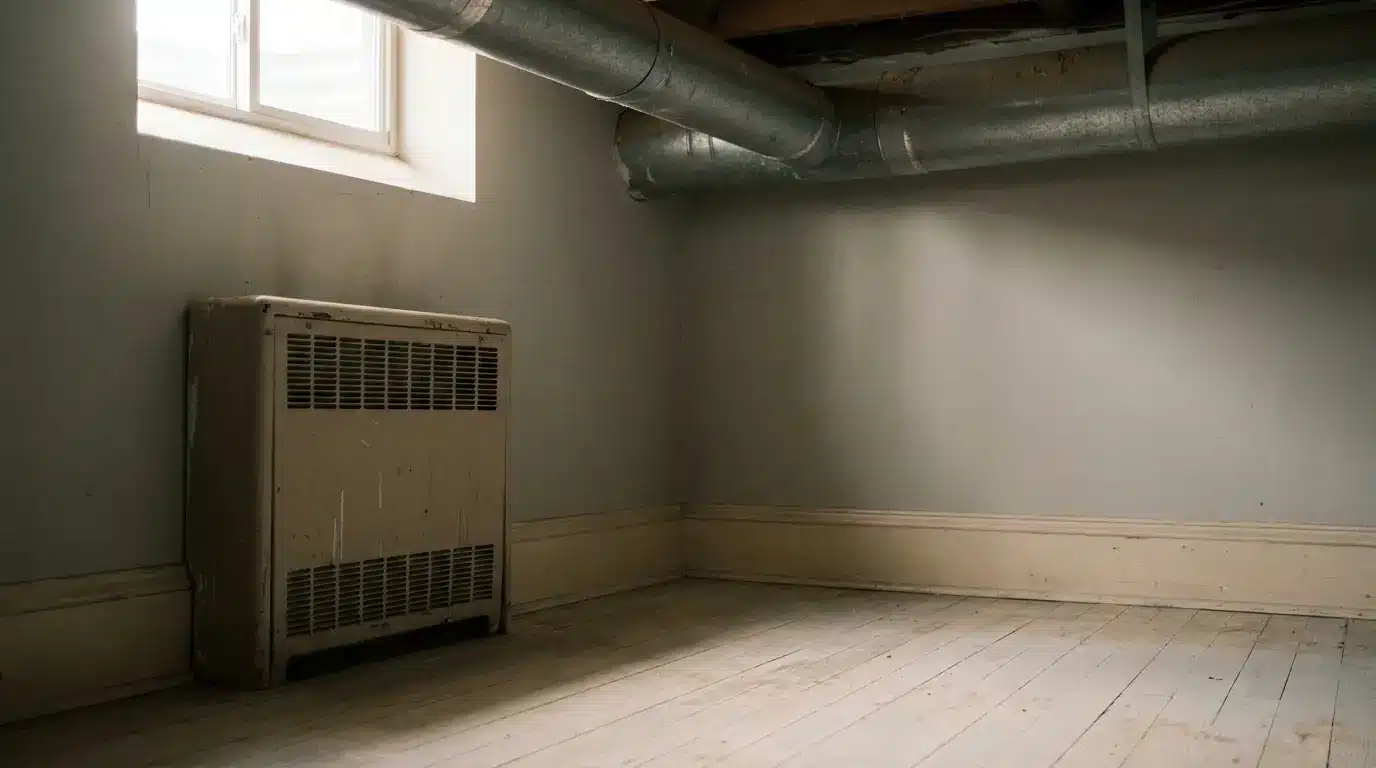
Start with the obvious: a register that’s half closed, buried under a rug or blocked by a dresser. Then look at the ductwork in the basement. Many systems have small damper levers on individual duct branches, and one turned the wrong way can starve a room.
Ducts in attics and crawl spaces can come apart at the joints or get crushed, sending heated air into spaces nobody lives in. Rooms at the end of a long run often get the least air even when everything is connected.
Return Air and Closed Doors
Air has to leave a room for warm air to keep coming in. In many homes the only return grille sits in a hallway, so a closed bedroom door with no gap underneath slowly chokes the supply. If a room warms up noticeably with the door open, the return path is the problem.
The System Shuts Off Too Soon
When the thermostat hangs in the warmest part of the house, it reaches its setting quickly and stops the system before distant rooms catch up. Short cycling, where the system runs only a few minutes at a time, has the same effect and often points to an overheating or airflow fault.
Radiators and Baseboards in Hot-Water Homes
Homes with boilers have their own version of the problem. A radiator that’s cold at the top and warm at the bottom has trapped air in it. A closed valve or a poorly balanced loop can leave one area short of heat, and a whole zone that stays cold may have a failing circulator pump or zone valve.
Reading the Clues – House or System?
Line up your notes against this table and the answer usually becomes clear.
| What you notice | Points to the house | Points to the system |
|---|---|---|
| Strong, warm airflow, but the room stays cold | Yes | |
| Weak or lukewarm airflow from the register | Yes | |
| Room gets colder mainly on windy days | Yes | |
| Room is cold even in mild weather | Yes | |
| An entire floor or zone stays cold | Yes | |
| Radiator cold at the top, warm at the bottom | Yes |
Fixes You Can Make This Weekend
Plenty of cold-room problems shrink with inexpensive work you can do yourself.
- Replace worn weatherstripping on windows and doors.
- Add a door sweep to exterior doors.
- Install foam gaskets behind outlet covers on exterior walls.
- Open and clear every register in the cold room.
- Check basement duct dampers, especially ones marked for winter and summer positions.
- Put in a fresh furnace filter.
- Bleed air from radiators that are cold at the top.
- Leave a gap under the door, or keep it open, so air can return.
When It’s Time for a Technician
Some findings go beyond weekend projects. Airflow that stays weak after the filter, registers and dampers check out often means a duct problem in a place you can’t reach or a blower that’s losing strength. Short cycling that continues with a clean filter, a boiler zone that won’t warm up, or any burning smell from the equipment also calls for a professional.
If an addition or converted space was tied into the original system, ask whether the equipment was ever sized to carry the extra load.
A good technician will measure airflow at the registers, inspect the accessible ductwork, and test the controls before suggesting a fix. Contractors such as Region Home Services, a family-run HVAC company in Bucks County, Pennsylvania, start with that kind of diagnosis and put the estimate in writing before any work begins.
Bring your temperature map to that visit, because a week of notes about which rooms run cold, and when, can shorten the diagnosis considerably.