

Ever notice how some flower beds just feel right while others seem a bit off?
There’s actually a simple design principle behind those gardens that makes you stop and stare.
The approach uses odd numbers to create arrangements that mirror what we see in nature, where plants rarely grow in perfect pairs or even groups.
This method takes the guesswork out of planning your flower beds, no matter if you’re planting your first garden or have been cultivating blooms for years.
Following this guideline helps you create displays that look natural and polished, without needing any formal training in landscape design.
What is the 3-5-8 Rule for Flowers?
The rule is straightforward: plant your flowers in clusters of three, five, or eight instead of even numbers.
This creates visual interest because odd groupings naturally draw the eye and feel less structured than pairs or groups of four.
When you arrange plants this way, you avoid that stiff, overly planned look that can make gardens feel artificial.
The asymmetry mimics how flowers grow in the wild, giving your beds a relaxed vibe.
You can repeat these groupings throughout your garden to build rhythm and cohesion. Think of it as organized randomness that ties your entire landscape together without looking like you tried too hard.
The Design Psychology Behind the 3-5-8 Rule
Our eyes naturally seek patterns, and odd numbers create a focal point that feels balanced without being symmetrical.
When you plant in groups of five or eight, these larger clusters anchor your garden beds and give them visual weight.
Smaller groupings of three work as accent points that complement without competing. This clustering approach solves a common problem: the polka dot effect.
Single plants scattered around look disjointed, like they’re each fighting for attention. Groups read as one cohesive element instead, creating impact through unity.
Layer different heights within these clusters to add depth, then repeat combinations throughout your beds to build rhythm.
Step-by-Step: How to Apply the 3-5-8 Rule in Flower Beds?
Ready to put this rule into action? Start by selecting your star players, then arrange them in odd-numbered groups based on your space.
The process builds naturally from choosing focal flowers to creating layers that add dimension.
Step 1: Choose a Focal Flower
Pick a statement bloom that will be the backbone of your design. Roses, hydrangeas, coneflowers, and peonies work well because they have presence and personality.
This focal plant should be something you love looking at, since you’ll be repeating it throughout the bed. Choose varieties that suit your climate and the light conditions in your garden.
Step 2: Plant in Groups of 3, 5, or 8
Match your grouping size to your available space. Smaller beds look best with clusters of three, which create impact without overwhelming the area.
Medium spaces can handle groups of five, while larger landscapes benefit from eight or more plants grouped together. These bigger clusters make a bolder statement and fill space more effectively.
Step 3: Repeat for Harmony
Take that same focal plant and repeat it in another section of your bed. This repetition creates visual rhythm and ties different areas together.
Keep your color palette consistent as you repeat groupings. The eye will naturally travel between these repeated elements, making your garden feel intentional and cohesive rather than random.
Step 4: Layer by Height
Arrange plants with the tallest varieties in the back, medium heights in the middle, and low growers or ground cover at the front. This layering ensures every plant gets visibility and creates depth that makes your bed look fuller.
The graduated heights also improve sight lines and prevent taller plants from hiding shorter ones.
Example Layout Ideas Using the 3-5-8 Rule
Seeing the rule in action makes it easier to visualize for your own space. These layout ideas show how the same principle adapts to different garden styles and goals.
1. Cottage Garden Layout
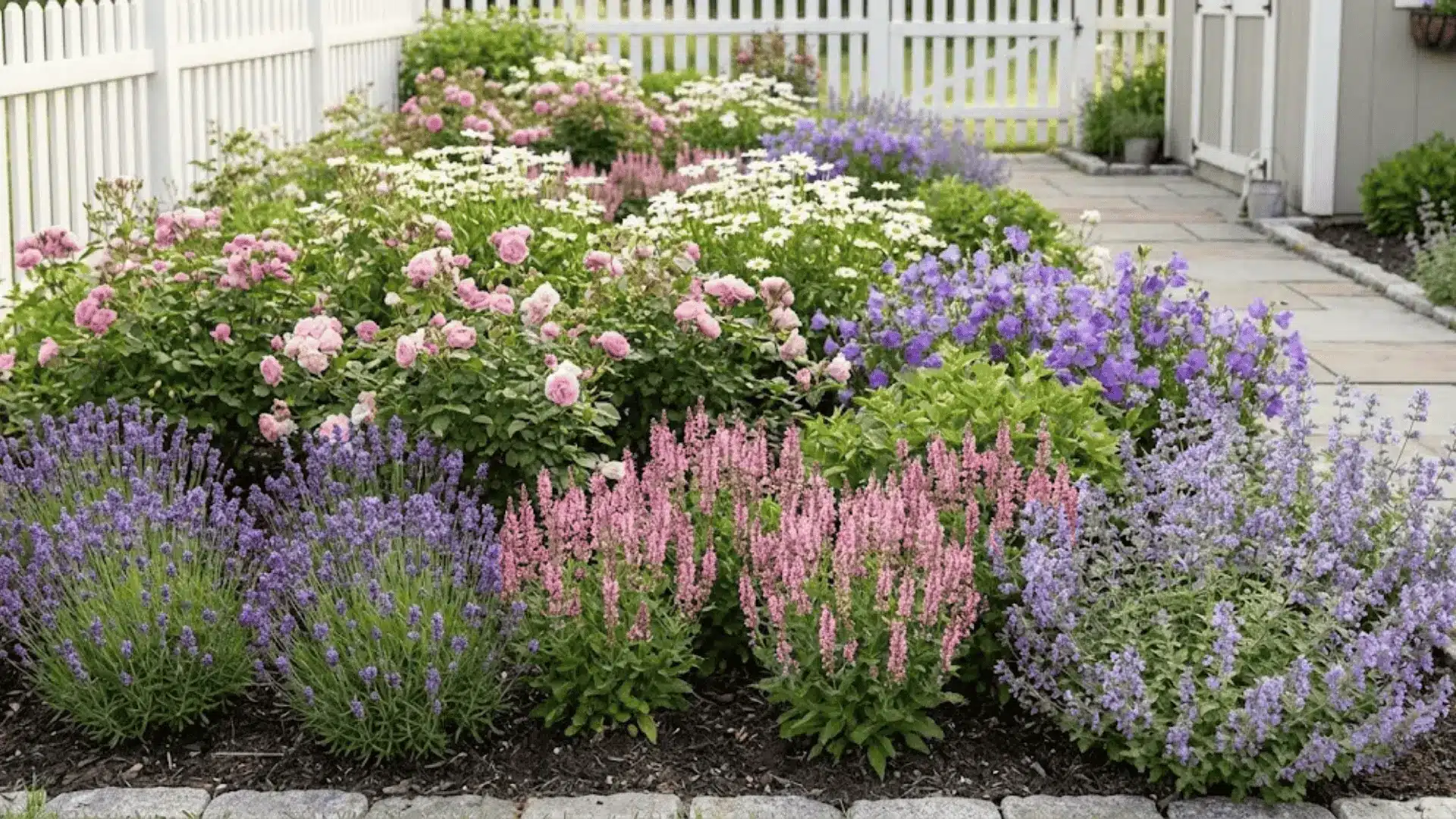
Plant perennials like lavender, salvia, and catmint in clusters of five for that classic, abundant cottage look. Stick to a pastel color palette with soft pinks, purples, and whites that repeat throughout the bed.
This creates the romantic, overflowing feel cottage gardens are known for while maintaining structure underneath.
2. Modern Minimalist Bed
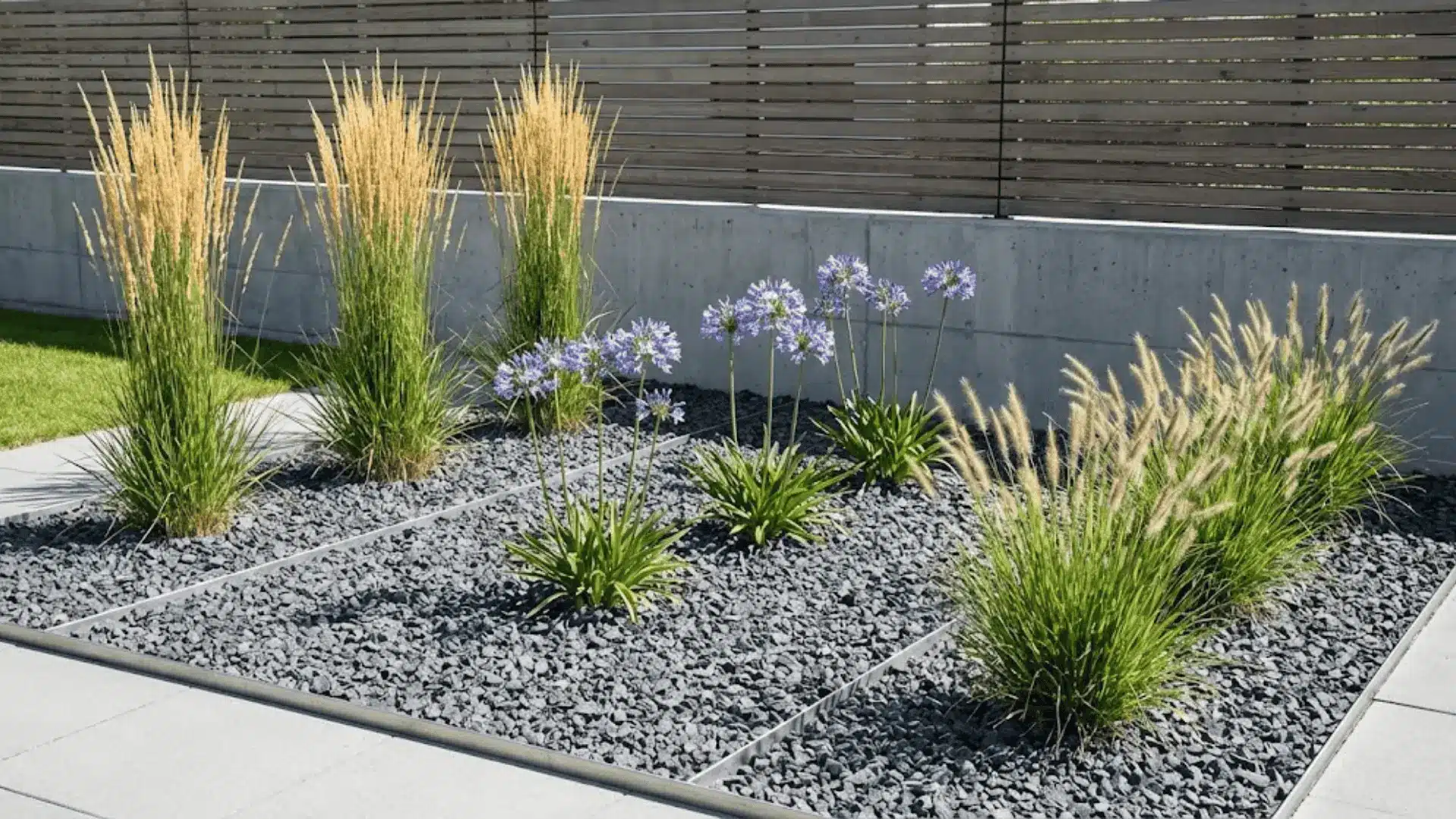
Go for bold statement plants like ornamental grasses or agapanthus in groups of three. Space these clusters with generous gaps between them to emphasize clean lines.
Repeat the same plant types in different areas to create rhythm while letting each grouping stand out as a sculptural element.
3. Pollinator Garden
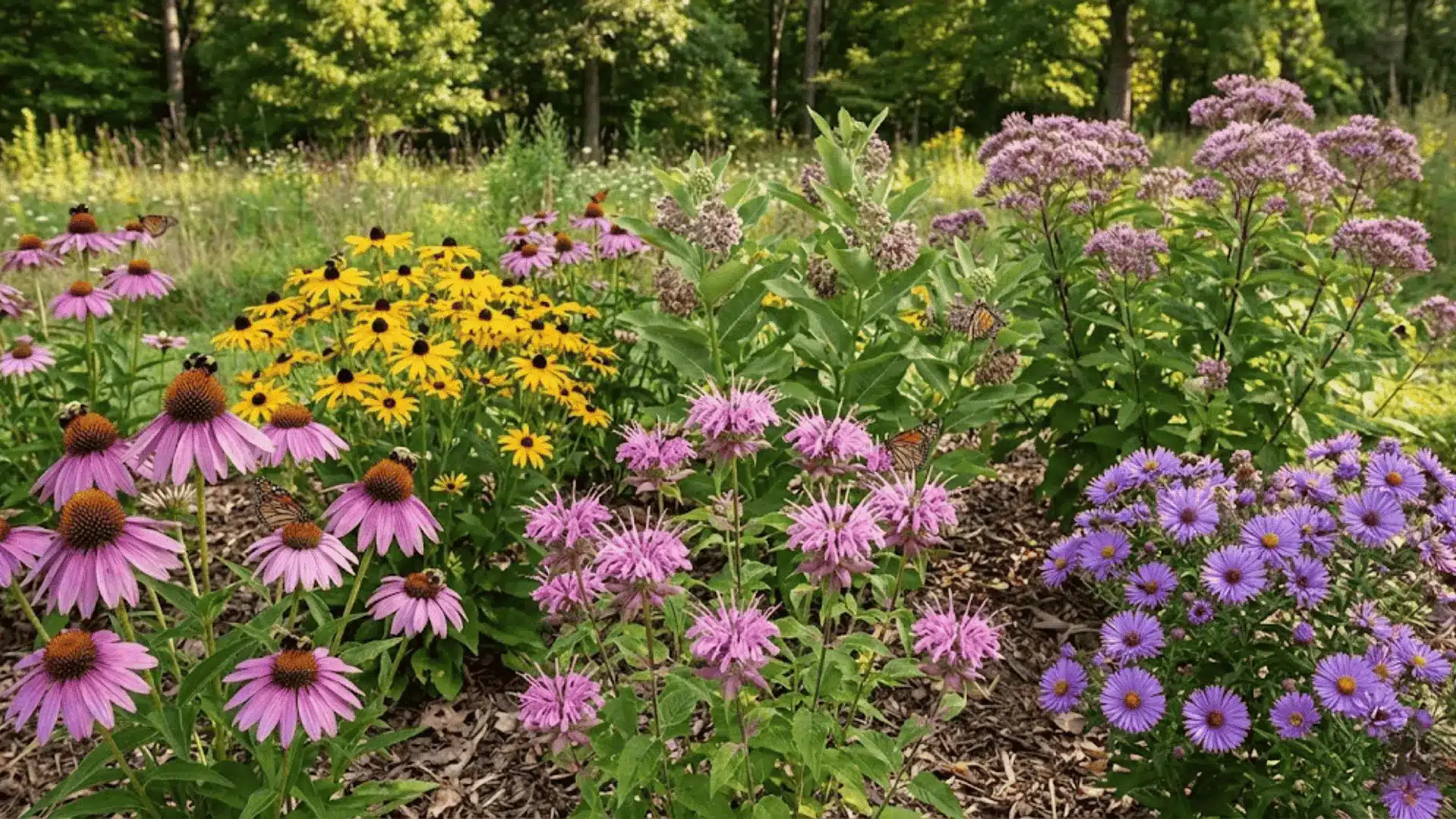
Use clusters of eight native flowering plants like coneflowers, bee balm, or asters to create feeding stations that attract bees and butterflies.
Larger groupings help pollinators find more nectar and are easier to spot. Repeat clusters to create a network of pollinator-friendly zones.
Fresh, healthy blooms matter here, so consider how florists keep flowers fresh to maintain vibrant displays.
Best Flowers to Use with the 3-5-8 Rule
Certain plants lend themselves beautifully to odd-numbered groupings because they have consistent size, shape, and bloom patterns.
Here are some reliable options that work well with this design approach.
| Plant Type | Best Options | Ideal Group Size | Why They Work |
|---|---|---|---|
| Perennials | Coneflowers, Black-eyed Susans, Salvia, Lavender | 3-5 | Consistent growth habits, return yearly |
| Annuals | Petunias, Marigolds, Zinnias, Impatiens | 5-8 | Season-long color, budget-friendly |
| Shrubs & Structural Plants | Hydrangeas, Roses, Ornamental Grasses | 3-5 | Anchor points for larger beds |
When the 3-5-8 Rule Doesn’t Apply
This rule works beautifully for natural, flowing garden designs, but some styles call for a different approach. Here are situations where you can skip the odd-number guideline.
- Formal symmetrical gardens that rely on matched pairs and mirror images for their structured, classical appeal.
- Container gardening, where space limitations and the need for balanced arrangements often work better with even numbers.
- Small balcony spaces that may only have room for one or two statement plants without looking overcrowded.
- Geometric landscape designs built on patterns, grids, and intentional symmetry that create modern, architectural impact.
If your garden style leans formal or your space is tight, even numbers might actually serve you better. Pay attention to what looks right in your specific setting.
Final Thoughts
Applying the 3-5-8 rule for flowers transforms how you approach garden design, turning what used to feel overwhelming into something manageable and fun.
You now have a framework that brings professional polish to your beds without needing years of experience.
Start small with one section of your garden, play around with different groupings, and watch how quickly things come together.
Your flower beds will look more intentional and inviting with this simple shift in how you plant.
Have you tried odd-number groupings in your own garden? Drop a comment below and share what worked for you.





One Response
Math point here: Eight (8) is an even number. 2-4-6-8-10, etc.