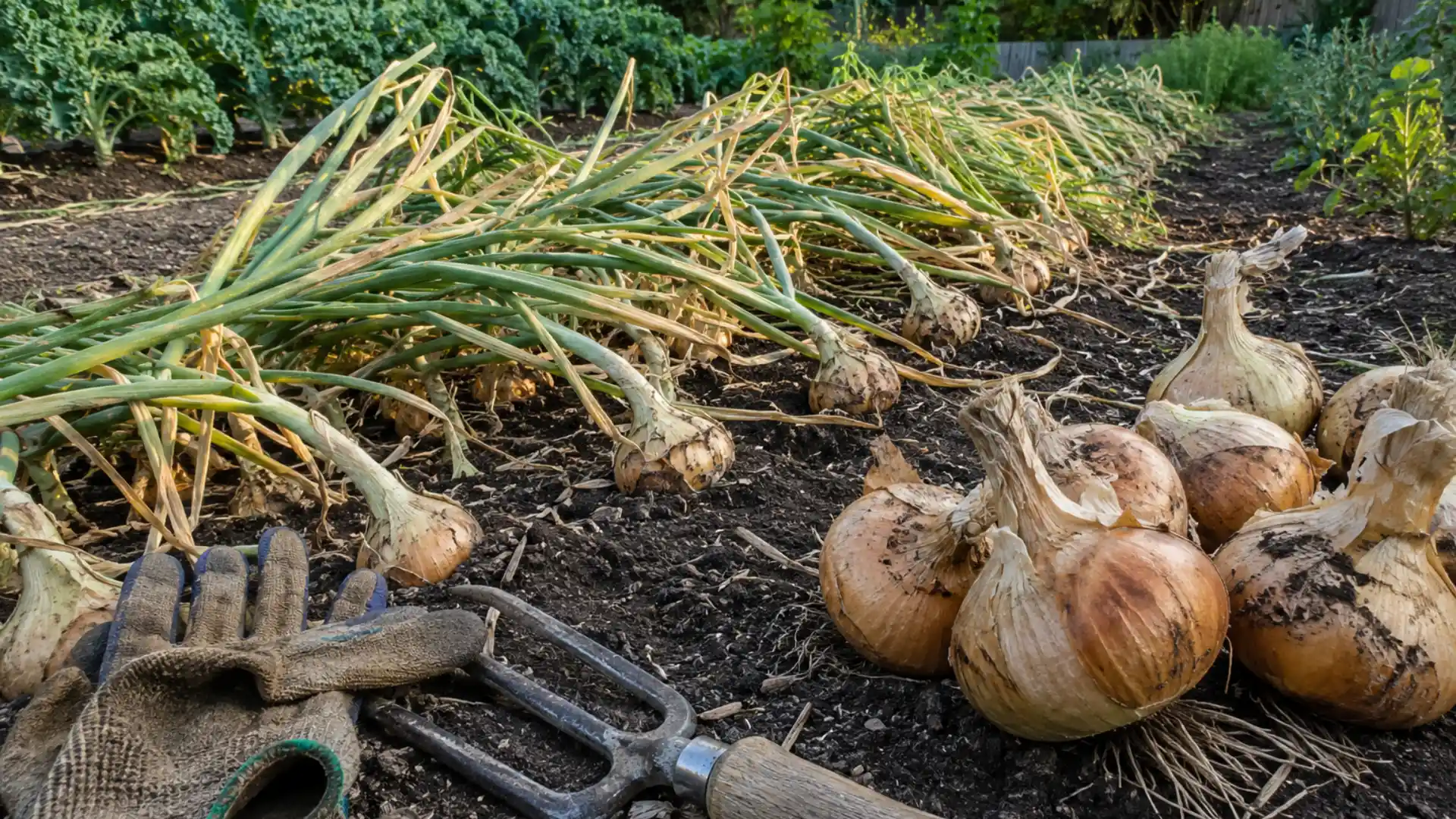
Onions are ready when their tops start turning yellow, drying out, and flopping over toward the ground.
I always watch for that instead of counting days, since the neck gets firm and the outer skins turn papery right before harvest time. That toppling is the plant’s own way of saying it is done growing.
Wait for it, and you will get bigger, better bulbs that cure and store well.
Green onions are a different story though, since you can pull those much earlier. Storage onions need full maturity and a good cure, while sweet onions taste best used fresh.
When is the Best Time to Harvest Onions?
Spring-planted onions typically mature in mid to late summer, though the exact window shifts with variety, planting date, day length, growing conditions, and climate.
Instead of counting days, watch your plants.
Most gardeners ask if falling tops mean it is harvest time, and yes, that is the cue, though not the whole picture. Once about half the tops have flopped over and started drying, your onions are ready to come up.
One droopy leaf does not mean the whole bed is done, so let the majority guide your timing rather than a single stalk.
7 Signs Your Onions Are Ready to Harvest
After years of growing onions in my own garden beds, I have learned the plant always tells you when it’s done; you just need to know its language. Here is what to look for.
1. The Tops Start Falling Over
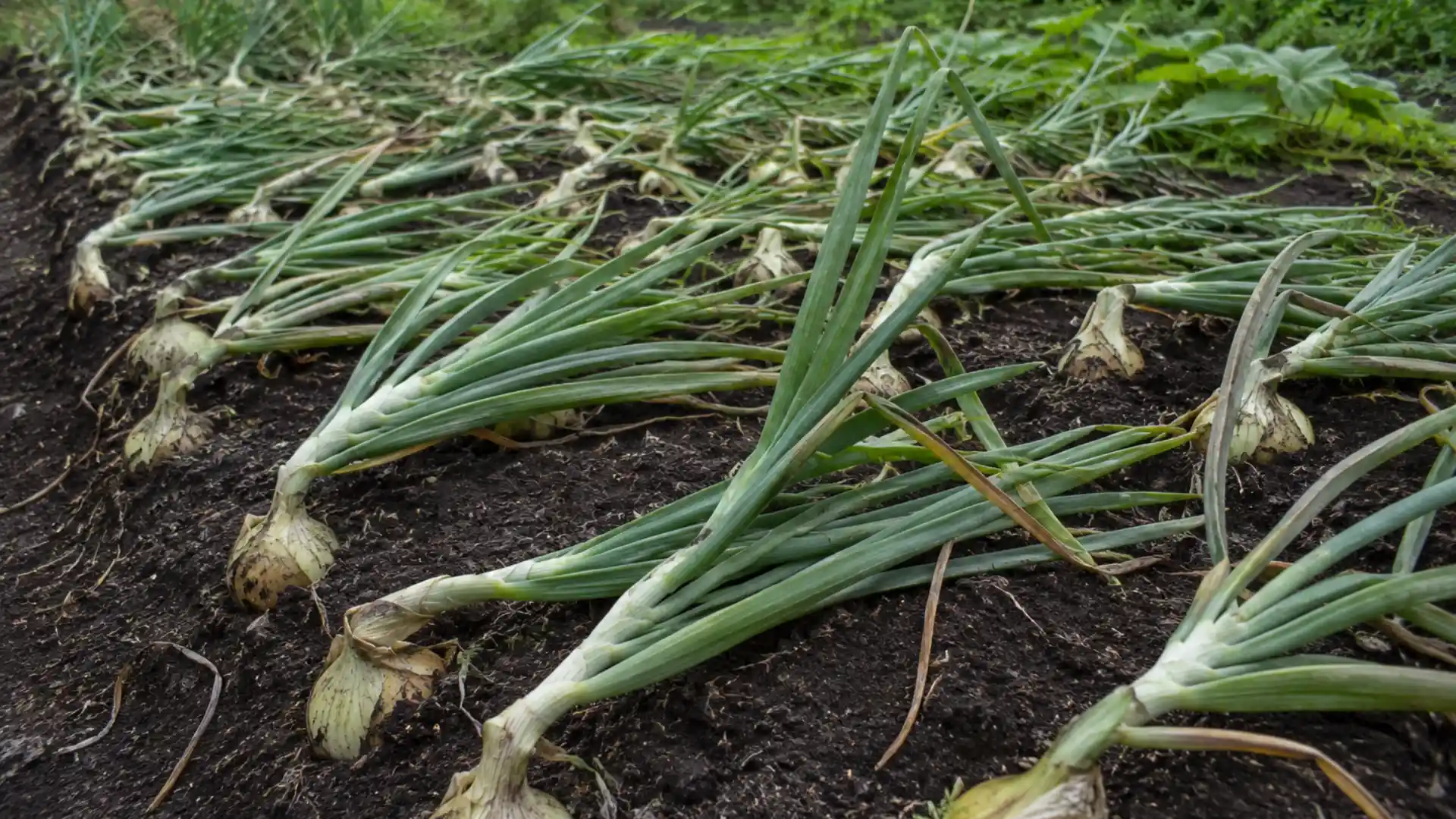
This is the clearest visual cue you will get. As bulbs finish forming, the hollow stalks weaken at the neck and naturally flop toward the soil, one by one, instead of standing upright.
It happens gradually across the bed rather than all at once.
2. The Tops Begin Turning Yellow or Brown
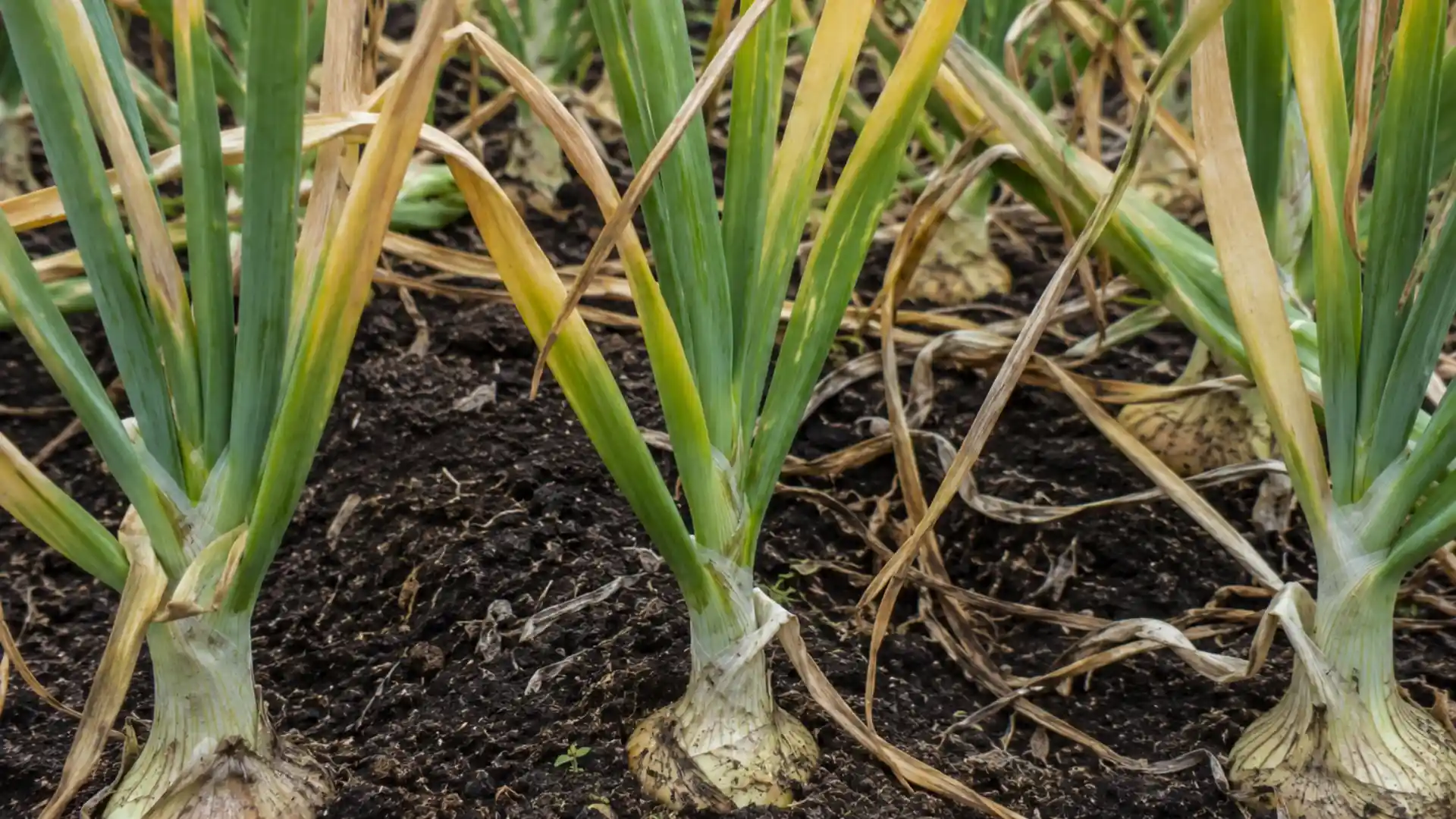
Mature foliage gradually loses its green color as the plant redirects energy into the bulb.
This is different from disease, which usually shows spotting, streaking, or a mushy texture rather than an even, season-ending fade. Healthy yellowing is uniform and comes paired with the toppling stage above.
3. The Onion Necks Become Tight and Firm
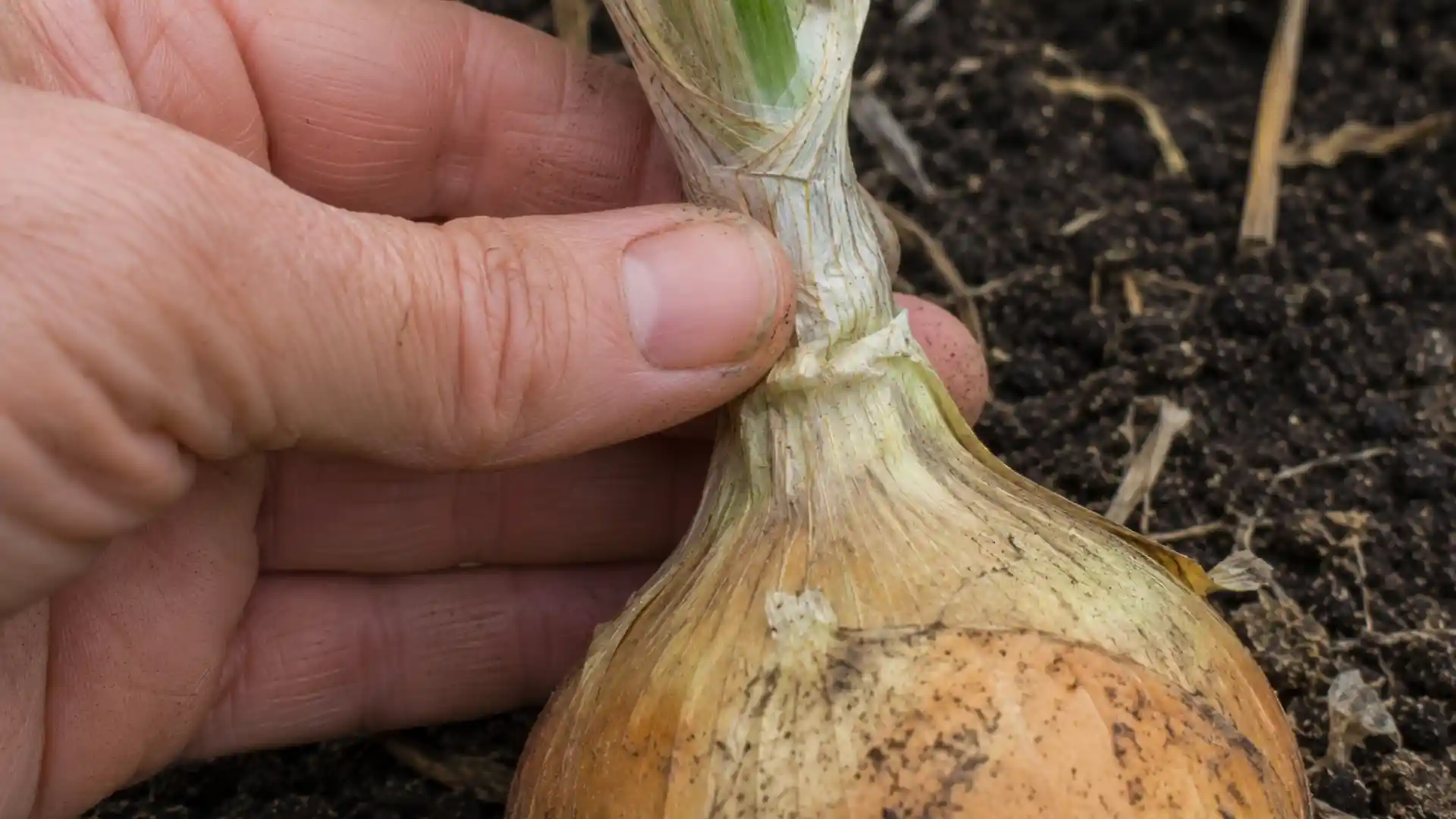
Run your fingers around the neck where the stalk meets the bulb. A mature onion feels tight, thin, and dry, not thick or spongy.
A soft, actively growing neck means the bulb is still pulling in moisture, and onions harvested that way would not cure or store nearly as well.
4. The Outer Skins Become Dry and Papery
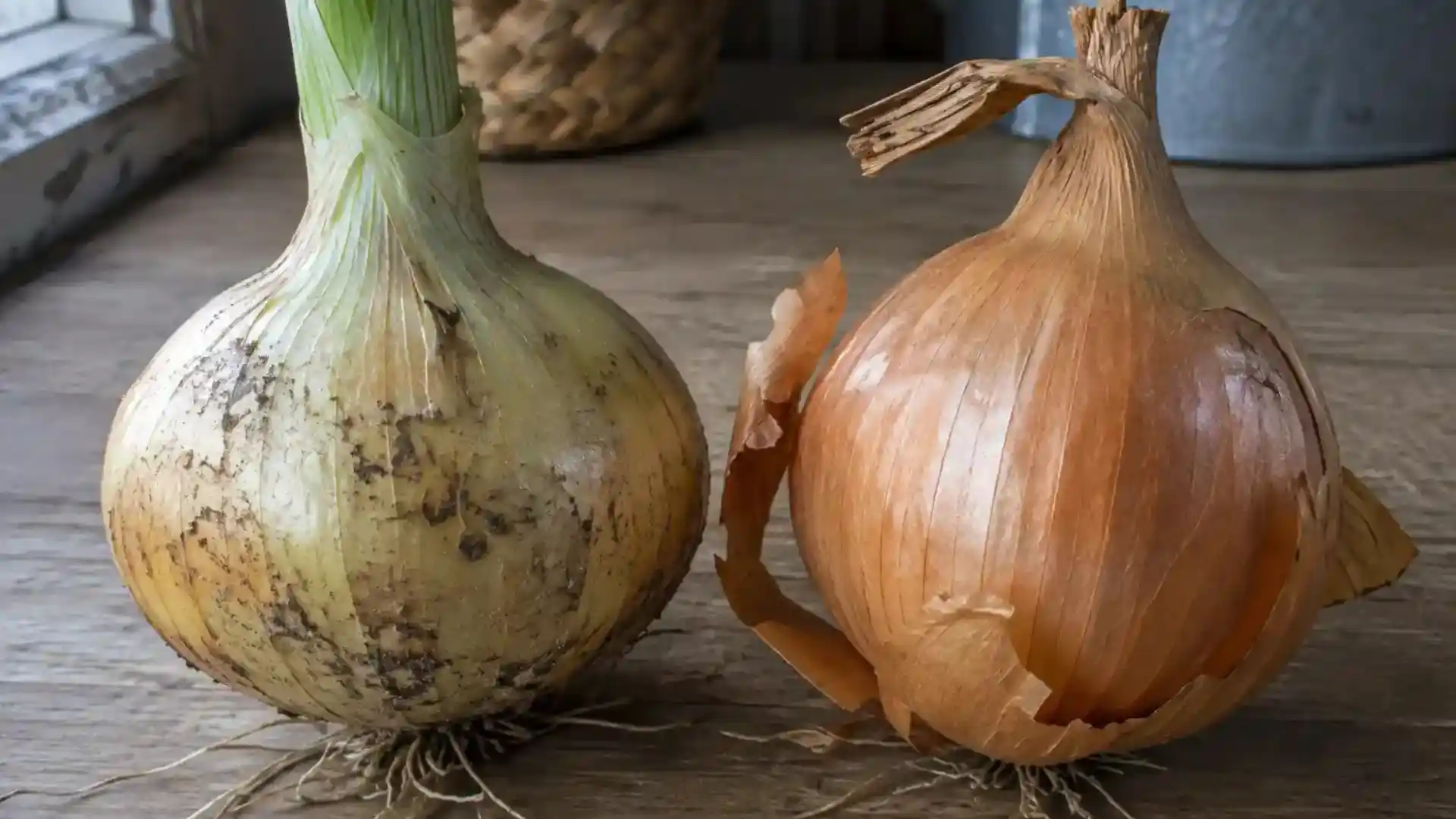
As bulbs finish growing, their outer scales dry into that classic papery, crackly layer you recognize from the store.
Freshly pulled bulbs look duller and tighter-skinned, while properly cured ones turn glossy, crisp, and rustling to the touch.
5. The Bulbs Have Reached Their Expected Size
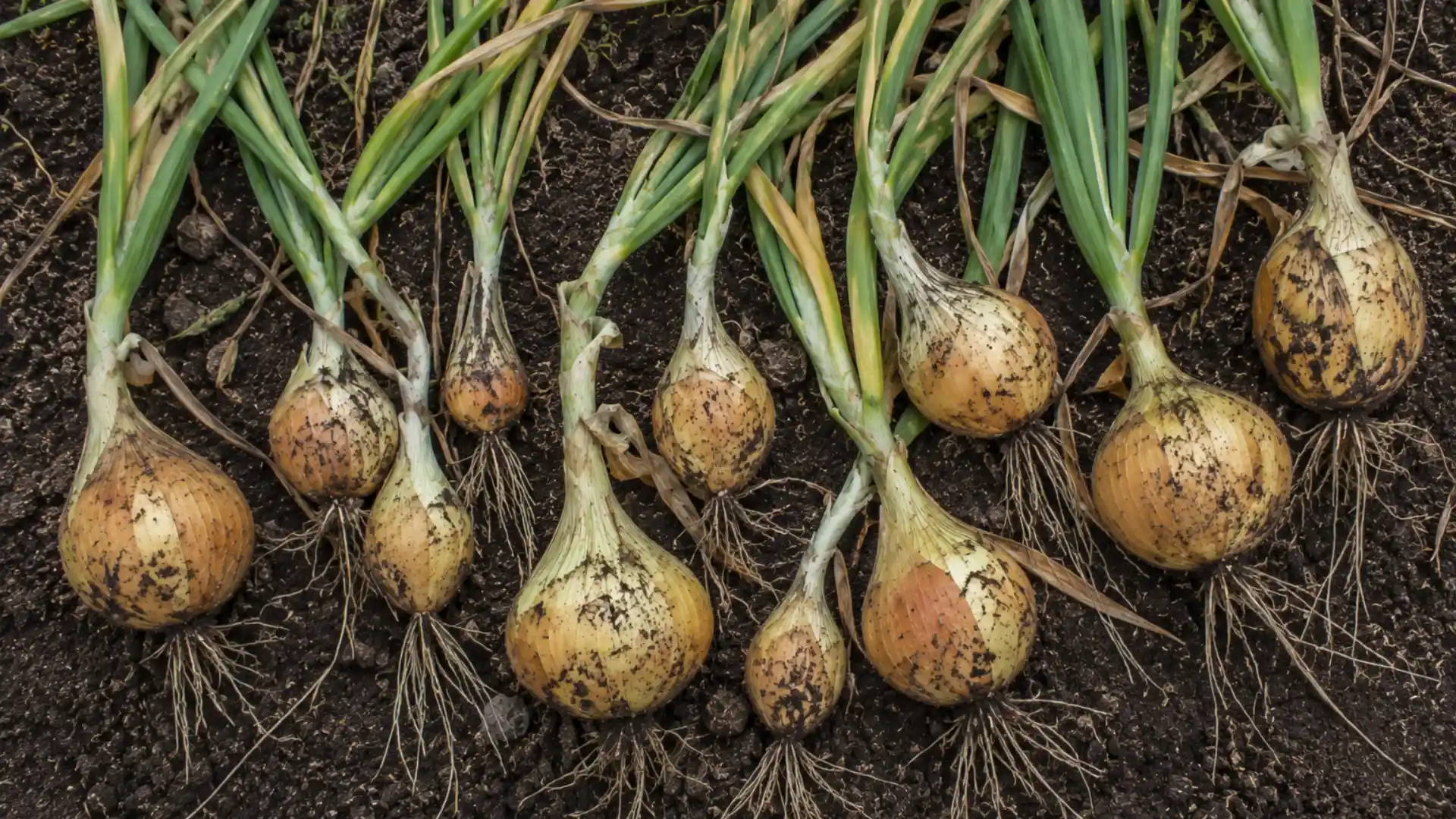
Size can help confirm what your eyes already suspect, but it should not be your deciding factor alone.
Every variety has its own typical size range, so a small yellow onion may be perfectly mature. Leaving bulbs in the ground purely to bulk them up often backfires once the other signs have appeared.
6. Bulbs Are Beginning to Push Above the Soil
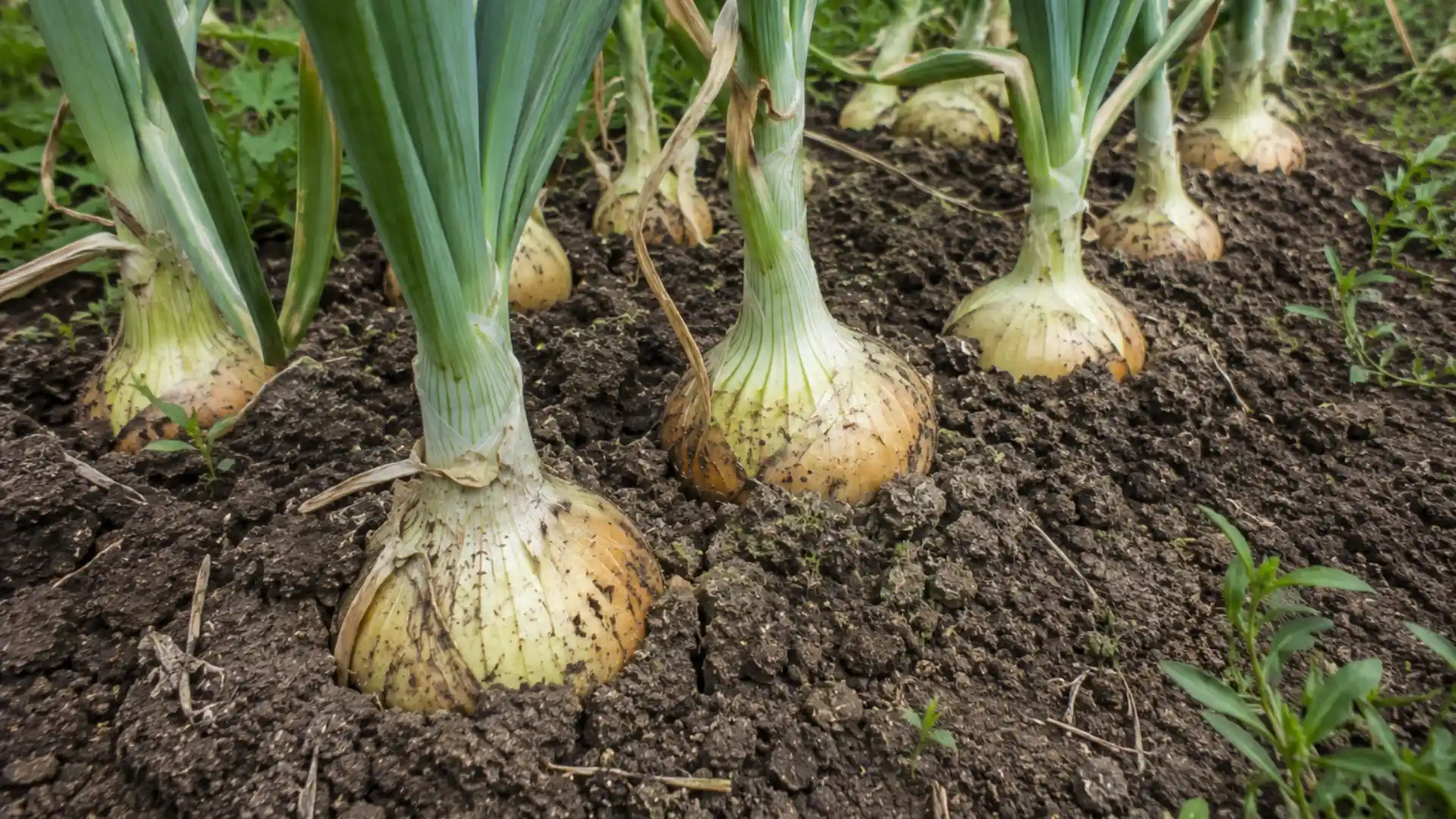
Some varieties naturally shoulder up out of the soil as bulbs swell near maturity.
It is worth noting, but exposed shoulders on their own do not confirm readiness. Pair this with neck firmness and toppling tops before you commit to pulling.
7. The Plant Has Stopped Producing Fresh Green Growth
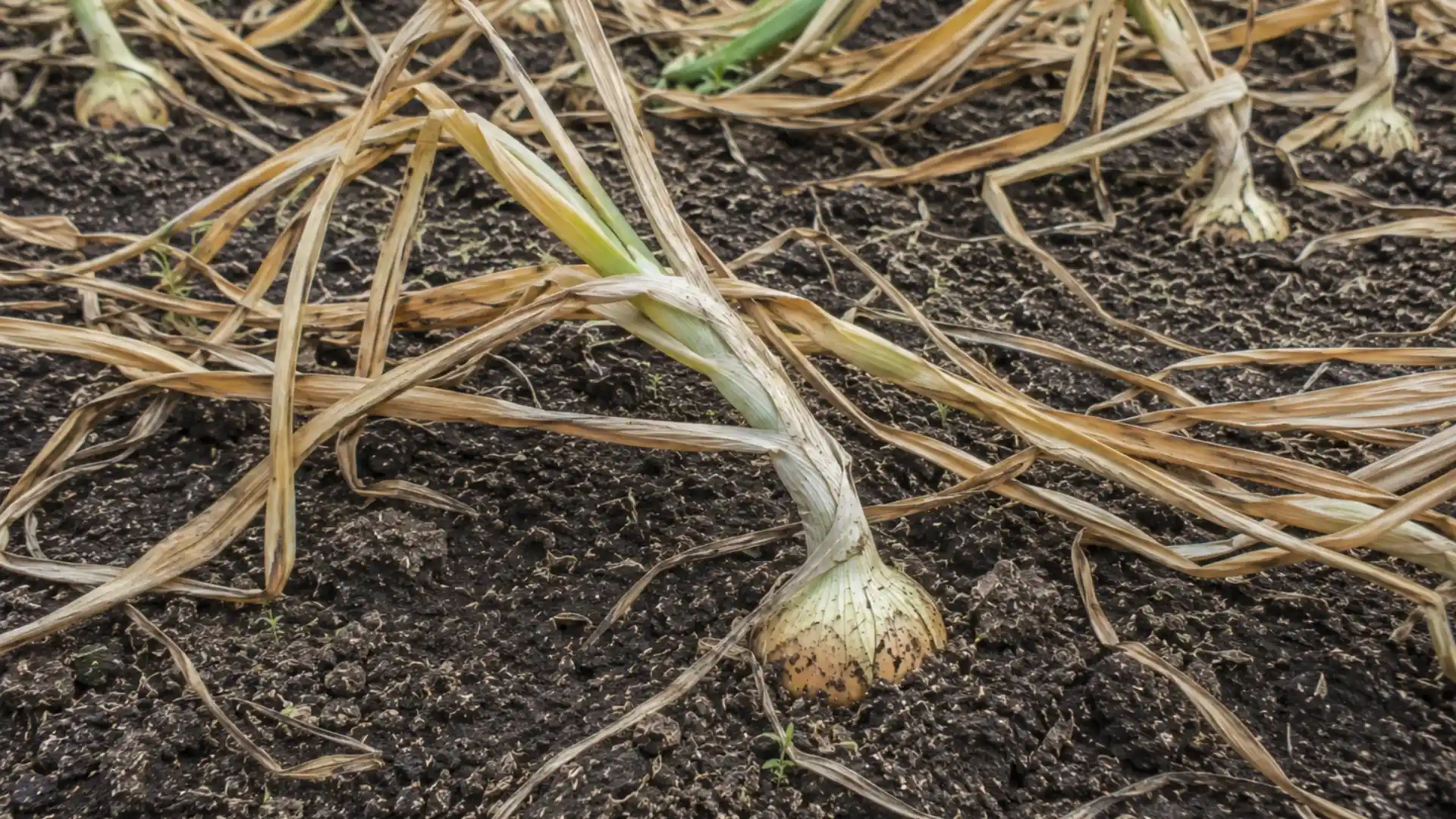
Once maturity sets in, the plant stops pushing new foliage altogether and shifts fully into bulb finishing mode.
This sign rarely stands alone, though; it shows up alongside yellowing, toppling, and that telltale firm neck, confirming what the other cues have already been suggesting.
How to Tell if an Onion is Mature Enough to Pull?
One sign alone can be misleading, but a few of them showing up together tell the real story.
Here is a quick side-by-side to help you check your bed with confidence.
| Ready to Harvest | Not Quite Ready |
|---|---|
| Tops yellowing and falling | Tops still upright and green |
| Neck is tight | Neck is thick and actively green |
| Outer skin is dry | Bulb skin is moist and soft |
| Bulb has reached expected size | Bulb is still noticeably undersized |
| Growth has slowed or stopped | New foliage is still developing |
Should You Stop Watering Before Harvesting Onions?
Yes, cutting back on water matters once your onions near the finish line.
As bulbs reach full size and tops start tumbling over, it’s time to ease off irrigation and let the soil dry out naturally.
Too much moisture right before harvest keeps the neck soft and the outer skin from developing that protective papery layer, which raises the risk of rot during curing and storage.
That said, this is not about stressing your plants with drought either.
Simply let nature take its course as the bulbs finish maturing on their own terms.
Should You Bend Onion Tops Over to Make Them Mature Faster?
It is a common question among gardeners eager to speed things along.
Some traditional growing guides do suggest gently bending remaining foliage once the crop is already close to maturity, nudging along those final stragglers still standing upright.
That said, this is not something to force on healthy, fully upright plants just because you are impatient for harvest day.
Bending too early or too aggressively can stress the bulb before it is truly ready.
Think of it as an optional late-season nudge, not a shortcut, and only worth trying once most signs of maturity are already showing.
How to Harvest Onions From the Garden?
I have pulled onions both the rushed way and the careful way, and the difference shows up weeks later in storage.
Once your bulbs show all the right maturity signs, the harvest itself is refreshingly simple. Just follow these steps to protect them for the best possible cure.
- Choose a dry day, since wet-harvested onions cure poorly and are far more prone to storage problems.
- Loosen the soil beside the bulb with a garden fork, never straight underneath, to avoid piercing or bruising it, and paying attention to soil texture around the bulb makes this step easier.
- Lift bulbs gently from the loosened soil, pulling by the foliage only once the ground is soft enough to release them easily.
- Brush off excess soil by hand, skipping any aggressive washing that can trap moisture and invite rot.
- Set aside damaged bulbs with cuts, bruises, or soft spots, and use those first instead of storing them long-term.
Handle this gently; your onions are already halfway to a good, long cure.
How Long Should Onions Cure After Harvest?
Curing is the step most new gardeners skip, and it is the one that determines whether your onions last through winter or turn mushy in a month.
It dries out the neck and outer layers, forming a protective shield around the bulb, and typically takes about 2 to 4 weeks depending on your climate and how mature the bulbs were at harvest.
If you are growing onions for the first time, the full onion growing timeline walks through this stage alongside planting and spacing decisions that shape it.
Curing Onions in the Garden
This method works well when the forecast cooperates, letting the sun and breeze do most of the work for you.
- Check the forecast first; curing outdoors only makes sense with warm, dry weather ahead.
- Lay bulbs in a single layer across the bed or a tarp for even airflow.
- Space them out so air can move freely between each bulb.
- Cover or relocate them quickly if rain or heavy moisture rolls in.
Once the weather turns unreliable, moving onions under cover is the safer bet.
Curing Onions Indoors
I have had far more consistent results curing indoors, especially in unpredictable weather, since airflow stays steady no matter what is happening outside.
- Pick a dry, ventilated space like a shed, garage, or covered porch.
- Spread bulbs out with enough room between them for air to circulate.
- Avoid stacking onions directly on top of one another.
- Turn bulbs occasionally so every side cures evenly.
Good airflow does the heavy lifting here, so give your onions room to breathe and let time handle the rest.
How Do You Know When Onions Are Done Curing?
Once curing is finished, your onions will tell you plainly; you just need to run through a quick check before moving them to storage.
- Neck is completely dry and no longer feels soft or green.
- Outer skin has turned papery, with loose layers that brush away easily.
- Bulb feels firm all the way through, with no give when pressed.
- No wet or soft areas anywhere on the bulb.
- No cuts, bruises, or signs of rot on the surface.
If your onions pass every check, they are cured and ready for long-term storage.
When to Harvest Different Types of Onions?
Not every onion follows the exact same timeline, since variety plays a real role in when and how you pull them.
Here is a quick breakdown to match your harvest approach to what is actually growing in your bed.
| Onion Type | Harvest Cue | Storage Life |
|---|---|---|
| Yellow Onions | Tops fully yellow and fallen, neck tight and dry | Long; cures and stores best |
| White Onions | Same signs as yellow onions | Shorter; use within a few months |
| Red Onions | Foliage collapse and papery skin | Best used fresh, not long-term |
| Sweet Onions | Thin skin, high water content | Short, use soon after harvest |
| Green Onions & Scallions | Pulled at useful stalk size, no bulb signs needed | Not stored, used fresh |
Knowing which type you are growing takes the guesswork out of harvest day and helps you plan for either quick use or a long winter’s worth of storage.
How to Store Harvested Onions?
I have lost onions to bad storage more than bad growing, so this part matters just as much as the harvest itself. A few key habits make the difference between onions that last through winter and ones that spoil within weeks.
- Keep them cool, dry, and ventilated, since humidity is what breaks down cured bulbs fastest; never store them in sealed plastic bags.
- Trim tops only after curing finishes, or braid suitable varieties together instead of cutting for a traditional, breathable storage method.
- Skip the fridge for whole cured onions; that environment is too humid for long-term keeping, though cut or peeled onions should go straight in.
- Expect storage life to vary widely based on variety, how well bulbs cured, any bruising, and the conditions they are kept in.
- Sweet onions won’t last as long as true storage varieties, so plan to use them within weeks rather than months.
Store them right, and a good harvest can genuinely carry you well into the colder months.
What Happens If You Leave Onions in the Ground Too Long?
Once maturity hits, more time in the soil rarely does your onions any favors. Overstaying brings its own set of problems that can undo weeks of careful growing.
- Increased exposure to rain and soil moisture as tops collapse and stop protecting the neck.
- Greater risk of rot setting in from that prolonged dampness around the bulb.
- Potential splitting or deterioration as bulbs sit too long past their peak.
- Reduced storage quality overall, even if the onion still looks fine on the surface.
Once your onions hit maturity, bigger is not better; it is just riskier. Pull them on time rather than chasing extra size.
What to Do If Rain is Coming at Harvest Time?
A little weather anxiety around harvest season is normal, but the fix is simpler than it feels.
- Prioritize mature bulbs rather than waiting around for a perfect forecast.
- Pick the driest practical day available, even if it is earlier than planned.
- Move onions under cover immediately if field curing is not realistic.
- Cure indoors instead, using a dry, ventilated space to finish the job field weather won’t allow.
Rain does not have to ruin your harvest; it just means shifting the curing process indoors.
Can You Harvest Onions That Have Flowered?
Yes, and you will want to act quickly once you spot it.
A flowering stalk, known as bolting, signals the plant has abandoned bulb growth in favor of reproduction instead.
Bolted onions generally don’t store well, since energy has already shifted away from the bulb itself.
Harvest these promptly rather than leaving them in the ground, and plan to use them fresh within a reasonably short window rather than tucking them away for long-term storage.
Frequently Asked Questions (FAQs)
How Do You Know for Sure Onions Are Ready to Harvest?
Look for several signs together rather than just one: yellowing, falling tops; a tight, dry neck; and papery outer skin. When these line up, your onions are ready to pull.
Can I Harvest Onions Before the Tops Fall over?
You can, especially for fresh use within a few days, but early-pulled bulbs will be smaller and won’t cure or store as well. For long-term storage, it is worth waiting for natural maturity signs.
How Long Do Onions Need to Cure Before Storing?
Most onions need about two to four weeks of curing, depending on conditions and maturity at harvest. Curing is complete once the neck is dry, the skin is papery, and the bulb feels firm.
Why Did My Onion Tops Fall Over Early, Before They Should?
Early collapse can stem from disease, pests, drought, excess moisture, or nutrient imbalance rather than natural ripening. Check for discoloration, spotting, or soft bulbs to rule out a problem.
Do Sweet Onions Need to Be Harvested and Stored Differently?
Yes, sweet onions have thinner skins and higher water content, making them less suited for long-term storage. Plan to use them fresh within a few weeks rather than curing them for winter.
Trust the Signs, Not the Calendar
Watching a garden through to harvest teaches patience in the best way.
Once you have learned to read your onions instead of your calendar, knowing when to harvest onions becomes second nature, a quiet skill built one growing season at a time.
Let the tops guide you, give your bulbs a proper cure, and store them with care, and you will be rewarded with onions that last well beyond the garden itself.
Have your own harvest tips or a story from this season’s onion patch? Drop a comment below; I’d love to hear how your garden is coming along.