You spot a tiny creature scuttling across your bathroom tile, pincers raised, moving with purpose, and your heart skips.
Is that a baby scorpion? A strange tick?
Before panic sets in, take a breath. What you’ve likely found is a pseudoscorpion, one of nature’s most misunderstood houseguests.
These miniature arachnids look intimidating with their lobster-like claws, but they’re completely harmless to you and surprisingly helpful around your home.
They don’t sting, don’t bite people, and actually feast on the pests you’d rather not have lurking in dark corners.
We’ll walk you through identifying these curious creatures, understanding why they’ve moved in, and deciding whether you even need to show them the door.
What are Pseudoscorpions?
Pseudoscorpions belong to the order Pseudoscorpiones, a group of arachnids that have existed for millions of years across every continent except Antarctica.
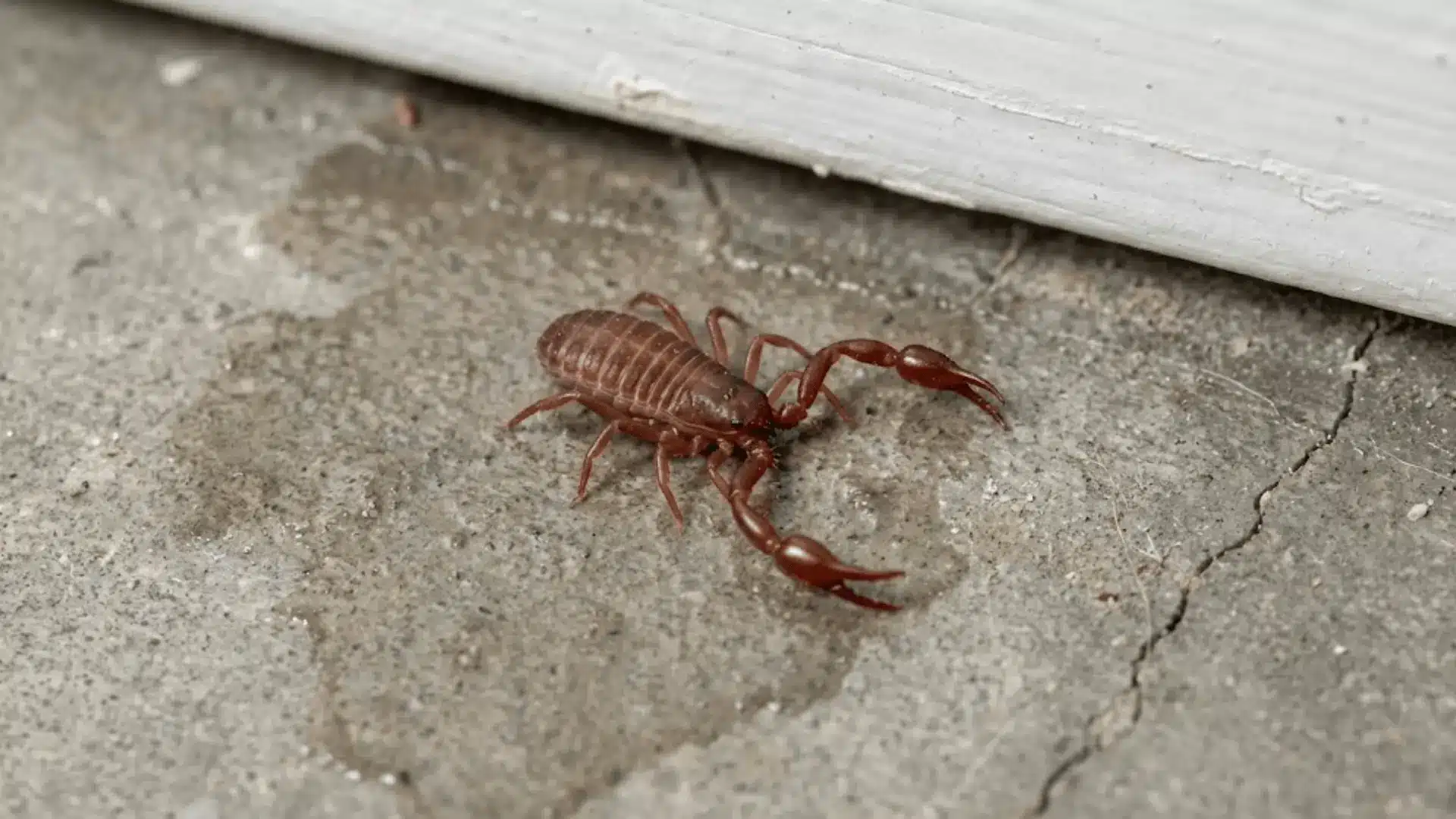
These tiny creatures measure just 2 to 8 millimeters long, roughly the size of a sesame seed or pencil eraser.
They earn their “false scorpion” nickname from their striking resemblance to their more notorious cousins, complete with prominent pincers that look surprisingly menacing for such a small package.
Here’s how to tell them apart:
- No tail or stinger extending from the back
- Flattened, teardrop-shaped body
- Two large pedipalps (claw-like appendages) at the front
- Eight legs, like all arachnids
- Pale brown to dark reddish coloring
What Do Pseudoscorpions Look Like?
At first glance, pseudoscorpions can send anyone into identification mode.
Their unusual appearance often leads to confusion with tiny brown household bugs like carpet beetles or spider beetles, especially when you’re trying to figure out what just crawled across your counter.
Let’s break down their features and clear up the most common cases of mistaken identity.
| Feature | Pseudoscorpion | Baby Scorpion | Tick | Spider Beetle |
|---|---|---|---|---|
| Size | 2–8 mm | 5–15 mm | 1–10 mm (engorged) | 2–5 mm |
| Body Shape | Flattened oval | Elongated with a tail | Round, flat when unfed | Round, humped back |
| Pincers/Claws | Large, prominent front pincers | Smaller pincers, less visible | None | None |
| Tail | None | Long, curved with a stinger | None | None |
| Legs | 8 legs | 8 legs | 6 legs (larvae), 8 (adults) | 6 legs |
| Color | Reddish-brown to dark brown | Tan to dark brown | Dark brown to gray | Reddish-brown to black |
| Movement | Quick, sideways scuttling | Forward crawling | Slow, deliberate | Slow, beetle-like |
Are Pseudoscorpions Dangerous?
Despite their fierce appearance, pseudoscorpions are completely harmless to humans. They possess venom glands in their pincers, but this venom is only effective against their tiny prey and poses zero threat to people or pets.
Even if you handled one directly, a bite would be extremely rare and feel like nothing more than a gentle pinch at worst.
Actually, you might want to thank them for being around. Pseudoscorpions are natural pest controllers that hunt down unwanted houseguests you’d rather not have:
- Dust mites hiding in bedding and carpets
- Booklice feeding on mold and paper
- Carpet beetle larvae damaging fabrics
- Small ants and little brown pantry bugs that invade food storage areas
- Clothes moth larvae
Many pest control experts consider them beneficial allies rather than problems to eliminate.
Why are Pseudoscorpions in My House?
Pseudoscorpions don’t intentionally invade your home looking for trouble. They wander in accidentally while hunting for food or hitching rides on other creatures.
Understanding how they enter and what keeps them around helps you address the real issue.
Common Entry Points
These tiny arachnids slip through openings you’d never notice. Foundation cracks and gaps around windows or doors create easy access routes. Firewood brought indoors often harbors pseudoscorpions hiding in bark crevices.
They also practice phoresy, a hitchhiking behavior where they attach to flying insects like flies or beetles and ride straight into your living space.
They’re particularly drawn to bugs that fly with erratic movement patterns, making springtails and fungus gnats common transport options. Check these areas if you’re seeing them regularly.
Conditions That Attract Them
Pseudoscorpions follow their food supply, which means they’re drawn to spaces where prey insects thrive. If you’re spotting them, it’s a sign other pests have already made themselves comfortable.
| Location | Humidity Level | What Attracts Them |
|---|---|---|
| Basements | High (60%+) | Silverfish, crickets, and moisture |
| Bathrooms | High (50-70%) | Booklice, mold, dampness |
| Bookcases | Moderate | Booklice feeding on paper |
| Storage areas | Variable | Undisturbed clutter, prey hiding spots |
| Kitchen corners | Moderate-High | Small ants, organic debris |
Seasonal Activity
Pseudoscorpion sightings spike during late spring and summer when humidity levels rise, and insect populations boom. They become more active and visible as they hunt for abundant prey.
Many indoor appearances are accidental wanderings rather than infestations, especially after heavy rains or muggy weather. In winter, sightings decline as they retreat to hidden, stable microclimates.
How to Get Rid of Pseudoscorpions in Homes?
Before you reach for pest control products, remember that pseudoscorpions are rarely a problem worth eliminating. They’re beneficial predators that self-regulate their populations based on available prey.
If you’re uncomfortable sharing space with them or notice unusually high numbers, addressing the underlying conditions works far better than any spray.
- Step 1: Make sure you’re actually dealing with pseudoscorpions and not baby scorpions or ticks that require different approaches.
- Step 2: Run dehumidifiers in damp areas, improve ventilation with exhaust fans, and fix any leaky pipes or faucets immediately.
- Step 3:Vacuum regularly to remove dust mites, address booklice in storage areas, and control other small insect populations.
- Step 4: Organize storage areas, remove old cardboard boxes, and declutter bookshelves where prey insects hide.
- Step 5: Caulk foundation cracks, repair torn window screens, weatherstrip doors, and inspect firewood before bringing it indoors.
Chemical pesticides are unnecessary and counterproductive for pseudoscorpions. They’ll naturally disappear once their prey is gone, making habitat modification the smartest long-term solution.
When to Call a Pest Control Professional?
Most pseudoscorpion sightings don’t warrant professional help, but certain situations call for expert intervention.
If you’re spotting more than a few dozen regularly across multiple rooms, it signals a significant underlying pest problem feeding them.
When you’re unsure about identification and worried you might be dealing with something more concerning, like baby scorpions, a professional can confirm what you’re seeing.
The biggest red flag is discovering coexisting infestations of dust mites, carpet beetles, booklice, or silverfish alongside pseudoscorpions.
This indicates broader moisture and sanitation issues that need comprehensive treatment beyond simple DIY fixes.
Wrapping Up
Finding pseudoscorpions in homes might feel unsettling at first, but now you know these little arachnids are more friend than foe.
They’re silent hunters working behind the scenes to keep actual pests in check, asking for nothing in return except a bit of humidity and the occasional dust mite.
Instead of panicking when you spot one scuttling across the floor, consider it a gentle reminder to check your moisture levels and tidy up neglected corners.
Have you encountered these tiny claw-bearers in your space? Drop a comment below and share your experience or any questions you still have about living alongside these misunderstood houseguests.