The Soil Secret That Stops Lettuce From Bolting (AKA: How to Keep Your Salad From Turning Into a Drama Queen)
If your lettuce has ever gone from “cute little leafy rosette” to “towering, bitter, floral betrayal” overnight, you’re not alone. Most of us blame the blazing afternoon sun like it personally wronged us (fair), but the real troublemaker is your soil temperature.
Yep. It’s what’s happening underground that flips the switch.
Once lettuce roots sit in soil that’s consistently around 75°F+, the plant basically goes, “Welp, it’s been real,” and starts pushing energy into flowers and seeds instead of tender leaves. That’s bolting. And it’s the reason your summer salads start tasting like regret.
The good news: you can stop (or at least seriously delay) this with a few simple moves no witchcraft, no complicated gadgets, no moving to coastal Maine.
Bolting 101: What’s Actually Happening
Bolting is when leafy greens decide they’re done being leafy. They stretch upward, form a stalk, and get bitter fast. Once the process starts internally, you can’t exactly talk them out of it with kind words and extra compost. (I’ve tried. They don’t care.)
Here’s the part people miss: it’s not just “a hot day” that does it. It’s warm soil over time that root zone heat that doesn’t cool off enough at night.
If you want to know what your lettuce is really dealing with, grab a soil thermometer and check about 2 inches deep in the morning, in a spot that isn’t baking in direct sun. Take a couple readings around the bed and average them. (Yes, this makes you feel like a scientist. No, you don’t need a lab coat.)
The Stuff That Pushes Lettuce Over the Edge
Soil temperature is the main villain, but it has a few sidekicks:
- Dry soil (drought stress): One missed watering during a hot streak can send lettuce into “make seeds before I perish” mode.
- Overcrowding: Roots competing + poor airflow = stress city. Thin as you go and eat the baby leaves. (This is the one time being snacky is productive.)
- Transplant shock: Sometimes lettuce gets offended by being moved and bolts later, even if temps aren’t horrible. In summer, direct sowing often wins.
And just so you have numbers you can actually use:
- Lettuce / arugula / bok choi start getting cranky around 75-82°F soil
- Spinach and cilantro are often even less forgiving (they bolt like they have places to be)
The “Oh No” Signs (Catch It Early or Don’t Bother)
Once you see obvious stalk action, you’re in salvage mode. But you usually get a little warning window sometimes a few days where you can harvest before the bitterness hits hard.
Watch for:
- The plant goes from squat and round to taller and upright
- Center leaves stretch faster than outer leaves
- It looks pointy instead of lush
- Color gets a little dull, like it’s emotionally checked out
If you see early bolting cues? Harvest immediately. Don’t wait for it to “finish growing.” It’s not growing. It’s leaving you.
How to Keep Soil Cooler (Without Losing Your Mind)
Here’s what actually works. And yes, you can stack these lettuce likes a layered support system.
1) Plant like you’re dodging a heat wave (because you are)
Sometimes the best strategy is… not picking a fight you can’t win.
A simple rule that’s helped me: find your first usual stretch of 85°F days, then count back about 50 days and treat that as your last “easy” sowing window for spring greens.
Also: succession plant. Sow a little every 10-14 days during your safe window. That way, one heat wave doesn’t take out your entire salad future.
If you live somewhere that hits triple digits and stays there (hello, zones 8-10), I’m going to say something controversial: it’s okay to take a summer lettuce break. I know. It hurts. But fighting lettuce through 100°F heat is like trying to keep ice cream in your purse. Possible? Technically. Worth it? Debatable.
2) Shade cloth: the cheat code
If you do one thing, do this.
A 30-50% shade cloth (I like 40% as an all purpose option) can drop temps enough to keep your soil out of the danger zone during moderate heat waves.
A few notes from the trenches:
- Hang it 12-18 inches above the plants so air can move (airflow matters)
- Put it up when you’re staring down multiple days above 85°F or warm nights that don’t cool off
- Natural shade works too: plant greens on the east side of taller crops (tomatoes, pole beans, corn) so they get afternoon shade without losing morning sun
Shade protects the top… but the real magic comes when you protect the soil.
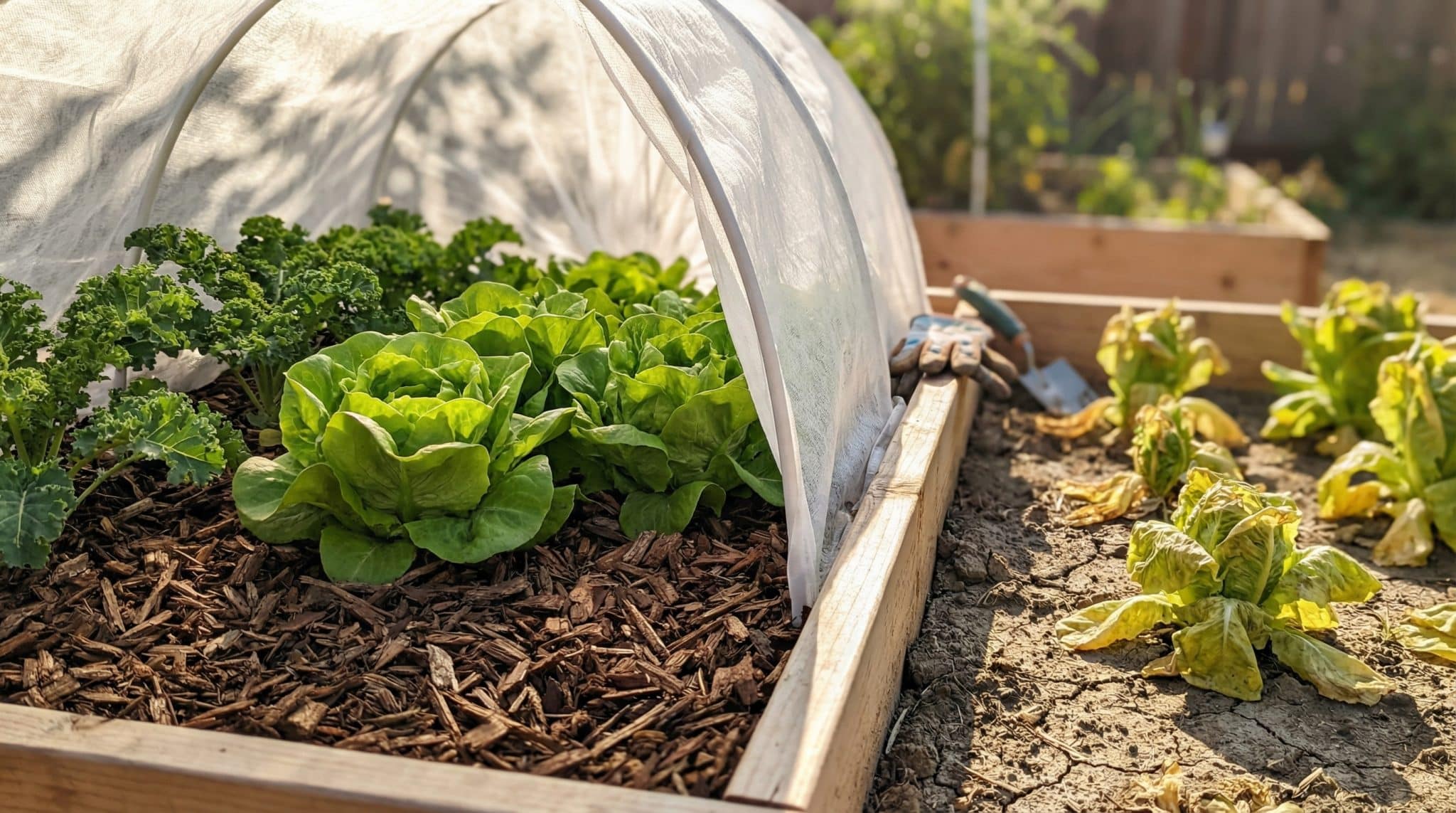
3) Mulch: the “cooling blanket” your soil actually wants
Mulch is wildly underrated for greens. Bare soil in summer is basically a frying pan.
If you add 2-4 inches of organic mulch (straw, chopped leaves, pine needles, etc.), you can keep soil noticeably cooler and more stable.
A couple quick opinions:
- I’d skip thick wood chips in a greens bed they can mess with nitrogen as they break down
- Leave a little breathing room around stems (an inch or two) so things don’t get too soggy and rot-y
Also, timing matters: mulch before the heat arrives. Mulching after your soil is already hot is like putting a lid on a pot and being surprised it stays warm.
Bonus: mulch cuts your watering needs a ton. Which brings me to…
4) Water like you mean it (steady moisture = calmer plants)
Lettuce has shallow roots and the emotional resilience of a Victorian heroine. It does not enjoy drying out.
In hot weather, aim for:
- Morning watering (before 9 a.m. if you can)
- Consistent moisture, not “drought then flood”
- Watering deeply enough that the top several inches actually get wet (soil should feel like a wrung out sponge)
If you can use drip lines or soaker hoses, do it. Wet leaves + heat = more disease potential, and honestly nobody has time for that.
5) Harvest like a snacky little gremlin (it helps)
Here’s a weird but true trick: lettuce that gets harvested regularly tends to bolt later than lettuce you let sit there and “become a full head.”
Try:
- Cut and come again: pick outer leaves every few days, leave the center
- Baby leaf harvest: start harvesting when plants are 3-4 inches tall and keep it going
More small harvests often beat waiting for perfection. Perfection is how lettuce gets you.
Start With the Right Lettuce (Because Some Varieties Just Quit Faster)
This is the lowest effort upgrade: buy seeds labeled slow bolt / heat tolerant / summer.
Personally, I’ve had the best luck with Batavian (Summer Crisp) types in warm weather thicker leaves, tougher attitude.
A few popular heat friendly picks:
- Anuenue (bred for hot conditions)
- Jericho (solid in heat. Keeps going when others sulk)
- Black Seeded Simpson (fast, forgiving, and reliable)
- Red Sails (great for a red leaf that doesn’t instantly turn bitter)
And if you’re growing other bolt happy herbs/greens for picking spinach at peak:
- Spinach: Bloomsdale Long Standing, Tyee
- Cilantro: Santo / Slow Bolt
- Arugula: Astro
Will varieties solve everything? No. But they’ll buy you time which is basically the whole game.
When It’s Just Too Hot: Swap Crops and Save Your Sanity
If your soil is consistently above 82°F, lettuce is going to be a part time job. This is when I pivot to summer greens that don’t act offended by heat:
- Malabar spinach (a vine, loves heat, keeps producing)
- New Zealand spinach (spinach-ish, heat tolerant, keeps trucking)
- Swiss chard (the unbothered queen of summer greens)
You still get “greens,” you just stop trying to force lettuce to live its worst life.
Okay, But What If It Already Bolted?
If you see the stalk, don’t panic just switch from prevention to triage:
- Harvest immediately. Outer leaves are often still fine (and cooking helps).
- If bitterness starts showing up, toss it into soups, stir fries, braises strong flavors cover a lot.
- If it’s really gone, let it flower. Pollinators love it, and you can save seed if you’re feeling ambitious (or just too tired to yank it out right now no judgment).
Then clear the space and replant with something heat tough. Summer doesn’t have to be the season your garden bullies you.
The One Thing I Want You to Do Tomorrow Morning
Go stick a thermometer in your soil. Seriously. Not the air. The soil.
If you’re creeping toward that mid-70s danger zone, throw down mulch, rig up some shade, and tighten up your watering before the heat wave hits. Future you deserves lettuce that tastes like lettuce not like punishment.
Now go save your salad.