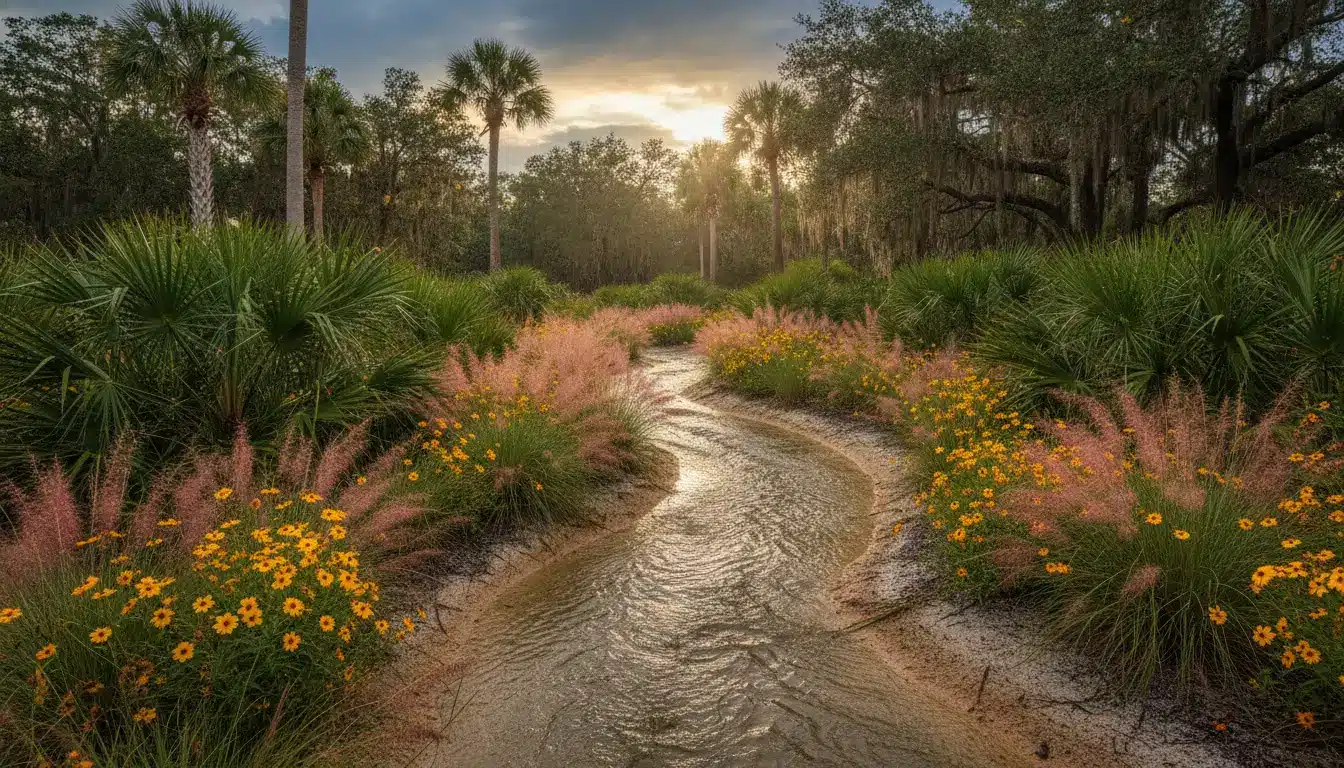
Florida’s warm climate, frequent storms, flat terrain, and expanding development create complex stormwater challenges. Heavy rainfall can overwhelm drainage systems, carry pollutants into waterways, erode soil, and increase localized flooding. Effective stormwater management therefore requires more than pipes, inlets, and detention ponds. It also depends on how landscapes receive, slow, filter, and absorb water.
Native plants can play a valuable role in this process. Because they are adapted to Florida’s rainfall patterns, soils, temperatures, and coastal conditions, they can support stormwater infrastructure while creating healthier and more resilient landscapes.
How Stormwater Affects Florida Communities
Stormwater runoff forms when rain falls faster than the ground can absorb it. Roads, parking lots, rooftops, sidewalks, and other impervious surfaces increase the amount and speed of runoff entering drainage systems.
As stormwater moves across developed land, it can collect:
- Sediment and eroded soil
- Fertilizers and nutrients
- Oil and vehicle residue
- Pesticides and chemicals
- Litter and organic debris
- Bacteria from animal waste
Without effective controls, these materials may enter canals, lakes, rivers, wetlands, estuaries, and coastal waters. Excess nutrients can also contribute to algae growth and declining water quality.
Traditional drainage infrastructure remains essential, but vegetation can improve how stormwater systems perform. Native plants are particularly useful because they are suited to local environmental conditions.
Native Plants Help Slow Stormwater Runoff
One of the main goals of stormwater management is to reduce the speed and volume of runoff. Fast-moving water can overload drainage structures and cause erosion around slopes, channels, pond banks, and outfalls.
Native grasses, shrubs, groundcovers, and trees intercept rainfall before it reaches the soil. Their leaves and stems temporarily hold water, while surface vegetation creates resistance that slows runoff.
This additional time allows more water to infiltrate the ground or move gradually toward drainage facilities. Slower runoff can reduce pressure on stormwater systems during intense rainfall events, especially when vegetation is integrated into several areas of a site.
Root Systems Improve Soil Stability and Infiltration
Many native plants develop deep or extensive root systems. These roots help hold soil in place and create pathways through which water can enter the ground.
Improved infiltration offers several benefits. It can reduce standing water, limit surface runoff, and support groundwater recharge where soil and site conditions allow. Dense root networks also stabilize vulnerable areas around swales, retention ponds, drainage channels, and shorelines.
Plants should still be selected according to their intended location. A species that performs well in a dry upland area may not survive in a frequently flooded basin. Engineers, landscape architects, and environmental specialists must consider soil type, water depth, drainage time, sunlight, salinity, and expected maintenance before choosing vegetation.
For projects that require coordinated drainage, permitting, and ecological planning,Pape-Dawson environmental engineering in Florida can help align landscape decisions with broader stormwater and infrastructure requirements.
Native Vegetation Can Filter Pollutants
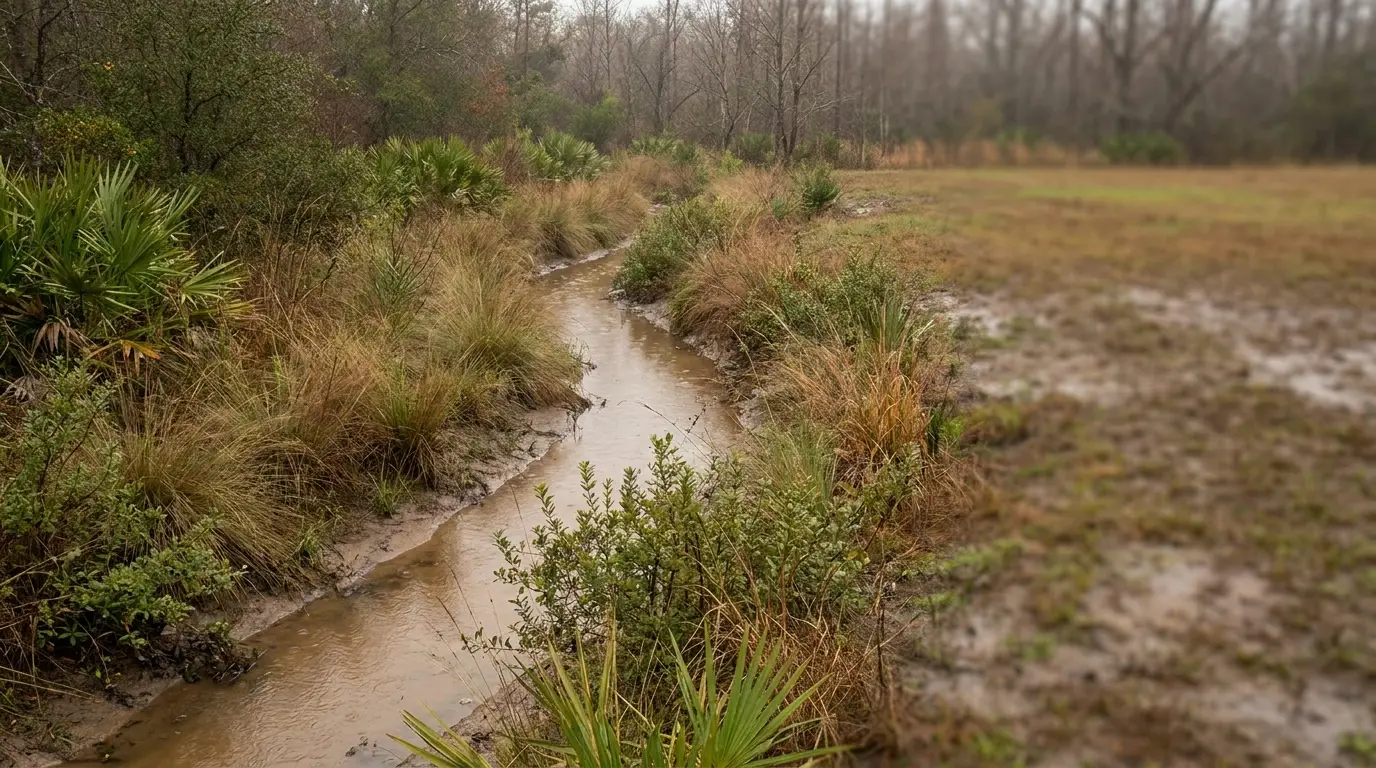
Vegetated stormwater features are designed to do more than move water away from developed areas. They can also improve water quality by capturing sediment and supporting natural filtration processes.
As runoff passes through vegetation, plant stems and groundcover slow the flow and allow suspended particles to settle. Soil and root systems can retain some pollutants, while plants may absorb nutrients such as nitrogen and phosphorus during growth.
Native plants may be used in features such as:
- Bioswales
- Rain gardens
- Vegetated filter strips
- Stormwater pond edges
- Constructed wetlands
- Green infrastructure corridors
Planting alone cannot remove every contaminant. However, when vegetation is combined with appropriate grading, engineered soils, drainage structures, and maintenance, it can become an effective part of a broader treatment system.
Florida Native Plants Support Resilient Landscapes
Florida landscapes may experience drought, extreme heat, heavy rain, high humidity, strong winds, and salt exposure. Native species have developed under these regional conditions, making them well suited to many stormwater applications.
Once established in an appropriate location, native plants may require less irrigation and fewer chemical inputs than poorly adapted ornamental species. This matters because excessive irrigation and fertilizer use can create additional runoff and water quality problems.
Native vegetation also supports birds, pollinators, and other wildlife. A stormwater area can therefore provide ecological value while still performing an infrastructure function. Detention ponds, drainage corridors, and rain gardens do not need to remain visually or biologically empty spaces.
Proper Plant Selection Is Essential
The term “native plant” does not automatically mean that a species is suitable for every site. Florida includes multiple ecological regions, and conditions can vary significantly between inland, coastal, urban, and wetland environments.
Before selecting plants, project teams should evaluate:
Moisture Conditions
Some plants tolerate prolonged flooding, while others require well-drained soil. Stormwater facilities may also contain several planting zones, ranging from permanently wet areas to dry upper slopes.
Soil Characteristics
Sandy soil, compacted fill, organic soil, and clay-influenced soil manage water differently. Soil testing can help identify drainage limitations and nutrient conditions.
Salt and Wind Exposure
Coastal projects may require plants that tolerate salt spray, brackish water, and strong winds.
Maintenance Requirements
Vegetation must remain accessible for inspection, sediment removal, mowing, pruning, and invasive-species management. Plants should not block drainage structures or interfere with maintenance equipment.
Native Plants Work Best as Part of an Integrated System
Native vegetation is not a substitute for sound engineering. Stormwater systems must still be designed around rainfall data, site topography, soil conditions, flood risk, regulatory requirements, and downstream impacts.
The strongest approach combines engineered infrastructure with natural processes. Pipes and control structures manage water movement, while soils and plants help slow, stabilize, and filter runoff.
By integrating native plants early in the planning process, Florida communities can create stormwater systems that are functional, attractive, and better adapted to local conditions. The result is infrastructure that manages rainfall more effectively while supporting water quality, landscape resilience, and long-term environmental health.