That little porch of yours deserves so much more than just a chair and some potted plants.
Enclosing it is one of those home projects that quietly changes everything about how you spend your time at home, hello, cozy year-round living.
If you are still exploring covered porch ideas before committing to a full enclosure, that is a perfectly reasonable place to start.
And yes, before you get swept up in window styles and shiplap ideas, it helps to actually understand the permit guide for enclosing a porch.
Knowing your porch enclosure building codes and sorting out if you need a permit to enclose a porch upfront saves you a whole lot of headaches down the road.
Do You Need a Permit to Enclose an Existing Porch?
In most U.S. cities, you do need a permit to enclose a porch, especially when the project involves adding walls, windows, or doors, upgrading electrical or HVAC, or converting the space into something livable.
Any changes that touch the structure, like reinforcing the foundation or shifting the roof load, also fall under permit territory.
That said, simple screen panels or cosmetic touch-ups usually fly under the radar.
Types of Permits Required
And since every city reads these rules a little differently, always check with your local building department before you start, because what’s fine in one zip code might require full approval in another.
| Permit Type | Scope | Common Examples | When It Triggers |
|---|---|---|---|
| Building Permit | Structural changes | Framing, walls, roofing, insulation | Any modification to the existing structure |
| Electrical Permit | Wiring and fixtures | Outlets, ceiling fans, lighting, and dedicated circuits | Adding or extending any electrical work |
| Mechanical / HVAC Permit | Climate control | Ductwork extensions, mini-split systems | Conditioning the enclosed space |
| Plumbing Permit | Water and drainage | Sink or bathroom in a sunroom conversion | Converting the porch into a livable or functional space |
| Zoning Approval | Land use compliance | Setbacks, lot coverage, height restrictions | Before any permit is even filed |
| HOA Approval | Community guidelines | Exterior aesthetics, materials, and design standards | If your property falls under an HOA |
Zoning & Code Requirements You Must Check
Before a single wall goes up, zoning and code requirements deserve your full attention. These are the rules that quietly determine what you can build, how big it can be, and whether it passes inspection.
- Setback rules dictate how far your enclosure must sit from property lines, and this varies by city and zone.
- Floor Area Ratio (FAR) limits how much of your lot can be covered, so enclosing a porch does count toward that number.
- Foundation standards include slab strength, frost line depth, and load-bearing wall requirements, all climate and location-dependent.
- Fire and safety codes cover egress windows, emergency exit sizing, and smoke detector placement within the new space.
- Local zoning overlays can add another layer of restrictions entirely, especially in historic districts or planned communities.
Skipping this step is where most porch projects hit a wall, literally and legally. A quick call to your local planning office before you finalize any plans goes a long way.
Step-by-Step: How to Enclose a Porch the Right Way?
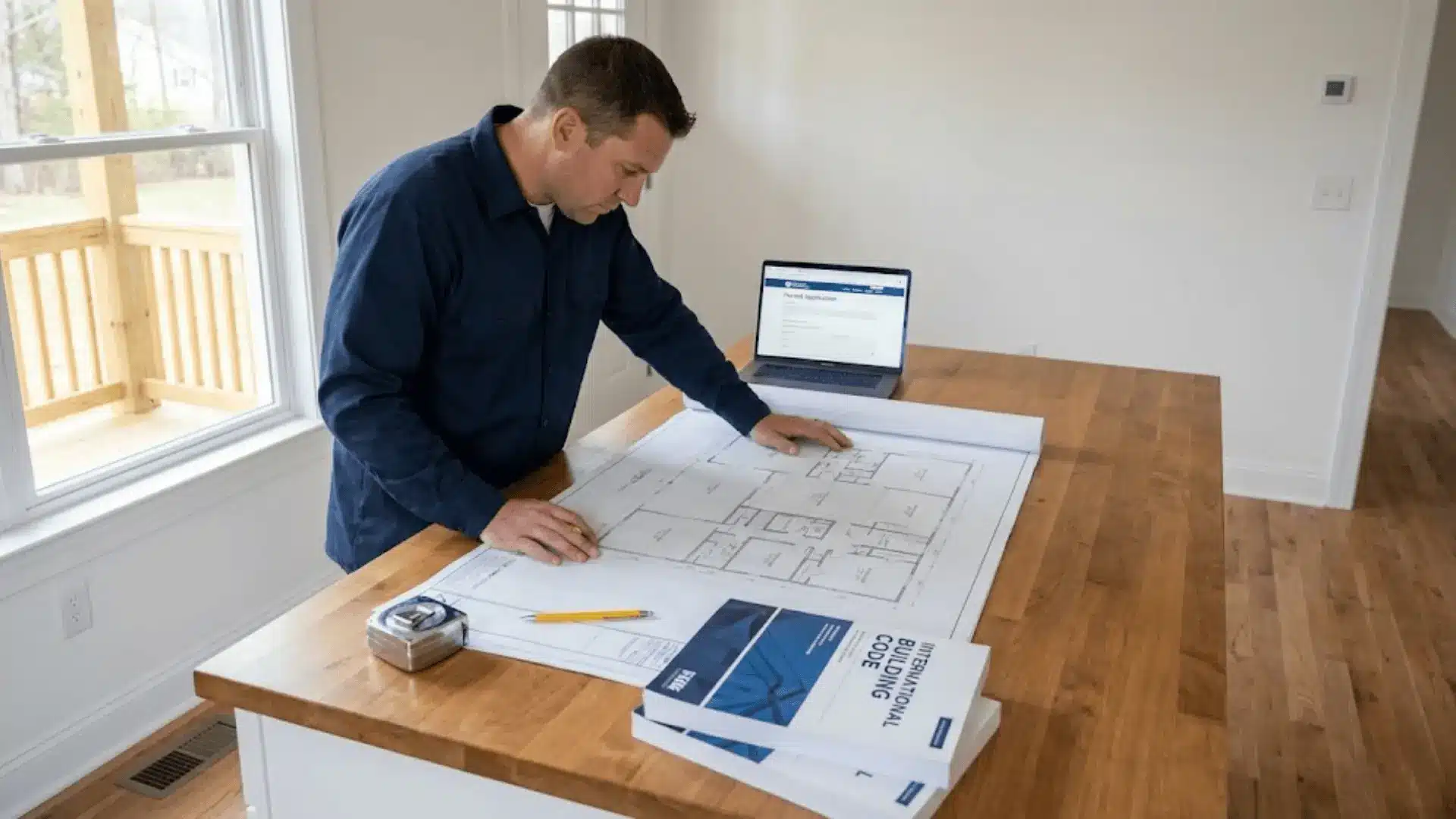
Getting your porch enclosure permitted does not have to feel overwhelming. Follow these steps in order, and you will move through the process with a lot less friction.
Step 1: Check Local Regulations
Start at your city or county building department’s website and request zoning verification for your property. This tells you what is and is not allowed before you invest in any plans.
The USA.gov Local Government Resources page can help you locate your specific municipal office if you are unsure where to begin.
Step 2: Create Plans or Hire a Designer
Most jurisdictions require professional drawings for structural enclosures. If your project changes any load-bearing elements, structural calculations will also be needed.
A licensed architect or designer familiar with local codes is worth every penny here.
Step 3: Submit Your Permit Application
Your application typically needs:
- A site plan showing property boundaries
- A floor plan of the proposed enclosure
- Exterior elevations
- Structural notes or engineer-stamped drawings
Check your local portal or PermitFlow’s jurisdiction guide for submission formats specific to your area.
Step 4: Pay the Permit Fees
Fees vary widely depending on your location and project scope. The National Association of Home Builders offers general benchmarks, but expect costs to differ by county.
Budget for this early so it does not catch you off guard mid-process.
Step 5: Schedule Your Inspections
Inspections happen in stages, and missing one can stall the entire project.
- Foundation inspection, if the base is being altered
- Framing inspection once the walls are up
- Electrical inspection before walls are closed
- Final inspection for certificate of occupancy
Cost Breakdown: Permit + Construction
Understanding the full cost picture before you commit saves you from budget surprises halfway through the build.
Permit fees and construction costs are just part of it; what lies underneath can shift your numbers significantly.
Permit Fees
Building permits are typically calculated as a percentage of the overall project value, generally landing between $150 and $1,500, depending on your location.
Electrical, mechanical, and plumbing permits are filed separately, adding another $50 to $300 each. Always confirm current fee schedules directly with your local building department.
Construction and Hidden Costs
A basic screen enclosure starts around $600, a three-season room runs $8,000 to $20,000, and a four-season room can reach $50,000 or more.
If weighing a partial structure first, the patio cover cost guide details pricing by size. Besides the build, hidden costs like structural reinforcement, foundation upgrades, and energy code compliance often surprise homeowners.
3-Season Room vs. 4-Season Room: Permit Differences
The type of enclosure you choose directly shapes how involved your permit process gets.
Here is a side-by-side look at what sets them apart.
| Feature | 3-Season Room | 4-Season Room |
|---|---|---|
| Insulation | Minimal | Full residential grade |
| Heating & Cooling | No permanent system | HVAC integration required |
| Permit Complexity | Simpler in many jurisdictions | Must meet full residential code |
| Electrical Requirements | Basic | Dedicated circuits are often required |
| Overall Cost | Lower | Significantly higher |
How Does Enclosing a Porch Affect Home Value?
Enclosing a porch adds livable square footage, which directly influences your home’s appraised value, especially when the work is permitted and up to code.
The return on investment varies by market, but a finished, functional space almost always reads well to buyers.
One thing homeowners often overlook is updating their homeowner’s insurance policy once the enclosure is complete.
The added square footage and structural changes can affect your coverage needs, and skipping that update could leave you underinsured.
Done right, this project is one of the more rewarding investments you can make in your home.
Timeline: How Long Does It Take?
Planning your timeline early helps you set realistic expectations and avoid unnecessary delays.
Here is a general breakdown of what to anticipate at each stage.
| Stage | Estimated Timeframe | Notes |
|---|---|---|
| Permit Approval | One to six weeks | Varies significantly by city and project complexity |
| Construction | Two to eight weeks | Depends on enclosure type and contractor availability |
| Inspection Scheduling | One to two weeks per visit | Book early, slots fill fast in busy seasons |
| Final Certificate of Occupancy | A few days to two weeks after the final inspection | Varies by jurisdiction |
Wrapping Up
Enclosing a porch is one of those projects that rewards you long after the last inspection is signed off.
With the right permits pulled, the right codes met, and the right people on the job, what you end up with is a space that genuinely adds to your home and your everyday life.
Think of this permit guide for enclosing a porch as your starting point, not a hurdle.
Got questions about your specific setup or a tip from your own enclosure project? Drop it in the comments, would love to hear how it goes.