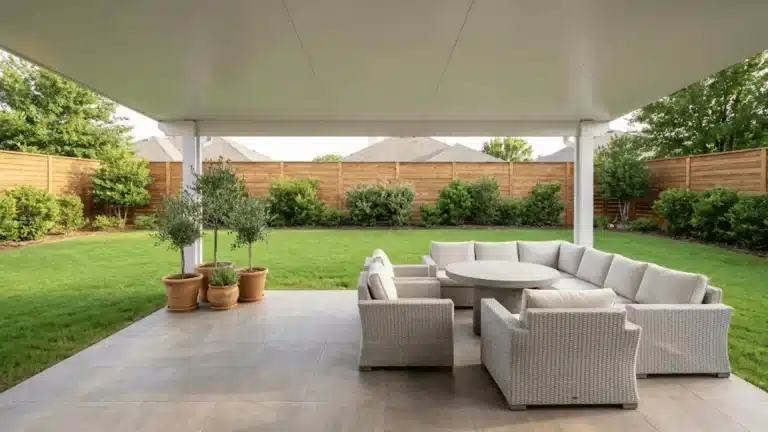
Outdoor living is having a major moment, and homeowners everywhere are reimagining their backyards as full-on retreats.
A patio cover sits right at the heart of that shift, offering shade, style, and serious resale value all at once.
Before you start pinning your dream setup, knowing what it actually costs to bring it to life makes all the difference.
Patio cover cost varies more than most people expect, and size, material, labor, and permits all play a role in shaping that final number.
Consider this your starting point for planning a space you’ll genuinely love.
Average Patio Cover Cost in the U.S.
Patio cover pricing across the U.S. spans a wide range, and where you land depends heavily on what you choose. Material and size drive the biggest chunk of the cost, with labor and permits filling in the rest.
Going the DIY route can shave a meaningful portion off the total, though contractor installation brings expertise that often pays for itself.
Here’s a quick snapshot to orient your budget before planning further.
| Cost Factor | DIY | Contractor Installed |
|---|---|---|
| Average Total Cost | $500 – $3,000 | $1,500 – $10,000+ |
| Cost Per Square Foot | $3 – $10 | $8 – $30 |
| Basic Cover | $500 – $1,200 | $1,500 – $4,000 |
| Premium Cover | $1,500 – $3,000 | $5,000 – $10,000+ |
Patio Cover Cost by Size
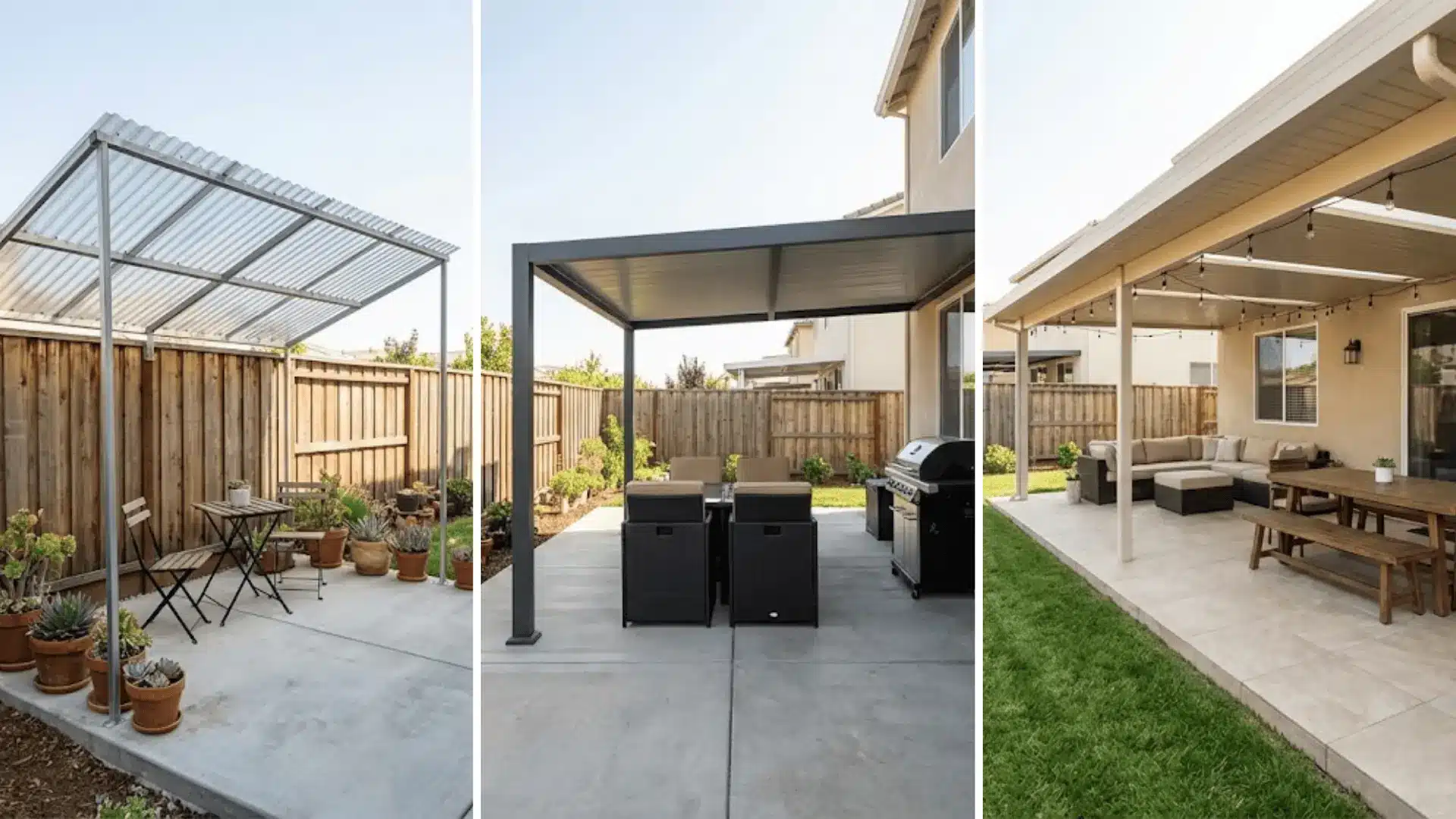
Size is one of the first decisions you’ll make, and it shapes everything that follows. Here’s how pricing breaks down across the most searched patio cover sizes.
10×10 Patio Cover Cost
A 10×10 cover is the sweet spot for smaller patios and compact backyards. Installed, expect to spend anywhere between $1,500 and $4,000, depending on the material.
Budget-friendly options like aluminum and polycarbonate keep costs low, with labor typically accounting for 40–50% of the total. It’s manageable as a DIY project too, which can bring that number down significantly.
12×12 Patio Cover Cost
The 12×12 is arguably the most popular size, offering just enough room for a seating area and a grill without overwhelming the yard. Installed costs typically range between $2,000 and $5,500.
On a per-square-foot basis, it runs slightly lower than a 10×10 thanks to economies of scale, making it a smart middle-ground choice for homeowners who want more coverage without a dramatic price jump.
20×20 Patio Cover Cost Installed
A 20×20 cover signals a serious outdoor living investment. Structural reinforcement and premium framing push costs higher, with installed prices ranging from $8,000 to $20,000+.
Attached builds are cheaper than freestanding structures as they use the home’s existing frame. At this size, the main costs include material quality, foundation work, and your choice between concrete and pavers.
Patio Cover Cost by Material
Material choice shapes not just the look of your patio cover but the long-term cost of owning it.
Here’s a side-by-side breakdown to help you weigh your options clearly.
| Material | Avg Installed Cost | Maintenance Level | Best For | Lifespan |
|---|---|---|---|---|
| Wood (Pressure-Treated, Cedar, Redwood) |
$3,000 – $10,000 | High (staining, sealing) | Classic, natural aesthetic | 10–25 years |
| Aluminum | $1,500 – $6,000 | Low | Modern homes, budget builds | 20–30 years |
| Vinyl | $2,000 – $7,000 | Low to Medium | Weather-resistant, mid-range budget | 20–25 years |
| Insulated (Solid Roof) |
$5,000 – $15,000 | Low | Year-round use, energy efficiency | 25–40 years |
| Pergola-Style | $1,500 – $5,500 | Low to Medium | Partial shade, decorative appeal | 10–20 years |
Labor & Installation Costs
Labor typically accounts for 40–60% of your total patio cover cost, and that share shifts depending on the complexity of the build.
Attached covers run cheaper on labor since they tie into the existing structure, while freestanding builds demand more groundwork and framing time.
Contractor hourly rates generally land between $50 and $100 per hour, with most standard installations wrapping up in one to three days.
Larger or more complex projects can stretch that timeline to a full week, especially when permits, concrete footings, or electrical work are part of the scope.
Additional Cost Factors
Patio cover pricing rarely stops at materials and labor. A handful of extras can quietly add up, and knowing them upfront keeps your budget honest.
- Urban and coastal markets carry noticeably higher labor and permit costs than suburban areas, so always pull local quotes before landing on a number.
- Most cities require permits for permanent, attached covers, with fees ranging from $100 to $1,000+ and HOA approvals adding extra lead time.
- Add-ons like ceiling fans, lighting, and built-in heaters are the most popular upgrades and can collectively add several hundred to a few thousand dollars to the total.
- Gutters, drainage systems, and electrical outlets are easy to deprioritize but cost significantly more to retrofit after installation is complete.
Factoring these in early prevents the kind of budget creep that turns a straightforward project into a stressful one.
Knowing how to permit a porch enclosure can give you a solid reference point for what the approval process typically looks like.
Attached vs. Freestanding Patio Cover Costs
The way your cover connects to your home, or doesn’t, changes the entire cost structure of the project. Here’s how the two builds compare across the factors that matter most.
| Cost Factor | Attached | Freestanding |
|---|---|---|
| Avg Installed Cost | $1,500 – $8,000 | $3,000 – $15,000+ |
| Structural Support | Borrows from the existing home frame | Requires independent posts and beams |
| Foundation Requirements | Minimal to none | Concrete footings are often required |
| Roofing Tie-In | Shares existing roofline, lower cost | Full independent roofing structure needed |
| Permit Complexity | Moderate | Higher, due to independent structural load |
| Insurance Implications | May increase home coverage slightly | Often classified as a separate structure |
| Home Value Impact | Directly adds to living space value | Adds value but is assessed separately |
Return on Investment
A well-built patio cover does more than improve your backyard; it actively works for your home’s resale value.
Outdoor living spaces consistently rank among the top features buyers look for, and exploring covered porch ideas shows just how much a finished outdoor space influences buyer appeal.
Appraisers typically factor in permanent structures, meaning quality builds can reflect meaningfully in your home’s assessed value.
On the energy side, strategic shade from a patio cover can reduce cooling costs by up to 25% in sun-heavy climates.
Cost-Saving Tips
Getting a patio cover you love doesn’t have to mean overspending. A few smart decisions early on can keep the project well within budget.
- Sticking to standard sizes like 10×10 or 12×12 avoids custom fabrication costs that can quietly inflate the total.
- Scheduling installation in the off-season, typically late fall or winter, often unlocks contractor discounts when demand slows down.
- Aluminum and vinyl deliver strong durability and clean aesthetics at a fraction of what premium wood or insulated options cost.
- Always collect at least three contractor bids before committing; pricing varies more than most homeowners expect.
Small decisions compound, and the right ones here can free up budget for the upgrades that actually matter to you.
Final Thoughts
Patio cover cost comes down to a combination of choices, and now you have a clear picture of what each one means for your budget.
Size, material, labor, location, and the extras you choose all shape the final number in ways that are completely within your control. The best patio cover is the one that fits how you actually live outdoors.
If you’ve been sitting on this decision, consider this the nudge you needed.
Drop a comment below sharing what size or material you’re leaning toward, we’d love to hear what your dream outdoor setup looks like.