Choosing the right paint finish is one of those small decisions that quietly shape the entire feel of a room.
And if you’ve ever stood in a paint aisle second-guessing yourself between matte and flat, most people find themselves in that exact spot. They look nearly identical on the card, yet they behave very differently on your walls.
How they handle light, how well they hold up, how easy they are to clean, all of it comes down to the finish.
Stick around, because once you know the difference, picking the right one feels surprisingly simple.
What is Flat Paint?
Flat paint is exactly what it sounds like: a finish with no sheen whatsoever.
It absorbs light rather than reflecting it, giving walls that soft, chalky, velvety look that photographs beautifully and feels very intentional in a space.
Because of how it diffuses light, it does a remarkable job of hiding surface imperfections like small dents, uneven textures, or old patch jobs.
That said, it works best in low-traffic areas like ceilings, adult bedrooms, or formal dining rooms where walls aren’t being touched, scrubbed, or bumped into on a daily basis.
What is Matte Paint?
Matte paint sits just a small step above flat, carrying a very low but barely noticeable sheen.
That slight difference in reflectivity actually makes it smoother, more durable, and a little easier to clean than flat paint, which is why it tends to be the more practical everyday choice.
It still delivers that beautiful, light-absorbing finish that designers love, and it has become incredibly popular in modern interior design for exactly that reason.
It is the kind of finish that feels both refined and livable, striking a balance between aesthetics and real-world functionality.
Matte vs. Flat Paint: Key Differences
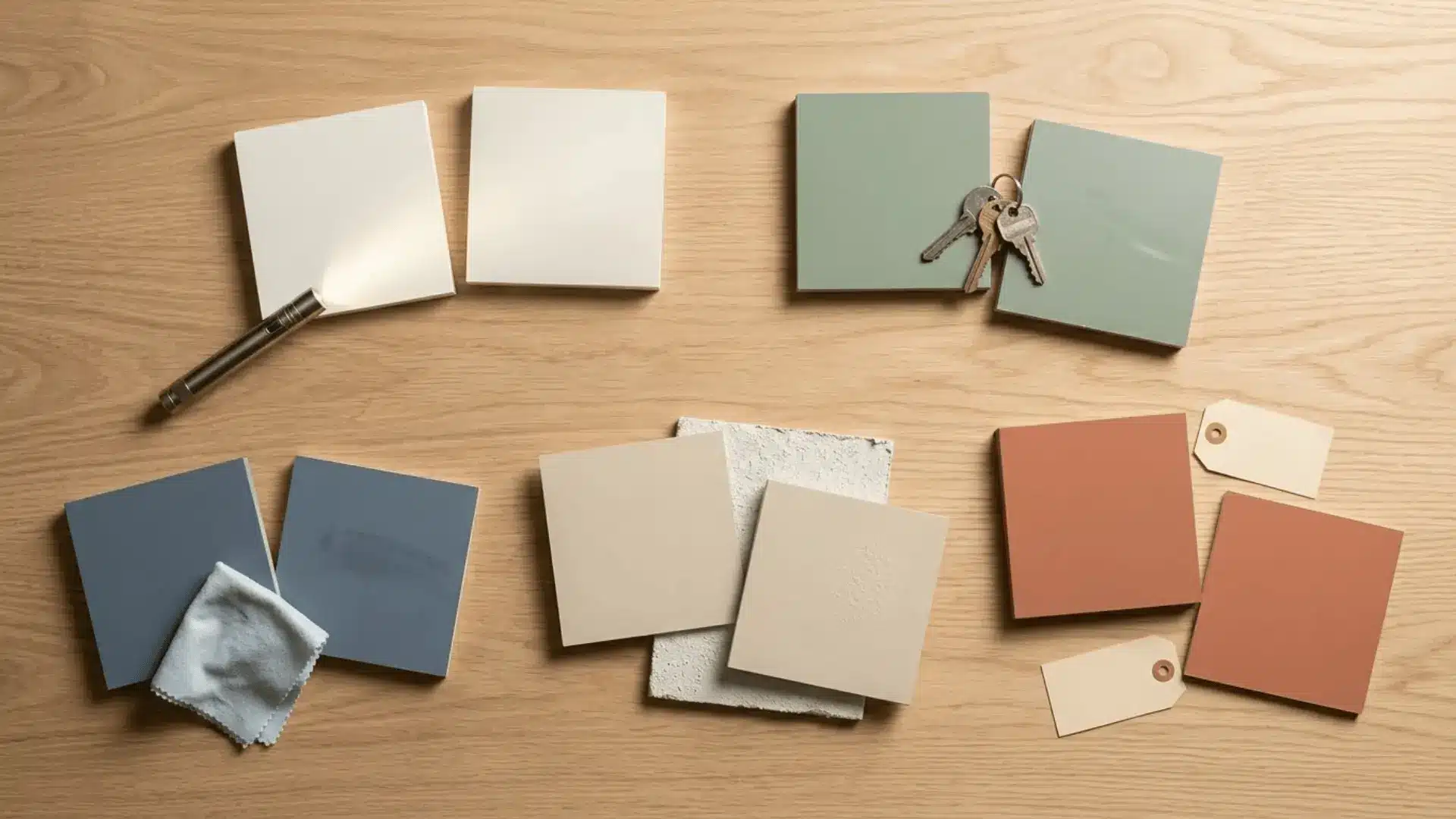
Both finishes share a similar quiet, non-glossy look, but they are not quite the same thing. Here is where they actually start to diverge.
1. Sheen & Appearance
Flat paint is completely non-reflective, soaking up light from every angle for that pure, chalky wall effect. Matte brings just a whisper of sheen, giving walls a little more depth and dimension.
The difference is subtle in person, but in a well-lit room, matte tends to feel slightly more polished.
2. Durability
When it comes to wear and tear, matte holds up noticeably better. It has a harder finish that resists scuffs and everyday contact more effectively.
Flat paint, while beautiful, is relatively delicate and more vulnerable to surface damage, making it a less ideal choice anywhere walls regularly come into contact with people or furniture.
3. Cleanability
Matte paint can handle gentle cleaning without losing its finish, which makes a real difference in practical living spaces.
Flat paint is far more sensitive; a damp cloth can lift the paint or leave a shiny patch behind. Flat marks and stains easily, so spills or smudges often become a permanent problem.
4. Coverage & Imperfection Hiding
Flat paint is genuinely the better performer here. Its completely light-diffusing surface conceals dents, bumps, and uneven textures with ease.
Matte is still a solid choice for imperfection hiding, but its slight reflectivity means surface flaws can occasionally catch the light. Good, but not quite as forgiving as flat.
5. Cost
Flat paint is generally the more budget-friendly option, making it a go-to for large surface areas like ceilings.
Matte paint tends to sit slightly higher in price, though the gap is rarely dramatic. Given its added durability and cleanability, most people find the modest price difference easy to justify.
Pros and Cons of Matte Paint
Matte paint has a lot going for it, but like any finish, it comes with a few tradeoffs worth knowing before you commit.
| Feature | Pros | Cons |
|---|---|---|
| Durability | Holds up better than flat against everyday wear | Less forgiving on walls with visible imperfections |
| Cleanability | Can handle gentle cleaning without damage | Not suitable for heavy scrubbing |
| Aesthetics | Delivers a stylish, modern, designer-approved finish | Slight sheen may not suit those wanting an ultra-flat look |
| Practicality | Works well in medium-traffic areas | Sits at a slightly higher price point than flat |
Pros and Cons of Flat Paint
Flat paint has a charm that is hard to replicate, but it does ask for a little more care in return.
| Feature | Pros | Cons |
|---|---|---|
| Imperfection Hiding | Exceptional at concealing dents, bumps, and uneven surfaces | Slight damage or patching can be more noticeable over time |
| Cost | One of the most budget-friendly finish options available | Frequent touch-ups may add to long-term costs |
| Aesthetics | Delivers a beautifully smooth, uniform, ultra-flat finish | Not ideal for those wanting any hint of depth or sheen |
| Practicality | Works wonderfully in calm, low-traffic spaces | Marks easily and is not suited for busy or high-traffic areas |
When to Use Matte Paint?
Matte paint is a reliable choice for spaces that see some daily activity but still deserve a beautiful, considered finish.
- Living rooms where walls need to look polished, but also hold up to regular use.
- Bedrooms for a soft, restful atmosphere that feels intentional without being precious.
- Hallways with light to moderate traffic, where durability matters just as much as aesthetics.
- Accent walls where that subtle depth and richness can really do its thing.
If your space checks any of these boxes, matte is very likely your answer.
When to Use Flat Paint?
Flat paint shines brightest in spaces where looks take priority over daily wear and tear.
- Ceilings where its non-reflective finish reduce glare and create a clean, seamless look overhead.
- Low-traffic rooms like formal dining spaces or guest rooms that rarely see heavy use.
- Older walls with bumps, patches, or uneven texture that need a little graceful concealing.
- Rental or budget projects where getting great coverage at a lower cost is the priority.
If the space is quiet and mostly decorative, flat paint is a perfectly sensible choice.
Matte vs. Flat Paint for Different Rooms
Not every room has the same needs, and the right finish often comes down to how a space is actually used day to day.
| Room | Better Choice | Reason | Caution |
|---|---|---|---|
| Living Room | Matte | Durable and easy to maintain | Flat will mark quickly |
| Bedroom | Either | Matte for practicality, flat for low-traffic calm | Know your usage first |
| Kitchen | Matte | Handles splashes and grease better | Flat is too delicate here |
| Bathroom | Matte | Holds up well against humidity | Use a moisture-resistant formula |
| Ceilings | Flat | Non-reflective, seamless, budget-friendly | Avoid matte on textured ceilings |
Expert Tips for Choosing the Right Paint Finish
A little intention before you paint goes a long way in making sure you are happy with the result.
- Study your lighting because natural and artificial light both reveal finishes very differently on the wall.
- Sample before you commit by testing a few swatches directly on your wall and observing them at different times of day.
- Match the finish to the room’s function so durability and aesthetics are both working in your favor.
- Layer your finishes by pairing flat on ceilings with matte on walls for a cohesive, designer-approved look.
Take your time with these decisions, and the right finish will make itself obvious.
Cost Comparison: Matte vs. Flat Paint
Price is rarely the only factor, but it is worth understanding what each finish actually costs you, both upfront and over time.
| Cost Factor | Matte Paint | Flat Paint |
|---|---|---|
| Price Per Gallon | Around $25–$35 per gallon | As low as $15–$50 per gallon |
| Long-term Maintenance | Costs more upfront but holds up longer, meaning fewer repaints | Cheaper initially, but touch-ups and repainting add up sooner |
| Durability Value | Better return over time in active spaces | Lower durability means repainting cycles come around faster |
| Best Budget Use Case | Medium-traffic rooms where longevity matters | Ceilings and low-traffic areas where walls see minimal wear |
The Bottom Line
At the end of the day, choosing between matte vs flat paint is less about which one is better and more about what your space genuinely needs.
Matte brings durability and a modern sensibility to everyday living spaces, while flat keeps things simple, budget-friendly, and beautifully understated in the right settings.
Neither is a wrong choice when used thoughtfully. So take what you have learned here, walk through your rooms with fresh eyes, and let the walls tell you what they need.
Have a question or a paint dilemma? Drop it in the comments below.