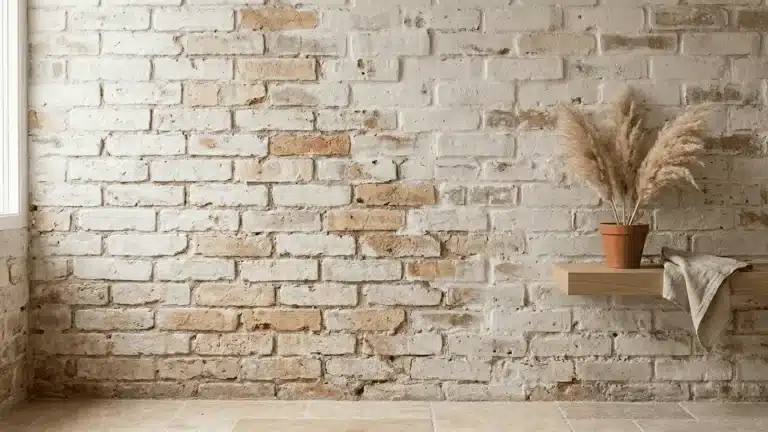
Brick walls have a quiet kind of beauty, and lime washing brings out the best of it.
That chalky, sun-bleached finish has been showing up everywhere lately, from cozy farmhouse kitchens to modern Mediterranean-inspired patios, and honestly, it makes sense why.
Unlike paint, lime wash soaks into the surface rather than sitting on top of it, giving your walls a natural, breathing finish that ages with your home rather than against it.
Ahead, you’ll find everything from design ideas to a simple how-to guide so you can decide if this look is right for your space.
Lime Washed Brick, But Make It Make Sense
Limewash is a limestone-based mixture that goes back centuries, used across European cottages, Mediterranean villas, and old farmhouses long before modern paint existed.
What makes it different is how it behaves on a brick. Rather than sitting on the surface like a coat of paint, it absorbs directly into the brick, becoming part of the wall itself.
This gives it that soft, uneven, lived-in look that feels impossible to fake.
The finish naturally varies in depth and tone, which is exactly what makes every lime-washed wall feel genuinely one-of-a-kind.
Why Lime-Washed Brick is Having a Moment?
Somewhere between the rise of warm farmhouse interiors and the shift toward more natural, imperfect aesthetics, lime-washed brick found its place, and it has not left since.
People are moving away from overly polished finishes and gravitating toward textures that feel collected, aged, and real. Mediterranean and rustic styles have only fueled that further.
Add Pinterest boards and home design accounts into the mix, and suddenly everyone is rewatching renovation reels featuring that dreamy, chalky brick finish.
It feels current without trying too hard, which is honestly the most appealing thing about it.
Key Benefits of Lime-Washed Brick
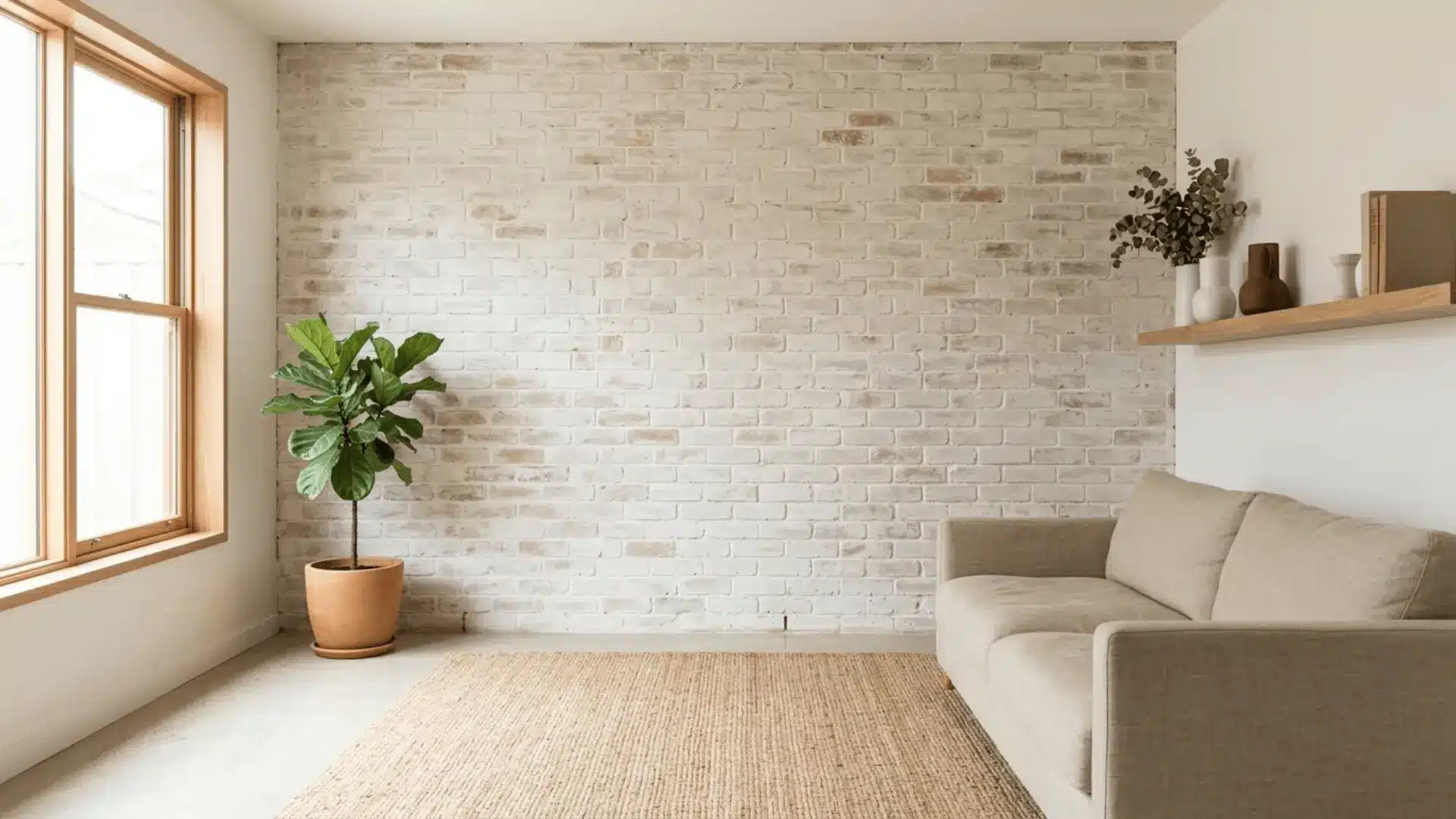
Lime-washed brick is not just a pretty finish; it genuinely performs well, too. Here is why so many homeowners are making the switch and not looking back.
1. Natural, Matte Aesthetic
The finish has that soft, chalky quality that feels warm and understated rather than flat or dull.
It brings out the natural texture of the brick underneath, adding depth and character that painted walls simply cannot replicate. Every wall ends up looking slightly different, which is exactly the point.
2. Breathable & Moisture-Resistant
Unlike regular paint, limewash does not form a sealed layer over the brick.
It allows the wall to breathe naturally, letting moisture pass through rather than getting trapped beneath the surface. This makes it a smart choice for older homes, exterior walls, and any space that deals with humidity regularly.
3. Eco-Friendly & Non-Toxic
Limewash is made from natural limestone, free from the harsh chemicals and synthetic compounds found in most conventional paints.
It is a finish you can apply without worrying about strong fumes, making it a genuinely safer option for families, pets, and the environment alike.
4. Durable & Long-Lasting
A well-applied lime wash finish does not peel, crack, or bubble the way paint sometimes does because it bonds with the brick itself.
Over time, it weathers beautifully, developing a naturally aged patina that adds to the charm rather than signaling neglect or wear.
5. Mold & Bacteria Resistant
Limestone is naturally alkaline, which creates an environment where mold, mildew, and bacteria simply struggle to grow.
This makes lime-washed brick a particularly practical choice for bathrooms, basements, and exterior-facing walls where dampness tends to be an ongoing concern.
6. Customizable Finish
Limewash is surprisingly flexible when it comes to the final look. Thin it down for a barely-there, washed effect or layer it up for something more opaque and defined.
You can also tint it in soft, earthy tones, giving you room to match the finish to your existing palette without losing that signature texture.
Limewash vs. Paint vs. Whitewash
They might all leave your brick looking lighter and fresher, but how they get there and what they leave behind is quite different.
Here is a side-by-side breakdown to help you figure out which finish actually suits your space.
| Feature | Limewash | Paint | Whitewash |
|---|---|---|---|
| Base Ingredient | Natural limestone | Synthetic chemicals | Watered-down paint or lime |
| Finish | Soft, chalky, matte | Solid, uniform | Semi-transparent, rustic |
| Breathability | High, absorbs into the brick | Low, forms a surface coat | Moderate |
| Durability | Long-lasting, ages beautifully | Can peel or crack over time | Less durable, fades faster |
| Moisture Resistance | Naturally moisture-resistant | Traps moisture underneath | Minimal resistance |
| Mold Resistance | High, alkaline nature resists mold | Low | Low |
| Eco-Friendliness | Non-toxic, natural | Contains VOCs | Depends on the base used |
| Customizability | Highly customizable, tintable | Wide color range | Limited, mostly white tones |
| Best For | Brick, stone, masonry | Drywall, wood, smooth surfaces | Casual, budget-friendly updates |
| Maintenance | Low, reapply every few years | Moderate, prone to chipping | High, fades and wears quickly |
- Choose limewash if you want a natural, breathable finish that ages gracefully and works with the texture of your brick rather than covering it up.
- Choose paint if you need full coverage, a specific bold color, or are working on non-masonry surfaces where limewash would not adhere properly.
- Choose whitewash if you are after a quick, budget-friendly refresh with a casual, relaxed look and do not mind touching it up more frequently over time.
Where to Use Lime-Washed Brick?
Lime-washed brick works beautifully in more places than you might expect.
Refreshing an interior accent wall or giving your home’s exterior a whole new personality, there is a fitting place for this finish in almost every corner of the home.
Interior Applications
Inside the home, lime-washed brick adds warmth and texture without overwhelming a space. It pairs naturally with linen, wood, and neutral tones, making it incredibly easy to style around.
- Fireplace surrounds for a cozy, lived-in focal point.
- Kitchen backsplashes that add rustic charm without feeling overdone.
- Accent walls in living rooms or bedrooms for subtle texture.
- Exposed basement or cellar walls where raw brick already exists.
Exterior Applications
On the outside, lime-washed brick softens the look of a facade while still holding up well against the elements. It is one of those finishes that genuinely improves with a little weathering over time.
- Front exterior walls for a warm, Mediterranean, or farmhouse-inspired curb appeal.
- Garden boundary walls that blend naturally into outdoor greenery.
- Garage or outbuilding facades for a cohesive, pulled-together look.
- Entryway or porch brick columns as a welcoming first impression.
Lime Washed Brick Design Ideas
The beauty of lime-washed brick is how much creative range it actually gives you.
From finish opacity to material pairings, here is a quick guide to help you shape a look that feels intentional and uniquely yours.
| Design Choice | Option A | Option B | Best For |
|---|---|---|---|
| Technique | German Smear (thick, textured) |
Limewash (thin, chalky) |
Smear for bold texture; limewash for subtlety |
| Opacity | Light wash (brick shows through) |
Opaque (fuller coverage) |
Light for aged charm; opaque for modern updates |
| Styling | Modern (clean, minimal, neutral) |
Rustic (warm, raw, vintage) |
Modern for contemporary; rustic for cozy interiors |
| Material Pairing | Wood (beams, shelving, floors) |
Stone or metal (fixtures, frames) |
Wood for warmth; stone or metal for contrast |
| Color Tinting | Classic white or off-white | Earthy tones (grey, sand, blush) |
White for timeless; earthy for organic palettes |
| Surface | Interior (walls, fireplaces) |
Exterior (facades, garden walls) |
Interior for texture; exterior for curb appeal |
How to Lime Wash Brick?
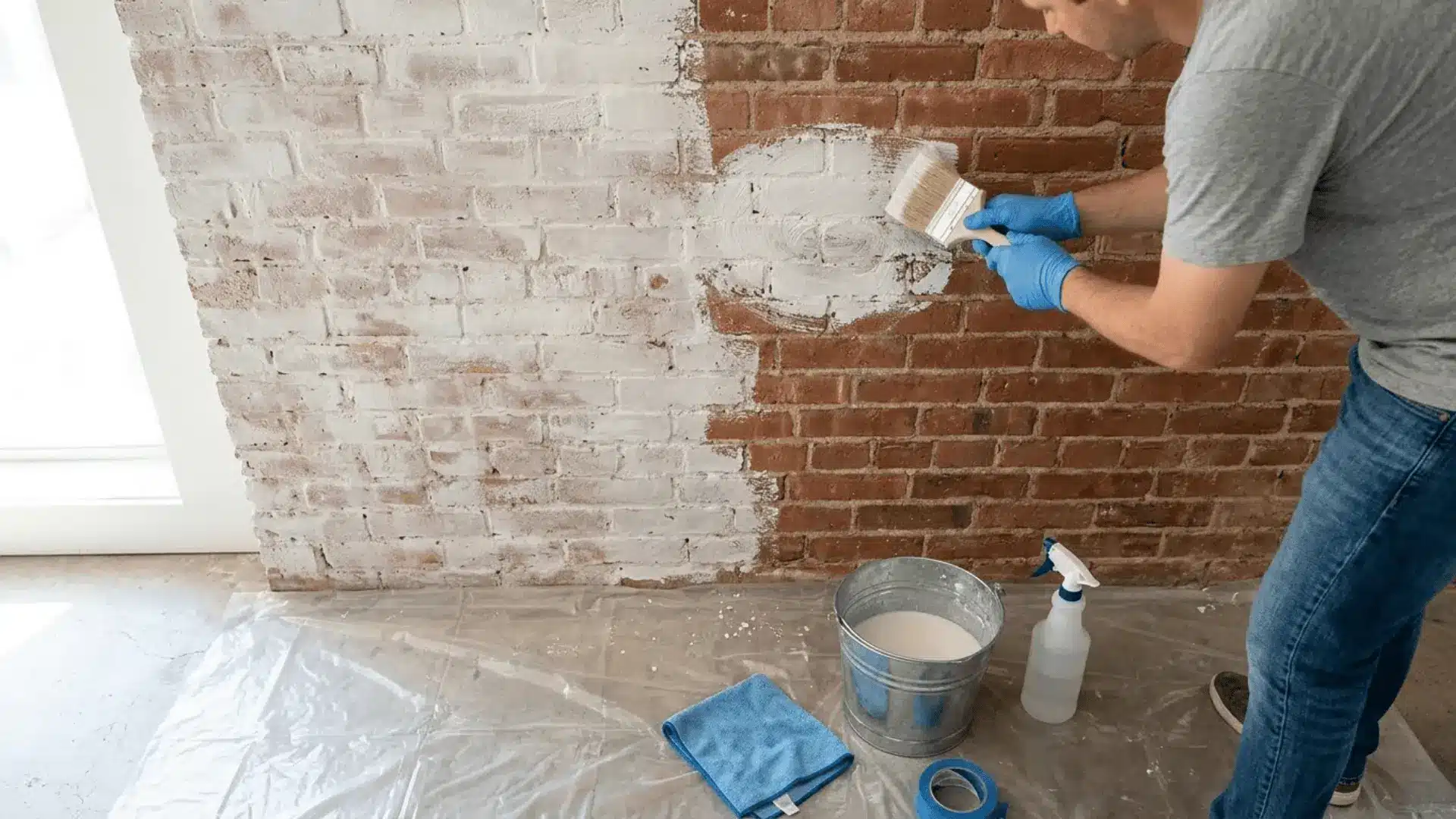
Lime washing brick is a satisfying DIY project that does not require professional experience to get right. With the right materials and a little patience, the results can look effortlessly beautiful.
Tools & Materials Needed
- Natural bristle brush or masonry brush
- Limewash mixture (store-bought or homemade)
- Water for dilution
- Protective drop cloths
- Painter’s tape
- Spray bottle
- Protective gloves and eyewear
Step-by-Step Process
Getting the technique right makes all the difference between a finish that looks intentional and one that just looks patchy.
Here is how to work through it cleanly.
- Step 1: Prep the surface by cleaning the brick thoroughly, removing dirt, dust, and any loose debris.
- Step 2: Dampen the brick lightly with a spray bottle so the limewash absorbs evenly rather than drying too fast.
- Step 3: Apply the first coat using a natural bristle brush in loose, circular strokes for an uneven, natural finish.
- Step 4: Wipe back selectively with a damp cloth while still wet to reveal more brick texture and control opacity.
- Step 5: Let it dry and layer a second coat if deeper coverage is needed, adjusting dilution for a lighter or heavier finish.
How Long Does Lime-Washed Brick Last?
One of the quieter selling points of limewash is how well it holds up over time.
A good application can last anywhere between 5 and 7 years, sometimes longer, with minimal upkeep.
Unlike paint that chips or peels, limewash fades gradually and naturally, which only adds to that worn-in, vintage quality people love about it.
When it does start to look a little tired, reapplication is straightforward and does not require stripping the old layer first. It is a finish that genuinely gets better with age rather than working against it.
Maintenance & Cleaning Tips
Limewash is refreshingly low-maintenance, but a little mindfulness goes a long way in keeping it looking its best.
- Clean with a soft brush or a damp cloth rather than anything abrasive.
- Avoid pressure washing, as high water pressure can strip the finish unevenly.
- Stay away from harsh chemical cleaners that can break down the limestone base.
- Expect and embrace natural fading and weathering as part of the finish’s character.
- Spot reapply in worn areas rather than redoing the entire wall every time.
With the right care, lime-washed brick takes care of itself for the most part, aging quietly and beautifully without asking for much in return.
Cost of Lime Washing Brick
Lime washing is one of the more budget-friendly ways to transform a brick surface, whether you go the DIY route or bring in a professional.
Here is a clear breakdown of what to expect before you budget for it.
| Cost Factor | DIY | Professional |
|---|---|---|
| Labor Cost | Free | Charged per project or hourly |
| Basic Lime + Water Mix | Low cost, mixed at home | Included in service quote |
| Premixed Limewash | Moderate, off-the-shelf pricing | Professional grade, higher quality |
| Cost Per Square Foot | Roughly $0.50 to $1.50 | Roughly $1.50 to $4.00 |
| Tools & Materials | One-time purchase, reusable | Included in service cost |
| Finish Quality | Depends on application skills | Consistent, even, experienced finish |
| Best For | Small to mid-sized DIY projects | Large surfaces or first-time applications |
Going the DIY route works beautifully for smaller surfaces and those comfortable with a hands-on approach. For larger exteriors or a more refined finish, a professional application is worth the added investment.
Is Lime Washed Brick Right for Your Home?
Lime-washed brick is a strong fit for homes leaning into natural, rustic, or Mediterranean aesthetics where texture and warmth are part of the vision.
It performs particularly well in humid or variable climates thanks to its breathable, moisture-resistant nature.
That said, it is not the best match for a brick that has already been painted over, as adhesion becomes tricky.
It also sits on the softer, more organic end of the finish spectrum, so ultra-modern or glossy interiors may find it a little out of place. Know your aesthetic, and it will rarely disappoint.
Final Thoughts
Lime-washed brick has a way of making spaces feel grounded, warm, and quietly considered. It is a finish rooted in history, yet it fits just as naturally into homes being designed today.
From a sun-drenched exterior wall to a cozy fireplace surround, the possibilities are genuinely lovely to explore.
If sustainability, texture, and effortless aging matter to you, this might just be the update your space has been waiting for.
Tried lime-washed brick in your home or planning to? Drop your thoughts, questions, or pictures in the comments below.