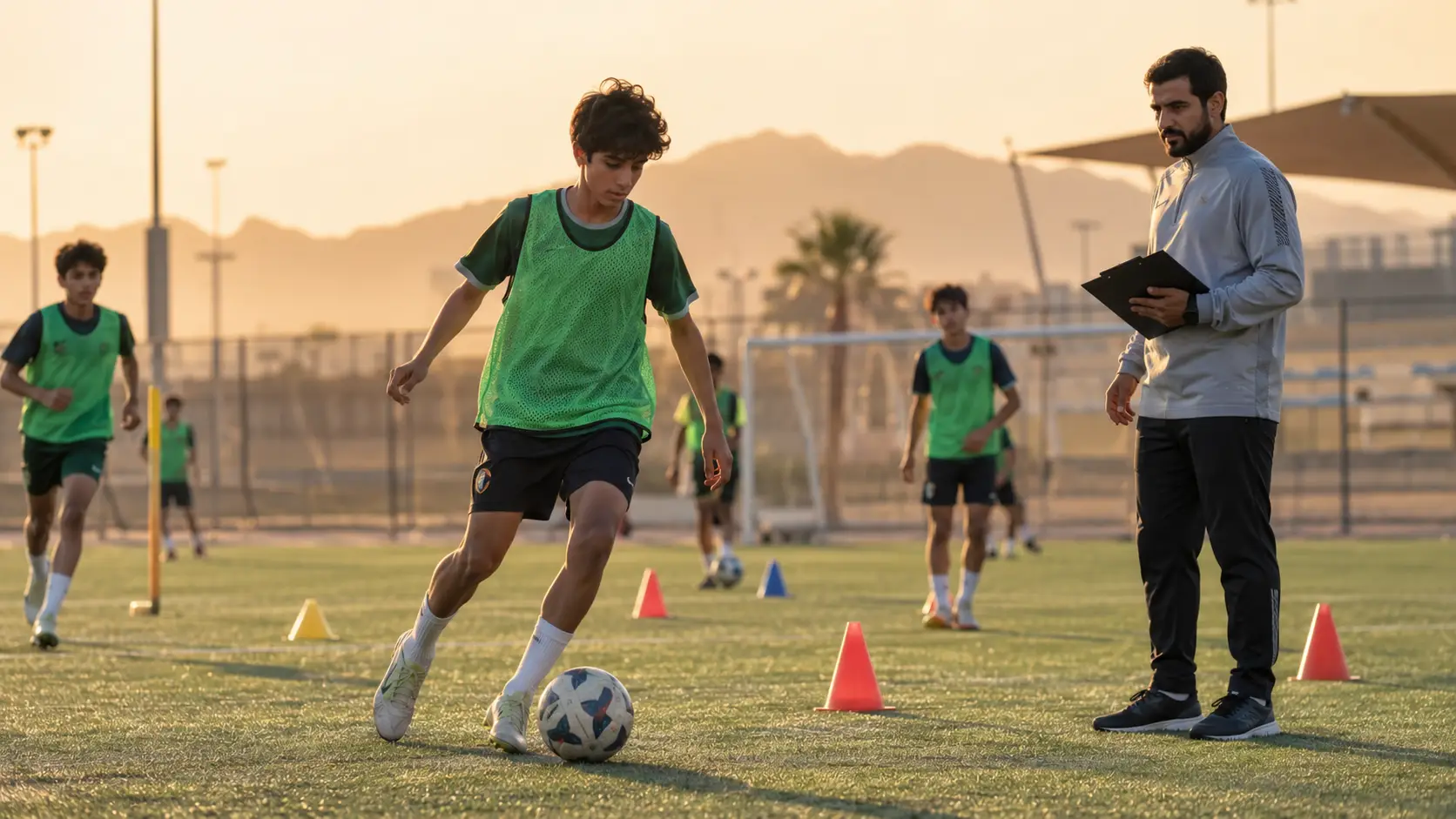
It’s not just about finding talented kids to nurture in the academy; rather, it is all done even before that. There must be identification of the talents of the children, and a pathway for the coming few years should be laid down for them by the coaches. In the case of Saudi Arabia, such an aspect is beginning to develop, with support being accorded to youth sports.
Scouting Starts Before the Academy Gates
Talent scouts usually do not base their estimation of a young player’s skills on one particular highlight. The physicality, reaction, decision-making, and behavior of a player in a difficult game are observed. Most sports bettors are also concerned about the same characteristics viewed from a different perspective. The recent form, team choice, injuries, tempo of the game, and dynamics of the action that occurs in real time may affect the perception of a sporting event. A tool like the Melbet app can be used by international fans to follow the fixture and its betting trends while the game is still going on. All this data is then analyzed by the scouts, who mainly concentrate on how the young players perform in terms of making decisions under those conditions.
Contacts can be established everywhere. The scouts can go to the school competitions, local teams, regional tournaments, or open tryouts. Quality academies also have contacts with the teachers and community coaches who work with the young players regularly. When one player shows excellent coordination and rhythm, another one picks up new instructions faster than the rest of the team.
|
Area of assessment |
What academy staff look for |
Why it matters |
|
Movement |
Balance, coordination, body control |
Shows how well an athlete handles physical tasks |
|
Technique |
Quality and consistency of sport-specific actions |
Reveals the current skill base |
|
Decisions |
Reactions under pressure and awareness of space |
Helps coaches judge game understanding |
|
Attitude |
Focus, effort, response to feedback |
Gives clues about learning habits |
|
Development |
Progress across repeated observations |
Helps separate early maturity from lasting potential |
From First Contact to a Real Assessment
In modern sport, a great deal of information is created prior to and during each sporting event. People who are interested in betting through websites can look at pre-match odds, recent scores, lineups, or live matches. Registration on the platform becomes an entry point in this case, and Melbet registration comes into play in the context of watching sports and betting online. Sports academies are not exempt from requiring accounts either, but in another sense. Coaches use accounts to save data on trials, videos, physical development, and other information about how young athletes are developing.
However, the test should not depend on the strength or speed of the athlete. The coach places the athlete in different types of mini-games, technical exercises, or decisions that need to be made quickly. It is possible to vary trials to see how the athletes react. An athlete who will listen and change his behavior throughout the session may turn out to be very useful for the team in the future. There are significant differences between the growth periods of children, and the physical parameters do not show the real picture.
What Scouts Actually Watch
During early testing, the coach should be able to identify a number of potential traits:
- Clean technique and control while changing direction or tempo
- Being aware of other players, the surroundings, the opposition, or the timing
- Being able to comprehend the feedback and apply it straight away
- Consistency even when the difficulty of the task increases
- Curiosity and discipline
There is not enough information in one test to answer all questions. Well-structured academies analyze athletes at least twice and try to compare their performance under different conditions. They search for certain trends. If a player shows composure, quick situational awareness, and good progress with training, then these features may be transferred to the higher level. Multiple observations also give a fair chance to future developers.
Talent Means More Than Early Physical Ability
Young players will exhibit great differences even at the same age. The first kid is taller and stronger because of physical maturation. The other player may not be tall but is good with timing and technique. Academies that rely greatly on size may miss great athletes who can turn out to be very competitive in the future.
This means that patience is required. Coaches must evaluate the athlete against his/her past achievements in relation to growth, coordination, self-confidence, and background. A coach with such knowledge will make wise judgments regarding workload and transfers to other age levels.
Reading Potential Over Time
Potential is easy to measure when coaches gather data over months. This enables them to evaluate technical improvement, training practices, physical development, and decisions during games. For instance, an adolescent player who can analyze mistakes during games indicates self-awareness and good knowledge. This knowledge makes it easy for coaches to impart coaching skills.
Turning Potential Into Daily Progress
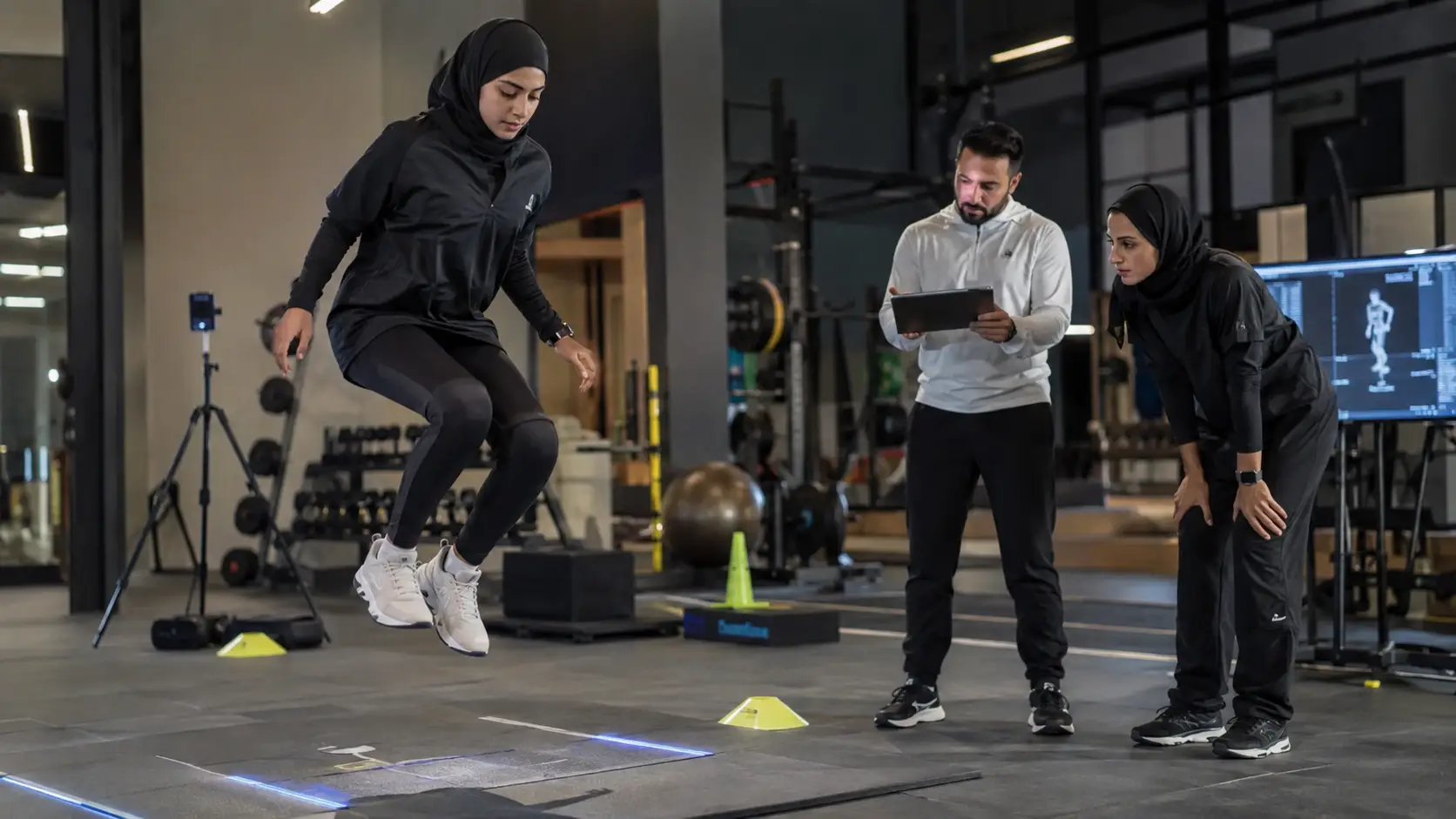
Selection is just the first step. After an athlete joins the academy, the next step is to turn their talent into success. The program must be tailored according to the athlete’s age, sport, position, and development stage. It must provide enough difficulty to enable improvement, but not to make every day a test.
A good development program can consist of:
- technical work built around the athlete’s main sport and role
- physical training matched to growth and current capacity
- recovery routines that fit school and competition schedules
- regular video or performance reviews with clear feedback
- chances to train or compete at a higher level when the athlete is ready
Progress is seldom linear. A participant may show fast improvement in one aspect but needs some more time in others. The coaches can modify the program instead of following a blanket approach. A goalkeeper can work on positioning for several weeks, whereas a sprinter can concentrate on his starting position.
Coaching the Person as Well as the Athlete
The academy will foster good habits that do not involve competing. The young athlete has to be taught how to handle school, sleep, eat, move, and increased pressure. A coach who communicates effectively will be able to explain why such habits are important.
Character is built on day-to-day decision-making. Athletes are taught how to show up prepared, honor their peers, listen to coaching, and react after failure. The academy needs to allow young people the space to assume responsibility as the adults establish order and direction.
An effective coach is able to handle errors without making them big issues. The young players must be coached and allowed the liberty to try difficult tasks. Improved coaching provides an objective, allows the player to retry, and assesses whether he or she has learned from the experience.
Saudi Arabia Is Building a Wider Talent Pathway
Mahd Sports Academy provides a good illustration of how a national program may improve access to talent development. Mahd Sports Academy has been set up as part of the Vision 2030 strategy for Saudi sport. The areas covered by the institution include talent identification, athlete development, sports science, and pathways into higher competitions.
It is important when there is a broad area of territory to cover. The academy conducts football try-outsatg various locations in Saudi Arabia for young age groups. Using technical identification, the academy selects some athletes for further development and connects scouting with the wider school system.
More attention is paid by Saudi sports to the data and technology usage. Technology can be helpful in identifying talents and analyzing athletes. Video analysis, test results, and performance data show improvements that may have been forgotten.
When Potential Becomes a Path
Sports academies are not looking for a finished athlete at age ten or twelve. Coaches want to see whether a young player can keep improving. Movement is significant; however, it does not form the entirety of the criteria. The scouts will evaluate the players based on their ability to make decisions, follow instructions, concentrate, and cope with pressure. The aforementioned traits are slowly built and only manifested when the coach starts writing down the performances of the player from various games.
The real game begins after the selection process. It is essential that the training fits the age, ability, and requirements of the athlete. The feedback should be detailed enough so that it can be applied to the next training session. The increasing popularity of football academies in Saudi Arabia reveals the benefits of broader scouting and structured training.