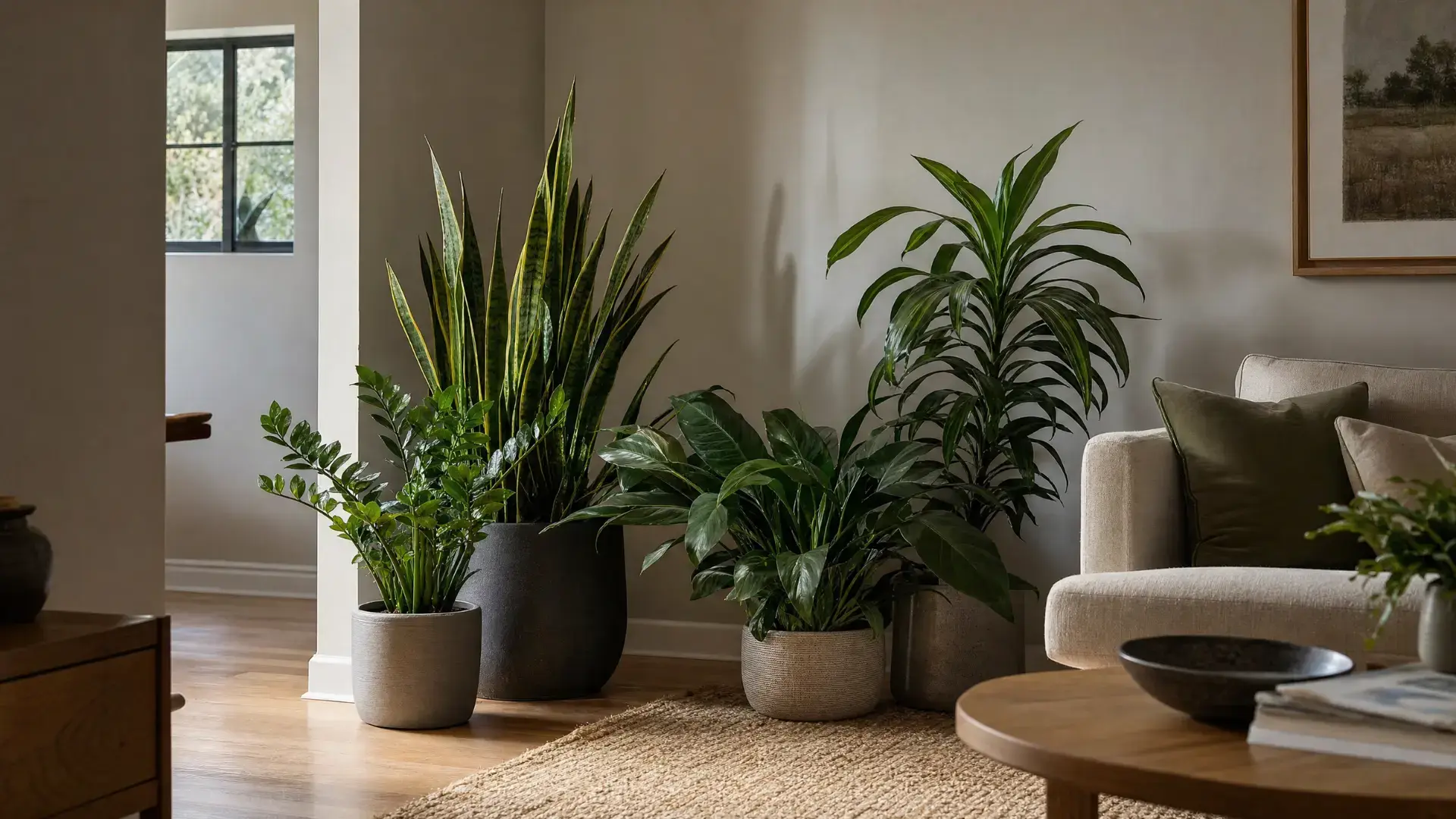
Some rooms just don’t get much sunlight, and that’s normal in most homes. Large, low-light indoor plants are made for exactly these spots. Picking the right one still takes a bit of know-how.
Some plants get labeled low light but slowly fade over time. Others keep their color and shape for years without much sun. That’s what separates a plant that lasts from one that doesn’t.
You want height, fullness, and a plant that actually survives. Below, I break down which tall plants really do well in shade.
You’ll learn what each one needs to stay healthy long-term. Pick the right one, and your shaded space will look good.
What Low Light Actually Means for a Plant?
Low light doesn’t mean no light. It means a spot without direct sun, like a north-facing window or a room a few feet from the nearest window.
Most plants sold as “low light” don’t grow best in the dark. They simply survive there, growing slower and staying smaller than they would in bright, indirect light.
A true low-light plant holds its color and shape even in a windowless office or a shaded hallway.
That’s the difference between a plant that lasts and one that fades within months. Many people start with a few beginner-friendly houseplants before moving on to wider, more structural varieties.
Large Low-Light Indoor Plants That Actually Do Well
I’ve tried a few of these myself and researched the rest. Together, they prove that a lack of bright light doesn’t have to mean a lack of options:
1. Snake Plant
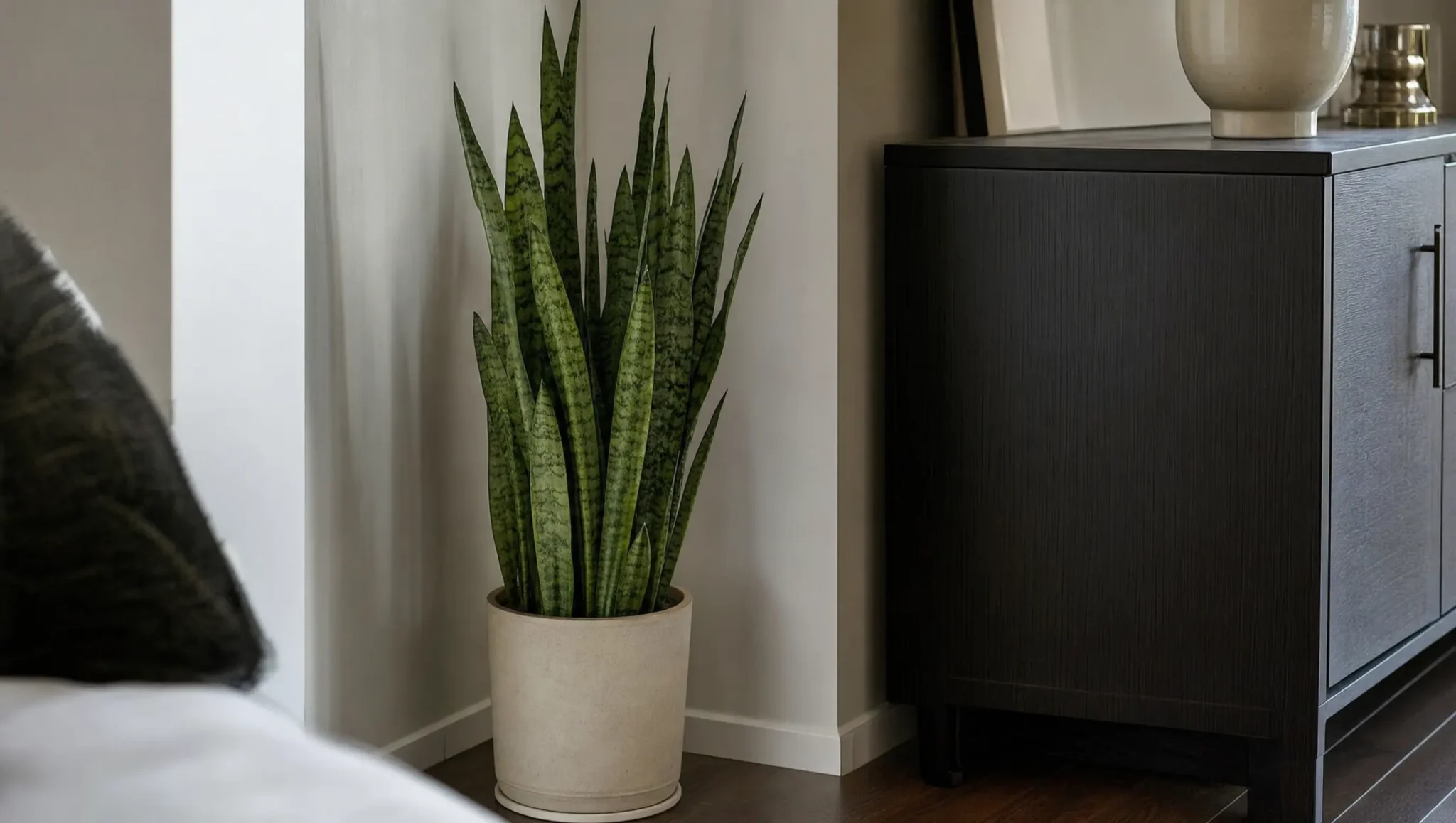
Snake Plant has rigid, sword-shaped leaves that create a clean vertical accent without taking up much floor space. Its architectural form works especially well beside cabinets, sofas, and narrow entryways.
It is an easy-care choice because its thick leaves store water and tolerate dry indoor air. Choose a sturdy pot, as taller varieties can become top-heavy as they mature.
- Indoor height: Usually 2–4 feet, depending on the variety
- Light tolerance: Tolerates 1 to 8 hours of shaded to bright indirect light
- Watering needs: Water every 2 to 6 weeks, once the soil is fully dry
2. Cast Iron Plant
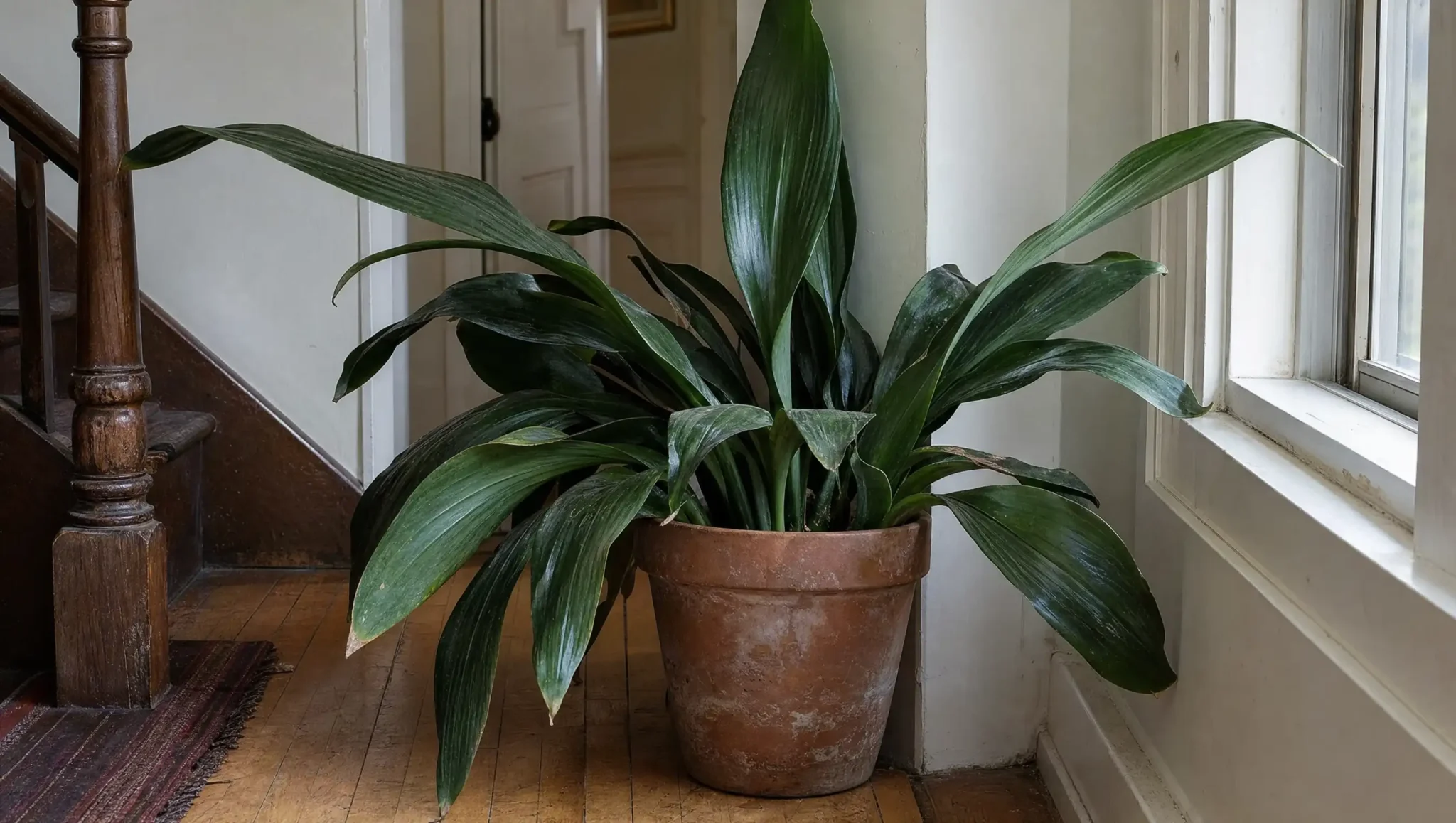
Cast Iron Plant produces broad, arching leaves that bring a full, leafy appearance to shaded rooms. Its deep green foliage suits traditional, minimalist, and woodland-inspired interiors.
This slow-growing plant requires little attention and tolerates dry air, temperature changes, and occasional neglect. It rarely needs repotting because its underground rhizomes develop gradually.
- Indoor height: Approximately 2–3 feet
- Light tolerance: Handles as little as 1 hour of light, up to 4 hours of filtered light
- Watering needs: Water every 2 to 3 weeks, after the top 2 inches dry out
3. ZZ Plant
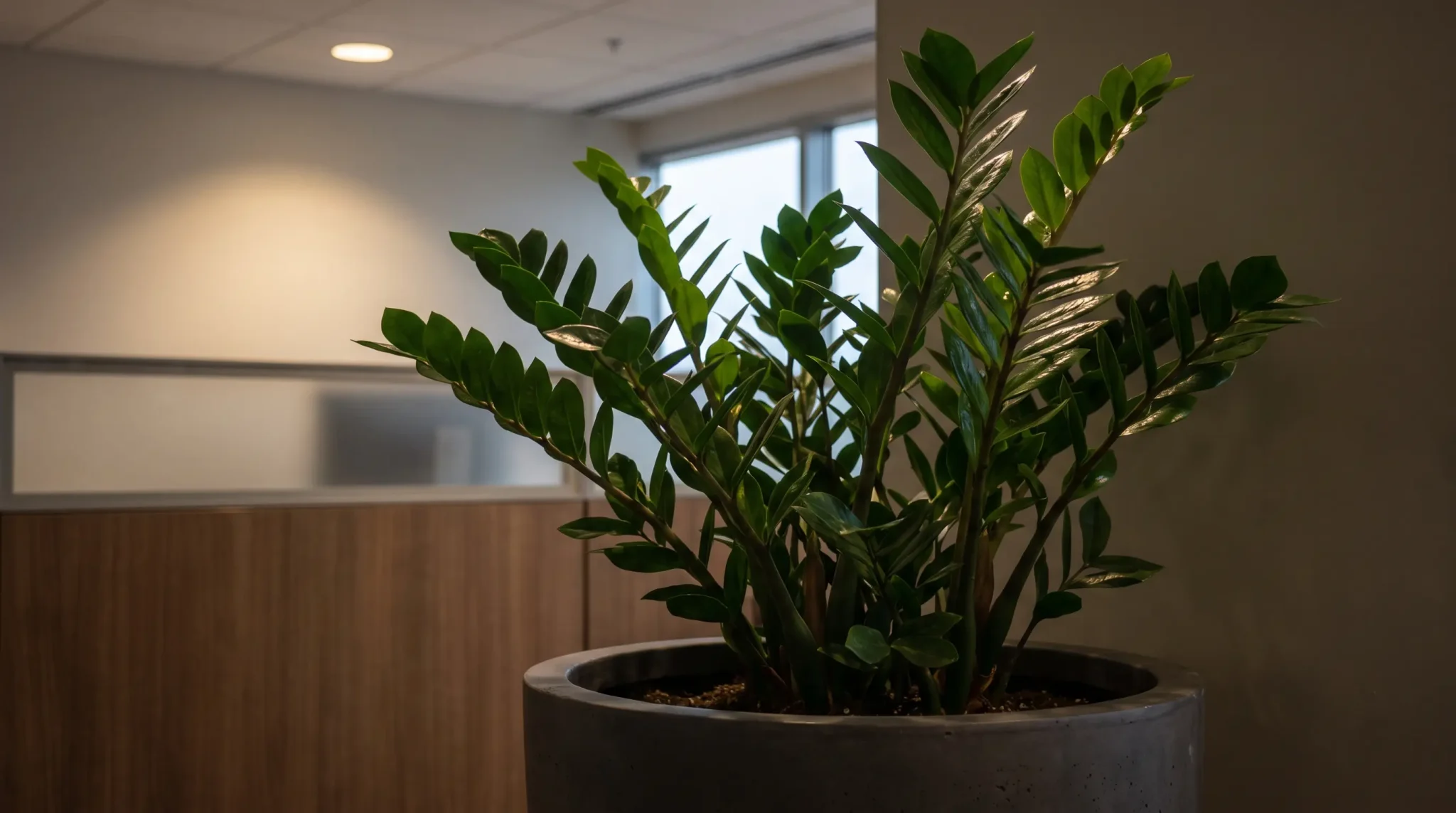
ZZ Plant develops rows of smooth leaflets along thick, upright stems, giving it a polished and symmetrical appearance. Its naturally glossy foliage reflects available light and brightens darker corners.
This beginner-friendly plant stores moisture in its underground rhizomes, allowing it to manage extended dry periods. New shoots emerge slowly but remain attractive and upright for years.
- Indoor height: Usually 2–4 feet
- Light tolerance: Thrives on 1 to 8 hours of dim to bright indirect light
- Watering needs: Water every 3 to 4 weeks, once the soil dries out completely
4. Dracaena Lisa
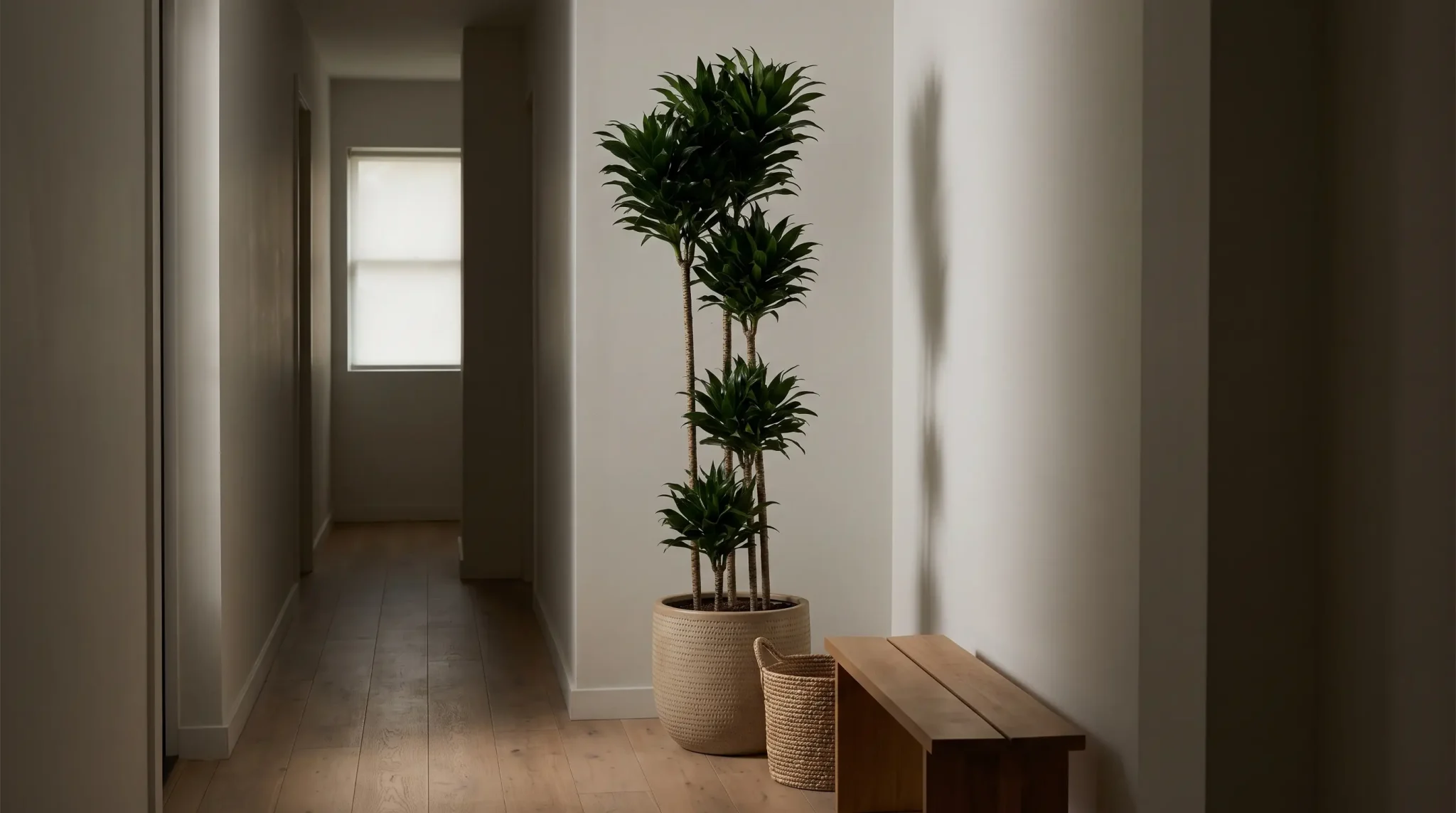
I like how this one adapts to dim corners and keeps its deep green color better than most variegated dracaenas. Occasionally removing older lower leaves keeps its crown and trunk looking tidy.
- Indoor height: Approximately 4–6 feet
- Light tolerance: Prefers 2 to 4 hours of filtered or indirect light
- Watering needs: On a 10- 14-day cycle, when the top half of the soil turns dry
5. Bamboo Palm
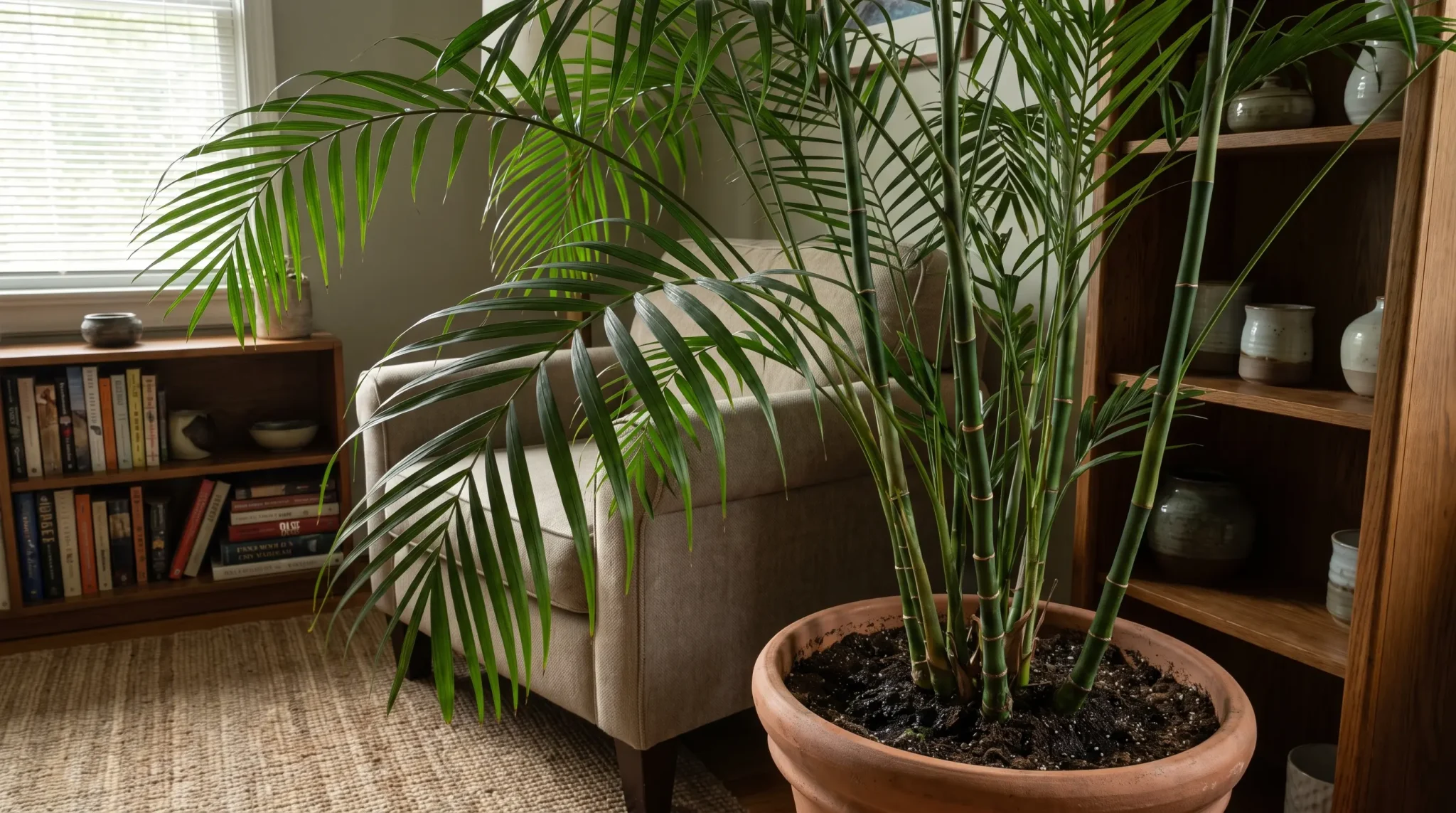
Bamboo Palm produces multiple reed-like stems topped with soft, feathery fronds. Its layered foliage helps soften bare walls, sharp furniture lines, and empty corners.
This palm needs slightly more attention because it prefers steady moisture and higher humidity. Brown leaf tips may appear when the soil or surrounding air remains excessively dry.
- Indoor height: Commonly 4–8 feet
- Light tolerance: Prefers 2 to 4 hours of filtered or indirect light
- Watering needs: Every 5 to 7 days works, once the top inch feels dry
6. Corn Plant
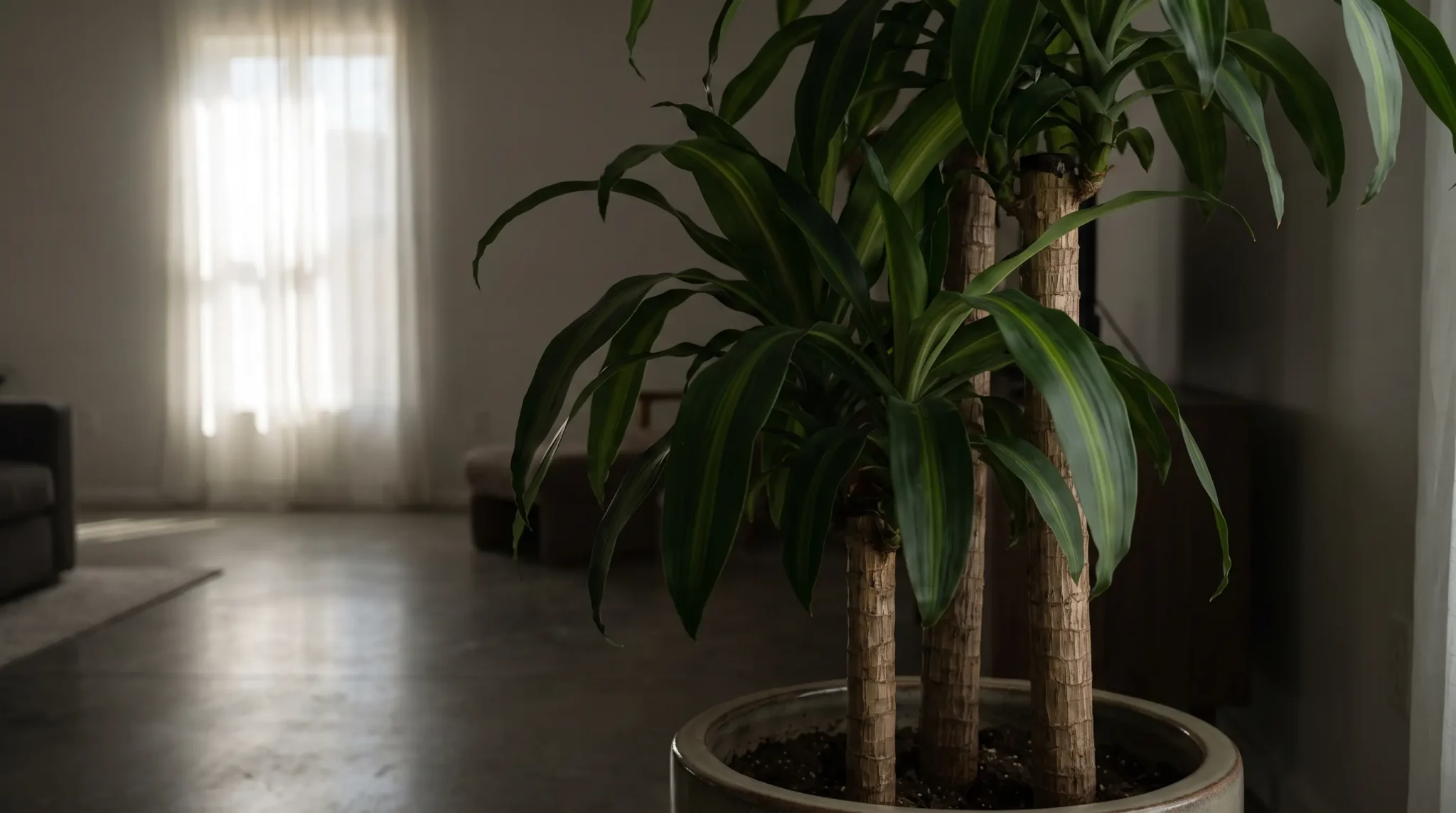
Corn Plant grows from thick canes topped with long, gently arching leaves. Depending on the variety, its foliage may be solid green or marked with lighter central stripes.
This adaptable plant is easy to control when it becomes too tall because its cane responds well to pruning. Healthy plants commonly produce new shoots below the cut, creating a fuller appearance.
- Indoor height: Usually 4–6 feet
- Light tolerance: Does well with 2 to 4 hours of soft, indirect light
- Watering needs: Roughly 10 to 14 days apart, once 2 to 3 inches down feels dry
7. Money Tree
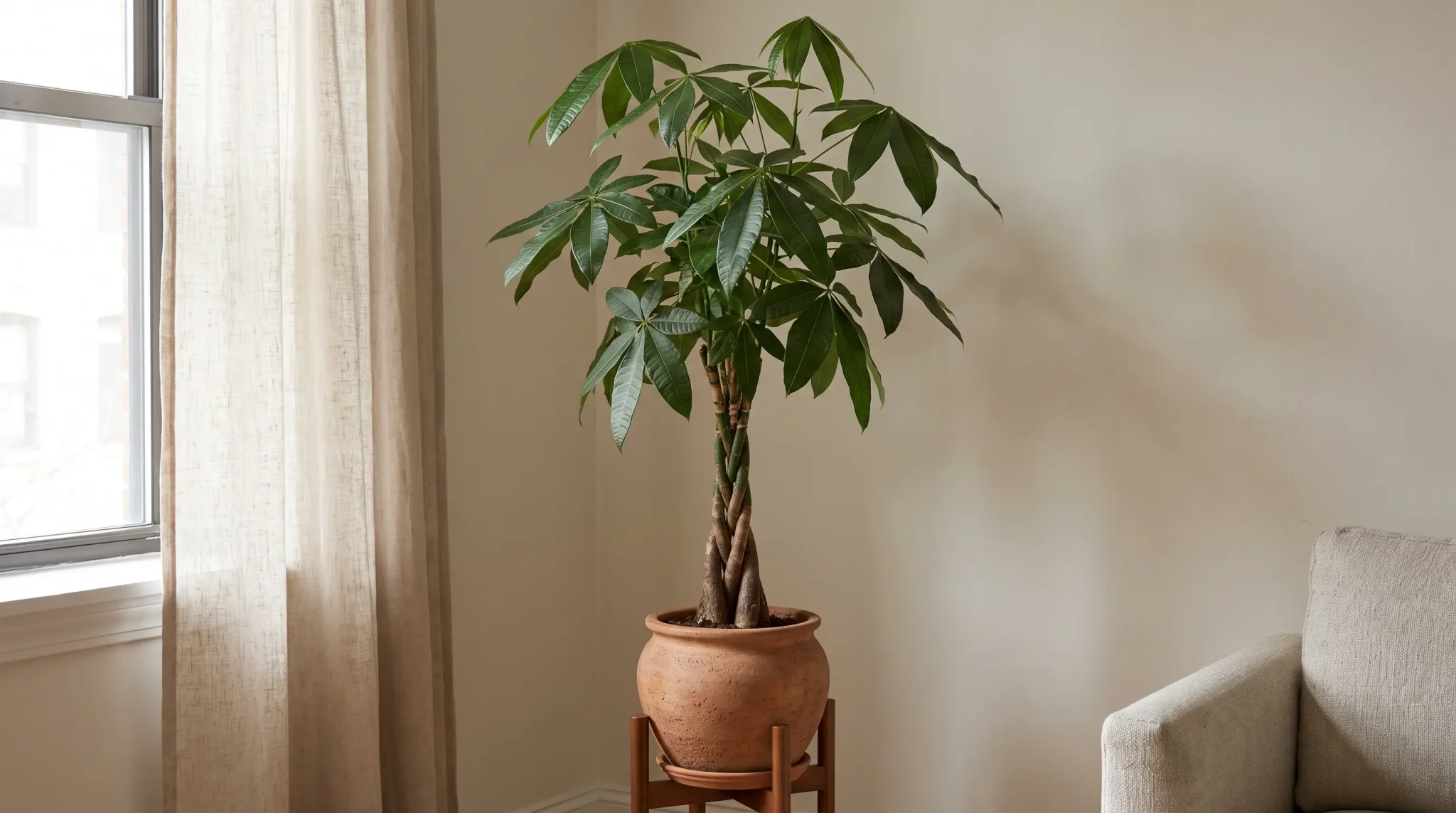
The money tree features a woody trunk topped with clusters of hand-shaped green leaves. Braided specimens add an especially decorative form to apartments and home offices.
It requires moderate care because it prefers stable temperatures, suitable drainage, and protection from cold drafts. Rotating the pot regularly helps its leafy crown grow evenly instead of leaning toward the nearest window.
- Indoor height: Approximately 3–6 feet
- Light tolerance: Grows best with 2 to 8 hours of bright, indirect light
- Watering needs: A 7- to 10-day gap, once the top few inches dry out
8. Chinese Evergreen
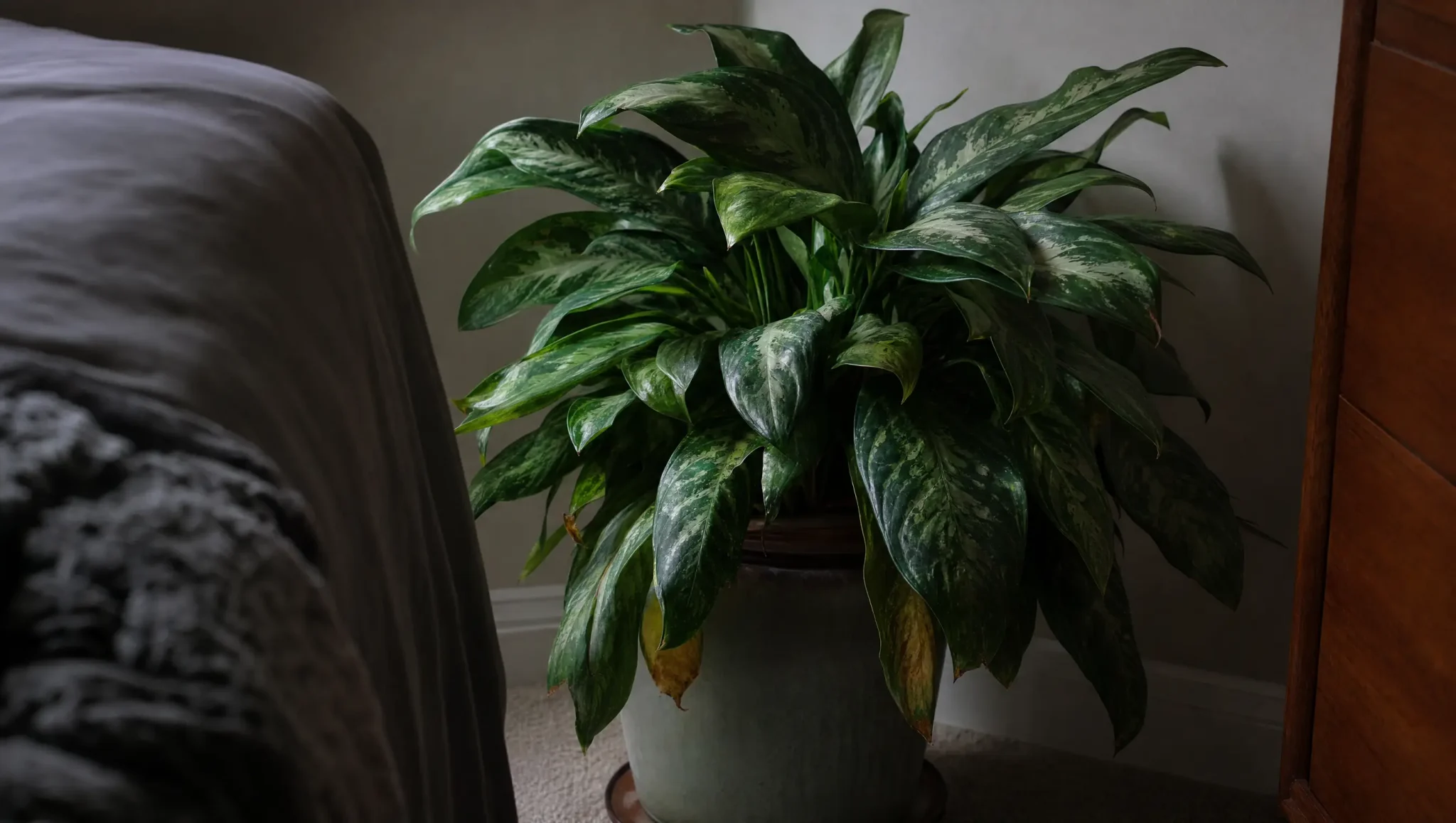
Chinese Evergreen forms dense clumps of broad leaves patterned with green, silver, cream, or pink. Dark green cultivars are generally better suited to deeply shaded spaces than colorful varieties.
This easy-care plant grows slowly and does not require frequent pruning or repotting. Older specimens gradually become bushier as fresh stems emerge from the base.
- Indoor height: Usually 1–3 feet
- Light tolerance: Tolerates just 1 hour of shade, up to 4 hours of indirect light
- Watering needs: Every 10 to 14 days is enough, once the top inch or two dries
9. Peace Lily
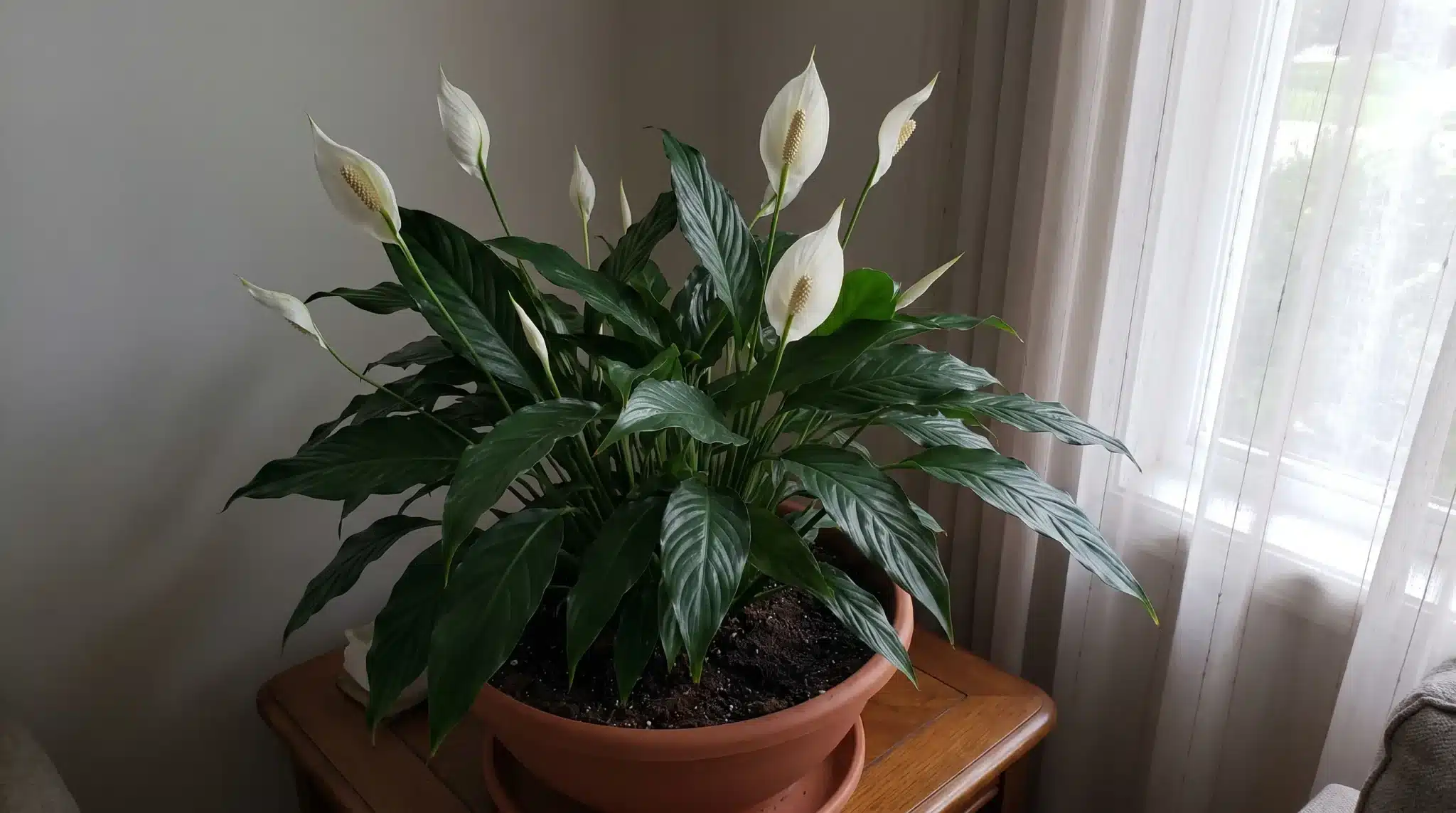
Peace Lily develops a rounded clump of glossy leaves with occasional white, hood-like flowers. Even without blooms, its dense foliage gives shaded rooms a fresh and finished appearance.
It needs moderate attention because its soil should not remain completely dry or constantly soggy. Slightly drooping leaves often signal thirst, giving you a visible reminder to check the soil.
- Indoor height: Approximately 2–4 feet
- Light tolerance: Prefers 2 to 4 hours of filtered light daily
- Watering needs: Water every 5 to 7 days, once the top inch feels slightly dry
10. Rubber Plant
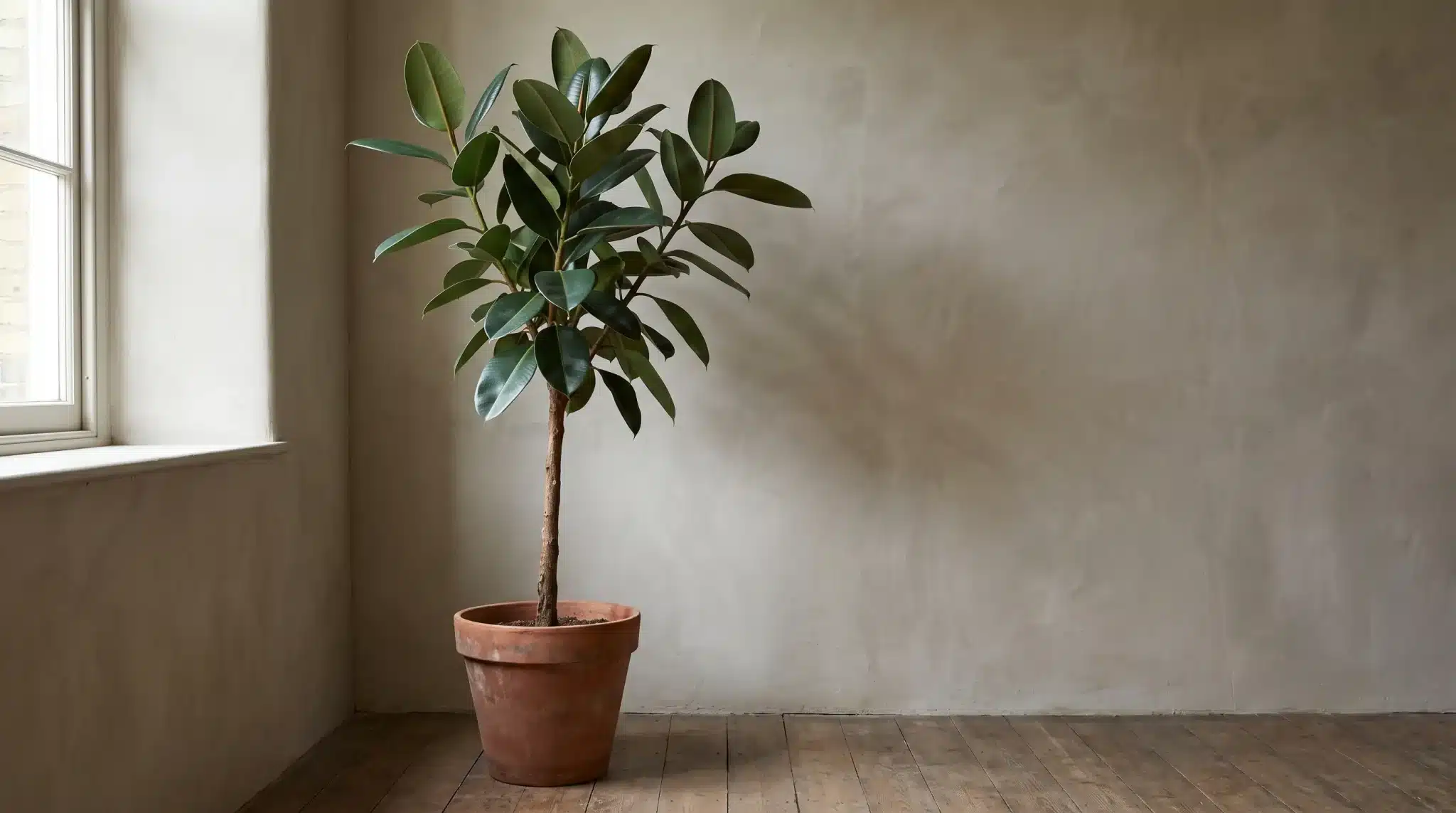
Rubber Plant has thick, oval leaves that grow around a strong central stem. Its bold foliage creates a tree-like focal point without requiring the spread of a traditional indoor tree.
Mine needed a bit of trial and error before I got the watering right, since it really rewards consistent care. Green-leaved varieties tolerate reduced light better than heavily variegated cultivars.
- Indoor height: Approximately 6–10 feet
- Light tolerance: Needs 3 to 8 hours of bright, indirect light to thrive
- Watering needs: Space watering 7 to 10 days apart, once the top 2 to 3 inches dry out
11. Parlor Palm
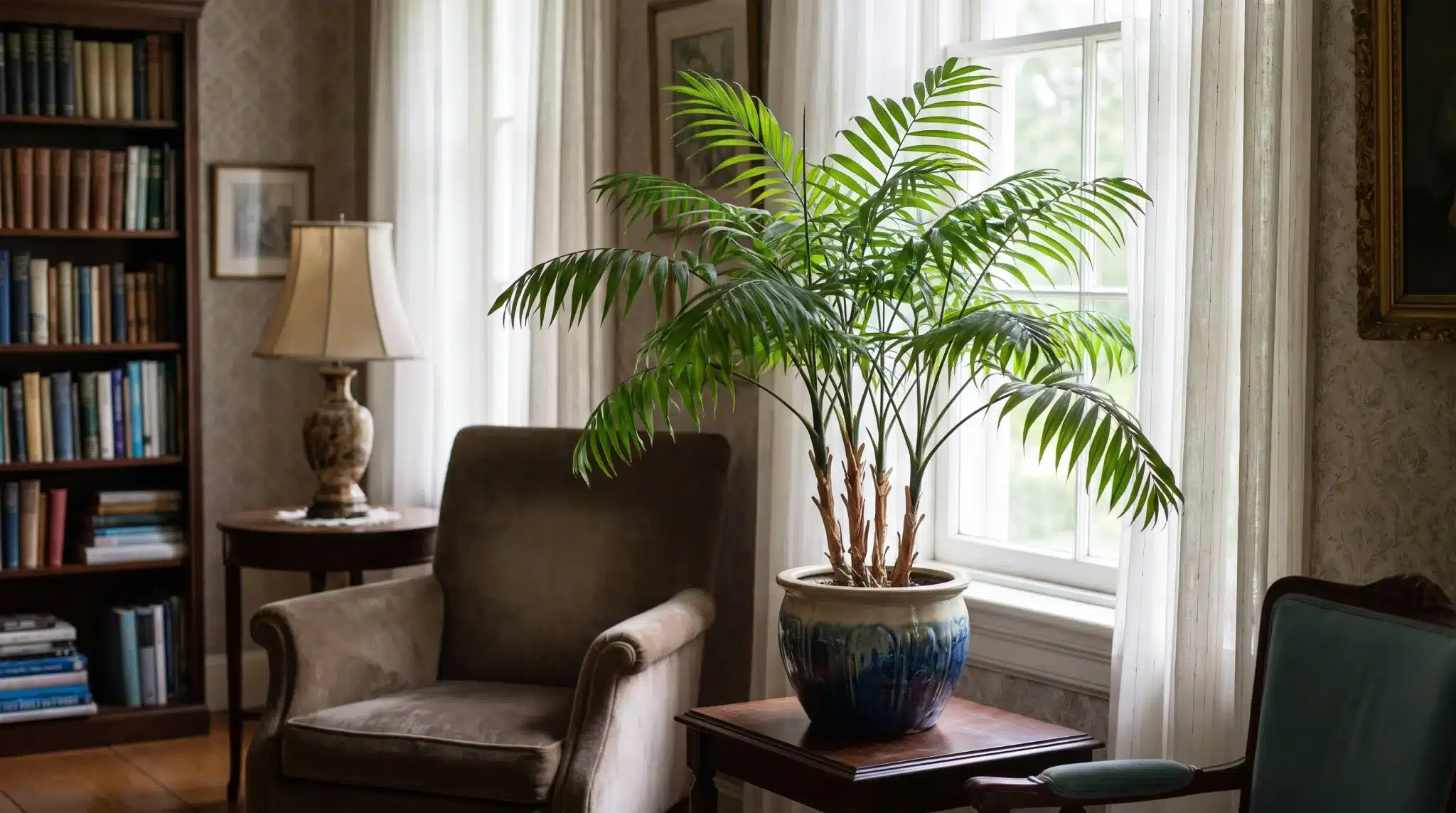
Parlor Palm grows delicate fronds from a cluster of narrow stems, producing an airy rather than bulky silhouette. Its restrained growth makes it suitable for bedrooms, offices, and smaller living rooms.
This relatively easy palm prefers stable indoor conditions and protection from harsh direct sunlight. Remove damaged fronds at their base because trimmed or browned sections will not regrow.
- Indoor height: Usually 2–6 feet
- Light tolerance: Does fine with 2 to 4 hours of low, filtered light
- Watering needs: Every 7 to 10 days, once the top inch feels dry to the touch
12. Philodendron Selloum
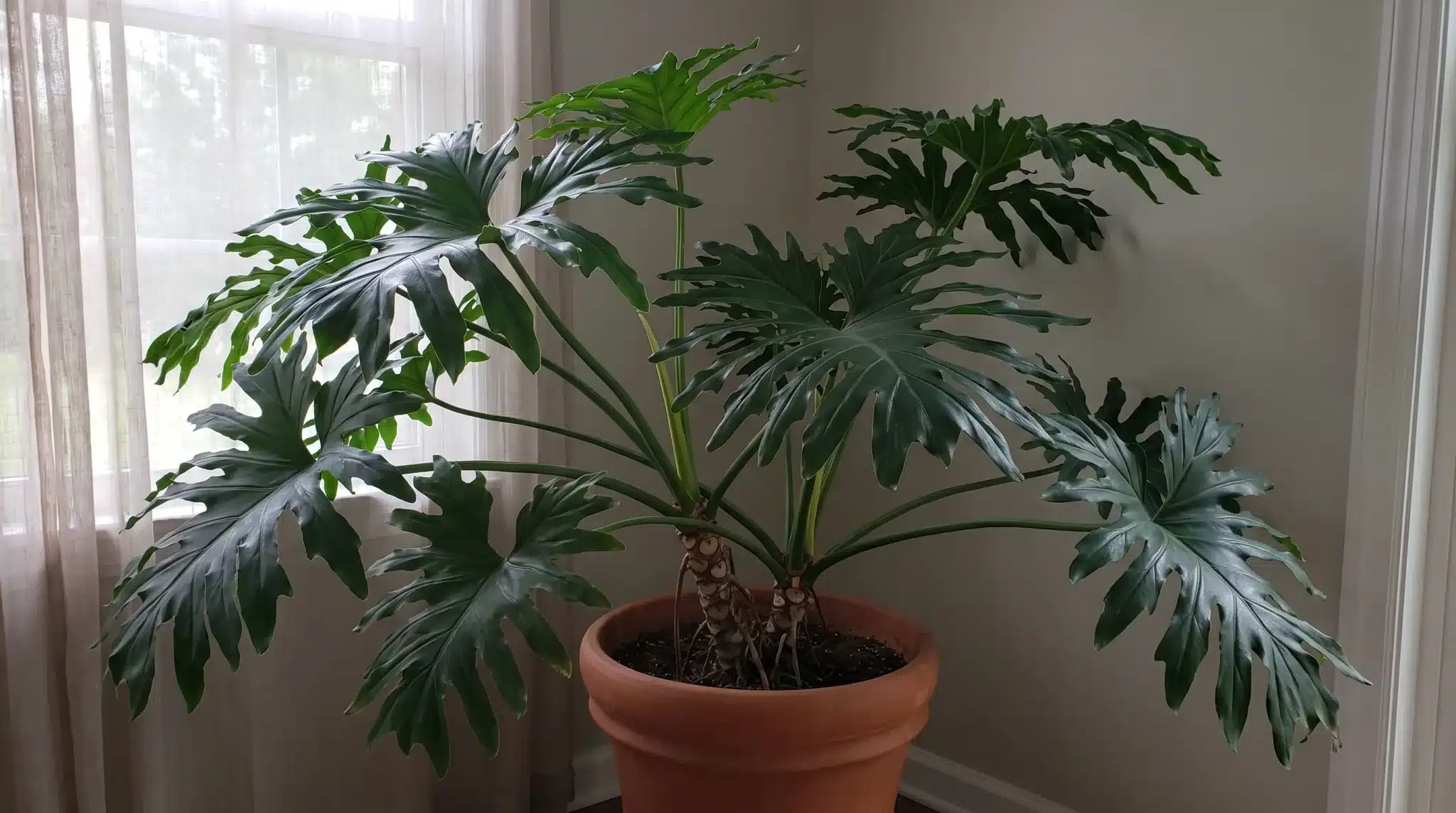
Philodendron Selloum develops large, deeply lobed leaves that give a room an immediate tropical character. Its spreading growth makes it most suitable for an open corner with generous floor space.
This forgiving plant requires little beyond suitable drainage and occasional pruning of damaged leaves. Mature specimens may develop a thick, trunk-like stem as older foliage naturally falls away.
- Indoor height: Approximately 3–5 feet
- Light tolerance: Handles 2 to 8 hours of indirect to bright light
- Watering needs: A 7- to 10-day interval, once 2 to 3 inches down feels dry
13. Monstera Deliciosa
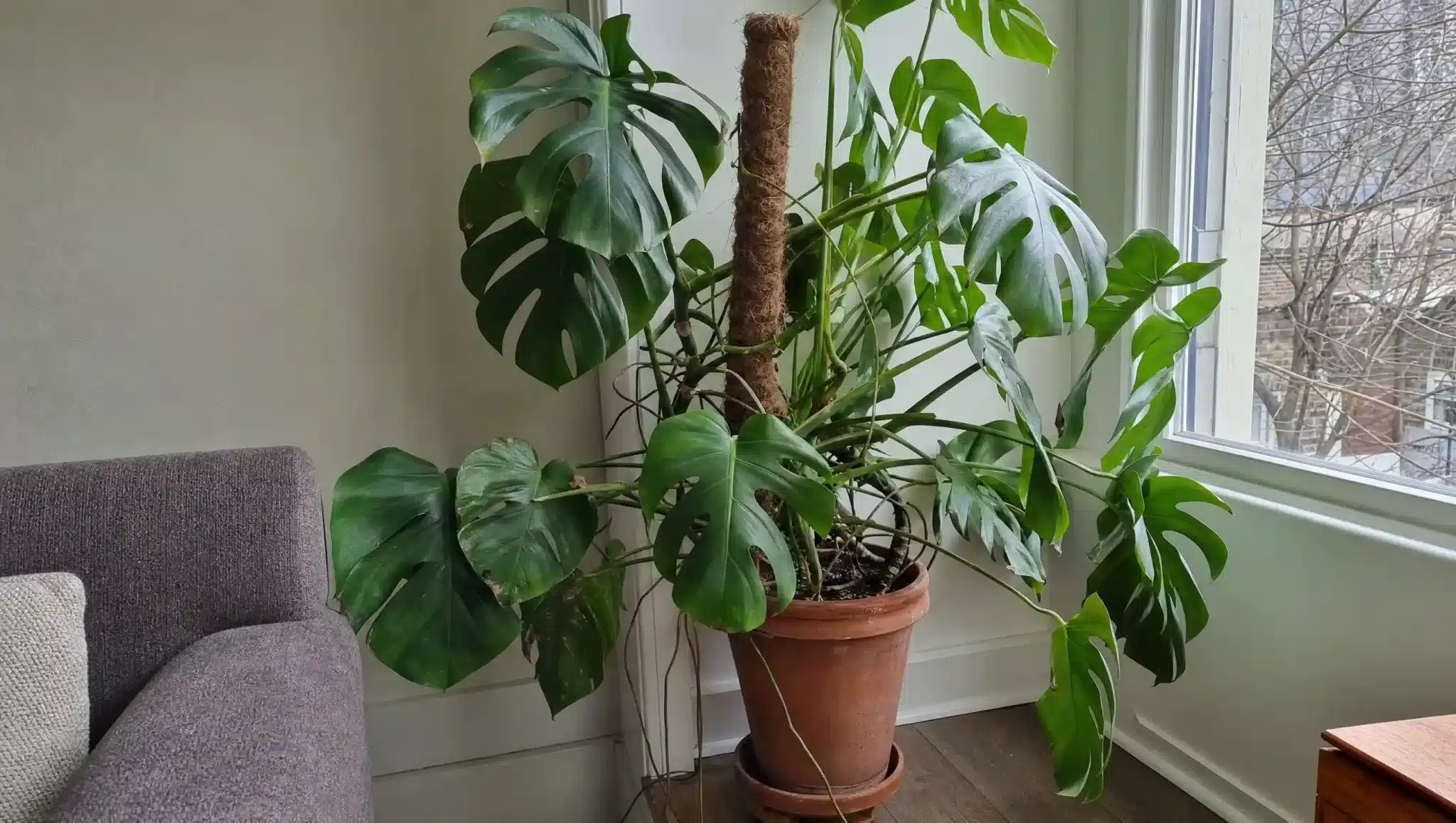
Monstera Deliciosa produces large leaves that develop recognizable holes and splits as the plant matures. A moss pole or sturdy support encourages it to climb and creates greater vertical impact.
This plant needs moderate care because its climbing stems require training and occasional support. Leaves grown in deeper shade may remain smaller and develop fewer openings.
- Indoor height: Approximately 6–8 feet with support
- Light tolerance: Needs 3 to 8 hours of medium to bright indirect light
- Watering needs: Every 7 to 10 days, once the top few inches feel dry
14. Janet Craig Dracaena
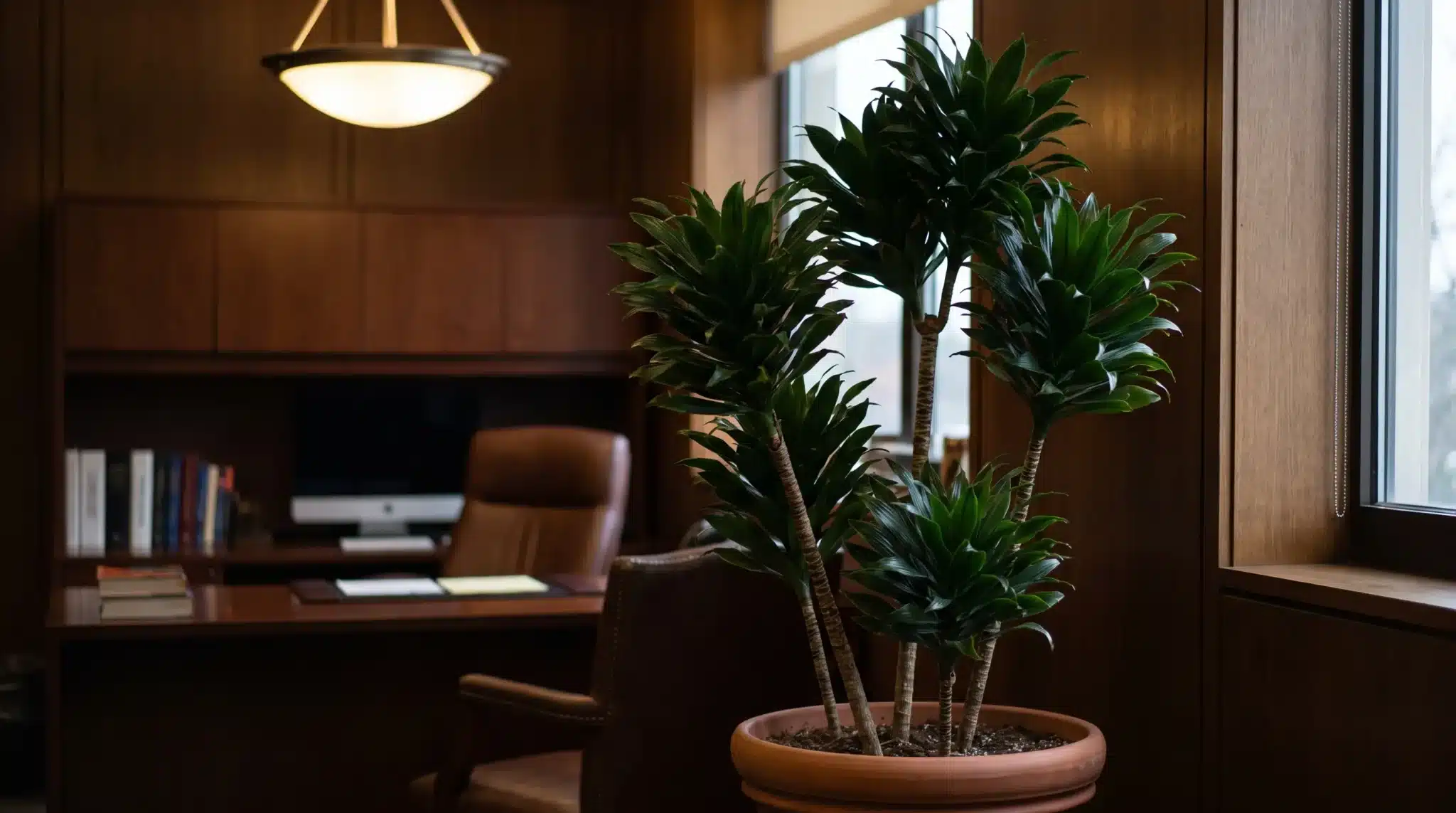
Janet Craig Dracaena displays dense clusters of solid green leaves along sturdy canes. Its simple coloring and upright structure complement professional offices as well as modern homes.
This highly manageable plant grows slowly and requires little pruning in dim rooms. Brown leaf tips may develop from mineral-heavy water, dry air, or excessive fertilizer.
- Indoor height: Usually 4–6 feet
- Light tolerance: Tolerates as little as 1 hour of shade, up to 4 hours of filtered light
- Watering needs: Roughly every 2 to 3 weeks, once the soil’s top half dries out
15. Kentia Palm
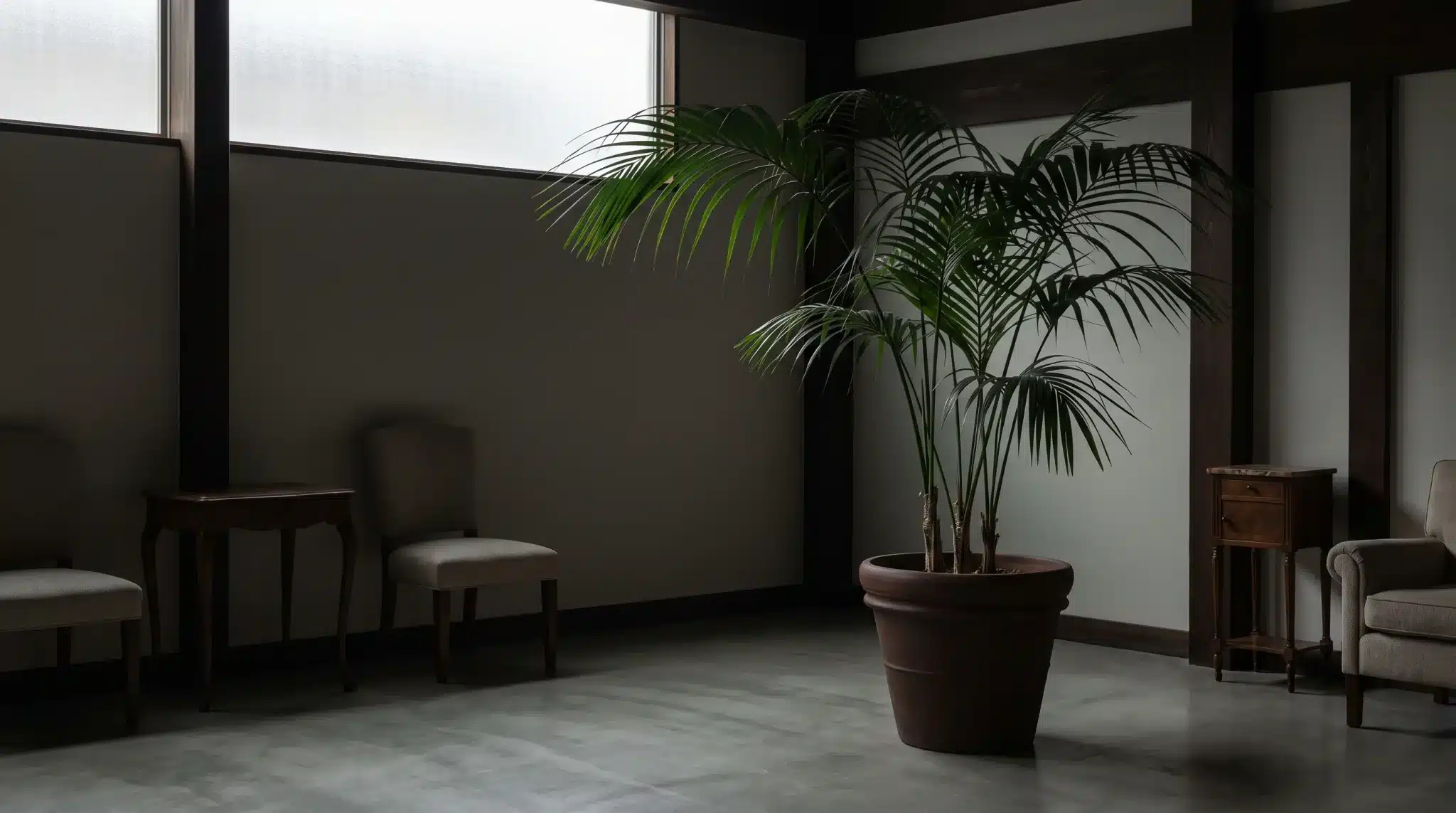
Kentia Palm produces long, arching fronds that create an elegant canopy around a slender base. Its graceful form can fill a tall corner without making the room feel crowded.
This palm needs moderate care and dislikes frequent relocation, overwatering, or unnecessary root disturbance. Its slow growth means a mature plant can stay in the same position for years.
- Indoor height: Approximately 6–10 feet
- Light tolerance: Prefers 2 to 8 hours of low to bright indirect light
- Watering needs: A 7- 10-day gap, once the top 1 to 2 inches feel dry
16. Bird’s Nest Fern
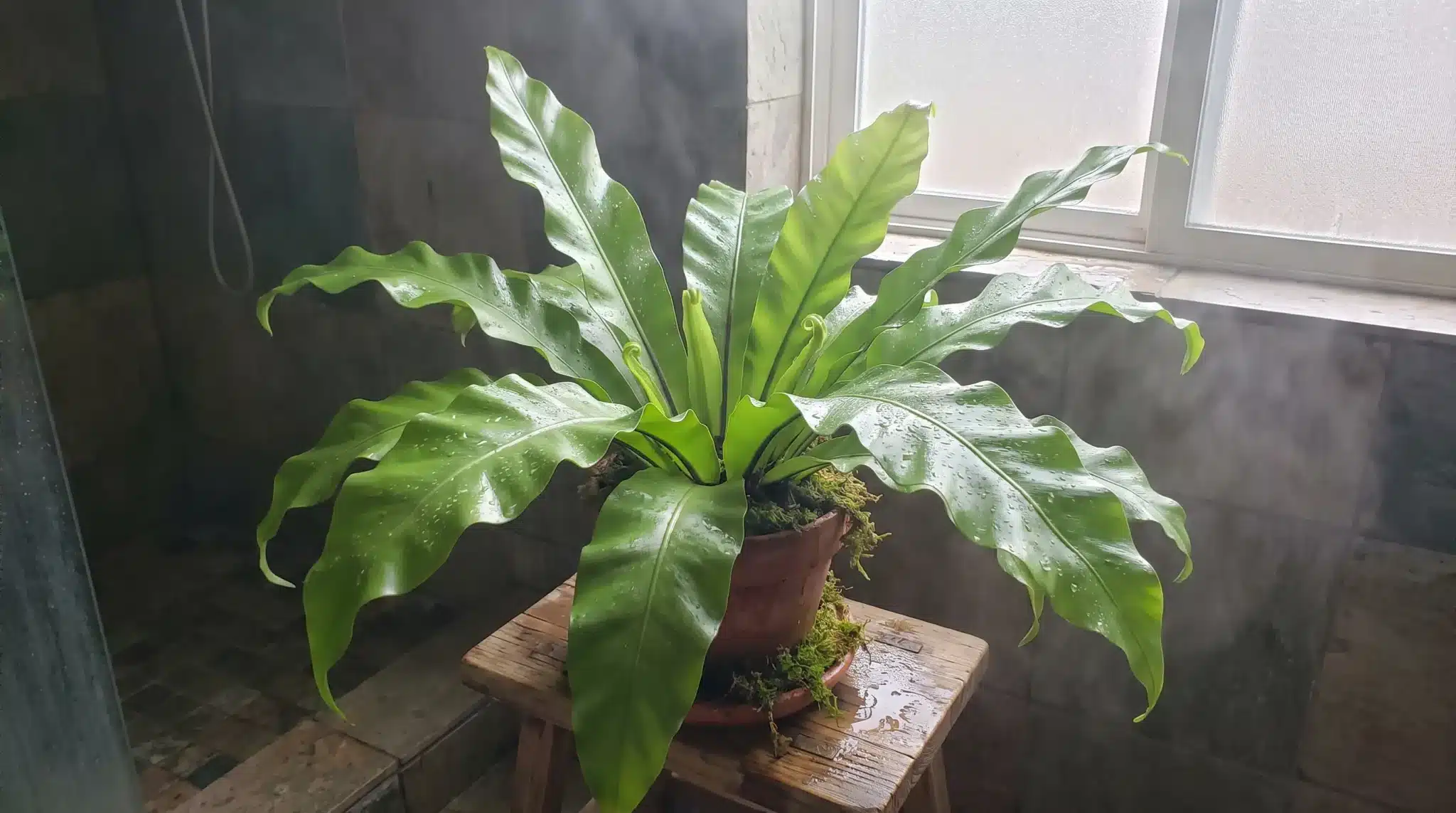
Bird’s Nest Fern grows smooth, wavy fronds from a central rosette instead of producing divided, feathery foliage. Its spreading form brings bold texture to a plant stand or low piece of furniture.
It requires moderate care because warm temperatures and higher humidity help keep its frond edges healthy. Pour water onto the soil rather than into the plant’s central crown to prevent rot.
- Indoor size: Approximately 1–2 feet tall and wide
- Light tolerance: Needs 2 to 4 hours of shaded, indirect light
- Watering needs: Every 5 to 7 days, once the surface starts feeling dry
17. Schefflera
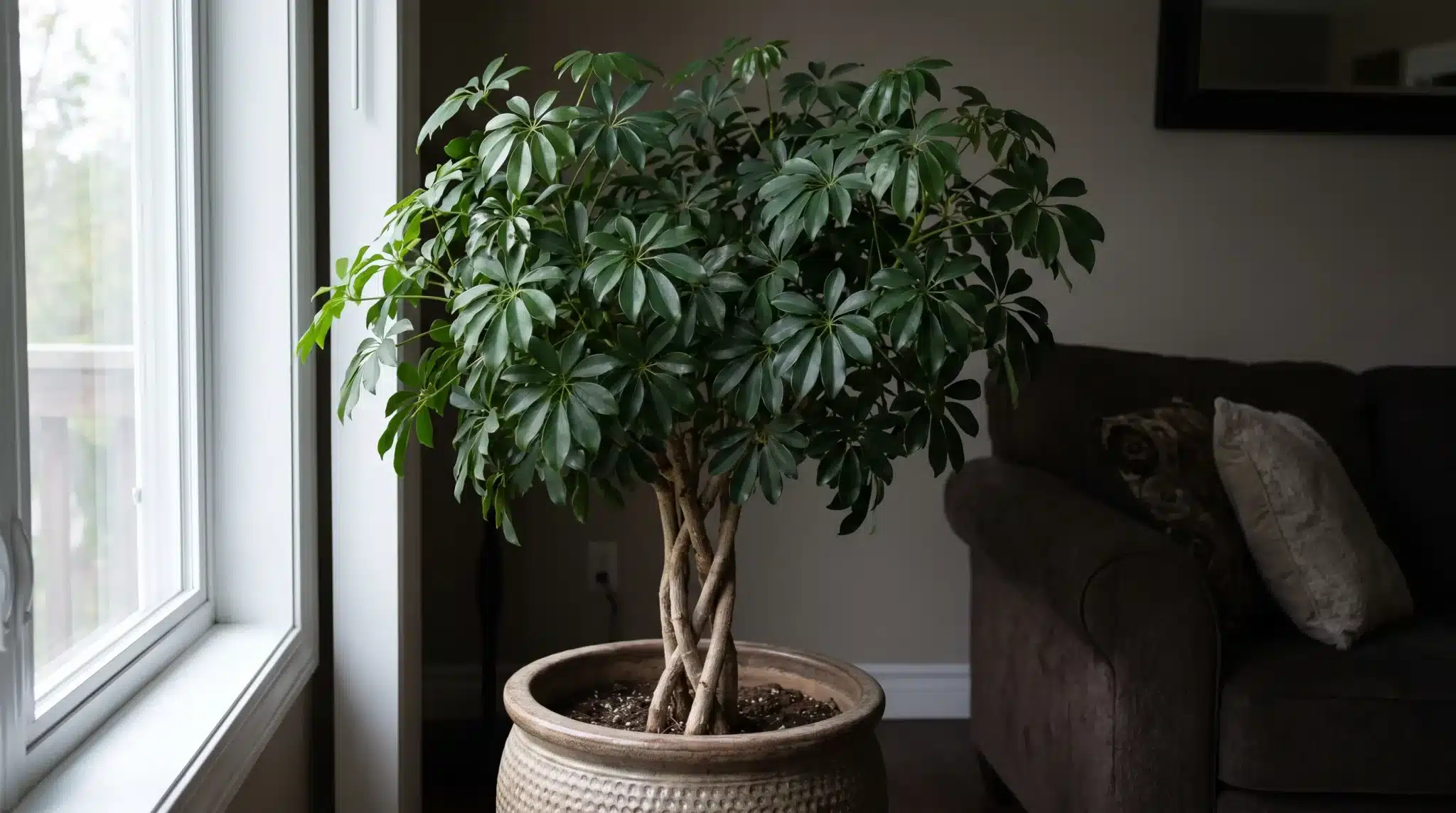
Schefflera develops clusters of leaflets arranged like the spokes of an umbrella. Its woody stems can be shaped into a compact bush or allowed to grow into a small indoor tree.
This adaptable plant handles occasional neglect, although pruning helps prevent thin or uneven growth. Pinching the growing tips encourages branching and creates a denser shape.
- Indoor height: Approximately 4–8 feet
- Light tolerance: Grows best with 3 to 8 hours of medium to bright light
- Watering needs: On a 7 to 10 day rhythm, once the top 2 inches dry out
18. Heartleaf Philodendron on a Totem
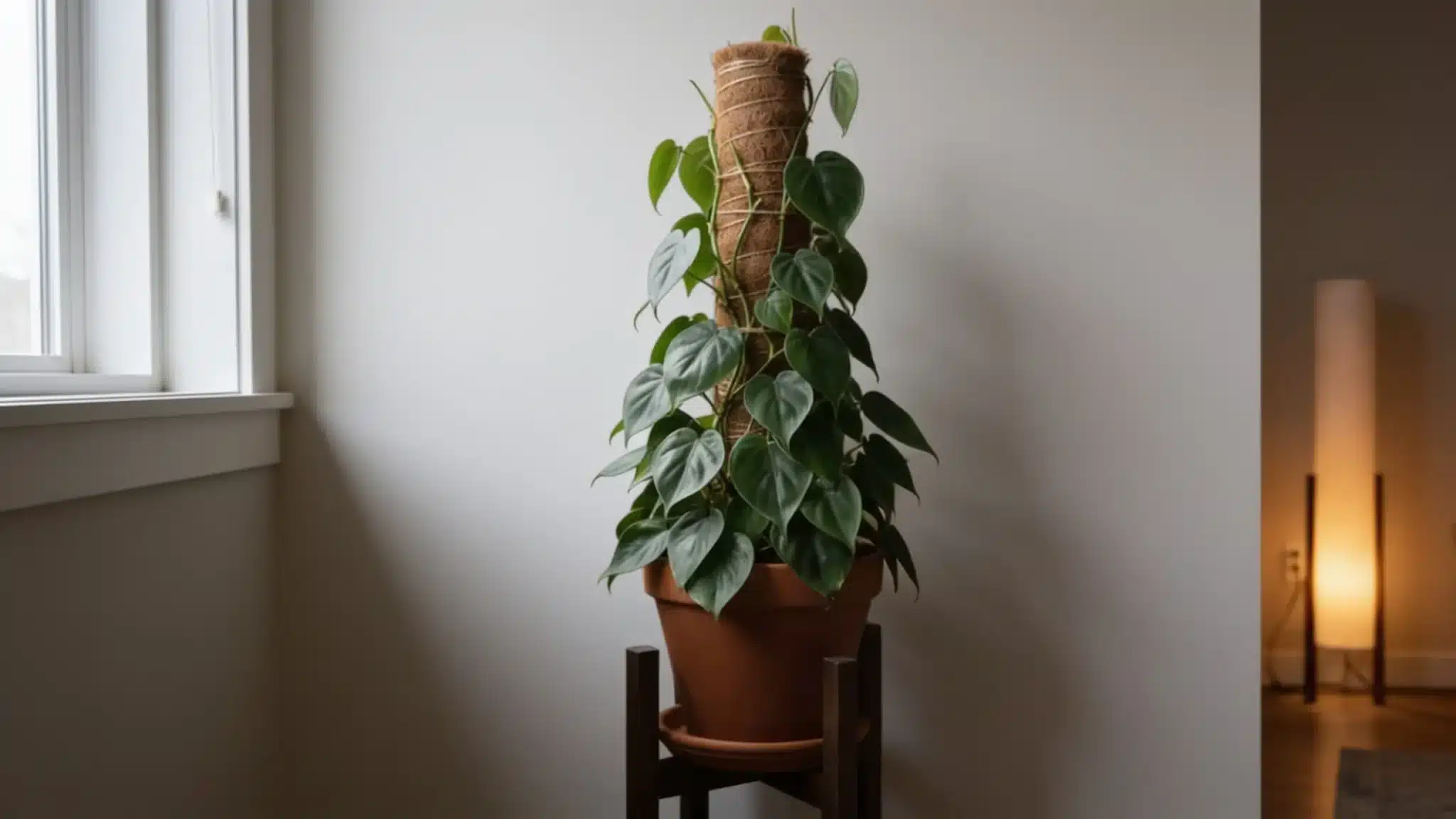
Heartleaf Philodendron produces flexible vines covered with smooth, heart-shaped leaves. Training those vines around a moss pole turns a familiar trailing plant into a tall green feature.
This beginner-friendly climber needs only occasional trimming and guidance to maintain its upright shape. Secure young stems loosely until their aerial roots begin attaching to the support.
- Indoor height: Approximately 4–7 feet when trained
- Light tolerance: Tolerates 1 to 8 hours of dim to bright indirect light
- Watering needs: Every 7 to 10 days, once the top inch or two feels dry
19. Pothos on a Totem
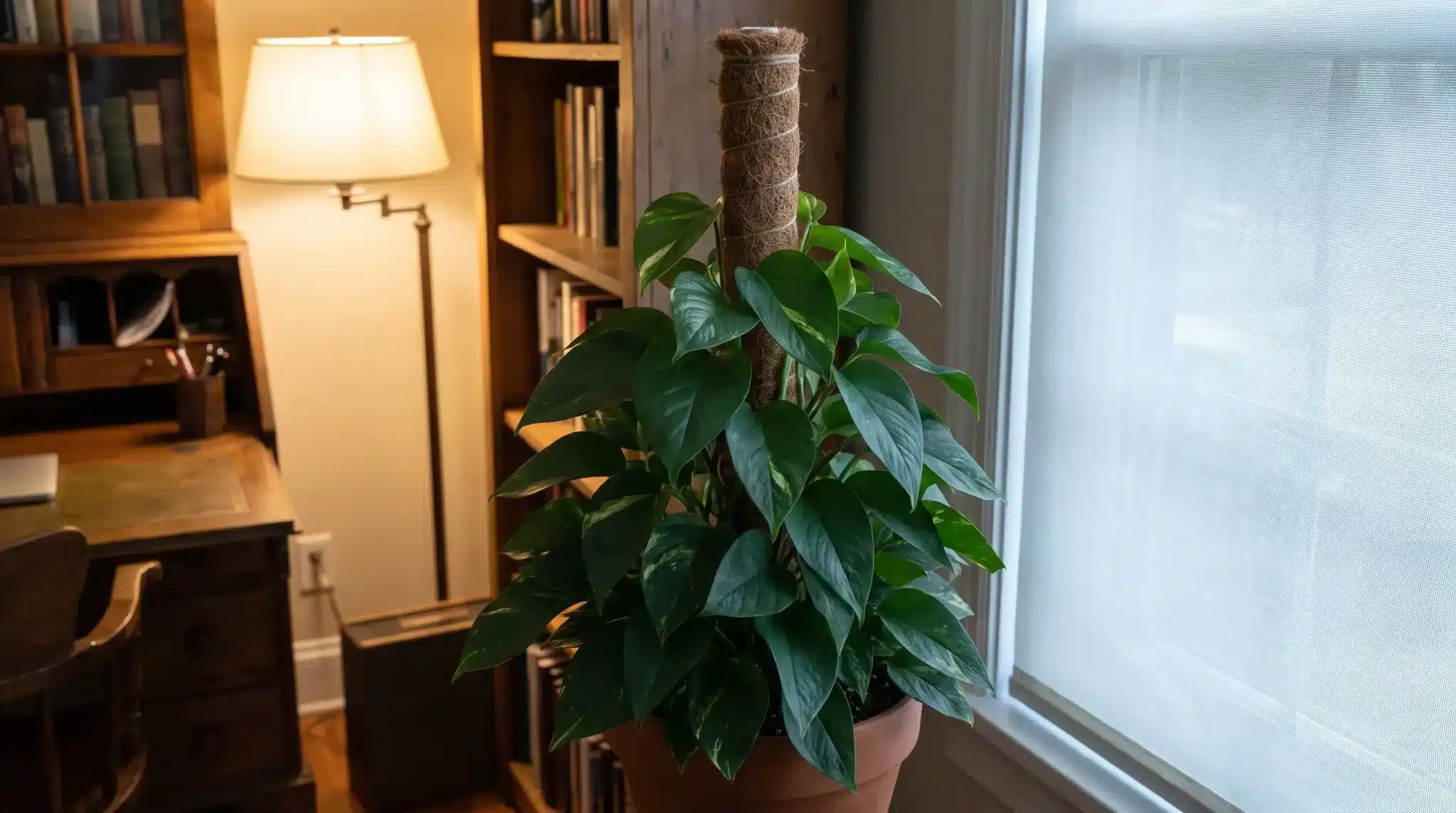
Pothos can be trained upward to form a dense column of overlapping leaves. Climbing also encourages larger foliage than allowing every vine to hang freely from the container.
This easy-care plant forgives missed waterings and responds well to occasional pruning. Fasten new growth loosely to the totem to maintain its upright, full appearance.
- Indoor height: Approximately 4–7 feet when supported
- Light tolerance: Handles 1 to 8 hours of low to bright indirect light
- Watering needs: Space it 7 to 10 days apart, once the top 1 to 2 inches dry out
20. Dumb Cane
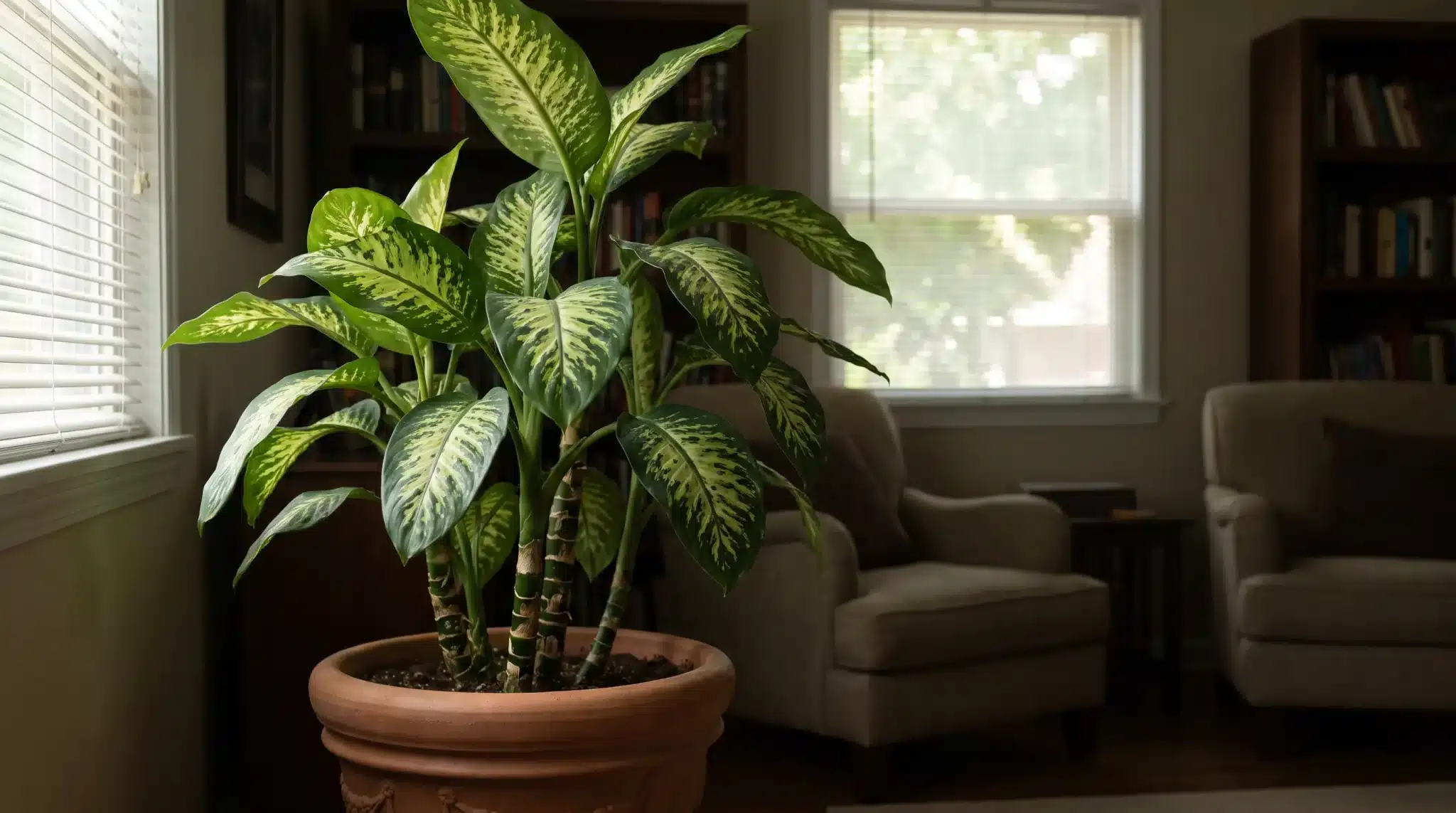
Dumb Cane produces broad leaves marked with attractive combinations of green, cream, or yellow. Its sturdy stems and substantial foliage give it the visual presence of a small tropical shrub.
I learned to handle mine with gloves after one accidental brush with its sap. It’s otherwise easy to care for; just water carefully and trim off damaged leaves now and then.
- Indoor height: Approximately 3–6 feet
- Light tolerance: Prefers 2 to 4 hours of filtered, indirect light
- Watering needs: Roughly every 7 to 10 days, once the top inch or two feels dry
21. Lady Palm
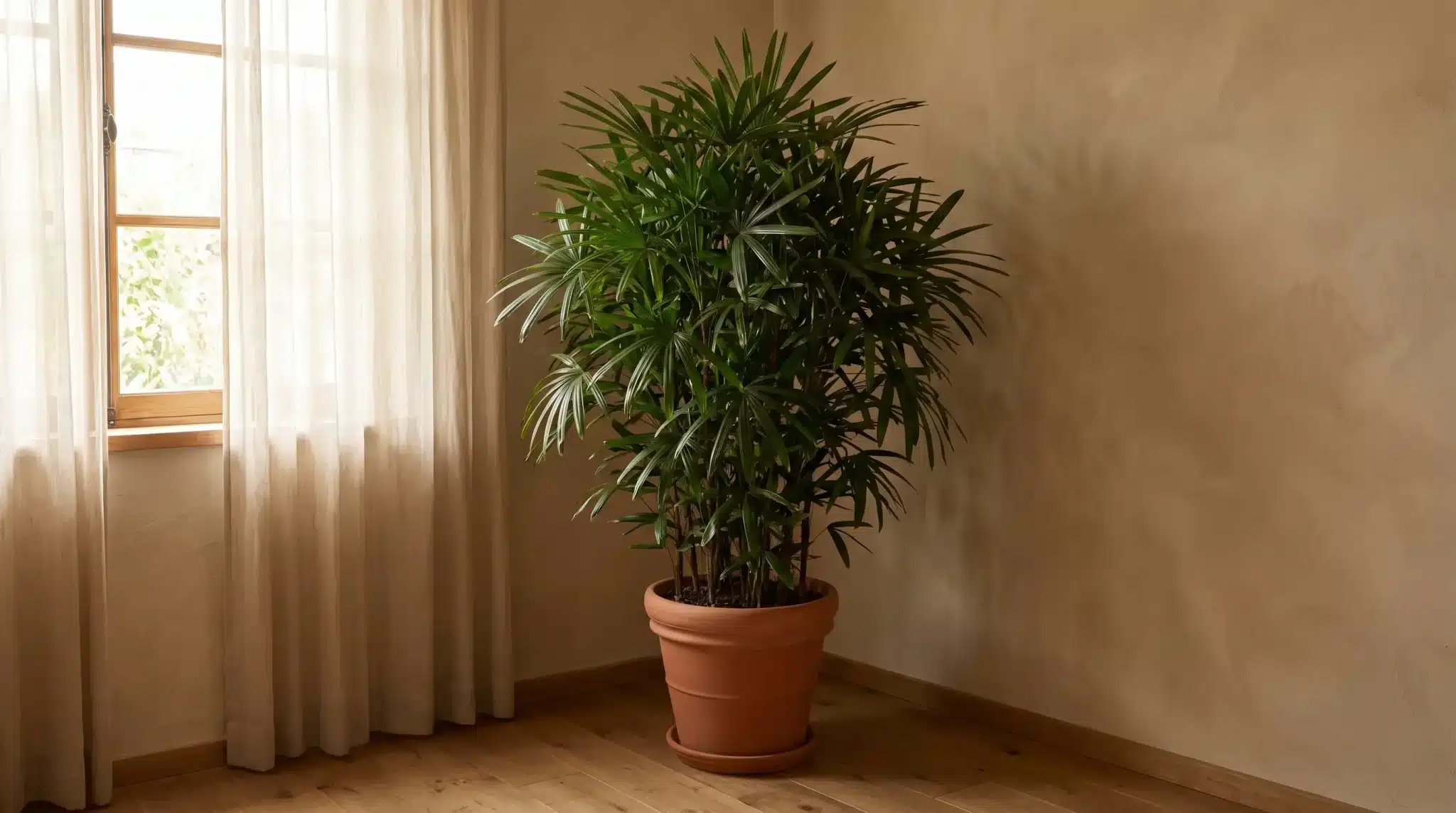
Lady Palm forms clusters of slender canes topped with distinctive fan-shaped leaves. Its dense, upright habit works well as a natural screen or a substantial corner plant.
It requires moderate care because consistent moisture and humidity help prevent brown leaf tips. The plant expands gradually from the base, creating a fuller clump as it matures.
- Indoor height: Approximately 4–6 feet
- Light tolerance: Needs 2 to 4 hours of shaded to moderate indirect light
- Watering needs: Every 5 to 7 days, once the top inch begins drying out
How to Keep Low-Light Plants Healthy?
Low-light plants grow slowly and take longer to recover from care mistakes. These essential habits will help them remain healthy in shaded rooms:
- Allow the appropriate amount of soil to dry before watering, since moisture evaporates slowly in low-light conditions and can otherwise cause root rot.
- Place every pot where it receives natural or artificial light, as no living plant can remain healthy in complete darkness indefinitely.
- Wipe dust from the leaves every few weeks so the plant can absorb as much of the limited available light as possible.
- Rotate the pot by a quarter turn each month to encourage balanced growth and prevent it from leaning toward the nearest light source.
- Apply diluted fertilizer sparingly during active growth because plants in dim rooms use nutrients slowly and can develop damaged roots from overfeeding.
With careful watering, sufficient ambient light, and occasional maintenance, your low-light plants can remain healthy and attractive for years.
Mistakes That Kill Low-Light Plants Fast
Most problems with low-light plants come from watering, drainage, or placement mistakes. Use this table to identify and correct them before permanent damage occurs.
|
Common mistake |
Why it harms the plant |
What to do instead |
|---|---|---|
|
Watering on a fixed schedule |
Soil dries slowly in dim rooms, so weekly watering can keep the roots constantly wet and cause rot. |
Check the soil first and water only when it has dried to the depth recommended for that plant. |
|
Using a pot without drainage holes |
Excess water collects around the roots, limiting oxygen and encouraging fungal growth and root decay. |
Choose a pot with drainage holes and empty any standing water from the saucer after watering. |
|
Placing the plant in total darkness |
Shade-tolerant plants still require ambient light for photosynthesis and will gradually weaken without it. |
Move the plant closer to a window or provide a suitable grow light in completely windowless spaces. |
Correcting these basic mistakes early gives low-light plants a much better chance of staying healthy, growing evenly, and maintaining attractive foliage for years.
Frequently Asked Questions (FAQs)
What is the Easiest Large Low-Light Indoor Plant to Keep Alive?
The snake plant is the easiest choice. It tolerates irregular watering, low light, and dry air better than almost any other tall houseplant, making it ideal for beginners or busy households.
Can a Large Plant Really Survive in a Room with No Windows?
Yes, but only a few can. Snake Plant, ZZ Plant, and Janet Craig Dracaena hold up in windowless rooms, though even they need occasional ambient light to stay healthy long-term.
Are Low-Maintenance Indoor Plants Safe for Homes with Pets?
It depends on the plant. Snake Plants, ZZ Plants, and Dumb Cane are toxic if chewed, so pet owners should choose Parlor Palms or check a pet-safety list before buying.
Final Words
That wraps up everything you need to know about large, low-light indoor plants. You now know which tall plants hold color without direct sun.
I’d start with snake plants or ZZ plants first. Watch the soil, not the calendar, before you water again. Dust the leaves so your plant can catch every bit of light.
Turn the pot now and then so growth stays even. Skip heavy feeding, since shaded plants use nutrients slowly. Small steps like these keep your plant full and healthy for years.
Your home doesn’t need bright windows to feel green and alive. Pick one plant and give it a spot today. Tell me which plant you picked in the comments below!