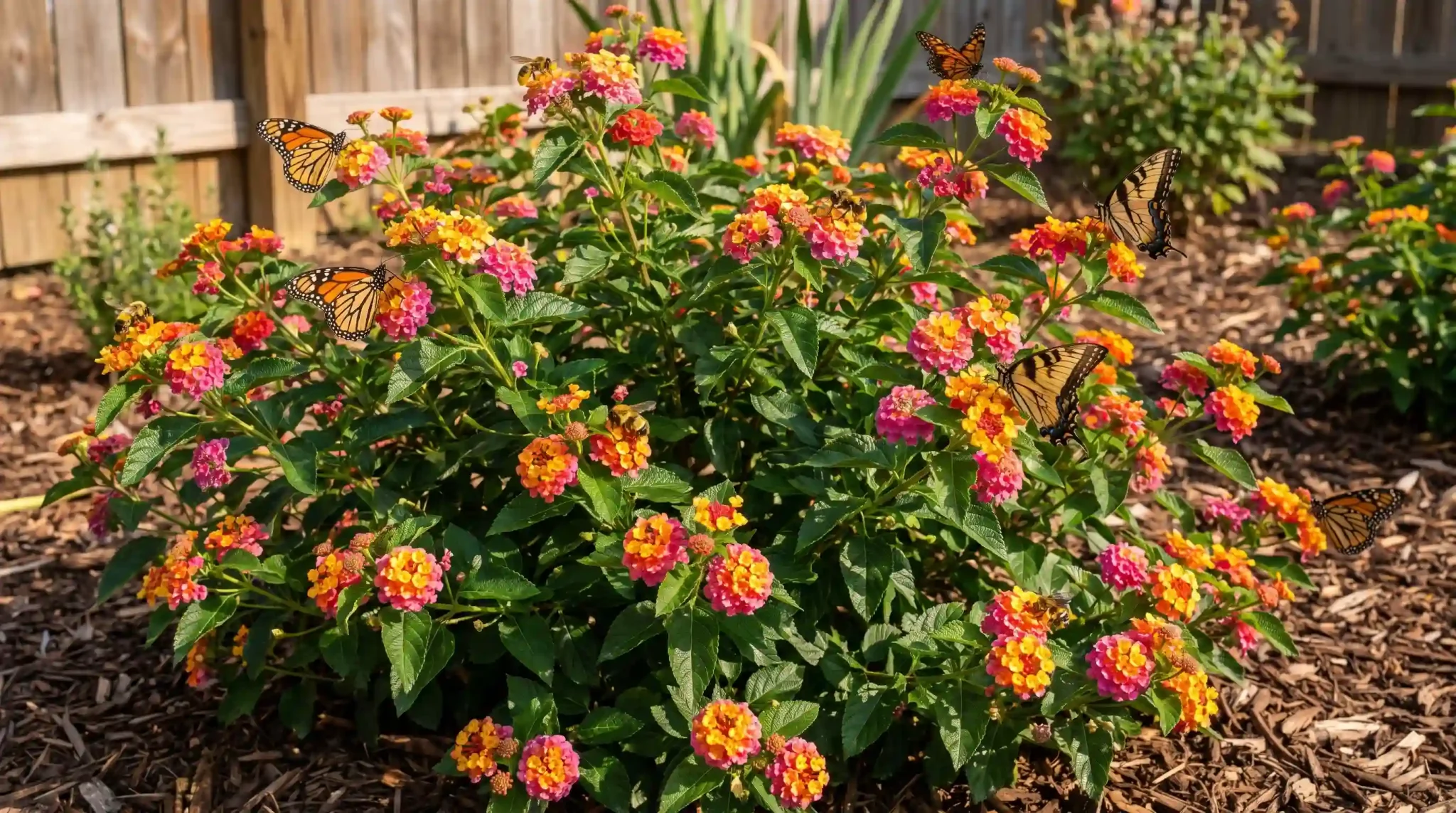
A garden full of color often starts with this one plant. That plant is lantana, and it blooms for months without much to-do.
Lantana plant care really comes down to a few simple habits. It also grows fast once it settles into a sunny spot. I have grown lantana myself and read through plenty of grower guides on it.
Based on that, a few habits matter more than the rest. Lantana grows well in flower beds, pots, and borders alike. It also handles heat and dry spells better than many other plants.
That toughness is exactly why so many gardeners rely on it. Stick around, and you will know exactly what to do next.
What Makes Lantana Different From Other Garden Flowers?
Lantana stands out because it blooms for months, not just a few weeks like many garden flowers. Its flowers grow in small, tight clusters that often shift color as they age.
Gardeners love this plant for its bold, steady color through the hottest part of summer. I’ve always been drawn to how it keeps thriving even when my other plants start wilting in the heat.
Unlike many flowering plants, lantana holds up well in heat and dry spells.
Some varieties spread low and wide, while others grow upright like a small shrub, pairing well with other butterfly-friendly flowering shrubs if you want more variety.
Knowing how lantana grows and blooms makes every later care decision easier to plan.
How to Grow Lantana in Pots?
Growing lantana in pots works well, but container plants need a bit more attention than garden beds. A few simple steps make all the difference. Here’s what to keep in mind:
- Step 1: Choose a container with drainage holes and enough space for the roots to spread.
- Step 2: Use a fast-draining potting mix, since garden soil packs down too tightly and holds water around the roots.
- Step 3: Check the water more often, since soil in pots dries out much faster than soil in the ground.
- Step 4: Place the pot in full sun, since lantana needs plenty of direct sunlight to keep producing strong blooms.
- Step 5: Feed more carefully, since container plants often need regular feeding, but only in small, controlled amounts.
These simple habits help your potted lantana grow strong all season. A little extra care in a container goes a long way toward better blooms.
Timing Tip: Plant lantana in pots after the last frost, once soil and air feel warm and steady. Early planting stresses young plants and slows growth.
How to Care for a Lantana Plant

Healthy lantana needs strong sunlight, fast-draining soil, careful watering, and limited fertilizer. Its care should also change as the plant becomes established and moves through different seasons.
1. Provide Plenty of Direct Sunlight
Place your lantana where it receives at least six hours of direct sunlight daily. Strong light supports compact growth, richer colors, and a steady supply of new flower clusters.
Avoid planting it under dense trees or beside walls that remain shaded for most of the day. Although lantana may survive partial shade, it often becomes leggy and flowers less freely.
2. Use Loose, Well-Draining Soil
Grow lantana in loose soil that lets excess water drain away from its roots. Neutral to slightly acidic soil generally provides suitable conditions for healthy growth.
Improve heavy clay with compost and other drainage-supporting amendments, or choose a raised location. For containers, use a quality potting mix blended with perlite, and choose pots with drainage holes.
3. Water According to Growth Stage
Water newly planted lantana regularly for its first two or three weeks. Keep the soil lightly moist during this period so developing roots can settle without drying out.
Once established, water garden-grown lantana deeply during dry periods, and pair it with mulch for a low-maintenance setup. Feel the soil first before watering again.
4. Check Potted Lantana More Frequently
Container-grown lantana dries faster than plants in garden beds, especially in hot or windy weather. Feel the top inch of soil every few days instead of relying on a fixed timetable.
Water thoroughly when this layer feels dry and allow the excess to leave through the drainage holes. Empty the saucer afterward so the root ball never remains submerged in collected water.
5. Apply Fertilizer Sparingly
Feed garden-grown lantana lightly when new growth begins in spring, especially when the soil is poor. Established plants growing in reasonably fertile ground may not require additional fertilizer.
Potted lantana gradually loses nutrients whenever water drains from the container. Apply a diluted, balanced water-soluble fertilizer approximately once monthly, following the product label to avoid feeding the plant excessively.
6. Prune for Healthy, Compact Growth
Remove dead or damaged stems when fresh spring growth begins. You may shorten long, sparse branches by up to one-third to encourage branching and create a fuller plant.
Trim wandering shoots lightly during summer if they make the plant look untidy. Avoid severe late-season pruning because the resulting tender growth can be damaged by falling temperatures.
7. Deadhead to Encourage More Flowers
Remove faded flower clusters before they turn into green or dark berries. Preventing seed development allows lantana to direct more of its available energy toward producing additional blooms.
Check your plant weekly and cut each finished cluster just above a healthy pair of leaves. This small habit is especially valuable for varieties that hold their old flowers instead of dropping them naturally.
Best Lantana Varieties for Non-Stop Summer Color
Choosing the right variety does as much for continuous bloom as any care step. Here’s a general starting list to consider:
|
Variety |
Growth Habit |
Flower Color |
Good For |
|---|---|---|---|
|
New Gold |
Low, mounding groundcover |
Golden yellow |
Sunny borders and slopes |
|
Miss Huff |
Upright shrub |
Orange and yellow |
Colder regions, since it is one of the more cold-tolerant cultivars |
|
Radiation |
Upright shrub |
Orange-red |
High heat and maximum color impact |
|
Samantha |
Upright shrub, variegated leaves |
Yellow |
Foliage interest along with flowers |
|
Lavender Swirl (trailing lantana) |
Trailing groundcover |
Lavender-purple |
Hanging baskets and retaining walls |
I always confirm hardiness and availability with my local nursery before buying. I’ve noticed cultivars get relabeled by the grower, so I check the plant tag myself to confirm mature size and habit.
How Lantana Care Changes by Season?

I’ve learned that lantana needs different care as the seasons change. It keeps growing year after year where I live, but it may die back in colder places:
- Spring: Increase watering as new growth begins, add light feeding if needed, and remove any winter damage.
- Summer: Watch watering closely during heat, avoid overfeeding, and stick to light shaping with regular pest checks.
- Fall: Cut back on watering as growth slows, usually reduce feeding, and clean up any weak growth.
- Winter: Keep watering minimal for dormant outdoor plants, skip feeding altogether, and protect or overwinter the plant depending on your climate.
Following this simple rhythm keeps your lantana healthy no matter where you live. A little attention each season goes a long way toward strong blooms next year.
Common Lantana Problems and What They Signal
I’ve found that lantana’s look usually signals root stress, poor conditions, season change, or pests. I always try to read the full pattern before I act.
|
Problem |
Signal |
Fix |
|---|---|---|
|
Yellowing leaves |
Overwatering or poor drainage |
Let topsoil dry; check drainage |
|
Wilting or drooping |
Dry soil, heat, or root damage |
Check moisture and roots |
|
Few or no flowers |
Low light or too much nitrogen |
Add sun; ease off fertilizer |
|
Sticky leaves |
Aphids or whiteflies |
Check undersides; use insecticidal soap |
|
Speckled, webbed leaves |
Spider mites |
Rinse leaves; apply labeled treatment |
|
Brown growth after cold |
Frost damage or dormancy |
Wait for spring growth to prune |
|
Soft stems, rotten roots |
Overwatering, root rot |
Trim roots, fix drainage, replant |
Fix the cause, not just the symptom. Give your lantana time to recover after the right correction.
When Should You Repot Lantana?
Lantana eventually outgrows its container and starts showing clear signs. Here are the signals I watch for:
- Roots circling tightly: This means the roots have run out of room and need more space to grow.
- Water draining too fast: This often means there’s more root than soil left to hold moisture.
- Drying out faster: The plant may need water more often because the roots have filled the pot.
- Growth slowing down: Even with good care, a crowded pot can hold the plant back.
- Roots through drainage holes: This is a clear sign it’s time to size up.
When you repot, choose a container just slightly larger than the current one. Sizing up too much can hold extra moisture and stress the roots.
Frequently Asked Questions (FAQs)
Can Lantana Survive Winter Outdoors?
Lantana can remain outdoors throughout winter in warm regions. Freezing temperatures may kill its upper growth elsewhere, although protected roots of hardy varieties may produce fresh shoots during spring.
How Big Does a Lantana Plant Get?
Mature size varies considerably by variety. Compact groundcovers may stay below two feet, while vigorous shrub forms can grow several feet tall and spread equally wide under favorable conditions.
Are Lantana Plants Toxic to Pets?
Lantana leaves and unripe berries can harm pets when eaten. Keep plants out of reach, and contact your veterinarian promptly if a dog or cat eats any part of the plant.
Final Thoughts
Lantana plant care mostly involves a few basic habits repeated over time. Small, steady habits matter far more than any single trick.
Stay consistent, watch how your plant responds, and adjust as needed. I have tested most of these habits on my own lantana plants.
This flower rewards attention with color that lasts through the season. Stick with simple routines and your lantana will keep thriving.
Caring for lantana becomes second nature after a bit of practice. Drop a comment below and let me know how your lantana is coming along!