If your kitchen could talk, it would probably start with the cabinets.
That one decision, inset or overlay, quietly shapes everything from how your space feels on a slow Sunday morning to how smoothly your daily routine runs.
It touches your budget, your storage, and that overall vibe you’ve been saving to your mood board for months. So before you commit to a finish or a hardware pull, it’s worth understanding what sits beneath it all.
Let’s walk through both styles together, the good, the trade-offs, and how to find your fit.
What are Inset Cabinets?
Inset cabinets are exactly what they sound like; the doors sit tucked inside the cabinet frame, perfectly flush with the face.
No overlap, no gap, just a clean, precise line all the way across. That level of alignment takes real craftsmanship to pull off, which is part of what makes them feel so considered and intentional.
You’ll notice the frame stays visible around each door, giving the whole kitchen a tailored, furniture-like quality.
They’re a natural fit for traditional, farmhouse, and classic kitchen styles, anywhere that quiet attention to detail is the whole point.
What are Overlay Cabinets?
Overlay cabinets take a different approach; the doors sit on top of the frame rather than inside it, either covering it partially or almost entirely.
Partial overlay leaves a bit of the frame peeking through between doors, while full overlay brings the doors close together with minimal gaps for a sleeker, more seamless finish.
The result is a look that feels clean and unfussy, which is exactly why overlay cabinets tend to feel so at home in modern and contemporary kitchens.
Less visible frame, more door, and a streamlined quality that just works.
Inset vs. Overlay Cabinets: Side-by-Side Comparison
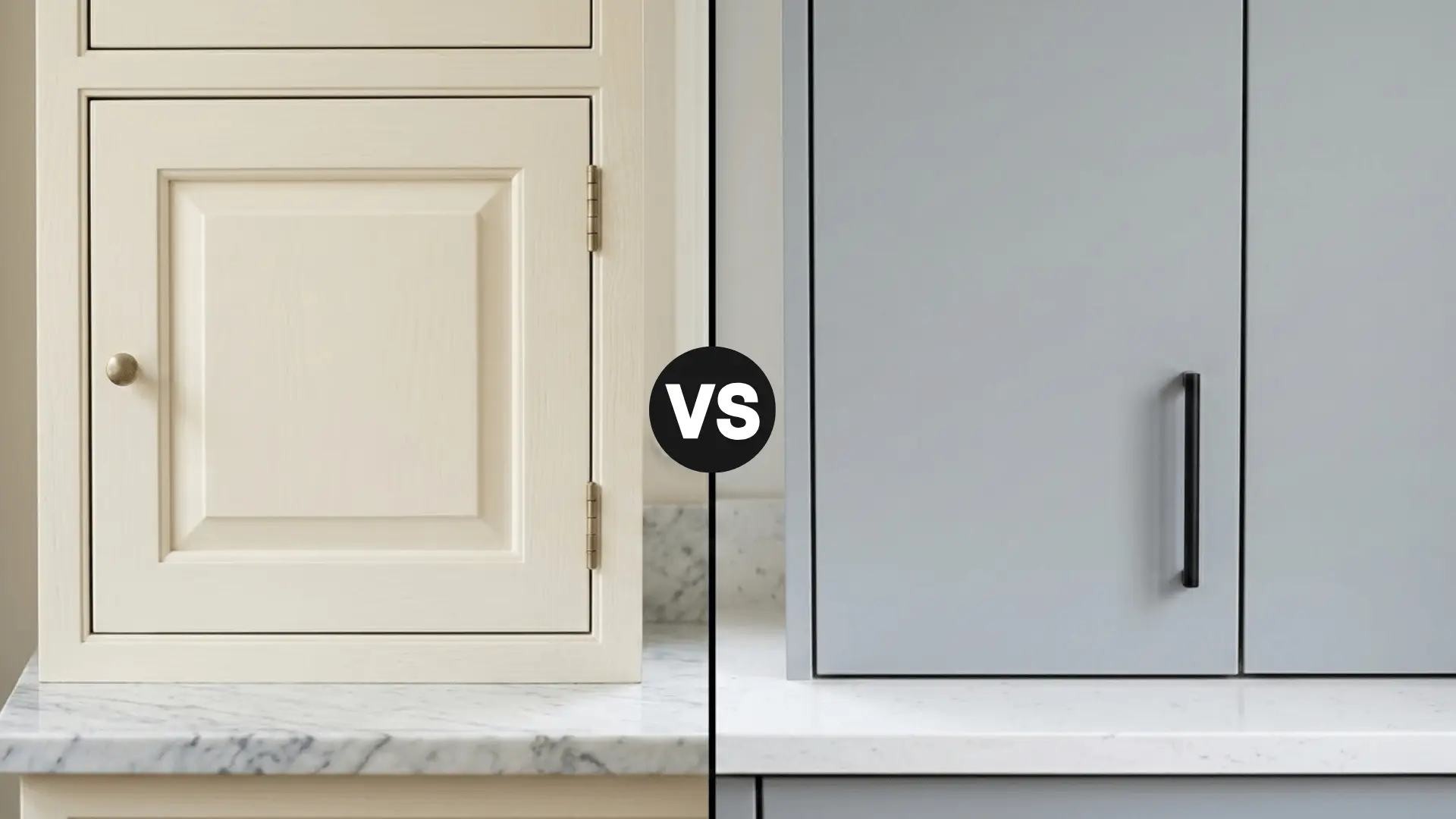
Choosing between the two often comes down to more than just looks. Here’s how inset and overlay cabinets actually stack up across the details that matter most.
1. Door Position
Inset doors are fitted within the cabinet frame, sitting completely flush with the face frame. This means the door and frame share the same plane, no projection, no overlap.
Overlay doors mount on top of the frame entirely. Partial overlay covers the frame by about half an inch on each side, while full overlay brings the doors close enough that barely any frame shows at all.
2. Appearance
Inset cabinets have that slow, deliberate quality, think exposed hinges, visible framing, and a look that feels closer to built-in furniture than cabinetry.
Overlay cabinets, especially full overlay, create an almost uninterrupted surface across the whole run, which is why they photograph so well in minimalist and Shaker-style kitchens alike.
3. Cost
Inset cabinets can run anywhere from thirty to sixty percent more than overlay, and that gap comes from the tolerances involved.
The doors have to be cut and hung with near-perfect precision because wood expands and contracts with humidity, and any shift shows immediately. Overlay is more forgiving to build and install, which keeps costs considerably lower.
4. Storage Space
The face frame on an inset cabinet physically reduces the cabinet opening, typically by an inch to an inch and a half on each side. Over a full kitchen’s worth of cabinets, that adds up.
Overlay doors don’t sit inside the opening at all, so the full interior depth and width stay accessible.
5. Installation
Inset installation is unforgiving. Walls need to be plumb, floors level, and every cabinet perfectly aligned before a single door goes on. Any settling or shifting in the structure telegraphs straight through to the fit.
Overlay installation has a natural margin for adjustment built in, making it significantly more practical for older homes or spaces where the bones aren’t perfectly square.
Inset vs. Overlay Cabinets: Quick Comparison
| Feature | Inset Cabinets | Overlay Cabinets |
|---|---|---|
| Door Position | Inside frame | On top of the frame |
| Appearance | Classic, tailored | Modern, seamless |
| Cost | Higher | More affordable |
| Storage Space | Slightly less | More usable space |
| Installation | Complex | Easier |
Pros and Cons of Inset Cabinets
Inset cabinets have a lot going for them, but they come with real considerations too. Here’s an honest look at both sides before you decide.
Where Inset Cabinets Win
- The flush, fitted look reads as custom and high-end without needing much else in the room to back it up.
- Timeless by nature, they don’t date the way trend-driven styles do.
- The construction is solid and built to last, hinges, frames, and all.
- They work beautifully as a design anchor in traditional, farmhouse, and transitional kitchens.
Where Inset Cabinets Fall Short
- They sit at a noticeably higher price point than overlay, both for the product and the installation.
- The face frame eats into usable cabinet space, which adds up across a full kitchen.
- Wood naturally expands and contracts with humidity, and on inset cabinets, that shift is immediately visible.
- Installation demands a level of precision that not every contractor is equipped to deliver well.
Pros and Cons of Overlay Cabinets
Overlay cabinets are the practical choice that still cleans up really well aesthetically. Here’s where they deliver and where they leave a little to be desired.
Where Overlay Cabinets Win
- They come in at a friendlier price point, making them accessible across a wider range of budgets and project scopes.
- The full cabinet interior stays usable since the doors don’t sit inside the opening at all.
- They’re easier to install and adjust, which matters especially in older homes where walls and floors aren’t perfectly square.
- They translate well across modern, transitional, and even contemporary Shaker-style kitchens.
Where Overlay Cabinets Fall Short
- Without the fitted, frame-hugging quality of inset, they can read as slightly less custom or considered up close.
- Depending on the hinge style, hardware can be visible between doors, which disrupts an otherwise clean surface.
- They don’t carry the same traditional, furniture-like weight that inset cabinets do, so in a very classic or heritage-style kitchen, they can feel a little out of place.
Cost Comparison: Inset vs. Overlay Cabinets
Cabinet style is one of those decisions that shows up twice, once in how your kitchen looks and once in what you pay for it.
Here’s how the two compare when it comes to actual spend.
| Cost Factor | Inset Cabinets | Overlay Cabinets |
|---|---|---|
| Base Price Range | Higher | Budget to mid-range |
| Price Difference | 15–30% more | More affordable |
| Labor Cost | High, precision-driven | Lower, more straightforward |
| Installation Complexity | Demands expert fitting | Flexible, easier to adjust |
| Long-term Value | High, timeless appeal | Good, style-dependent |
Inset cabinets run 15 to 30% more than overlay, and most of that cost comes down to precision. Every door has to be cut and hung within extremely tight tolerances, and the labor to get that right isn’t cheap.
Overlay cabinets are more forgiving to build and install, which keeps costs noticeably lower across the board.
Which Cabinet Style is More Popular?
Overlay cabinets are comfortably the more common choice right now, and it’s easy to see why.
They fit naturally into the clean, minimal aesthetic that dominates modern kitchen design, cost less, and give you more usable storage without compromise.
Inset cabinets haven’t gone anywhere, though. They hold steady in luxury builds and custom homes where craftsmanship and a tailored, furniture-like finish are the whole point.
So while overlay leads on volume, inset leads on intention. The choice usually says as much about priorities as it does about taste.
Which Cabinets Offer More Storage Space?
If storage is your priority, overlay cabinets have a straightforward advantage.
Because the doors sit on top of the frame rather than inside it, the full cabinet opening stays accessible, and nothing is lost to the frame itself.
Inset cabinets, by contrast, give up a small portion of that opening on every single cabinet, and across an entire kitchen, that adds up to a noticeable difference.
For smaller kitchens, especially, where every inch of storage counts, overlay is simply the more practical call.
Inset vs. Overlay Cabinets for Different Kitchen Styles
Neither style is universally better; it really comes down to the kitchen you’re building around them. Here’s how each one fits into the most common design directions.
1. Modern Kitchens
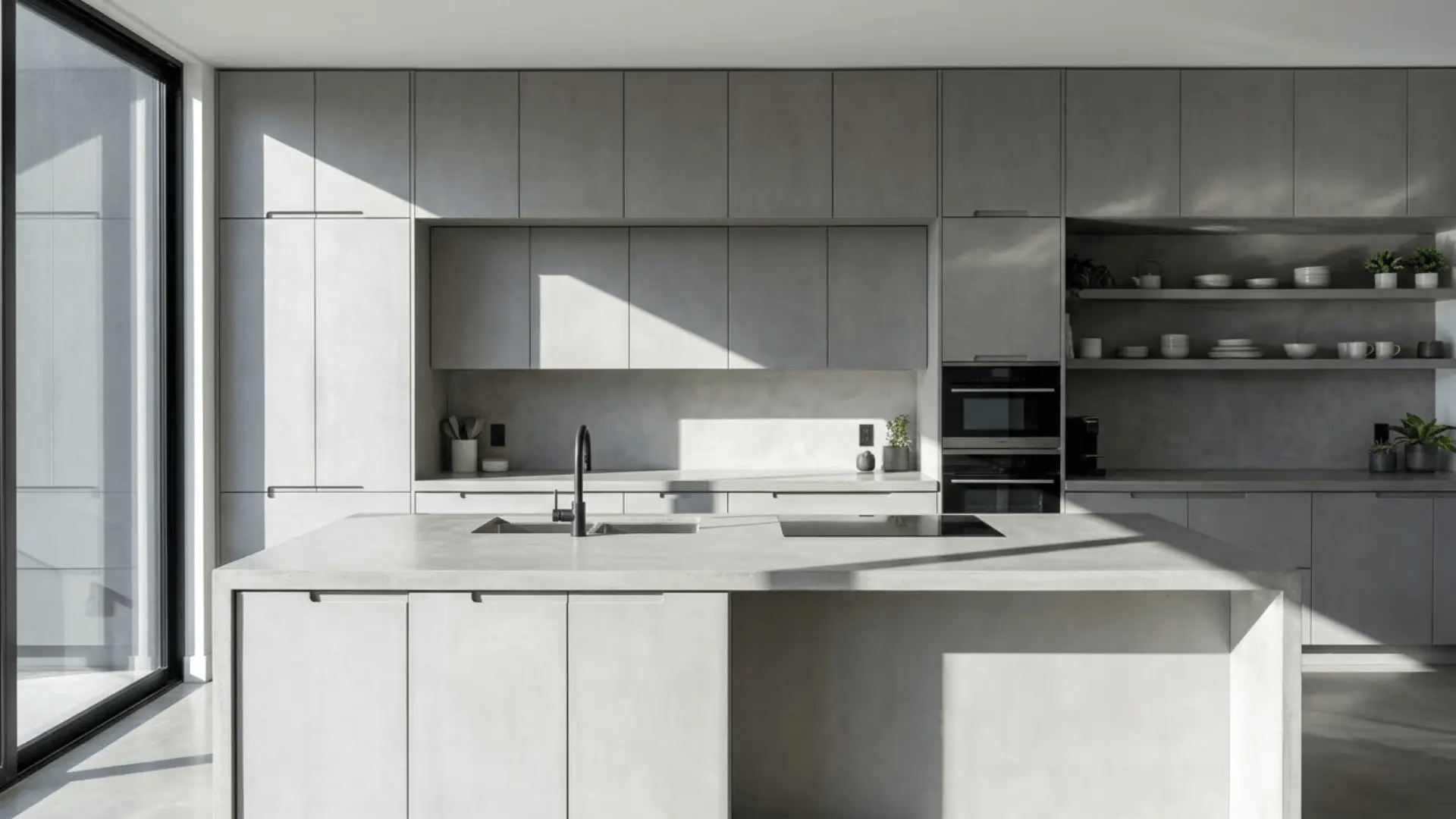
Full overlay is the natural match here. The doors sit close together with minimal framing visible, which plays right into the clean, uninterrupted surfaces that modern kitchens are built on.
Pair it with flat-front doors, integrated hardware, and a neutral palette, and the whole thing just clicks.
2. Traditional Kitchens
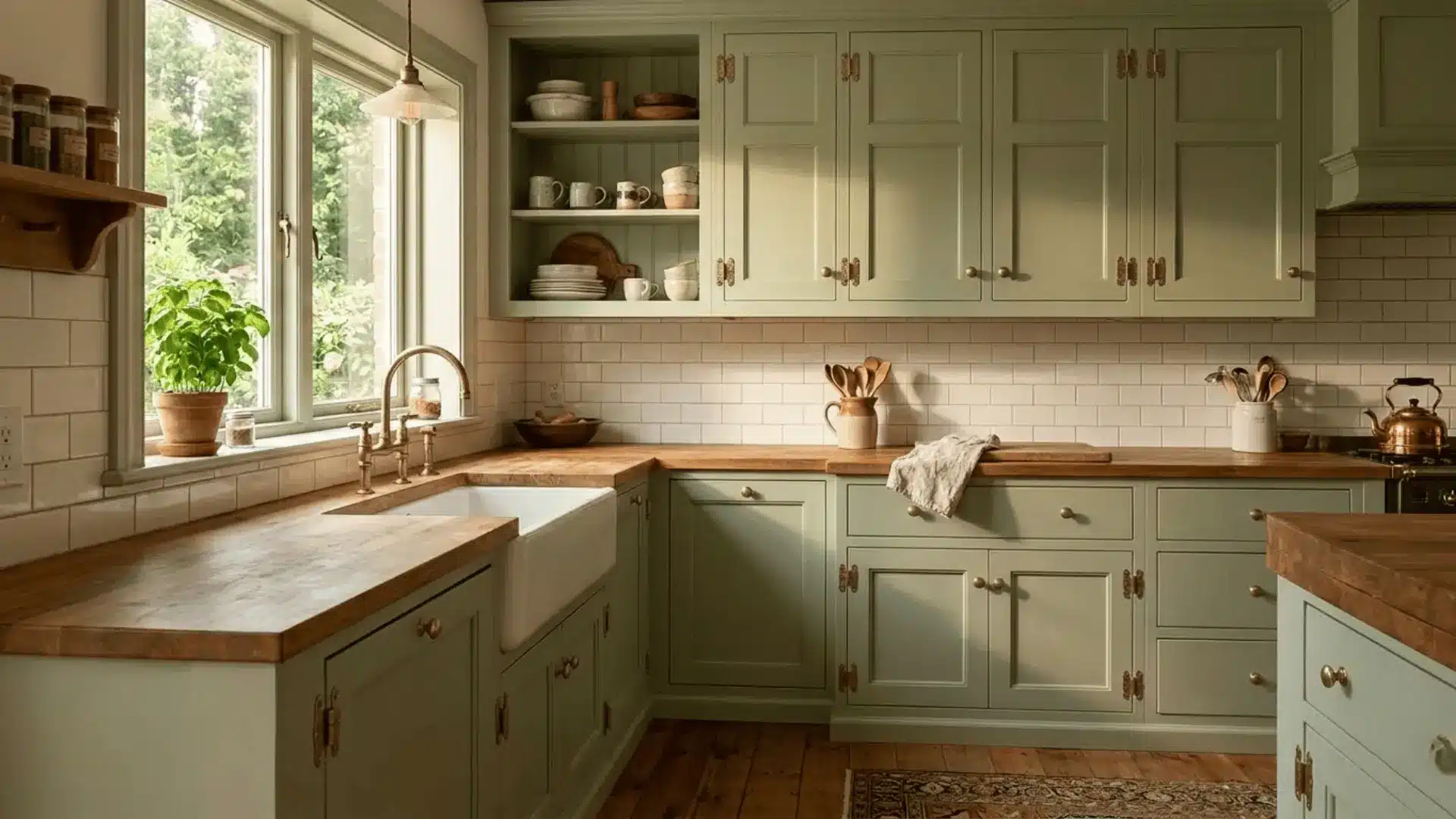
Inset cabinets feel at home in traditional spaces in a way overlay simply doesn’t replicate.
The visible frame, the flush fit, the exposed hinges, it all adds up to that slow, considered, furniture-like quality that traditional kitchens are known for. If your kitchen leans classic, an inset is worth every penny.
3. Transitional Kitchens
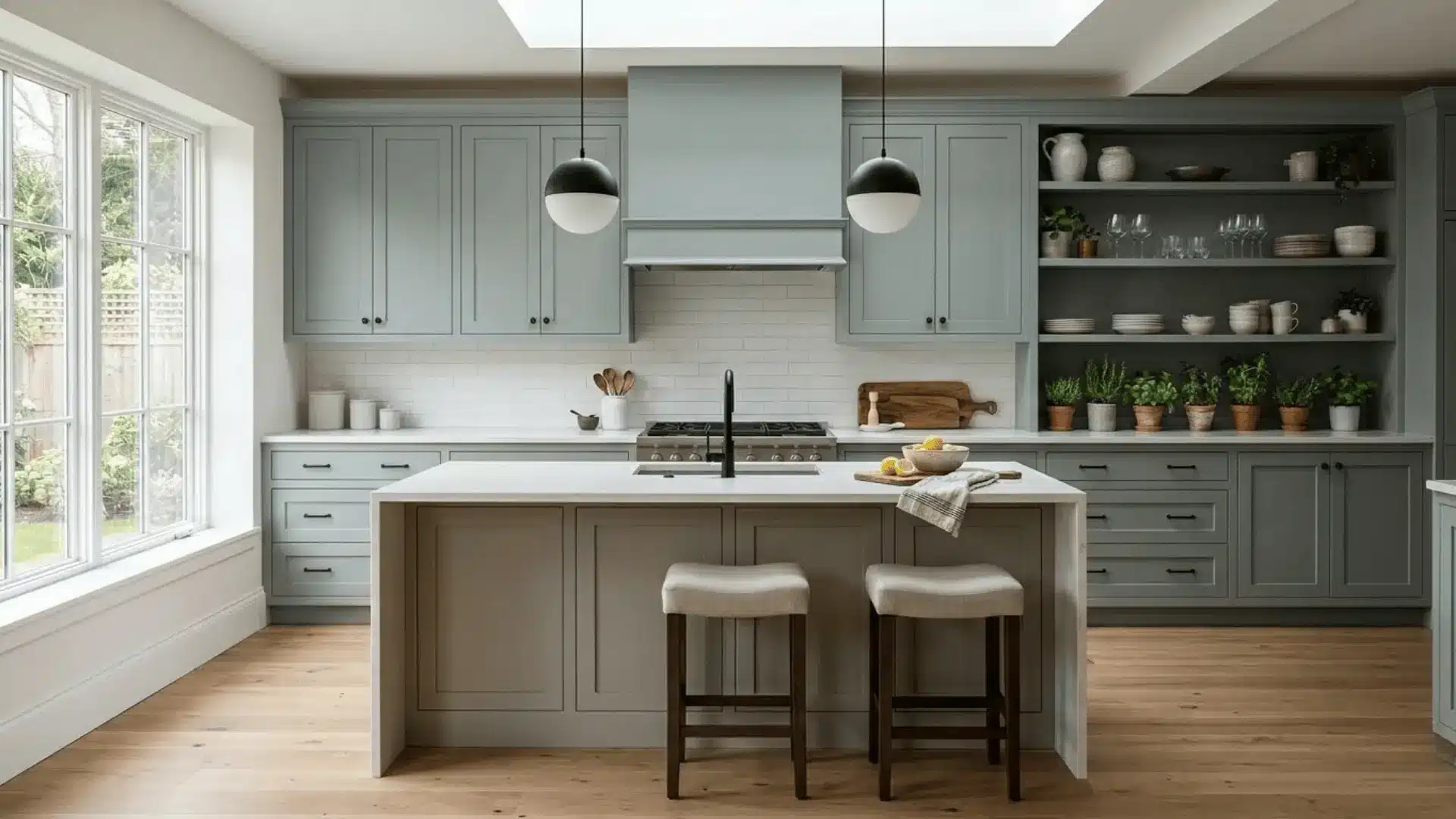
Transitional kitchens sit comfortably between the two worlds, which means either style can work depending on how you finish it. Full overlay with warm wood tones reads more traditional.
Inset with a simple Shaker door and matte hardware can feel surprisingly contemporary. The finishes do a lot of the heavy lifting here.
Can You Mix Inset and Overlay Cabinets?
You can, and in the right hands, it actually works really well. Some custom kitchens use inset cabinets on the perimeter for that tailored, high-end feel while keeping overlay on the island, where practicality matters more.
The key is holding everything else consistent, same finish, same hardware, same color palette throughout.
When the visual language stays unified, the mix reads as intentional rather than mismatched.
It’s not the most common approach, but for a kitchen that wants character without going all in on one style, it’s a genuinely interesting direction worth considering.
The Bottom Line
At the end of it all, the inset vs overlay cabinets debate isn’t really about which one is better.
It’s about which one is better for your kitchen, your lifestyle, your budget, and the feeling you want to walk into every morning.
Both styles bring something real to the table, just in different ways. Take what you’ve learned here, hold it against your space, and trust what feels right.
Still weighing your options? Drop your questions in the comments, happy to help you think it through.