
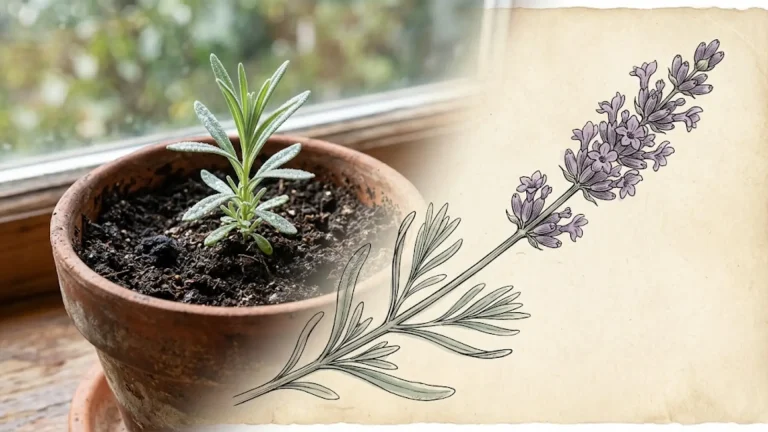
If you have ever wanted to grow lavender from seed but felt intimidated by the process, you’re in good company, and honestly, it’s simpler than most gardening blogs make it sound.
Lavender doesn’t sprout the way your average flower does.
It wants a cool little rest before it wakes up, which is part of what makes growing it from scratch so satisfying.
I’ve grown my fair share of lavender from seed, and below, I’m walking through exactly how to plant lavender seeds, from picking a good variety to giving your seedlings the soil and light they need to actually thrive.
Growing Lavender from Seed, Worth It or Not?
Yes, though it takes more patience than starting nursery plants or cuttings.
In my experience, seeds cost far less and open up varieties you’ll rarely find at a garden center, which matters if you’re planting in bulk.
Cuttings root faster, and nursery plants bloom sooner, but neither gives you that same satisfaction of watching something start from nothing.
Seeds simply take longer, often a full year before flowers show up, so if you’re after quick color, cuttings win.
If you want variety and value, seeds are worth the wait.
Supplies You’ll Need Before Planting Lavender Seeds
Getting your setup right from the start makes the whole process smoother, and most of these items are things you probably already have on hand.
- Seed-starting mix, light and well-draining, never garden soil
- Seed trays or small pots with drainage holes
- Humidity dome to lock in moisture during germination
- Spray bottle for gentle, even watering
- Grow lights if natural sunlight is limited
- Heat mat (optional) to speed up germination
- Labels so you don’t lose track of varieties
- Vermiculite (optional) for extra moisture retention and light coverage
Step-by-Step: How to Plant Lavender Seeds?
Getting lavender seeds to germinate reliably comes down to a handful of details most guides skip over.
Here’s the process I’ve refined after several growing seasons of trial and error.
Step 1: Cold Stratify the Seeds, if Needed
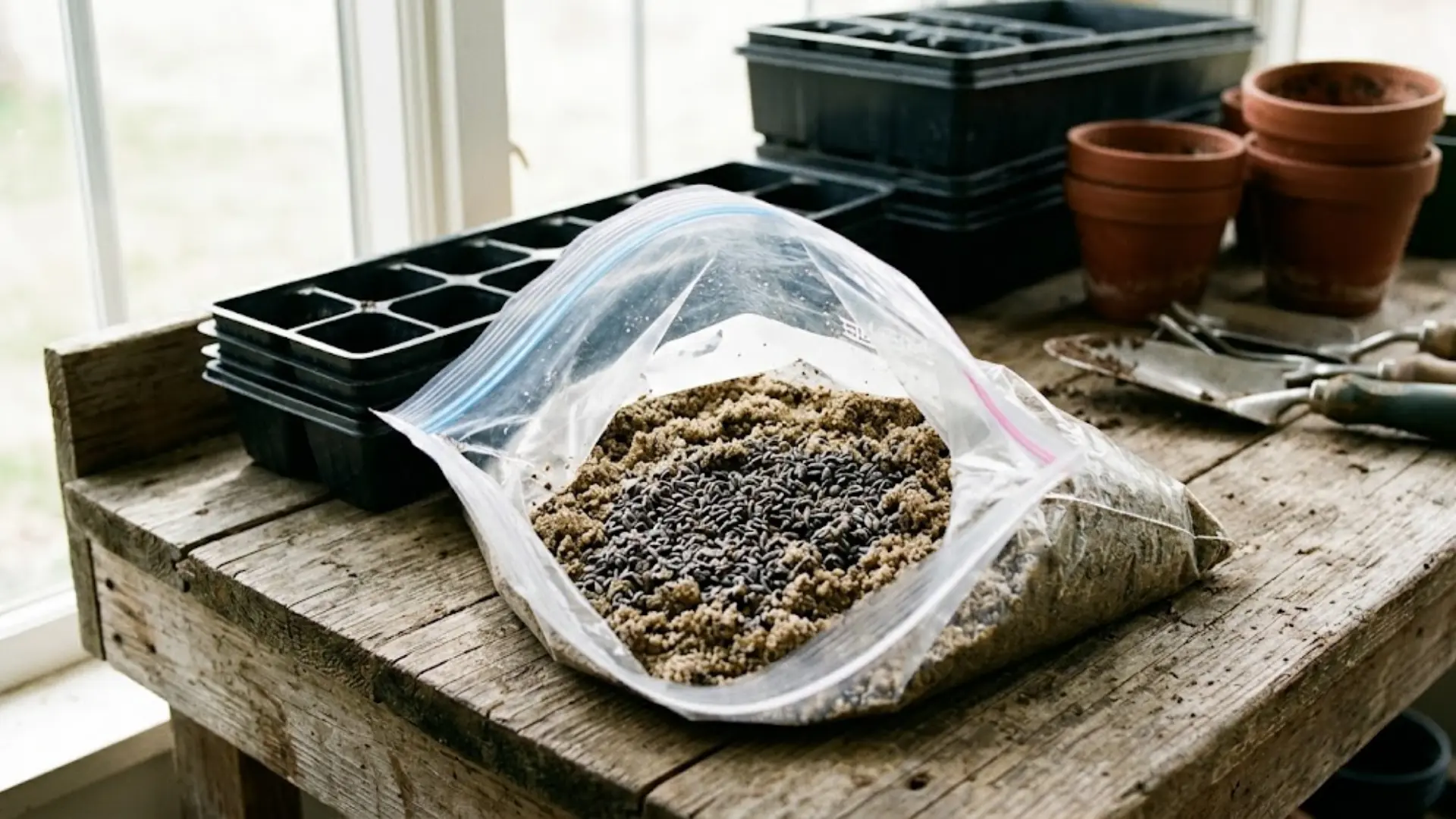
Cold stratification tricks seeds into thinking they’ve survived winter, which triggers germination once warmth returns. English lavender and most varieties of angustifolia respond best to this step, while some hybrids skip it entirely.
Mix seeds with damp sand or a moist paper towel, seal them in a labeled bag, and refrigerate for 3 to 4 weeks before sowing.
Skipping this step with cold-hardy varieties often results in spotty, unreliable germination.
Step 2: Prepare a Light, Well-Draining Seed-Starting Mix
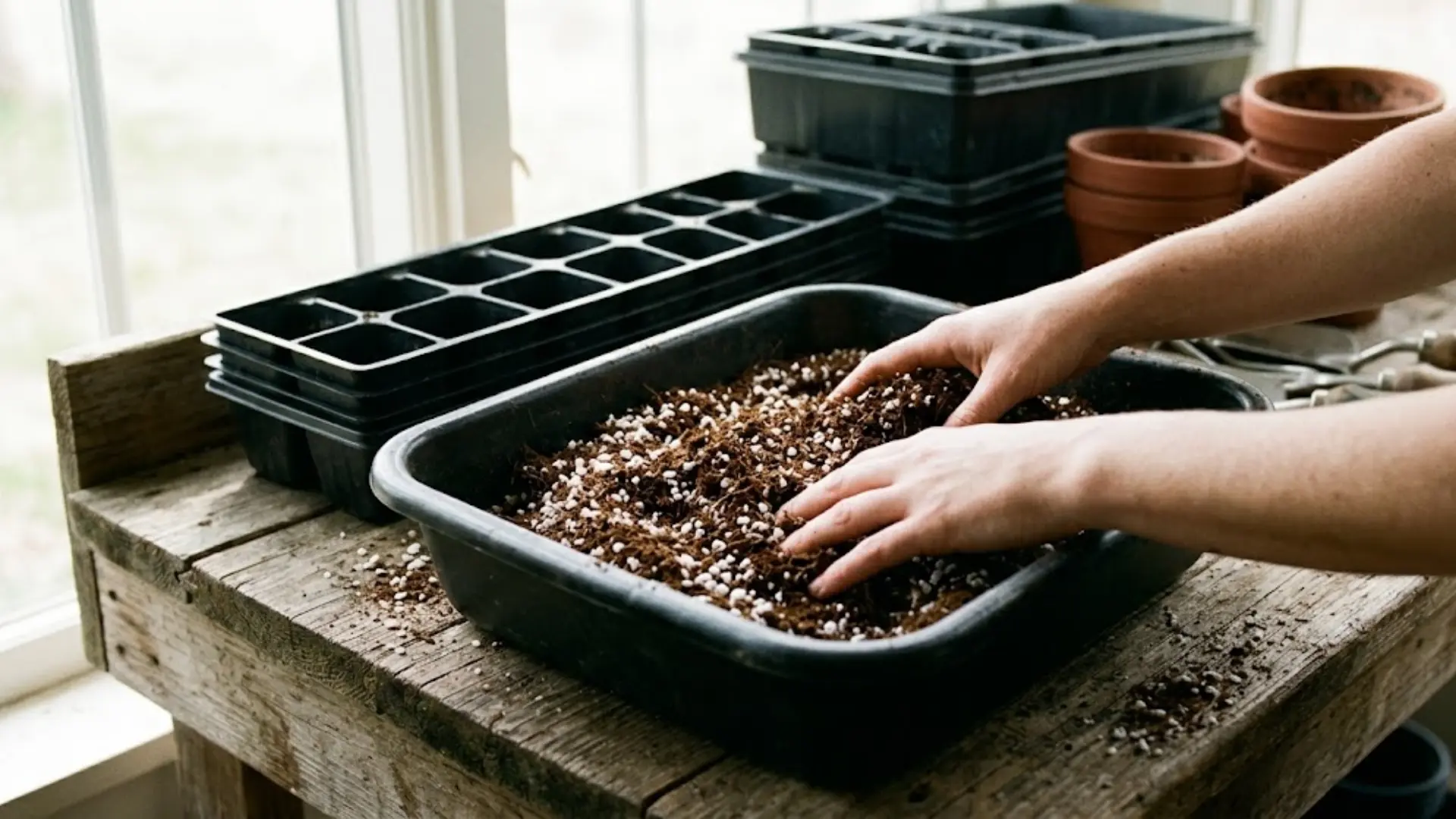
Lavender seeds rot quickly in dense, moisture-heavy soil, so a proper seed-starting mix matters more than people expect.
I go with a blend that’s mostly peat or coco coir combined with perlite or vermiculite, never straight garden soil, since how topsoil differs from garden soil comes down mostly to drainage and texture.
This keeps roots aerated while still holding enough moisture to support germination. If your mix feels heavy or clumps when squeezed, it’s too dense, and lavender seedlings will struggle in it.
Step 3: Fill Trays and Moisten the Soil
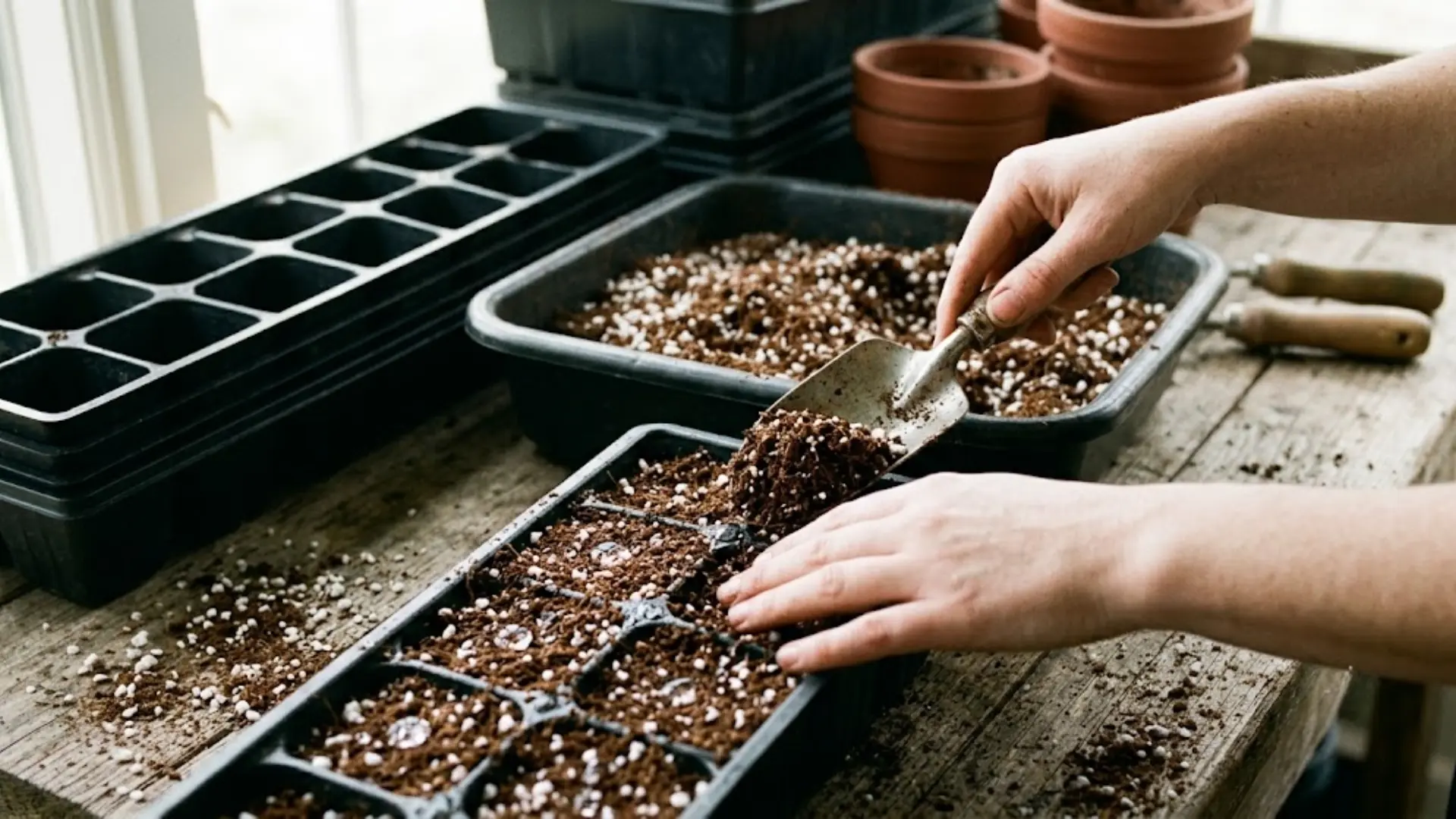
Fill your trays or pots loosely, then tap them gently to settle the mix without compacting it. Moisten thoroughly before sowing rather than after, since heavy watering over the seeds can bury or displace them.
I aim for soil that’s evenly damp, like a wrung-out sponge, never soggy. Getting this moisture level right before sowing saves you from having to disturb seeds later due to uneven watering.
Step 4: Sow the Seeds Correctly
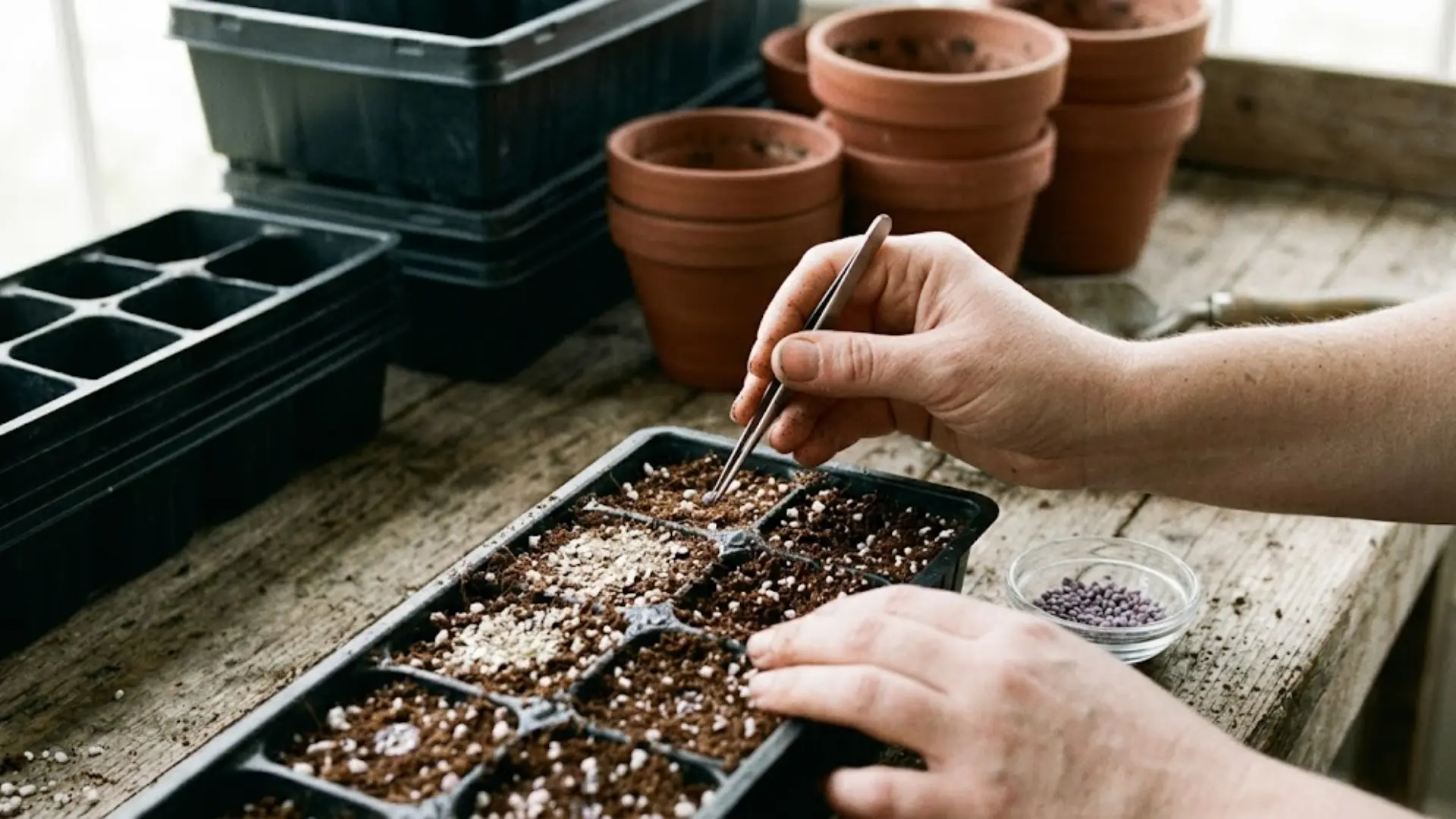
Lavender seeds need light to germinate, so they should sit on the surface or get barely dusted with a thin layer of vermiculite, never buried deep.
Space seeds about 1 to 2 inches apart if sowing multiple per tray, giving seedlings room before they need thinning.
Overcrowding early on leads to weak, leggy growth, something I learned the hard way after cramming too many seeds into one tray.
Step 5: Provide Warmth and Bright Light
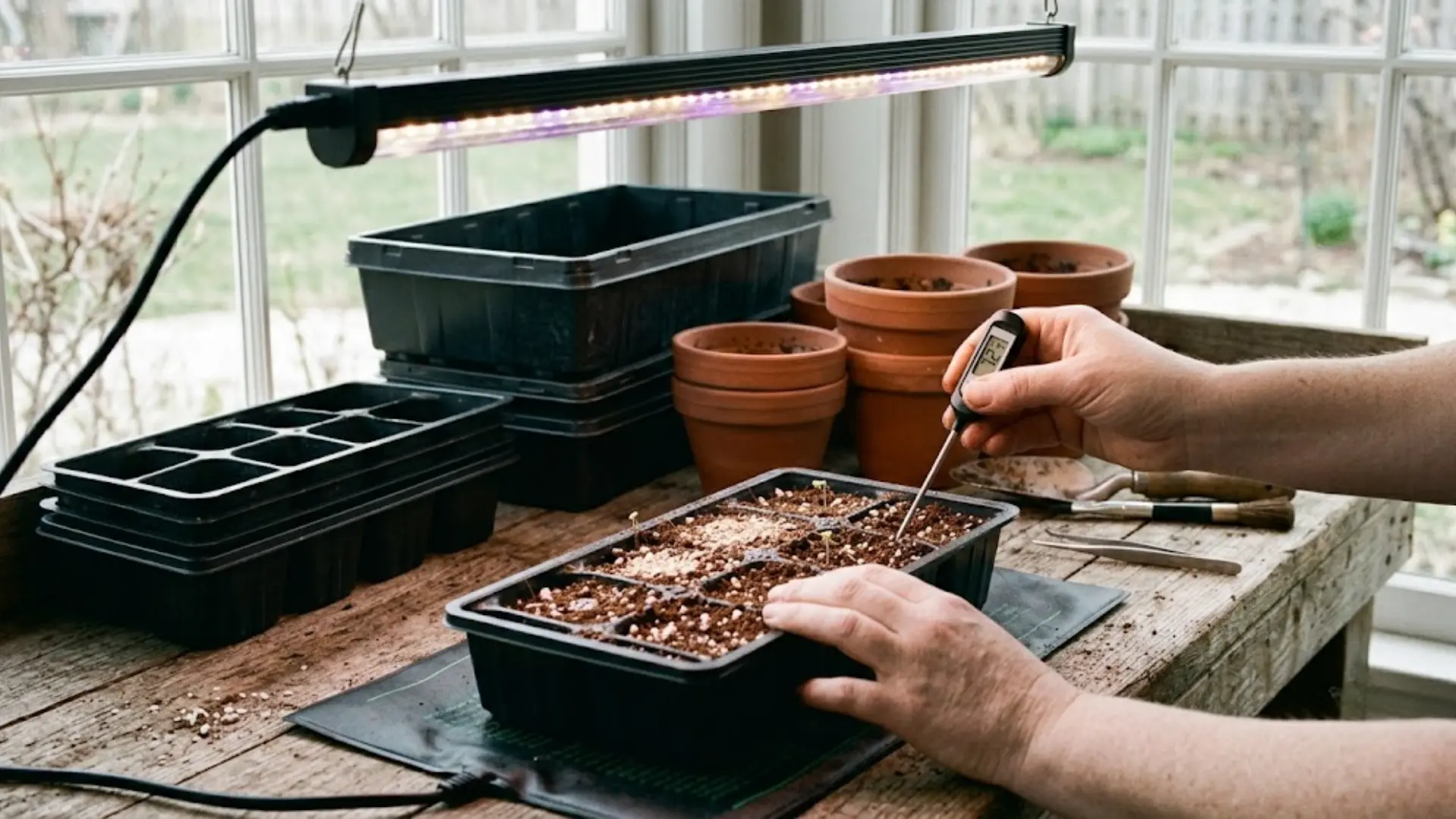
Lavender seeds germinate best in warm conditions, around 65 to 70°F, so a heat mat helps if your space runs cool.
Once seedlings emerge, light becomes the priority. A sunny south-facing window sometimes isn’t enough, which is where grow lights come in, positioned just a few inches above the trays to prevent stretching.
However, picking the right grow light wattage for your setup makes more of a difference here than people expect. Weak light early on is one of the most common reasons seedlings turn leggy and fragile.
Step 6: Keep Moisture Consistent Without Overwatering
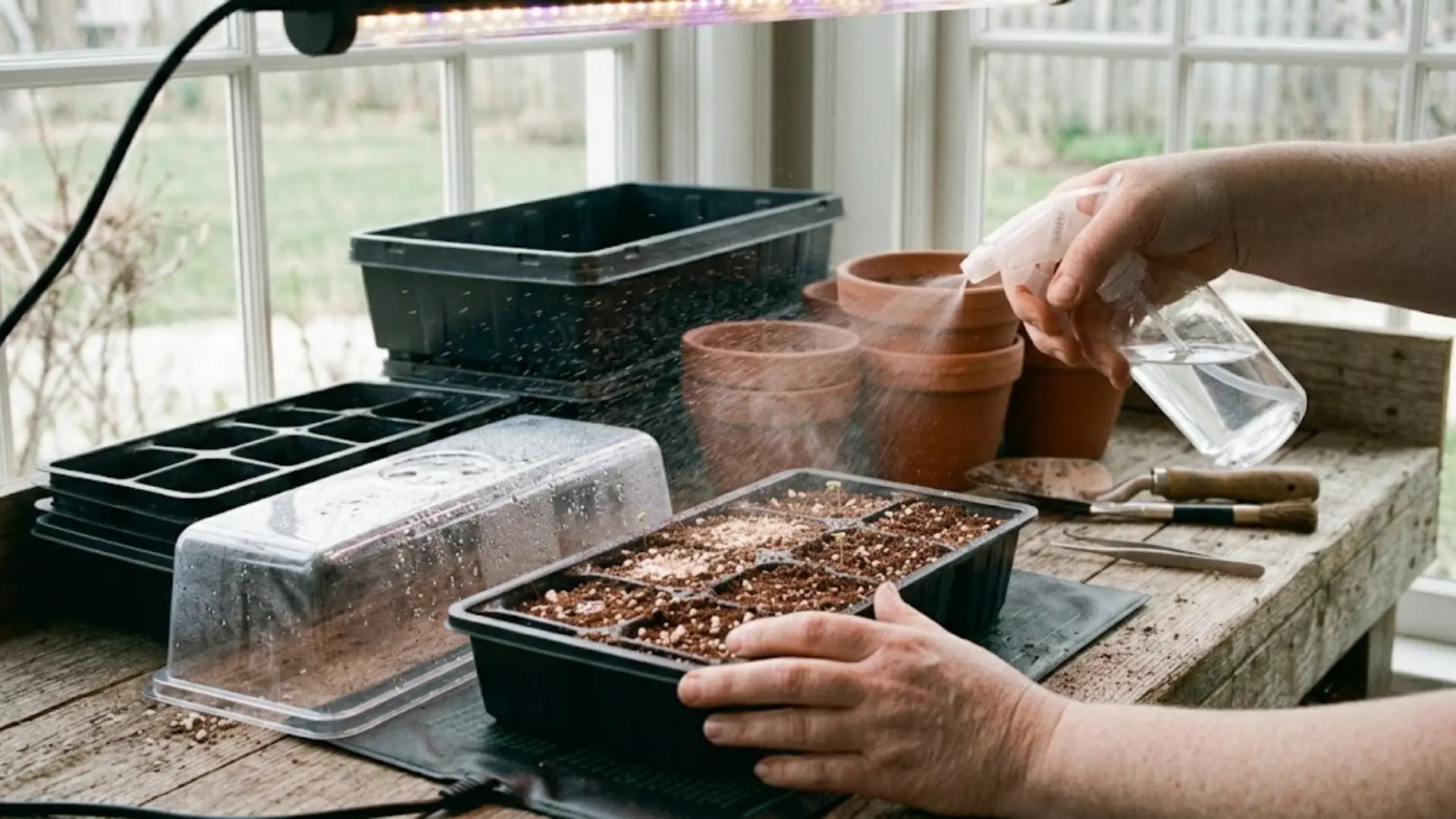
Consistency matters more than volume here. A spray bottle keeps the surface damp without flooding the tray, which is important since lavender seedlings are especially prone to damping off in overly wet conditions.
I check trays daily, misting only when the surface starts to look dry rather than on a fixed schedule. A humidity dome helps early on but should come off once seedlings appear.
Step 7: Wait for Germination
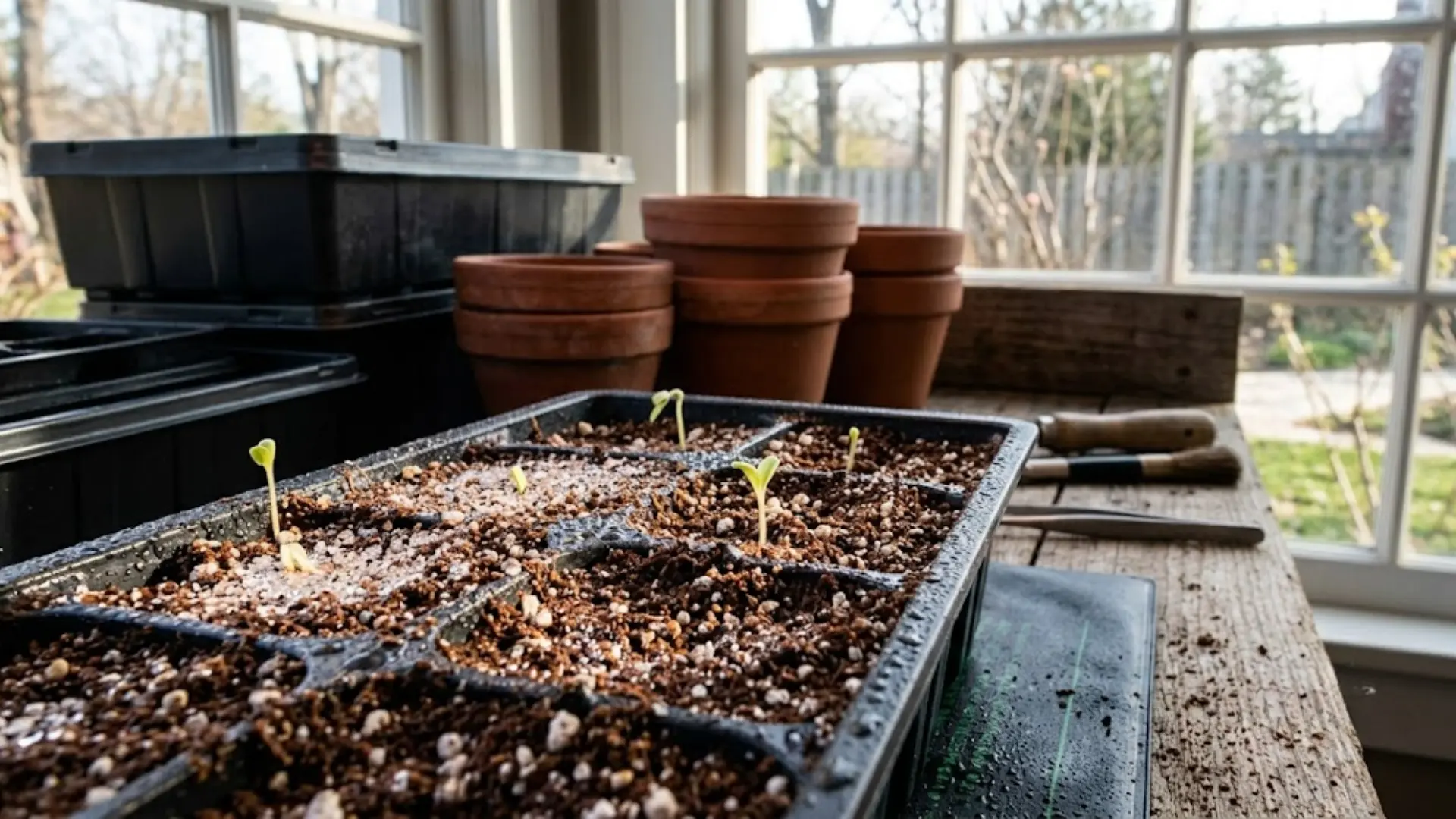
Patience is the real test here. Lavender seeds typically take 14 to 21 days to germinate, though some varieties stretch closer to a month depending on conditions.
Germination rates also tend to run lower than other herbs, so don’t be discouraged if not every seed sprouts. Once tiny seedlings appear, resist the urge to move them too soon, since they’re still fragile in these first couple of weeks.
Best Lavender Varieties to Grow from Seed
Not all lavender seeds behave the same way, and picking the right variety early on saves you a lot of frustration down the line.
English lavender is the easiest starting point for most beginners, while French and Spanish types bring their own quirks in germination and climate needs.
Here’s how the most common varieties stack up.
| Variety | Germination Reliability | Best For | Notes |
|---|---|---|---|
|
English Lavender |
High | Beginners, cold climates | Most forgiving, hardy, and widely available |
| Angustifolia Cultivars (Munstead, Hidcote) |
High | Compact gardens, borders | Reliable bloomers, true to seed |
| French Lavender (Lavandula dentata) |
Moderate | Warm climates, containers | Slower to germinate, less cold hardy |
| Spanish Lavender (Lavandula stoechas) |
Low to moderate | Ornamental plantings | Distinct blooms, but trickier from seed |
The Right Time to Plant Lavender Seeds
Timing depends on your starting method, indoors or direct sowing outside.
Indoors, begin seeds about 8 to 10 weeks before your last frost date, giving them time to establish before transplanting. Outdoors, wait until after the frost danger has passed and the soil has warmed.
Your USDA hardiness zone plays a big role here, since gardeners in colder zones often rely on indoor starts, while those in warmer zones can often direct-sow.
Spring sowing is more common, but fall planting works in mild climates as well, letting seeds stratify naturally over winter.
How Long Does It Take Lavender Seeds to Germinate?
Lavender rewards patience more than most herbs, and knowing the rough timeline ahead helps you avoid giving up too soon.
Here’s what to expect at each stage, based on typical growing conditions.
| Stage | Expected Time | If You Rush This Stage |
|---|---|---|
| Cold Stratification | 3 to 4 weeks (if needed) | Germination rates drop sharply, and sprouting becomes patchy |
| Germination | 14 to 21 days after sowing | Seeds may just be slow, not dead; digging them up disturbs viable ones |
| First True Leaves | 2 to 3 weeks after germination | Transplanting too early shocks fragile roots that aren’t established yet |
| Ready for Transplant | 8 to 10 weeks from sowing | Seedlings moved outdoors too soon often stall or die from stress |
| First Blooms | 10 to 12 months, sometimes the following season | Fertilizing heavily to force early blooms weakens the plant long-term |
How to Grow Lavender From Seed After Germination?
Once seedlings emerge, the real work of learning how to grow lavender from seed begins, and most of it comes down to restraint rather than effort.
- Step 1: Thin the seedlings first. As soon as true leaves appear, snip the weaker sprouts at soil level so only one strong seedling remains per cell.
- Step 2: Switch to bottom watering. Once thinned, start watering the trays from below so the roots pull moisture upward rather than sitting in wet soil.
- Step 3: Increase their light exposure. As seedlings grow taller, move them closer to a window or grow light until they get 6+ hours of strong light daily.
- Step 4: Introduce a light feed. After the second set of true leaves forms, start a diluted, half-strength fertilizer once a month, never more.
- Step 5: Begin hardening off. Once seedlings have several sturdy leaves and a strong stem, start setting them outside for a few hours a day, building up to full days over 7 to 10 days before transplanting.
Follow these steps in order, and your seedlings will move from fragile sprouts to sturdy little plants ready for the garden without much drama at all.
Transplanting Lavender Seedlings Outdoors
Seedlings are ready to move outdoors once they’ve hardened off and built a sturdy stem with several sets of true leaves, usually around 8 to 10 weeks from sowing.
So, pick a spot with full sun and sharp drainage, since soggy roots kill lavender faster than almost anything else I’ve seen go wrong in a garden bed.
Work in some sand or gravel if your soil holds water, and space plants 12 to 18 inches apart for good airflow as they mature.
I water immediately after transplanting to settle the roots, then ease off, letting the soil dry slightly between waterings.
Best Growing Conditions for Healthy Lavender
Lavender thrives on neglect more than attention, and most growing problems trace back to conditions just a little off from what it actually wants.
| Condition | Ideal Range | Why It Matters |
|---|---|---|
| Sunlight | 6 to 8 hours, morning sun especially | Morning sun dries dew off the leaves fast, lowering the risk of fungal spotting |
| Soil pH | 6.5 to 8.0 | Lavender comes from limestone-heavy soil, so a bit of garden lime helps in acidic yards |
| Drainage | Raised beds or mounded rows | A slight mound keeps roots above the waterline during heavy rain |
| Water | Deep soak weekly in year one, then rarely | Established roots grow deep enough that extra water often does more harm than good |
| Air Circulation | 18 to 24 inches apart | Tight spacing causes root rot more often than overwatering does |
| Mulching | Gravel or stone only | Light gravel also reflects heat back onto the plant, which lavender prefers |
Growing Lavender in Containers From Seed
Container growing gives lavender more control over drainage and soil quality than most garden beds can offer, which makes it a solid option in wetter climates. It does mean paying closer attention to a few specific details, though.
Picking the Right Pot and Potting Mix
Terracotta works better than plastic since it wicks away excess moisture through the walls, which matters more for lavender than almost any other plant.
Pick a pot with drainage holes and at least 12 inches in diameter to give roots room to spread.
Skip regular potting soil entirely, and mix in perlite or coarse sand at nearly equal parts to prevent water from sitting around the roots, since containers already trap moisture more than open ground does.
Watering Through the Seasons and Overwintering
Once your pot is set up right, care shifts to keeping the plant alive through both summer heat and winter cold in a way garden-grown lavender rarely needs.
- Water only when the soil is dry at least an inch down, since pots dry faster, but overwatering still causes more damage than underwatering.
- Move pots to full sun whenever possible, rotating occasionally so growth stays even on all sides.
- Bring containers indoors or into a garage before the first hard frost if you’re in a colder zone.
- Reduce watering significantly in winter, since dormant plants need very little moisture and soggy soil in cold weather invites rot fast.
- Keep overwintered plants somewhere cool but frost-free, since warm indoor heat can trick lavender into premature new growth.
Get the pot and mix right from the start, and container-grown lavender ends up needing less fuss than people expect, even through winter.
What to Do When Lavender Seeds Won’t Sprout?
Even with the right process, lavender seeds sometimes stall out or seedlings run into trouble along the way.
Here’s how to spot what’s going wrong and fix it before it costs you the whole tray.
| Problem | Possible Cause | Solution |
|---|---|---|
| No Germination | No cold stratification, or soil too cold | Warm the soil to 65 to 70°F, and stratify the next batch |
| Mold on Soil | Overwatering, poor airflow under dome | Remove dome daily, let surface dry slightly |
| Weak Seedlings | Overcrowding, low light | Thin seedlings, move closer to light |
| Leggy Growth | Insufficient light | Lower grow lights, add more hours of light |
| Yellow Leaves | Overwatering or nutrient deficiency | Water less, add diluted feed if it persists |
| Seedlings Collapsing | Damping off from excess moisture | Improve airflow, cut back on watering |
Lavender Care During the First Year
First-year lavender is still building its root system, which makes it more fragile than established plants and worth watching a little closer.
- Watering: Deep soak once a week for the first few months, then taper off as roots establish.
- Fertilizing: Skip it almost entirely; one light, diluted feed in spring is plenty for young plants.
- Pruning: Pinch back any flower buds in the first year to push energy into root and stem growth instead.
- Winter Protection: Add a light layer of gravel mulch around the base before the first hard frost in colder zones.
- Weeds: Keep the area around young plants clear by hand, since competition for water and nutrients hits hardest in year one.
If you’re weighing whether lavender needs fertilizer at all, the short answer is barely, and mostly just in this first year.
Get through this first year carefully, and lavender typically settles into the low-maintenance plant it’s known to be for years afterward.
Where to Buy High-Quality Lavender Seeds?
Fresh, reputable seeds make a real difference in germination rates, and starting with mislabeled or old stock is one of the most common reasons lavender fails it sprout.
Look for online sellers with detailed germination information, visible harvest dates, and strong customer reviews, ideally backed by a germination guarantee.
Gardening authorities like the Royal Horticultural Society are a good starting point for guidance on reputable growing practices.
Local garden centers work well too, letting you check packaging dates in person and pick varieties suited to your regional climate directly off the shelf.
Checklist before buying any lavender seeds
- Confirm the variety name matches the growth habit and climate tolerance you want.
- Check the packaging or harvest date, since freshness affects germination more than price does.
- Verify USDA zone suitability before buying, so the variety actually fits your climate.
The Closing Note
Growing lavender from seed asks for patience, but that’s exactly what makes the reward feel earned. Every stubborn seedling that finally takes root teaches you something no nursery plant ever could.
After walking through cold stratification, transplanting, and those first fragrant blooms, you now have everything needed to learn how to plant lavender seeds with confidence rather than guesswork.
Trust the process, give it time, and your garden will thank you in silvery green and soft purple.
Tried this yourself? Share how your lavender seedlings are coming along in the comments. I’d love to hear what’s working for you.
Frequently Asked Questions (FAQs)
Can I Plant Lavender Seeds Directly Outside?
Yes, but only after your last frost date, once the soil has warmed and drains well. Indoor starting still gives more reliable germination, especially in cooler climates.
How Many Lavender Seeds Should I Plant per Pot?
Sow 2 to 3 seeds per cell or small pot, then thin down to the strongest single seedling once true leaves appear. This gives roots room to grow without early competition.
Do Lavender Plants Come Back Every Year?
Yes, lavender is a perennial that returns year after year once established, often living 10 to 15 years with good drainage and minimal fuss. Winter hardiness depends on the variety and your growing zone.
What’s the Best Soil Mix for Lavender Seedlings?
A light blend of seed-starting mix with perlite or coarse sand works best, since it drains fast and prevents root rot. Avoid dense potting soil, which holds too much moisture for young lavender roots.


One Response
Thank you so much. Great information. My first try at growing lavender….in the mohave desert. I’m planning an herbal tea garden. Di you have any information on processing the lavender for making tea,? I know that’s going to be a long ways off.