After a few seasons growing it in porch baskets, calibrachoa care has come down to a handful of habits rather than constant fussing.
Better known as Million Bells, this trailing bloomer produces hundreds of tiny, petunia-like flowers all summer, but it drops its own spent blooms and trails more gracefully than a petunia ever will.
A sunny hanging basket or a border that needs to fill in fast both suit it well, and calibrachoa pays back a little upkeep with a long season of color.
Below, planting steps, sunlight and watering needs, feeding schedules, pruning techniques, and the real differences between calibrachoa care in pots and in the ground, plus fixes for the most common problems.
What is Calibrachoa?
Calibrachoa belongs to the Solanaceae family, making it a close cousin of the petunia, though it’s classified as its own genus.
Most people know it by its nickname, Million Bells, named for the hundreds of small, bell-shaped flowers it produces all season.
The plant grows with a trailing and mounding habit, cascading over pots and baskets or forming a tidy mound in garden beds. It blooms from spring through the first frost in shades of pink, purple, yellow, red, orange, and bicolor.
Gardeners love it for one reason: maximum color with minimal upkeep. Spent blooms drop off on their own, skipping the deadheading that petunias require.
How to Plant Calibrachoa?
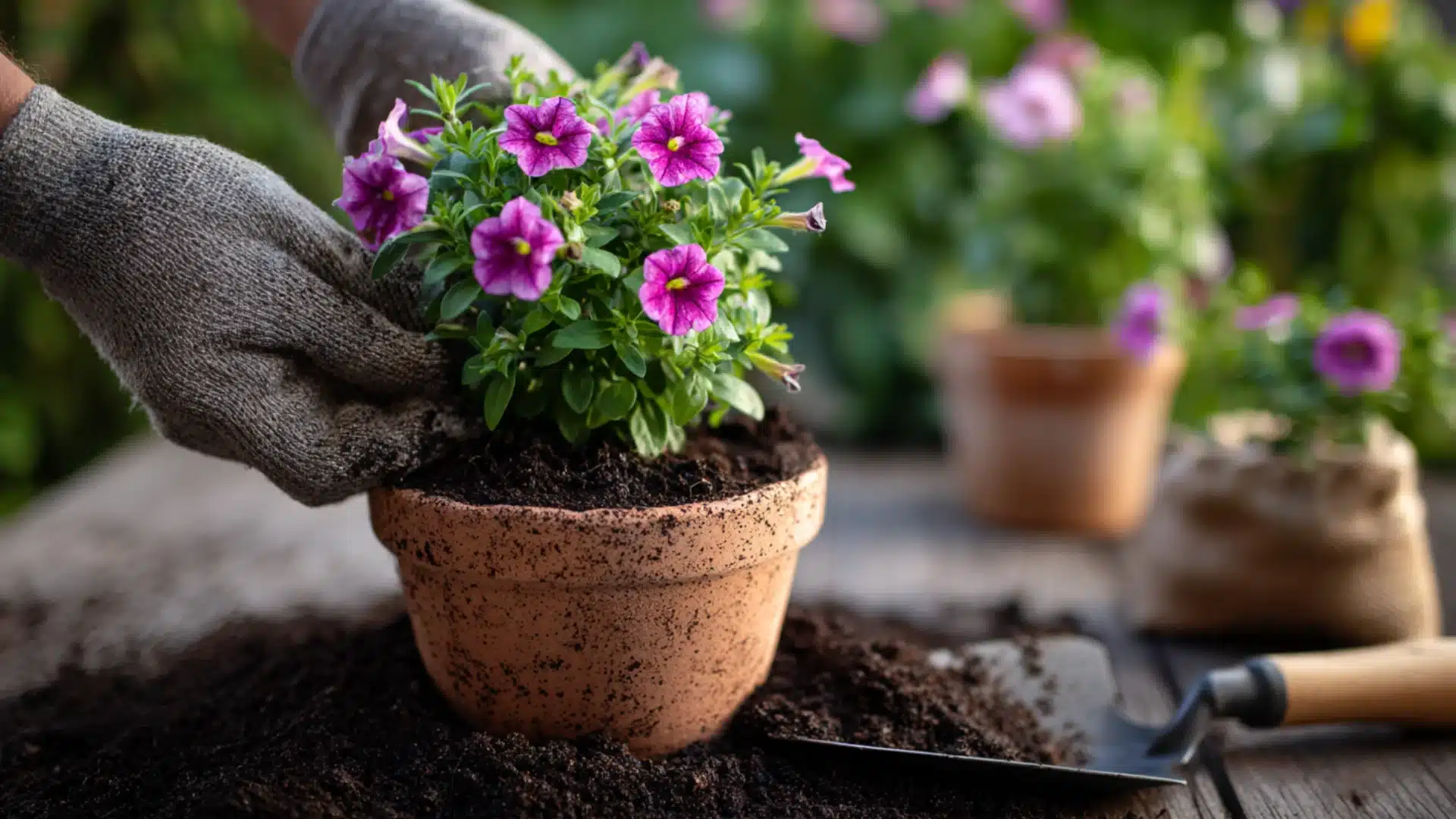
Getting the planting stage right sets the foundation for a full season of blooms. A few key decisions upfront, timing, plant selection, location, soil, and technique make a noticeable difference in how quickly your calibrachoa establishes and fills in.
1. Best Time to Plant
Plant calibrachoa after the last frost date has passed, once nighttime temperatures consistently stay above 45°F and daytime temperatures reach the 60s.
Planting too early risks frost damage to tender new growth, while waiting too long shortens the bloom season.
Garden centers typically stock starter plants from early spring through early summer, giving you flexibility to plant whenever conditions in your area are right.
2. Choosing Healthy Plants
Look for starters with compact growth, vibrant foliage, and a few open blooms rather than leggy stems or yellowing leaves. Check the base of the plant for firm, white roots instead of dark, mushy ones, which signal root rot.
Avoid plants that look root-bound, wilted, or stretched, since these take longer to establish and recover after transplanting and often fall behind healthier starters within the first few weeks after planting.
3. Selecting the Right Location
Choose a spot that receives at least 6 hours of full sun daily, since calibrachoa depends on strong, consistent light for continuous blooming throughout the season.
Good air circulation around plants helps prevent fungal issues like powdery mildew, especially in humid climates.
In extremely hot regions, provide light afternoon shade to protect plants from heat stress and wilting during the hottest part of the day, particularly in peak summer months.
4. Soil Preparation
Calibrachoa needs well-drained, slightly acidic soil with a pH between 5.5 and 6.5. Mix in compost or other organic matter before planting to boost drainage and add essential nutrients.
If your native soil is heavy clay, amend it generously with organic matter or consider raised beds, since compacted soil holds excess water and increases the risk of root rot.
5. Step-by-Step Planting Guide
With the site, soil, and timing sorted, the actual planting takes only a few minutes:
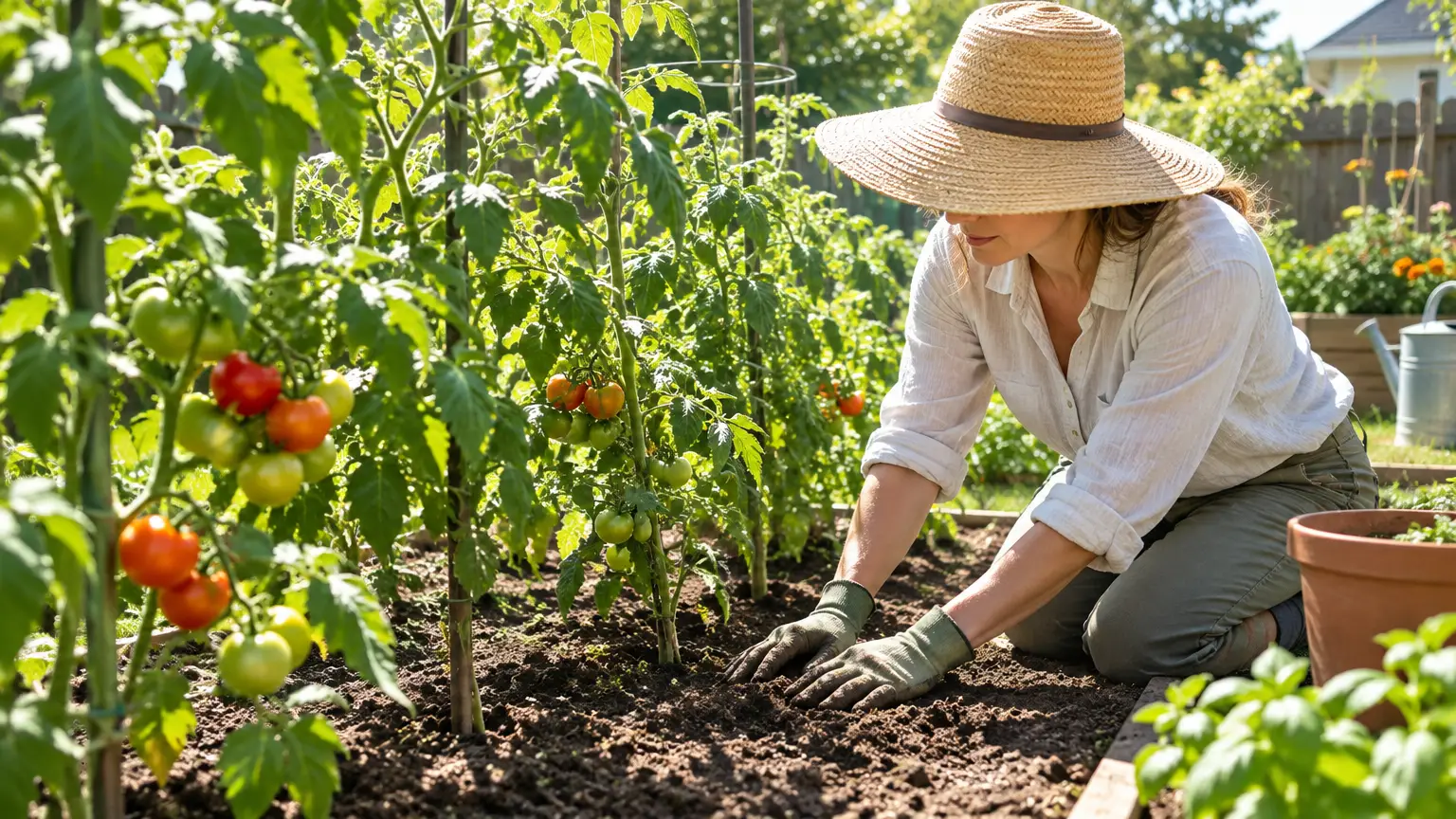
- Step 1: Prepare the planting area by clearing weeds and loosening the soil.
- Step 2: Dig a hole slightly wider than the plant’s root ball.
- Step 3: Plant at the same depth it was growing in its nursery container.
- Step 4: Backfill the hole with soil, pressing gently to remove air pockets.
- Step 5: Water thoroughly right after planting to help roots settle in.
- Step 6: Apply a light layer of mulch around garden bed plantings to retain moisture.
Nail the timing, soil, and spacing here, and calibrachoa tends to establish fast, often pushing out a few open blooms within the first two to three weeks.
Calibrachoa Care Basics
Beyond planting, calibrachoa’s ongoing health depends on getting four fundamentals right: light, water, soil, and feeding. Nail these basics, and the plant takes care of the rest with steady, continuous blooms.
| Care Factor | Details |
|---|---|
| Sunlight |
6-8 hours of full sun daily; too much shade causes fewer blooms and legginess |
| Watering |
Daily for 1-2 weeks after planting; 2-3 times weekly once established; daily for containers in summer |
| Overwatering signs | Yellowing leaves, wilting despite moist soil |
| Underwatering signs | Crispy leaf edges, drooping |
| Soil | Well-draining, fertile, slightly acidic (pH 5.5-6.5); amend heavy clay with compost or peat moss |
| Slow-release fertilizer | Mixed in at planting, lasts 2-3 months |
| Liquid fertilizer | Every 1-2 weeks, best for containers and hanging baskets |
| Bloom booster | Every 2-3 weeks during peak bloom for maximum flowers |
Skipping regular feedings is one of the most common reasons calibrachoa stops blooming or develops pale, yellowing leaves from nutrient deficiency.
A bloom booster works because of potassium’s role in blooming, not just the nitrogen most gardeners default to.
Calibrachoa Care in Pots
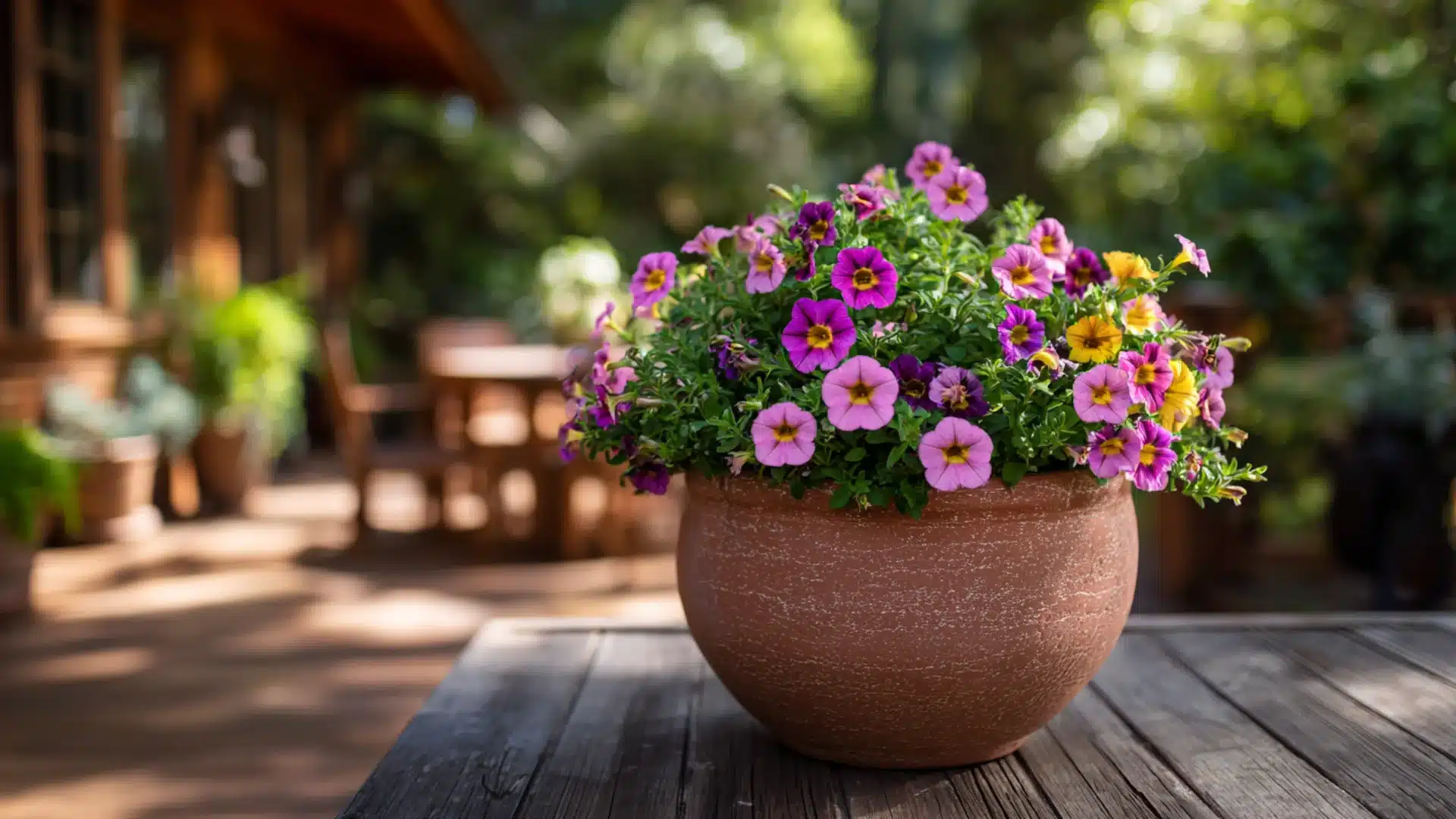
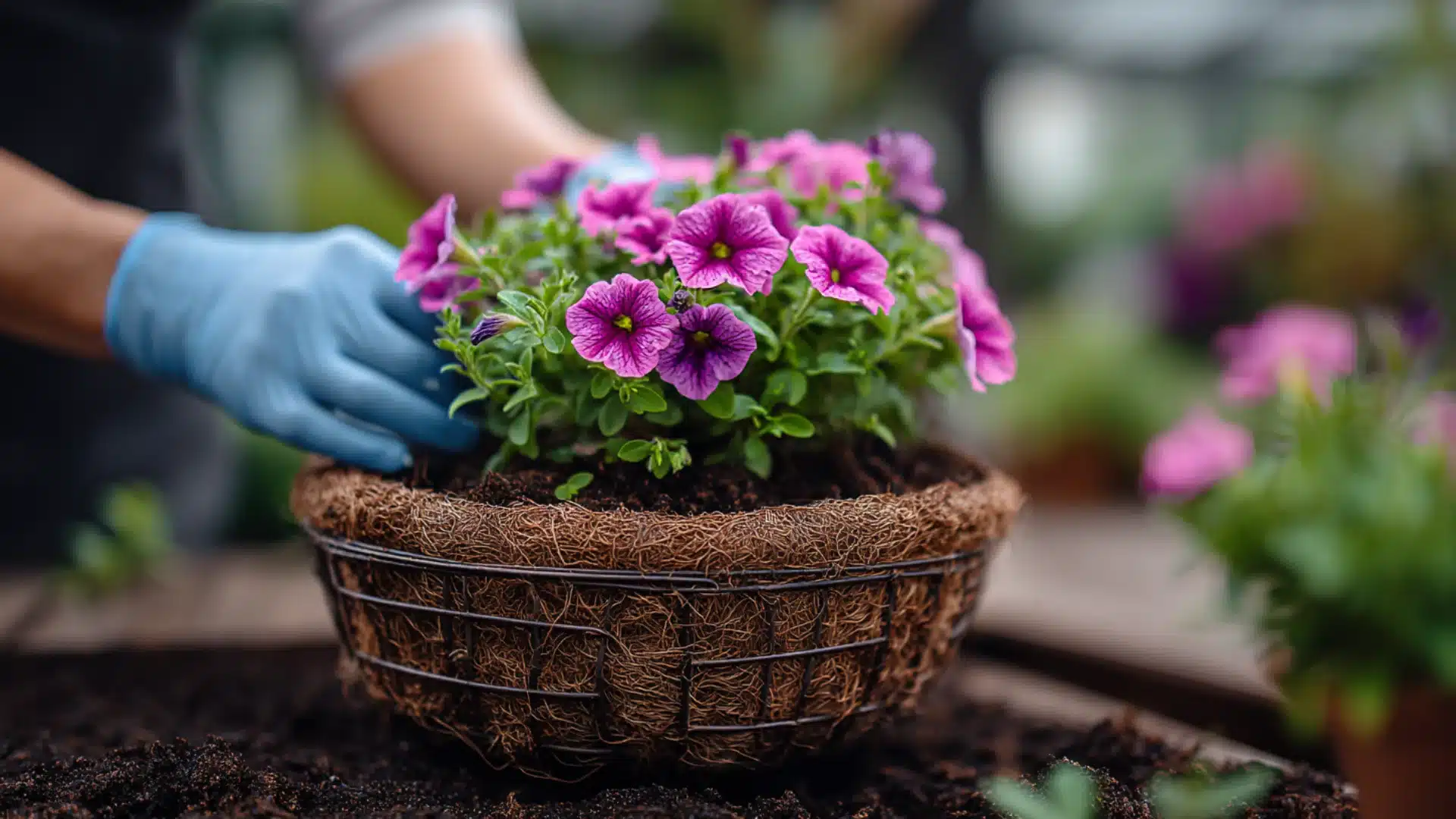
Containers are the most popular way to grow calibrachoa, offering full control over soil, drainage, and placement. Whether in a simple pot or a cascading hanging basket, container-grown plants need slightly more attentive care than those in garden beds.
1. Choosing the Right Pot
Select a pot at least 10 to 12 inches in diameter to give roots enough room to spread and support healthy, full growth throughout the season.
Multiple drainage holes at the bottom are essential, since standing water quickly leads to root rot and other moisture-related problems.
Terracotta, plastic, and resin all work well as material choices, though terracotta dries out faster than the others and may need more frequent watering during hot summer weather.
2. Best Potting Mix
An ideal potting mix is lightweight, well-draining, and formulated specifically for annuals or hanging baskets, giving roots the aeration they need to thrive.
Look for mixes containing perlite or vermiculite, which improve drainage and prevent compaction over time.
Avoid heavy garden soil in containers, since it retains too much moisture and suffocates roots, leading to slower growth, fewer blooms, and an increased risk of root rot.
3. Watering Container Plants
Container-grown calibrachoa often needs daily watering during summer, especially in hot or windy conditions that dry soil out quickly and stress the roots. Cooler or rainy weather reduces watering frequency, sometimes to every 2-3 days.
Always check the top inch of soil before watering, since containers can swing between too dry and waterlogged much faster than garden beds ever do.
4. Feeding Potted Calibrachoa
Liquid fertilizer works best for containers, applied every 1 to 2 weeks to replenish nutrients that frequent watering tends to wash out of the soil.
Alternatively, mix slow-release granules into the potting soil at planting time for steady, consistent feeding that lasts 2 to 3 months without additional effort.
Combining both methods, slow-release at planting plus regular liquid feed, often produces the fullest, most continuous blooms throughout the entire growing season.
5. Hanging Basket Care Tips
Check hanging baskets daily, since they dry out faster than ground-level pots due to increased air exposure. Rotate baskets every week or two to ensure even light exposure and prevent one-sided growth.
Improve airflow by avoiding overcrowded plantings, and refresh tired, leggy baskets midseason with a trim and a dose of fertilizer.
Get the pot, soil, and feeding routine right, and containers reward you with the same nonstop, cascading color calibrachoa is known for, no garden bed required.
Growing Calibrachoa in the Ground
Planting calibrachoa directly in garden beds offers a different growing experience than containers, with less frequent watering and more room for roots to spread. It’s a great option for borders, mass plantings, and gardeners who want lower-maintenance color all season.
- Benefits: Greater soil volume retains moisture longer, roots have unlimited room to spread, and beds require less daily attention than containers.
- Ideal Spacing: Space plants 8 to 12 inches apart to allow airflow, prevent overcrowding, and reduce the risk of powdery mildew.
- Mulching: Apply a 1- to 2-inch layer to retain moisture, suppress weeds, and regulate soil temperature. Keep mulch a few inches away from stems to prevent rot. First, compare a few different flower bed mulch options to make it easier to pick.
- Watering: In-ground plants need less frequent watering than containers, often just once or twice weekly, depending on rainfall and heat.
- Companion Planting: Pair with petunias, verbena, lobelia, or sweet potato vine for similar sun and water needs; avoid plants that require consistently wet soil.
- Borders and Mass Plantings: Calibrachoa’s mounding, spreading habit creates a continuous ribbon of color along edges or quickly fills gaps in mass beds.
Given the right spacing, soil, and care routine, in-ground calibrachoa delivers the same nonstop color as containers, with noticeably less day-to-day upkeep.
Seasonal Calibrachoa Care Calendar
Calibrachoa’s needs shift as temperatures change throughout the growing season. Following a simple seasonal rhythm keeps plants healthy and blooming continuously from planting to frost.
| Season | Watering | Feeding | Other Tasks |
|---|---|---|---|
| Spring | Daily until established | Apply at planting | Plant after last frost |
| Summer | Daily (pots); 2-3x/week (ground) | Every 1-2 weeks | Prune leggy stems; shade in extreme heat |
| Fall | Reduce frequency | Continue feeding | Take cuttings before frost (optional) |
| Winter | Minimal (if overwintering indoors) | Pause or reduce | Treat as annual unless in zones 9-11 |
Stick to this calendar, and calibrachoa rewards you with steady, uninterrupted color across every season it’s actively growing.
How to Keep Calibrachoa Blooming All Summer
Consistent care through the hottest months makes the difference between a plant that fizzles out by July and one that blooms nonstop until frost. A few key habits keep calibrachoa performing at its peak all summer long.
- Full Sun: Provide 6 to 8 hours of direct sunlight daily to fuel continuous flowering.
- Consistent Moisture: Keep soil evenly moist, never bone-dry or soggy, checking containers daily in hot weather.
- Regular Feeding: Feed every 1 to 2 weeks with a liquid fertilizer to support constant bloom production.
- Light Trimming: Pinch back leggy stems every few weeks to encourage bushier, fuller growth.
- Prevent Nutrient Deficiencies: Watch for pale or yellowing leaves, a sign it’s time to feed.
- Avoid Overcrowding: Space plants properly to maintain airflow and reduce the risk of disease.
- Proper Drainage: Ensure pots and beds drain well to prevent root rot from summer downpours or overwatering.
Keep this checklist handy through the summer, and calibrachoa keeps rewarding you with fresh blooms right through the season’s peak heat.
Do You Need to Deadhead Calibrachoa?
Calibrachoa is self-cleaning, meaning spent blooms drop off naturally without any deadheading required, unlike petunias that need regular grooming to keep flowering well.
Light grooming still helps occasionally, especially to remove damaged or discolored stems after heavy rain, wind, or intense summer heat.
Trimming back a few scraggly sections also encourages fresh, vigorous growth from the base and keeps the plant looking full and tidy.
While not mandatory, a quick tidy-up every few weeks supports better airflow, reduces disease risk, and helps maintain consistent, nonstop blooming throughout the season.
How and When to Prune Calibrachoa?
Calibrachoa often becomes leggy over time as stems stretch toward light or grow faster than the plant can support, especially in partial shade or crowded conditions.
A midseason haircut, trimming stems back by about one-third, helps rejuvenate tired plants and encourages a fresh flush of blooms.
Pinching young plants early in the season, right after planting, also promotes bushier growth from the start rather than a single, sparse stem.
When trimming, cut stems back by 2 to 4 inches, always just above a leaf node, to encourage branching. Avoid cutting back more than a third of the plant at once, as this unnecessarily stresses the roots.
Recovery typically takes 1 to 2 weeks, during which the plant redirects energy into new growth rather than blooming.
Keep watering and feeding consistently during this period to speed up recovery and bring blooms back quickly.
Common Calibrachoa Problems and Solutions
Most calibrachoa issues trace back to watering, light, or nutrients. Catching these signs early makes them easy to correct before they affect the whole plant.
| Problem | Likely Cause | Solution |
|---|---|---|
| Yellow leaves | Overwatering or iron deficiency | Let the soil dry between waterings; apply an iron supplement or micronutrient feed. |
| Few flowers | Insufficient sunlight or lack of feeding | Move to full sun; resume regular fertilizing |
| Leggy growth | Too little light or infrequent pruning | Increase sun exposure; pinch back stems regularly |
| Wilting | Overwatering (root rot) or underwatering | Check soil moisture; adjust watering frequency accordingly |
| Root rot | Poor drainage or overwatering | Improve drainage; reduce watering; repot if severe |
| Leaf drop | Stress from temperature swings or drought | Maintain consistent watering and stable growing conditions |
| Brown foliage | Sunburn, underwatering, or fungal disease | Provide afternoon shade in extreme heat; water consistently |
| Small blooms | Nutrient deficiency or overcrowding | Feed with bloom booster; space plants properly |
| Iron chlorosis (yellow leaves, green veins) | High soil pH limiting iron uptake | Apply a chelated iron supplement; lower the soil pH slightly |
Most of these problems resolve within 1 to 2 weeks once the underlying cause, whether watering, light, or nutrients, is corrected.
Companion Plants: Calibrachoa vs. Petunia and Best Pairings
Calibrachoa and petunias look similar but differ in key ways. Calibrachoa produces smaller, bell-shaped flowers in greater numbers and is self-cleaning, needing little deadheading. Petunias have larger blooms but require regular grooming.
Calibrachoa handles heat slightly better, while petunias are a touch more drought-tolerant.
Calibrachoa’s trailing habit suits hanging baskets, while petunias grow more upright. Both attract pollinators, though petunias also draw hummingbirds.
Calibrachoa suits low-maintenance, cascading color, while petunias appeal to those who don’t mind deadheading.
Calibrachoa also pairs well with companions such as verbena, lobelia, sweet potato vine, and bacopa for added texture and cascading interest.
Try bacopa and sweet potato vine in baskets, or verbena and dusty miller in beds for season-long color.
Common Pests and Diseases
Calibrachoa is relatively pest-resistant, but a few common invaders and diseases can still affect plant health, especially in humid or crowded conditions.
Aphids show up the most often of the bunch, and the same aphid control methods that work on other flowering annuals work here too.
| Issue | Signs | Prevention |
|---|---|---|
| Aphids | Clusters on new growth, sticky residue | Inspect regularly; treat early with insecticidal soap |
| Spider mites | Fine webbing, stippled leaves | Increase humidity; avoid drought stress |
| Whiteflies | Tiny white insects that scatter when disturbed | Use yellow sticky traps; avoid overcrowding |
| Thrips | Silvery streaks, distorted blooms | Remove affected flowers; use neem oil |
| Fungus gnats (containers) | Small flies near the soil surface | Let soil dry between waterings; avoid overwatering |
| Root rot | Wilting despite moist soil, mushy roots | Ensure proper drainage; avoid overwatering |
| Powdery mildew | White, powdery coating on leaves | Improve airflow; avoid overhead watering |
| Botrytis (gray mold) | Fuzzy gray growth on stems or blooms | Remove affected parts; reduce humidity around plants |
| Viral diseases | Mottled leaves, stunted growth | Purchase disease-free starters; sanitize tools between plants |
Good airflow, proper watering, and regular inspection catch most pest and disease issues early, before they spread or seriously damage the plant.
Popular Calibrachoa Varieties
Breeders have introduced dozens of calibrachoa series, each with its own bloom size, color, and habit. Here’s a quick rundown to help you choose:
- Superbells: Red, pink, purple, yellow, white, and bicolor blooms; trailing habit, spreads up to 24 inches; great for baskets and containers.
- Cabaret Series: Vibrant, uniform colors; compact, early-flowering; suited for baskets and garden beds.
- MiniFamous: Wide color range including doubles and bicolors; compact, mounding habit; ideal for small containers.
- Can-Can Series: Yellow, orange, and dark peach tones; vigorous growth with dark foliage; best for mass plantings.
- Aloha Series: Soft pastels to neon shades; compact and heat-tolerant; works well in containers and beds.
- MillionBells Series: Violet, pink, red, yellow, and white; available in mounding or trailing forms; suited for baskets and containers.
- Superbells Double: Deep orange and magenta double blooms; trailing habit; ideal for upscale hanging baskets.
- Superbells Lemon Slice: Bright yellow flowers with a dark center; trailing habit; great for containers and baskets.
All varieties share the same core needs: full sun, well-draining soil, and consistent feeding for nonstop blooms.
The Bottom Line
Calibrachoa rewards gardeners with nonstop color from spring through the first frost, given full sun, well-draining soil, consistent moisture, and regular feeding.
Container-grown plants need more frequent watering and feeding than those in garden beds, but both deliver low-maintenance blooms all season.
A hanging basket on a sunny porch or a border that needs to fill in fast both work here, and calibrachoa’s self-cleaning flowers make it one of the easiest ways to add color without constant grooming.
Ready to get planting? Pick up a few starters this weekend and share how your baskets or beds turn out in the comments.
Frequently Asked Questions (FAQs)
How Often Should I Water Calibrachoa?
Water container-grown calibrachoa when the top inch of soil feels dry, often daily in hot weather. In-ground plants need less frequent watering, typically once or twice a week.
Does Calibrachoa Need Full Sun?
Yes, calibrachoa needs 6 to 8 hours of full sun daily to bloom at its best. Too much shade leads to fewer flowers and leggy growth.
Can Calibrachoa Grow in The Ground?
Yes, calibrachoa performs well in garden beds, borders, and mass plantings, though it needs less frequent watering and feeding than container-grown plants.
Why is My Calibrachoa Turning Yellow?
Yellowing leaves usually signal overwatering or iron deficiency. Let soil dry between waterings, and apply an iron supplement if the veins stay green while leaves yellow.