Stepping outside, brushing your fingers over fragrant basil leaves, and knowing dinner can taste fresher because of something you grew yourself.
But the first harvest can also feel surprisingly nerve-racking. Cut too much, and you may worry the plant will struggle. Pick the wrong leaves, and you might wonder if you are slowing future growth.
Learning how to harvest basil takes away that hesitation and makes the whole process feel simple.
If your basil is growing in a sunny garden bed, a patio pot, or a kitchen container, a few careful snips can turn one healthy plant into a steady source of fresh flavor all season long.
When is Basil Ready to Harvest?
Basil is usually ready to harvest once the plant is about 6 to 8 inches tall and has several sets of healthy leaves. You do not need to wait until the plant is fully grown before picking a few leaves.
In fact, regular harvesting can help basil grow fuller and produce more branches.
For the best flavor, harvest the leaves before the plant starts flowering, since flowering can make the leaves taste slightly stronger or more bitter.
Morning is a good time to harvest because the leaves are fresh and well hydrated.
Choose healthy, bright green leaves and avoid damaged or yellow ones. If your basil is still small, take only a few leaves and allow the plant to keep growing before harvesting more.
How to Harvest Basil?
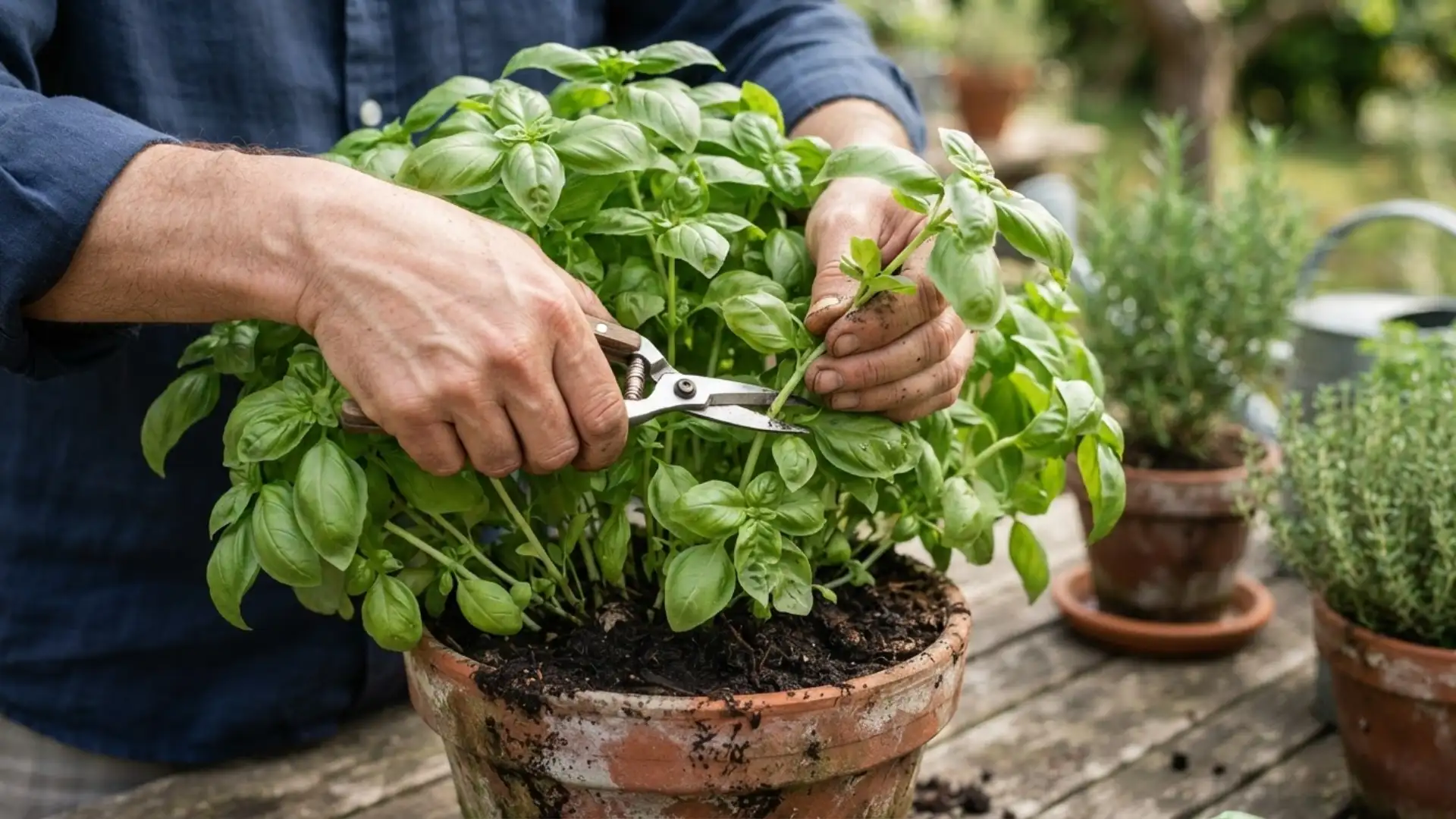
Harvesting basil the right way helps you get fresh leaves while encouraging the plant to grow fuller and stronger. Instead of randomly pulling off leaves, focus on cutting healthy stems in the correct place.
A few simple steps can help your basil recover quickly and keep producing new growth throughout the season.
1. Find a Healthy Stem
Start by choosing a strong stem with plenty of healthy, green leaves.
Look for one that has several sets of leaves from top to bottom, since this gives you more options for making the right cut.
Avoid stems with yellowing, spotted, wilted, or damaged leaves because they may be stressed or unhealthy. Picking vigorous growth helps protect the plant while giving you fresh, flavorful basil.
2. Locate a Leaf Node
Next, find a leaf node on the stem you want to harvest. A node is the spot where two leaves, and sometimes tiny new shoots, grow from opposite sides of the main stem.
Look closely because small shoots may already be forming between the leaves and stem.
Cutting near this point is important because those shoots can develop into new branches, helping your basil become fuller and produce more leaves after harvesting.
3. Cut Just Above the Node
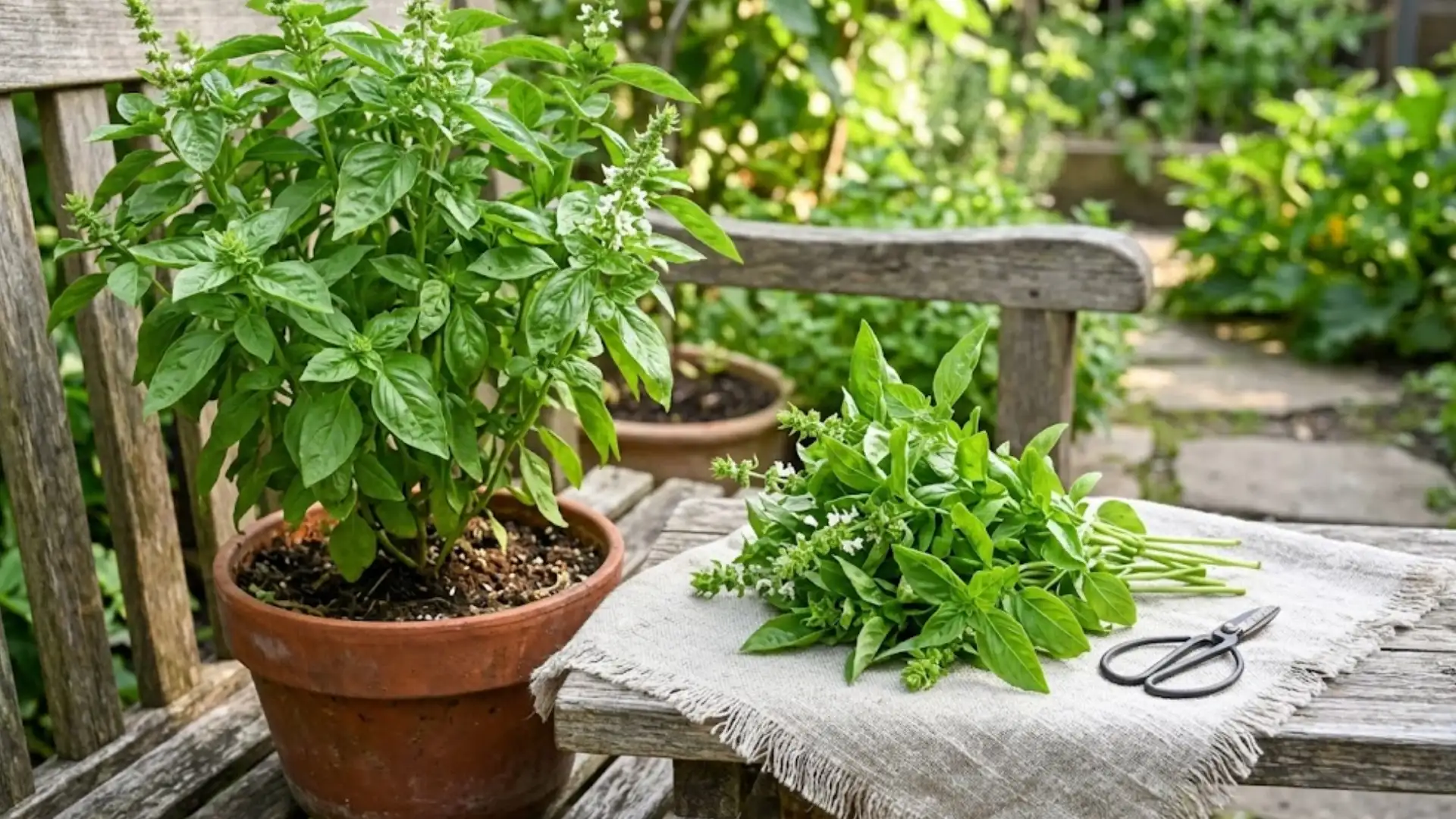
Use clean scissors, garden snips, or your fingertips to remove the stem without crushing it. Make your cut about ¼ inch above the leaf node you selected.
This leaves the small shoots below the cut in place so they can continue growing.
Avoid leaving a long piece of bare stem above the node because it may dry out or die back. A clean, well-placed cut also helps the plant recover more easily.
The same caution applies to other kitchen herbs; cutting into old, woody growth on a rosemary plant can leave it slow to recover.
4. Harvest From the Top First
Begin harvesting from the upper part of the basil plant instead of repeatedly removing leaves from the bottom.
Cutting the growing tips encourages the plant to send out new side branches below each cut, creating a fuller and bushier shape. Lower leaves are still important because they help the plant produce energy.
Avoid cutting the main stem close to the soil, as removing too much growth can weaken the plant and slow its recovery.
5. Leave Enough Leaves Behind
Even when your basil looks full, avoid removing most of its leaves in a single harvest. The plant needs healthy foliage to capture sunlight and produce energy through photosynthesis.
Leaving plenty of leaves behind allows it to recover and continue developing new stems.
Young basil plants need even more care, so harvest only a small amount at first. As the plant becomes larger and stronger, you can gradually take more during each harvest.
Picking Basil Leaves vs Cutting Whole Stems
Both methods work, but they serve different purposes. Picking individual leaves is useful when you only need a small amount, while cutting whole stems is better for larger harvests and can help the plant grow bushier.
|
Method |
Best For |
How to Do It |
|---|---|---|
|
Picking individual leaves |
Small, quick harvests for cooking |
Gently remove a few mature leaves without stripping one area bare. Leave plenty of healthy foliage so the plant can keep growing. |
|
Cutting whole stems |
Larger harvests and encouraging fuller growth |
Cut a healthy stem just above a leaf node. This encourages new side shoots to develop and helps the basil plant become bushier over time. |
How Much Basil Can You Harvest at Once?
You can usually harvest up to one-third of a healthy basil plant at one time without causing too much stress.
This gives you plenty of leaves while leaving enough growth for the plant to keep producing energy and new stems. If the basil is still young or recently planted, take less and allow it more time to establish.
Avoid stripping most of the leaves from one area or cutting the plant too close to the soil. Spread your cuts across several healthy stems instead.
After a larger harvest, give the plant time to recover before taking another heavy cut.
Regular, moderate harvesting is better than removing too much at once because it helps basil stay bushy, productive, and healthy throughout the growing season.
How Often Should You Harvest Basil?
You can harvest basil regularly once the plant is growing well and has plenty of healthy leaves. In warm weather, checking the plant every few days is a good habit because basil can grow quickly.
Light harvesting can be done often, while larger cuts should be spaced out so the plant has time to recover. For steady growth, pinch or trim the top stems every week or two as needed.
Regular harvesting also helps prevent the plant from becoming tall, thin, or full of flowers. If you notice flower buds forming, remove them early when you want more leaves.
Growth usually slows in cooler weather, so harvest less often then. Always leave enough healthy foliage behind to support continued growth and recovery.
What to Do With Basil After Harvesting
Freshly harvested basil can be used right away or stored for later. The best method depends on how soon you plan to use it and whether you want to keep the leaves fresh, frozen, or dried.
- Use it fresh: Add basil to salads, pasta, sandwiches, pesto, sauces, or pizza for the strongest flavor.
- Keep stems in water: Place cut basil stems in a glass of water at room temperature and use them within several days.
- Refrigerate carefully: Wrap loose leaves in a slightly damp paper towel and store them in a container or bag.
- Freeze for later: Freeze whole or chopped basil leaves, or combine them with a little oil before freezing.
- Dry the leaves: Air-dry or use a dehydrator, then store the dried basil in an airtight container away from heat and light.
Conclusion
Harvesting basil is simple once you know where and how much to cut.
Picking a few leaves when needed or trimming whole stems regularly can help keep your basil productive and prevent it from becoming tall and sparse.
Take what you need, leave enough healthy foliage behind, and give the plant time to recover after heavier harvesting.
Growing basil this season? Tell us about your harvest and any tips you’ve learned in the comments below.
Frequently Asked Questions
Should You Wash Basil Immediately After Harvesting?
Wash basil only when you are ready to use it. Extra moisture during storage can encourage bruising, dark spots, and make fresh leaves spoil faster.
Can You Harvest Basil After It Rains?
Yes, but wait until the leaves dry if possible. Harvesting wet basil can spread disease more easily and makes freshly cut leaves harder to store.
How Long Does Basil Take to Grow Back After Harvesting?
Healthy basil often produces visible new growth within several days after trimming. Warm temperatures, good light, water, and careful harvesting help it recover faster.
Can You Harvest Basil Grown Indoors Year-Round?
Yes, indoor basil can be harvested year-round if it receives enough light, warmth, and water. Growth may slow during winter when daylight becomes limited naturally.