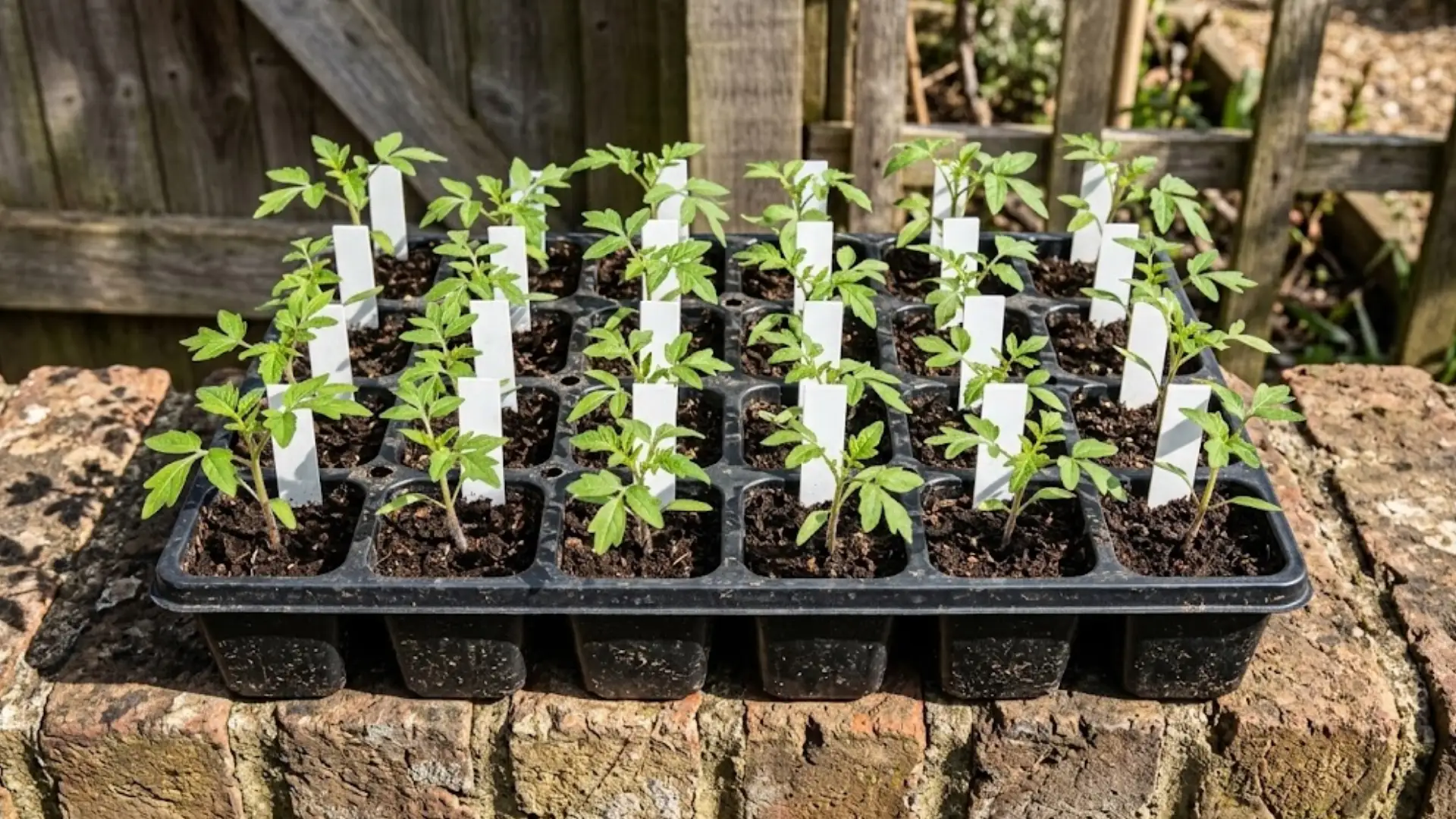
Starting seedlings indoors gives them a safe place to grow, but moving them outside too quickly can undo weeks of careful work.
That is why learning how to harden off seedlings is an important step.
I know it can be tempting to transplant as soon as warm weather arrives, especially when your seedlings are getting bigger by the day.
But young plants need time to adjust to brighter sunlight, changing temperatures, and outdoor conditions.
A gradual transition gives your plants a stronger start and makes that long-awaited move into the garden feel far less uncertain.
Why Do Seedlings Need to Be Hardened Off?
Seedlings grown indoors are used to stable temperatures, gentle light, and little wind.
Many gardeners raise these early seedlings on a windowsill or in an indoor seed-starting setup with grow lights, which keeps conditions even more sheltered than a greenhouse.
Moving them directly outdoors can expose them to stronger sunlight, changing temperatures, and drying winds before they are ready.
Hardening off gives seedlings time to adjust gradually to these conditions.
Key benefits of hardening off seedlings:
- Reduces transplant shock
- Protects leaves from sunscald
- Strengthens stems against wind
- Improves survival after transplanting
Properly hardened seedlings are more likely to establish healthy roots, continue growing steadily, and cope with normal outdoor conditions without severe wilting or leaf damage.
How to Harden Off Seedlings?
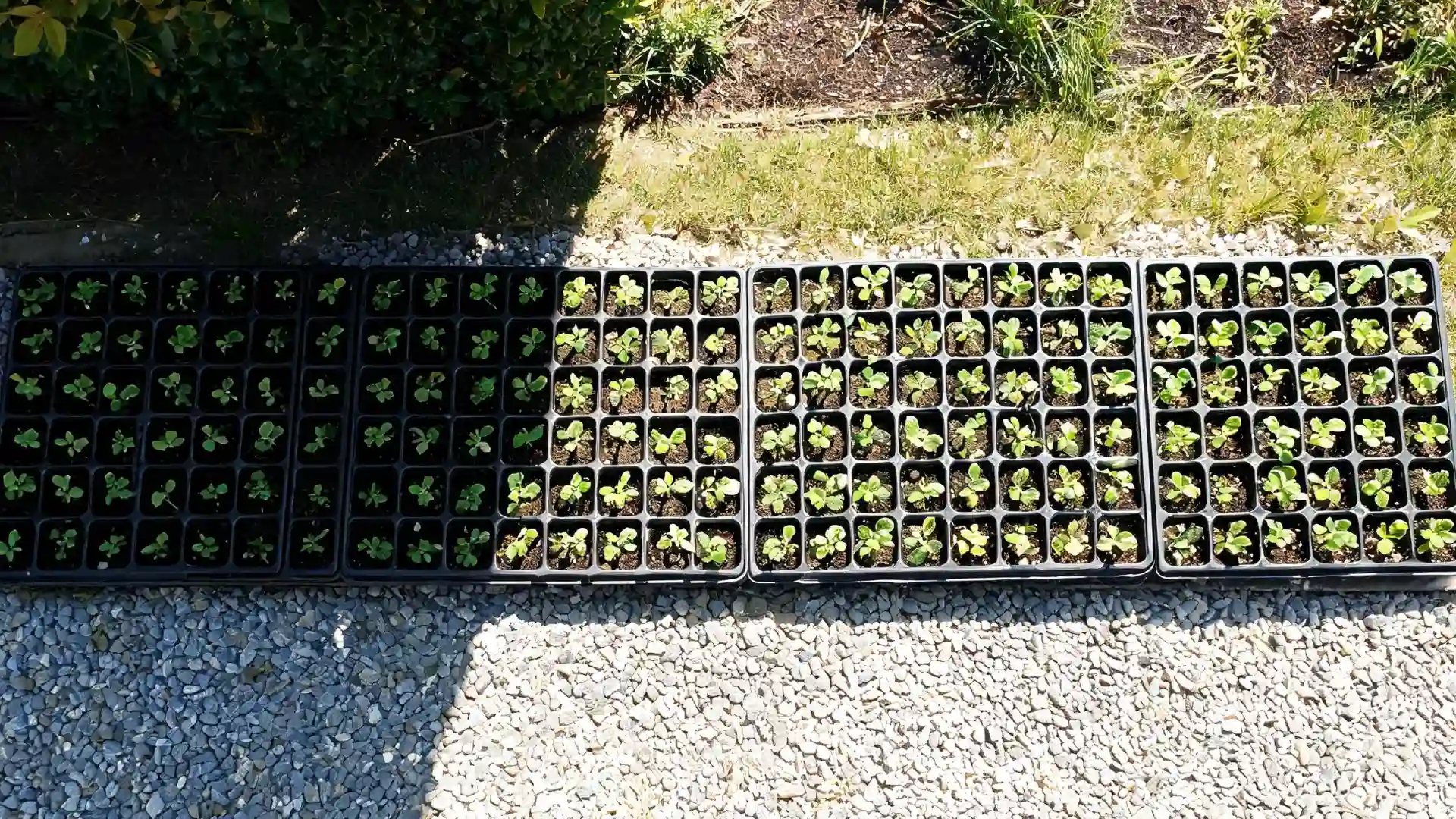
Hardening off seedlings works best when you make small changes over several days. Use the following schedule as a general guide, but adjust it if your seedlings show signs of stress.
Day 1-2: Start With a Short Period in the Shade
Begin by placing your seedlings outside for one to two hours in a sheltered, shaded location.
Choose a spot protected from strong wind, heavy rain, and direct afternoon sunlight. These first few days give tender plants a gentle introduction to outdoor conditions.
Check the soil because small containers may dry out faster outside, and bring the seedlings indoors after their short session.
Day 3-4: Increase Their Time Outdoors
On days three and four, extend the seedlings’ outdoor time by a few hours. You can also introduce them to gentle morning sunlight, which is less intense than afternoon sun.
Keep them protected from strong winds and extreme temperatures while they adjust.
Watch the leaves for wilting, curling, or discoloration. If the seedlings remain healthy, continue with the schedule.
Day 5-6: Introduce More Direct Sunlight
By days five and six, seedlings can usually handle longer periods of direct sunlight. Increase their sun exposure gradually rather than placing them in full sun all day.
Keep an eye out for pale, bleached, scorched, or wilted leaves, which may indicate too much exposure.
Check the soil regularly and water as needed, since outdoor conditions can dry containers quickly. If plants appear stressed, move them into shade and reduce their exposure temporarily.
Day 7-10: Leave Seedlings Outside for Most of the Day
During days seven through ten, allow your seedlings to spend most of the day outdoors.
Give them more exposure to the sunlight and gentle breezes they will experience after transplanting. Continue checking soil moisture and watch for signs of stress.
Weather conditions can change quickly, so stay alert.
Move the seedlings to shelter if strong winds, heavy rain, extreme heat, or unusually cold temperatures are expected.
Day 10-14: Prepare Seedlings for Overnight Conditions
During the final stage, begin leaving seedlings outdoors overnight when temperatures stay within a safe range for the specific plants you are growing.
Start in a sheltered location at first and keep checking the forecast for sudden temperature drops, frost, or severe weather.
Once they can remain outdoors day and night comfortably, I generally transplant them into the garden.
How to Use a Cold Frame to Harden Off Seedlings?
A cold frame can make hardening off easier when you have several trays of seedlings and do not want to carry them indoors and outdoors every day.
It is a bottomless, enclosed structure with a transparent lid that allows sunlight to reach the plants while providing some protection from wind, heavy rain, and sudden weather changes.
Place your seedlings inside the cold frame and begin by opening the lid for a short period during the day.
Gradually open it wider and leave it open longer each day as the seedlings adjust. Close the frame at night when temperatures are too cold for your plants.
As conditions become suitable, leave the lid fully open during the day and eventually overnight.
Always monitor the temperature inside, since a closed cold frame can heat up quickly in direct sunlight.
How to Harden Off Tomato Plants?
Tomato plants are sensitive to sudden changes in sunlight, wind, and temperature, especially when grown indoors.
- Start in a Sheltered Spot: Place tomato plants outside for one to two hours in shade, protected from strong wind.
- Introduce Morning Sun Gradually: After a few days, give plants gentle morning sunlight before moving them back into shade.
- Increase Outdoor Time Daily: Add a few hours outside each day as long as the plants remain healthy.
- Monitor Water and Temperature: Keep the soil evenly moist to avoid overwatering and bring plants inside when temperatures become too cold.
- Allow Overnight Exposure: Once conditions are suitable, leave plants outside overnight before transplanting them into the garden.
When Should You Start Hardening Off Seedlings?
Start hardening off seedlings about 7 to 14 days before you plan to transplant them outdoors.
The exact timing depends on the plant type, local weather, and how quickly the seedlings adjust.
For cool-season crops, you can usually start when daytime temperatures are mild, and conditions are above the plant’s cold tolerance.
Warm-season seedlings, such as tomatoes and peppers, need warmer conditions and should not be exposed to frost.
Choose a mild day with little wind to begin the process.
Check the weather forecast before taking seedlings outside, and delay hardening off during heavy rain, strong winds, freezing temperatures, or unusually hot weather.
What Gardeners Say About Hardening Off Seedlings?
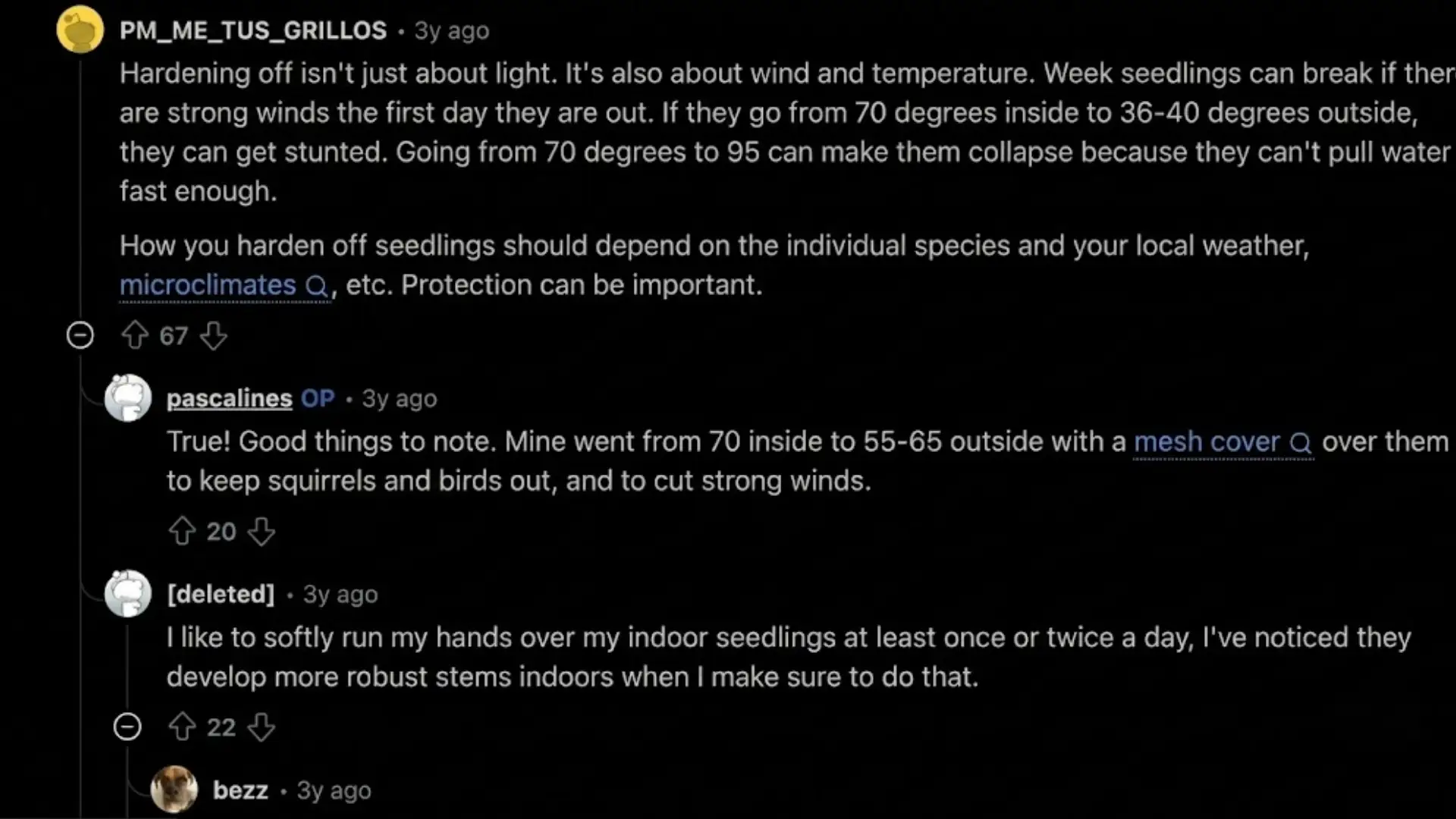
Gardeners on Reddit shared several practical ways to make hardening off seedlings easier.
One gardener with around 800 seedlings skipped repeatedly carrying trays indoors and outdoors.
Instead, they waited for three cloudy, drizzly days and moved the seedlings outside, reporting no sunscald before later exposing them to full sun.
Other gardeners stressed that sunlight is only part of the process.
Wind and sudden temperature changes can also stress young plants, so the method should match the plant species and local weather.
Some gardeners use sheltered patios, gradually moving seedlings from mostly shade to sunnier spots over several days.
The main takeaway is to stay flexible and protect seedlings from extreme conditions.
How to Tell When Seedlings are Fully Hardened Off?
Seedlings are fully hardened off when they can handle normal outdoor conditions without showing significant stress.
Look at their leaves, stems, growth, and how they respond to longer periods outside before transplanting them into the garden.
- Leaves Stay Firm and Healthy: Leaves remain upright without severe wilting, bleaching, scorching, or curling after outdoor exposure.
- Stems Become Stronger: Stems can stay upright and can handle gentle outdoor winds without bending excessively or becoming damaged.
- Plants Handle Direct Sunlight: Seedlings tolerate several hours of appropriate direct sunlight without developing burned or faded leaves.
- Seedlings Tolerate Longer Outdoor Periods: Plants can remain outside throughout the day without showing signs of stress.
- Growth Continues Normally: New leaves and steady growth indicate seedlings have adjusted well and are ready for transplanting.
What to Do If Seedlings Wilt During Hardening Off?
Wilting during hardening off usually means the seedlings are adjusting too quickly to sunlight, wind, heat, or moisture loss.
Act early and reduce their exposure until they recover. Check the plants and growing conditions before continuing with the hardening-off schedule.
- Move wilted seedlings into a shaded, sheltered area away from direct sunlight and strong wind.
- Check the soil moisture and water seedlings if the top layer feels dry.
- Shorten their outdoor time for the next few days until the seedlings recover.
- Avoid exposing stressed seedlings to extreme heat, cold temperatures, heavy rain, or strong winds.
- Resume hardening off gradually, increasing outdoor exposure only when the seedlings remain firm and healthy.
Once the seedlings recover, continue the process at a slower pace rather than starting over.
Watch their response each day and adjust outdoor exposure as needed. Healthy seedlings should gradually tolerate longer periods outside without wilting or developing damaged leaves.
Conclusion
Hardening off may add an extra week or two to your growing routine, but it gives your seedlings a much better start outdoors.
I still think that extra week is the cheapest insurance a gardener can buy.
Instead of rushing to get young plants into the garden, watch how they respond each day.
Once your seedlings settle into their garden beds or containers, you can focus on regular watering, feeding, and watching them grow through the season.
After following a schedule, share how your hardening-off process went in the comments below.
Frequently Asked Questions
What is the Difference Between Hardening and Hardening Off?
Hardening generally means strengthening plant growth, while hardening off specifically means gradually adjusting indoor-grown seedlings to outdoor sunlight, wind, and changing temperatures before transplanting.
Are Leggy Seedlings Doomed?
No, leggy seedlings can often recover with stronger light, proper spacing, careful watering, and gradual hardening off before transplanting into the garden.
Can Tomato Plants Recover if They Were Not Hardened Off?
Yes, tomato plants may recover from transplant shock or sunscald. Provide temporary shade, consistent moisture, and protection from extreme weather while they gradually adjust.